Editor's Choice
Wimbledon 2026 Curtain Raiser: Tennis Returns to Oldest Stage With a New Power Shift
Wimbledon never feels like the next tournament on the calendar. It feels like tennis changing clothes.
The clay dust disappears. The grass arrives. The rallies shorten. The margins shrink. Players who looked comfortable in Paris suddenly need faster feet, sharper hands, and a completely different kind of nerve.
When Is Wimbledon 2026?
Wimbledon 2026 will take place from Monday, June 29, to Sunday, July 12, 2026, at the All England Lawn Tennis and Croquet Club in London. The Championships will run across 14 days, with the opening rounds beginning on June 29 and the final weekend closing the grass-court Grand Slam on July 11 and July 12. Wimbledon’s official schedule confirms the 2026 tournament window and the 14-day format.
The tournament starts with two days of Gentlemen’s and Ladies’ Singles first-round matches. Gentlemen’s and Ladies’ Doubles begin on Wednesday, July 1, while Mixed Doubles action starts on Friday, July 3. The Junior Championships begin on Saturday, July 4, before wheelchair events, 14-and-under junior competitions, and invitation events join the schedule during the second week.
That schedule gives Wimbledon 2026 the rhythm fans know well: early-round traffic in the first week, middle-Sunday momentum, fourth-round pressure, quarterfinal drama, and then the semifinal and final stretch that turns Centre Court into one of sport’s most watched stages.
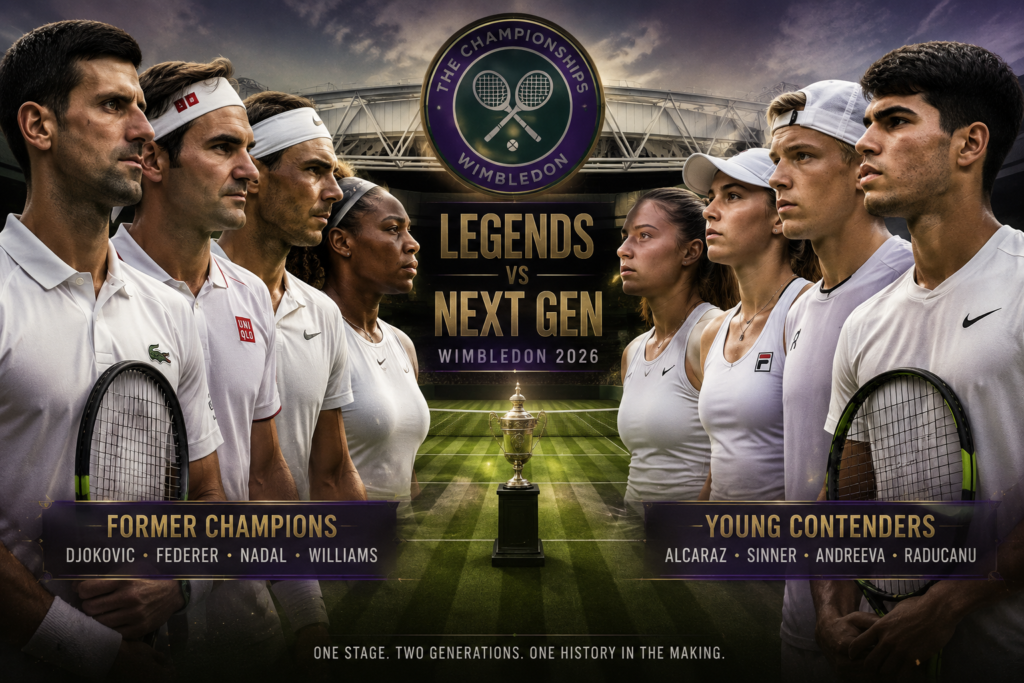
The timing also matters because Wimbledon arrives at a turning point in tennis. The grass-court major will follow another intense clay season and land at a moment when the sport’s power balance is shifting across both the ATP and WTA tours. Established champions still carry the weight of history, but younger contenders now arrive in London with the confidence, physical edge, and tactical courage to challenge the old order.
Wimbledon 2026 will also carry added attention because of its record prize-money announcement. The tournament’s total prize fund has been confirmed at £64.2 million, with the Gentlemen’s and Ladies’ Singles champions each set to earn £3.6 million. Reuters reported that the increase marks a 20% rise and comes amid wider player demands for a greater share of Grand Slam revenues.
For fans following the build-up, the key point is simple: Wimbledon 2026 begins on June 29 and ends on July 12. Between those dates, tennis returns to its oldest stage with a new generation trying to prove that grass-court greatness no longer belongs only to the familiar names.
Qualifying takes place from June 22 to June 25 at Roehampton, before the main draw begins at the All England Club on June 29. For full tournament coverage, follow The Sports Encounter’s Tennis Hub.
This year’s Wimbledon arrives with a slightly different charge in the air. The old hierarchy still matters, but the sport is moving. New champions have emerged. Established stars are carrying fresh pressure. Grass-court specialists are circling. British hopes have storylines again. And for the first time in a while, Wimbledon feels less like a predictable checkpoint and more like a stage where the order of tennis could shift.
For more tournament coverage, follow The Sports Encounter’s exclusive tennis coverage, including our latest analysis of the Wimbledon 2026 prize-money increase, the rise of Mirra Andreeva as a Grand Slam force, and Alexander Zverev’s breakthrough French Open title.
Wimbledon 2026: Key Details
Tournament: The Championships, Wimbledon 2026
Dates: June 29 to July 12
Qualifying: June 22 to June 25
Venue: All England Lawn Tennis and Croquet Club, Wimbledon
Surface: Grass
Singles Draw: 128 players in both men’s and women’s singles
Prize Fund: £64.2 million
Singles Champions’ Prize: £3.6 million each
The numbers matter, especially the prize-money increase, but Wimbledon has never been defined only by money, ranking points, or draw size.
Its real power comes from the feeling that everything is being watched more closely.
A first-round stumble at another tournament becomes a footnote. A first-round stumble at Wimbledon becomes a headline. A good run becomes a national conversation. A title run becomes part of tennis history.
The Grass-Court Reset Changes Everything
Grass does not give players much time to lie.

On clay, a player can recover from a bad position with defense, patience, and endurance. On grass, one loose service game can tilt a set. A mistimed return can end a rally before it begins. A player who moves beautifully on hard courts can look half a step late when the ball stays low.
That is why Wimbledon often creates its own logic.
The best player on paper is not always the most comfortable player on grass. Big servers gain value. Aggressive returners become dangerous. Net instincts matter again. Slice, touch, and balance stop being decoration and become weapons.
This is also why Wimbledon has a habit of rewarding players who can think quickly. Grass does not always ask who can hit harder. It asks who can adjust faster.
The French Open Changed the Mood Before Wimbledon
The grass swing begins in the shadow of Roland Garros, and 2026 gave tennis two major storylines heading into London.

Alexander Zverev finally became a Grand Slam champion by winning the French Open, ending years of near-misses and pressure. Mirra Andreeva also arrived in a new category after winning the women’s title in Paris as a 19-year-old, confirming that the next generation is no longer waiting politely outside the room.
That matters for Wimbledon.
A first major title can do strange things to a player. It can free them. It can also add weight. Zverev now enters the next Grand Slam with proof that he can finish the job, but Wimbledon will ask a different question: can he translate clay-court momentum onto grass?
Andreeva’s challenge is just as fascinating. Paris rewarded her control, maturity, and baseline confidence. Wimbledon will test her timing, serve protection, and ability to handle low-bouncing exchanges against players who want to rush her.
For more on how Paris reshaped the tennis conversation, read The Sports Encounter’s feature on when Paris welcomed two new French Open champions.
Women’s Draw: Power, Movement, and Grass-Court Nerve
The women’s field looks especially dangerous because there is no single clean storyline.
Aryna Sabalenka remains a central figure because power travels well to every surface. Elena Rybakina’s serve and flat hitting make her a natural grass threat. Iga Swiatek is still too good to dismiss anywhere, even if grass has not always given her the same comfort as clay.
Then there is Andreeva, now carrying the glow and burden of being a Grand Slam champion.
That mix creates a fascinating draw. Sabalenka can hit through almost anyone. Rybakina can turn service games into locked doors. Swiatek can still overwhelm opponents if she finds rhythm early. Andreeva brings the new-champion energy that can either explode into another deep run or run into the reality of a surface that gives teenagers very few soft lessons.
The grass-court lead-up has already added another layer. Donna Vekic’s Queen’s title win over Emma Raducanu showed again why proven grass-court instincts matter. Raducanu’s run also gave British fans something to hold onto, even though Vekic handled the final with the calm of a player who knows how to compete on this surface.
Wimbledon loves a home story. It also has no problem breaking one.
Men’s Draw: A New Champion Meets an Old Test
The men’s side has its own tension.
Zverev arrives as the newest Grand Slam champion. That alone changes how opponents see him and how he sees himself. A player who has broken through once can become lighter, freer, and more dangerous.
But Wimbledon is not Paris with green paint.
The grass court asks him to shorten points, serve with authority, return low, and avoid getting dragged into awkward forward movement. His serve gives him a clear route to success, but the second week at Wimbledon often exposes players who cannot transition smoothly from baseline control to grass-court instinct.
Elsewhere, the usual grass variables apply. Big servers will believe they can make noise. Aggressive first-strike players will back themselves. Players with strong returns and clean movement will wait for one loose service game.
Jack Draper’s fitness will also draw attention after his withdrawal from Queen’s as he continued knee recovery. British tennis rarely enters Wimbledon without emotional weight, and Draper’s attempt to get ready in time adds another human subplot to the men’s field.
Wimbledon is often remembered for champions. Before that, it is built on questions like these.
Why This Wimbledon Feels Like a Power-Shift Tournament
The phrase “changing of the guard” gets thrown around too easily in tennis. Usually, the old guard does not leave. It adapts, resists, and makes the new players earn every inch.
Wimbledon 2026 feels different because the pressure is coming from both directions.
New champions want validation. Established contenders want control. Grass-court specialists want to turn surface comfort into chaos. Injured or rebuilding players want one fortnight to rewrite the public conversation.

That is the power-shift feeling.
It does not mean one generation disappears overnight. Tennis does not work that way. It means the tournament could clarify who is ready to own the next phase.
A player can leave Wimbledon as a champion, contender, warning sign, or question mark. Sometimes the gap between those labels is one tiebreak.
What Fans Should Watch Early
The first week at Wimbledon can be brutal because the grass is fresh, slick, and fast. Movement is uncomfortable. Seeds can be vulnerable before they settle. Players who arrive with confidence from the grass warm-ups can catch bigger names before they find rhythm.
Watch for three things early.
First, service-game pressure. Players who struggle to hold comfortably in the opening rounds usually do not survive long.
Second, movement. Grass exposes footwork quickly. A player who looks hesitant on the first step is already in trouble.
Third, composure in tiebreaks. Wimbledon is full of sets where neither player gives much away. The players who make cleaner decisions at 5-5 and 6-6 often become the players still standing in week two.
For ongoing player updates, draw reaction, and match analysis, follow The Sports Encounter’s latest tennis coverage.
Key Storylines
Can Zverev carry Grand Slam momentum onto grass?
Winning Paris changed his career. Wimbledon will test whether that breakthrough can travel.
How does Andreeva handle life as a Grand Slam champion?
Her talent is obvious, but grass will challenge her timing and adjustment speed.
Can Sabalenka or Rybakina impose power on the draw?
Both have the tools to make grass look simple when their serve and first strike are firing.
Will British hopes survive the pressure?
Raducanu’s Queen’s run brought energy. Draper’s fitness remains a key question.
Can a grass specialist disrupt the bracket?
Every Wimbledon has room for a player who understands the surface better than the rankings suggest.
FAQs
When does Wimbledon 2026 start?
Wimbledon 2026 starts on Monday, June 29, 2026, and runs until Sunday, July 12, 2026, at the All England Lawn Tennis and Croquet Club in London.
When is Wimbledon 2026 qualifying?
Wimbledon qualifying takes place from June 22 to June 25 at Roehampton.
What surface is Wimbledon played on?
Wimbledon is played on grass.
How many players are in the Wimbledon singles draws?
Both the men’s and women’s singles draws feature 128 players.
Why is Wimbledon different from other Grand Slams?
Wimbledon is the only Grand Slam played on grass, which changes movement, tactics, serving value, and match tempo.
Final Verdict
Wimbledon 2026 arrives at the right moment for tennis.
The sport has new Grand Slam champions. It has established stars trying to hold position. It has grass-court danger players ready to turn one good week into something bigger. It has home hopes, injury questions, and the usual All England Club pressure that can make even great players look human.
That is why this tournament feels bigger than another stop on the calendar.
Paris gave tennis new names to discuss.
Wimbledon will show which of them can handle the grass, the silence before serve, the sudden tiebreak, and the weight of history.
The gates are about to open.
The power shift may already be underway.
Breaking News
DR Congo Stun Portugal as Ronaldo’s World Cup Question Grows Louder
Portugal started fast but finished frustrated as DR Congo earned a brave 1-1 draw in Group K. João Neves gave Portugal an early lead, but Yoane Wissa’s historic equalizer turned the match into another strong African statement against European opposition at the FIFA World Cup 2026.
Portugal arrived with pedigree, star power, and one of the most recognizable players in football history.
DR Congo arrived with belief.
By full time, that belief had turned into one of the most meaningful results of the early FIFA World Cup 2026 group stage. Portugal were held to a 1-1 draw by DR Congo in Group K, and the result said plenty about both teams.
For Portugal, this was a missed chance to open the tournament with control. They scored early, moved the ball with confidence, and looked ready to turn the match into a routine win.
For DR Congo, this was not only a point. It was a statement of identity.
The Leopards refused to shrink under the pressure of facing Portugal and Cristiano Ronaldo on the World Cup stage. They defended with discipline, attacked with purpose, and found a deserved equalizer through Yoane Wissa before halftime.
This was another reminder that the gap between established European names and ambitious African teams is not as comfortable as it once looked.
Match Summary: Early Portugal Lead, Historic DR Congo Reply
Portugal made the perfect start.
João Neves put them ahead in the sixth minute after Pedro Neto delivered a dangerous cross into the box. Neves timed his run well and guided his header into the net, giving Portugal exactly the kind of early goal that should settle a favorite.
At that point, the match looked ready to follow a familiar script. Portugal would dominate the ball, stretch DR Congo across the pitch, and wait for the second goal to arrive.
It never did.
DR Congo absorbed pressure, stayed compact, and slowly grew into the match. They did not panic after conceding early. Instead, they kept their shape and waited for the right moment to hurt Portugal.
That moment came just before halftime.
Arthur Masuaku delivered from a corner, and Yoane Wissa attacked the ball with conviction. His header beat the Portuguese defense and changed the mood of the match completely.
Portugal had started like a favorite. DR Congo went into the break like a team that knew it belonged.
For more early tournament context, read our France vs Senegal World Cup 2026 match report, where Kylian Mbappe’s performance showed how elite sides can still punish African teams when given space.
DR Congo Played With Nerve, Not Fear
The best part of DR Congo’s performance was not only the goal.
It was the attitude.
Many underdogs defend deep, clear the ball, and wait for the final whistle against elite European opposition. DR Congo showed more courage than that. They were organized without becoming passive. They respected Portugal without looking intimidated.
Their defenders stayed tight in central areas, forcing Portugal to look wide and slowing the rhythm around Cristiano Ronaldo. When Portugal tried to overload the box, DR Congo bodies were there. When the ball dropped loose, they fought for second balls.
That structure gave them a platform.
Axel Tuanzebe and Chancel Mbemba provided the kind of defensive authority DR Congo needed. Their reading of crosses, physical duels, and late blocks kept Portugal from turning possession into real punishment.
Goalkeeper Lionel Mpasi also gave the team calmness. He managed pressure well, claimed what he could, and helped DR Congo reset during difficult spells.
The wider story was even more powerful. DR Congo were playing their first World Cup match in more than five decades, and Wissa’s goal carried historic weight. This was a country returning to the biggest stage and refusing to play like a guest.
Wissa’s Equalizer Was More Than a Goal
Yoane Wissa’s header gave DR Congo a result to chase.
It also gave their fans a moment to keep.
The timing mattered. Scoring before halftime meant Portugal could not go into the dressing room with control of the match narrative. The equalizer forced Roberto Martinez’s team to restart emotionally and tactically after the break.
The method also mattered.
DR Congo did not need a lucky deflection or a defensive mistake. They created pressure from a set piece, delivered the ball with quality, and finished with authority. That kind of goal travels well in tournament football because it gives a team something repeatable.
Set pieces can change group-stage math. DR Congo proved they have that tool.
For an African side facing one of Europe’s biggest teams, the goal carried another message. DR Congo were not there to survive. They were there to compete.
That same competitive edge has already shaped several stories in this tournament, including the sibling stories giving FIFA World Cup 2026 a deeper emotional layer.
Were Portugal Too Dependent on Ronaldo?
This match will raise a difficult question for Portugal.
Are they still too emotionally and tactically dependent on Cristiano Ronaldo?
Ronaldo remains a giant figure. His presence changes stadium energy, media focus, defensive attention, and Portugal’s attacking psychology. Even at 41, he still carries a magnetism very few players in football history have ever had.
The problem is that Portugal sometimes seemed to wait for the Ronaldo moment instead of building enough collective threat around him.
Their early goal came from movement, width, and a cross into a dangerous area. After that, Portugal had plenty of possession but did not create enough high-quality chances. The ball moved, but the attack lacked sharp final actions.
Bruno Fernandes tried to influence the tempo. Bernardo Silva and Pedro Neto offered technical control and width. Rafael Leão and Gonçalo Ramos gave Portugal different options from the bench.
Still, the longer the match went on, the more Portugal’s attack looked caught between two ideas.
They wanted to serve Ronaldo.
They also needed to play faster around him.
That balance never fully arrived.
Ronaldo’s presence remains valuable, but Portugal cannot afford to let every tight match become a search for one iconic finish. Tournament football rewards teams that can win through different routes. Against DR Congo, Portugal looked short of those routes.
The issue felt even clearer when compared with Argentina’s sharper use of Lionel Messi in Argentina’s win over Algeria, where the superstar influence translated into clear attacking output rather than hesitation around one focal point.
Portugal Had Control, But Not Enough Danger
The most worrying part for Portugal was the lack of cutting edge.
They had territory. They had the stronger names on paper. They had the early goal. Yet DR Congo were not pulled apart often enough.
That matters because Portugal are not judged only by whether they dominate the ball. They are judged by whether they turn that control into chances, pressure, and goals.
Against DR Congo, the rhythm became too predictable.
Portugal circulated possession but did not consistently break defensive lines. Their crosses became easier to read. Their central combinations slowed down. DR Congo’s defenders were asked to work hard, but they were not constantly dragged into panic.
That is where Portugal must improve before facing Uzbekistan and Colombia.
In a group stage, one draw does not destroy a campaign. It does, however, remove comfort. Portugal now have less margin for error, and the Ronaldo question will only grow louder if their attack remains this dependent on moments rather than patterns.
Another African Team Stands Up to Europe
This result also fits a bigger pattern from the opening stage of the tournament.
African teams are making European opponents uncomfortable.
Cape Verde held Spain to a goalless draw. Egypt drew 1-1 with Belgium. Morocco earned a 1-1 draw against Brazil, a South American giant with European-level quality across the squad. Now DR Congo have held Portugal.
These results do not all tell the same story tactically, but they point toward the same football reality.
African teams are no longer arriving at the World Cup only with athleticism and emotion. They are arriving with structure, experience, and players shaped by major European leagues. They know how to defend space, manage pressure, and punish teams that take too long to finish matches.
DR Congo’s draw with Portugal will feel especially important because of the opponent and the stage. Portugal are not a fading side with one superstar. They have elite talent across midfield, attack, and defense. Holding them required more than passion.
It required a plan.
DR Congo had one.
This wider African resilience also connects with how Jordan, Algeria, and Senegal have been forcing stronger opponents to work harder than expected, as seen in our coverage of Austria’s win over Jordan and France’s battle with Senegal.
Why This Result Matters for Group K
Group K now looks far more open than Portugal wanted.
A win would have allowed Portugal to control the group early and manage the next two fixtures with more flexibility. A draw means every remaining match carries pressure.
Portugal still have the talent to top the group, but they now need sharper performances against Uzbekistan and Colombia. They cannot rely on reputation, Ronaldo’s aura, or late pressure alone.
For DR Congo, the point is huge.
They did not just avoid defeat. They showed they can compete physically, tactically, and emotionally at this level. That gives them real belief before facing Colombia and Uzbekistan.
The draw also changes how opponents will view them. DR Congo will not be treated as a soft fixture. That brings respect, but it also brings new pressure. Their next challenge is to prove this was not a one-night surge.
For fans tracking how the wider tournament picture is developing, our FIFA World Cup 2026 coverage will continue following every major group-stage shift.
Final Word: DR Congo Earned Respect, Portugal Earned Questions
Portugal did not lose, but this felt like a warning.
Their attack still has elite names, yet the team must become more fluid, more ruthless, and less centered around the hope that Ronaldo will solve every difficult moment.
DR Congo, meanwhile, earned the kind of result that can reshape a group-stage campaign. They were brave without being reckless, disciplined without being negative, and emotional without losing control.
That is tournament football at its best.
One team came in expecting to win.
The other came in ready to prove it belonged.
By the final whistle, DR Congo had done far more than take a point from Portugal. They had added another African statement to a World Cup that is already refusing to follow old assumptions.
The Sports Encounter’s World Cup 2026 coverage focuses on fixtures, team news, match analysis, fan stories, tournament trends, and the biggest talking points from football’s global stage.
FAQs
What was the final score between Portugal and DR Congo?
Portugal and DR Congo drew 1-1 in their FIFA World Cup 2026 Group K match.
Who scored for Portugal against DR Congo?
João Neves scored for Portugal in the sixth minute after meeting Pedro Neto’s cross.
Who scored DR Congo’s equalizer?
Yoane Wissa scored DR Congo’s equalizer with a header from Arthur Masuaku’s delivery just before halftime.
Was Portugal too dependent on Cristiano Ronaldo?
Portugal looked too reliant on Ronaldo as a focal point at times. They had possession and attacking talent, but their play often lacked speed and variety around him.
Why was DR Congo’s performance important?
DR Congo showed discipline, courage, and tactical maturity against a major European side. Their draw also continued a wider World Cup pattern of African teams troubling established opponents.
Tags: Portugal vs DR Congo, FIFA World Cup 2026, Cristiano Ronaldo, DR Congo football, Yoane Wissa, João Neves, Group K, African football, World Cup match report
Editor's Choice
NHL’s Ratings Rise Proves Hockey Has Rediscovered its Lost Mojo
The 2026 Stanley Cup Final gave the NHL its strongest championship TV audience in seven years, with Carolina’s title run over Vegas turning high-scoring hockey, comeback drama, and national broadcast reach into a major ratings win. The surge shows hockey’s growing appeal in a crowded sports market and gives the league a real chance to turn playoff momentum into long-term audience growth.
The NHL did more than crown a champion this week. It reminded American sports television that hockey still has the power to pull casual viewers into its fastest, loudest, most chaotic version of itself when the product is easy to find, emotionally loaded, and alive with scoring swings.
The 2026 Stanley Cup Final between the Carolina Hurricanes and Vegas Golden Knights averaged 5.2 million viewers on ABC, the highest audience for the NHL’s championship round in seven years, according to Reuters. Carolina’s title-clinching Game 6 drew 5.9 million viewers and peaked at 7.2 million late in the contest as the Hurricanes finished a 3-0 win in Las Vegas.
For a league that often fights for national attention against the NBA, NFL offseason drama, baseball’s summer rhythm, global soccer, and streaming fragmentation, those numbers matter.
They show hockey can still cut through when the matchup carries real stakes and the broadcast window gives fans a clear path into the sport.
The Hurricanes’ second Stanley Cup, their first since 2006, gave the Final a strong sporting payoff. The numbers around it gave the NHL something wider: evidence that the league’s postseason product is gaining traction again.
For more hockey coverage, follow The Sports Encounter’s NHL Hub.
The Stanley Cup Final Became a Ratings Win Because the Hockey Was Easy to Sell
Ratings stories can feel cold until the games explain the numbers.
This Final had the kind of hockey that works for television. The first five games all produced at least six total goals. Both teams delivered comebacks. Two games went to overtime. Vegas had a high-profile roster, a recent championship identity, and a dramatic coaching situation. Carolina had years of playoff frustration behind it and a fan base waiting for the final step.
That combination gave the series movement.
Every game felt like it could swing. Every lead felt unsafe. Every goalie decision carried weight. Every shift near the boards had the potential to become a scoring chance within seconds.
For casual fans, that matters.
They do not always enter a Stanley Cup Final with deep knowledge of line combinations, defensive-zone structures, or special-teams trends. They respond first to pace, tension, goals, crowd noise, and the feeling that one mistake can change everything.
This series gave them that feeling early and often.
Carolina’s Game 6 shutout was the only game that broke the pattern of both teams scoring multiple goals, but even that finale had a strong hook. The Hurricanes were closing a 20-year championship wait. Vegas was trying to force Game 7 at home. The scoreline became cleaner than the series, but the emotional stakes stayed heavy until Carolina finished the job.
Read our full title story here: Carolina Hurricanes Shut Out Vegas Golden Knights in Game 6, Lift Stanley Cup After 20 Years.
The Numbers Show a Wider NHL Playoff Surge
The Final was the headline, but the broader playoff picture matters even more.
ABC and ESPN averaged 2.2 million viewers across 43 NHL playoff games in 2026, their highest figure for NHL playoff coverage. That number was up 127% from 2025 and 19% from 2024, according to Reuters.
ESPN also reported that Game 5 of the Stanley Cup Final averaged 5.8 million viewers on ABC, making it the largest Game 5 audience since 2018. That game peaked at 6.9 million viewers as Carolina beat Vegas 4-2 and moved within one win of the Cup.
Those gains point to three connected trends.
1. Broadcast access still changes everything
Hockey benefits when fans know where to find it.
ABC gave the Stanley Cup Final broad reach, and that mattered. The 2026 clincher more than doubled the audience that watched Florida win the Cup against Edmonton on Turner networks in 2025. It also rose 40% from the last ABC-carried Final in 2024, another Panthers-Oilers series.
That difference does not reduce the importance of the matchup, but it does show how much platform clarity still matters in American sports.
Streaming has changed viewer habits, but major live events still gain power when fans can locate them quickly on a familiar national network.
2. The NHL postseason has become more TV-friendly
Playoff hockey has always carried tension. The difference in 2026 was how often that tension turned into visible action.
Goals came quickly. Leads moved. Overtime arrived. Goaltending choices became talking points. Star players and depth players both shaped outcomes.
For a casual viewer, that makes the product easier to follow because the story keeps refreshing itself.
The league does not need every game to become a track meet. Defensive pressure, blocked shots, penalty kills, and low-scoring grind games remain part of hockey’s identity.
Still, the 2026 Final showed how scoring volume can widen the audience without stripping away the sport’s physical edge.
3. The NHL had two markets with strong narrative value
Carolina and Vegas gave the Final two different forms of modern NHL appeal.
The Hurricanes offered long-term construction. Their rise was tied to system, patience, depth, Rod Brind’Amour’s culture, and a fan base that had waited since 2006 to see another Cup.
Vegas offered modern expansion-era ambition, bold roster decisions, and a franchise that expects to contend every season.
That contrast helped the series.
Carolina carried emotional payoff. Vegas carried urgency. Together, they created a Final that felt larger than a neutral matchup between two strong teams.
For the series build-up, revisit our Game 6 preview: Hurricanes vs Golden Knights Game 6 Analysis: Carolina One Win From Stanley Cup Glory.
Carolina’s Championship Gave the NHL a Clean Winner’s Story
The Hurricanes were not a one-week ratings gift. They were a hockey story years in the making.
Carolina had been close before. The franchise built a serious playoff identity, kept returning to pressure games, and kept asking whether its structure could survive the final stage.
The 2026 answer was emphatic.
The Hurricanes finished the Final in six games. They shut out Vegas in the clincher. Jordan Staal turned veteran leadership into visible production and earned the Conn Smythe Trophy as playoff MVP. Brandon Bussi became one of the postseason’s most striking stories after stepping into the crease and helping stabilize Carolina’s run.
That gave the NHL something every league wants in June: a champion with texture.
This was more than a team lifting a trophy. It was a group completing a long arc. Staal’s age, Bussi’s emergence, Taylor Hall’s long-awaited Cup moment, Carolina’s wait since 2006, and Brind’Amour’s steady identity all gave fans entry points into the story.
The Hurricanes made patience look powerful
Modern sports culture often rewards instant reaction. A bad period becomes a crisis. A lost game becomes a referendum. A playoff exit becomes a demand for major change.
Carolina’s rise offered a different lesson.
The Hurricanes kept their structure. They trusted their style. They stayed with a hockey identity that had brought them close several times before. That kind of consistency can look stubborn until it finally becomes championship proof.
When fans watched Carolina celebrate in Las Vegas, they were watching a team that had earned its breakthrough slowly.
Vegas’ Coaching Move Shows the NHL’s Stakes Are Rising Too
The league’s rise is also visible in how quickly pressure moves through successful organizations.
Two days after losing the Stanley Cup Final, the Golden Knights announced that John Tortorella would not return as head coach. That decision followed one of the strangest coaching arcs in recent NHL memory.
Vegas hired Tortorella on March 29 after abruptly firing Bruce Cassidy with eight games left in the regular season. Tortorella went 7-0-1 to close the regular season and helped the Golden Knights win the Pacific Division.
Vegas then beat the Utah Mammoth and Anaheim Ducks in six games each before sweeping the Colorado Avalanche in the Western Conference Final.
That is an extraordinary short-term impact.
Yet it still ended with a coaching change after a six-game Stanley Cup Final loss.
Golden Knights general manager Kelly McCrimmon thanked Tortorella for giving the team an immediate lift at a pivotal moment, but the move also says plenty about Vegas as an organization.
The Golden Knights operate with championship standards. They measure seasons by the final step. In that environment, even a dramatic run to the Final may leave decision-makers searching for a different long-term fit.
Tortorella’s brief Vegas run added another layer to the Final
Tortorella remains one of the most recognizable coaching personalities in modern NHL history.
He owns 777 regular-season coaching wins, won the Stanley Cup with Tampa Bay in 2004, and has coached the Lightning, Rangers, Canucks, Blue Jackets, Flyers, and Golden Knights.
His presence gave the Final extra television interest. He brought intensity, history, and the kind of bench personality viewers recognize even beyond one fan base.
That matters for league visibility.
The NHL grows when games carry identifiable characters. Players drive the sport, but coaches, front offices, fan bases, and local cultures help turn series into conversation.
Why the NHL’s Rise Feels Different in 2026
The NHL has had strong moments before. One strong Final does not guarantee permanent mainstream growth. A seven-year ratings high, however, gives the league a real moment to build around.

The 2026 postseason arrived at a time when sports viewing habits are crowded and fragmented. Fans split attention across live games, highlights, social clips, betting content, fantasy sports, podcasts, YouTube reactions, and team accounts.
A league can no longer depend on tradition alone.
Hockey’s advantage is that its best moments travel well across platforms.
A big hit works in five seconds. A breakaway works without explanation. A goalie save can go viral instantly. An overtime winner creates a clip that casual fans understand before they know the full series context.
The Stanley Cup presentation still carries old-school sports weight, but the path to it now lives across broadcast, social media, short-form video, and fan communities.
The NHL’s challenge is to connect those moments into a weekly habit.
The league has the product. It needs the pathway.
The 2026 Final showed that viewers will come when the pathway is clear.
Put high-stakes hockey on a major network. Give fans emotional teams. Let the scoring breathe. Make the stars visible. Turn the tactical battles into simple stories. Give casual viewers a reason to return for the next game.
That formula can help the NHL move beyond playoff spikes.
What the NHL should protect from this moment
The league should protect broad accessibility for marquee games, continue pushing player storytelling, and lean into the speed of the product without reducing hockey to highlights alone.
The sport’s deeper appeal still lives in pressure.
A neutral-zone turnover, a tired defensive pair, a late change, a power-play entry, or a goalie screen can decide a season. Fans stay longer when broadcasts and digital coverage explain those details without making the game feel like homework.
That is where the NHL has room to grow.
The Big Lesson: Hockey’s Growth Comes From Drama Fans Can Feel
The rise of the NHL in 2026 is not only a ratings chart story.
It is a reminder that hockey’s best version remains one of the most powerful live products in sports. It has speed, physicality, precision, skill, noise, and sudden emotional reversals.
It has old captains chasing one more moment, goalies becoming heroes without warning, coaches carrying reputations into new rooms, and fan bases waiting years for the night that finally arrives.
The 2026 Stanley Cup Final gave the NHL all of that.
Carolina Hurricanes got the Cup. Vegas got a painful summer of decisions. ABC and ESPN got their strongest NHL playoff performance. The league got a signal that its championship product can still command national attention when the stage, story, and broadcast window align.
Now the real test begins.
The NHL has momentum. The next step is turning a brilliant postseason into a wider audience that comes back before the next Stanley Cup Final.
The Sports Encounter’s NHL coverage focuses on match reports, series analysis, player performances, tactical trends, fan impact, and the biggest talking points from hockey’s biggest stage.
FAQs
Why did the 2026 Stanley Cup Final ratings matter for the NHL?
The 2026 Stanley Cup Final averaged 5.2 million viewers, making it the most-watched Final in seven years. That gave the NHL a strong national TV signal after several seasons of fragmented sports viewing.
Who won the 2026 Stanley Cup Final?
The Carolina Hurricanes beat the Vegas Golden Knights in six games and clinched the title with a 3-0 win in Game 6 in Las Vegas.
How many viewers watched Game 6 of the 2026 Stanley Cup Final?
Game 6 of the 2026 Stanley Cup final averaged 5.9 million viewers and peaked at 7.2 million late in the contest as Carolina secured the Stanley Cup.
Why was the Hurricanes vs Golden Knights series attractive for TV?
The series had high scoring, comebacks, overtime games, strong markets, a long-awaited Carolina championship story, and a dramatic Vegas coaching subplot.
What happened to John Tortorella after the Stanley Cup Final?
The Vegas Golden Knights announced that John Tortorella would not return as head coach two days after losing the Stanley Cup Final to Carolina.
Can the NHL sustain this ratings growth?
The NHL has a chance to build on the 2026 surge if it keeps marquee games accessible, improves player storytelling, and turns playoff excitement into regular-season habits.
Editor's Choice
Serena Williams’ Tennis Return Turns Wimbledon 2026 Into a Family Reunion
Serena Williams’ return to professional tennis gathered momentum despite a first-round doubles loss in Berlin, with the 23-time Grand Slam singles champion now preparing for a high-profile Wimbledon 2026 reunion with sister Venus. After stepping away from tennis in 2022, Serena’s comeback has become one of the biggest stories of the grass-court season, blending legacy, family, match fitness, and one more chapter on the sport’s most historic stage.
Serena Williams is back on a professional tennis court, and the scoreboard tells only part of the story.
Her latest result came in Berlin, where Williams and Karolina Muchova lost 6-4, 6-4 to Erin Routliffe and Giuliana Olmos in the opening round of doubles at the WTA 500 Berlin Tennis Open. On paper, it was a straight-sets defeat. In the larger tennis picture, it was another step in one of the most closely watched comebacks of the 2026 grass-court season.
Williams, now 44, has returned to match play after stepping away from professional tennis in 2022, when she described her next chapter as an effort to “evolve away from tennis.” Four years later, that evolution has turned again toward competition, timing, movement, pressure points, and grass-court preparation.
The Berlin match was her second tournament since announcing her comeback. It followed her return at Queen’s Club, where she teamed with Canadian teenager Victoria Mboko before that run ended after Mboko suffered a knee injury. Now, the comeback shifts toward its biggest stage: Wimbledon.
For full tournament context, dates, schedule, venue details, and fan guide, read The Sports Encounter’s Wimbledon 2026 schedule guide and our Tennis Hub.
Serena Williams Loses in Berlin, but the Comeback Gains Shape
The Berlin doubles defeat gave Williams another live test on grass before Wimbledon begins on June 29. Williams and Muchova entered unseeded and faced a strong doubles pairing in Routliffe and Olmos. The 6-4, 6-4 scoreline showed competitive tennis without the sharp closing edge that elite doubles often demands.
That matters because doubles at the highest level can expose rust quickly. Points move fast. Return positioning needs trust. Net coverage depends on instinct. Service games can turn on one loose volley or one half-step late reaction. For a player returning after years away, those small moments become part of the rebuilding process.
Williams did not return to Berlin as a player trying to prove she still owns tennis. She returned as a champion testing what her body, timing, competitive mind, and match rhythm can still produce. That makes Berlin more useful than the result alone suggests.
Muchova, who carried strong singles form into the week, also played singles in Berlin and beat China’s Zhang Shuai 6-1, 6-3. That made the doubles loss less about Muchova’s form and more about the challenge of building a new team quickly against experienced opposition.
Why the Wimbledon Wildcard Changes Everything
The bigger development came before Berlin had time to settle. Wimbledon handed Serena and Venus Williams a wildcard into the ladies’ doubles draw, setting up their return as a team at the All England Club after a four-year gap from the tournament together.
Wimbledon 2026 runs from June 29 to July 12 at the All England Lawn Tennis and Croquet Club. The official tournament schedule begins with singles first-round matches across the opening two days, with doubles action joining the program later in the first week.
Wildcards go to players whose rankings do not secure automatic entry. They often go to high-profile returning players, British players, or athletes whose recent ranking does not reflect their commercial draw, past success, or special circumstances. In this case, the decision was easy to understand. Serena and Venus Williams at Wimbledon still carry a level of audience pull few doubles teams can match.
For more Wimbledon build-up, read The Sports Encounter’s Wimbledon 2026 curtain raiser and our report on Wimbledon’s record 2026 prize-money increase.
How Serena Williams and Venus Williams Bring More Than Nostalgia
Serena and Venus have won six Wimbledon doubles titles together. Their All England Club doubles wins came in 2000, 2002, 2008, 2009, 2012, and 2016. Across all Grand Slam women’s doubles events, they have won 14 major titles as a team.
Those numbers explain why the wildcard is a serious sporting decision, not a ceremonial invitation. The Williams sisters built one of the most successful doubles partnerships in Open Era tennis. They brought singles-level athleticism into doubles, covered the court with rare power, and changed what opponents expected from a sisters’ pairing.

They also made doubles feel bigger. Grand Slam doubles often struggles for mainstream attention when singles stars dominate the tournament conversation. When Serena and Venus enter a doubles draw, that changes immediately. Their presence brings casual fans, old followers, new viewers, broadcasters, and tournament energy into matches that might otherwise sit outside the main global conversation.
Their Wimbledon Record Still Has Real Weight
Wimbledon has always been central to the Williams story. Serena won seven singles titles at the All England Club. Venus won five. Together, they ruled doubles across multiple eras and generations.
Their last Wimbledon doubles title came in 2016. Their last tournament together as a doubles team was the 2022 U.S. Open, where they lost in the first round. That makes the 2026 reunion both emotional and competitive. It is a return to a place where they made history, but it also places them inside a modern doubles draw full of faster teams, sharper specialists, and younger legs.
For readers following the broader women’s tennis power shift before Wimbledon, The Sports Encounter’s tennis coverage will track the major grass-court storylines, seeded players, wildcard entries, injury updates, and Grand Slam talking points.
Queen’s Club Was the First Test
Before Berlin, Serena’s comeback began at Queen’s Club in London. She partnered Victoria Mboko, the Canadian teenager whose rise gave the pairing an interesting generational contrast. Williams was returning as one of the greatest champions in tennis history. Mboko was still building her own professional identity.
The partnership started brightly. Williams and Mboko beat Nicole Melichar-Martinez and Erin Routliffe 7-6 (2), 6-2 in Serena’s first professional match since the 2022 U.S. Open. That result carried real value because Routliffe is an established doubles player, and the match showed Serena could still compete inside high-level points.
The run ended when Mboko suffered a knee injury. That withdrawal denied Williams more match time before Wimbledon, but it also showed why her comeback requires careful management. At 44, every tournament week is also a physical calculation. Grass is elegant to watch, but it demands strong knees, quick low movement, explosive first steps, and confident balance.
What the Berlin Loss Tells Us About Serena’s Readiness
The Berlin defeat should not be exaggerated. Williams did not enter the tournament with a long run of recent matches. She played with a new partner against a capable doubles team. The match was competitive enough to show she can stay inside tour-level tennis, but it also highlighted the difference between presence and full match sharpness.
Three takeaways matter most
1. Serena needs match rhythm more than headlines
Training can sharpen movement and ball striking, but doubles reactions come from live points. The more Serena plays, the more her instincts can return under pressure.
2. Wimbledon doubles will depend heavily on serving patterns
Serena and Venus can still trouble opponents if they serve well, attack second balls, and shorten points. Doubles rewards first-strike tennis, and that has always suited both sisters.
3. Movement will decide their ceiling
The Williams sisters have the hands, experience, and court intelligence. The question is how consistently they can move through sharp angles, low volleys, reflex exchanges, and sudden transitions on grass.
Why Serena’s Return Feels Different From a Standard Comeback
Most comebacks are measured by rankings, wins, and tournament progress. Serena’s return carries a wider emotional charge because she left tennis as more than a player. She left as a symbol of modern sporting greatness, motherhood, power, longevity, business ambition, and cultural influence.
Her comeback does not need to look like the old Serena to matter. Fans know she is no longer in her prime years. Opponents know the game has moved. The WTA Tour has changed since 2022, with new stars, different rhythms, and younger players who grew up studying Serena rather than facing her.
That is what makes her return interesting. She is stepping into a version of tennis that she helped shape. The power baseline game, elite athletic preparation, aggressive returning, and fearless big-point mentality across the WTA all carry traces of the Williams era.
Now Serena returns to see how much of that old force can still operate inside a new field.
Could Serena Play Singles Again?
For now, Wimbledon has confirmed the doubles wildcard with Venus. The singles question remains open, but it should be treated carefully. A singles return would demand a very different physical and competitive load.
Doubles allows Serena to manage court coverage, shorten points, and lean into serving, returning, and net instincts. Singles would require longer rallies, wider movement, more defensive recovery, and back-to-back physical demands across rounds.
That does not mean singles is impossible. It means the decision would need to match her preparation, body response, and tournament goals. Serena has nothing left to prove in singles. Her 23 Grand Slam singles titles remain the Open Era benchmark for women’s tennis. If she chooses to play singles again, it will likely come from personal motivation rather than legacy pressure.
Venus Adds Another Layer to the Story
Venus Williams makes this comeback richer. Serena alone would already be a major Wimbledon storyline. Serena with Venus becomes something else entirely.
Venus, 45, has battled through physical setbacks and intermittent competition in recent years. Her place in tennis history is secure, but her presence beside Serena creates a shared memory for fans who watched their rise from teenage disruptors to global icons.
At Wimbledon, that emotional pull will be powerful. Centre Court and No.1 Court crowds understand history. They also understand endings, returns, and the rare chance to watch athletes who changed the sport share a stage again.
The challenge is that Wimbledon will test them from the first round. Sentiment does not win service games. History does not cover sharp crosscourt returns. The sisters will need clean execution, controlled energy, and tactical clarity from the opening match.
What Fans Should Watch at Wimbledon 2026
Serena and Venus will attract attention from the moment the doubles draw is released. Their first-round opponents will matter because doubles chemistry can make rankings misleading. A specialist team with recent match rhythm could make life difficult immediately.
Fans should watch their serving percentages, return depth, net positioning, and body language between points. The old Williams teams thrived on presence. They made opponents feel rushed. If that pressure returns, even in bursts, they can become dangerous.
Another key detail will be scheduling. Wimbledon doubles can force players into awkward timing around court assignments and weather interruptions. For older players, rhythm and recovery matter. A favorable schedule could help them build confidence. A stop-start tournament could make the physical side more complicated.
For more Grand Slam build-up and tournament explainers, readers can follow The Sports Encounter’s Wimbledon 2026 coverage throughout the grass-court season.
Serena’s Comeback Gives Wimbledon a Story Beyond the Draw
Wimbledon 2026 already had strong talking points: record prize money, shifting grass-court power, a changing generation, and a tournament calendar packed with uncertainty. Serena’s return adds a human story that cuts through every layer of tennis coverage.
It is a story about a champion testing herself without needing the sport to validate her. It is about sisters returning to the place where they built one of tennis’s defining doubles legacies. It is about fans getting one more chance to watch Serena and Venus together in white on grass.
The Berlin loss shows Serena still has work to do. The Queen’s Club win showed she can still compete. The Wimbledon wildcard gives the comeback a stage worthy of the name.
For Serena Williams, this return may not be about chasing the past. It may be about choosing one more chapter on her own terms.
FAQs
Is Serena Williams returning to professional tennis?
Yes. Serena Williams has returned to professional tennis in doubles during the 2026 grass-court season. She played at Queen’s Club and Berlin before receiving a Wimbledon doubles wildcard with Venus Williams.
Did Serena Williams win her Berlin doubles match?
No. Serena Williams and Karolina Muchova lost 6-4, 6-4 to Erin Routliffe and Giuliana Olmos in the opening round of doubles at the WTA 500 Berlin Tennis Open.
Will Serena Williams play Wimbledon 2026?
Yes. Serena Williams has received a Wimbledon 2026 ladies’ doubles wildcard with Venus Williams. Her singles status remains separate from the confirmed doubles entry.
How many Wimbledon doubles titles have Serena and Venus won together?
Serena and Venus Williams have won six Wimbledon women’s doubles titles together: 2000, 2002, 2008, 2009, 2012, and 2016.
How many Grand Slam doubles titles have Serena and Venus won together?
The Williams sisters have won 14 Grand Slam women’s doubles titles together.
When does Wimbledon 2026 start?
Wimbledon 2026 starts on Monday, June 29, and runs until Sunday, July 12.
Why did Serena Williams get a Wimbledon wildcard?
Serena Williams needed a Wimbledon wildcard because her ranking does not provide automatic entry. Wimbledon often gives wildcards to major returning players, high-profile names, and players with special circumstances.
The Sports Encounter’s tennis coverage focuses on Grand Slam reports, match analysis, player stories, rankings context, tactical trends, and the biggest talking points from the ATP and WTA tours.