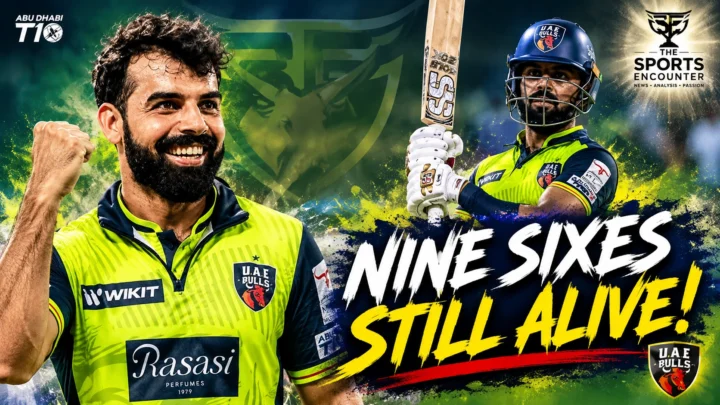
SHARJAH, United Arab Emirates, November 23, 2026: Babar Azam announced his arrival in the International League T20 with a fluent 86 from 51 deliveries, while captain Shadab Khan produced an outstanding spell of 3/18 as Desert Vipers defeated Sharjah Warriorz by six wickets at Sharjah Cricket Stadium on Monday night. Chasing 167, the defending champions reached 167/4 in 17.3 overs, securing their first victory of the 2026–27 season with 15 balls remaining.
The result was shaped by two contrasting collapses in momentum. Sharjah Warriorz looked capable of setting a much bigger target when they reached 102/1 in the 11th over, with Paul Walter dominating the attack. Shadab’s three wickets disrupted the middle order, and Khuzaima Tanveer claimed another three to restrict the hosts to 166. Babar then struck 13 fours and two sixes, using his timing and placement to ensure the Vipers controlled the chase for most of its duration.
Key Takeaways
- Tim Seifert gave Sharjah Warriorz an aggressive opening, scoring 17 from nine deliveries before Tom Curran dismissed him with the score on 34 in the third over.
- A target of 167 at Sharjah could still have been challenging, particularly with Adam Milne, Junaid Siddique and Waqar Salamkheil among the Warriorz’ bowling options.
- After Gous fell at 70/2 in the seventh over, Joe Clarke joined Babar at a stage when the Warriorz still had an opportunity to slow the chase.
- Desert Vipers won their maiden ILT20 championship in January 2026, defeating MI Emirates by 46 runs in the final.
Desert Vipers vs Sharjah Warriorz: Match Summary
| Match Detail | Result |
|---|---|
| Competition | DP World International League T20, Season 5 |
| Match | Fourth match |
| Date | November 23, 2026 |
| Venue | Sharjah Cricket Stadium, UAE |
| Toss | Desert Vipers won and elected to field |
| Sharjah Warriorz | 166 all out in 20 overs |
| Desert Vipers | 167/4 in 17.3 overs |
| Result | Desert Vipers won by six wickets with 15 balls remaining |
| Leading batter | Babar Azam, 86 off 51 balls |
| Leading bowlers | Shadab Khan 3/18; Khuzaima Tanveer 3/31 |
| Leading Warriorz batter | Paul Walter, 75 off 43 balls |
The result gave Desert Vipers a needed response after their opening defeat to MI Emirates, a rematch of the previous season’s final. As defending champions, the Vipers entered Season 5 with established expectations but quickly discovered that defending a title offers little protection against early setbacks.
Story at a glance

Desert Vipers vs Sharjah Warriorz: Match Summary
The result gave Desert Vipers a needed response after their opening defeat to MI Emirates, a rematch of the previous season’s final. As defending champions, the Vipers entered Season 5 with established expectations but quickly discovered that defending a title offers little protection against early setbacks.
Sharjah Warriorz’s Strong Start Disappears After Shadab Khan Enters the Contest
Tim Seifert gave Sharjah Warriorz an aggressive opening, scoring 17 from nine deliveries before Tom Curran dismissed him with the score on 34 in the third over.
Shadab Khan’s 3/18 Was the Most Economical Spell of the Match
Shadab completed four overs for just 18 runs and three wickets, recording an economy rate of 4.50.
Khuzaima Tanveer and Tom Curran Complete the Bowling Job
Shadab was the outstanding bowler statistically, but the Warriorz collapse was sustained by contributions from elsewhere in the attack.
Babar Azam’s 86 Gives the Desert Vipers Chase Its Authority
A target of 167 at Sharjah could still have been challenging, particularly with Adam Milne, Junaid Siddique and Waqar Salamkheil among the Warriorz’ bowling options.
The Sports Encounter examined that challenge in its ILT20 Season 5 preview, which considered how the six franchises were rebuilding their squads and preparing for another demanding tournament.
Sharjah Warriorz’s Strong Start Disappears After Shadab Khan Enters the Contest
Tim Seifert gave Sharjah Warriorz an aggressive opening, scoring 17 from nine deliveries before Tom Curran dismissed him with the score on 34 in the third over.
Walter then took responsibility for the innings. The left-hander struck 11 fours and two sixes during a 43-ball 75, maintaining a strike rate of 174.41.
James Vince provided support with 23 from 22 balls, and the Warriorz reached 102/1 when Vince was dismissed in the 11th over.
At that stage, a total comfortably beyond 180 appeared possible if the middle order could capitalize on Walter’s work.
Instead, Sharjah’s innings unraveled.
Shadab removed Vince, bowled Brandon McMullen for two and then dismissed captain Sikandar Raza for a two-ball duck.
Two of those dismissals came within three deliveries in the 13th over, leaving the Warriorz struggling to rebuild.
Naseem Shah compounded the damage by bowling Walter for 75 in the 14th over, removing the one batter who had consistently found the boundary.
From 102/1, Sharjah lost nine wickets while adding only 64 runs.
How the Warriorz Lost Control
| Match Point | Score | Significance |
|---|---|---|
| 2.2 overs | 34/1 | Seifert dismissed after a quick start |
| 10.2 overs | 102/2 | Shadab removes Vince |
| 12.3 overs | 122/3 | McMullen bowled by Shadab |
| 12.5 overs | 122/4 | Raza bowled by Shadab for a duck |
| 13.5 overs | 128/5 | Walter dismissed by Naseem Shah |
| 17.1 overs | 148/7 | Khuzaima removes George Linde |
| 20 overs | 166 all out | Warriorz fail to bat through without losing their final wicket |
The key phase was the period between 122/2 and 128/5, when Sharjah lost three wickets for six runs.
Shadab’s two rapid breakthroughs created that pressure, and Naseem’s dismissal of Walter ensured the home side could not easily recover.
Shadab Khan’s 3/18 Was the Most Economical Spell of the Match
Shadab completed four overs for just 18 runs and three wickets, recording an economy rate of 4.50.
In a match where Walter scored freely and both teams ultimately exceeded eight runs per over, Shadab’s control was particularly valuable.
His figures included 12 dot balls, meaning half the legal deliveries he bowled produced no runs from the bat or extras.
That pressure translated into wickets rather than merely slowing the scoring.
He dismissed Vince, McMullen and Raza, leaving Sharjah with fewer established batting options during the second half of their innings.
The quality of the spell becomes clearer when compared with the innings’ overall scoring rate. Sharjah averaged 8.30 runs per over; Shadab conceded only 4.50.
Across four overs, that difference represents 15.2 runs fewer than a bowler would have conceded at the Warriorz’ overall innings rate.
This is a contextual calculation, not a claim that Shadab personally prevented exactly 15 runs.
Shadab has produced similarly influential performances for Desert Vipers in another franchise competition. In July, he took 4/13 against San Francisco Unicorns in the Global Super League, helping the Vipers secure a nine-wicket victory.
TSE’s analysis of that Shadab Khan and Zachary Carter performance examined how controlled spin bowling could make a run chase significantly easier.
At Sharjah, the same principle was evident. Shadab did not simply collect wickets. He removed batters whose presence could have made the target substantially more demanding.
Khuzaima Tanveer and Tom Curran Complete the Bowling Job
Shadab was the outstanding bowler statistically, but the Warriorz collapse was sustained by contributions from elsewhere in the attack.
Khuzaima Tanveer finished with 3/31 from four overs. He removed Mohammad Nabi, George Linde and Craig Overton, ensuring the lower order could not produce a sustained recovery.
Tom Curran returned 2/21 from four overs, an economy rate of 5.25, and claimed the important opening wicket of Seifert.
He later bowled Ali Naseer, preventing another potential lower-order contribution.
Together, Shadab and Khuzaima took six wickets for 49 runs from eight overs.
That combination of wickets and control explains why Walter’s 75 did not translate into a match-winning total.
Curran’s contribution was also significant in the wider context of the team’s squad-building decisions. He rejoined the Vipers as a wildcard selection before the tournament, strengthening their seam-bowling options.
The Sports Encounter’s analysis of the six ILT20 wildcard signings identified Curran’s ability to balance the attack and lower order as a potential advantage for the champions.
Against the Warriorz, his four overs were among the most productive and economical of the innings.
Babar Azam’s 86 Gives the Desert Vipers Chase Its Authority
A target of 167 at Sharjah could still have been challenging, particularly with Adam Milne, Junaid Siddique and Waqar Salamkheil among the Warriorz’ bowling options.
But Babar Azam made the chase appear comparatively straightforward.
He scored 86 from 51 balls, hitting 13 fours and two sixes at a strike rate of 168.62.
The innings was notable for how frequently he located the boundary.
His 13 fours produced 52 runs, while the two sixes contributed another 12. That meant 64 of his 86 runs came in boundaries, approximately 74.4% of his total.
It was a performance built around timing, placement and selective aggression rather than an indiscriminate search for sixes.
Fakhar Zaman contributed 15 from 10 deliveries, and the pair added 40 before Junaid Siddique removed Fakhar in the fourth over.
Andries Gous then struck 13 from only five balls, including two sixes, before falling to Waqar Salamkheil.
By the end of the powerplay, Desert Vipers had reached 70/1.
Babar was already on 38, giving the champions a strong platform from which to manage the remaining chase.
His half-century arrived from 31 deliveries, including eight boundaries and a six.
At that point, he had established a scoring tempo that prevented the required run rate from becoming uncomfortable.
Babar Azam’s Innings at a Glance
| Measure | Performance |
|---|---|
| Runs | 86 |
| Balls faced | 51 |
| Fours | 13 |
| Sixes | 2 |
| Strike rate | 168.62 |
| Boundary runs | 64 |
| Share of runs from boundaries | 74.4% |
| Half-century | 31 balls |
| Dismissal | Caught by Walter, bowled by Milne |
Why Babar’s ILT20 Debut Matters Beyond One Match
Babar’s appearance carried unusual interest because it was his first match in the ILT20.
He arrived in the UAE on Sunday, joining a Desert Vipers side already under pressure after losing its opening match.
In an interview published before his debut, Babar discussed representing Pakistan in the UAE tournament and the continuing pressure associated with his career.
His arrival also reinforced a broader trend in franchise cricket: established international batters now provide value through both on-field performance and the attention they bring to a team.
That commercial and sporting relationship was examined in TSE’s analysis of Babar Azam’s appeal to overseas franchise leagues.
The argument is especially relevant in the ILT20, where teams recruit international stars while attempting to build a recognizable identity among local and overseas supporters.
However, Babar’s performance at Sharjah offered something more immediate than name recognition.
He played the innings his team required.
The Vipers needed a convincing response to an opening defeat. Babar supplied the runs, set the scoring tempo and remained at the crease until the target was within reach.
His batting also demonstrated why discussions about his suitability for high-scoring T20 cricket should account for the circumstances and execution of individual innings rather than relying solely on broad labels about batting style.
Against Sharjah, he combined control with a strike rate approaching 169.
Joe Clarke’s Partnership Keeps the Chase Under Control
After Gous fell at 70/2 in the seventh over, Joe Clarke joined Babar at a stage when the Warriorz still had an opportunity to slow the chase.
Instead, the pair added 82 runs for the third wicket.
Clarke contributed 35 from 27 balls, striking two fours and a six.
The partnership was valuable because the two batters did not need to score at identical rates.
Babar remained the principal aggressor, while Clarke ensured the Vipers did not lose momentum through another cluster of wickets.
When Milne removed Clarke in the 16th over, the score had reached 152/3.
Babar fell four deliveries later for 86, leaving the Vipers on 155/4.
For the first time in the chase, Sharjah had taken two wickets in quick succession.
But there were only 12 runs left to score.
Shimron Hetmyer remained unbeaten on four, while Shadab contributed eight not out from five balls, including a six.
The winning runs arrived in the 18th over, completing a chase that had been shaped by Babar’s long occupation of the crease.
Original Analysis: The Difference Between the Two Innings Was Wicket Preservation
Both sides reached promising positions during their innings.
Sharjah Warriorz were 102/1 after 10.2 overs.
Desert Vipers reached 70/1 after the powerplay and later 152/3 after 15.1 overs.
Yet their innings developed very differently.
Sharjah’s middle order lost wickets too frequently to support Walter’s aggressive batting.
The Vipers, by contrast, allowed Babar and Clarke to construct a substantial third-wicket stand after two early dismissals.
| Key Measure | Sharjah Warriorz | Desert Vipers |
|---|---|---|
| Final total | 166 all out | 167/4 |
| Overs faced | 20 | 17.3 |
| Run rate | 8.30 | 9.54 |
| Highest individual score | Paul Walter, 75 | Babar Azam, 86 |
| Major turning point | Loss of three wickets for six runs | Babar-Clarke 82-run partnership |
| Wickets lost | 10 | 4 |
| Principal advantage | Walter’s early scoring | Higher chase tempo and better wicket preservation |
The Vipers were not simply more aggressive. They were more efficient in distributing the responsibility for scoring.
Fakhar and Gous contributed early acceleration. Babar sustained the innings. Clarke provided partnership stability. Shadab and Hetmyer completed the job.
Sharjah received a magnificent contribution from Walter but too little support after Vince’s dismissal.
The result illustrates a recurring principle in T20 cricket: one individual innings can establish a promising position, but the ability to preserve wickets and maintain partnerships often determines whether that start becomes a winning total.
Complete Sharjah Warriorz Batting Scorecard
| Batter | Dismissal | R | B | 4s | 6s | SR |
|---|---|---|---|---|---|---|
| Tim Seifert (wk) | c Babar Azam b Tom Curran | 17 | 9 | 1 | 1 | 188.88 |
| Paul Walter | b Naseem Shah | 75 | 43 | 11 | 2 | 174.41 |
| James Vince | c Shimron Hetmyer b Shadab Khan | 23 | 22 | 2 | 1 | 104.54 |
| Brandon McMullen | b Shadab Khan | 2 | 6 | 0 | 0 | 33.33 |
| Sikandar Raza (c) | b Shadab Khan | 0 | 2 | 0 | 0 | 0.00 |
| Mohammad Nabi | c Andries Gous b Khuzaima Tanveer | 3 | 8 | 0 | 0 | 37.50 |
| George Linde | c Andries Gous b Khuzaima Tanveer | 14 | 12 | 0 | 1 | 116.66 |
| Craig Overton | c Mujeeb Ur Rahman b Khuzaima Tanveer | 8 | 12 | 1 | 0 | 66.66 |
| Ali Naseer | b Tom Curran | 2 | 5 | 0 | 0 | 40.00 |
| Adam Milne | not out | 2 | 3 | 0 | 0 | 66.66 |
| Junaid Siddique | run out (Hetmyer/Gous) | 1 | 1 | 0 | 0 | 100.00 |
| Extras | 19 (b 4, lb 9, nb 3, w 3) | |||||
| Total | 166 all out (20 overs; 8.30 runs per over) | |||||
Did not bat: Waqar Salamkheil.
Desert Vipers Bowling Figures
| Bowler | Overs | Maidens | Runs | Wickets | Economy |
|---|---|---|---|---|---|
| Naseem Shah | 2.5 | 0 | 31 | 1 | 10.94 |
| Mujeeb Ur Rahman | 4 | 0 | 35 | 0 | 8.75 |
| Tom Curran | 4 | 0 | 21 | 2 | 5.25 |
| Khuzaima Tanveer | 4 | 0 | 31 | 3 | 7.75 |
| Shadab Khan | 4 | 0 | 18 | 3 | 4.50 |
| Mohammad Saleem | 1.1 | 0 | 17 | 0 | 14.57 |
Fall of wickets: 34/1 (Seifert, 2.2), 102/2 (Vince, 10.2), 122/3 (McMullen, 12.3), 122/4 (Raza, 12.5), 128/5 (Walter, 13.5), 137/6 (Nabi, 15.5), 148/7 (Linde, 17.1), 156/8 (Ali Naseer, 18.4), 165/9 (Overton, 19.5), 166/10 (Junaid Siddique, 19.6).
Complete Desert Vipers Batting Scorecard
| Batter | Dismissal | R | B | 4s | 6s | SR |
|---|---|---|---|---|---|---|
| Fakhar Zaman | c Brandon McMullen b Junaid Siddique | 15 | 10 | 2 | 0 | 150.00 |
| Babar Azam | c Paul Walter b Adam Milne | 86 | 51 | 13 | 2 | 168.62 |
| Andries Gous (wk) | b Waqar Salamkheil | 13 | 5 | 0 | 2 | 260.00 |
| Joe Clarke | c Paul Walter b Adam Milne | 35 | 27 | 2 | 1 | 129.62 |
| Shimron Hetmyer | not out | 4 | 7 | 0 | 0 | 57.14 |
| Shadab Khan (c) | not out | 8 | 5 | 0 | 1 | 160.00 |
| Extras | 6 (lb 1, w 5) | |||||
| Total | 167/4 (17.3 overs; 9.54 runs per over) | |||||
Did not bat: Tom Curran, Vriitya Aravind, Mujeeb Ur Rahman, Mohammad Saleem, Khuzaima Tanveer.
Sharjah Warriorz Bowling Figures
| Bowler | Overs | Maidens | Runs | Wickets | Economy |
|---|---|---|---|---|---|
| Adam Milne | 3.3 | 0 | 42 | 2 | 12.00 |
| Mohammad Nabi | 1 | 0 | 11 | 0 | 11.00 |
| Craig Overton | 1 | 0 | 13 | 0 | 13.00 |
| Junaid Siddique | 3 | 0 | 26 | 1 | 8.66 |
| Waqar Salamkheil | 4 | 0 | 26 | 1 | 6.50 |
| George Linde | 3 | 0 | 23 | 0 | 7.66 |
| Sikandar Raza | 1 | 0 | 10 | 0 | 10.00 |
| Ali Naseer | 1 | 0 | 15 | 0 | 15.00 |
Fall of wickets: 40/1 (Fakhar Zaman, 3.5), 70/2 (Andries Gous, 6.1), 152/3 (Joe Clarke, 15.1), 155/4 (Babar Azam, 15.5).
Third-wicket partnership: Babar Azam and Joe Clarke added 82 runs.
What the Result Means for the Desert Vipers’ Title Defense
Desert Vipers won their maiden ILT20 championship in January 2026, defeating MI Emirates by 46 runs in the final.
The title was a major milestone for a franchise that had previously reached the final without securing the trophy.
Their opening defeat in Season 5 therefore created an early test of their ability to respond under a different set of expectations.
At Sharjah, the champions demonstrated two strengths that should remain important as the competition progresses.
First, the bowling attack contains multiple wicket-taking options capable of operating in different phases.
Second, Babar’s inclusion gives the batting lineup another established performer capable of controlling a substantial chase.
Those advantages do not guarantee another championship, particularly with strong opposition across the six-team tournament.
But the victory provides evidence that the Vipers can still combine disciplined bowling with aggressive batting, even after changes to their squad.
The importance of Pakistani players to franchise success has become an increasingly significant theme in the sport. TSE examined that trend in its report on Pakistan cricketers winning titles across overseas T20 competitions.
Shadab’s bowling and Babar’s innings offer another example of experienced Pakistani internationals influencing a franchise result through complementary roles.
What Went Wrong for Sharjah Warriorz?
Sharjah will take encouragement from Walter’s innings, but the result exposes weaknesses that need addressing.
The middle order failed to support a batter who had established a strong platform.
The lower order then struggled to produce enough runs to compensate for the collapse.
With the ball, the Warriorz dismissed Fakhar and Gous during the powerplay, but they could not prevent Babar from maintaining an aggressive scoring rate.
Milne eventually removed both Clarke and Babar, finishing with two wickets, yet conceded 42 runs in 3.3 overs.
Waqar Salamkheil offered greater control with 1/26 from four overs, but the attack as a whole could not generate enough sustained pressure.
For Sharjah, the immediate concern is converting promising positions into complete performances.
Walter’s 75 demonstrated the team’s ability to score quickly. The challenge is creating partnerships around such innings and ensuring the bowling attack has enough runs to defend.
What Happens Next in ILT20 2026?
The fifth season of the International League T20 runs from November 21 to December 20, with 34 matches involving six franchises.
Desert Vipers are scheduled to face Dubai Capitals on November 25 at Dubai International Stadium, while Sharjah Warriorz are due to meet Dubai Capitals on November 27 at Sharjah Cricket Stadium.
The teams are also scheduled to meet again in Sharjah on December 4.
These fixtures give both sides opportunities to build on the lessons from Monday’s contest.
Desert Vipers will want to maintain the balance between attacking batting and economical bowling.
Sharjah Warriorz must improve the resilience of their middle order and prevent opponents from taking control so quickly after an important partnership ends.
Readers can follow the competition through the official ILT20 match center and the tournament’s Season 5 fixture announcement.
For further insight into Babar’s decision to play in the UAE competition, The National’s interview published ahead of his debut examines the personal and professional expectations surrounding his latest franchise assignment.
Continue the ILT20 Story



Frequently Asked Questions
Who won Desert Vipers vs Sharjah Warriorz on November 23, 2026?
Desert Vipers won by six wickets, reaching 167/4 in 17.3 overs after dismissing Sharjah Warriorz for 166.
How many runs did Babar Azam score?
Babar Azam scored 86 from 51 deliveries, hitting 13 fours and two sixes at a strike rate of 168.62.
How many wickets did Shadab Khan take?
Shadab Khan took three wickets for 18 runs from four overs, dismissing James Vince, Brandon McMullen and Sikandar Raza.
Who was Sharjah Warriorz’s leading run-scorer?
Paul Walter scored 75 from 43 balls, including 11 fours and two sixes.
How many wickets did Khuzaima Tanveer take?
Khuzaima Tanveer claimed three wickets for 31 runs from four overs.
How quickly did Desert Vipers complete the chase?
The Vipers reached their target with 15 deliveries remaining, winning in 17.3 overs.
Who captained Desert Vipers?
Shadab Khan captained the Vipers, contributing 3/18 with the ball and eight not out with the bat.
Who captained Sharjah Warriorz?
Sikandar Raza captained Sharjah Warriorz but was dismissed for a two-ball duck.
Was this Babar Azam’s first ILT20 match?
Yes. The Sharjah fixture marked Babar’s debut in the International League T20.
Who are the defending ILT20 champions?
Desert Vipers won Season 4 in January 2026 and entered the 2026–27 tournament as defending champions.
Final Assessment: Shadab Created the Opportunity, Babar Completed the Response
Sharjah Warriorz had enough early momentum to set a challenging target, but their middle-order collapse turned a promising innings into a manageable total.
Shadab Khan was central to that change, taking three wickets while conceding only 18 runs.
Khuzaima Tanveer and Tom Curran then ensured the lower order could not recover.
Babar Azam transformed that bowling advantage into a decisive result, scoring 86 from 51 balls and maintaining control through the most important phase of the chase.
Desert Vipers secured their first victory of the season through contributions from different departments, demonstrating the balance that helped make them champions earlier in the year.
For Sharjah Warriorz, Walter’s 75 deserved a better outcome. Their inability to build around it was ultimately the difference between a potentially imposing target and a six-wicket defeat.
Babar Azam
- Classy Babar Azam and Disciplined Shadab Khan Get Desert Vipers Off the Mark in ILT20
- Mohammad Abbas Ends Pakistan’s Two-Year Wait for Home Test Series Triumph
- Pakistani Bowlers Rock Sri Lanka Before Babar’s Blunder Revives Rawalpindi Test
- This Too Shall Pass: When Babar Azam’s Words for Virat Kohli Came Back to Save Him
- Pakistan vs Sri Lanka ODI Tri-Series Final: Babar Azam Faces His Biggest Test as Sri Lanka’s Fearless Batting Meets Pakistan’s Bowling Firepower