Connect with us
Elma Victors

Published

on

BRUSSELS: The Wanda Diamond League season ended in Brussels on Saturday night, but very little about the final felt like an ending.

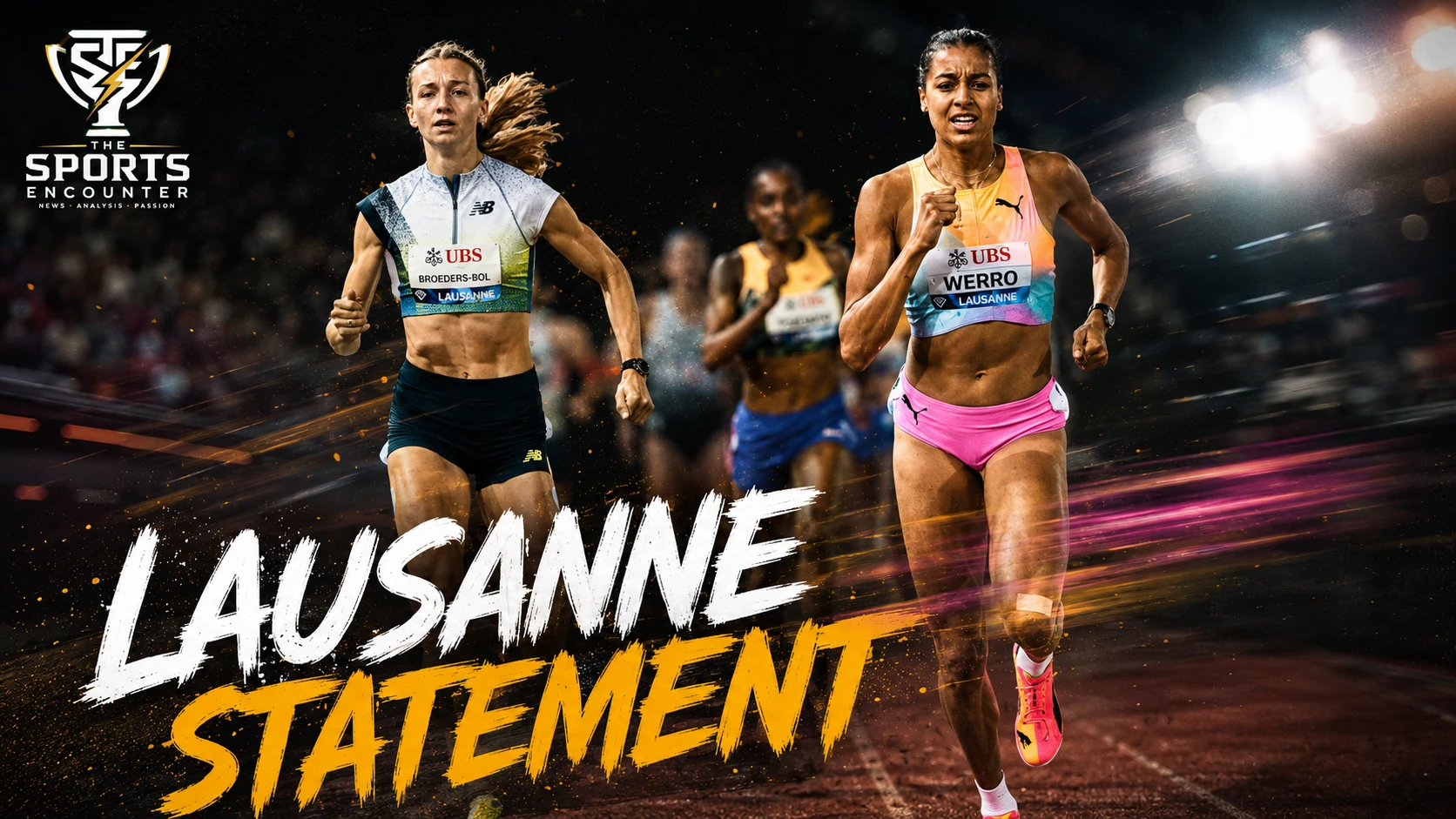
Audrey Werro needed almost every meter of the home straight to hold off Femke Broeders-Bol in a women’s 800m race separated by six hundredths of a second. Kenny Bednarek matched the fastest 200m time in the world this year. Masai Russell followed her world record with another title. Alison dos Santos looked almost casual while destroying a 40-year-old meeting record. Birhanu Balew produced the fastest men’s 5,000m of 2026, Klaudia Kazimierska rewrote the Polish record books, and Rajindra Campbell crossed the 23-meter barrier in the shot put.

Brussels crowned the final group of Diamond League champions at the 50th Allianz Memorial Van Damme, but the more revealing story was what happened to the competitive landscape heading into the inaugural World Athletics Ultimate Championship in Budapest from September 11 to 13.

Several athletes who were already expected to contend in Hungary did more than confirm form. They sharpened rivalries, raised performance standards and made Budapest considerably harder to predict.

That is the real legacy of this Diamond League Final.

The closing night did not settle athletics’ biggest late-season questions. It made them better.

Diamond League Final 2026 Closing Night: Key Results

Event Winner Performance Significance
Women’s 800m Audrey Werro 1:54.75 Diamond League title, meeting record
Men’s 200m Kenny Bednarek 19.62 Equaled 2026 world lead
Women’s 100m hurdles Masai Russell 12.20 Meeting record
Men’s 400m hurdles Alison dos Santos 46.70 Meeting record
Men’s 5,000m Birhanu Balew 12:45.70 World lead, Asian record
Women’s 1,500m Klaudia Kazimierska 3:54.04 World lead, Polish record, meeting record
Men’s shot put Rajindra Campbell 23.08m World lead, meeting record
Women’s high jump Eleanor Patterson 2.01m First Diamond League title
Women’s pole vault Hana Moll 4.91m Personal best, Diamond League title
Women’s 100m Tina Clayton 10.93 Only sub-11 performance in the final
Women’s long jump Monae’ Nichols 6.91m Diamond League title
Men’s 3,000m steeplechase Gemechu Godana 8:08.67 Beat Soufiane El Bakkali
Women’s javelin Yan Ziyi 68.42m Diamond League title
Men’s javelin Rumesh Tharanga Pathirage 89.04m Sri Lanka’s first Diamond Trophy

The official World Athletics closing-night report confirmed seven meeting records on Saturday, while the Wanda Diamond League’s complete champions list shows 32 athletes leaving Brussels with Diamond Trophies across the two-day final.

Audrey Werro Wins by 0.06 Seconds, but the 800m Story Is Bigger Than Brussels

The women’s 800m has become one of the most compelling events in world athletics because nobody at the front can afford a tactical error anymore.

Werro took responsibility for the race in Brussels. Rather than sitting behind the pace and waiting for a final-lap move, the 22-year-old Swiss athlete committed herself near the front and tried to make the closing stages a test of strength.

Broeders-Bol stayed close enough to make that decision uncomfortable.

The former 400m hurdles specialist attacked down the home straight, gradually reducing Werro’s advantage until the finish became almost impossible to call in real time.

Werro crossed in 1:54.75.

Broeders-Bol followed in 1:54.81.

Six hundredths separated the Diamond Trophy from second place.

The result also broke Pamela Jelimo’s long-standing Brussels meeting record and gave Werro another major title in a season that has moved her from elite prospect to one of the central figures in women’s middle-distance running.

Werro’s 2026 progression has changed expectations around the 800m

The Sports Encounter has tracked that transformation throughout the European summer.

At the European Championships in Birmingham, Werro survived a dramatic semifinal fall and was reinstated after review, a sequence covered in our analysis of the controversial 800m semifinal.

Less than 24 hours later, she beat Olympic champion Keely Hodgkinson in a championship-record 1:54.81 to win European gold. Our Werro-Hodgkinson final analysis argued that the performance mattered because Werro had proved her raw speed could survive championship pressure.

Zurich then moved the discussion somewhere else entirely.

Werro ran 1:53.70 at the Weltklasse meeting on August 27, lowering her Swiss record and moving within 0.42 seconds of Jarmila Kratochvílová’s 1:53.28 world record from 1983.

That performance formed part of an extraordinary meeting covered in our complete Weltklasse Zurich 2026 review.

A world record that had spent decades looking disconnected from modern women’s 800m running suddenly looked visible again.

Broeders-Bol keeps getting closer

Werro’s victory should not obscure the other half of this rivalry.

Broeders-Bol moved into the 800m only this year after building her career as one of the greatest 400m hurdlers of her generation.

She is already running 1:54 territory consistently.

In Zurich, Broeders-Bol clocked 1:54.71 to establish a Dutch record. The Sports Encounter’s analysis of that breakthrough identified the remaining challenge clearly: she was already fast enough to contend with almost anyone, but still needed to convert elite performances into major victories.

Brussels produced the same tension.

She did almost everything required.

Werro still found six hundredths more.

Budapest offers another immediate opportunity, where World Athletics expects Werro, Broeders-Bol and Olympic champion Hodgkinson to be among the leading contenders.

Kenny Bednarek Runs 19.62 Again and Sends a Clear Message to Budapest

Conditions were hardly designed for sprinting history.

The temperature sat around 16 degrees Celsius, and Bednarek later said he had also been dealing with sickness.

He still ran 19.62.

That time matched the world-leading performance he produced in Zurich the previous week rather than establishing a new world lead, an important distinction when assessing just how consistent his current level has become.

Bednarek separated from the field coming off the bend and never allowed the final to develop into a close contest.

South Africa’s Sinesipho Dambile followed in 19.89, while Zimbabwe’s Makanakaishe Charamba ran 19.99.

Olympic champion Letsile Tebogo finished outside the top three.

Repeating 19.62 may matter more than running it once

Zurich could have been interpreted as the perfect race arriving on the perfect night.

Brussels removes some of that possibility.

Bednarek has now produced the fastest 200m mark in the world twice in consecutive Diamond League appearances.

Our Zurich analysis noted that his original 19.62 was only 0.05 outside his personal best.

Repeating the number one week later suggests he is not merely capable of accessing that level occasionally. He is operating around it.

That distinction matters enormously with the Ultimate Championship approaching.

Bednarek himself believes a significant personal best may still be available if execution improves in Budapest.

Masai Russell Does Not Need Another World Record to Look Dominant

Nine days before Brussels, Masai Russell produced one of the defining performances of the 2026 season.

She ran 12.09 in Zurich to break Tobi Amusan’s women’s 100m hurdles world record.

The Sports Encounter’s deep dive into Russell’s 12.09 examined how three hundredths of a second transformed a record that had stood since 2022.

Brussels did not demand another historic time.

Russell won anyway.

Her 12.20 established a meeting record and placed her comfortably ahead of Bahamian Devynne Charlton, who finished second in 12.33.

Russell’s decisive move came late, particularly over the final two barriers, where she separated from Charlton and converted a close contest into a clear victory.

The pressure around Russell has changed

The difference between being a world-record challenger and world-record holder is psychological as much as statistical.

Russell no longer enters races trying to reach someone else’s standard.

Everyone else is chasing hers.

That changes how rivals respond when she starts well and changes how every 12.2-second performance is judged.

A 12.20 meeting record might have been the headline performance of an ordinary Diamond League season.

For Russell, it came nine days after 12.09.

Her own standard has moved so quickly that an exceptional performance now looks almost routine.

Alison dos Santos Makes 46.70 Look Easier Than It Should

The men’s 400m hurdles experienced a similar distortion of expectations.

Dos Santos broke Karsten Warholm’s world record in Zurich with 45.80, a performance examined in our analysis of how the Brazilian moved beyond the Warholm era.

In Brussels, he ran 46.70.

That was almost a second slower than Zurich.

It was still fast enough to destroy a meeting record that had stood for exactly 40 years.

Andre Phillips’ previous Brussels standard of 47.51 dated to 1986.

Dos Santos beat it by 0.81 seconds.

He also finished 1.33 seconds ahead of his nearest challenger, Trevor Bassitt.

The most worrying detail for his rivals was how controlled it looked

Dos Santos did not appear to empty himself over the final meters.

He moved through the race with enough control to suggest Budapest rather than Brussels remains the bigger target.

That becomes particularly interesting because the Ultimate Championship is designed to put the strongest available athletes into compact, high-pressure fields without the long preliminary structure of a conventional global championship.

Warholm’s absence from Brussels removed the immediate rematch after losing his world record.

Budapest should restore the wider championship tension.

Birhanu Balew Turns the Last Lap Into an Asian Record

The men’s 5,000m was not won through gradual attrition.

Birhanu Balew changed the race late.

The Bahraini accelerated brutally over the closing lap and separated from a field that had remained tightly packed deep into the contest.

He finished in 12:45.70.

The performance did three things at once:

  • set the fastest men’s 5,000m time in the world this year;
  • established an Asian record;
  • gave Balew the Diamond League title.

Burundi’s Egide Ntakarutimana finished second in 12:46.73, a national record, while Kenya’s Cornelius Kemboi took third in a personal-best 12:47.29.

The depth was extraordinary. World Athletics reported that the top six runners all finished under 12:50.

Budapest will test Balew differently

The Ultimate Championship’s men’s 5,000m will be a straight final.

There is no qualifying round in which athletes can conserve energy or study the field under championship conditions.

That may suit a runner who has just shown he can produce a devastating closing lap after staying attached to elite pace.

Klaudia Kazimierska Finds the Race She Had Been Waiting For

Kazimierska arrived in Brussels without a victory this season.

She left with the fastest women’s 1,500m time in the world in 2026.

The Polish athlete ran 3:54.04, almost two seconds faster than her previous personal best.

It also broke Poland’s national record and erased the Brussels meeting record of 3:54.75 that Faith Kipyegon had set in 2024.

Dorcus Ewoi followed in a personal-best 3:54.72, while Jessica Hull ran 3:54.73.

Eight women finished under four minutes.

The performance was not simply a fast time

Kazimierska described a season in which small technical and training pieces had gradually started fitting together.

Brussels was the first night when the full picture appeared at once.

The result also gave Poland one of its most significant Diamond League moments in years and adds another athlete arriving at Budapest with confidence peaking at exactly the right time.

Rajindra Campbell Crosses the 23-Meter Line

Shot putters often talk about 23 meters as a psychological frontier.

Rajindra Campbell crossed it when it mattered most.

The Jamaican produced 23.08m on his sixth and final attempt.

The throw established a world lead, broke the Brussels meeting record and delivered the Diamond League title.

It also moved Campbell significantly closer to Ryan Crouser’s world record of 23.56m.

Campbell has spoken openly about the gap that remains between himself and some of the event’s physically strongest athletes, particularly in the weight room.

That may actually make 23.08 more interesting.

If his technical efficiency is already producing throws beyond 23 meters while he still identifies areas for major physical development, the ceiling may not yet be obvious.

Eleanor Patterson Beats Mahuchikh Again

The women’s high jump produced another result that could matter in Budapest.

Eleanor Patterson was the only athlete to clear 2.01m.

Olympic champion Yaroslava Mahuchikh cleared 1.99m for second, while fellow Australian Nicola Olyslagers finished third at 1.95m.

It was Patterson’s first overall Diamond League title.

More importantly, it was her second consecutive victory over Mahuchikh after also defeating her in Heilbronn shortly before Brussels.

That does not erase Mahuchikh’s championship pedigree.

It does mean the hierarchy entering the final global event of the season is less predictable than it looked earlier in the summer.

Hana Moll Reaches a New Level in the Pole Vault

Hana Moll cleared 4.91m to win the women’s pole vault, improving her personal best and claiming the Diamond Trophy.

Angelica Moser finished second at 4.80m, while Tina Sutej cleared 4.70m for third.

World champion Katie Moon also cleared 4.70m but finished fourth on countback.

Moll’s victory fits one of the wider patterns visible across the 2026 Diamond League: established champions remain dangerous, but younger athletes are increasingly arriving with performances that demand immediate inclusion in global-title discussions.

Tina Clayton Wins a 100m Final Nobody Controlled Beforehand

Jamaica’s Tina Clayton was the only woman to break 11 seconds in the 100m final.

She won in 10.93 ahead of European champion Amy Hunt and American star Sha’Carri Richardson.

The result matters because the women’s sprint picture has remained fluid throughout 2026.

Clayton’s ability to execute cleanly in a final where several high-profile athletes were present gives Jamaica another major championship option heading into the season finale.

Gemechu Godana Beats El Bakkali in the Steeplechase

The men’s 3,000m steeplechase eventually became a direct confrontation between Morocco’s Soufiane El Bakkali and Ethiopia’s Gemechu Godana.

Godana increased the pressure on the final lap and El Bakkali could not answer.

The 20-year-old Ethiopian won in 8:08.67, with El Bakkali second in 8:10.03.

For an athlete of Godana’s age, defeating one of the most accomplished steeplechasers of the modern era is more significant than another strong time.

It changes expectations.

Yan Ziyi and Rumesh Pathirage Add More History in the Javelin

China’s Yan Ziyi continued one of the most remarkable teenage seasons in field events by winning the women’s javelin with 68.42m.

Olympic champion Haruka Kitaguchi produced her strongest throw in the final round but could not catch her.

Yan finished the Diamond League season as one of its youngest champions.

In the men’s event, Rumesh Tharanga Pathirage won with 89.04m after dominating much of the Diamond League campaign.

His victory delivered Sri Lanka’s first Diamond Trophy.

The significance goes beyond a single event. Diamond League champions are increasingly coming from a broader range of nations, one of the clearest indicators of how globally competitive several athletics disciplines have become.

Twenty-One First-Time Champions Tell a Bigger Story

The 2026 Diamond League Final produced 32 champions across its two days in Brussels.

Twenty-one were first-time winners.

That is a remarkable turnover rate in a series traditionally associated with established stars defending titles across several seasons.

Werro, Russell, Campbell, Moll, Patterson and Kazimierska were among athletes adding their names to the champions list, while Bednarek and Dos Santos regained titles they had previously won.

The result is a sport entering Budapest with fewer predictable hierarchies than World Athletics could reasonably have hoped for when it designed the Ultimate Championship.

Brussels Was the Final Diamond League Meeting, but Budapest Is Now the Real Finish Line

The inaugural World Athletics Ultimate Championship runs from September 11 to 13 in Budapest.

World Athletics has built the event around Olympic champions, world champions, Diamond League winners and the year’s strongest performers.

The format is deliberately compressed.

Many track events begin directly at the semifinal stage. The 1,500m and 5,000m are straight finals. Field events also move directly into finals. Approximately 400 athletes are expected across 28 events.

The total prize pool is $10 million, the richest single-event purse in track and field history, with individual champions earning $150,000.

The Sports Encounter explored the format in detail in our guide to the Ultimate Championship’s experimental rules.

The competition is supposed to remove the comfortable stages from elite athletics.

Brussels has ensured many of the athletes arriving there will also carry the best form of their seasons.

The Women’s 800m May Be Budapest’s Defining Race

No event illustrates the transition from Diamond League to Ultimate Championship better.

Werro has the fastest time among the leading women this summer and now owns the Diamond Trophy.

Broeders-Bol keeps lowering her own standard and keeps getting closer to beating her.

Hodgkinson remains the Olympic champion and an athlete capable of producing championship races without needing paced conditions.

The Sports Encounter had already examined how the rivalry changed when Hodgkinson withdrew from Zurich and Werro became the center of the late-season 800m story.

Since then, Werro has run 1:53.70 and beaten Broeders-Bol by six hundredths in Brussels.

There is no obvious reason to expect Budapest to be calmer.

The Hurdles Have Two World-Record Holders Arriving as Diamond League Champions

Russell owns the women’s 100m hurdles world record.

Dos Santos owns the men’s 400m hurdles world record.

Both won in Brussels.

Both set meeting records.

Neither needed to approach the absolute limit of the historic performances they produced in Zurich.

That combination makes their Budapest races particularly interesting.

World records prove maximum capability.

Diamond League titles one week later prove the athletes can come back and win without requiring another perfect night.

Championship sport often rewards the second quality more consistently than the first.

Bednarek May Be Entering Budapest With the Most Repeatable Sprint Form

A single 19.62 can happen when conditions, execution and form align.

Two consecutive 19.62 performances begin to describe an athlete’s operating level.

Bednarek has now done it in Zurich and Brussels.

Tebogo remains an Olympic champion with a significantly faster personal best, and other elite sprinters will arrive with championship credentials.

Bednarek’s advantage is simpler.

He is currently reproducing his best 2026 speed every time he races.

That may be the strongest form indicator available heading into Budapest.

What the Diamond League Final Really Told Us

The obvious way to review Brussels is through trophies.

Werro won one.

Bednarek won one.

Russell, Dos Santos, Campbell, Kazimierska and the rest left with the same reward.

The more valuable information came from how they won.

Werro survived pressure from an athlete who refuses to stop improving.

Bednarek repeated the world lead.

Russell followed a world record with another technically strong championship race.

Dos Santos demonstrated that even his controlled performances are now historically fast.

Balew finished a 5,000m faster than anyone else this year.

Kazimierska produced the race of her career at exactly the moment the international season reached its final phase.

Campbell moved beyond a barrier that matters deeply inside his event.

These are not simply results from the final Diamond League weekend.

They are evidence about what might happen seven days later.

The Sports Encounter Verdict

Brussels was supposed to close the 2026 Diamond League season.

Instead, it functioned as the strongest possible advertisement for what comes next.

Audrey Werro and Femke Broeders-Bol have turned the women’s 800m into a rivalry where six hundredths can decide a season. Werro’s 1:53.70 from Zurich has also moved one of athletics’ oldest world records from historical curiosity into an active conversation.

Kenny Bednarek has repeated 19.62 in consecutive major meetings and now reaches Budapest with perhaps the most stable top-end 200m form in the world.

Masai Russell and Alison dos Santos have already rewritten their events’ record books and still looked strong enough in Brussels to suggest the celebrations after Zurich did not interrupt their competitive sharpness.

Balew, Kazimierska and Campbell arrive with new world-leading marks. Patterson has beaten Mahuchikh twice in succession. Godana has defeated El Bakkali. Moll has raised her personal best. Clayton has another major sprint title.

That is what made the Diamond League Final consequential.

The trophies tell us who won the season series.

The performances tell us the outdoor season is not really finished yet.

Budapest will decide whether Brussels was a culmination or simply the final warning.

Frequently Asked Questions

Who won the women’s 800m at the 2026 Diamond League Final?

Audrey Werro of Switzerland won in 1:54.75, beating Femke Broeders-Bol of the Netherlands by 0.06 seconds. Broeders-Bol finished in 1:54.81.

What is Audrey Werro’s personal best in the 800m?

Werro’s personal best is 1:53.70, set at the Weltklasse Zurich meeting on August 27, 2026.

How close is Audrey Werro to the women’s 800m world record?

Jarmila Kratochvílová’s world record is 1:53.28. Werro’s 1:53.70 personal best is 0.42 seconds slower.

What did Kenny Bednarek run in Brussels?

Bednarek won the men’s 200m in 19.62 seconds. The performance equaled the world-leading time he had already run in Zurich the previous week.

Did Masai Russell break another world record in Brussels?

No. Russell won the women’s 100m hurdles in a meeting-record 12.20. She had broken the world record nine days earlier in Zurich with 12.09.

What did Alison dos Santos run in the Diamond League Final?

Dos Santos won the men’s 400m hurdles in 46.70, breaking the Brussels meeting record that had stood for 40 years.

Who produced world-leading performances in Brussels?

Among the major world-leading results were Birhanu Balew’s 12:45.70 in the men’s 5,000m, Klaudia Kazimierska’s 3:54.04 in the women’s 1,500m and Rajindra Campbell’s 23.08m in the men’s shot put. Kenny Bednarek equaled his existing world lead of 19.62 in the 200m.

How many athletes won Diamond League titles in 2026?

Thirty-two athletes were crowned Wanda Diamond League champions across the two-day final in Brussels.

When is the World Athletics Ultimate Championship?

The inaugural World Athletics Ultimate Championship takes place in Budapest, Hungary, from September 11 to 13, 2026.

How much prize money is available at the Ultimate Championship?

World Athletics has announced a total prize pool of $10 million, with individual event winners receiving $150,000.

Elma Victors is a London-based accounting professional and sports writer covering cricket, soccer, tennis, major international competitions, and the business and commercial side of sport. Her analytical background shapes a detail-oriented approach to sports journalism, with particular attention to statistics, performance trends, financial developments, sponsorships, contracts, and the wider context behind major sporting stories. At The Sports Encounter, Elma contributes match reports, breaking news, player-focused features, tournament analysis, and stories examining the commercial forces influencing modern sport. Her work combines clear reporting with statistical context and a practical understanding of how decisions made away from the field can affect teams, athletes, competitions, and supporters. Based in London, she brings both a global sports perspective and an analytical mindset to coverage across major leagues, tournaments, and international events.

Athletics

Tara Davis-Woodhall Crash Puts Budapest 2026 Return in Doubt as Ultimate Championship Faces Its First Human Test

Olympic and world long jump champion Tara Davis-Woodhall is unsure whether she will compete at the 2026 World Athletics Ultimate Championship after a car crash left her with a severe concussion and unable to resume normal training.

Luke Edelman The Sports Encounter

Published

on

Tara Davis-Woodhall pictured in a dramatic athletics graphic as she faces a late decision over competing at the 2026 World Athletics Ultimate Championship after a car crash and severe concussion.

Tara Davis-Woodhall has spent 2026 looking almost untouchable in the long jump. A car accident has now created the one obstacle no competition format, ranking advantage or training plan can solve quickly.

The Olympic and world champion is uncertain whether she will compete at the inaugural World Athletics Ultimate Championship in Budapest from September 11 to 13 after suffering a severe concussion in a head-on collision while driving to training.

Davis-Woodhall has said she avoided life-threatening injuries but has been unable to train since the accident and is still dealing with the mental effects of what happened.

That leaves one of the championship’s biggest stars facing a decision with unusually complicated stakes.

She is not simply a leading medal contender.

Davis-Woodhall is ranked No. 1 in the women’s long jump, owns the 2026 world-leading mark of 7.20 meters and had been selected by World Athletics as one of the faces of its new championship.

She is also serving as the event’s lead content creator, a role specifically designed to help the Ultimate Championship connect athletes more directly with younger audiences.

The collision therefore arrives at a particularly difficult moment for both athlete and event.

World Athletics wants Budapest to feel different from a conventional global championship. Davis-Woodhall was supposed to embody that difference by competing at the highest level while also helping tell the story of the event from inside the athlete experience.

Now the first major test of that athlete-first philosophy is whether everyone involved can accept that the right decision may be for one of the championship’s most marketable stars to step away.

By The Sports Encounter Editorial Desk
Published: September 2, 2026
Updated: September 2, 2026

Tara Davis-Woodhall Car Crash: What We Know

Detail Current Information
Athlete Tara Davis-Woodhall
Age 27
Event Women’s long jump
Injury Severe concussion
How accident occurred Head-on collision while driving to training
Training status Has not trained since the crash
Budapest status Still undecided
Ultimate Championship dates September 11-13, 2026
2026 world ranking No. 1 women’s long jump
2026 best 7.20m
Ultimate Championship role Competitor and lead content creator

Davis-Woodhall said the crash occurred when another vehicle turned into her path as she entered a parking area on the way to a training session.

Both vehicles were reportedly traveling at relatively low speed, yet the collision was still strong enough to total both cars and leave Davis-Woodhall with a severe concussion.

She has emphasized that she did not suffer life-threatening injuries.

That distinction should not minimize the seriousness of the concussion.

Concussion recovery cannot be reduced to whether an athlete can walk, jog or look physically normal.

Davis-Woodhall herself has described the mental side of the recovery as the more difficult part.

She has been working with doctors and physiotherapists but has not resumed normal training.

With Budapest only days away, she has said the decision will be taken day by day.

The Timing Could Hardly Be Worse

Davis-Woodhall was approaching Budapest in some of the strongest form of her career.

World Athletics lists her as the current No. 1 women’s long jumper, and her 7.20-meter performance at the Los Angeles Grand Prix in June remains the best legal mark of the 2026 season. Her wind-assisted 7.25m at the same competition demonstrated that the 7.20 performance was not an isolated jump. World Athletics’ official report from Los Angeles confirmed that the 7.20m jump improved her outdoor personal best and moved her equal 19th on the world all-time list.

Davis-Woodhall said this week that she felt as fast and strong as she had ever been before the accident.

That makes the interruption especially cruel from a sporting perspective.

Elite jumping programs are built around timing.

Speed on the runway, takeoff mechanics, strength work, nervous-system freshness and competition rhythm are all managed toward a target date.

A major championship that arrives immediately after an enforced period without training disrupts all of those elements simultaneously.

The Sports Encounter has spent much of the summer tracking how small changes in timing and preparation can decide elite athletics.

Our coverage of Weltklasse Zurich’s extraordinary night of world records and championship-level performances showed how athletes such as Mondo Duplantis, Masai Russell and Alison dos Santos have been sharpening their form specifically toward Budapest.

Davis-Woodhall had been doing the same.

The crash interrupted that process at the worst possible point.

Budapest Was Supposed to Be the Next Showcase of Davis-Woodhall’s Peak

The long jump field in Budapest was already shaping up as one of the clearest opportunities for World Athletics to showcase its new championship concept.

Davis-Woodhall was expected to arrive as Olympic champion, world champion, world No. 1 and owner of the year’s best jump.

That is exactly the type of athlete the Ultimate Championship was designed around.

World Athletics has promoted the event as a meeting point for Olympic champions, world champions, Diamond League winners and the year’s best-ranked performers.

The Sports Encounter examined the format in detail when World Athletics unveiled its radical new Ultimate Championship rules.

The championship compresses elite athletics into three evenings, uses smaller fields, introduces new competition mechanisms and offers the largest prize pool ever seen in track and field.

Field events will be contested as straight finals.

That makes every jump more important.

There is less room to build gradually into a championship.

Athletes have to arrive ready.

That makes Davis-Woodhall’s lost training time especially relevant if she does attempt to compete.

The $10 Million Ultimate Championship Raises the Stakes

The inaugural event carries a record $10 million prize fund.

Individual champions will receive $150,000, the largest first-place prize in the sport’s championship structure.

Second place earns $75,000, while third is worth $40,000.

The original World Athletics announcement described the competition as a major attempt to create a premium season-ending championship in years without an Olympic Games or World Championships.

Money matters.

For Davis-Woodhall, though, the decision cannot sensibly be reduced to prize money.

No athlete preparing for a championship wants to surrender an opportunity worth $150,000.

No reigning champion wants to withdraw while believing she might still be capable of winning.

Competitive instinct creates its own pressure.

The more important question is whether competing is medically appropriate.

That answer belongs to Davis-Woodhall and her medical team, not the prize structure, television schedule or promotional needs of the championship.

This Is Where the Ultimate Championship’s Athlete-First Promise Gets Tested

World Athletics has spent months emphasizing that Budapest will be built around athletes differently.

Competitors will receive greater access to their own footage.

They will have more control over digital storytelling.

Media Day has been redesigned.

There will be special family access.

There will be athlete-led entertainment and new commercial opportunities.

World Athletics even redesigned the traditional medal ceremony concept for the event.

Davis-Woodhall’s lead content-creator role sits directly inside that philosophy.

The official announcement naming her an Ultimate Star praised her ability to combine elite performance with authentic athlete-led storytelling.

That makes her current situation an uncomfortable but important test.

An athlete-first championship has to remain athlete-first when the athlete may not be able to compete.

The commercial logic of wanting Davis-Woodhall in Budapest is obvious.

The sporting logic of wanting the world’s top-ranked jumper is equally obvious.

Neither should outweigh medical readiness.

Davis-Woodhall’s Role Was Bigger Than the Long Jump

The collision also affects one of the event’s central marketing experiments.

Davis-Woodhall was not simply invited to appear in promotional videos.

World Athletics gave her a formal storytelling role as lead content creator.

That reflects a broader shift in how athletics is trying to market itself.

For decades, many athletes became visible to mainstream audiences only during Olympic Games or World Championships.

Social media has changed that relationship.

Athletes can now build their own audiences, tell their own stories and create commercial value independent of the traditional broadcast cycle.

Davis-Woodhall is particularly effective at that.

World Athletics specifically selected her because her personality and digital reach give the championship a way to connect sport and entertainment without removing the seriousness of competition.

The Sports Encounter has been tracking this athlete-centered direction throughout the summer.

Our report on new camera guidelines for female athletes at the European Championships examined how broadcasters are increasingly being asked to consider athlete dignity and agency alongside traditional production goals.

The Ultimate Championship moves that idea further by giving athletes more direct control over content.

Davis-Woodhall was supposed to become one of its clearest examples.

The Long Jump Field Changes Immediately If She Withdraws

Any Davis-Woodhall withdrawal would materially alter the women’s long jump.

The American owns the leading legal mark of the season at 7.20m.

Italy’s Larissa Iapichino is next on the 2026 world list at 7.12m.

Alyssa Jones has jumped 7.09m, while Malaika Mihambo remains one of the most experienced championship performers in the field.

The difference between facing Davis-Woodhall and competing without her is significant.

A 7.20m athlete changes the psychology of a final.

Competitors know that a jump around 7.00m may not be enough.

They may need to attack the board more aggressively.

They may take greater technical risk.

Remove that benchmark and the competition becomes more open.

This is similar to what The Sports Encounter has observed elsewhere in field events this season.

Our analysis of Mondo Duplantis and Emmanouil Karalis pushing each other beyond 6.20 meters in Zurich showed how one exceptional athlete can change the behavior of everyone around him.

Davis-Woodhall has become that athlete in the women’s long jump.

Budapest Was Already Building Toward a High-Level Field-Event Showcase

The inaugural championship arrives at the end of a remarkable summer for field events.

Duplantis has continued operating at heights that would have seemed extraordinary only a few years ago.

Karalis has closed the gap.

Miltiadis Tentoglou won another major long jump title in Birmingham.

The men’s long jump at the European Championships became another example of how championship experience can matter even when several athletes arrive with similar physical capacity.

The Sports Encounter’s European Athletics Day 2 coverage examined Tentoglou’s fourth consecutive European crown and the pressure created by elite field-event consistency.

Davis-Woodhall was supposed to bring a similar sense of inevitability to Budapest.

Her participation is now uncertain.

The field will prepare for both possibilities.

Her 7.20m Season Has Already Changed the Standard

Whatever happens in Budapest, Davis-Woodhall’s 2026 season has already moved the women’s long jump forward.

The 7.20m mark in Los Angeles established a new personal best and the top legal distance of the year.

She also produced a wind-assisted 7.25m in the same competition.

Those numbers matter because women’s long jump has spent several seasons searching for consistent seven-meter performers.

Davis-Woodhall has increasingly made that territory normal.

The most dangerous version of her game combines elite runway speed with a takeoff that allows her to preserve horizontal velocity rather than sacrificing it for height.

That is why her comment about being faster and stronger than ever before the accident deserves attention.

She believed her physical development was still moving forward.

The crash has interrupted that progression.

It does not erase it.

The Mental Side of the Crash Should Not Be Treated as Secondary

Davis-Woodhall has been unusually open about the mental impact of the collision.

That matters because athletes are often expected to frame recovery entirely through physical milestones.

Can she run?

Can she lift?

Can she jump?

Can she compete?

A severe concussion complicates that progression.

An athlete may look physically capable while still experiencing symptoms that affect concentration, reaction, confidence, sleep or emotional stability.

Davis-Woodhall has said the mental side remains difficult even though she is physically okay in a broader sense.

That should be taken seriously.

Long jump is a high-speed technical event.

Athletes sprint down a runway at near-maximal velocity and must coordinate takeoff position precisely at the board.

Any hesitation or compromised concentration can affect performance.

There is no responsible way to predict from outside whether Davis-Woodhall will be ready.

Her doctors and recovery response over the coming days will determine that.

The Decision Does Not Need to Be Heroic

Elite sport often rewards narratives of competing through adversity.

Sometimes those stories are genuinely inspiring.

Sometimes the wiser decision is not competing.

Davis-Woodhall has nothing to prove about her courage.

She has already won the Olympic title.

She is the reigning world champion.

She leads the world this year.

A decision to withdraw would not diminish any of those achievements.

Similarly, if her medical team clears her and she feels ready to compete, returning would be understandable.

The point is that neither outcome should be framed as a test of toughness.

This is a recovery decision.

That framing matters in a sport that increasingly presents its athletes as complete people rather than only medal-producing bodies.

The Ultimate Championship Needs Stars, but It Also Needs Credibility

World Athletics has invested heavily in Budapest because the event is intended to fill a structural gap in the athletics calendar.

There is no traditional World Championships or Olympic Games in 2026.

The Ultimate Championship gives athletes another global target.

Mondo Duplantis has publicly backed that logic.

Letsile Tebogo has praised the new competition mechanisms.

The event is also using new media concepts, athlete-generated content and a faster three-night format.

The Sports Encounter’s coverage of Masai Russell’s 12.09 world record in Zurich showed how Budapest is already benefiting from athletes arriving in historically strong form.

The women’s 100m hurdles now features the fastest woman ever.

The men’s 400m hurdles will feature a new world-record holder after Alison dos Santos ran 45.80 in Zurich.

Duplantis remains the central figure in pole vault.

The event will have stars even if Davis-Woodhall cannot compete.

What it cannot afford is a perception that a star was pressured to return before she was ready.

World Athletics Has Designed Budapest Around Athlete Visibility

Many of the event’s innovations are built around making athletes more visible.

That includes competition footage that athletes can publish themselves.

World Athletics photography will be made available to competitors.

A redesigned Media Day will create direct content opportunities.

There will be an athlete-only post-event experience.

Davis-Woodhall’s role was intended to connect all of those elements.

The strategy reflects a larger reality inside modern sport.

Fans increasingly connect to personalities before they connect to events.

Track and field historically struggles with this because major championship cycles are separated by long stretches where athletes disappear from mainstream coverage.

The Ultimate Championship is trying to shorten that distance.

Davis-Woodhall, Noah Lyles, Duplantis, Tebogo and other recognizable personalities give World Athletics direct routes into younger audiences.

The athlete becomes the entry point.

The event becomes the destination.

Davis-Woodhall’s Absence Would Be a Marketing Loss, but the Event Can Survive It

The championship would unquestionably lose something if Davis-Woodhall withdraws.

She is one of the most marketable athletes in global track and field.

She combines performance, personality and social reach unusually well.

Her husband, Paralympic champion Hunter Woodhall, has also helped make the couple one of athletics’ most recognizable partnerships.

That visibility creates crossover interest beyond traditional track audiences.

World Athletics knew exactly what it was doing when it placed her near the center of the Ultimate Championship’s promotional strategy.

The event is also deeper than one athlete.

Duplantis, Tebogo, Russell, dos Santos and many other major champions are already positioned as central attractions.

The structure itself is part of the story.

The $10 million prize fund is another.

The shortened competition format is another.

Budapest does not collapse without Davis-Woodhall.

It becomes a slightly different championship.

Budapest Is Part of a Bigger Athletics Reinvention

The Ultimate Championship should also be viewed within the wider reinvention taking place across athletics.

European broadcasters are changing camera practices.

World Athletics is experimenting with competition rules.

Athletes are receiving greater digital rights.

Prize money is increasing.

Future World Championships are being pursued by cities with larger economic and legacy arguments.

The Sports Encounter has followed that changing landscape through Nairobi’s bid to become the first African host of the World Athletics Championships and London’s £400 million legacy case for 2029.

Budapest represents the competition-design side of the same movement.

Track and field is trying to become easier to follow, more commercially attractive and more centered on recognizable athletes.

Davis-Woodhall is exactly the kind of athlete that strategy needs.

Her current situation also reminds the sport that athletes cannot simply be treated as content assets.

LA28 Adds Another Reason Not to Rush the Decision

Davis-Woodhall’s career extends well beyond September 2026.

The Los Angeles Olympics are less than two years away.

She will be competing on home soil if she qualifies.

The Sports Encounter’s coverage of LA28’s early media and operational preparations demonstrates how quickly the next Olympic cycle is already becoming real.

For Davis-Woodhall, Los Angeles offers an unusually important long-term target.

She could arrive as defending Olympic champion.

The opportunity to compete for another Olympic title in the United States carries obvious significance.

That broader career horizon makes one point particularly clear.

Budapest matters.

Her health matters more.

What Happens If Davis-Woodhall Competes?

If she is medically cleared and chooses to compete, several questions immediately become relevant.

How much training has she lost?

Long jump performance depends heavily on runway rhythm. Even a short interruption can affect timing at the board.

Can she reproduce full-speed approach work?

Athletes may feel generally healthy before they are ready for maximal sprinting and jumping loads.

How many competition jumps can she tolerate?

The Ultimate Championship’s straight-final format reduces rounds but increases the importance of every attempt.

How does the concussion affect concentration?

That cannot be assessed from public appearances or social media.

Can she compete without compromising longer-term recovery?

That is ultimately the most important question.

What Happens If She Withdraws?

The long jump title immediately becomes more open.

Iapichino moves closer to favorite status based on seasonal marks.

Mihambo’s championship experience becomes more valuable.

Other seven-meter threats gain a clearer path.

World Athletics also has to adjust its content strategy around one of its lead personalities.

Davis-Woodhall could potentially remain involved in a non-competing media capacity if her recovery allows, but that should not be assumed.

Her role may need to change completely.

The championship would lose one of its strongest competitive storylines.

It would gain another opportunity to demonstrate that athlete welfare is not merely promotional language.

The Sports Encounter Verdict: The Right Decision Is the One That Protects the Athlete

Davis-Woodhall entered September as the strongest women’s long jumper in the world.

She owns the 2026 world lead.

She is Olympic champion.

She is world champion.

She was positioned as one of the central faces of the first World Athletics Ultimate Championship.

Every competitive instinct will tell her to find a way onto the runway in Budapest.

Every commercial instinct around the event will hope she can.

Neither instinct should decide this.

A severe concussion deserves time, medical judgment and honesty about how the athlete actually feels.

Davis-Woodhall has already said the physical and mental sides of the recovery are not identical.

That may be the most important detail in the entire story.

The inaugural Ultimate Championship was created to put athletes closer to the center of track and field’s future.

The first meaningful demonstration of that philosophy may have nothing to do with prize money, new rules or television innovation.

It may simply be allowing one of its biggest stars to make the safest decision for herself.

If Davis-Woodhall competes, Budapest will gain one of its most compelling storylines.

If she withdraws, the championship will continue without her.

The 2026 season has already shown what she can do when healthy.

There is no reason to demand that she prove it again before she is ready.

Frequently Asked Questions About Tara Davis-Woodhall and Budapest 2026

What happened to Tara Davis-Woodhall?

Davis-Woodhall suffered a severe concussion in a head-on car collision while driving to a training session ahead of the World Athletics Ultimate Championship.

Was Tara Davis-Woodhall seriously injured?

She has said she suffered no life-threatening injuries, but the severe concussion has prevented her from training and has affected her mentally as well as physically.

Will Tara Davis-Woodhall compete in Budapest?

As of September 2, she had not made a final decision and said she was taking the recovery day by day with her medical team.

When is the World Athletics Ultimate Championship?

The inaugural championship will take place in Budapest from September 11 to 13, 2026.

What is Tara Davis-Woodhall’s best jump in 2026?

Her legal world-leading mark is 7.20 meters, achieved at the Los Angeles Grand Prix on June 14.

Is Tara Davis-Woodhall the world No. 1?

Yes. World Athletics currently lists Davis-Woodhall as the No. 1-ranked women’s long jumper.

What is the World Athletics Ultimate Championship prize money?

The event has a total prize fund of $10 million, the largest in track and field history, with individual champions earning $150,000.

Why is Davis-Woodhall important to the Ultimate Championship?

She was selected as both a leading competitor and the event’s lead content creator, making her one of the central figures in World Athletics’ athlete-led promotional strategy.

Who could challenge for the women’s long jump if Davis-Woodhall withdraws?

Larissa Iapichino, Malaika Mihambo and other leading seven-meter jumpers would become more prominent contenders if the world No. 1 does not compete.

Has Tara Davis-Woodhall won an Olympic gold medal?

Yes. She is the reigning Olympic women’s long jump champion and also the reigning world champion.

Continue Reading

Athletics

Weltklasse Zurich 2026: Two World Records, Werro’s 1:53.70 and a Night of Historic Marks

Weltklasse Zurich 2026 produced two world records, Audrey Werro’s stunning 1:53.70, a 6.25m clearance from Mondo Duplantis and a remarkable collection of world leads, national records and historic performances across two days.

Published

on

Alison dos Santos, Masai Russell and Audrey Werro featured in a cinematic Weltklasse Zurich 2026 athletics graphic highlighting two world records and Werro’s 1:53.70 performance.
Published: August 29, 2026

Weltklasse Zurich 2026 started above the concourse of Zurich Main Station and ended with the Letzigrund track producing one of the most extraordinary collections of performances seen anywhere in athletics this season.

Across August 26 and 27, the final qualifying stop of the 2026 Wanda Diamond League delivered two world records, multiple world leads, national records, meeting records, a Diamond League record and several performances that pushed established events toward territory once considered almost unreachable.

Alison dos Santos ran 45.80 seconds to break Karsten Warholm’s men’s 400m hurdles world record. Less than 40 minutes later, Masai Russell lowered the women’s 100m hurdles record to 12.09. Audrey Werro then came within 0.42 seconds of the oldest women’s outdoor world record still standing, while Mondo Duplantis and Emmanouil Karalis turned the pole vault into a contest at heights few athletes in history have even attempted.

The Sports Encounter has already examined Dos Santos’ 45.80 world record in detail, as well as Russell’s historic 12.09 sprint-hurdles performance. This wrap brings the entire Zurich meeting together, including the performances that might have dominated a normal Diamond League night but were almost overshadowed by the two global records.

Official performances and placings can be checked through the World Athletics Weltklasse Zurich results.

Weltklasse Zurich 2026 at a Glance

Detail Information
Meeting Weltklasse Zurich 2026
Series Wanda Diamond League
Dates August 26-27, 2026
Venues Zurich Main Station and Letzigrund Stadium
Major Stadium Attendance Approximately 25,000 spectators
World Records 2
Men’s 400m Hurdles WR Alison dos Santos, 45.80
Women’s 100m Hurdles WR Masai Russell, 12.09
Women’s 800m Audrey Werro, 1:53.70
Men’s Pole Vault Mondo Duplantis, 6.25m
Next Diamond League Stop Final in Brussels, September 4-5

Complete Weltklasse Zurich 2026 Winners

Event Winner Country Performance Significance
Women’s Pole Vault, Main Station Hana Moll USA 4.90m Personal best
Women’s 100m Julien Alfred Saint Lucia 10.70 National record
Women’s 200m, pre-program Fabienne Hoenke Switzerland 22.53 Home victory
Women’s 800m Audrey Werro Switzerland 1:53.70 World lead, Diamond League record, meeting record, national record
Women’s 1500m, pre-program Ludovica Cavalli Italy 4:03.27 Victory
Women’s 100m Hurdles Masai Russell USA 12.09 World record
Women’s 400m Hurdles Anna Cockrell USA 52.13 World lead and meeting record
Women’s 3000m Steeplechase Faith Cherotich Kenya 8:55.82 Victory
Women’s High Jump Nicola Olyslagers Australia 2.02m Season best
Men’s 200m Kenny Bednarek USA 19.62 World lead
Men’s 400m, pre-program Yuki Joseph Nakajima Japan 44.62 Victory
Men’s 800m Emmanuel Wanyonyi Kenya 1:41.76 World lead
Men’s 1500m Cole Hocker USA 3:31.71 First Diamond League victory
Men’s 3000m Parker Wolfe USA 7:27.43 Meeting record
Men’s 110m Hurdles, pre-program Jason Joseph Switzerland 13.11 Home victory
Men’s 400m Hurdles Alison dos Santos Brazil 45.80 World record
Men’s Pole Vault Mondo Duplantis Sweden 6.25m Meeting record and outdoor world lead
Men’s Long Jump Miltiadis Tentoglou Greece 8.45m Victory
Men’s Shot Put Jordan Geist USA 22.53m Personal best
Men’s Javelin Rumesh Tharanga Pathirage Sri Lanka 92.07m Second 92m-plus competition of his season
Men’s 1500m Wheelchair, pre-program Marcel Hug Switzerland 3:02.41 Home victory

Alison dos Santos Runs Straight Through Warholm’s World Record

The moment that changed the scale of the meeting came in the men’s 400m hurdles.

Dos Santos entered Zurich having beaten Warholm repeatedly during 2026, including a 46.43 world lead in Silesia only days earlier. Warholm remained in exceptional form himself after running 46.63 to win another European title in Birmingham.

Zurich removed any uncertainty about where the event currently stands.

Dos Santos made up ground on Warholm rapidly and had effectively erased the stagger by halfway. His final two hurdle clearances remained controlled despite the pace, and the Brazilian crossed the line in 45.80.

Warholm’s 45.94 Olympic world record from Tokyo had survived for five years. Dos Santos lowered it by 0.14 seconds while the former record holder was racing directly against him.

Warholm finished second in 46.69.

The significance of that number should not be missed. Warholm remained inside historically elite territory, yet Dos Santos finished almost nine-tenths ahead.

That performance followed a rivalry already documented in The Sports Encounter’s Birmingham European Championships wrap, where Warholm had looked anything but vulnerable.

Masai Russell Makes It Two World Records in Less Than 40 Minutes

Zurich barely had time to absorb the first world record before another one arrived.

Russell entered the women’s 100m hurdles having already run 12.14 earlier this season, only two hundredths outside Tobi Amusan’s 12.12 record.

The Olympic champion finally broke through at Letzigrund.

With the wind reading exactly 0.0 m/s, Russell ran 12.09 to become the first woman to break 12.10 in legal conditions.

Amusan was there to see her record disappear from the lane beside her. The Nigerian responded with a season-best 12.23 for second, while European champion Nadine Visser took third in a season-best 12.34.

Two hurdles events had now produced two world records in the same stadium within approximately 40 minutes.

Audrey Werro Runs 1:53.70 and Moves Within 0.42 of History

If Zurich had produced no world records, Werro’s women’s 800m might have been the unquestioned story of the meeting.

The Swiss star won in 1:53.70, improving her own world lead and Diamond League record while also setting meeting and national records.

Jarmila Kratochvílová’s 1:53.28 world record, set in 1983, survived by only 0.42 seconds.

Werro’s progression through 2026 has changed the entire balance of the event. She had already beaten Keely Hodgkinson to European gold in Birmingham, a victory examined in TSE’s analysis of her championship-record European triumph.

Hodgkinson was originally expected in Zurich before withdrawing because her body was not ready to race again after the European Championships. That development had placed even more attention on Werro, Broeders-Bol and Georgia Hunter Bell, as explained in our Zurich 800m preview following Hodgkinson’s withdrawal.

Femke Broeders-Bol Runs 1:54.71 and Still Finishes Second

The depth of the race was almost as remarkable as Werro’s winning time.

Femke Broeders-Bol ran aggressively behind the pacemaker and held the lead until Werro moved past with roughly 200 meters remaining.

Broeders-Bol crossed the line in 1:54.71.

That performance lowered her Dutch national record by 0.70 seconds, took her below 1:55 for the first time and moved her to ninth on the all-time women’s 800m list.

She finished second.

Hunter Bell then ran 1:55.03 for third, giving Zurich three athletes below 1:56 in one of the fastest women’s 800m races ever staged.

The scale of Broeders-Bol’s transition into middle-distance running is examined more closely in our report on her 1:54.71 Dutch record.

Duplantis and Karalis Turn Six Meters Into the Beginning of the Contest

Men’s pole vault supplied the strongest field-event performance of the night.

Mondo Duplantis cleared 6.25m to win, establishing a Weltklasse Zurich meeting record and the outdoor world lead.

Yet the most important development may have been what happened behind him.

Emmanouil Karalis cleared 6.20m, improving his Greek national record and forcing Duplantis to continue competing rather than winning the event before turning his attention toward record attempts.

Sondre Guttormsen cleared 6.00m for third. Chris Nilsen and Ernest John Obiena both reached 5.90m, reflecting the depth of a competition operating at an unusually high level.

Karalis passed at 6.25m after Duplantis cleared it, and both athletes then attempted 6.32m, one centimeter beyond Duplantis’ world record.

Neither succeeded.

The fact that two athletes were simultaneously attempting a height above the world record was significant enough on its own. Our full Duplantis-Karalis Zurich analysis examines how Karalis is changing the competitive dynamic at the top of the event.

Wanyonyi and Sedjati Both Break 1:42

The men’s 800m had been advertised as a possible world-record attempt, and the opening lap reflected that ambition.

The pacemaker reached 400 meters in 49.20.

Olympic champion Emmanuel Wanyonyi took control after 600 meters, but Djamel Sedjati refused to let him escape.

Wanyonyi held on in 1:41.76, the fastest time in the world this season. Sedjati finished only seven hundredths behind in a season-best 1:41.83.

The world record survived, but two men running below 1:42 in the same late-season race reinforced just how high the current standard has become.

Julien Alfred Wins a 10.70 Photo Finish

The women’s 100m delivered one of the tightest finishes of the meeting.

Julien Alfred and Melissa Jefferson-Wooden both stopped the clock at 10.70 despite a 0.7 m/s headwind.

The difference required a photo finish.

Alfred won by five thousandths of a second, setting a Saint Lucian national record. Jefferson-Wooden’s long unbeaten streak over 100m ended despite matching the winning time.

Sha’Carri Richardson finished third in 10.97.

World Athletics noted that it was only the second race in history in which two women had run 10.70 or faster.

Kenny Bednarek Produces the Fastest 200m of 2026

Kenny Bednarek removed most of the suspense from the men’s 200m before the finish.

The American powered clear to win in 19.62, setting a world lead and finishing only 0.05 outside his personal best.

South Africa’s Sinesipho Dambile finished 0.20 seconds behind.

Bednarek’s performance was another example of why Zurich cannot be reduced to its world records. A 19.62 sprint would normally have been one of the main international athletics headlines of the week.

Anna Cockrell Takes Over the Women’s 400m Hurdles World Lead

Anna Cockrell delivered another major hurdles performance for the United States.

She ran 52.13 to break the Zurich meeting record and take the world lead from Emma Zapletalová.

Zapletalová had been level with Cockrell entering the home straight but struck the penultimate hurdle and eventually faded to sixth.

Former world record holder Dalilah Muhammad ran a season-best 53.16 to finish second.

Cockrell’s winning time took 0.05 seconds from the previous meeting record set in 2025.

Parker Wolfe Erases a 40-Year Zurich Record

Some records survive because nobody gets close enough to threaten them.

Saïd Aouita’s Zurich 3000m mark had lasted since 1986.

Parker Wolfe ended that run with a decisive late move.

Australia’s Cameron Myers attacked with around 250 meters remaining, but Wolfe responded and moved ahead inside the final 100 meters. He crossed in 7:27.43, taking approximately five seconds from the old meeting record.

Graham Blanks completed an American one-two in 7:27.92, while Myers finished third in 7:27.97.

Seven athletes broke 7:30.

Pathirage Throws Beyond 92 Meters Again

Sri Lanka’s Rumesh Tharanga Pathirage entered Zurich having already produced a 92.62m personal best earlier in 2026.

Repeating that level was always going to matter almost as much as the original breakthrough.

Pathirage delivered.

Anderson Peters led the javelin competition after the opening round with 86.93m before Pathirage moved ahead at 88.23m. The Sri Lankan extended his lead to 89.90m and then launched 92.07m with his final attempt.

The throw finished only 21 centimeters short of the 30-year-old Zurich meeting record of 92.28m.

The significance of producing another 92m-plus competition is explored in The Sports Encounter’s full Pathirage Zurich report.

Olyslagers Beats Mahuchikh in the High Jump

Nicola Olyslagers added another victory in one of women’s high jump’s strongest current rivalries.

The Australian cleared a season-best 2.02m and was the only athlete over the winning height.

Iryna Gerashchenko reached 2.00m, equaling her personal best, to finish second.

World record holder Yaroslava Mahuchikh cleared 1.96m and finished equal fourth.

Olyslagers’ result reinforced a competitive pattern that has developed across recent championships and Diamond League meetings. Mahuchikh remains the world record holder, but Olyslagers continues to accumulate victories in direct competition.

Faith Cherotich Wins Another Fast Steeplechase

Faith Cherotich defended her Zurich success in the women’s 3000m steeplechase with an 8:55.82 victory.

The world champion narrowly held off fellow Kenyan Doris Lemngole, with only 0.12 seconds separating them.

Peruth Chemutai also finished below nine minutes, running 8:58.28.

The result sets up another high-level confrontation at the Diamond League Final, where the women’s steeplechase field will again bring together several of the fastest runners of 2026.

Jordan Geist Produces the Shot Put Surprise

Jordan Geist entered a men’s shot put field containing several more established global names and left with a 22.53m personal best.

The American beat Jamaica’s Rajindra Campbell, who reached 22.22m.

Italian favorite Leonardo Fabbri finished third.

Geist’s win was one of the meeting’s quieter surprises, but a 22.53m personal best in that field gave it genuine international weight.

Tentoglou Survives a Long Jump Battle by Two Centimeters

Miltiadis Tentoglou needed 8.45m to win a high-quality men’s long jump.

Tajay Gayle finished only two centimeters behind at 8.43m.

Wayne Pinnock took third with 8.33m, while Jorge Hodelin was fourth at 8.32m.

Swiss favorite Simon Ehammer also broke eight meters at Letzigrund for the first time, reaching 8.14m and finishing sixth.

Cole Hocker Finally Gets His First Diamond League Win

Cole Hocker already owned titles considerably bigger than a regular Diamond League meeting win.

The Olympic 1500m champion and world 5000m champion had nevertheless never won a Diamond League race.

Zurich changed that.

Hocker timed his finish effectively and crossed in 3:31.71, narrowly ahead of Kenya’s Phanuel Koech in 3:31.84.

Jakob Ingebrigtsen finished fifth in 3:32.16 as he continued his return to elite racing following his injury-disrupted season.

Hana Moll Opens Zurich With a 4.90m Breakthrough

The meeting had actually begun one day before the Letzigrund spectacle.

Zurich Main Station was converted into an athletics arena for the women’s pole vault on August 26, with more than 3,000 spectators watching from the temporary grandstand and standing areas.

Hana Moll won with a personal-best 4.90m.

Home favorite Angelica Moser cleared 4.85m for second, while Katie Moon and Sandi Morris shared third at 4.75m.

The depth was exceptional. Six women cleared at least 4.75m, something the official Zurich organizers noted had happened in only three previous women’s pole vault competitions.

The full competition is documented in the official Weltklasse Zurich Main Station report.

Why Zurich 2026 Was Bigger Than Two World Records

The obvious temptation is to remember Zurich through Dos Santos and Russell alone.

Both deserve that attention.

Yet the true scale of the meeting becomes clearer when the performances underneath those records are placed beside them.

Athlete Performance Achievement
Alison dos Santos 45.80 Men’s 400m hurdles world record
Masai Russell 12.09 Women’s 100m hurdles world record
Audrey Werro 1:53.70 World lead, Diamond League record, 0.42 from WR
Femke Broeders-Bol 1:54.71 Dutch 800m record
Mondo Duplantis 6.25m Meeting record and outdoor world lead
Emmanouil Karalis 6.20m Greek pole vault record
Emmanuel Wanyonyi 1:41.76 Men’s 800m world lead
Kenny Bednarek 19.62 Men’s 200m world lead
Anna Cockrell 52.13 World lead and meeting record
Parker Wolfe 7:27.43 40-year-old meeting record broken
Julien Alfred 10.70 Saint Lucia 100m national record
Rumesh Pathirage 92.07m Second 92m-plus javelin performance of 2026

Those marks came from sprints, hurdles, middle-distance races, distance running, jumps and throws.

That distribution is what separates a great individual performance from a great meeting.

Zurich did not produce one extraordinary event surrounded by ordinary ones. High-level performances kept arriving across almost every discipline.

Zurich Also Changed the Narrative Heading Into Brussels

Zurich was the 14th and final qualifying meeting of the 2026 Wanda Diamond League season.

The series now moves to Brussels for its two-day Final on September 4 and 5, where all 32 Diamond League champions will be crowned.

Several Zurich winners will arrive with very different expectations after what happened at Letzigrund.

Dos Santos is no longer merely the athlete who keeps beating Warholm. He now owns the world record.

Russell moves from world-record challenger to world-record holder.

Werro enters the closing phase of the season with 1:53.28 no longer looking impossibly distant.

Karalis has shown he can remain in Duplantis’ competition beyond six meters, while Wanyonyi and Sedjati have again pushed the men’s 800m under 1:42.

The broader season then continues toward the inaugural World Athletics Ultimate Championship in September, where athletics will introduce a different championship format and several rule innovations. TSE has explained those changes in our complete World Athletics Ultimate Championship rules guide.

The Sports Encounter Verdict

Weltklasse Zurich has built its reputation over decades by attracting fields capable of producing performances that matter beyond one evening.

The 2026 edition lived up to that reputation in an unusually complete way.

Dos Santos and Russell changed two world-record tables. Werro pushed a 43-year-old standard deeper into view. Duplantis and Karalis took the pole vault beyond 6.20m in the same competition. Wanyonyi and Sedjati both broke 1:42. Alfred needed thousandths to separate herself from Jefferson-Wooden. Cockrell, Bednarek and Wolfe produced world-leading or record-breaking performances of their own.

Even the events outside the central spotlight delivered elite marks.

Pathirage went beyond 92 meters again. Olyslagers cleared 2.02m. Geist produced a personal best to defeat a world-class shot put field. Tentoglou survived an 8.43m challenge from Gayle. Hocker finally collected his first Diamond League victory.

The meeting started with Moll flying over 4.90m above Zurich Main Station and finished with an entire athletics season looking slightly different.

The official World Athletics Zurich report describes the night as unforgettable.

That description is difficult to argue with.

Brussels will award the trophies.

Zurich changed the standards the finalists will carry there.

Frequently Asked Questions

When was Weltklasse Zurich 2026 held?

Weltklasse Zurich 2026 took place across August 26 and 27. The women’s pole vault was staged at Zurich Main Station on August 26, with the main stadium program held at Letzigrund on August 27.

How many world records were broken in Zurich?

Two world records were broken. Alison dos Santos ran 45.80 in the men’s 400m hurdles, while Masai Russell ran 12.09 in the women’s 100m hurdles.

What world record did Alison dos Santos break?

Dos Santos broke Karsten Warholm’s men’s 400m hurdles world record of 45.94 by running 45.80.

What world record did Masai Russell break?

Russell broke Tobi Amusan’s women’s 100m hurdles world record of 12.12 with a 12.09 performance.

How fast did Audrey Werro run in Zurich?

Werro won the women’s 800m in 1:53.70, setting a world lead, Diamond League record, meeting record and Swiss national record.

How close was Audrey Werro to the women’s 800m world record?

Werro finished 0.42 seconds outside Jarmila Kratochvílová’s 1:53.28 world record from 1983.

Who won the men’s pole vault in Zurich?

Mondo Duplantis won with 6.25m. Emmanouil Karalis finished second after clearing a Greek national record of 6.20m.

Who won the women’s 100m in Zurich?

Julien Alfred defeated Melissa Jefferson-Wooden in a photo finish. Both were timed at 10.70, with Alfred winning by five thousandths of a second and setting a Saint Lucian national record.

Who won the Zurich men’s 800m?

Emmanuel Wanyonyi won in a world-leading 1:41.76, narrowly beating Djamel Sedjati, who ran 1:41.83.

When is the 2026 Diamond League Final?

The Wanda Diamond League Final will take place at the King Baudouin Stadium in Brussels on September 4 and 5, 2026.

Continue Reading

Athletics

Femke Broeders-Bol Runs 1:54.71 Dutch Record as Zurich 800m Rewrites the All-Time List

Femke Broeders-Bol lowered her Dutch 800m record again with a stunning 1:54.71 in Zurich, finishing second behind Audrey Werro and moving to No. 9 all-time.

Published

on

Femke Broeders-Bol races to a Dutch national record of 1:54.71 in the women’s 800m at the Zurich Diamond League.

Femke Broeders-Bol entered 2026 as one of the defining 400m hurdles athletes of her generation.

She leaves Zurich looking increasingly like one of the best 800m runners in the world.

The Dutch star ran a stunning 1:54.71 at the Weltklasse Zurich Diamond League meeting on Thursday, breaking her own national record, dipping under 1:55 for the first time and moving to No. 9 on the all-time women’s 800m list.

And she still finished second.

Audrey Werro won an extraordinary race in 1:53.70, while Britain’s Georgia Hunter Bell followed Broeders-Bol home in 1:55.03. Three women therefore broke 1:56 in a race that turned what was already one of the most interesting events of the 2026 season into something even faster.

For Broeders-Bol, however, the result carries a different significance.

Her move to the 800m is no longer an experiment, a side project or a fascinating late-career challenge. She has now run a time achieved by only eight women before her in the history of the event.

The official World Athletics Zurich results confirm Broeders-Bol’s 1:54.71 behind Werro’s 1:53.70, with Hunter Bell third in 1:55.03.

Femke Broeders-Bol’s 1:54.71 at a Glance

Detail Result
Event Women’s 800m
Meeting Weltklasse Zurich, Wanda Diamond League
Date August 27, 2026
Winner Audrey Werro, Switzerland
Winning time 1:53.70
Broeders-Bol position Second
Broeders-Bol time 1:54.71
National record Dutch record
Previous personal best 1:55.41, Lausanne
Improvement 0.70 seconds
All-time position No. 9
Third place Georgia Hunter Bell, 1:55.03

World Athletics’ official athlete profile now lists 1:54.71 as Broeders-Bol’s 800m personal best.

Broeders-Bol Broke 1:55 Only Six Days After Setting Her Previous Record

The speed of the progression may be the most important part of this story.

Broeders-Bol ran 1:55.41 in Lausanne on August 21.

That was already a Dutch record.

She finished only eight hundredths behind Werro’s 1:55.33 and provided another sign that the gap between the Swiss star and the former hurdles specialist was becoming increasingly small.

The official Wanda Diamond League report described Lausanne as another record-breaking chapter in the developing rivalry.

Six days later, Broeders-Bol removed another 0.70 seconds from her best.

Race Broeders-Bol Position Progression
Ostrava 1:57.13 2nd First major outdoor 800m breakthrough
Paris Diamond League 1:55.60 2nd Moved firmly into world-class territory
European Championships 1:55.54 3rd European bronze
Lausanne Diamond League 1:55.41 2nd Dutch record
Zurich Diamond League 1:54.71 2nd Dutch record, first sub-1:55

The Sports Encounter had already identified Broeders-Bol as one of the most fascinating athletes in the Zurich field when Keely Hodgkinson withdrew and changed the shape of the race.

Zurich showed that the intrigue was justified.

This Is the Same Athlete Who Dominated the 400m Hurdles

Broeders-Bol’s 800m rise becomes even more remarkable when viewed against the career she had already built.

She is not a middle-distance runner who gradually shaved seconds from her personal best through years of two-lap specialization.

She built her reputation as one of the world’s finest 400m hurdles athletes.

Her official Diamond League profile credits her with five Diamond League titles in the event and a long winning streak that helped make her one of the most recognizable athletes in European track and field.

In 2026, she chose a different problem.

Eight hundred meters.

The transition initially raised obvious questions.

Would her 400m speed carry through the second lap?

Could a hurdles background translate into tactical positioning in a crowded middle-distance race?

Would she be able to control the severe late-race fatigue that defines elite 800m competition?

Those questions are being answered much faster than expected.

Zurich Was Not About Surviving the Second Lap

Earlier in the season, the most obvious uncertainty around Broeders-Bol was how she would manage the final 200 meters.

That is where 400m speed stops being enough.

The athlete must maintain mechanics after a full lap, react tactically and resist the lactate accumulation that turns the closing straight into one of the most painful stretches in athletics.

Zurich showed Broeders-Bol is no longer simply trying to endure that section.

She is racing it.

Werro eventually proved too strong, but Broeders-Bol stayed within an exceptionally fast contest rather than paying for the early pace with a collapse.

The 1:54.71 demonstrates something more meaningful than raw speed.

Her body is learning the event.

Being No. 9 All-Time Changes Her Status

World Athletics’ all-time list now places Broeders-Bol ninth among women over 800 meters.

That puts the Zurich performance beyond the normal language of a successful event switch.

This is historically fast running.

Her 1:54.71 places her ahead of generations of Olympic medalists, world champions and athletes who spent entire careers training specifically for the event.

That does not suddenly make her the favorite in every major 800m final.

Times and championships measure different skills.

But an athlete cannot run 1:54.71 and still be described as an outsider learning the event.

The evidence has moved past that.

Audrey Werro Still Won the Race

Broeders-Bol’s breakthrough should not erase the athlete who beat her.

Werro ran 1:53.70.

That was another extraordinary performance in a season where the Swiss runner has repeatedly moved toward the limits of the event.

The Sports Encounter followed Werro through one of the most dramatic championship journeys of the summer, beginning when she fell in the European Championship semifinal and was reinstated after appeal.

One day later, she defeated Olympic champion Hodgkinson and Broeders-Bol in the final.

Our full analysis of Werro’s European 800m gold showed how quickly she had moved from fast Diamond League runner to championship winner.

Zurich was further proof.

Werro won again.

Broeders-Bol simply made the race around her historically fast.

Second Place in 1:54.71 Tells Us How Extreme the Event Has Become

This is another detail worth keeping.

Broeders-Bol ran the ninth-fastest performance ever by a woman.

She lost.

Hunter Bell ran 1:55.03.

She finished third.

That is the current state of the women’s 800m.

Times that would have defined previous international seasons are now being produced by athletes who do not win the race.

The Sports Encounter saw the same trend in Birmingham, where Werro’s 1:54.81 beat Hodgkinson’s 1:55.01 and Broeders-Bol’s 1:55.54 in one of the defining races of the European Championships.

The entire record-heavy Birmingham session was covered in our Birmingham 2026 record-night wrap.

Zurich raised the standard again.

Broeders-Bol Has Improved by More Than Two Seconds in a Matter of Months

Her outdoor 800m debut came in Ostrava at 1:57.13.

That was already fast enough to prove the experiment had potential.

She is now at 1:54.71.

The difference is 2.42 seconds.

At recreational level, 2.42 seconds can look small.

At 1:57-level elite middle-distance racing, it is enormous.

Each additional fraction becomes progressively harder to remove because the athlete is already operating close to maximum velocity and oxygen delivery.

Broeders-Bol has made that improvement while simultaneously learning positioning, pacing, race rhythm and the specific demands of an event she did not spend her formative years specializing in.

Her Hurdling Background May Explain Part of the Transition

Broeders-Bol entered the 800m with several physical advantages that traditional middle-distance runners spend years trying to build.

She possessed elite 400m speed.

She understood rhythm.

She had developed exceptional strength through repeated hurdles training.

She also had years of experience tolerating extreme fatigue while maintaining technical form over one lap.

Those qualities do not automatically create an elite 800m runner.

They provide an unusually strong foundation.

The 800m asks an athlete to extend that speed endurance for another lap while making tactical decisions inside a pack.

Broeders-Bol appears to be learning the tactical side without losing the speed that made her dangerous over 400 meters.

The European Championships Were the First Championship Proof

Fast paced races are one thing.

Championship finals are different.

Birmingham gave Broeders-Bol the first major evidence that her new event could produce medals as well as times.

She won European bronze in 1:55.54 behind Werro and Hodgkinson.

The result came after progressing through rounds rather than preparing exclusively for one paced final.

That is an important distinction.

The Sports Encounter’s complete Birmingham 2026 review identified the women’s 800m as one of the championship’s biggest shifts in hierarchy.

Broeders-Bol contributed directly to that shift.

Lausanne Made Zurich Feel Possible

Six days before Zurich, Broeders-Bol nearly beat Werro.

The Swiss athlete won Lausanne in 1:55.33.

Broeders-Bol finished in 1:55.41.

Eight hundredths separated them.

The result changed expectations for Zurich because it showed that Broeders-Bol could remain attached to Werro throughout a fast two-lap race rather than simply chasing her from distance.

The official Wanda Diamond League review confirmed that 1:55.41 was a Dutch record.

Zurich then removed seven tenths from it.

Two national records in six days is not normal progression.

It is an athlete discovering new limits almost race by race.

The Battle With Hunter Bell Was Another Important Measure

Georgia Hunter Bell finished third in 1:55.03.

The Briton has enough middle-distance range to succeed across both 800m and 1500m, and she entered Zurich as one of the strongest tactical athletes in the field.

Broeders-Bol beating her by 0.32 seconds reinforces a point that can be lost beneath Werro’s winning time.

The Dutch runner was not merely dragged to a fast performance from the back.

She finished ahead of another established world-class middle-distance athlete.

That is competitive progress, not just statistical progress.

Hodgkinson’s Absence Still Matters

Keely Hodgkinson had been expected to race in Zurich.

The Olympic champion withdrew because her body was not ready to race again after the European Championships.

The Sports Encounter examined that decision in our Zurich 800m preview after Hodgkinson pulled out.

Her absence means Zurich did not settle the complete hierarchy.

Werro beat Broeders-Bol.

Broeders-Bol beat Hunter Bell.

Hodgkinson remains outside that particular comparison.

That leaves one of the most interesting questions in women’s athletics unresolved.

What happens when Werro, Hodgkinson and this new 1:54.71 version of Broeders-Bol line up healthy in the same race?

The Women’s 800m Has Become One of Athletics’ Deepest Events

The event currently has several different forms of elite threat.

Werro owns extraordinary pure speed and championship confidence.

Hodgkinson remains an Olympic champion with one of the strongest championship records in the field.

Broeders-Bol brings 400m speed and a rapidly improving two-lap engine.

Hunter Bell offers range and tactical intelligence.

Other established international contenders remain capable of entering the medal picture.

This is why one runner breaking 1:55 and finishing second should not be treated as an oddity.

It may be a warning about where the event is heading.

Zurich Was Already One of the Greatest Athletics Nights of 2026

Broeders-Bol’s record happened inside a meeting that produced extraordinary performances almost everywhere.

Alison dos Santos broke Karsten Warholm’s men’s 400m hurdles world record with 45.80.

Masai Russell followed with a women’s 100m hurdles world record of 12.09.

Mondo Duplantis cleared 6.25m in the pole vault as Emmanouil Karalis reached 6.20m.

Rumesh Pathirage threw 92.07m in the men’s javelin.

Werro ran 1:53.70.

Broeders-Bol ran 1:54.71.

Her national record did not receive the loudest headline because Zurich produced two world records.

That does not make it a minor performance.

Her Move to the 800m Now Looks Like a Career Reinvention

Event changes are common in athletics.

Successful event changes at world-class level are not.

Broeders-Bol has already built one elite career.

She won Diamond League titles over the hurdles and became one of Europe’s defining athletes.

Now, at 26, she is building another identity.

That makes the project particularly unusual.

This is not an athlete moving events because the previous discipline had never worked.

She is moving after already mastering one.

The 800m therefore represents choice rather than rescue.

Why No. 9 All-Time Matters More Than Another National Record

National records are important.

All-time placement provides a different scale.

A country can have a relatively weak historical record in an event, allowing a national record without corresponding global importance.

That is not what happened here.

World Athletics lists Broeders-Bol at No. 9 all-time with 1:54.71.

That means her time survives the broader historical comparison.

It is not only fast for the Netherlands.

It is fast for the entire history of women’s 800m running.

The Next Step Is Not Another Personal Best

Broeders-Bol has already proved she can run fast enough to contend with almost anybody.

The next question is whether she can consistently convert that speed into victories.

She has finished second in Ostrava.

Second in Paris.

Third at the European Championships.

Second in Lausanne.

Second in Zurich.

Those results demonstrate remarkable consistency.

They also reveal the remaining challenge.

She keeps arriving near the front.

Now she has to cross the line first against the event’s strongest athletes.

Brussels Provides the Next Test

The Diamond League Final takes place in Brussels on September 4-5.

Broeders-Bol entered Zurich still fighting to secure her place and finished the qualifying series third in the women’s 800m standings with 21 points, behind Werro and Hodgkinson.

The official Wanda Diamond League season now moves from points accumulation to the final, where one race determines the Diamond Trophy.

That format may suit Broeders-Bol differently.

There is no need to manage a series position.

There is no second chance.

One race.

One title.

Budapest Could Become Even More Important

The inaugural World Athletics Ultimate Championship follows in Budapest from September 11-13.

The Sports Encounter’s guide to the Ultimate Championship’s new format explains how compressed fields and high-pressure finals will test athletes differently from the normal Diamond League structure.

For Broeders-Bol, those environments will reveal something 1:54.71 alone cannot.

Can she use this speed when nobody is pacing the race for history?

TSE Progression Scorecard: Broeders-Bol’s 800m Reinvention

Category 2026 Status
Outdoor 800m debut 1:57.13
Paris Diamond League 1:55.60, second
European Championships 1:55.54, bronze
Lausanne 1:55.41, Dutch record
Zurich 1:54.71, Dutch record
Zurich improvement 0.70 seconds from Lausanne
Total improvement from Ostrava 2.42 seconds
World all-time ranking No. 9
Major 800m medal European bronze
Current strength Elite 400m speed combined with rapidly improving 800m endurance
Remaining question Can fast second places become championship and Diamond League wins?
TSE verdict The transition is complete. Broeders-Bol is now an elite 800m runner.

The Detail That Matters

Femke Broeders-Bol did not win in Zurich.

That may make 1:54.71 easier to overlook on a night filled with world records.

It should not.

Six days earlier, 1:55.41 was the fastest 800m she had ever run.

Zurich took another seven tenths away.

She is now the ninth-fastest woman in history.

Her season started with questions about whether a world-class 400m hurdler could become a serious 800m runner.

That question has expired.

The evidence is now too strong.

Broeders-Bol has a European medal.

She has repeated Diamond League podiums.

She has broken the Dutch record twice within a week.

She has run under 1:55.

And only eight women in history have ever run faster.

The more interesting question starts now.

How much faster can she become once she stops learning the event and starts mastering it?

Frequently Asked Questions

What time did Femke Broeders-Bol run in Zurich?

Femke Broeders-Bol ran 1:54.71 in the women’s 800m at the 2026 Zurich Diamond League meeting.

Did Femke Broeders-Bol win the Zurich 800m?

No. Audrey Werro won in 1:53.70. Broeders-Bol finished second in 1:54.71, with Georgia Hunter Bell third in 1:55.03.

Is 1:54.71 a Dutch national record?

Yes. Broeders-Bol lowered her own Dutch 800m record to 1:54.71.

What was Broeders-Bol’s previous Dutch record?

She had run 1:55.41 in Lausanne on August 21, only six days before improving the record in Zurich.

Where does Femke Broeders-Bol rank all-time in the women’s 800m?

World Athletics lists her 1:54.71 performance at No. 9 on the all-time women’s 800m list.

Is Femke Broeders-Bol the former 400m hurdles star Femke Bol?

Yes. Broeders-Bol built her international reputation in the 400m hurdles before shifting her focus toward the 800m during the 2026 season.

What did Broeders-Bol run at the European Championships?

She won European bronze in Birmingham in 1:55.54 behind Audrey Werro and Keely Hodgkinson.

What was Broeders-Bol’s first major outdoor 800m time in 2026?

She ran 1:57.13 in Ostrava, finishing second behind Werro.

How much has Broeders-Bol improved since Ostrava?

Her improvement from 1:57.13 to 1:54.71 is 2.42 seconds.

Who holds the women’s 800m world record?

Jarmila Kratochvílová holds the world record at 1:53.28, set in 1983.

When is the 2026 Diamond League Final?

The Wanda Diamond League Final is scheduled for September 4-5, 2026, in Brussels.

What is Broeders-Bol’s next major challenge?

Her late-season focus moves toward the Diamond League Final and the World Athletics Ultimate Championship, where her 800m progression will be tested in championship-style racing rather than only paced meetings.

Continue Reading

FIFA World Cup 2026 Hub

Gianni Infantino and UEFA officials featured in a cinematic FIFA governance graphic highlighting the escalating legal and political fight over the abandoned FIFA Forward Enterprise plan. Gianni Infantino and UEFA officials featured in a cinematic FIFA governance graphic highlighting the escalating legal and political fight over the abandoned FIFA Forward Enterprise plan.
Breaking News4 days ago

FIFA Accuses UEFA of “Smear Campaign” as Infantino Fight Enters US Courts

FIFA has accused UEFA of using U.S. court proceedings as part of a smear campaign against Gianni Infantino as the...

Leandro Paredes and Argentina players during the fallout from the 2026 FIFA World Cup final as FIFA announces suspensions and disciplinary sanctions. Leandro Paredes and Argentina players during the fallout from the 2026 FIFA World Cup final as FIFA announces suspensions and disciplinary sanctions.
Breaking News2 weeks ago

FIFA Hits Argentina with Heavy World Cup Sanctions as Paredes Gets 10-Game Ban

FIFA has handed Argentina major disciplinary sanctions after the 2026 World Cup final brawl, including a 10-game suspension for Leandro...

Gianni Infantino at the center of a cinematic FIFA power struggle as UEFA, AFC and CONCACAF weigh a possible no-confidence move against the FIFA president. Gianni Infantino at the center of a cinematic FIFA power struggle as UEFA, AFC and CONCACAF weigh a possible no-confidence move against the FIFA president.
Breaking News3 weeks ago

Can FIFA Oust Gianni Infantino? Regional Powerhouses Now Weigh Historic No-Confidence Vote

Gianni Infantino is facing the most serious political challenge of his FIFA presidency as UEFA, the AFC and CONCACAF discuss...

AFC President Sheikh Salman and Qatar football officials depicted in a dramatic split-screen graphic as the Gianni Infantino crisis deepens divisions inside Asian football. AFC President Sheikh Salman and Qatar football officials depicted in a dramatic split-screen graphic as the Gianni Infantino crisis deepens divisions inside Asian football.
Editor's Choice3 weeks ago

AFC-Qatar Rift Deepens as Infantino Crisis Divides Asian Football

AFC President Sheikh Salman bin Ebrahim Al-Khalifa has hit back at Qatar after its football federation challenged the confederation’s stance...

Kevin Lamour and Gianni Infantino feature in a FIFA governance graphic highlighting Lamour’s departure after criticism of the abandoned World Cup investment plan. Kevin Lamour and Gianni Infantino feature in a FIFA governance graphic highlighting Lamour’s departure after criticism of the abandoned World Cup investment plan.
Breaking News3 weeks ago

Why FIFA COO Kevin Lamour Was Shown the Exit Way

FIFA COO Kevin Lamour has left the organization weeks after accusing staff of being deceived over the abandoned FIFA Forward...

Gianni Infantino pictured against an Ireland football backdrop as the FAI withdraws support for his FIFA re-election campaign. Gianni Infantino pictured against an Ireland football backdrop as the FAI withdraws support for his FIFA re-election campaign.
Breaking News3 weeks ago

Ireland Turns on Infantino as FIFA Election Revolt Spreads Beyond Europe’s Heavyweights

Ireland has withdrawn its support for Gianni Infantino’s re-election as FIFA president, adding another national association to a widening governance...

Donald Trump backs Gianni Infantino as UEFA, AFC and CONCACAF intensify pressure on the FIFA president ahead of the 2027 election. Donald Trump backs Gianni Infantino as UEFA, AFC and CONCACAF intensify pressure on the FIFA president ahead of the 2027 election.
Breaking News4 weeks ago

Donald Trump Comes to Gianni Infantino’s Rescue as FIFA Crisis Turns Political

Donald Trump has thrown his support behind Gianni Infantino as UEFA, AFC and CONCACAF deepen their challenge to the FIFA...

Gianni Infantino appears under intense scrutiny as UEFA, AFC and CONCACAF challenge his FIFA leadership over the abandoned World Cup commercial rights stake-sale plan. Gianni Infantino appears under intense scrutiny as UEFA, AFC and CONCACAF challenge his FIFA leadership over the abandoned World Cup commercial rights stake-sale plan.
Editor's Choice4 weeks ago

UEFA, AFC and CONCACAF Turn on Infantino as FIFA Crisis Becomes a Fight for His Presidency

UEFA, the AFC and CONCACAF have jointly accused FIFA President Gianni Infantino of breaking trust over the abandoned World Cup...

Gianni Infantino stands under intense scrutiny in a cinematic FIFA leadership crisis scene, surrounded by press cameras, officials, global football imagery, and the headline “Infantino Under Pressure.” Gianni Infantino stands under intense scrutiny in a cinematic FIFA leadership crisis scene, surrounded by press cameras, officials, global football imagery, and the headline “Infantino Under Pressure.”
Editor's Choice4 weeks ago

FIFA Says Infantino Is Being Undermined as Leadership Crisis Turns Into a Battle Over Legitimacy

FIFA has escalated its defense of Gianni Infantino, warning of a concerted effort to undermine its president as the fallout...

Lionel Messi raises both index fingers toward the sky in Argentina’s No. 10 jersey during a match, illustrating the uncertainty around when the 39-year-old legend will retire from international football. Lionel Messi raises both index fingers toward the sky in Argentina’s No. 10 jersey during a match, illustrating the uncertainty around when the 39-year-old legend will retire from international football.
Editor's Choice4 weeks ago

When Will Lionel Messi Retire? Argentina President Says Only Messi Has the Answer

Lionel Messi’s retirement remains an open question after his eight-goal 2026 World Cup. Argentina president Claudio Tapia says only Messi...

Cinematic FIFA governance graphic showing a somber football executive at a FIFA Congress podium, a glowing FA letter stamped “Support Withdrawn,” the headline “FA Turns Against Infantino,” international flags, a connected globe, and The Sports Encounter logo. Cinematic FIFA governance graphic showing a somber football executive at a FIFA Congress podium, a glowing FA letter stamped “Support Withdrawn,” the headline “FA Turns Against Infantino,” international flags, a connected globe, and The Sports Encounter logo.
Breaking News1 month ago

English FA Turns Its Back on Gianni Infantino, Withdraws Support for Re-Election

The English FA has formally withdrawn its support for Gianni Infantino’s bid for another term as FIFA president, adding major...

A suited FIFA official bows at a crisis meeting beneath a fractured world football graphic, surrounded by delegates, torn $4.2 billion deal papers and the headline “World Cup Not for Sale.” A suited FIFA official bows at a crisis meeting beneath a fractured world football graphic, surrounded by delegates, torn $4.2 billion deal papers and the headline “World Cup Not for Sale.”
Editor's Choice1 month ago

FIFA President Apologizes to Member Nations After FIFA World Cup Selloff Plan Fails to Inspire

FIFA has apologized to its member associations after abandoning a controversial plan to sell a 20% stake in a new...

Gianni Infantino stands under pressure as FIFA officials hold crisis talks in Morocco following the rejected World Cup commercial stake sale proposal. Gianni Infantino stands under pressure as FIFA officials hold crisis talks in Morocco following the rejected World Cup commercial stake sale proposal.
Breaking News1 month ago

Infantino in Survival Mode After World Cup Stake Sale Idea Results in Global Revolt

Gianni Infantino’s abandoned World Cup commercial rights proposal has triggered an internal FIFA revolt, lost European support, and drawn a...

Gianni Infantino stands isolated at a FIFA podium as Arsène Wenger, Mattias Grafstrom, Prince Ali and divided football officials surround him, with fractured blue-and-red VFX imagery, The Sports Encounter logo, and the headline “Allies Break Ranks.” Gianni Infantino stands isolated at a FIFA podium as Arsène Wenger, Mattias Grafstrom, Prince Ali and divided football officials surround him, with fractured blue-and-red VFX imagery, The Sports Encounter logo, and the headline “Allies Break Ranks.”
Editor's Choice1 month ago

Crisis Plagues FIFA as Wenger, Grafstrom and Federations Break Ranks

Gianni Infantino’s grip on FIFA is under growing pressure after senior officials, European federations and former allies distanced themselves from...

Gianni Infantino stands between representatives of smaller football nations and the rejected UEFA and CONCACAF blocs, with a glowing world map, voting imagery, and the headline “Small Nations, Big Power” beneath The Sports Encounter logo. Gianni Infantino stands between representatives of smaller football nations and the rejected UEFA and CONCACAF blocs, with a glowing world map, voting imagery, and the headline “Small Nations, Big Power” beneath The Sports Encounter logo.
Editor's Choice1 month ago

Infantino Looks to Smaller Nations After UEFA, CONCACAF Snub

Gianni Infantino’s FIFA future may depend on smaller and emerging nations after UEFA and CONCACAF lost confidence in his leadership....

Gianni Infantino appears under a fractured World Cup trophy as UEFA, AFC, and other football stakeholders reject FIFA’s failed private investment stake plan. Gianni Infantino appears under a fractured World Cup trophy as UEFA, AFC, and other football stakeholders reject FIFA’s failed private investment stake plan.
Editor's Choice1 month ago

FIFA’s World Cup Stake Plan Failed in Three Days. The Damage to Gianni Infantino May Last Much Longer

FIFA’s attempt to sell a 20% stake in a new World Cup commercial entity collapsed within days after a global...

Cinematic tribute to Cristiano Ronaldo’s World Cup career, showing his rise, record-breaking goals and six-tournament journey on one side, and his emotional final farewell with Portugal on the other, under the headline “Goals. Records. Farewell.” with The Sports Encounter logo. Cinematic tribute to Cristiano Ronaldo’s World Cup career, showing his rise, record-breaking goals and six-tournament journey on one side, and his emotional final farewell with Portugal on the other, under the headline “Goals. Records. Farewell.” with The Sports Encounter logo.
Editor's Choice1 month ago

Cristiano Ronaldo’s World Cup Career: Goals, Records and Final Farewell

Cristiano Ronaldo became the first man to score in six FIFA World Cups, but football’s greatest tournament never gave him...

Cinematic VFX featured image showing fictionalized World Cup legend silhouettes walking toward a glowing stadium tunnel, with farewell confetti, The Sports Encounter logo, and the headline “The Last Dance: World Cup Legends Say Goodbye.” Cinematic VFX featured image showing fictionalized World Cup legend silhouettes walking toward a glowing stadium tunnel, with farewell confetti, The Sports Encounter logo, and the headline “The Last Dance: World Cup Legends Say Goodbye.”
Editor's Choice1 month ago

The Golden Generation Saying Goodbye After the FIFA World Cup 2026

The 2026 World Cup did more than crown a champion. It marked the emotional farewell of a generation that shaped...

Cinematic tribute to Neymar Jr.’s World Cup journey, showing his Brazilian flair and rainbow-flick skill on one side and his pain, injuries and emotional heartbreak on the other, with the headline “Skill. Pain. Legacy.” and The Sports Encounter logo. Cinematic tribute to Neymar Jr.’s World Cup journey, showing his Brazilian flair and rainbow-flick skill on one side and his pain, injuries and emotional heartbreak on the other, with the headline “Skill. Pain. Legacy.” and The Sports Encounter logo.
Editor's Choice1 month ago

Neymar’s World Cup Career: Skill, Pain, and the Rainbow Flick Legacy

Neymar carried Brazil’s World Cup hopes across four tournaments, producing unforgettable goals while enduring injuries, criticism and elimination heartbreak. His...

Cinematic FIFA World Cup 2030 graphic showing the golden trophy at the center of a global football revolt, with protesting delegates, distressed executives, collapsing financial charts, torn investment documents, and the headline “World Cup 2030: Not for Sale?” alongside The Sports Encounter logo. Cinematic FIFA World Cup 2030 graphic showing the golden trophy at the center of a global football revolt, with protesting delegates, distressed executives, collapsing financial charts, torn investment documents, and the headline “World Cup 2030: Not for Sale?” alongside The Sports Encounter logo.
Editor's Choice1 month ago

Is the FIFA World Cup 2030 Not for Sale Anymore?

FIFA’s proposal to sell a minority stake in a $20 billion World Cup commercial company appears to have collapsed after...

ASEAN Championship 2026

English Premier League 2026

NHL 2026

The Hundred 2026

Wimbledon 2026

French Open 2026

Lanka Premier League 2026

Global Super League 2026

The World of LeBron James

NFL 2026-27

Boxing Gloves On

US Open 2026

Breaking News