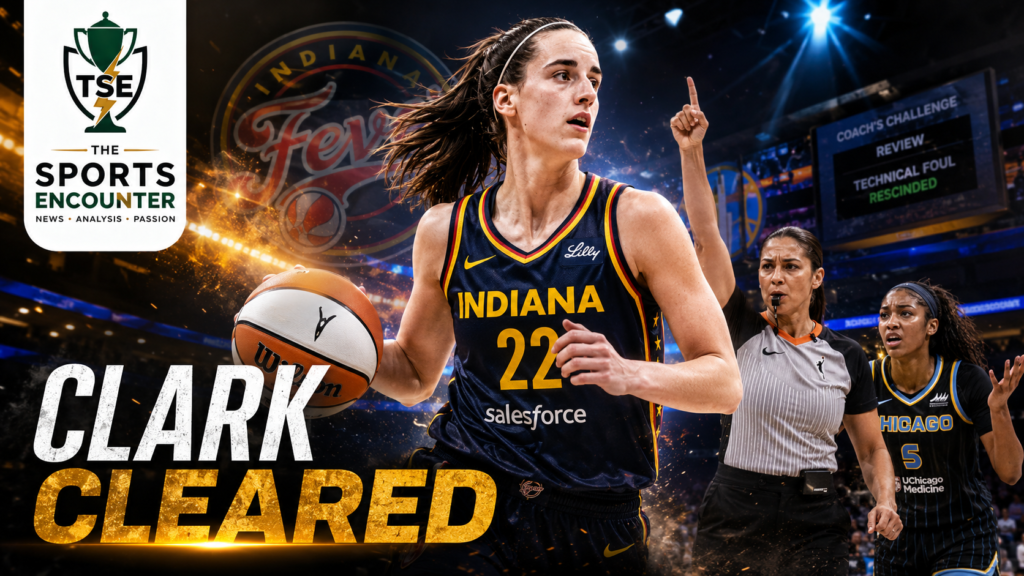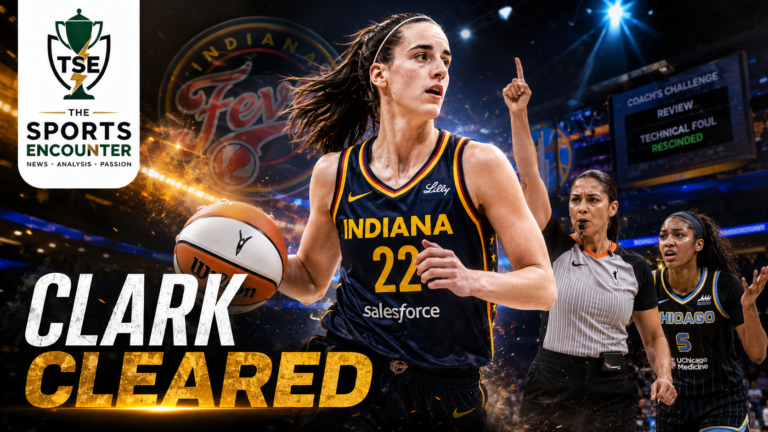
Caitlin Clark Avoids Suspension as WNBA Rescinds Eighth Technical Foul
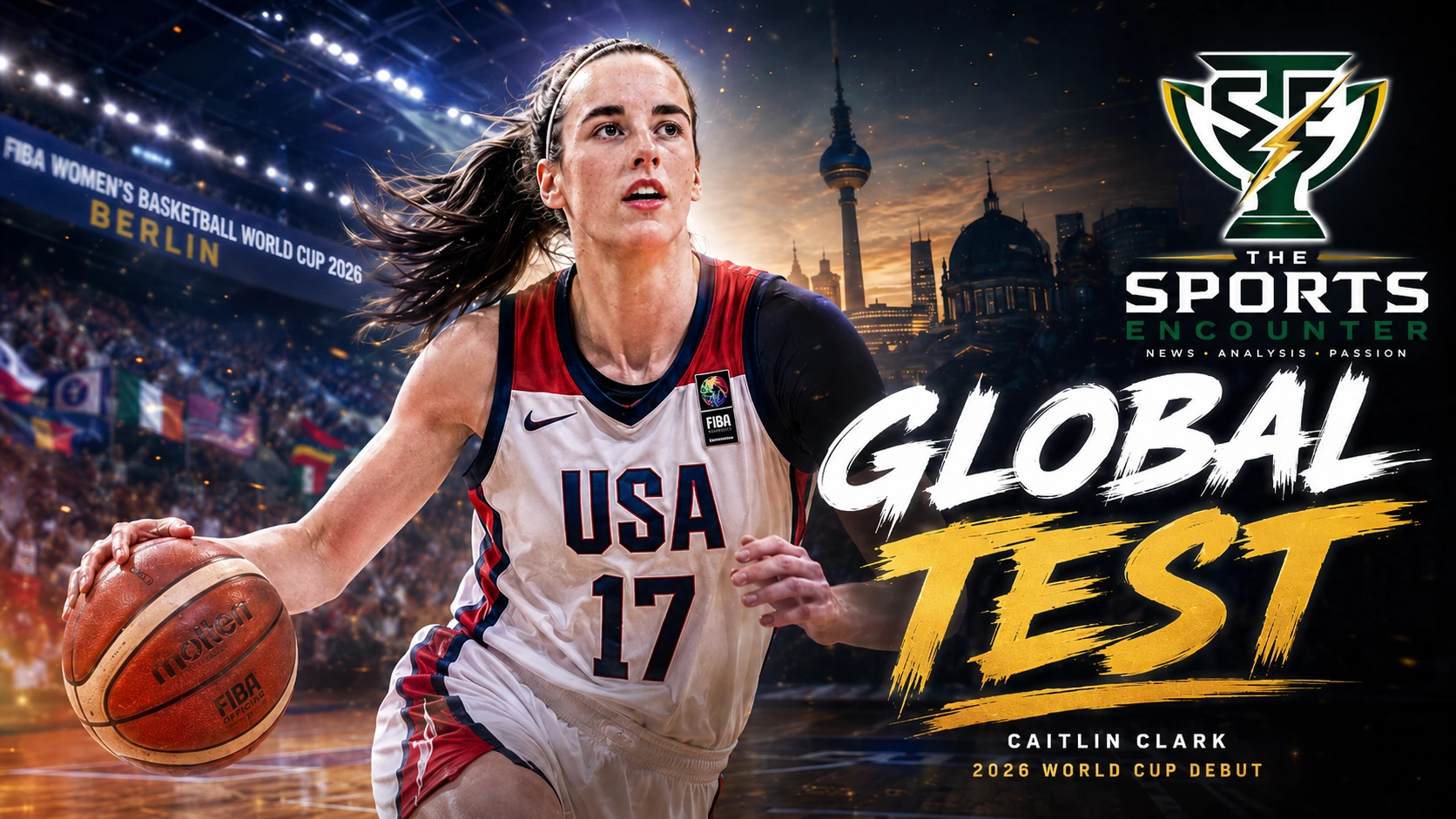
Caitlin Clark will remain available for the Indiana Fever after the WNBA rescinded the technical foul that would have triggered an automatic one-game suspension. She had 26 points and 11 assists in Indiana’s 90-86 win over Chicago.
Caitlin Clark will be available for the Indiana Fever’s crucial upcoming game against the New York Liberty after the WNBA rescinded the technical foul that would have triggered an automatic one-game suspension.
Clark was assessed what appeared to be her eighth technical foul of the 2026 regular season during Indiana’s 90-86 victory over the Chicago Sky on Saturday, August 8. Under WNBA rules, an eighth technical foul results in an automatic one-game suspension without pay. The league later reviewed the incident and removed the technical, keeping Clark below the suspension threshold. :contentReference[oaicite:0]{index=0}
The decision carries immediate competitive significance for Indiana. The Fever return home to face the New York Liberty at Gainbridge Fieldhouse on Tuesday, August 11, and Clark is now eligible to play. :contentReference[oaicite:1]{index=1}
Clark had already made her impact felt before the officiating controversy. She finished the Chicago win with 26 points and 11 assists, recording her 26th career points-assists double-double and ninth of the season. She also made five of six attempts from three-point range. :contentReference[oaicite:2]{index=2}
Caitlin Clark Suspension Scare: Key Facts
| Detail | Information |
|---|---|
| Player | Caitlin Clark |
| Team | Indiana Fever |
| Opponent | Chicago Sky |
| Result | Indiana Fever won 90-86 |
| Clark’s performance | 26 points, 11 assists |
| Three-point shooting | 5-for-6 |
| Initial ruling | Eighth technical foul of the season |
| League decision | Technical foul rescinded |
| Suspension | No |
| Next game | New York Liberty, August 11 |
What Happened Between Caitlin Clark and the Official?
The incident occurred late in the third quarter in Chicago.
Clark was forced toward the baseline and out of bounds during a play before making contact with an official. The contact was initially interpreted as intentional enough to warrant a technical foul. :contentReference[oaicite:3]{index=3}
Video of the sequence, however, raised immediate questions about whether Clark had actually initiated the contact deliberately.
Chicago’s Natasha Cloud appeared to make contact with Clark as the Fever guard moved toward the sideline, contributing to Clark’s momentum into the official. Reuters reported that game footage suggested Cloud’s contact may have played a role in the collision. :contentReference[oaicite:4]{index=4}
The distinction mattered enormously.
Had the technical remained on Clark’s record, it would have been her eighth of the regular season and automatically triggered a one-game suspension. :contentReference[oaicite:5]{index=5}
Stephanie White Immediately Challenged the Call
Indiana head coach Stephanie White strongly objected to the ruling.
White also received a technical foul while disputing the decision and defended Clark after the game. The Fever quickly sought league review of the call. :contentReference[oaicite:6]{index=6}
The WNBA did not take long to act.
The league rescinded Clark’s technical later Saturday, removing the automatic suspension that would otherwise have kept her out of Indiana’s next game. :contentReference[oaicite:7]{index=7}
Why the WNBA Rescinded Clark’s Technical
The league’s decision effectively determined that the circumstances surrounding the contact did not justify leaving the technical foul on Clark’s season total.
WNBA rules allow officials to assess technical fouls for conduct including disrespect toward an official, overt resentment toward a call, and physical contact with an official. The league can subsequently review technical fouls and modify disciplinary records when warranted. :contentReference[oaicite:8]{index=8}
In Clark’s case, the available footage appeared to support the argument that the collision was incidental rather than a deliberate attempt to contact the referee.
The technical was therefore removed.
What Is the WNBA Technical Foul Suspension Rule?
The rule itself is straightforward.
Under current WNBA regulations, a player or coach is automatically suspended without pay for one game upon receiving an eighth technical foul during the regular season. Every two additional technical fouls after that can trigger another automatic one-game suspension. :contentReference[oaicite:9]{index=9}
That made Saturday’s ruling unusually consequential.
A routine technical foul can normally mean a fine and little more. Clark’s situation had reached the point where one additional technical could directly affect Indiana’s lineup.
With the latest call rescinded, the immediate suspension threat has disappeared, although discipline remains an issue Clark and the Fever will need to manage over the remainder of the regular season.
Clark Was Brilliant Before the Controversy Took Over
The disciplinary story should not obscure the basketball.
Clark produced one of Indiana’s strongest performances of the night, scoring 26 points while adding 11 assists in the 90-86 victory. The double-double was her ninth of the season and the 26th points-assists double-double of her WNBA career. :contentReference[oaicite:10]{index=10}
Her perimeter shooting was particularly efficient.
Clark hit five of her six three-point attempts, giving Indiana the kind of spacing and shot creation that Chicago struggled to contain throughout the game. :contentReference[oaicite:11]{index=11}
The performance came at an important stage of the season as the Fever continue pushing toward the playoffs and trying to improve their position against other contenders.
Indiana Reached 20 Wins
The victory over Chicago also carried broader significance for the Fever.
Indiana entered the game following an overtime defeat to the Las Vegas Aces and needed a response. The Fever had been 19-12 before that loss, and Saturday’s victory delivered another important result as the regular season moves into its final stretch. :contentReference[oaicite:12]{index=12}
Clark and Kelsey Mitchell provided much of the offensive pressure, while Aliyah Boston contributed 13 points and 11 rebounds. :contentReference[oaicite:13]{index=13}
Winning in Chicago also helped Indiana reset quickly after the disappointment of the overtime loss to Las Vegas.
The Chicago-Indiana Game Had More Than One Flashpoint
Clark’s technical was not the only officiating controversy in an emotionally charged game.
Chicago guard DiJonai Carrington was ejected after receiving a Flagrant 2 foul for a hard challenge on Indiana’s Sophie Cunningham during a fast-break sequence. :contentReference[oaicite:14]{index=14}
The incident generated additional debate after Carrington posted a message on social media following the game suggesting racial bias in the decision.
Cunningham rejected that interpretation and noted that she had previously been ejected for comparable contact. Fever coach Stephanie White described the foul as deserving of the Flagrant 2 ruling while also suggesting that the contact may not have been intentional. :contentReference[oaicite:15]{index=15}
The two incidents combined to make the latest Fever-Sky meeting another highly emotional chapter in one of the league’s most closely watched matchups.
Clark’s Availability Against New York Matters
The biggest consequence of the WNBA’s reversal is what happens next.
Indiana hosts the New York Liberty on August 11 at Gainbridge Fieldhouse. The game is scheduled for 7:30 p.m. ET. :contentReference[oaicite:16]{index=16}
Clark’s availability significantly changes the outlook for that matchup.
Indiana have already shown this season that they can hurt New York. On July 18, the Fever erased a 13-point deficit and defeated the Liberty 108-88 in Indianapolis. :contentReference[oaicite:17]{index=17}
Clark’s ability to create shots, stretch defenses and generate assists gives Indiana a completely different offensive ceiling when she is on the floor.
Losing her to suspension against New York would therefore have been far more damaging than missing a routine regular-season game against a lower-level opponent.
TSE Analysis: This Was More Than a Disciplinary Reversal
The immediate story is simple: Clark was facing a suspension, and now she is not.
The wider significance involves timing.
Indiana are entering a part of the schedule where individual games can affect playoff positioning, matchup confidence and momentum. A suspension for one of the league’s most productive offensive creators could have had a measurable competitive cost.
The WNBA’s review prevented a disputed officiating decision from carrying that consequence.
There is also a broader lesson for Clark.
She plays with visible emotion and competitive intensity, qualities that are central to her appeal and performance. As technical fouls accumulate, however, that emotional edge begins to carry a tangible roster cost.
The overturned call gives her breathing room.
It does not eliminate the need for control.
Every technical from here will draw additional attention because the suspension threshold remains close enough to matter.
The Fever Need Clark Available for the Stretch Run
Indiana’s ambitions have changed.
The Fever are no longer simply trying to prove they belong in the playoff conversation. Their performances this season have made deeper expectations reasonable.
Clark’s recent form is part of that equation.
Earlier in the season, she recorded a Fever-record 45-point performance against Seattle and produced her fourth career triple-double during a road victory over Portland. :contentReference[oaicite:18]{index=18}
Those performances illustrate why every potential absence carries weight.
Indiana can survive stretches without any one player, but their best version is built around Clark’s scoring range, passing vision and ability to force defenses into uncomfortable decisions.
The league’s reversal ensures that version of the Fever can take the floor against New York.
What Happens Next for Caitlin Clark?
The immediate priority is Tuesday’s home game against the Liberty.
Indiana then continues through the final section of its regular-season schedule with playoff positioning increasingly important. :contentReference[oaicite:19]{index=19}
Clark will also need to remain aware of her technical-foul total.
The rescinded call has removed Saturday’s penalty, but future technical fouls could again move her toward an automatic suspension.
That adds another small tactical consideration to every emotional interaction with officials during the stretch run.
Frequently Asked Questions
Is Caitlin Clark suspended?
No. The WNBA rescinded the technical foul that would have been Clark’s eighth of the regular season, so she will not serve an automatic one-game suspension. :contentReference[oaicite:20]{index=20}
Why was Caitlin Clark given a technical foul?
Clark was initially called for making contact with an official after going out of bounds during Indiana’s game against Chicago. Video suggested contact from Natasha Cloud contributed to Clark moving into the official. :contentReference[oaicite:21]{index=21}
Why did the WNBA rescind Caitlin Clark’s technical foul?
The league reviewed the incident and removed the technical after the available footage indicated the contact with the official was not sufficiently deliberate to justify leaving the penalty on Clark’s record.
How many technical fouls trigger a WNBA suspension?
A player or coach receives an automatic one-game suspension without pay upon reaching eight technical fouls during the regular season. :contentReference[oaicite:22]{index=22}
How many points did Caitlin Clark score against Chicago?
Clark scored 26 points and added 11 assists in Indiana’s 90-86 victory. She also made five of six three-point attempts. :contentReference[oaicite:23]{index=23}
Who do the Indiana Fever play next?
Indiana hosts the New York Liberty at Gainbridge Fieldhouse on Tuesday, August 11, at 7:30 p.m. ET. :contentReference[oaicite:24]{index=24}
Will Caitlin Clark play against the New York Liberty?
Barring a separate injury or availability issue, Clark is eligible to play because the WNBA rescinded the technical foul that would have caused her suspension.
What was the score of Indiana Fever vs Chicago Sky?
The Fever defeated the Sky 90-86 on August 8, 2026. :contentReference[oaicite:25]{index=25}
Fans can follow official game information, standings and league updates through the WNBA.
Editor's Choice
Jaissle Starts Newcastle Rebuild With Valencia Win as Elanga Injury Scare Eases
Matthias Jaissle opened his Newcastle United reign with a 2-1 comeback win over Valencia as Yoane Wissa scored twice, young players impressed, and early medical signs suggested Anthony Elanga avoided a serious injury.
Matthias Jaissle began his Newcastle United tenure with a 2-1 comeback win over Valencia at the Mestalla, but the result was almost overshadowed by a frightening injury scare involving Anthony Elanga.
Newcastle fell behind inside four minutes when Filip Ugrinic curled a superb long-range effort into the top corner, but substitute Yoane Wissa scored twice after halftime to turn the match around and secure the 54th Trofeo Naranja. Valencia finished with 10 men after captain José Luis Gayà was sent off for a high challenge on Elanga in the 35th minute. :contentReference[oaicite:1]{index=1}
Elanga was stretchered off and initially appeared to have suffered a serious injury, but Jaissle later said the early medical indications were encouraging and that the Sweden international could potentially resume training next week. :contentReference[oaicite:2]{index=2}
The victory gave Newcastle an immediate lift under their new head coach, although Jaissle was careful not to overstate the significance of a preseason result. His larger task remains rebuilding a squad that has gone through major change ahead of the 2026-27 Premier League season. :contentReference[oaicite:3]{index=3}
The Sports Encounter previously examined why Newcastle turned to Matthias Jaissle after Eddie Howe’s departure and how the appointment signaled a different direction for the club. Our Premier League 2026-27 curtain raiser also highlighted how little preparation time Jaissle has before Newcastle’s opening league test. :contentReference[oaicite:4]{index=4}
Valencia 1-2 Newcastle: Key Facts
| Detail | Information |
|---|---|
| Competition | Preseason friendly, Trofeo Naranja |
| Venue | Mestalla Stadium, Valencia |
| Result | Valencia 1-2 Newcastle United |
| Valencia scorer | Filip Ugrinic |
| Newcastle scorer | Yoane Wissa, 2 goals |
| Red card | José Luis Gayà, Valencia |
| Newcastle injury concern | Anthony Elanga |
| Elanga outlook | Early indications suggest injury is not serious |
| Newcastle coach | Matthias Jaissle |
| Next major date | Premier League opener vs Liverpool, August 23 |
Valencia Strike Before Jaissle Can Settle
Jaissle’s first match could hardly have started worse.
Valencia took the lead inside four minutes when Ugrinic found space around 25 yards from goal and curled an excellent shot beyond debutant goalkeeper Lukáš Horníček into the top corner. :contentReference[oaicite:5]{index=5}
The early setback immediately tested a Newcastle side trying to absorb a new coach’s ideas while integrating several younger and recently recruited players.
There were encouraging signs in the response.
Within two minutes, Newcastle won the ball high through Nick Woltemade, Harvey Barnes released William Osula, and the striker fired into the side netting. Anthony Elanga then had the ball in the net in the 10th minute after a pass from Jacob Ramsey, only for the goal to be ruled out for offside. Newcastle’s official match report suggested the flag appeared questionable. :contentReference[oaicite:6]{index=6}
The sequence offered an early glimpse of what Jaissle may want from Newcastle: aggressive ball recovery, quick vertical progression, and direct attacks once possession is won in advanced areas.
The Elanga Challenge Changed the Mood Completely
The most alarming moment came in the 35th minute.
Gayà launched into a high challenge on Elanga, leaving the Newcastle winger in visible pain. Referee José María Sánchez Martínez immediately showed the Valencia captain a red card. Elanga received treatment before being taken from the pitch on a stretcher. :contentReference[oaicite:7]{index=7}
The sight of Elanga being carried off created obvious concern, especially with Newcastle’s Premier League opener approaching.
Jaissle admitted afterward that he had feared the worst when the challenge happened, but the initial assessment from Newcastle’s medical staff eased those concerns.
He said the injury appeared to be less serious than first feared and expressed hope that Elanga could return to training during the following week. :contentReference[oaicite:8]{index=8}
Why Elanga’s Fitness Matters So Much
Newcastle can ill afford another major disruption during an already unsettled summer.
Elanga is one of the players expected to carry greater responsibility in the new-look attack, particularly as Jaissle works through the consequences of several significant departures.
Reuters reported that the new manager has inherited a squad in transition following the exits of Bruno Guimarães, Sandro Tonali, and Anthony Gordon. :contentReference[oaicite:9]{index=9}
The Sports Encounter has already tracked the upheaval, including Bruno Guimarães’ reported £75 million move toward Arsenal. :contentReference[oaicite:10]{index=10}
When a club loses that much established quality in one window, every remaining high-level attacker becomes more important.
Elanga’s pace gives Newcastle an outlet in transition and helps stretch defensive lines. Losing him for the beginning of the league season would have created another problem Jaissle did not need.
Yoane Wissa Turns the Game After Halftime
The comeback belonged to Yoane Wissa.
Jaissle made four changes at halftime, introducing Wissa, Sean Steur, Bazoumana Touré, and Mason Miley. The changes immediately gave Newcastle a different attacking rhythm. :contentReference[oaicite:11]{index=11}
After Horníček produced a smart save from Guido Rodríguez, Wissa capitalized on a Valencia defensive error and calmly finished through goalkeeper Stole Dimitrievski’s legs to make it 1-1. :contentReference[oaicite:12]{index=12}
The winner followed from a move that highlighted another of the night’s encouraging performances.
Touré accelerated down the left during a quick Newcastle counterattack and squared the ball unselfishly for Wissa, who tapped in his second goal. :contentReference[oaicite:13]{index=13}
For Wissa, two goals in Jaissle’s first match are valuable for more than the scoreboard.
He is entering a season in which roles throughout Newcastle’s attack are being reassessed. A forward who can convert opportunities while the tactical structure is still being built gives the new manager flexibility.
Jaissle Refuses to Treat a Friendly Like a Trophy Night
The most revealing part of Jaissle’s post-match reaction was his restraint.
He made clear that Newcastle would not treat one preseason victory as evidence that the rebuild was complete. The German described the process as a journey and emphasized that there was still substantial work ahead. :contentReference[oaicite:14]{index=14}
That response makes sense.
Newcastle won, but the circumstances were unusual. Valencia played more than half the match with 10 men, while Jaissle is still learning which players fit his preferred structures and which positions need reinforcement.
The result is useful because it gives the squad confidence.
The performance is useful because it gives the coaching staff information.
Neither should be mistaken for proof that Newcastle are ready for the Premier League.
Jaissle Gives Newcastle’s Young Players Real Responsibility
One of the clearest themes from the night was youth.
Horníček made his debut in goal after joining from Braga. Reuters also highlighted debuts for Aladji Bamba and Bazoumana Touré, while 18-year-old Sean Steur impressed after coming off the bench. :contentReference[oaicite:15]{index=15}
Newcastle’s official report also noted opportunities for Henry Johnson, Dylan Charlton, and Mason Miley during the second half. :contentReference[oaicite:16]{index=16}
Jaissle stressed afterward that young players need time and support when stepping into elite-level football. :contentReference[oaicite:17]{index=17}
That message is especially relevant given the direction Newcastle’s squad appears to be taking.
The club cannot simply replace every departed senior player with another established star. Some of the rebuild will have to come from developing younger talent quickly enough to contribute without asking them to carry the team too soon.
Bazoumana Touré Gives Jaissle an Encouraging Glimpse
Touré’s role in the winning goal deserves attention.
The winger entered at halftime and attacked the left flank aggressively. His burst during the decisive counterattack forced Valencia backward before he chose the correct final pass rather than attempting to finish the move himself. :contentReference[oaicite:18]{index=18}
That combination of speed and decision-making is exactly what Newcastle need from younger attacking players.
Preseason performances can be misleading, but good habits still matter.
Touré did not merely look dangerous. He made a productive decision at the decisive moment.
Newcastle’s Summer Has Been About Change Everywhere
Jaissle did not inherit a stable team requiring minor tactical adjustments.
He inherited a club undergoing simultaneous changes in management, leadership, midfield structure, attacking roles, and squad age profile.
The departure of Eddie Howe alone was significant.
Howe guided Newcastle out of relegation trouble, took them back into the Champions League, and delivered the 2025 League Cup, ending the club’s long domestic trophy drought. The Sports Encounter examined the scale of Jaissle’s task when Newcastle moved to bring him from Al-Ahli. :contentReference[oaicite:19]{index=19}
Then came the player departures.
Bruno Guimarães had become captain and one of the symbols of Newcastle’s rise. Sandro Tonali provided technical control in midfield. Anthony Gordon brought pressing, running power, and Premier League experience.
Replacing all of that at once is not simply a recruitment problem.
It changes how the team functions.
What Jaissle’s First Match Suggests About His Newcastle
No preseason friendly should be treated as a tactical manifesto, but several patterns were visible.
Newcastle tried to win possession high, attacked quickly after turnovers, and gave wide players freedom to accelerate into space.
They also showed resilience after conceding early.
The downside was that Valencia found opportunities before the red card, including the opening goal and later efforts that tested Newcastle’s defensive organization. :contentReference[oaicite:20]{index=20}
That is likely to become one of Jaissle’s biggest preseason priorities.
High-intensity football only works when the distances between the press, midfield, and back line remain compact. If those spaces open, Premier League opponents will punish them far more ruthlessly.
Wissa’s Double Complicates the Attacking Selection
Competition for attacking places is exactly what Jaissle needs.
Wissa’s two-goal performance gives the new coach another option at a time when several forward roles remain open to interpretation.
Nick Woltemade started against Valencia. William Osula also featured from the beginning. Harvey Barnes played in the first half, while Wissa and Touré changed the game after the break. :contentReference[oaicite:21]{index=21}
That creates choices.
Jaissle can prioritize mobility, pressing, transition speed, finishing, or physical presence depending on the opponent.
The deeper question is which combination gives Newcastle enough goals across a full Premier League season.
Liverpool Loom Over Every Preseason Decision
Newcastle’s league season begins against Liverpool on August 23. Reuters confirmed the date, while The Sports Encounter’s Premier League curtain raiser identified the fixture as one of the opening round’s major heavyweight games. :contentReference[oaicite:22]{index=22}
That leaves Jaissle little time.
He has to establish a defensive structure, decide his preferred midfield, clarify the attacking hierarchy, integrate new players, and assess whether further recruitment is required.
The Elanga update therefore carries particular importance.
If the winger returns quickly, Jaissle keeps one more established attacking option available during a compressed preparation period.
TSE Analysis: The Win Matters Less Than the Response
The most useful thing Newcastle showed in Valencia was not the final score.
It was their reaction to adversity.
They conceded almost immediately.
One of their key attackers was then taken off on a stretcher after an ugly challenge.
The match became emotionally charged.
Newcastle still reorganized, used their bench effectively, and turned the result around.
That does not mean Jaissle’s rebuild is ahead of schedule.
It does give him something useful to work with.
Young teams often struggle when a match stops following the plan. Newcastle’s second-half performance suggested there is enough energy and adaptability in the squad for Jaissle to begin shaping a new identity.
The real test will come when the opposition have 11 players, the points matter, and the pressure is coming from Liverpool rather than a preseason crowd in Valencia.
Elanga’s Update May Be the Best Result of the Night
Wissa scored twice.
Jaissle won his first game.
Newcastle lifted the Trofeo Naranja.
Yet the most important development may still be the early medical assessment on Elanga.
When he left the field on a stretcher, Newcastle had every reason to fear a lengthy absence.
Jaissle’s post-match update suggested otherwise. He said the medical team was offering almost entirely positive indications and that the injury did not appear serious. :contentReference[oaicite:23]{index=23}
For a club already managing so much change, avoiding another long-term injury is a significant relief.
What Happens Next for Newcastle?
Newcastle will continue preseason preparations before the Premier League begins.
Jaissle will use the remaining fixtures and training sessions to determine which younger players are ready for meaningful first-team minutes and which areas of the squad still require reinforcement.
Elanga’s recovery will be monitored closely over the next several days.
The club will also need to decide how much of the Valencia performance can translate into competitive football.
A friendly comeback is encouraging.
Liverpool on August 23 will provide the first meaningful answer.
Frequently Asked Questions
What was the score in Valencia vs Newcastle?
Newcastle United defeated Valencia 2-1 at the Mestalla in a preseason friendly on August 8, 2026. :contentReference[oaicite:24]{index=24}
Who scored for Newcastle against Valencia?
Yoane Wissa scored both Newcastle goals after coming on as a halftime substitute. :contentReference[oaicite:25]{index=25}
Who scored for Valencia?
Filip Ugrinic scored Valencia’s goal inside the opening four minutes with a long-range finish. :contentReference[oaicite:26]{index=26}
What happened to Anthony Elanga?
Elanga was stretchered off after a high challenge from Valencia captain José Luis Gayà, who was sent off. Early medical indications suggested the injury was not serious. :contentReference[oaicite:27]{index=27}
Will Anthony Elanga miss the Premier League opener?
That has not been confirmed. Jaissle said he hoped Elanga could return to training as early as the following week, which suggests Newcastle are optimistic about his recovery. :contentReference[oaicite:28]{index=28}
Was this Matthias Jaissle’s first Newcastle match?
Yes. The 2-1 victory over Valencia was Jaissle’s first match in charge of Newcastle United. :contentReference[oaicite:29]{index=29}
When does Newcastle start the Premier League season?
Newcastle begin their Premier League campaign against Liverpool on August 23, 2026. :contentReference[oaicite:30]{index=30}
Which Newcastle youngsters played against Valencia?
Lukáš Horníček, Aladji Bamba, Bazoumana Touré, Sean Steur, Mason Miley, Henry Johnson, and Dylan Charlton were among the younger players given opportunities during the match. :contentReference[oaicite:31]{index=31}
Fans can follow official team news and match updates through Newcastle United’s official website.
Editor's Choice
Algeria Make History as Morocco Join Them at FIFA Women’s World Cup 2027
Algeria made history by qualifying for the FIFA Women’s World Cup for the first time, while Morocco secured a second consecutive appearance after both North African nations won their WAFCON 2026 quarter-finals.
North African women’s football produced one of its biggest nights in years as Algeria qualified for the FIFA Women’s World Cup for the first time and hosts Morocco secured a return to the global stage with quarter-final victories at the 2026 Women’s Africa Cup of Nations.
Algeria came from behind to defeat 10-player Côte d’Ivoire 2-1 in Casablanca, while Morocco edged former African champions South Africa by the same scoreline in Rabat. The two results sent both nations into the WAFCON 2026 semifinals and, more importantly, secured automatic qualification for the FIFA Women’s World Cup Brazil 2027. :contentReference[oaicite:0]{index=0}
For Algeria, the achievement is historic. The Fennecs have never previously appeared at a FIFA Women’s World Cup. Morocco, meanwhile, will make their second appearance after debuting in 2023. :contentReference[oaicite:1]{index=1}
The results also make Algeria and Morocco the first African nations to book their places at Brazil 2027 through the continental qualification route. :contentReference[oaicite:2]{index=2}
The Sports Encounter will continue following major international football developments through its Soccer section, with match analysis, qualification stories, player performances, and tournament context from around the world.
Algeria and Morocco Qualify for Women’s World Cup 2027: Key Facts
| Team | Quarter-final opponent | Result | World Cup significance |
|---|---|---|---|
| Algeria | Côte d’Ivoire | Won 2-1 | First FIFA Women’s World Cup qualification |
| Morocco | South Africa | Won 2-1 | Second FIFA Women’s World Cup appearance |
| Algeria scorers | Ines Khiri, Amira Ould Braham | ||
| Morocco scorers | Sakina Ouzraoui, Hanane Aït El Haj (penalty) | ||
| World Cup | FIFA Women’s World Cup Brazil 2027 | ||
| World Cup dates | June 24 to July 25, 2027 | ||
Algeria Complete a Historic Comeback Against Côte d’Ivoire
Algeria’s breakthrough did not come easily.
Côte d’Ivoire struck first through Ines Konan, putting Algeria under immediate pressure in a quarter-final that carried both semifinal qualification and a first-ever World Cup berth. :contentReference[oaicite:3]{index=3}
The match changed significantly in the 41st minute when Nsira Ouedraogo was sent off for a dangerous challenge involving Algerian goalkeeper Chloé N’Gazi. That left Côte d’Ivoire with 10 players and gave Algeria an opportunity to increase pressure after the break. :contentReference[oaicite:4]{index=4}
Second-half goals from Ines Khiri and Amira Ould Braham overturned the deficit and sent Algeria into the semifinals of the Women’s Africa Cup of Nations for the first time. CAF confirmed that the 2-1 victory also secured Algeria’s first appearance at the FIFA Women’s World Cup. :contentReference[oaicite:5]{index=5}
Côte d’Ivoire still had chances to recover. Rebecca Elloh struck the post from a penalty when the score was 1-1, an opportunity that could have changed the entire qualification story. :contentReference[oaicite:6]{index=6}
Instead, Algeria completed the turnaround and created one of the defining moments in the history of their women’s national team.
Why Algeria’s Qualification Matters
World Cup qualification gives Algeria something far larger than a successful tournament run.
The country now has a place on the biggest stage in women’s football.
For a national program still building international experience, qualification for Brazil 2027 provides exposure, competitive development, investment opportunities, and a reference point for younger players entering the system.
It also expands North Africa’s presence in the women’s game.
Before this qualification, Morocco had been the region’s primary representative at the Women’s World Cup. Algeria’s breakthrough means North African women’s football now has more than one nation operating at the global level.
That is a meaningful shift for the region.
Morocco Hold Off South Africa in Rabat
Morocco’s qualification carried a different kind of pressure.
The Atlas Lionesses were playing at home against South Africa, the 2022 African champions and the team that defeated Morocco in that year’s WAFCON final. :contentReference[oaicite:7]{index=7}
Morocco started aggressively and nearly scored in the 20th minute when Sanaa Mssoudy headed narrowly over. South Africa responded almost immediately through Thembi Kgatlana, whose effort also missed the target. :contentReference[oaicite:8]{index=8}
The breakthrough arrived in the 31st minute.
Sakina Ouzraoui reacted quickly inside the penalty area and produced a first-time finish beyond goalkeeper Kaylin Swart to give Morocco the lead. It was her second goal of the tournament. :contentReference[oaicite:9]{index=9}
Morocco doubled the advantage six minutes into the second half when Hanane Aït El Haj converted from the penalty spot. :contentReference[oaicite:10]{index=10}
South Africa refused to disappear.
Kgatlana pulled one back in the 67th minute with a powerful finish after cutting in from the left, setting up a tense final phase. :contentReference[oaicite:11]{index=11}
The hosts were forced to defend with discipline as Banyana Banyana pushed for an equalizer, but Morocco held on for a 2-1 victory and secured their return to the Women’s World Cup. :contentReference[oaicite:12]{index=12}
Morocco’s Second World Cup Is a Different Achievement
Morocco are no longer simply proving they can qualify.
The next challenge is proving that the breakthrough made in 2023 can become sustainable.
The Atlas Lionesses reached the round of 16 on their World Cup debut in Australia and New Zealand, which immediately raised expectations around the program. :contentReference[oaicite:13]{index=13}
Returning for Brazil 2027 means the 2023 campaign was not an isolated moment.
Morocco now have another tournament cycle in which to deepen their squad, develop younger players, strengthen domestic structures, and build on the experience of competing against the world’s best teams.
Qualifying at home also gives the achievement additional emotional weight.
North Africa Has Two World Cup Teams
The combined significance of the two results is difficult to ignore.
Algeria and Morocco are geographical rivals with different football histories, but their simultaneous qualification creates a wider regional story.
North Africa will have at least two representatives at the 2027 Women’s World Cup.
That gives the region increased visibility in a competition where African representation has historically been dominated by nations such as Nigeria, Ghana, South Africa, and Cameroon.
Morocco have already forced themselves into that conversation.
Algeria have now joined them.
How Africa Qualifies for the 2027 Women’s World Cup
The 2026 Women’s Africa Cup of Nations also serves as Africa’s qualification tournament for Brazil 2027.
The four WAFCON semifinalists qualify automatically for the Women’s World Cup. :contentReference[oaicite:14]{index=14}
That means Algeria and Morocco have already secured two of Africa’s four direct places.
The remaining quarter-finals will determine the other two automatic qualifiers.
The losing quarter-finalists are not completely eliminated from World Cup contention. They move into African play-off matches, with two teams advancing to the FIFA inter-confederation play-offs. :contentReference[oaicite:15]{index=15}
As a result, Côte d’Ivoire and South Africa still have a possible route to Brazil 2027.
World Cup 2027 Will Be Staged in Brazil
The 2027 FIFA Women’s World Cup will take place in Brazil from June 24 to July 25. :contentReference[oaicite:16]{index=16}
The tournament will feature 32 teams and will be the first Women’s World Cup staged in South America. :contentReference[oaicite:17]{index=17}
For Algeria, simply reaching that stage will represent a landmark moment.
For Morocco, expectations will be higher after the progress made during their first appearance.
What Happens Next at WAFCON 2026?
Qualification for the World Cup does not end either team’s continental ambitions.
Morocco and Algeria are now into the semifinals of WAFCON 2026.
Reuters reported that Morocco will face the winner of Cameroon versus Nigeria, while Algeria will meet the winner of Ghana versus Malawi. :contentReference[oaicite:18]{index=18}
Morocco’s semifinal is scheduled for August 12. CAF also confirmed that the hosts advanced to the last four following their win over South Africa. :contentReference[oaicite:19]{index=19}
Both teams therefore move from qualification celebrations directly into the race for the African title.
TSE Analysis: Algeria’s Breakthrough Could Matter Beyond One Tournament
The most important result of the night belongs to Algeria.
Morocco’s qualification confirms an upward trajectory that has already included a World Cup appearance and knockout-stage football.
Algeria are crossing that threshold for the first time.
First-time qualification can alter the trajectory of a women’s football program because it gives administrators, players, sponsors, supporters, and young athletes a tangible reference point.
The challenge now is turning one historic qualification into a sustainable international level.
That means using Brazil 2027 as the beginning of a longer development cycle rather than treating qualification itself as the destination.
Morocco already offer an example of how quickly expectations can change once a team proves it belongs on the global stage.
Algeria now have the opportunity to create their own version of that story.
South Africa and Côte d’Ivoire Still Have Hope
For the two losing quarter-finalists, the night was painful but not final.
South Africa and Côte d’Ivoire will move into the WAFCON play-off route for places in FIFA’s inter-confederation tournament. :contentReference[oaicite:20]{index=20}
Reuters reported that South Africa will face the loser of Cameroon versus Nigeria, while Côte d’Ivoire will play the loser of Ghana versus Malawi. :contentReference[oaicite:21]{index=21}
Those matches will determine which two African nations advance to the inter-confederation play-offs.
The path becomes harder, but qualification remains possible.
What Algeria and Morocco Have Already Achieved
| Achievement | Algeria | Morocco |
|---|---|---|
| Qualified for Brazil 2027 | Yes | Yes |
| Women’s World Cup appearances | First | Second |
| WAFCON 2026 semifinalist | Yes | Yes |
| Historic significance | First World Cup qualification | Back-to-back World Cup appearances |
Frequently Asked Questions
Did Algeria qualify for the 2027 Women’s World Cup?
Yes. Algeria qualified for the FIFA Women’s World Cup for the first time after defeating Côte d’Ivoire 2-1 in the WAFCON 2026 quarter-finals. :contentReference[oaicite:22]{index=22}
Who scored for Algeria against Côte d’Ivoire?
Ines Khiri and Amira Ould Braham scored Algeria’s second-half goals after Ines Konan had given Côte d’Ivoire the lead. :contentReference[oaicite:23]{index=23}
Did Morocco qualify for the 2027 Women’s World Cup?
Yes. Morocco defeated South Africa 2-1 and secured their second consecutive Women’s World Cup appearance. :contentReference[oaicite:24]{index=24}
Who scored for Morocco against South Africa?
Sakina Ouzraoui scored in the first half, and Hanane Aït El Haj converted a second-half penalty. Thembi Kgatlana scored for South Africa. :contentReference[oaicite:25]{index=25}
Is this Algeria’s first Women’s World Cup?
Yes. Brazil 2027 will be Algeria’s first appearance at a FIFA Women’s World Cup.
How many times has Morocco qualified for the Women’s World Cup?
Morocco have now qualified twice, following their debut at the 2023 tournament. :contentReference[oaicite:27]{index=27}
When is the FIFA Women’s World Cup 2027?
The tournament will run from June 24 to July 25, 2027, in Brazil. :contentReference[oaicite:28]{index=28}
How many African teams qualify directly for Brazil 2027?
Four African teams qualify directly through WAFCON 2026, while two more African nations can reach the inter-confederation play-offs. :contentReference[oaicite:29]{index=29}
Can South Africa still qualify?
Yes. South Africa can still reach the FIFA inter-confederation play-offs through the WAFCON play-off route. :contentReference[oaicite:30]{index=30}
Fans can follow official tournament updates through the CAF Women’s Africa Cup of Nations and FIFA Women’s World Cup 2027 qualifiers.
Editor's Choice
FIFA Says Infantino Is Being Undermined as Leadership Crisis Turns Into a Battle Over Legitimacy
FIFA has escalated its defense of Gianni Infantino, warning of a concerted effort to undermine its president as the fallout from the failed World Cup investment plan turns into a wider battle over governance, legitimacy, and the 2027 election.
FIFA has escalated its defense of President Gianni Infantino, accusing unnamed opponents of conducting a “concerted and ongoing effort” to undermine his leadership as the political fallout from the abandoned World Cup investment plan deepens across global soccer.
The governing body said challenges to Infantino’s authority must take place through FIFA’s statutes, elections, and established democratic procedures rather than through what it described as allegations, insinuation, or misinformation. The intervention came after another turbulent week in which European associations withdrew support, Norway called for Infantino to resign, and several federations from Africa, South America, and other regions publicly rallied behind him. :contentReference[oaicite:0]{index=0}
The latest statement changes the nature of the crisis.
The dispute began with Infantino’s abandoned proposal to raise approximately $4.2 billion by selling a minority interest in a commercial enterprise linked to FIFA tournaments, including the World Cup. It has since developed into a struggle over who has the legitimacy to decide the FIFA president’s future and whether criticism of his leadership represents ordinary political opposition or an attempt to bypass the governing body’s electoral system. :contentReference[oaicite:1]{index=1}
For The Sports Encounter, this is the next stage of a story that has evolved rapidly since FIFA’s investment plan triggered resistance from UEFA, CONCACAF, senior officials, and national associations. Our earlier coverage examined how the World Cup stake proposal collapsed, how the revolt spread inside FIFA, and why smaller member associations may ultimately decide Infantino’s political future. :contentReference[oaicite:2]{index=2}
FIFA Leadership Crisis: What Changed on Saturday?
| Issue | Latest Position |
|---|---|
| FIFA’s defense of Infantino | FIFA says there is a concerted effort to undermine its president |
| Infantino’s mandate | FIFA says he remains democratically elected by its 211 member associations |
| UEFA position | UEFA has said it no longer has confidence in Infantino |
| Norway position | Norwegian FA President Lise Klaveness has called for Infantino to resign |
| CAF position | The African confederation has unanimously backed Infantino |
| CONMEBOL position | Rejects any attempt to remove Infantino outside a vote involving FIFA members |
| Mexico position | Supports Infantino and rejects leadership processes outside FIFA statutes |
| 2027 FIFA election | Infantino is seeking another term, with no clear challenger yet established |
FIFA Draws a Line Around the Electoral Process
FIFA’s latest message is important because it attempts to define the boundaries of legitimate opposition.
The governing body said anyone seeking to replace or challenge Infantino must do so through the formal mechanisms established by FIFA’s statutes and member associations. It warned against attempts to achieve politically through public allegations what opponents could not achieve through elections. :contentReference[oaicite:3]{index=3}
That argument rests on a powerful institutional fact.
Infantino was elected by FIFA’s member associations, and every one of FIFA’s 211 members holds a vote in presidential elections.
This creates a distinction between influence and authority.
UEFA can generate enormous commercial and political pressure. Major federations such as England, Germany, France, Spain, and the Netherlands carry substantial sporting influence. Players’ unions and sponsors can also shape public legitimacy.
None of them, individually, can remove a FIFA president outside the governing structure.
That is the ground on which FIFA now appears determined to fight.
FIFA Does Not Name the People It Says Are Undermining Infantino
The governing body did not identify the individuals or organizations it believes are behind the alleged effort to weaken Infantino. It also did not specify every report it considered false or misleading. :contentReference[oaicite:4]{index=4}
FIFA said recent reporting had included unsubstantiated and demonstrably false claims concerning both the organization and its president, and said inaccurate coverage would be challenged directly.
The statement followed reports concerning payments made by UEFA to a former employee during Infantino’s time as UEFA general secretary. Infantino has denied wrongdoing, while FIFA has rejected the allegations as unfounded. :contentReference[oaicite:5]{index=5}
The absence of named opponents makes the statement broader than a conventional rebuttal.
It reads as a warning to the wider coalition challenging Infantino’s authority.
The Rabat Meeting Was Supposed to Restore Confidence
FIFA’s leadership met in Rabat, Morocco, earlier in the week as the fallout from the abandoned investment project intensified.
After that meeting, FIFA Secretary General Mattias Grafström and members of the Management Board reaffirmed their full support for Infantino. The organization also acknowledged that the processes, communication, and internal interaction surrounding the withdrawn FIFA Forward Enterprise proposal needed improvement. :contentReference[oaicite:6]{index=6}
FIFA said the meeting was intended to strengthen governance, restore confidence, and improve transparency ahead of future challenges. :contentReference[oaicite:7]{index=7}
That language was conciliatory.
Saturday’s message was considerably more defensive.
The sequence suggests FIFA is trying to pursue two objectives simultaneously: acknowledge procedural mistakes while protecting the president from a political challenge it believes is moving beyond ordinary criticism.
The World Cup Investment Plan Remains the Origin of the Crisis
The current confrontation cannot be separated from the proposal that caused it.
Infantino backed a plan that could have raised approximately $4.2 billion through private investment in a new commercial vehicle connected to FIFA’s competitions.
The project was intended to unlock immediate capital by selling a minority stake in a business containing valuable tournament-related commercial rights.
The reaction was severe.
UEFA objected to the lack of consultation and transparency. CONCACAF also challenged the process. Senior FIFA figures publicly distanced themselves from the plan, while national associations questioned how a project involving one of global football’s most valuable assets could have progressed without broader involvement.
Infantino eventually abandoned the proposal.
FIFA later apologized to member associations for mistakes in the way the plan had been handled, while maintaining that the problem involved process and communication rather than violations of governance rules. :contentReference[oaicite:8]{index=8}
The commercial plan is gone.
The political consequences remain.
Norway Has Moved From Criticism to Calling for Resignation
The strongest personal challenge came from Norwegian Football Federation President Lise Klaveness.
Klaveness said Infantino no longer possessed the institutional trust needed to govern FIFA effectively and called on him to resign. She described international football cooperation as being in serious trouble and argued that the sport needed to move beyond internal power struggles. :contentReference[oaicite:9]{index=9}
Her intervention matters because it moves the debate beyond disagreement over one commercial proposal.
The issue becomes whether Infantino can still command enough institutional confidence to govern effectively even if he retains enough votes to stay in office.
Those are different questions.
A president can survive electorally while losing political cooperation from important stakeholders.
UEFA Is Still Applying Pressure
UEFA has maintained that its concerns were not resolved simply because FIFA withdrew the investment plan.
The European governing body has demanded assurances that similar attempts to restructure the commercial ownership of the game will not be repeated without proper consultation. It has also maintained the possibility of withdrawing from FIFA competitions if those concerns are not addressed. :contentReference[oaicite:10]{index=10}
That threat carries enormous leverage.
Europe controls many of the strongest national teams, biggest television markets, major sponsors, and most commercially valuable players in world football.
At the same time, UEFA cannot unilaterally determine who serves as FIFA president.
This tension explains why the crisis has evolved into a dispute over legitimacy.
Infantino Still Has a Significant Coalition Behind Him
Any assumption that Infantino is politically isolated would be inaccurate.
The Confederation of African Football has unanimously backed his leadership. CONMEBOL has opposed attempts to remove him outside a formal vote of FIFA’s membership. Mexico’s federation has also supported him, despite CONCACAF taking a more critical position. :contentReference[oaicite:11]{index=11}
Argentina has likewise backed FIFA’s work under Infantino, while acknowledging that the abandoned commercial proposal created uncertainty and was handled poorly. Paraguay and Ecuador have also expressed support. :contentReference[oaicite:12]{index=12}
This is why the electoral arithmetic remains complicated.
Infantino’s critics may dominate headlines in some of football’s wealthiest markets, but FIFA presidential elections are decided by associations rather than commercial value.
England gets one vote.
Brazil gets one vote.
Germany gets one vote.
So does every smaller FIFA member.
The Sports Encounter previously examined how that one-country, one-vote structure could protect Infantino if he maintains support across Africa, Asia, Oceania, South America, and smaller national associations. :contentReference[oaicite:13]{index=13}
What FIFA’s New Statement Really Tells Us
The strongest insight from Saturday’s statement is that FIFA is preparing for a political contest, not merely a communications cleanup.
The organization is now framing the president’s mandate as an institutional principle.
That is strategically significant.
If the argument remains focused on the failed investment proposal, critics have substantial ground to attack the process, lack of consultation, and internal resistance.
If the argument shifts toward democratic legitimacy, FIFA can ask a different question:
Who has the right to decide whether Infantino stays?
Under FIFA’s statutes, the answer ultimately rests with the member associations.
That framing may be Infantino’s strongest political defense.
The Crisis Is Becoming a Test of Two Different Types of Power
There are now two power structures operating against each other.
The first is commercial and institutional influence.
UEFA, CONCACAF, major national associations, players, sponsors, and elite leagues can create enormous public and financial pressure.
The second is electoral power.
FIFA’s 211 associations determine the presidency.
Infantino does not necessarily need to regain unanimous support from Europe to survive. He needs enough associations to remain behind him when the votes are counted.
This is why support from CAF, Mexico, Argentina, Paraguay, and other associations is so important.
The crisis may increasingly resemble a contest between football’s largest commercial centers and the wider federation network that gives FIFA its electoral legitimacy.
Could Infantino Still Be Removed?
Yes, but the process would be difficult.
FIFA’s statutes allow member associations to use formal mechanisms to challenge leadership, including congress procedures and presidential elections.
As The Sports Encounter previously reported, an Extraordinary FIFA Congress can be requested by at least 20% of the 211 member associations, which amounts to 43 members. UEFA alone has 55 associations and therefore possesses enough votes to request such a process if its members remained unified. :contentReference[oaicite:14]{index=14}
Requesting a congress and removing a president are not the same thing.
A successful leadership challenge would require a much broader coalition.
That remains the central weakness in the anti-Infantino movement.
Several associations have withdrawn support, but no universally credible challenger has yet emerged.
The 2027 FIFA Election Is Now the Real Battlefield
Infantino is seeking another term at the FIFA Congress in Morocco in March 2027.
Only weeks ago, his re-election appeared largely uncontested.
That assumption has disappeared.
European federations including England and Croatia have withdrawn support, while others are questioning whether the governance crisis has made another Infantino term acceptable. :contentReference[oaicite:15]{index=15}
Yet no clear rival has consolidated the opposition.
This creates a paradox.
Infantino may be more politically vulnerable than at any point during his presidency while still remaining the strongest individual candidate.
TSE Analysis: FIFA’s Crisis Has Reached the Question That Matters Most
The failed World Cup investment plan was the trigger.
The deeper issue is authority.
Critics believe Infantino’s leadership style has become too centralized, insufficiently transparent, and increasingly disconnected from stakeholders who expect major decisions to be developed collectively.
FIFA’s defense is that its president was legitimately elected and cannot be displaced through political pressure, media campaigns, or informal coalitions operating outside the governing body’s constitutional framework.
Both arguments now exist at the same time.
This makes the crisis harder to resolve.
Dropping the investment proposal removed the original policy dispute, but it did not restore trust.
A resignation would satisfy Infantino’s strongest critics, but his supporters see no legitimate reason to surrender a mandate granted by the member associations.
An election could resolve the legal question while leaving the political divisions intact.
That is why FIFA’s latest statement matters.
The governing body is signaling that any attempt to end Infantino’s presidency will have to defeat him inside FIFA’s own system.
From this point forward, the most important question may no longer be how angry UEFA is.
It is whether the opposition can turn that anger into 211-member electoral arithmetic.
What Happens Next?
The immediate focus will remain on whether more national associations formally withdraw their support for Infantino.
UEFA’s next moves will also matter, particularly if the confederation escalates its boycott threat or seeks formal constitutional action.
Attention will then turn toward possible presidential challengers ahead of the 2027 election.
If no credible candidate emerges, Infantino could survive the most damaging crisis of his presidency despite losing the confidence of some of football’s most powerful institutions.
If a challenger can unite Europe with meaningful blocs from Africa, Asia, the Americas, and Oceania, the situation changes completely.
The next phase therefore belongs to federation presidents, not press statements.
Frequently Asked Questions
Why is Gianni Infantino facing a FIFA leadership crisis?
The crisis began after FIFA proposed raising approximately $4.2 billion by selling a minority stake in a commercial company connected to the World Cup and other tournaments. The plan was criticized over transparency, consultation, and governance before being abandoned.
What did FIFA say about attempts to remove Infantino?
FIFA said there was a concerted and ongoing effort to undermine its president and insisted that any challenge to his leadership must follow FIFA’s statutes, elections, and democratic procedures. :contentReference[oaicite:16]{index=16}
Has UEFA withdrawn support for Infantino?
UEFA has said it no longer has confidence in Infantino’s leadership and has maintained pressure on FIFA following the collapse of the investment proposal. :contentReference[oaicite:17]{index=17}
Which organizations still support Infantino?
CAF has unanimously backed Infantino, while CONMEBOL has rejected attempts to remove him outside FIFA’s formal voting structure. Mexico, Argentina, Paraguay, Ecuador, and several other associations have also expressed support. :contentReference[oaicite:18]{index=18}
Has Gianni Infantino resigned?
No. Infantino remains FIFA president and continues to hold the formal mandate granted by FIFA’s member associations.
When is the next FIFA presidential election?
Infantino is seeking another term at the FIFA Congress scheduled for Morocco in March 2027. :contentReference[oaicite:19]{index=19}
Does Infantino currently have a challenger?
No clear challenger has yet emerged who appears capable of uniting enough of FIFA’s 211 member associations to defeat him. :contentReference[oaicite:20]{index=20}
Can UEFA remove the FIFA president?
UEFA cannot remove the FIFA president by itself. It can exert significant political pressure and has enough member associations to request certain formal FIFA procedures, but a successful leadership change would require broader support across FIFA’s global membership.
For official statements and governance updates, readers can follow FIFA’s official platform.
The Sports Encounter will continue following the FIFA leadership crisis as the debate shifts from the collapsed World Cup commercial proposal toward Infantino’s mandate, the 2027 election, and the wider struggle over how world football should be governed.