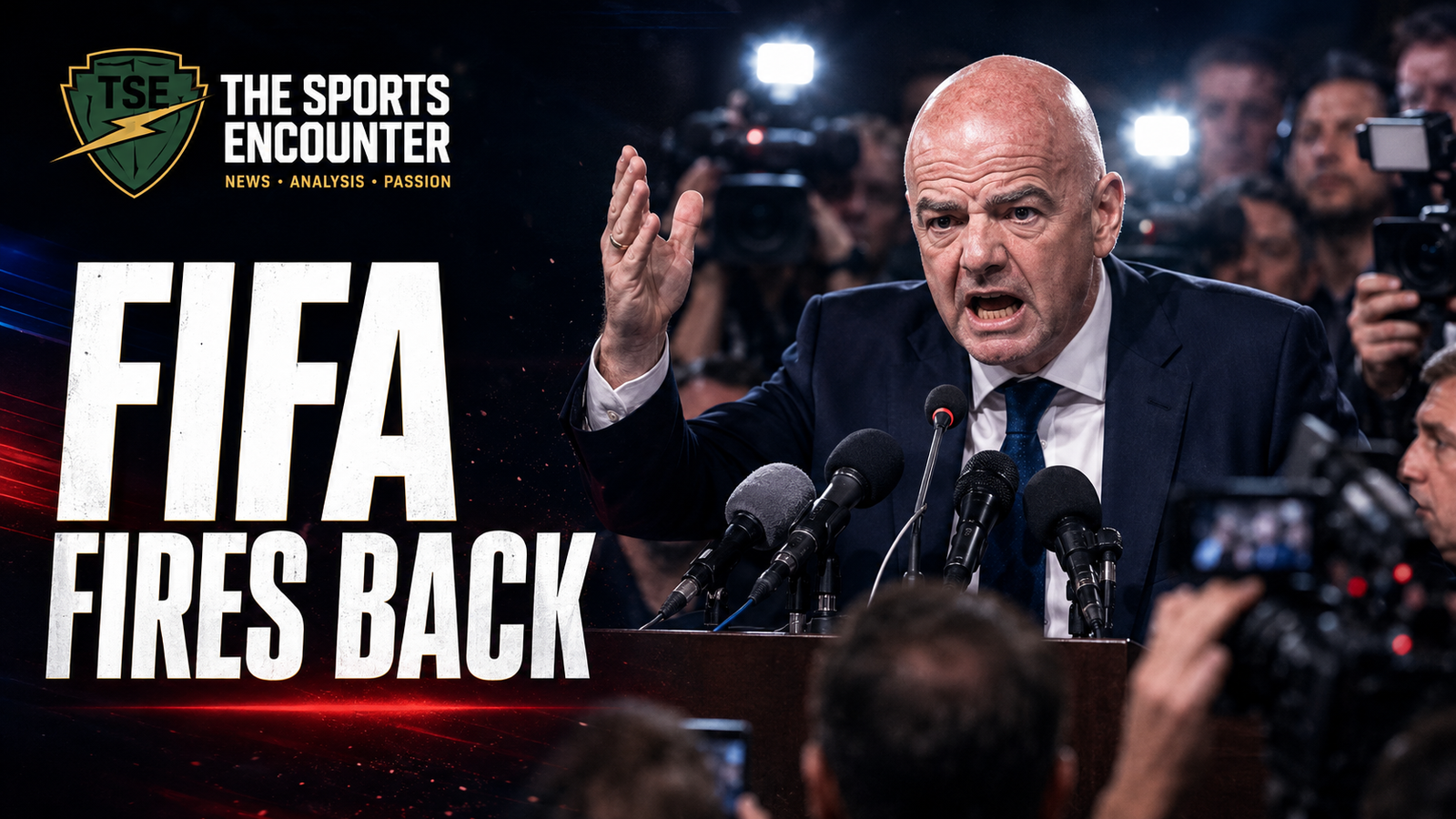
Gianni Infantino Defends FIFA World Cup 2026 Decisions in an Open Letter
Gianni Infantino says critics allowed hate to obscure the joy of FIFA World Cup 2026. Fans, players, officials, and national associations see something deeper: political access, unexplained disciplinary exceptions, visa discrimination, refereeing disputes, and a governing body unwilling to answer difficult questions.

Gianni Infantino has described FIFA World Cup 2026 as a celebration of unity, safety, and happiness. A significant section of the football world remembers a more complicated tournament.
FIFA’s president used an open letter published on July 27 to confront journalists, supporters, officials, and national associations that questioned the organization’s conduct during the tournament in the United States, Canada, and Mexico.
His message carried pride, frustration, and accusation. Infantino argued that critics became so consumed by negativity that they failed to see millions of people enjoying football together. He presented FIFA as an organization working on the front lines while its detractors spread rumors from behind screens and keyboards.
The emotional force of that defense will appeal to people who experienced the tournament as a month-long celebration. Spain produced memorable football, Argentina reached another final, record audiences followed the competition, and supporters filled stadiums and fan festivals across three countries. Nearly 63 million viewers reportedly watched the final in the United States.
However, Infantino’s letter does little to resolve the questions that made this one of the most disputed World Cups in modern memory.
Fans were troubled by refereeing errors, visa restrictions, expensive tickets, political interference, inconsistent disciplinary rulings, and FIFA’s treatment of teams and officials from politically sensitive countries. Several decisions appeared so unusual that supporters openly questioned whether every participant operated under the same rules.
No publicly established evidence proves that FIFA planned match errors or manipulated results. That distinction matters. Yet a lack of proven conspiracy does not make the concerns meaningless. FIFA created much of the suspicion through exceptions, vague explanations, and a defensive approach to scrutiny.
TL;DR: Infantino’s position against the fans’ concerns
| Issue | Infantino’s position | Why fans remain unconvinced |
|---|---|---|
| Overall tournament | The World Cup delivered joy, unity, safety, and inclusion | A successful spectacle can still contain serious governance failures |
| Criticism | Some critics spread hate, rumors, and distorted narratives | Journalists and supporters raised documented questions involving visas, discipline, and political access |
| Folarin Balogun case | Changes to suspensions occur in major competitions | The intervention of the host country’s president made this case fundamentally different |
| Refereeing | Mistaken cards and disputed decisions are routine in football | The concentration of major errors and lack of transparent explanations damaged trust |
| Iran | Iran entered the United States safely because football promotes peace | Iranian officials alleged discriminatory visa treatment and had to alter logistical plans |
| Visa access | FIFA helped countries facing conflict, instability, and health crises participate | Some officials and supporters were still excluded, including a selected World Cup referee |
| Safety | The tournament experienced no violence or serious security incidents | Operational safety does not settle questions about fairness, access, or independence |
What Gianni Infantino said in his open letter
Infantino’s central argument is that FIFA’s critics allowed hostility to obscure the tournament’s human impact.
“You were so consumed by hate and criticism that you missed it all,” he wrote.
He contrasted the work of FIFA’s tournament organizers with people commenting from a distance. According to Infantino, FIFA delivered “the best show in the world” while critics circulated false rumors and planted division.
His defense rested on three main claims.
- The World Cup brought countries and communities together despite war, political instability, health emergencies, and diplomatic tension.
- The tournament remained safe, with Infantino claiming there was “no violence” and “no incidents.”
- Controversial refereeing and disciplinary decisions resembled situations routinely accepted in domestic leagues and other international competitions.
That final point appears directed at the enormous backlash surrounding refereeing and FIFA’s treatment of the Folarin Balogun red-card suspension, although Infantino avoided building his letter around named cases.
He also referred to Iran, Haiti, and the Democratic Republic of Congo as evidence of football’s ability to cross political and humanitarian boundaries. In his interpretation, their participation demonstrated that FIFA had protected the global nature of the competition.
The positive side of his case deserves recognition. An expanded 48-team tournament created opportunities for more countries and supporters, while the football itself produced compelling stories. Spain’s triumph, including its extra-time victory over Argentina in the final, gave the tournament a worthy sporting conclusion.
Still, a joyful final cannot retroactively settle every dispute that came before it.
The Balogun decision became the tournament’s governance crisis
The case involving United States striker Folarin Balogun sits at the heart of the argument over FIFA’s independence.
Balogun received a red card after video review during the United States’ victory over Bosnia and Herzegovina. Under the normal World Cup process, the dismissal carried an automatic one-match suspension.
US President Donald Trump publicly criticized the call and contacted Infantino. FIFA subsequently placed Balogun’s suspension on hold, allowing him to face Belgium. The red card remained on his record, but the immediate competitive punishment was deferred under a one-year probationary arrangement.
The complete sequence and its regulatory implications were examined in The Sports Encounter’s report on how Trump’s intervention transformed USA vs Belgium into a FIFA rules crisis.
Infantino now argues that mistaken cards and later decisions not to suspend players occur in major leagues. In a narrow technical sense, he has a point. Football bodies can overturn dismissals, modify punishments, or suspend sanctions when their regulations permit them to do so.
That comparison avoids the most troubling part of the Balogun case.
The controversy arose because a national president directly contacted the head of world football about a decision affecting his country’s team. FIFA then granted an exceptional outcome before an important knockout match.
The United States eventually lost 4-1 to Belgium, so the decision did not carry the hosts deeper into the tournament. Competitive outcome, however, does not determine ethical seriousness. A questionable process remains questionable even when the intended beneficiary loses.
Norwegian Football Federation president Lise Klaveness described FIFA as moving onto a “slippery slope.” Norway has considered an ethics complaint, arguing that external political influence disrupted the proper disciplinary process. Belgium, UEFA figures, and LaLiga president Javier Tebas also voiced concerns.
Fans therefore have a legitimate question: Would the president of a less powerful country have received the same access, speed, and result?
Infantino’s letter never provides a convincing answer.
Trump’s presence intensified every suspicion
Trump’s involvement extended beyond one telephone call.
His highly visible relationship with Infantino became part of the tournament’s political background. Their appearances together, FIFA’s previous decision to give Trump a peace award, and the president’s role during the final trophy ceremony made it difficult for FIFA to maintain the appearance of institutional distance.
After Spain defeated Argentina, Trump and Infantino jointly handed the trophy to Rodri before the celebration. Images of the two men standing at the center of football’s largest ceremony reinforced the perception that FIFA had allowed a host-country political leader to occupy an unusually prominent position.
A host president appearing at a final is hardly unprecedented. The problem came from accumulation. Visa policies affected tournament participants. Trump criticized a referee. He contacted Infantino over an American player’s suspension. FIFA then changed the effect of that suspension.
Each event made the next one look less isolated.
Supporters who suspected favoritism were responding to a visible chain of access and influence. Calling the entire reaction hateful risks dismissing a genuine governance problem.
Iran’s participation was more complicated than Infantino suggests
Infantino presented Iran’s arrival in the United States as proof that football overcame politics.
“The Iranian team received visas to enter because football is about peace,” he wrote.
That statement describes the eventual participation of Iran’s players, but it leaves out the wider conflict.
The Iranian Football Federation accused US authorities of “vindictive behavior” after visas were reportedly refused for key managerial and administrative personnel. Problems processing entry documents also contributed to Iran moving its training base from Tucson, Arizona, to Tijuana, Mexico.
Iranian officials raised complaints over access, logistics, security, and what they considered unequal treatment. Against the backdrop of conflict between Iran and the United States, every restriction carried political weight far beyond an ordinary visa delay.
FIFA can reasonably argue that securing entry for the players prevented a much larger crisis. The organization does not control the immigration laws of the United States. Infantino had already acknowledged during the tournament that FIFA could not dictate whom a national government should admit.
However, FIFA selected and defended the hosting structure. Its responsibility included securing credible access arrangements for qualified teams, accredited personnel, officials, and supporters.
Presenting Iran’s participation as a complete success allows FIFA to claim credit for the visas that were issued while distancing itself from those that were denied. Fans can see the inconsistency.
The visa problem reached beyond Iran
Somali referee Omar Abdulkadir Artan reportedly held a valid visa but was still barred from entering the United States. His exclusion became one of the clearest contradictions in FIFA’s inclusion narrative.
Artan was an appointed tournament official. If FIFA could not guarantee access for a referee selected to work at its flagship event, supporters were entitled to question the strength of its preparations and assurances.
Fans from countries affected by US travel restrictions also faced uncertainty. Concerns surrounding immigration enforcement, possible Immigration and Customs Enforcement activity near venues, rejected visa applications, and entry denials created an atmosphere far removed from the uncomplicated welcome promised by tournament marketing.
Infantino pointed to the participation of countries facing conflict, domestic crisis, or health emergencies. Haiti competed amid severe instability, while the Democratic Republic of Congo participated against the background of an Ebola outbreak.
These achievements carry genuine value. They still cannot erase the people who were excluded.
Refereeing errors made fans question the tournament’s credibility
FIFA World Cup 2026 placed referees under extraordinary attention. Supporters searched for their identities, salaries, fitness demands, equipment, and decision-making records. The trend became so pronounced that The Sports Encounter examined why World Cup fans suddenly became obsessed with referees.
The strongest accusations followed Argentina’s 3-2 victory over Egypt in the round of 16.
Egypt complained of “serious” officiating errors. A goal was disallowed following an alleged foul much earlier in the attacking sequence, while a penalty appeal was rejected. Egypt also objected to what it considered inconsistent treatment from French referee François Letexier and called for an investigation.
FIFA refereeing chief Pierluigi Collina rejected allegations of bias. He acknowledged that mistakes can occur across a large tournament but insisted that referees operated independently. Collina also warned that unsupported allegations could expose officials and their families to threats.
That warning should be taken seriously. Criticism of a decision must never become harassment, xenophobia, or a personal attack. Claims circulating online that the match was proven to be rigged were unsupported, while manipulated screenshots and temporary Wikipedia edits offered no evidence of corruption.
At the same time, FIFA cannot place every critical question in the same category as abuse or disinformation.
The debate surrounding Egypt’s exit formed part of a broader tournament struggle with VAR. Disallowed goals, disputed red cards, sensor-based interventions, and inconsistent thresholds created the impression that technology had made decisions more complicated without making authority more accountable. The Sports Encounter documented that wider breakdown in How VAR Became a WAR at the FIFA World Cup 2026.
Were the errors biased or planned?
Many supporters interpreted the repeated controversies as evidence of favoritism. Some went further and argued that decisions were planned.
The available public evidence does not establish organized match manipulation by FIFA. Refereeing mistakes, even several serious ones, cannot independently prove a predetermined outcome.
Fans nevertheless reached those suspicions because FIFA repeatedly failed the appearance-of-fairness test.
A host-country president intervened in a player suspension. Argentina benefited from disputed calls against Egypt before reaching the final. Iran alleged discriminatory treatment. A selected referee could not enter a host country. FIFA’s president maintained an exceptionally visible relationship with Trump. Disciplinary rules appeared flexible in one politically sensitive case.
When these events accumulate, trust depends on transparent records and independent review. FIFA largely offered authority-based reassurance: trust the process because FIFA says the process was proper.
That approach is no longer enough for modern supporters.
Ticket prices and commercial decisions added to the anger
Competitive controversies were accompanied by complaints about affordability and commercialization.
Ticket prices varied dramatically, with premium resale and hospitality costs reaching levels far beyond ordinary supporters. FIFA’s pricing approach strengthened the view that the World Cup had become a luxury global event built around corporate access.
Mandatory hydration breaks also attracted skepticism. Protecting players from extreme North American heat had a clear medical basis, but broadcasters’ use of the stoppages for advertising made fans question whether welfare and commercial opportunity had become intertwined.
The size of the tournament created its own problems. Forty-eight teams and more matches widened global representation, yet they also increased travel, logistical strain, officiating demands, and environmental costs.
FIFA can point to full stadiums and record revenue as evidence of demand. Fans can point to the same numbers and ask who increasingly controls access to their game.
Where Infantino is right
Infantino is correct that the loudest controversies did not define every supporter’s experience.
Millions of fans felt safe, welcomed, and emotionally connected to the competition. Spain played outstanding football and produced deserving individual winners, including Golden Ball winner Rodri. Lamine Yamal emerged as a global figure during a remarkable coming-of-age tournament.
Online discussion also contained false claims, personal attacks, and conspiratorial conclusions unsupported by evidence. Journalists and supporters should distinguish confirmed procedural failures from speculation. Referees deserve protection from threats regardless of how poorly they may have handled a match.
Infantino also deserves credit for recognizing the tournament’s ability to connect people from countries experiencing conflict and instability. That emotional power remains football’s greatest strength.
Where Infantino’s defense falls short
The letter treats criticism as a failure to appreciate joy. That creates a false choice.
A supporter can celebrate Spain’s football, admire the tournament’s leading performers, and still question FIFA’s conduct. Enjoyment does not require institutional silence.
Infantino also groups legitimate reporting, abusive commentary, and false rumors into one hostile force. The categories are fundamentally different. Hate deserves condemnation. Documented scrutiny requires an answer.
Most importantly, the letter offers little transparency. It does not explain who reviewed Balogun’s suspension, whether Infantino communicated Trump’s request to decision-makers, what safeguards protected the disciplinary committee, or how FIFA plans to prevent similar political intervention.
Neither does it provide a complete account of visa denials, Iran’s logistical disruption, Artan’s exclusion, or the standards used to evaluate disputed refereeing performances.
The public needed dates, processes, documents, and accountability. It received indignation.
Final verdict: FIFA delivered a great tournament and created a trust problem
Infantino’s strongest argument concerns scale. FIFA successfully completed the largest World Cup ever staged across three vast host countries. Millions attended, billions followed, and FIFA World Cup 2026 produced sporting memories that will survive every administrative controversy.
His weakest argument is that critics missed the tournament because they were consumed by hate.
Fans saw the football. They also saw FIFA apply an extraordinary disciplinary exception after direct intervention from the US president. They watched visa rules separate some participants from a supposedly inclusive event. They witnessed disputed refereeing decisions and received limited explanations. They saw political power move closer to the center of football governance.
Those concerns cannot all be reduced to bitterness.
There is no verified basis to declare that FIFA planned the tournament’s refereeing errors or manipulated the World Cup winner. There is ample basis to argue that FIFA handled several politically sensitive decisions in ways that weakened public confidence.
A governing body earns trust by explaining uncomfortable decisions with the same energy it uses to promote successful ones.
Infantino’s letter defends FIFA’s achievement. It does not repair FIFA’s credibility.
The Sports Encounter’s World Cup 2026 coverage focuses on fixtures, team news, match analysis, fan stories, tournament trends, and the biggest talking points from football’s global stage.

Editor's Choice
Do the 76ers Have the NBA’s Best Starting Five After Adding LeBron James?
Philadelphia’s projected starting five now carries 36 All-Star selections, five MVP awards, elite scoring, defensive power, and a rookie wild card. But does that make the 76ers the NBA’s best starting lineup?
The Philadelphia 76ers have spent years chasing the kind of roster that forces the rest of the NBA to stop and stare.
Now they may finally have one.
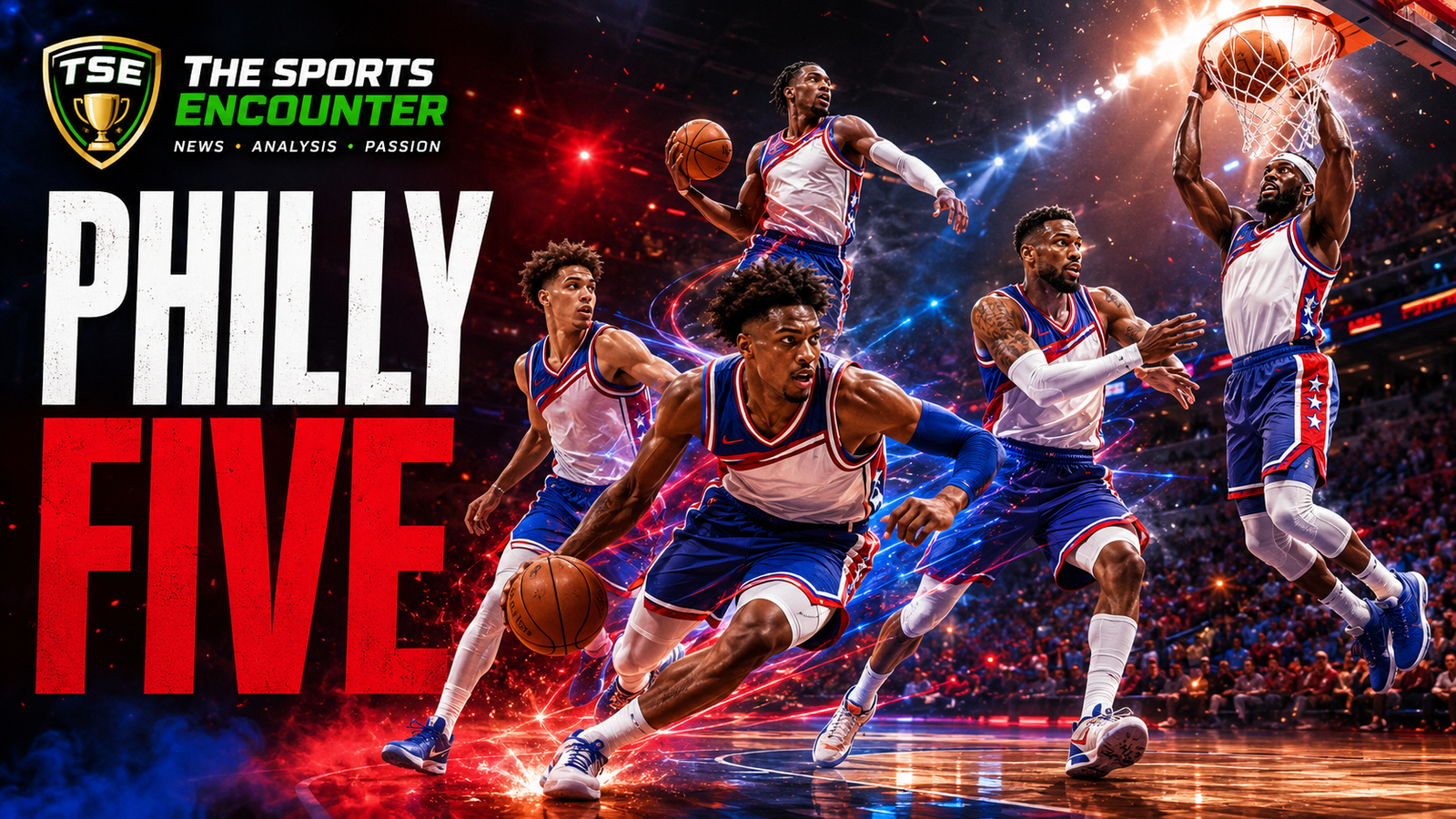
A projected starting five of Tyrese Maxey, VJ Edgecombe, Jaylen Brown, LeBron James and Joel Embiid looks almost unreal on a lineup graphic. It carries the weight of 36 All-Star selections, five MVP awards, a former NBA Finals MVP, one of the league’s most dangerous young guards, and one of the most explosive young players entering the NBA.
TL;DR
- The Philadelphia 76ers’ projected starting five of Tyrese Maxey, VJ Edgecombe, Jaylen Brown, LeBron James and Joel Embiid may be the NBA’s most headline-grabbing lineup.
- The group combines 36 All-Star selections and five MVP awards, driven mainly by LeBron James and Joel Embiid.
- Philadelphia’s biggest strengths are star power, size, shot creation, transition force, foul pressure and late-game options.
- The biggest questions are spacing, defensive assignments, Embiid and LeBron’s health, and how quickly VJ Edgecombe can handle a major role.
- The 76ers may have the NBA’s most powerful projected starting five on paper, but their season will depend on chemistry, availability and sacrifice.
That is not a normal starting lineup. That is a basketball argument.
After LeBron James officially joined the 76ers and selected No. 23 for the 2026-27 season, Philadelphia instantly became one of the league’s biggest stories. Reuters reported that James is attempting to become the first player to win NBA championships with four different franchises, after previous title runs with the Miami Heat, Cleveland Cavaliers and Los Angeles Lakers. The same report also noted that Philadelphia’s roster now includes Joel Embiid, Jaylen Brown, Tyrese Maxey and VJ Edgecombe around him.
The NBA’s official site remains the central destination for league scores, schedules, team news and player information through NBA.com. But right now, the most fascinating question may sit in Philadelphia.
Do the 76ers have the NBA’s best projected starting five?
The short answer is this: they may have the most dangerous one. Whether they have the best one depends on what version of each player shows up, how the ball moves, how the defense holds, and whether age, health and spacing stay under control.
For more NBA coverage, visit The Sports Encounter’s NBA hub.
Philadelphia’s Projected Starting Five At A Glance
On paper, the 76ers’ lineup has almost every ingredient a contender wants. Maxey brings speed. Edgecombe brings athletic pressure. Brown brings two-way force. LeBron brings control, intelligence and playoff memory. Embiid brings interior dominance, scoring gravity and elite rim protection when healthy.
| Position | Player | Primary Value | Biggest Question |
|---|---|---|---|
| PG | Tyrese Maxey | Speed, scoring, pull-up shooting, transition pressure | Can he balance aggression with playmaking beside LeBron? |
| SG | VJ Edgecombe | Athleticism, downhill pressure, defensive tools | Can he handle starting-level decision-making early? |
| SF | Jaylen Brown | Physical wing scoring, defense, playoff experience | How cleanly does he fit beside LeBron and Embiid? |
| PF | LeBron James | Playmaking, leadership, transition command, late-game control | Can he stay healthy and impactful at 41? |
| C | Joel Embiid | Elite scoring, foul pressure, post play, rim protection | Can he stay available deep into the season? |
This is why the Sky Sports-style graphic has traveled so widely across social media. It captures the shock value in one image. Philly’s lineup is not built around one star and four helpers. It is built around layers of star power.
LeBron and Embiid alone would make any lineup nationally relevant. Add Brown and Maxey, and the 76ers move from interesting to frightening. Add Edgecombe’s upside, and the conversation changes again.
That fifth name matters because the 76ers do not need Edgecombe to be a finished star on opening night. They need him to run, defend, attack gaps and punish the attention that others create. If he does that, Philadelphia’s lineup becomes much harder to guard.
Why This Lineup Looks So Overwhelming On Paper
The first reason is simple: the 76ers now have too many players who can bend a defense.
Embiid can draw double teams from the post, elbows and mid-post. LeBron can force rotations with one drive or one pass. Maxey can collapse defenses with speed. Brown can punish weak defenders through strength and shot-making. Edgecombe can pressure the rim before defenses are set.
Most NBA teams can survive one elite advantage creator. Great teams usually have two. Philadelphia may now have four proven ones, plus a rookie athlete who can become a fifth if his game translates quickly.
That creates a brutal defensive problem.
If opponents load up on Embiid, LeBron can organize the weak side. If they switch smaller defenders onto Embiid, Philadelphia can slow the game and punish the mismatch. If they send extra help at LeBron, Maxey can attack tilted coverage. If they hide weaker defenders on Edgecombe, the rookie’s cutting and transition speed can make that uncomfortable.
This is the kind of roster that can win possessions in multiple ways. It can play through the post. It can run after misses. It can isolate. It can hunt switches. It can close games through two-man actions between LeBron and Embiid, Maxey and Embiid, or LeBron and Brown.
For deeper legacy context, read our LeBron James vs Michael Jordan vs Kareem Abdul-Jabbar debate.
The LeBron-Embiid Partnership Changes Everything
The most fascinating part of this lineup is the LeBron-Embiid partnership.
LeBron has spent two decades solving defenses before they fully reveal themselves. Embiid has spent years drawing attention without always having the perfect late-game structure around him. Together, they could give Philadelphia a different kind of offensive clarity.
Embiid no longer has to create every hard shot alone. LeBron can enter the ball cleanly, manipulate help defenders, and create rhythm touches. That sounds basic, but it matters. Great big men become more dangerous when they receive the ball in the right place, at the right time, with the defense already moving.
LeBron also gives Embiid a release valve when playoff defenses shrink the floor. Philadelphia has often looked stuck in late postseason possessions when the ball stopped, the spacing tightened, and Embiid had to solve a crowd. LeBron gives them another decision-maker who can slow the panic.
The reverse is just as important.
Embiid gives LeBron a half-court anchor unlike almost anyone he has played with late in his career. Anthony Davis gave him elite defense and vertical finishing. Embiid gives him post scoring, face-up scoring, free-throw pressure, pick-and-pop range, and an offensive center who can be the first option for long stretches.
That could help LeBron conserve energy. He does not need to dominate every possession. He can choose moments, run the team, attack matchups, and become more selective.
At 41, selectivity may be the difference between a memorable final chapter and a season that looks better on posters than on the court.
Tyrese Maxey Is The Speed Engine
If LeBron is the brain and Embiid is the force, Maxey is the engine.
Philadelphia cannot afford to become slow, heavy and predictable. Maxey prevents that. His first step changes pace. His open-floor speed gives the 76ers a way to score before opponents can build the wall around Embiid. His shooting range also gives LeBron more room to operate.
Maxey’s role may be the most delicate of the five starters.
He has already grown into a major offensive player. Now he must learn how to stay aggressive beside LeBron without turning into a passenger. That balance is not automatic. Younger stars sometimes become too deferential around legendary players. Maxey cannot do that.
Philadelphia needs his violence in the open floor. It needs his pull-up threat. It needs him attacking closeouts, punishing switches, and forcing defenders to guard 94 feet of pressure.
The good news is that Maxey’s game should travel well beside LeBron. He does not need the ball for 18 seconds to matter. He can sprint into handoffs, relocate after passes, attack early offense, and punish defenses that overhelp.
That makes him one of the most important players in this entire experiment.
For more on LeBron’s Philadelphia move, read why LeBron wearing No. 23 for the 76ers became a major NBA storyline.
Jaylen Brown Gives Philadelphia A Different Kind Of Edge
Jaylen Brown may be the player who makes this lineup feel physically unfair.
He gives Philadelphia a powerful wing who can guard up, attack mismatches, pressure the rim and score through contact. In modern playoff basketball, strong two-way wings are gold. Brown has lived inside high-stakes postseason games. He understands the physicality, the scouting, the noise, and the way series change after every game.
That matters for a 76ers team that cannot treat this season like a long-term development project.
Brown also gives Philadelphia another player who can take a difficult matchup away from LeBron. That could prove huge during the regular season. LeBron should not have to guard the opponent’s most explosive wing every night. Brown can absorb many of those assignments, while Edgecombe develops and Embiid protects the back line.
Offensively, Brown’s fit will require discipline. He will need to attack decisively, avoid sticky possessions, and keep the ball moving when defenses load up. That has always been the tradeoff with high-powered lineups. Everyone must give up something.
If Brown embraces that, Philadelphia’s ceiling rises sharply.
VJ Edgecombe Is The Swing Piece
Every superteam has a pressure point. For Philadelphia, VJ Edgecombe may be it.
That is not a criticism. It is reality.
LeBron, Embiid, Brown and Maxey are known commodities. We know their strengths. We know their playoff value. We know their star profiles. Edgecombe is different. His athleticism is real, his upside is obvious, and his energy could be exactly what an older star-heavy lineup needs.
Still, starting as a young guard on a title-chasing team is not easy.
Opponents will test his handle. They will help off him if his shot becomes inconsistent. They will force him into quick reads. In the playoffs, every young player gets dragged into the spotlight until he proves he can survive there.
That is why Edgecombe’s job should be simple early.
Run. Defend. Cut. Attack open lanes. Hit open shots. Keep the ball moving. Bring energy without trying to prove he belongs on every possession.
If he grows into more, Philadelphia becomes terrifying. If he struggles, the 76ers may eventually need a more experienced floor-spacing guard in closing lineups.
Where The Lineup Could Be Historically Strong
The graphic’s most eye-catching line is the combined star power: 36 All-Star selections and five MVP awards. That gives Philadelphia one of the most decorated projected starting fives in recent memory.
But reputation alone does not win games. Fit does.
Here is where the 76ers could be elite:
| Area | Why Philadelphia Could Dominate |
|---|---|
| Shot creation | LeBron, Embiid, Maxey and Brown can all create offense in different ways. |
| Free-throw pressure | Embiid, LeBron and Brown can force contact and put opponents in foul trouble. |
| Transition offense | Maxey and Edgecombe can run, while LeBron remains one of the best open-floor passers ever. |
| Late-game options | Philadelphia can run offense through LeBron, Embiid, Maxey or Brown depending on matchup. |
| Size and physicality | Brown, LeBron and Embiid create a powerful frontcourt that can punish smaller teams. |
| National pressure experience | LeBron and Brown have lived through championship-level attention. |
This is where the best-starting-five argument becomes real.
Other teams may have cleaner spacing. Some may have younger cores. Others may have better regular-season continuity. But very few can match Philadelphia’s combination of proven greatness, physical size, scoring diversity and playoff experience.
For another look at how LeBron changes the business of the NBA, read our analysis of the 76ers’ expected national TV surge.
The Spacing Question Will Not Go Away
Now comes the uncomfortable part.
This lineup is stacked, but it is not flawless. The biggest tactical question is spacing.
Embiid can shoot, but defenses still prefer him near the middle of the floor. LeBron can hit threes, but opponents may go under screens depending on the matchup and stage of the game. Brown’s jumper can be streaky. Edgecombe may need time. Maxey is the cleanest high-volume spacing threat among the five.
That could create tight driving lanes if the ball sticks.
Philadelphia must avoid turning possessions into five talented players standing around the arc while one star attacks. That style can work in regular-season bursts, but playoff defenses live for predictability.
The 76ers need movement. They need Maxey flying off screens. They need Brown cutting when defenders turn their heads. They need Edgecombe living in the dunker spot and corners. They need Embiid screening as often as he posts. LeBron must keep the ball moving before defenses fully load up.
The good version of this team will look powerful and connected.
The bad version will look crowded.
Can They Defend At A Championship Level?
The defensive ceiling is also complicated.
Embiid gives Philadelphia a legitimate back-line anchor. Brown gives them a strong wing defender. LeBron can still defend smartly when engaged, especially in important possessions. Edgecombe has the athletic profile to become a useful defender. Maxey competes, even if size can become an issue against bigger guards.
The question is whether they can defend every night across an 82-game season.
LeBron’s workload must be managed. Embiid’s health must be protected. Brown cannot be asked to cover every difficult perimeter matchup. Edgecombe will make rookie mistakes. Maxey may be targeted by bigger guards and wings in switches.
That means Philadelphia’s defensive system must be intelligent. They cannot rely only on talent. They need clear assignments, strong communication, and a bench that can absorb matchup demands.
In the playoffs, defense becomes personal. Opponents will hunt weak points. They will force switches. They will run Maxey through screens. They will test Edgecombe’s discipline. They will pull Embiid away from the rim. They will make LeBron defend in space.
If Philadelphia handles those tests, the best-starting-five debate gets serious fast.
The Health Question Is The Real Season
No part of this 76ers story matters more than availability.
LeBron is 41. Embiid has carried major physical concerns across multiple seasons. Brown and Maxey play with force. Edgecombe is young, but rookies can hit walls when the NBA schedule becomes relentless.
Philadelphia’s best lineup may be terrifying. But how often will it play together?
That question may define the 76ers’ regular season more than any tactical issue. The franchise cannot chase every December win like it is Game 7. It needs to build chemistry while protecting its stars. That sounds easy until national television, fan expectation and Eastern Conference seeding pressure arrive together.
LeBron’s arrival has already turned the 76ers into appointment viewing. Reports indicate Philadelphia could receive the maximum 34 national TV appearances. That brings attention, but it also brings temptation. Marquee games create pressure to play. Christmas games create pressure to perform. Rivalry games create pressure to prove the experiment is working.
The smartest version of Philadelphia will think beyond the schedule.
The 76ers need this lineup healthy in April, May and June. Anything else is noise.
How Philadelphia Compares With Other Elite Starting Fives
The best-starting-five debate depends on the standard.
If the standard is pure name value, Philadelphia may win. LeBron, Embiid, Brown and Maxey make a louder top four than almost anyone. If the standard is proven chemistry, other teams may have a stronger claim. If the standard is regular-season durability, Philadelphia has questions. If the standard is playoff matchup fear, the 76ers are right near the top.
| Category | 76ers Rating | Reason |
|---|---|---|
| Star power | Elite | LeBron, Embiid, Brown and Maxey give Philadelphia massive name value. |
| Shot creation | Elite | Four starters can generate offense against set defenses. |
| Spacing | Good but uncertain | Maxey helps, but defenses may test LeBron, Brown and Edgecombe from deep. |
| Defense | High ceiling | Embiid and Brown anchor the structure, but age and matchups matter. |
| Durability | Major question | LeBron and Embiid’s health will shape the entire season. |
| Playoff upside | Championship level | The lineup has enough elite talent to beat anyone if healthy. |
The New York Knicks, Oklahoma City Thunder, Denver Nuggets, Boston Celtics, Minnesota Timberwolves and other contenders will all have arguments depending on roster movement, health and development. But Philadelphia’s starting five has a unique kind of pressure attached to it.
It is built to win now.
There is no gentle timeline when LeBron is 41 and Embiid is in win-now territory. The 76ers did not assemble this group to become interesting. They assembled it to chase a championship.
For more all-time NBA debate coverage, see our ranking of the 10 best NBA players ever.
What The 76ers Must Sacrifice To Make It Work
The hardest part of superteam basketball is rarely talent. It is sacrifice.
Maxey may have to give up some possessions. Brown may have to defend harder while taking fewer shots. LeBron may have to play more off the ball than usual. Embiid may have to screen, roll and pass earlier instead of trying to win every post touch alone. Edgecombe may have to accept a narrower role than his talent suggests.
That is where the season becomes psychological.
The 76ers need clarity before conflict appears. Who closes games? Who handles the ball late? Who takes the final shot? Which matchups decide closing lineups? How often does LeBron rest? How many minutes can Embiid safely play? How patient will the team be with Edgecombe?
These questions sound small in July. They become enormous in February after a three-game losing streak on national TV.
Philadelphia has enough experience to solve them. LeBron has played in every kind of pressure environment. Brown has won at the highest level. Embiid understands the burden of expectation. Maxey has grown through pressure rather than hiding from it.
Still, the locker room must become stronger than the noise around it.
Why This Lineup Could Become Must-Watch Basketball
Even with the questions, this 76ers lineup has the one thing every sports fan understands instantly.
It has event energy.
Every game could carry a storyline. LeBron returning to Los Angeles. LeBron facing Cleveland. Embiid against Nikola Jokic. Brown against Boston. Maxey against the league’s fastest guards. Edgecombe’s first real test against elite defenses. Christmas Day. Opening week. Playoff rematches. National TV debates.
The NBA understands that value. Broadcasters understand it too. Fans may tune in just to see whether the whole thing looks brilliant or unstable.
That is the beauty of this roster. It is not boring in either direction.
If it works, Philadelphia becomes a title monster. If it struggles, every game becomes a referendum on age, fit, ego and pressure. The league wins attention either way.
For The Sports Encounter’s wider basketball coverage, read why WNBA ticket prices are soaring in 2026.
Final Verdict: The 76ers May Have The NBA’s Most Dangerous Starting Five
So, do the Philadelphia 76ers have the NBA’s best projected starting five?
They have the strongest argument on star power. They may have the highest drama ceiling. They definitely have one of the league’s most intimidating combinations of scoring, size, intelligence and late-game options.
But the word “best” needs proof.
The 76ers must show that Maxey can stay aggressive beside LeBron. They must show that Brown can fit cleanly into a crowded star structure. They must show that Edgecombe can survive real defensive attention. They must protect Embiid’s body. They must manage LeBron’s season with patience and precision.
If those pieces hold, Philadelphia’s lineup can become the most feared five-man group in the league.
LeBron James did not just give the 76ers another famous name. He changed their basketball identity, their television value, their pressure level and their championship timeline in one move.
Philadelphia now has the kind of starting five fans debate before it ever plays a real game.
That is rare.
The next step is harder.
The 76ers have to turn the graphic into a team.
Breaking News
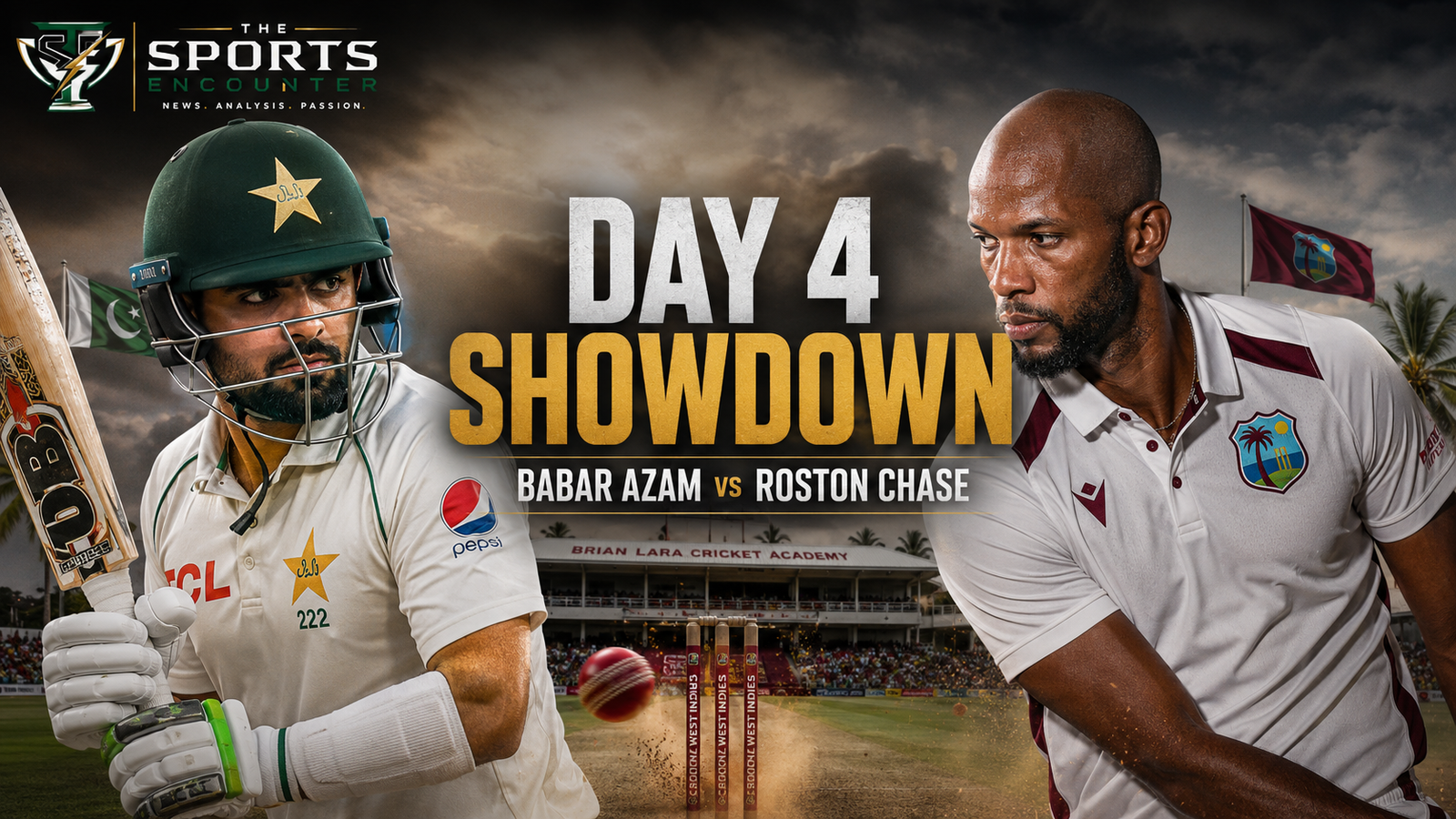
Why Pakistan’s Tarouba Chase Already Feels Bigger Than the Number
West Indies hold a 155-run lead after Day 3 at Tarouba, but Caribbean Test history says Pakistan’s chase could still become a thriller.

TL;DR
- West Indies ended Day 3 at 126/7, leading Pakistan by 155 runs in the first Test at Brian Lara Cricket Academy.
- The match is the first-ever Test at the Tarouba venue, giving every major performance extra historical value.
- Shan Masood scored the first Test hundred at the ground, while Justin Greaves’ five-wicket haul kept West Indies ahead.
- Caribbean Test history includes both giant fourth-innings chases and tiny targets successfully defended.
- Pakistan’s highest successful Test chase in the West Indies is only 36/3, making any target near 160 or above a major historical test.
- Day 4 could turn quickly if West Indies stretch the lead or Pakistan strike early.
Match Situation After Day 3
| Detail | Information |
|---|---|
| Match | West Indies vs Pakistan, 1st Test |
| Venue | Brian Lara Cricket Academy, Tarouba, Trinidad |
| Match Context | First-ever Test match at this venue |
| West Indies 1st Innings | 311 |
| Pakistan 1st Innings | 282 |
| West Indies 2nd Innings | 126/7 at stumps on Day 3 |
| Current Lead | West Indies lead by 155 |
| Pakistan Standout Batter | Shan Masood, century |
| West Indies Standout Bowler | Justin Greaves, five-wicket haul |
| Pakistan Standout Bowler | Mohammad Abbas |
| Day 4 Question | Can West Indies stretch the lead, or can Pakistan keep the target chaseable? |
Caribbean Fourth-Innings Record Snapshot
| Record Type | Match | Target | Final Chase / Score | Venue | Result |
| Highest successful chase in West Indies | West Indies vs Australia, 2003 | 418 | 418/7 | Antigua Recreation Ground | West Indies won by 3 wickets |
| Second-highest successful chase in West Indies | India vs West Indies, 1976 | 403 | 406/4 | Queen’s Park Oval | India won by 6 wickets |
| Pakistan’s highest successful chase in West Indies | West Indies vs Pakistan, 2017 | 32 | Pakistan 36/3 | Sabina Park | Pakistan won by 7 wickets |
| Lowest target defended in West Indies | West Indies vs Zimbabwe, 2000 | 99 | Zimbabwe 63 | Queen’s Park Oval | West Indies won by 35 runs |
| Another low target defended in West Indies | India vs West Indies, 1997 | 120 | West Indies 81 | Kensington Oval | India won |
The Chase Is Not Set Yet, But the Pressure Is
By stumps on Day 3, the first Test at Brian Lara Cricket Academy had reached the kind of position that gives Test cricket its old magic. West Indies were not safe. Pakistan were not beaten. The pitch had enough bite to keep bowlers interested, and every extra run from the West Indies tail had started to feel like pressure added to Pakistan’s fourth-innings chase.
West Indies reached 126 for 7 in their second innings, taking their lead to 155. That makes Day 4 beautifully balanced. Shamar Joseph and Kemar Roach will try to stretch the advantage. Pakistan will want Mohammad Abbas, Mohammad Ali, Khurram Shahzad, and Aamer Jamal to finish the innings quickly.
The situation carries extra weight because Brian Lara Cricket Academy is hosting its first-ever Test match. Shan Masood has already written himself into the venue’s history with its first Test hundred. Justin Greaves has added a five-wicket spell that may decide the match. Abbas has kept Pakistan alive with the kind of control that gives red-ball cricket its rhythm.
For readers following Pakistan’s red-ball reset under Babar Azam, this match connects directly with The Sports Encounter’s earlier analysis of Babar Azam’s return as Pakistan Test captain and what it means for a side still searching for stability.
Why 155 Already Looks Tricky at Tarouba
A fourth-innings target is never just a number. It depends on the surface, the bowling attack, the weather, the cracks, the bounce, and the mood inside the batting room.
At Tarouba, the first three days have shown that batters can survive if they stay organized, but they rarely dominate for long. West Indies made 311 first. Pakistan replied with 282. Neither innings exploded. Both sides needed discipline, patience, and lower-order resistance.
That is why West Indies’ current lead of 155 matters. If Joseph and Roach stretch it toward 180, Pakistan’s chase could become a genuine examination. If they push it near 200, West Indies may begin to feel the weight of history on their side.
The Sports Encounter’s Cricket Hub will be the natural place to follow how this Test fits into Pakistan’s wider tour and the continuing conversation around Test cricket’s survival, skill, and pressure.
Highest Successful Test Chases in the West Indies
Caribbean pitches have produced some of Test cricket’s most memorable fourth-innings stories. The biggest chase in Test history happened in the West Indies, and another famous chase came at Queen’s Park Oval in Trinidad.
| Rank | Team | Opponent | Target | Score | Venue | Year |
| 1 | West Indies | Australia | 418 | 418/7 | Antigua Recreation Ground | 2003 |
| 2 | India | West Indies | 403 | 406/4 | Queen’s Park Oval | 1976 |
| 3 | Australia | West Indies | 359 | 362/7 | Bourda, Guyana | 1978 |
| 4 | West Indies | Pakistan | 317 | 317/2 | Bourda, Guyana | 1958 |
| 5 | West Indies | Australia | 308 | 311/9 | Kensington Oval | 1999 |
| 6 | West Indies | England | 282 | 282/7 | Queen’s Park Oval | 1998 |
The top two are part of cricket folklore. West Indies’ 418 for 7 against Australia in Antigua remains the highest successful chase in Test history. India’s 406 for 4 against West Indies at Queen’s Park Oval in 1976 stood as the world record chase for 27 years.
That history tells Pakistan one thing clearly: fourth-innings runs can be made in the Caribbean. But those famous chases also required exceptional batting, partnerships, and calm under pressure.
Pakistan will need all three if West Indies stretch this target much further.
Pakistan’s Highest Successful Test Chase in the West Indies
Pakistan’s own fourth-innings chase history in the Caribbean is surprisingly modest.
Their highest successful run chase in a Test match in the West Indies appears to be only 36 for 3, when they chased a target of 32 against West Indies at Sabina Park, Kingston, in April 2017.
That match was the first Test of Pakistan’s 2017 tour of the West Indies. West Indies made 286 and 152. Pakistan responded with 407 in their first innings before finishing the chase at 36 for 3 to win by seven wickets.
Pakistan also won by nine wickets at Bourda, Georgetown, in 1988, but that chase was even smaller. West Indies made 172 and 292, Pakistan scored 435 and then reached 32 for 1 to complete the win.
That context makes the current Tarouba Test much more interesting. If Pakistan are asked to chase anything near 160, 180, or 200 on Day 4, they would not merely be trying to win the first Test of the series. They would also be attempting their highest successful Test run chase in the West Indies by a huge distance.
This is where the match moves beyond the scoreboard. Pakistan’s batters are not just chasing West Indies. They are chasing their own history in the Caribbean.
Lowest Targets Defended in the West Indies
The other side of Caribbean history is less comforting for chasing teams. Low targets have also been defended here, sometimes brutally.
| Rank | Defending Team | Chasing Team | Target | Chasing Score | Venue | Season |
| 1 | West Indies | Zimbabwe | 99 | 63 | Queen’s Park Oval | 1999/00 |
| 2 | India | West Indies | 120 | 81 | Kensington Oval | 1996/97 |
| 3 | Pakistan | West Indies | 188 | 81 | Kensington Oval | 2016/17 |
| 4 | England | West Indies | 194 | 46 | Queen’s Park Oval | 1993/94 |
The 99-run defence at Queen’s Park Oval remains one of the great reminders that small chases can become psychological traps. West Indies bowled Zimbabwe out for 63 while defending just 99 in 2000, a result that still sits among the most remarkable low-target wins in Test history.
Pakistan also know what it feels like to defend a modest target in the Caribbean. In 2017, they bowled West Indies out for 81 at Kensington Oval while defending 188. That result sits directly in the record trail now relevant to this Tarouba Test.
That is exactly why Pakistan cannot look at 155, 170, or even 190 as routine.
What History Means for Pakistan
Pakistan’s best route is simple in theory and difficult in execution: remove the last three West Indies wickets quickly, then make the chase feel small.
That starts with Mohammad Abbas. His spell on Day 3 kept Pakistan in the match because he forced West Indies to play with discipline every ball. Mohammad Ali and Khurram Shahzad also have to maintain that pressure early on Day 4. Aamer Jamal, after taking punishment from Shamar Joseph late on Day 3, will need sharper control if Babar Azam turns to him again.
Pakistan cannot allow Joseph and Roach to add a loose 30. Tail-end runs change fourth innings. They alter fields, delay confidence, and force batters to walk out feeling they are chasing more than the board says.
For broader context on why spells like Abbas’ matter in modern Test cricket, The Sports Encounter’s feature on whether old fast bowlers were better suited to Test cricket gives this match a useful technical frame.
What History Means for West Indies
West Indies know they are close to a defendable position. They do not need 300. They may not even need 220. On this pitch, with Justin Greaves confident after his five-wicket haul and the seamers finding enough assistance, a target near 190 could make Pakistan uncomfortable.
Greaves has already changed the match once. His five-for in Pakistan’s first innings turned Shan Masood’s historic century into a lead for West Indies rather than a platform for Pakistan control. If he finds the same rhythm in the fourth innings, West Indies will believe they can defend anything above 170.
Shamar Joseph’s late hitting also mattered because it gave the hosts emotional momentum. Three sixes against Aamer Jamal did not only add runs. They changed the sound of the day. They made West Indies feel aggressive again.
That Caribbean competitive edge has surfaced in other recent West Indies stories covered by The Sports Encounter, including Jason Holder’s T20I impact against Sri Lanka and West Indies’ final T20I win over Sri Lanka. This Test now asks whether that spirit can hold across the longer format.
Shan Masood’s Century Still Shapes the Match
Pakistan are still alive because Shan Masood gave them one of the most important innings of the Test. His century became the first Test hundred at Brian Lara Cricket Academy, and it came in a match where batting has rarely looked comfortable.
That innings also matters because of Pakistan’s captaincy story. Babar Azam is back as Test captain after three years. Masood, the man recently replaced, responded with a century rather than noise. In a low-scoring Test, that was not just personal form. It was match substance.
The Sports Encounter’s preview of the series, West Indies vs Pakistan Test Series: Babar Azam Begins Red-Ball Reset, framed this tour as a test of Pakistan’s red-ball direction. Tarouba has delivered that test immediately.
Day 4 Could Decide the Match in One Hour
The first hour of Day 4 now carries the weight of the Test.
If Pakistan remove West Indies quickly, a chase around 160 to 170 will look difficult but manageable. If West Indies bat another 45 minutes and reach a lead of 190 or beyond, Pakistan’s dressing room will start remembering every low target ever defended in the Caribbean.
That is the beauty of this match. History offers both warnings and hope.
The Caribbean has seen 418 chased. It has also seen 99 defended. Pakistan, meanwhile, have never chased anything remotely close to the likely Tarouba target in a winning Test in the West Indies.
For Pakistan, the equation is clear: take three wickets fast, then bat with the calm that fourth-innings chases demand.
For West Indies, every run from Joseph and Roach may turn into pressure, belief, and maybe the difference between a good fight and a famous win.
Breaking News
Glasgow 2026 Day 4 Wrap-Up: Australia Pulls Away as Nigeria, Jamaica and Scotland Light Up the Games
Australia pulled away at the top of the Glasgow 2026 medal table on Day 4, but Nigeria, Jamaica, Canada, Scotland, and England all delivered major moments across swimming, athletics, gymnastics, weightlifting, and Para sport as the Commonwealth Games moved into full competition mode.


Four days into Glasgow 2026, the medal table has started to look less like a contest at the top and more like an Australian statement.
Australia ended Monday, July 27, with 26 gold, 13 silver and 20 bronze medals, giving it 59 overall. That is a commanding lead after Day 4 and reflects the depth of a team that has turned the pool into its strongest weapon while still finding gold across other venues.
England remained second with 8 gold, 13 silver and 11 bronze for 32 total medals. Canada sat third with 7 gold, 8 silver and 6 bronze. Nigeria climbed into fourth with 6 gold and 4 silver, while Scotland’s 5 golds kept the host nation firmly inside the top five.
For a compact Games built around 10 sports, six Para sports and four venues, Day 4 showed exactly why Glasgow 2026 can still deliver a full multi-sport punch. The official Glasgow 2026 Commonwealth Games website described the day as one packed with standout moments across swimming, athletics, gymnastics and weightlifting.
For more major-event coverage, visit The Sports Encounter’s FIFA World Cup 2026 hub.
Glasgow 2026 Medal Table After Day 4
| Rank | Nation | Gold | Silver | Bronze | Total |
|---|---|---|---|---|---|
| 1 | Australia | 26 | 13 | 20 | 59 |
| 2 | England | 8 | 13 | 11 | 32 |
| 3 | Canada | 7 | 8 | 6 | 21 |
| 4 | Nigeria | 6 | 4 | 0 | 10 |
| 5 | Scotland | 5 | 4 | 2 | 11 |
| 6 | South Africa | 3 | 3 | 5 | 11 |
| 7 | Malaysia | 3 | 0 | 2 | 5 |
| 8 | India | 2 | 5 | 3 | 10 |
| 9 | Jamaica | 2 | 0 | 0 | 2 |
| 10 | New Zealand | 1 | 4 | 3 | 8 |
The Pool Remains Australia’s Power Base
Australia’s Day 4 dominance again began in the water.
Jenna Forrester delivered one of the standout Australian performances by winning the women’s 400m individual medley. Sam Williamson added another gold in the men’s 50m breaststroke, while Meg Harris took the women’s 100m freestyle. Alex Perkins continued Australia’s strong butterfly campaign with gold in the women’s 100m butterfly.
The women’s 4x200m freestyle relay then added another layer to Australia’s pool control, with England taking silver and New Zealand claiming bronze.
This was not only about medal volume. It was about pressure management. Australia looked like a team that expects to win and has enough depth to keep winning even when the schedule becomes heavy. That is what separates a strong swimming nation from a Games-defining one.
For readers who enjoy performance rankings and all-time debates, The Sports Encounter’s ranking of the 10 best NHL players ever uses a similar data-and-context approach.
Rose Davies Gives Australia a Historic Track Moment
Australia’s Day 4 was not limited to swimming.
Rose Davies won gold in the women’s 10,000m, giving Australia one of its most meaningful athletics moments of the Games so far. Her victory mattered because it moved Australia’s success beyond the pool and into the opening night of athletics.
The time, the setting and the timing all helped. Athletics often changes the emotional rhythm of the Commonwealth Games. Swimming can build the early medal table, but track and field gives the Games a different stage, with national pride playing out in front of a louder, more direct crowd.
TL;DR
Day 4 of the Glasgow 2026 Commonwealth Games belonged to Australia on the medal table, but the day’s emotional range stretched far beyond one nation. Australia surged to 26 gold medals and 59 total medals after another dominant swimming night and key wins in athletics and gymnastics. England stayed second overall, Canada moved strongly with hammer throw and gymnastics success, Nigeria turned weightlifting into a gold rush, Jamaica announced itself on the track and in the high jump, while hosts Scotland found one of their loudest moments through Ben Sandilands’ Para athletics gold.
Davies’ win gave Australia a statement at Scotstoun Stadium and reminded rivals that the medal-table leader is not relying on one sport alone.
Nigeria Turns Weightlifting Into a Statement
Nigeria had one of the most important national days of Glasgow 2026.
Rafiatu Lawal won gold in the women’s 58kg weightlifting event, continuing Nigeria’s strong start in the sport. Edidiong Umoafia also delivered gold in the men’s 71kg class, helping Nigeria climb to six gold medals by the end of Day 4.
That number matters.
Nigeria’s medal table position is built on gold efficiency. With 10 total medals and six golds, the team has converted podium chances into top-step finishes at an impressive rate. That is why Nigeria sat fourth overall despite having fewer total medals than Scotland, South Africa and India.
For African sport, this was a day with real visibility. Nigeria’s weightlifters did more than win medals. They gave the country a sharp identity at these Games: powerful, disciplined and dangerous whenever the bar is loaded.
For more global sports stories with national pride at the center, read our feature on Sidny Lopes Cabral’s World Cup wonder goal for Cape Verde.
Jamaica Arrives in Athletics With Two Golds
Jamaica waited for athletics, and then made its entrance properly.
Demario Prince won the men’s 110m hurdles in 13.17 seconds, giving Jamaica a sharp sprint-hurdles statement. Soon after, Romaine Beckford added gold in the men’s high jump with a clearance of 2.25m.
Two golds in quick succession changed Jamaica’s position on the medal table and gave its Games campaign a new feel.
Jamaica does not need a long explanation when athletics begins. The country carries a deep track-and-field identity, and even when the event is not the 100m or 200m, Jamaican victories still bring a certain electricity to a Games.
Prince’s hurdles gold was direct and fast. Beckford’s high jump win added variety. Together, they made Day 4 feel like Jamaica had finally opened its main chapter at Glasgow 2026.
Canada Finds Gold Through Power and Precision
Canada’s Day 4 was built on two very different qualities: raw power and technical control.
Ethan Katzberg won the men’s hammer throw with a massive 80.97m effort. It was the kind of performance that made the event feel settled early. Katzberg entered with world-class authority and performed like an athlete fully comfortable with being the target.
Canada also collected gymnastics gold through Jordan Carroll in the men’s pommel horse and Lia-Monica Fontaine in the women’s vault, while Felix Dolci won the men’s rings final.
That mix helped Canada move to seven gold medals and 21 total medals. More importantly, it showed range. Canada was not relying on one discipline. It found medals through field events, apparatus finals and steady podium depth.
For readers tracking North American sports trends, The Sports Encounter’s NBA coverage hub offers more stories around elite performance, pressure and legacy.
Scotland Gets Its Home-Crowd Moment
Every host nation needs moments that belong to the crowd as much as the athlete.
Ben Sandilands gave Scotland one of those moments by winning gold in the men’s 1500m T20 in 3:57.25. It was one of the loudest emotional wins of Day 4 because it joined performance with place. A Scottish athlete winning at home, in Para athletics, in front of a crowd hungry for a shared release, gave Glasgow a proper Games memory.
Scotland ended Day 4 with 5 gold, 4 silver and 2 bronze medals, good enough for fifth on the medal table. That is a strong position for the host nation, especially in a Games where Australia has already opened a major gap at the top.
Hosts do not need to dominate a Games to define parts of it. They need moments that feel local, loud and lasting. Sandilands gave Scotland exactly that.
England Stays Second Through Depth
England’s Day 4 was not as explosive as Australia’s, but it kept the team second overall.
Luke Whitehouse won gold in the men’s floor exercise, while Thomas Young took the men’s T20 100m title in 11.11 seconds. Sophie Hahn added gold in the women’s T38 100m, and Brock Whiston won the women’s SB8 100m breaststroke.
Adam Ramsay-Peaty’s bronze in the men’s 50m breaststroke also carried attention because of his name, profile and comeback story.
England’s medal table strength is based on spread. The team has 32 medals after Day 4, with 13 silvers and 11 bronzes showing depth across events. The challenge is conversion. Australia has raced ahead because it has turned more finals into gold. England has stayed visible because it keeps reaching podiums.
That difference may define the rest of the Games.
India Adds Weightlifting and High Jump Value
India’s Day 4 was quieter than Australia’s or Nigeria’s, but still important.
India’s medal table showed 2 gold, 5 silver and 3 bronze medals after Day 4. The standout athletics result came through Sarvesh Kushare, who took silver in the men’s high jump behind Jamaica’s Romaine Beckford after clearing the same height of 2.25m.
India also continued to find relevance in weightlifting and boxing, two areas where the country entered Glasgow with real medal expectations.
The broader story for India is still developing. A 10-medal total keeps the team in the top 10, but the next phase will decide whether this becomes a solid Games or a missed opportunity. Boxing quarter-finals, weightlifting finals and athletics events could still reshape that conversation.
For more cricket and India-focused sports coverage, visit The Sports Encounter’s Cricket hub.
Day 4 Changed the Shape of Glasgow 2026
Day 4 mattered because it widened the Games.
The first few days of any Commonwealth Games can feel dominated by the pool and early medal-table movement. Monday changed that. Athletics arrived with genuine force. Weightlifting gave Nigeria a golden identity. Gymnastics spread medals across Australia, England and Canada. Para sport created some of the day’s most emotional wins.
That is the beauty of the Commonwealth Games when they work well. The medal table tells one story, but the day itself tells many.
Australia is clearly the team to chase. England has depth but needs more gold conversion. Canada looks balanced. Nigeria looks dangerous whenever strength sports come into play. Scotland has enough home energy to keep producing headline moments. Jamaica has entered the athletics conversation with perfect timing.
For broader tournament analysis, read our feature on how World Cup 2026 viewership reflected soccer’s rise in the United States.
Final Verdict
Day 4 of Glasgow 2026 gave the Commonwealth Games its clearest shape so far.
Australia is no longer simply leading. It is pulling away. The swimming team remains the main engine, but Rose Davies’ 10,000m gold showed that Australia can also hurt rivals in athletics.
Behind that dominance, the Games became richer. Nigeria’s weightlifters gave their country a golden day. Jamaica announced itself through hurdles and high jump. Canada found medals through hammer throw and gymnastics. Scotland got a home-crowd moment through Ben Sandilands. England stayed second by stacking podiums across sport and Para sport.
The medal table may say Australia owns the Games right now.
Day 4 said something wider: Glasgow 2026 has moved from opening rhythm into full competition mode.
The chase is on, even if Australia has already made everyone else chase from a long way back.
The Sports Encounter’s Commonwealth Games coverage focuses on results, medal-table movement, athlete stories, tactical context, national trends and the biggest talking points from Glasgow 2026.


Sidny Lopes Cabral’s World Cup Wonder Goal Gave Cape Verde a Moment No One Can Take Away
Sidny Lopes Cabral’s stunning 25-yard strike against Argentina gave Cape Verde its defining World Cup 2026 moment. The 23-year-old left-back...


Gianni Infantino Defends FIFA World Cup 2026 Decisions in an Open Letter
Gianni Infantino says critics allowed hate to obscure the joy of FIFA World Cup 2026. Fans, players, officials, and national...


FIFA World Cup 2026 Final Viewership Confirms Soccer’s Rise in the US
The FIFA World Cup 2026 final drew nearly 63 million U.S. viewers across Fox, Telemundo, and Peacock. The record audience,...


Who Made It to the Fan-Voted Dream Team of the FIFA World Cup 2026?
The fan-voted FIFA World Cup 2026 Dream Team features standout performers from Spain, France, Argentina, England, Norway, and Cape Verde,...


How Youngster Lamine Yamal Came of Age in the FIFA World Cup 2026
Lamine Yamal arrived at the FIFA World Cup 2026 as football’s most celebrated teenager. He left as a world champion...


Meet the Top 10 Goal Scorers of the FIFA World Cup 2026
Kylian Mbappé’s speed, movement, and ruthless finishing produced 10 goals and another Golden Boot, but the FIFA World Cup 2026...


Why FIFA Picked Rodri as the Best Player of the FIFA World Cup 2026
Rodri did not lead the FIFA World Cup 2026 scoring charts, but Spain’s captain controlled the spaces, passing lanes, defensive...


From Johannesburg to New Jersey: Spain’s Two World Cup Heroes
Separated by sixteen years and two different generations, Andrés Iniesta and Ferran Torres delivered the goals that defined Spain's two...


Ferran Torres Ends Argentina’s Resistance as Spain Rule the World Again
Ferran Torres struck in extra time as Spain’s relentless control overwhelmed Argentina, ended Lionel Messi’s title defense, and delivered La...


Saka Hat-Trick Outshines Mbappé Record in World Cup Bronze Match
Bukayo Saka scored a hat-trick as England survived a fierce French comeback to win a record-breaking 6-4 World Cup third-place...


Is Lionel Messi the Greatest Athlete Ever? The Case, By the Numbers
Lionel Messi’s case reaches far beyond football. From a World Cup title and eight Ballon d’Or awards to 900 career...


From Messi to Yamal, 19 years ago
From Lionel Messi’s rise as Barcelona’s young prodigy to Lamine Yamal’s emergence as football’s next sensation, this story explores the...


France vs England: The 2026 World Cup Game Nobody Wanted, But Won’t Want to Miss
France and England meet in the 2026 World Cup third-place playoff in Miami after painful semifinal defeats. The bronze final...


Argentina vs. Spain World Cup 2026 Final: Messi, Yamal, Team News and Full Build-Up
Argentina and Spain meet in the 2026 FIFA World Cup final at MetLife Stadium, with Lionel Messi chasing a historic...

What Went Wrong for England in the World Cup 2026 Semi-Final Defeat to Argentina
England led Argentina through Anthony Gordon’s second-half goal but surrendered control as Enzo Fernández and Lautaro Martínez completed a dramatic...


Pelé’s 1958 World Cup Final Shirt Sells for $4.9 Million in Historic Sotheby’s Auction
Pelé’s blue No. 10 shirt from Brazil’s historic 1958 World Cup final victory over Sweden has sold for $4.9 million...


Messi Engineers Argentina’s Late Escape as England Falter in Atlanta
Lionel Messi created two late goals as Argentina punished England’s retreat, completed a dramatic 2-1 comeback in Atlanta, and reached...


Top 10 Players of the FIFA World Cup 2026
Mbappé leads the tournament in goal contributions, Messi keeps rewriting World Cup history, and Haaland transformed Norway. We rank the...


How VAR Became a WAR at the FIFA World Cup 2026?
VAR was introduced to correct obvious mistakes. At World Cup 2026, sensors, expanded reviews, disputed red cards, and accusations of...


Why Do Player Friendships, Bromances, and Reunions Fascinate Fans?
Haaland and Bellingham, Mbappé and Hakimi, Messi and Suárez. Football friendships give fans warmth, humor, loyalty, and emotional stories that...


Mitch Baker’s Dream Debut Pushes Indonesia Into ASEAN Championship Race
Mitch Baker marked his Indonesia debut with a hat trick as the Garuda overwhelmed Cambodia 5-1 and moved directly into...

Singapore Finds Control Against Timor-Leste, but the Hardest Group A Tests Await
Singapore beat Timor-Leste 2-0 through headed goals from Ilhan Fandi and Song Ui-young, strengthening their semifinal hopes ahead of tougher...


Vietnam’s Seven-Goal Warning Opens ASEAN Championship 2026 With Late Singapore Drama
Defending champion Vietnam opened the ASEAN Championship with a ruthless 7-0 victory over Timor-Leste, while Singapore needed Ilhan Fandi’s spectacular...


Goalkeeper Timeouts Could Change English Soccer More Than Fans Realize
English football’s proposed goalkeeper timeout trial may look like a small rule change, but it could reshape how teams manage...


Manchester United’s 5-0 Win Over Rosenborg Reveals Carrick’s Bigger Rebuild
Manchester United’s 5-0 win over Rosenborg revealed more than preseason progress. Michael Carrick’s evolving tactics, Joshua Zirkzee’s influence, the rise...


Premier League’s £589.5 Million Gamble: Why Five Players Now Carry Record-Breaking Expectations
Alexander Isak, Morgan Rogers, Florian Wirtz, Elliot Anderson and Moisés Caicedo now occupy the five highest positions in Premier League...


Is Bruno Guimarães Joining Arsenal? Here Is Why It Matters
Bruno Guimarães has reportedly told Newcastle United he wants to leave and join Arsenal, turning one of the summer’s biggest...


Chelsea Bring Geovany Quenda Into Their Long Game Until 2034
Chelsea have completed the arrival of Geovany Quenda from Sporting Lisbon, with the Portuguese winger signing until 2034 after a...


Who Were the 10 Best NHL Players Ever? A Ranking Built to Survive the Argument
Wayne Gretzky leads our evidence-based ranking of the 10 best NHL players ever, but Bobby Orr, Mario Lemieux, Gordie Howe,...


Patrick Kane Comes Home as Jet Greaves Earns His NHL Future
Patrick Kane is returning to the Chicago Blackhawks, while the Columbus Blue Jackets have committed three years to Jet Greaves....


Meet the New Most Expensive Player in NHL History
The Anaheim Ducks matched a five-year, $90 million offer sheet to keep Leo Carlsson, making the 21-year-old center the highest-paid...


Rangers Send Adam Edstrom to Predators as Nashville Buys Size and New York Clears a Path
The Rangers moved Adam Edstrom to Nashville for Massimo Rizzo and a fifth-round pick, giving the Predators size and New...


Pittsburgh Penguins Have a New Owner After NHL Nod
The NHL has approved the Hoffmann family’s purchase of the Pittsburgh Penguins, ending Fenway Sports Group’s control and opening a...

Will Jacks Holds MI London Together as Southern Brave Lose Last-Ball Thriller
Will Jacks’ calm 54 and Ollie Pope’s last-ball finish gave MI London a tense three-wicket win over winless Southern Brave...


Clarke, Smeed Power Birmingham Phoenix Past Trent Rockets in 418-Run Hundred Thriller
Joe Clarke and Will Smeed shared a 104-run opening stand before Birmingham Phoenix survived powerful innings from Finn Allen, Ben...


Liam Livingstone Fights Hard, But Manchester Super Giants Beat London Spirit by 7 Runs
Liam Livingstone crossed 1,000 Hundred runs and produced a remarkable all-round performance, but Tim Seifert and Sonny Baker helped Manchester...


Phil Salt Anchors Tricky Chase as Welsh Fire Beat Southern Brave in The Hundred 2026
Phil Salt delivered a patient unbeaten 47 on a difficult Southampton pitch as Welsh Fire chased 136 with two balls...

Nicholas Pooran Powers MI London to 7-Wicket Victory in Hundred 2026 Opener
Nicholas Pooran produced a devastating unbeaten 58 from 22 balls as MI London recovered from 4 for 2 to defeat...

Wimbledon Men’s Singles Champions: How Triumph on Grass Changed Their Careers
From Spencer Gore and William Renshaw to Roger Federer, Novak Djokovic, Carlos Alcaraz, and Jannik Sinner, discover how every Wimbledon...

Guo Hanyu and Kristina Mladenovic Turn Trust Into Wimbledon 2026 Glory
Guo Hanyu and Kristina Mladenovic turned a new partnership into Wimbledon glory, defeating Gabriela Dabrowski and Luisa Stefani in a...


Jannik Sinner’s Wimbledon Defense Against Novak Djokovic and Alexander Zverev
Jannik Sinner’s Wimbledon 2026 defense began with a five-set escape and ended with victories over Novak Djokovic and Alexander Zverev....

Muchova, Noskova Turn Wimbledon Women’s Singles Final Into an All-Czech Affair
Karolina Muchova saved match point to beat Coco Gauff in a Centre Court thriller, while Linda Noskova handled Marta Kostyuk...


Ostapenko and Arevalo Win Wimbledon 2026 Mixed Doubles Title
Jelena Ostapenko and Marcelo Arevalo fought back from a set down to beat Storm Hunter and Marc Polmans in the...


When Paris Welcomed Two New French Open Champions
Paris, France – June 9, 2026: There are days at Roland Garros when tennis feels like a sport. Then there...


French Open 2026: Mirra Andreeva Becomes a Grand Slam Reality
Mirra Andreeva relived the memories of Monica Seles on Super Sunday at Roland Garros to lift her maiden French Open...


Alexander Zverev Beats Flavio Cobolli, Agony to Lift Maiden French Open Title
Paris, France – June 7, 2026: While some titles are won in two weeks, Alexander Zverev took years of frustration,...
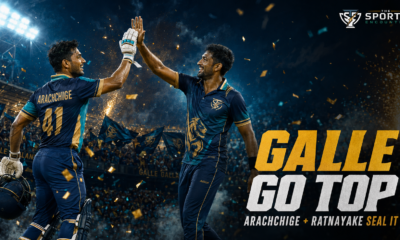

Galle Gallants Crush Jaffna Kings as Wellalage’s Lone Fight Gets Buried Under a Bigger Crisis
Galle Gallants returned to the top of the LPL 2026 table with a 60-run win over Jaffna Kings, as Sahan...


Janith Liyanage Saves Colombo Kaps From Kandy Royals in LPL 2026
Janith Liyanage’s unbeaten 52 rescued Colombo Kaps before Mujeeb Ur Rahman’s three wickets and disciplined death bowling sealed a 23-run...
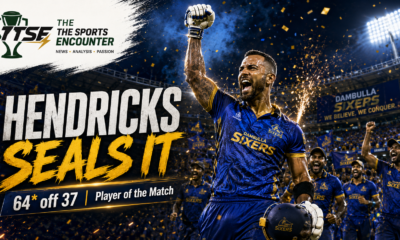

Reeza Hendricks Lifts Dambulla Sixers to 2nd Spot in LPL 2026
Reeza Hendricks struck an unbeaten 64 off 37 balls as Dambulla Sixers chased down 179 with 23 balls remaining to...
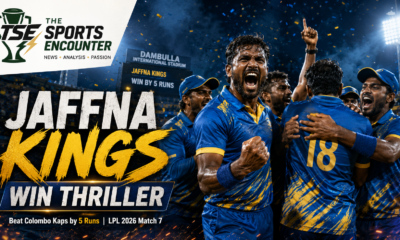

LPL 2026: Jaffna Kings Beat Colombo Kaps by 5 Runs Despite Sahan’s Late Assault
Chamindu Wickramasinghe’s explosive 43 off 22 balls and a disciplined bowling display helped Jaffna Kings withstand Wanuja Sahan’s late charge...
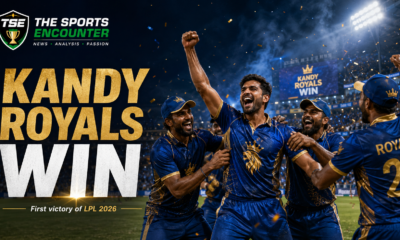

Kandy Royals Reverse Losing Trend, Register 1st Win in Lanka Premier League 2026
Kandy Royals secured their first victory of the Lanka Premier League 2026 with a commanding 43-run win over Dambulla Sixers....
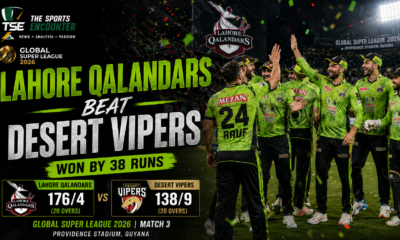

Bracewell Leads from the Front as Lahore Qalandars Stay Unbeaten
Michael Bracewell produced a commanding all-round performance before Usama Mir triggered a dramatic collapse as Lahore Qalandars defeated Desert Vipers...


Rovman Powell, Guyana Amazon Warriors Hold Never to Beat San Francisco Unicorns in Rain-Hit GSL Chase
Rovman Powell stayed unbeaten on 29 as Guyana Amazon Warriors survived a late collapse to defeat San Francisco Unicorns by...
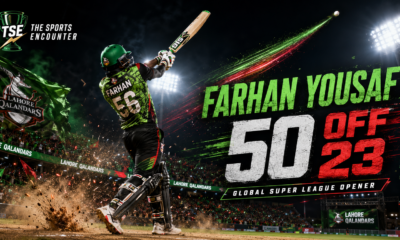

Farhan Yousaf Announces Arrival as Lahore Qalandars Win Global Super League Opener
Farhan Yousaf’s fearless 23-ball fifty and Shayan Jahangir’s composed 65 helped Lahore Qalandars defeat Perth Scorchers XI by 16 runs...
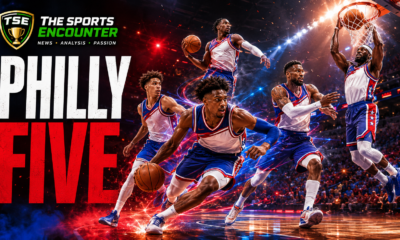

Do the 76ers Have the NBA’s Best Starting Five After Adding LeBron James?
Philadelphia’s projected starting five now carries 36 All-Star selections, five MVP awards, elite scoring, defensive power, and a rookie wild...


How LeBron James Turns Philadelphia 76ers Into the NBA’s Must-Watch Team
LeBron James has not played a minute for the 76ers yet, but his arrival has already transformed Philadelphia into one...

Philadelphia 76ers Officially Announce LeBron James Signing, Assign 23 Jersey
LeBron James will wear No. 23 for the Philadelphia 76ers after officially joining the franchise for what he called his...

LeBron James vs Michael Jordan vs Kareem Abdul-Jabbar: Who Is the Best NBA Player Ever?
LeBron James, Michael Jordan, and Kareem Abdul-Jabbar define three different versions of basketball greatness. This in-depth NBA GOAT debate compares...


LeBron James Joins the 76ers, Changes Philadelphia’s Title Math
LeBron James has chosen the Philadelphia 76ers for his record-extending 24th NBA season, turning one of basketball’s loudest late-career questions...