Editor's Choice
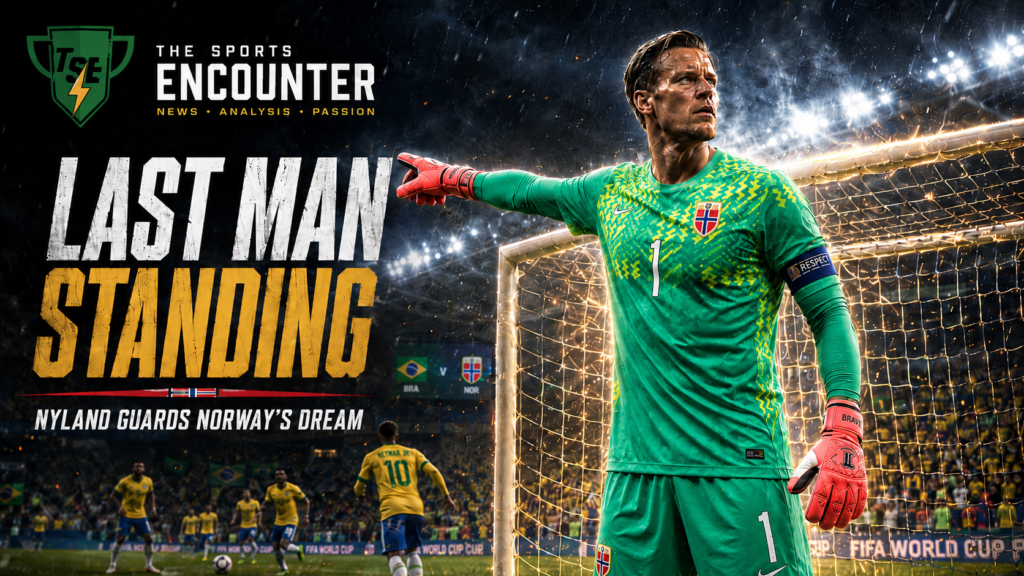
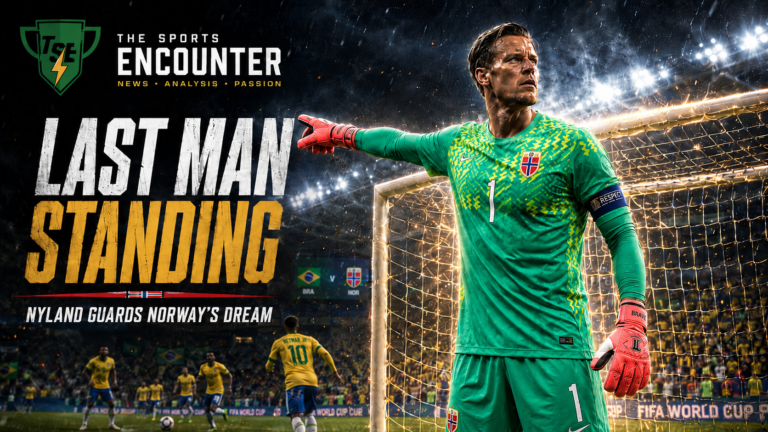
The Nordic Who Weathered the Storm Like a Last Man Standing
Erling Haaland scored the goals, but Ørjan Nyland gave Norway the right to believe. Against Brazil, the veteran goalkeeper became the calmest man inside the storm.
Some World Cup matches are remembered by the scorer.
A few are remembered by the goalkeeper who refused to let the story end too early.
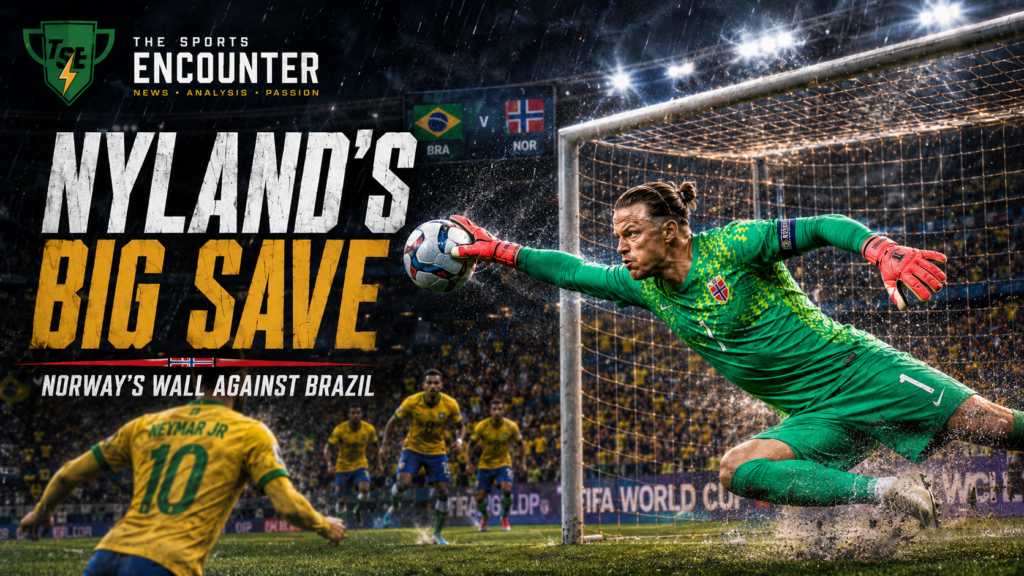
Norway’s 2-1 win over Brazil in the FIFA World Cup 2026 Round of 16 will naturally travel through the world with Erling Haaland’s name attached to it. That is fair. Haaland scored twice in the final 11 minutes, first with a towering header and then with a low finish from the edge of the box, to send Norway into their first World Cup quarterfinal.
Yet before Haaland could become the headline, Ørjan Nyland had to become the wall.
Brazil had the early penalty. Brazil had the crowd’s emotional pull. Brazil had Vinícius Júnior, Gabriel Martinelli, Matheus Cunha, Bruno Guimarães, and later Neymar. Brazil had the pressure that comes with five stars on the shirt and a nation trained to expect quarterfinals as a minimum.
Nyland had one job.
Hold the line until Norway could find its moment.
He did more than that. He gave Norway the right to keep dreaming.
For a wider account of the match drama, read The Sports Encounter’s full report on how Haaland turned Brazil’s missed penalty into a World Cup nightmare.
Brazil Had the Storm. Nyland Took the Lightning
The match shifted after a VAR review in the first half.
Kristoffer Ajer slid in on Matheus Cunha inside the area. Referee Ismail Elfath initially did not award a penalty, but the decision changed after video review. Brazil had the kind of early knockout chance that often decides tournaments before the scoreboard knows what happened.
Bruno Guimarães stepped up.
The idea was clever. A stuttering run-up was meant to make Nyland move first. The Norwegian goalkeeper did move, but he moved the right way. He went to his left and turned the shot wide.
That was not only a save.
It was a message.
Brazil could have gone ahead. Norway could have been dragged into panic. Haaland could have spent the rest of the night chasing a game shaped by Brazilian rhythm. Instead, Nyland kept it 0-0 and changed the emotional weather inside the stadium.
NBC Sports called the penalty stop a “massive moment” and noted how Brazil’s fans were stunned into silence after the save.
That silence mattered.
For Norway, it created belief.
For Brazil, it planted doubt.
The Numbers Tell the Pressure Story
Goalkeeper tributes can easily become emotional without evidence. Nyland’s night does not need exaggeration.
The match data shows what he had to survive.
ESPN’s match stats listed Brazil with 2.75 expected goals to Norway’s 0.84, 34% possession to Norway’s 66%, four shots on goal to Norway’s five, three big chances created, and four big chances missed. ESPN also credited Norway with four saves.
Sofascore’s halftime report showed the same pattern early: Brazil had created the stronger danger despite having less of the ball. At the break, Brazil had 1.01 xG to Norway’s 0.35, with Brazil leading shots 7-4 and touches in the box 20-4. Nyland had already saved the penalty and was rated 7.8 at halftime, the best score on the pitch at that point.
That is the match in miniature.
Norway owned territory for long spells, but Brazil owned fear.
Every time Brazil broke, the game felt like it could tear open. Vinícius drove at defenders. Martinelli tested the space. Cunha won the penalty. Endrick later got a golden chance after a Vinícius pass but could only send his effort wide after a heavy touch.
Nyland had to live with all of that.
A goalkeeper in a game like this does not only save shots. He manages waiting. He manages the seconds between danger. He manages defenders who know Brazil can punish one loose body shape. He manages his own pulse when the whole stadium expects the next yellow shirt to score.
The Oldest Kind of Goalkeeping Heroism
Modern football loves goalkeepers who pass through pressure.
That matters, of course. Norway benefited from Nyland’s long-ball work too. Sofascore credited him at halftime with completing 9 of 16 long balls, an important detail because those clearances helped Norway escape pressure and reset the field.
Still, this was a night for the older kind of goalkeeping.
Read the penalty. Stay big. Hold the near post. Protect the box. Keep calm when the opponent smells blood. Trust your hands when the game becomes wild.
Nyland did all of it with the face of a man who has lived a full football life.
At 35, he is not a new star arriving with perfect branding and a global campaign around him. His career has moved through Hødd, Molde, Ingolstadt, Aston Villa, Norwich City, Bournemouth, Reading, RB Leipzig, and Sevilla. Transfermarkt lists him as a 1.92m Norwegian goalkeeper from Volda, born on September 10, 1990, and without a club since July 1, 2026 after leaving Sevilla.
That makes this World Cup run feel even more human.
Nyland is not the loudest name in Norway’s squad. Haaland owns the global spotlight. Martin Ødegaard owns the creative image. Antonio Nusa brings youth and electricity. Andreas Schjelderup became the second-half accelerator against Brazil.
The goalkeeper, though, was the one who made the miracle possible.
Norway’s First Quarterfinal Needed a Last Man
Norway had already made history before facing Brazil.
Their 2-1 win over Ivory Coast in the Round of 32 was Norway’s first ever victory in a World Cup knockout match. Opta Analyst noted that Norway became the first European nation since Ukraine in 2006 to win a World Cup knockout tie for the first time.
Against Brazil, the story grew larger.
Reuters reported that Norway’s win sent them to the World Cup quarterfinals for the first time, while Brazil failed to reach the quarterfinals for the first time since 1990.
That is not a small result.
This was not a friendly shock or a group-stage surprise that can be softened by future fixtures. Brazil are out. Norway are alive. The old order took a hit, and a Nordic underdog stepped into history with its goalkeeper’s gloves still warm from the moment that changed everything.
For more knockout-stage context, The Sports Encounter’s FIFA World Cup 2026 Round of 16 preview shows how this stage had already become a tournament of shocks, drama, and sudden emotional turns.
Haaland Finished It, Schjelderup Changed It, Nyland Protected It
Norway’s win had three layers.
Nyland protected the game in the first half.
Ståle Solbakken changed it at halftime.
Haaland finished it late.

The Guardian reported that Solbakken made a double substitution at halftime, bringing on Oscar Bobb and Andreas Schjelderup. The change helped Norway become more dangerous on the counterattack, and Schjelderup assisted both Haaland goals.
That tactical shift deserves credit.
Yet tactics only matter if the game is still there to be won.
Without Nyland’s penalty save, Norway may have entered halftime trailing. Brazil could have slowed the match, forced Norway higher, and created more counterattacking space. Haaland’s late double might never have found the same emotional oxygen.
That is why goalkeeping moments are often misunderstood.
A goal changes the scoreboard.
A save changes the future.
Nyland’s stop gave Norway time to become Norway again.
The Quarterfinal Road Now Runs Through Mexico or England
Norway will face the winner of Mexico vs England in the quarterfinals, according to Reuters and the official knockout path.
That makes Nyland’s performance even more important.
Mexico or England will bring different problems. Mexico would bring home energy, pace, and the emotional force of a co-host nation. England would bring Harry Kane, set-piece danger, and the burden of tournament expectation.
The Mexico vs England tie has already carried its own strange weather subplot, with severe storm concerns around the Azteca explored in The Sports Encounter’s feature on the storm before the storm at Mexico vs England.
Norway will not care who comes next.
After surviving Brazil, every opponent looks playable. That does not mean every opponent is easy. It means belief has changed its shape.
For a side with Haaland up front and Nyland behind, the formula is dangerous: one man can keep you alive, and another can end the match.
Why Nyland’s Night Deserves Its Own Tribute
The World Cup usually belongs to scorers.
Haaland will dominate the reels. Neymar’s tears will travel across social feeds. Brazil’s exit will bring debates about Carlo Ancelotti, selection, tactics, missed chances, and the end of another cycle. Norway’s supporters will remember Haaland’s smile, Schjelderup’s assists, and the shock of seeing Brazil fall.
But Norwegian fans should also remember the quieter image.
Nyland, set on his line.
Guimarães, stepping forward.
A stadium holding its breath.
One dive to the left.
One ball turned away.
One nation spared from collapse.
The Nordic who weathered the storm like a last man standing did not need theatrical gestures. He did not need to shout at cameras or claim the night. His performance was built on timing, discipline, calm, and the kind of experience that only becomes visible when everything is at risk.
Brazil brought the storm.
Nyland stood inside it.
Haaland scored the goals that put Norway into the quarterfinals, but Nyland made sure there was still a game to win.
That is why this was not only a striker’s masterpiece.
It was a goalkeeper’s act of national preservation.
FAQs
Why was Ørjan Nyland important in Norway’s win over Brazil?
Ørjan Nyland was crucial because he saved Bruno Guimarães’ first-half penalty and made key interventions while Brazil created the better early chances. His performance kept Norway level long enough for Erling Haaland to win the match late.
How many saves did Norway make against Brazil?
Stats providers differed slightly. ESPN credited Norway with four saves, while Fox Sports listed three keeper saves. Both sources agree that Norway’s goalkeeper had a major role in the 2-1 victory.
Who scored for Norway against Brazil?
Erling Haaland scored both Norway goals. His first came in the 79th minute from an Andreas Schjelderup cross, and his second came around the 90th minute from another Schjelderup assist.
Who scored Brazil’s goal against Norway?
Neymar scored Brazil’s goal from a stoppage-time penalty. The goal came too late to prevent Brazil from being eliminated.
Who will Norway play next?
Norway will face the winner of Mexico vs England in the FIFA World Cup 2026 quarterfinals.

Editor's Choice
Can Sinner, Zverev, or Fery Stop Novak Djokovic from 8th Wimbledon Title?
Novak Djokovic is chasing an eighth Wimbledon title, but Jannik Sinner, Alexander Zverev and Arthur Fery now stand between him and another historic Centre Court triumph.
World number 8 Novak Djokovic of Serbia, local wild card entry Arthur Fery, French Open 2026 champion Alexander Zverev, and defending champion Jannik Sinner completed the last-four line-up in the Wimbledon 2026 at All England Club in London on Wednesday.
Novak Djokovic is chasing an eighth Wimbledon title and a 25th Grand Slam crown, but his road is now stacked with danger. He must first face defending champion Jannik Sinner after surviving Felix Auger-Aliassime in the longest Wimbledon quarter-final in history. On the other side of the draw, Alexander Zverev is chasing back-to-back Grand Slam titles after winning the French Open, while British wildcard Arthur Fery is trying to turn a fairytale run into one of Wimbledon’s greatest title stories.
Key Facts: Wimbledon 2026 Men’s Semi-Final Picture
| Player | Route to Semi-Final | Wimbledon 2026 Storyline | Biggest Threat |
|---|---|---|---|
| Novak Djokovic | Beat Felix Auger-Aliassime 7-6(10), 3-6, 6-3, 6-7(4), 7-6(10-4) | Chasing eighth Wimbledon title and 25th Grand Slam | Recovery after five-hour quarter-final |
| Jannik Sinner | Defending champion into last four | Trying to protect his Wimbledon crown | Pace, timing and baseline control |
| Alexander Zverev | Beat Taylor Fritz 6-4, 6-4, 6-2 | Chasing back-to-back Grand Slam titles after French Open win | Serve, reach and major-winning confidence |
| Arthur Fery | Beat Flavio Cobolli 6-4, 7-6(4), 6-0 | British wildcard chasing history | Crowd energy and fearless tennis |
Wimbledon Has Put Djokovic Back in Familiar Territory, but This Time It Feels Different
Novak Djokovic has spent so much of his career standing near the end of Grand Slam tournaments that his presence in another Wimbledon semi-final can almost look routine.
It is not routine anymore.
This is a 39-year-old champion trying to pull one more historic title from a draw that is no longer bending around his reputation. Djokovic is still here, still alive, still two wins away from an eighth Wimbledon title, but the tournament has changed shape around him.
Jannik Sinner is waiting as the defending champion. Alexander Zverev is carrying the confidence of a French Open winner. Arthur Fery has turned a wildcard entry into the emotional story of British tennis this summer.
That is what makes this Wimbledon different.
Djokovic is no longer only chasing records. He is trying to prove that the old Centre Court authority still works when the next generation, the form player and the fairytale all arrive at once.
The Sports Encounter’s Wimbledon 2026 curtain raiser framed this tournament as a stage where tennis power could shift again. That warning now feels real. The men’s semi-final lineup is no longer a simple contest of rankings. It is a test of eras, bodies and belief.
Djokovic’s Quarter-Final Was Historic, but It Also Raised a Bigger Question
Djokovic reached the semi-final after beating Felix Auger-Aliassime 7-6(10), 3-6, 6-3, 6-7(4), 7-6(10-4) in a five-hour, 15-minute battle. Reuters reported it as the longest Wimbledon quarter-final in history, and Djokovic later said he won it with “a racket and a lot of heart” in its Djokovic vs Auger-Aliassime match report.
The line sounded emotional. It also sounded honest.
Djokovic had to survive more than a strong opponent. He had to survive the kind of match that follows a player into the next round. Five sets on grass can drain the calves, hips, shoulders and concentration. Five hours and 15 minutes at 39 is not background detail. It is part of the semi-final story.
Auger-Aliassime pushed him through two extended tiebreaks, took the second set, forced a fourth-set tiebreak and made the final set feel like a test of nerve rather than form. Djokovic still found the answer in the deciding match tiebreak, winning it 10-4.
That was classic Djokovic.
The concern is what comes next.
The Serbian has already made history at this tournament. The Sports Encounter covered how Djokovic broke Roger Federer’s Wimbledon match-wins record earlier in the tournament, reaching 106 victories at the All England Club. Now he has added another milestone by reaching an eighth straight Wimbledon semi-final.
But records do not reduce fatigue.
Djokovic must now recover quickly enough to face the one opponent least likely to give him recovery time inside the match.
Why Sinner Is the Most Direct Threat to Djokovic’s Title Chase
Sinner is not simply another semi-final opponent. He is the defending Wimbledon champion and the player most capable of making Djokovic’s body pay for every long exchange.
His game is clean, fast and suffocating. He takes the ball early, protects the baseline and rarely lets opponents settle into slow tactical patterns. Against Djokovic, that matters because the semi-final may turn less on experience and more on who controls the first shot after the serve.
Djokovic cannot afford to spend too much of this match defending from the corners. If Sinner locks into rhythm, the rallies will become physical early. That would test Djokovic’s recovery after the Auger-Aliassime marathon and force him to win points the hard way.
The official Wimbledon website lists the path through the last four in its gentlemen’s singles draw, and the Djokovic-Sinner semi-final is the heavyweight question in the top half. One man is trying to protect the present. The other is trying to stretch the past into one more title run.
The Sports Encounter’s Wimbledon 2026 title preview identified Djokovic’s durability and Sinner’s title defense as two of the tournament’s defining themes. They now meet directly.
Djokovic still has tools that Sinner cannot copy. His return remains one of the best pressure weapons tennis has ever seen, his tiebreak nerve is still elite, and his ability to read momentum and change pace can unsettle even the cleanest ball-strikers.
Still, Sinner can make this match uncomfortable if he does three things: serve efficiently, attack Djokovic’s second serve and stretch rallies long enough to turn recovery into a live issue.
That is why this semi-final may decide more than a finalist.
It may decide whether Djokovic still has enough physical margin to win two more matches at Wimbledon.
Zverev Has Finally Brought Major-Winning Confidence to Grass
Alexander Zverev’s Wimbledon quarter-final was not just a win. It was a message.
He beat Taylor Fritz 6-4, 6-4, 6-2 to reach the semi-finals, ending a seven-match losing run against the American. Fritz had troubled him repeatedly, including at Wimbledon in 2024, but this time Zverev played with control from the opening set and never allowed the old pattern to take over.
Reuters’ Wimbledon coverage noted that Zverev snapped that losing streak while reaching his first Wimbledon semi-final. The performance also mattered because he arrived in London as the French Open champion, trying to prove that his major-winning momentum could travel from clay to grass.
That is a huge shift in Zverev’s career story.
For years, the question around him at Grand Slams was whether he could finish. In 2026, after winning the French Open, the question has changed. Now it is whether he can stack titles and become a genuine multi-surface major force.
Against Fritz, Zverev looked like a player carrying new authority. He broke early, protected his serve and grew more aggressive after Fritz received treatment for a right knee issue early in the second set. By the third set, the German was controlling the rhythm and stepping into the court with purpose.
His backhand winner to seal a double break at 4-1 in the third set captured the performance. It was clean, direct and final.
The Sports Encounter’s analysis of Wimbledon 2026 top seeds and title favorites asked whether Zverev could carry his 2026 breakthrough into the grass season. The answer is now stronger than it was a week ago.
If he beats Fery, Zverev could enter the final with something Djokovic knows well: the calm that comes from already having won the biggest matches.
That makes him dangerous.
Fery Is No Longer Just a Fairytale
Arthur Fery entered Wimbledon ranked 114th in the world and holding a wildcard. At the start of the tournament, that made him a local interest story. Now it makes him one of the most compelling players left in the draw.
Fery beat ninth seed Flavio Cobolli 6-4, 7-6(4), 6-0 to reach the semi-finals. Reuters reported in its Fery vs Cobolli quarter-final report that he became one of the rare men’s wildcards to reach the last four at a Grand Slam.
That fact gives the run historical weight. The emotional weight comes from how he did it.
Fery did not stumble into the semi-finals. He played with clarity. Cobolli had early chances, including a break point at 3-3 in the first set, but Fery held firm. When Cobolli served at 4-5, the Italian double-faulted and then missed a forehand wide. Fery took the opening set and with it a measure of control.
The second set should have been the danger zone. Fery dropped serve early, recovered and then played a composed tiebreak to move two sets ahead. The third set became a statement. He broke early, fought off break points in the following game and then watched Cobolli’s resistance disappear.
He closed the match with an ace.
That finishing detail matters because it shows how far his mindset had travelled. A wildcard trying to survive may tighten at the end. Fery attacked the finish.
Arthur Fery vs Goran Inavisevic
His run has naturally drawn comparisons with Goran Ivanisevic, who won Wimbledon as a wildcard in 2001. Fery is still two wins away from matching that miracle, but the comparison has become unavoidable because Wimbledon loves stories that feel too strange to script.
The Sports Encounter’s Wimbledon 2026 Day 6 report showed how quickly this tournament could turn volatile. Fery has now taken that volatility and placed it in the men’s semi-finals.
The Four Men Left Have Turned Wimbledon Into Four Competing Stories
This is why the final weekend feels unusually rich.
Djokovic is chasing history.
Sinner is defending his crown.
Zverev is chasing back-to-back Grand Slam titles.
Fery is trying to turn a wildcard into a Wimbledon legend.
Each player carries a different pressure.
What Each Semi-Finalist Brings to Wimbledon 2026
| Player | Biggest Strength | Biggest Pressure | What It Means for Djokovic |
| Djokovic | Experience, return game and tiebreak nerve | Recovery after a five-hour quarter-final | Must manage energy better than emotion |
| Sinner | Baseline timing and defending champion confidence | Protecting his Wimbledon title | Can turn the semi-final into a physical test |
| Zverev | Serve, reach and French Open momentum | Proving he can win majors on different surfaces | Could be a dangerous final opponent |
| Fery | Freedom, crowd energy and fearless shot-making | First Grand Slam semi-final pressure | Would bring chaos and home support into a possible final |
That table explains the real shape of the tournament.
Djokovic has the richest history, but he may not have the easiest path. Sinner can test his legs. Zverev can test his serving patterns and baseline tolerance. Fery can test the emotional temperature of Centre Court if the British crowd turns the final into a national event.
What Djokovic Must Get Right Against Sinner
Novak Djokovic’s semi-final plan must be disciplined.
The Serb needs a high first-serve percentage because too many second serves will allow Sinner to step in early. He needs short points whenever possible, especially in the opening set, because he cannot afford another match that becomes physically expensive before the final. He also needs to control the middle of the court with depth rather than chase Sinner’s pace from behind the baseline.
The first set may be decisive emotionally.
If Djokovic wins it, Sinner has to carry the pressure of defending his title against the sport’s greatest problem-solver. If Sinner wins it, Djokovic may have to decide how much physical debt he is willing to create for a possible final.
That is the hidden tension of this match.
Djokovic can win a five-set war against Sinner. The question is whether he can win the tournament after doing it.
Can Zverev or Fery Change the Final Before It Even Starts?
The bottom-half semi-final between Zverev and Fery carries a different kind of intrigue.
Zverev will be expected to win. He is the second seed, the French Open champion and the more experienced player at this stage. He also has a serve and backhand built to control grass-court points when he is confident.
Fery has a different weapon: freedom.

He has already gone further than expected. The pressure that normally traps underdogs may not feel the same for him. If he starts well, the Centre Court crowd could become part of the match. That can make even experienced opponents play tighter.
Zverev must treat Fery as a semi-finalist, not a story.
If he does, his game should give him enough structure to reach the final. If he lets the occasion breathe too much, Fery’s confidence could grow into something harder to stop.
That is the danger of fairytales. They often look harmless until they start changing scoreboards.
Verdict: Djokovic Can Still Win His 8th Wimbledon Title, but the Field Finally Has Real Answers
Djokovic can still win Wimbledon 2026, but this is no longer a title chase built only around his name, memory and Centre Court authority.
That is what makes the final stretch so compelling.
For years, Djokovic has made Wimbledon pressure look like a private language only he fully understood. He has won long matches, broken younger opponents, solved different generations and turned impossible scorelines into another chapter of his own control.
This time, the draw has given him three very different problems.
Sinner is the most immediate threat because he can make the semi-final physical from the first game. He is the defending champion, plays with clean baseline authority and has the kind of timing that can force Djokovic into one extra defensive step again and again. After a five-hour, 15-minute quarter-final against Felix Auger-Aliassime, that matters.
Zverev is dangerous because he is no longer chasing proof in the same way. His French Open 2026 title changed the emotional weight around him. After beating Taylor Fritz in straight sets and ending a seven-match losing run against the American, he looks like a player who has carried major-winning confidence onto grass.
Fery is the wild card in every sense. He entered Wimbledon ranked 114th, received a wildcard and has now reached the semi-finals with the British crowd behind him. If he beats Zverev, the final would become something very different: Djokovic or Sinner against a home story with nothing to lose and a crowd ready to believe.
Can Djokovic Win his 8th Wimbledin Title in 2026?
That is why Novak Djokovic’s eighth Wimbledon title bid feels so heavy.
The Serb still has the return game. He still has the tiebreak nerve. He still has the experience no one else in this draw can match. But Sinner has the crown, Zverev has the momentum and Fery has the story.
If Djokovic lifts the trophy again, it will not feel like another familiar triumph.
It will feel like one of the hardest Wimbledon titles of his career, won against youth, recovery, form and emotion all at once.
The next two matches will decide whether the tournament belongs to the present, the future, the fairytale, or the man who has spent two decades refusing to let anyone else write the ending.
FAQs
Can Novak Djokovic win his eighth Wimbledon title in 2026?
Yes, Novak Djokovic can still win his eighth Wimbledon title in 2026. He is two wins away from the trophy, but he must first beat defending champion Jannik Sinner in the semi-final. If he reaches the final, he will face either Alexander Zverev or Arthur Fery.
Who will Novak Djokovic face in the Wimbledon 2026 semi-final?
Novak Djokovic will face Jannik Sinner in the Wimbledon 2026 men’s semi-final. Sinner is the defending champion and one of the toughest possible opponents for Djokovic after his five-set quarter-final win over Felix Auger-Aliassime.
Why is Djokovic’s Wimbledon 2026 campaign historic?
Djokovic’s Wimbledon 2026 campaign is historic because he is chasing an eighth Wimbledon title, which would equal Roger Federer’s men’s singles record at the All England Club. He is also trying to win a 25th Grand Slam singles title.
How long was Djokovic’s quarter-final against Felix Auger-Aliassime?
Djokovic’s quarter-final against Felix Auger-Aliassime lasted five hours and 15 minutes. Reuters reported it as the longest Wimbledon quarter-final in history.
Can Jannik Sinner stop Djokovic at Wimbledon 2026?
Yes, Sinner can stop Djokovic. He is the defending champion, plays fast from the baseline and can make the semi-final physically demanding. That matters because Djokovic is coming off a five-set quarter-final.
Can Alexander Zverev win back-to-back Grand Slam titles?
Yes, Zverev can still win back-to-back Grand Slam titles. He won the French Open in 2026 and reached the Wimbledon semi-finals by beating Taylor Fritz in straight sets.
Why is Arthur Fery’s Wimbledon run special?
Arthur Fery’s Wimbledon run is special because he entered the tournament as a wildcard ranked 114th in the world. By reaching the semi-finals, he placed himself among the rare men’s wildcards to go this deep at a Grand Slam.
Has a wildcard ever won Wimbledon?
Yes. Goran Ivanisevic won Wimbledon as a wildcard in 2001. Arthur Fery’s run has drawn comparisons because he is trying to turn a wildcard entry into a historic Wimbledon title campaign.
Who are the Wimbledon 2026 men’s semi-finalists?
The Wimbledon 2026 men’s semi-finalists are Novak Djokovic, Jannik Sinner, Alexander Zverev and Arthur Fery.
What is the biggest storyline in the Wimbledon 2026 men’s draw?
The biggest storyline is whether Djokovic can still win an eighth Wimbledon title while Sinner defends his crown, Zverev chases back-to-back Grand Slam titles and Fery tries to complete a wildcard miracle.
Breaking News
Kobel Breaks Colombia Hearts as Switzerland Reach World Cup Quarterfinals
Switzerland beat Colombia 4-3 on penalties after 120 goalless minutes at BC Place Vancouver, with Gregor Kobel’s shootout save sending the Swiss into an Argentina quarterfinal.
The last Round of 16 match had no goal to separate Colombia from Switzerland, but it still found a way to leave one team frozen on the pitch and the other running toward history.
After 120 minutes of pressure, missed chances, brave goalkeeping, tired legs, and rising tension at BC Place Vancouver, Switzerland beat Colombia 4-3 on penalties following a 0-0 draw. Gregor Kobel became the central figure of the night, saving Cucho Hernández’s penalty after Davinson Sánchez had already hit the bar, before Ruben Vargas sent the decisive kick past Camilo Vargas.
It was Switzerland’s first FIFA World Cup quarterfinal appearance since 1954, and it came through the kind of match that tests far more than attacking rhythm. Colombia had possession, energy, and the larger attacking volume. Switzerland had shape, patience, Kobel, and enough composure from the spot to survive one of the tensest nights of the tournament.
For readers following the wider knockout story, this match completed the path first mapped in The Sports Encounter’s FIFA World Cup 2026 Round of 16 preview, where Colombia’s clash with Switzerland already looked like one of the round’s most physically demanding matchups.
TL;DR
- Switzerland beat Colombia 4-3 on penalties after a 0-0 draw through extra time.
- Gregor Kobel made the decisive shootout save from Cucho Hernández and delivered a huge all-round goalkeeping performance.
- Camilo Vargas also kept Colombia alive with important saves across regular and extra time.
- Colombia created more shots and pushed hard, but could not turn pressure into a goal.
- Switzerland will face Argentina in the quarterfinal at Kansas City Stadium on Saturday, July 11 local time.
- Switzerland received three yellow cards, Colombia received two, and no red cards were reported.
Key Match Information
| Detail | Information |
|---|---|
| Match | Switzerland vs Colombia |
| Competition | FIFA World Cup 2026, Round of 16 |
| Result | Switzerland 0-0 Colombia, Switzerland won 4-3 on penalties |
| Venue | BC Place Vancouver, Vancouver |
| Date | July 7, 2026 local time, July 8 IST |
| Top Performer | Gregor Kobel, decisive penalty save and key saves across the match |
| Turning Point | Kobel saved Cucho Hernández’s penalty after Davinson Sánchez hit the bar |
| What It Means | Switzerland reached their first World Cup quarterfinal since 1954 and will face Argentina |
Colombia Had the Ball, Switzerland Had the Nerve
Colombia looked more comfortable with the ball for long stretches. Their midfield tried to move Switzerland sideways, Luis Díaz kept asking questions from wide areas, and the second-half changes brought fresh running into the final third.
The numbers reflected that pressure. Colombia had more possession, more shots, and more corners. Their problem was the final touch. The attacks kept reaching dangerous zones without producing the one clean finish that could break Switzerland’s defensive block.
That has been one of Colombia’s strengths in this tournament: they rarely panic when matches become difficult. Their 1-0 win over Ghana in the previous round showed a mature knockout temperament, and that same discipline appeared again in Vancouver. The difference this time was that Switzerland refused to open up. You can revisit that build-up in our report on Colombia’s Round of 32 win over Ghana.
Switzerland did not dominate the ball, but Murat Yakin’s side managed the match with patience. They defended the box well, slowed Colombia’s rhythm when needed, and kept the game close enough to make penalties feel like a realistic route rather than a desperate escape.
Gregor Kobel Gives Switzerland the Match They Needed
Kobel’s night will be remembered for the penalty save, but his influence started much earlier.
Colombia forced Switzerland into uncomfortable defensive phases, especially when they moved the ball quickly into wide channels and attacked second balls near the box. Kobel gave the Swiss back line confidence by staying sharp on crosses, reading danger early, and making the saves that kept the match scoreless.
His biggest moment arrived in the shootout. After Sánchez struck the bar, Switzerland had an opening. Akanji then missed, and the pressure returned. That was when Kobel stepped forward.
Hernández went low. Kobel read it, got across, and made the save that changed the shootout. Moments later, Ruben Vargas finished the job.
Switzerland have played enough major-tournament knockout matches where small margins went against them. This time, their goalkeeper owned the margin.
Camilo Vargas Deserved Better Than Defeat
Colombia’s pain will be sharper because Camilo Vargas also played an exceptional match.
Switzerland did not create as many chances as Colombia, but Vargas still had to stay alert through long periods where the match rhythm kept shifting. He handled deliveries, protected his area, and kept Colombia alive when Swiss attacks threatened to open space around the box.
His penalty-shootout night ended cruelly. He went the wrong way for the decisive Ruben Vargas kick, then sat on the goal line as Switzerland celebrated. That image told the story of Colombian heartbreak, but it should not erase his work across the match.
Goalkeepers often become visible only when they make the final save or miss the final moment. This match had two goalkeepers who shaped the entire contest. Kobel got the winning image. Vargas still gave Colombia every chance to take the game deeper.
Switzerland’s Bench Helped Drag the Match Toward Penalties
Yakin’s substitutions mattered because Switzerland needed fresh legs more than attacking poetry.
Zeki Amdouni, Cedric Itten, Ruben Vargas, Miro Muheim, Silvan Widmer, and Djibril Sow all entered at different stages, giving Switzerland energy in a match that became more stretched after 90 minutes. Amdouni, Itten, Xhaka, and Ruben Vargas converted their penalties, which also showed how much trust Switzerland placed in players who had to enter a match already loaded with pressure.
That is often where knockout football becomes a squad test. Starting elevens build the platform. Substitutes decide whether a tired team still has enough calm left for the final act.
Colombia’s Exit Hurts Because the Performance Had Belief
Colombia will leave this World Cup with frustration, but not embarrassment.
They finished the match with 15 shots to Switzerland’s seven, forced Kobel into work, and carried the stronger attacking intent through several phases. James Rodríguez started and helped Colombia control some early rhythm before Juan Fernando Quintero replaced him and later scored the first penalty of the shootout.
Luis Díaz also converted his penalty under huge pressure, but Colombia’s two misses proved decisive. Sánchez hit the bar. Hernández was stopped by Kobel. In a match without goals, those two moments became the difference between a quarterfinal place and a painful flight home.
This result also connects with the wider pattern of a knockout round shaped by tension, late drama, and emotional exits. Switzerland’s survival now sits beside Argentina’s rescue act against Egypt, covered in our report on Messi saving Argentina after Egypt pushed the champions to the brink.
Penalties Decide the Final Round of 16 Match
| Penalty Order | Team | Player | Outcome |
| 1 | Colombia | Juan Fernando Quintero | Scored |
| 2 | Switzerland | Granit Xhaka | Scored |
| 3 | Colombia | Davinson Sánchez | Missed, hit bar |
| 4 | Switzerland | Zeki Amdouni | Scored |
| 5 | Colombia | Jaminton Campaz | Scored |
| 6 | Switzerland | Manuel Akanji | Missed |
| 7 | Colombia | Cucho Hernández | Saved by Gregor Kobel |
| 8 | Switzerland | Cedric Itten | Scored |
| 9 | Colombia | Luis Díaz | Scored |
| 10 | Switzerland | Ruben Vargas | Scored |
The shootout had everything: an early Colombian lead, a Swiss response, a defender’s miss from each side, a goalkeeper’s defining save, and Ruben Vargas turning a difficult night into one of Switzerland’s biggest World Cup moments.
This was also a reminder of why penalty technique has become one of the tournament’s most discussed themes. For more context on modern spot-kick debates, read our explainer on why stutter-step penalties are dividing World Cup 2026 fans.
Cards and Discipline
| Team | Yellow Cards | Players Booked | Red Cards |
| Switzerland | 3 | Granit Xhaka 51’, Denis Zakaria 59’, Miro Muheim 105’ | 0 |
| Colombia | 2 | Luis Suárez 60’, Davinson Sánchez 95’ | 0 |
The match carried plenty of physical pressure, but it never fully lost control. The five yellow cards reflected the edge of the contest, especially after halftime and during extra time, but no player was sent off.
That disciplinary control mattered in a Round of 16 already shaped by refereeing conversations. The wider tournament debate around officials has grown louder, especially after fan scrutiny in other knockout matches. The Sports Encounter covered that trend in our feature on why FIFA World Cup 2026 fans are suddenly obsessed with referees.
Switzerland vs Argentina Quarterfinal: Where and When?
Switzerland will now face Argentina in the FIFA World Cup 2026 quarterfinal.
| Detail | Information |
| Match | Argentina vs Switzerland |
| Round | Quarterfinal |
| Venue | Kansas City Stadium, Kansas City |
| Local Date | Saturday, July 11, 2026 |
| Local Time | 8:00 PM CDT |
| Pakistan Time | Sunday, July 12, 2026, 6:00 AM PKT |
| India Time | Sunday, July 12, 2026, 6:30 AM IST |
Argentina arrive after surviving Egypt in one of the most emotional matches of the tournament. Switzerland arrive with belief, a clean sheet, and a goalkeeper who has already won one knockout match with his hands and his nerve.
The winner of Argentina vs Switzerland will face Norway or England in the semifinal, which gives the Swiss a clear but brutal path. Beat Colombia on penalties. Face Messi’s Argentina. Then possibly deal with England’s tournament muscle or Erling Haaland’s Norway.
For readers tracking the full quarterfinal picture, Switzerland’s next match now belongs beside Belgium’s 4-1 win over the USA and Spain’s late win over Portugal as part of a final eight loaded with storylines.
What This Win Says About Switzerland
Switzerland did not produce a dazzling attacking performance. They produced something more useful in a knockout match: survival with structure.
They absorbed pressure without collapsing. They managed fatigue without losing shape. They trusted their goalkeeper. They recovered after Akanji’s missed penalty. They found a final taker in Ruben Vargas who could walk into the most important kick of the night and finish it cleanly.
That is why this win matters. It was not built on one brilliant attacking spell. It was built on a team understanding exactly what the match had become and staying alive long enough for Kobel to decide it.
The official FIFA World Cup 2026 stage now moves toward the quarterfinals with Switzerland still standing. Colombia leave with regret, but Switzerland leave Vancouver with history, a clean sheet, and the belief that Argentina will have to break them the hard way.
Editor's Choice
Should Stutter-Step Penalties Be Allowed?
The stutter-step penalty has become one of FIFA World Cup 2026’s biggest talking points after Bruno Guimarães’ costly miss against Norway and successful deceptive run-ups from Neymar, Cristiano Ronaldo, and Kylian Mbappe reopened the debate over skill, fairness, and pressure from the spot.
The stutter-step penalty technique annoys plenty of fans. However, players keep trusting it anyway.
FIFA World Cup 2026 has turned the penalty run-up into a tactical debate again, and Brazil’s shock defeat to Norway gave that debate its sharpest image yet. Bruno Guimarães walked up to the spot, slowed his run, tried to read Ørjan Nyland, and produced the kind of weak penalty that makes supporters question the entire method.
Nyland saved. Brazil lost. The conversation exploded.
The same match also showed why the technique refuses to disappear. Neymar later used deception from the spot and scored in stoppage time. Across the tournament, Cristiano Ronaldo and Kylian Mbappe have also found success with deceptive run-ups, while failures from Bruno and Lionel Messi have kept the criticism alive.
That is the strange life of this technique.
When it works, it looks clever.
When it fails, it looks unforgivable.
For wider tournament coverage, follow The Sports Encounter’s FIFA World Cup 2026 hub.
Key Penalty Talking Points
| Talking Point | Why It Matters |
|---|---|
| Bruno Guimarães missed against Norway | His stutter-step penalty was saved by Ørjan Nyland and became a defining moment in Brazil’s exit |
| Neymar scored late in the same match | The same idea of deception succeeded when executed with authority |
| Ronaldo and Mbappe used deceptive run-ups successfully | Elite players continue to trust hesitation and goalkeeper manipulation |
| Fans want the technique banned | Many supporters see the stop-start run-up as unsporting or ugly |
| IFAB allows feinting during the run-up | The law separates legal deception before the kick from illegal feinting after the run-up is complete |
What the Law Actually Says
The first question is simple: is the stutter-step legal?
Yes, within limits.
Under the Laws of the Game, feinting during the run-up is permitted. The issue begins when the kicker completes the run-up and then feints to kick the ball. IFAB’s guidance on feinting makes the distinction clear: feinting during the run-up is allowed, but feinting to kick the ball once the run-up has been completed is an offense.
That distinction is the entire debate.
A player can slow down, hesitate, change rhythm, or stutter while approaching the ball. What he cannot do is reach the ball, pretend to shoot, and then delay the actual kick after the run-up has ended.
This is why most stutter-step penalties survive legal scrutiny. They happen before the final kicking action. They may frustrate goalkeepers and fans, but frustration is different from illegality.
Football has always allowed deception. A step-over is legal. A body feint is legal. A no-look pass is legal. A Panenka is legal. The stutter-step sits in that same family of tricks, except it happens in the most emotionally exposed moment of the game.
That is why people react so strongly.
Why Bruno Guimarães’ Miss Changed the Mood
Brazil’s defeat to Norway was already one of the biggest shocks of FIFA World Cup 2026. The penalty miss made it feel even more painful.
Brazil had a chance to take control early. Vinícius Júnior initially had the ball near the spot, but Bruno Guimarães eventually took the penalty. He tried to pause, read Nyland, and send the goalkeeper the wrong way. Instead, the shot lacked conviction and sat close enough for Nyland to save.
Bruno Guimarães’ missed penalty against Norway became one of the defining moments of Brazil’s World Cup exit. Neymar’s stoppage-time penalty gave Brazil hope, but it came too late to repair the damage.
The miss also made the penalty-choice debate louder. A missed penalty is painful in any match. In a World Cup knockout tie, it becomes a national argument.
The technique took much of the blame because it looked soft. Had Bruno smashed the ball over the bar, supporters may have criticized execution. Because he slowed down and gave Nyland time to read him, the miss felt avoidable.
That perception matters.
Fans often forgive power. They rarely forgive hesitation that fails.
Why Players Still Use It
Penalty taking is no longer only about power or placement.
It is data, body language, goalkeeper manipulation, and nerve.
Goalkeepers study takers. Analysts track preferred corners. Coaches review body shape, run-up angle, foot position, hip opening, and historical patterns. At this level, a penalty taker who runs straight through the ball without variation can become predictable.
The stutter-step is one way to fight that predictability.
By slowing the run-up, the taker tries to force the goalkeeper to move first. Once the goalkeeper leans or commits, the taker can roll the ball into the opposite corner. The technique gives the shooter a fraction of extra information.
That fraction is the appeal.
It also creates the risk.
If the goalkeeper refuses to move, the taker suddenly has less momentum, less rhythm, and less margin for error. That is when the shot becomes weak. Bruno’s miss showed the danger perfectly. Neymar’s goal showed why players continue to trust it.
The method itself is not good or bad. The execution decides everything.
Why Fans Hate It
Supporters dislike stutter-step penalties for three main reasons.
First, they feel unnatural. A penalty has an old-school purity to it: one player, one ball, one goalkeeper, one strike. The stutter-step disrupts that image. It turns the kick into theater.
Second, it can look unfair to goalkeepers. Fans see the taker delay, wait, and manipulate, while the goalkeeper must stay on the line and avoid moving too early. Even when the law allows the run-up deception, the optics can feel tilted toward the shooter.
Third, failed stutter-steps look terrible. A missed Panenka looks arrogant. A weak stutter-step looks nervous. Supporters tend to punish both emotionally because the player appears to have chosen style over certainty.
That is not always fair.
Many stutter-step takers are not showing off. They are using a practiced method designed to increase the chance of scoring. Yet football is judged through emotion as much as logic. A penalty miss in a World Cup knockout game will never be treated as a technical detail.
It becomes a character test.
Ronaldo, Neymar, Mbappe, and the Star Factor
The technique survives because elite players keep validating it.
Neymar has used hesitation for years. Cristiano Ronaldo has long understood how to manipulate goalkeeper timing. Kylian Mbappe’s penalty style often mixes speed, confidence, and late adjustment. These players know that the goalkeeper is not only reacting to the ball. He is reacting to reputation.
That is why star power matters.

When Ronaldo slows his run-up, a goalkeeper knows he is facing a player with years of penalty authority. When Neymar pauses, the goalkeeper expects disguise. When Mbappe shapes his body, the goalkeeper has to decide whether the shot is going across him or back the other way.
The stutter-step works best when the taker owns the moment.
Bruno Guimarães did not. That does not make him a poor player. It does show that penalty technique must match personality, repetition, and pressure history.
Some players are better suited to clean power. Others thrive on deception. The mistake is treating one method as a universal solution.
Ronaldo’s World Cup also showed how heavy late-tournament pressure can become for even the greatest names. His tournament ended when Spain knocked Portugal out with a brutal late winner, adding another emotional layer to the tournament’s penalty and knockout pressure debates.
Should the Technique Be Banned?
The emotional answer from many fans is yes.
The football answer is more complicated.
Banning all stutter-steps would create enforcement problems. How much hesitation is too much? Is a slow run-up illegal? Is a change of pace illegal? Can a player pause for half a second? What about a player who naturally takes short steps before striking?
The current law gives referees a cleaner distinction. Feinting during the run-up is allowed. Feinting after completing the run-up is prohibited.
That does not remove every gray area, but it gives officials a workable line.
A full ban would also remove a legitimate psychological skill from penalty taking. Football has always rewarded disguise. The best players use their eyes, hips, feet, and timing to mislead opponents. The penalty spot should not be completely separated from that wider logic.
The better question is whether referees should enforce the existing law more strictly when the run-up clearly ends and the kicker still feints.
That would preserve deception while cutting out the most excessive versions.
How This Fits World Cup 2026’s Bigger Rules Debate
The stutter-step argument is part of a wider World Cup 2026 pattern.
This tournament has repeatedly turned rules, officials, VAR decisions, red cards, hydration breaks, and stoppages into major fan debates. Supporters are not only watching goals anymore. They are watching the machinery around the game.
That is why the stutter-step debate sits naturally alongside the sudden fan obsession with World Cup referees. Fans want to know what is legal, what is fair, how decisions are made, and why certain moments feel wrong even when they fit the rulebook.
The same curiosity also shaped the wider VAR and knockout-stage debates before the Round of 16, where disallowed goals, referee decisions, and match-turning calls became part of the tournament’s emotional rhythm.
Penalty law now belongs inside that bigger conversation.
When a taker hesitates, a goalkeeper waits, a referee watches, and millions of fans judge the result, the penalty becomes more than one kick. It becomes a referendum on how football balances skill, fairness, psychology, and spectacle.
The Sports Encounter View
Stutter-step penalties should remain legal, but the boundaries need to be enforced clearly.
A penalty is already weighted toward the taker. That is the point of the punishment. Yet the goalkeeper deserves a fair contest within the law. Allowing hesitation during the run-up keeps the tactical battle alive. Allowing a fake after the run-up is complete would tilt the contest too far.
So the balance is right in principle.
The problem is not the law. The problem is perception.
Fans see a stop-start penalty and often assume the taker has cheated the moment. Players see it differently. They see a goalkeeper waiting to read them, a scouting report trying to predict them, and a chance to win the psychological battle before contact with the ball.
That is why this argument will not disappear.
World Cup 2026 has only made it louder.
The stutter-step is ugly when it fails, beautiful when it works, and legal when performed inside the run-up. Bruno Guimarães became the warning. Neymar became the counterargument. Ronaldo and Mbappe remain proof that the world’s biggest players still believe deception is worth the risk.
Penalty taking has changed.
The spot kick is no longer only a strike.
It is a negotiation between nerve, data, timing, and ego.
That may annoy fans, but it is exactly why the stutter-step is here to stay.
Source Attribution
This article draws on The Guardian’s analysis of the stutter-step penalty trend, IFAB’s guidance on feinting during penalties, and match reporting around Brazil’s World Cup exit against Norway.
FAQs
What is a stutter-step penalty?
A stutter-step penalty is a spot kick where the taker slows, pauses, or changes rhythm during the run-up to make the goalkeeper move early before choosing where to shoot.
Are stutter-step penalties legal?
Yes, stutter-step penalties are legal if the feint happens during the run-up. IFAB rules prohibit feinting to kick the ball after the run-up is complete.
Why do fans dislike stutter-step penalties?
Many fans dislike them because they look unnatural, appear unfair to goalkeepers, and seem especially poor when the taker produces a weak shot or misses.
Why do players still use stutter-step penalties?
Players use them because they can force goalkeepers to commit early. At elite level, penalty taking involves body language, data, timing, and psychological manipulation.
Who missed a stutter-step penalty at World Cup 2026?
Bruno Guimarães missed a crucial penalty for Brazil against Norway in the FIFA World Cup 2026 Round of 16. Ørjan Nyland saved it, and Brazil later lost 2-1.
Who scored with a stutter-step penalty at World Cup 2026?
Neymar scored a late penalty for Brazil against Norway after using deception in the run-up. Cristiano Ronaldo and Kylian Mbappe have also used deceptive run-ups successfully during the tournament.
Should stutter-step penalties be banned?
They should not be fully banned, but referees should enforce the existing rule clearly. Feinting during the run-up should remain legal, while feinting after the run-up is complete should be punished.