Updated: September 8, 2026
Tyson Fury has spent years waiting for Anthony Joshua, and on Sunday night he sounded like a man who had finally run out of patience.
The former heavyweight champion publicly declared that his long-awaited fight with Joshua was effectively finished, blamed his British rival for the impasse and immediately called for a third meeting with Oleksandr Usyk in November.
That sounded definitive.
Story at a glance
What Tyson Fury Actually Said About Anthony Joshua
Fury’s latest intervention came through social media after several days of increasingly public frustration over the Joshua negotiations.
Why Fury vs Joshua Has Stalled Again
The venue has become the central problem.
The Fight Is in Trouble, but Fury Has Not Formally Cancelled It
This point is essential because Fury’s declaration can easily create a misleading headline.
Wembley Talks Had Reopened Only Days Earlier
Fury’s announcement is even more striking because momentum appeared to be moving back toward London shortly beforehand.
Why Anthony Joshua Wants the Fight in Britain
Joshua’s position carries sporting and commercial logic.
The paperwork says otherwise.
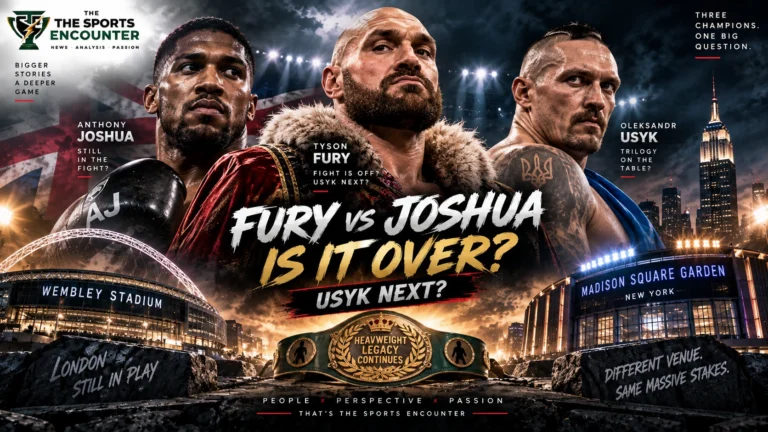
Fury and Joshua have signed individual agreements connected to a proposed November 20 heavyweight event promoted by Sela, but the fight itself has yet to be formally finalized. The central disagreement concerns where it should happen. Joshua’s side says his contract requires the bout to be staged in the United Kingdom. Organizers and Netflix have pushed for Madison Square Garden in New York.
That leaves boxing in a familiar place with a fight it has been trying to make for most of a decade: both men want to fight, enormous money is available, commercial partners want the event, supporters want a conclusion, yet the contest still has no confirmed venue.
Fury has now raised the temperature by treating the delay as a withdrawal.
Joshua’s promoter Eddie Hearn has taken a very different position. Talks to stage the fight at Wembley Stadium had reopened only days before Fury’s latest comments, with Hearn publicly insisting that Joshua remains committed to the British showdown.
The next twist came almost immediately. Fury turned toward the only heavyweight who has beaten him twice, challenging Usyk to settle their rivalry with a trilogy fight before the end of 2026.
Usyk’s camp did not rush toward the offer.
The result is an extraordinary heavyweight triangle involving two fights people would pay to see, three careers approaching their final chapters and a negotiation in which location may now matter almost as much as money.
What Tyson Fury Actually Said About Anthony Joshua
Fury’s latest intervention came through social media after several days of increasingly public frustration over the Joshua negotiations.
His message was unmistakable. He accused Joshua of backing away from the contest, said he was now looking for another opponent and presented a third fight with Usyk as the obvious alternative.
Fury acknowledged that Usyk had earned the decisions in their previous meetings and challenged the Ukrainian to face him again in November.
The language around Joshua was far less respectful.
That fits Fury’s usual promotional style, but the timing is significant because this particular dispute is no longer about whether the two British heavyweights generate enough money or public interest to fight each other.
They do.
The current battle concerns the event itself.
Readers can follow The Sports Encounter’s complete boxing coverage and analysis as the situation develops.
Why Fury vs Joshua Has Stalled Again
The venue has become the central problem.
Joshua’s side says his agreement requires the fight to take place in Britain. Wembley Stadium would satisfy that condition while providing the natural setting for a contest that has always been promoted as the defining all-British heavyweight fight of its generation.
Other commercial interests favor New York.
Madison Square Garden offers enormous international prestige and allows the event to be positioned more directly around the American television audience. It would also turn Fury-Joshua from a British stadium spectacle into a global destination fight.
Neither argument is absurd.
That is precisely why the dispute has become difficult.
For British supporters, taking Fury-Joshua away from the UK strips away part of the event’s identity. Both fighters built their fame through British boxing, both have filled UK stadiums and both spent years being compared within the same domestic heavyweight era.
For organizers, the equation includes global subscriptions, broadcast timing, sponsorship, venue economics and the possibility of maximizing commercial reach beyond Britain.
The fight therefore sits between two competing versions of what Fury-Joshua is supposed to be.
| Wembley Stadium | Madison Square Garden |
|---|---|
| British homecoming | Global destination event |
| Potential huge UK stadium crowd | Iconic boxing venue |
| Fits Joshua camp’s contractual position | Better alignment with U.S. prime-time considerations |
| Legacy-driven atmosphere | International commercial appeal |
| Natural setting for British rivalry | Opportunity to expand the fight beyond UK identity |
The Fight Is in Trouble, but Fury Has Not Formally Cancelled It
This point is essential because Fury’s declaration can easily create a misleading headline.
There has been no joint announcement confirming that Fury-Joshua has been cancelled.
No promoter has announced a replacement main event.
No confirmed Usyk agreement exists.
Joshua’s camp continues to dispute the suggestion that he has withdrawn.
The accurate position is therefore narrower: Fury believes the negotiations have reached a point where he is willing to move on, while the people representing Joshua are still trying to resolve the venue issue.
That could change quickly.
Heavyweight boxing has repeatedly produced negotiations that looked dead before money, venue concessions or political intervention revived them.
The Fury vs Joshua saga has already survived enough false starts to make any absolute prediction dangerous.
Wembley Talks Had Reopened Only Days Earlier
Fury’s announcement is even more striking because momentum appeared to be moving back toward London shortly beforehand.
Hearn said discussions over Wembley had reopened after public resistance to the possibility of shifting the bout to New York.
London Mayor Sadiq Khan had also publicly backed staging the fight in the capital and signaled a willingness to help overcome operational obstacles surrounding a major Wembley event.
That brought the British option back into serious consideration.
The wider disagreement concerns more than crowd capacity. A late UK start could help satisfy global broadcast considerations, while the contractual position described by Joshua’s team continues to give Wembley leverage.
The current drama therefore appears to have been triggered by Fury’s frustration with the pace of the process rather than by a publicly documented termination of the fight.
Why Anthony Joshua Wants the Fight in Britain
Joshua’s position carries sporting and commercial logic.
A Fury fight at Wembley would become an immediate part of British boxing history.
Joshua has already built some of his biggest career moments around major UK stadium nights. His victory over Wladimir Klitschko at Wembley in 2017 remains one of the defining fights of his career.
Fury has equally deep ties to the British audience despite spending significant parts of his championship career competing overseas.
A domestic meeting between them was imagined long before Saudi Arabia became the center of heavyweight boxing and before Netflix became involved in major fight promotion.
For more background on Joshua’s place in this storyline, The Sports Encounter maintains an Anthony Joshua archive tracking the former unified champion.
Fury and Joshua Both Passed Their July Tests
The frustration surrounding the venue is intensified by the fact that both men already completed the dangerous part of the preparation process.
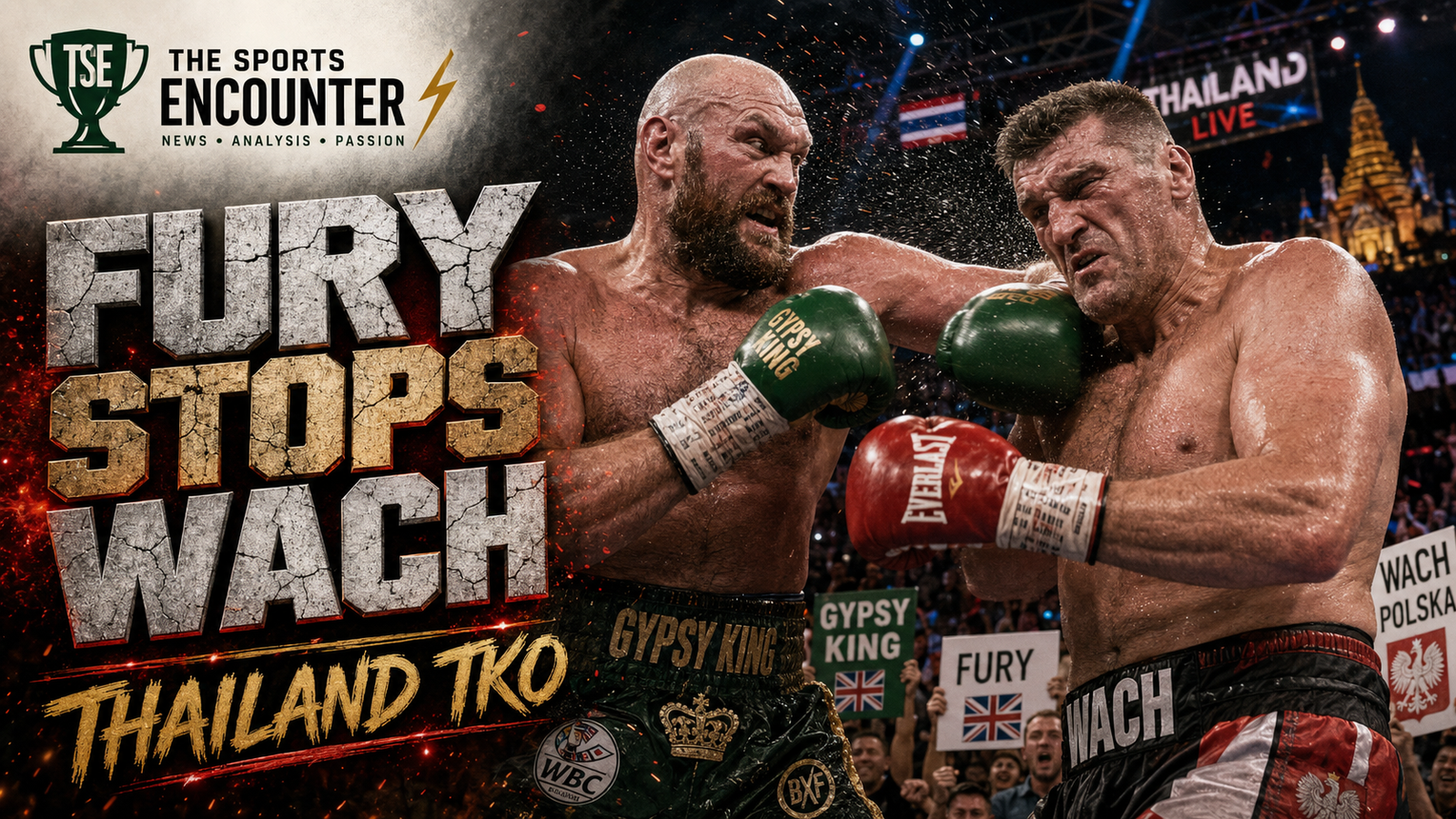
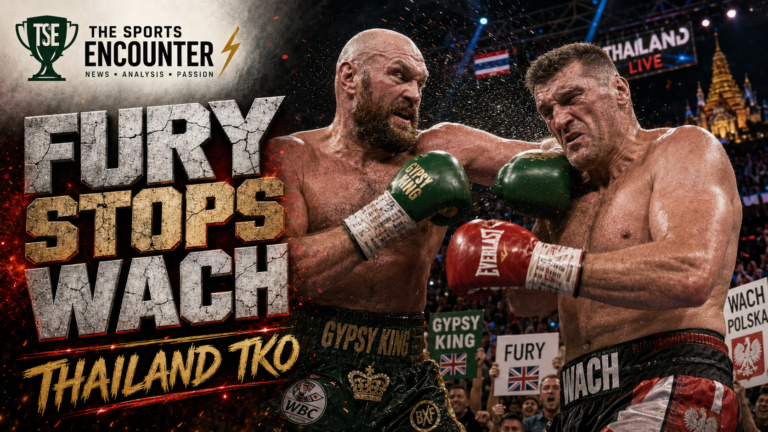
Fury fought Mariusz Wach in Thailand on July 24 and won by seventh-round stoppage.
It was a deliberately controlled assignment designed to give Fury rounds and keep him active without creating unnecessary risk before a potential Joshua fight.
The Sports Encounter’s detailed analysis of Fury’s victory over Mariusz Wach examined why the fight mattered mainly as a bridge toward Joshua.
Joshua returned one day later against Kristian Prenga in Saudi Arabia.
The night was much less comfortable than expected.
Joshua was knocked down twice before recovering to stop Prenga and preserve the enormous fight waiting beyond him.
The official Matchroom event record for Joshua vs Prenga confirms the July comeback card.
Both men therefore emerged from their tune-ups with wins.
The sporting obstacle was cleared.
The negotiation became the harder fight.
Tyson Fury’s 2026 Comeback Was Built Around Joshua
Fury began the year by returning from another retirement.
He had stepped away following consecutive defeats to Usyk in 2024, losses that removed his unbeaten record and ended his claim to heavyweight supremacy.
His comeback immediately created two obvious legacy routes.
The first was Joshua.
The second was eventually trying to avenge the Usyk losses.
Fury then beat Arslanbek Makhmudov before stopping Wach, rebuilding activity and confidence without immediately returning to the highest competitive level.
Our Tyson Fury coverage has followed that late-career transition from championship dominance toward legacy fights.
The Joshua contest was supposed to justify the entire sequence.
Without Joshua, Fury needs another opponent capable of generating comparable interest.
There are very few.
Why Fury Immediately Called Oleksandr Usyk
Usyk solves almost every promotional problem created by the possible collapse of Fury-Joshua.
He is globally recognizable.
He owns victories over both Fury and Joshua.
He remains unbeaten.
He has already shared 24 competitive rounds with Fury.
There is a legitimate sporting question surrounding whether Fury could make enough adjustments in a third meeting to reverse two defeats.
Usyk beat Fury by split decision in May 2024 to become undisputed heavyweight champion, then defeated him again by unanimous decision in December.
Those losses permanently changed Fury’s résumé.
A trilogy would give him the chance to rewrite the final chapter.
The World Boxing Council’s heavyweight review documents Usyk’s remarkable recent run, including two victories over Joshua, two over Fury and two over Daniel Dubois.
Usyk Has Already Beaten Both Sides of the British Rivalry Twice
| Opponent | Usyk Results | What It Changed |
|---|---|---|
| Anthony Joshua | 2 wins | Usyk became unified heavyweight champion and successfully defended the belts |
| Tyson Fury | 2 wins | Usyk became undisputed heavyweight champion and confirmed the result in the rematch |
| Daniel Dubois | 2 wins | Extended Usyk’s dominance over elite British heavyweights |
That history gives Usyk an unusual place in the Fury-Joshua story.
Britain spent years debating which of Fury and Joshua was the better heavyweight.
Usyk defeated both twice.
That does not remove public appetite for Fury-Joshua because their rivalry has always contained a strong domestic and cultural element, but it changes what the fight means competitively.
The winner would gain bragging rights over the other.
Neither man can use the result to claim superiority over Usyk.
Would Fury vs Usyk III Actually Make Sense?
Sportingly, yes.
Commercially, yes.
Negotiationally, it is much less straightforward.
Usyk has already won twice.
He does not need a third Fury fight to establish superiority in their rivalry.
That places the negotiating leverage heavily on his side.
Fury needs the rematch more than Usyk does.
Usyk’s manager Sergey Lapin responded to the callout by making clear that the Ukrainian does not intend to become Fury’s emergency option simply because the Joshua negotiations have become difficult.
Lapin’s message was effectively that serious interest needs to arrive through a concrete proposal rather than a social-media challenge.
That response reduces the chances of an immediate November trilogy unless a substantial formal offer follows.
Usyk’s 2026 Form Adds Another Question
Usyk returned in May against former kickboxing champion Rico Verhoeven at the Pyramids of Giza.
He won by 11th-round stoppage, extending his professional boxing record to 25-0.
The official WBC account of Usyk’s win over Verhoeven described a demanding contest in which the Ukrainian eventually broke through late.
Usyk has since moved into a late-career phase where every opponent must justify the physical and commercial investment required for another training camp.
That makes the question facing him different from Fury’s.
Fury is searching for a replacement if Joshua cannot be finalized.
Usyk can afford to choose.
Why a Third Usyk Fight Is Riskier for Fury Than Joshua
A Joshua fight carries obvious danger. Joshua remains a huge puncher with size, experience and the ability to end heavyweight fights quickly.
Fury would still enter with tactical evidence that he can exploit.
Joshua has been hurt and stopped before. His stamina and response under sustained pressure have been tested repeatedly. Fury’s size, clinching, movement and awkward rhythm could create a difficult technical problem.
Usyk presents a challenge Fury has already failed to solve twice.
The Ukrainian’s feet disrupt Fury’s preferred distance. His left hand repeatedly found openings in both fights. His conditioning allowed him to increase pressure during periods when Fury wanted greater control of the pace.
The ninth round of their first meeting remains the clearest example. Usyk hurt Fury badly and forced a standing count after driving him around the ring.
Fury performed better in stretches of both fights than the 0-2 record might suggest, but the larger problem remains unchanged.
He needs a new tactical answer.
Fury vs Joshua Still Makes More Sense for Both British Fighters
The current dispute has created enough noise to obscure a simple commercial reality.
Fury-Joshua remains the most logical fight for Fury.
It also remains the most logical fight for Joshua.
Both are former heavyweight champions.
Both are entering the later stages of their careers.
Both have already lost twice to Usyk.
Both retain enormous British and international audiences.
Neither needs a belt for the fight to matter.
The Sports Encounter’s heavyweight boxing archive provides broader context on a division where championship belts and commercial megafights increasingly operate on separate tracks.
Fury-Joshua has reached the stage where its value comes from history rather than rankings.
The WBC Rankings Show How Relevant Both Men Remain
Even after their defeats and comeback periods, Fury and Joshua remain among the most prominent heavyweights in the sport.
The WBC’s September heavyweight ratings place Fury and Joshua at the top of its contender list.
The ranking does not determine whether their commercial fight happens, but it reinforces the point that neither man has disappeared from the competitive heavyweight picture.
Both remain capable of drawing major opponents and major audiences.
Could Fury’s Usyk Challenge Be Negotiating Pressure?
This is one of the most important possibilities.
Publicly threatening to abandon Joshua for Usyk changes the negotiation.
It tells Joshua’s camp that Fury believes he has another major option.
It tells organizers that the November date does not necessarily depend on Joshua.
It puts pressure on everyone involved in the venue dispute to make concessions quickly.
Whether Fury truly expects Usyk to accept is a separate question.
Boxing negotiations frequently take place in public because social-media statements can alter leverage before contracts are amended behind closed doors.
Fury understands that better than most fighters.
His callout may be entirely genuine.
It can also be useful even if Usyk never signs.
Three Realistic Paths From Here
| Scenario | What Has to Happen | Likelihood Driver |
|---|---|---|
| Fury vs Joshua at Wembley | Venue dispute is resolved around the UK contractual position | Joshua camp holds firm and organizers accept London |
| Fury vs Joshua in New York | Joshua agrees to revised terms for Madison Square Garden | Financial and broadcast package becomes compelling enough |
| Fury moves to another opponent | Joshua negotiations finally collapse | Fury refuses further delay and November date is preserved |
Scenario 1: Wembley Saves the Fight
This remains the cleanest solution.
It satisfies Joshua’s stated contractual position, answers the demand from British supporters and gives the event the national atmosphere that has followed the rivalry for years.
The challenge is making the broadcast and commercial structure work for all parties.
Scenario 2: Joshua Agrees to Madison Square Garden
This would require movement from Joshua’s side.
New York offers prestige and a major U.S. platform, but the economics would need to compensate for abandoning the British venue position that his camp has defended publicly.
Scenario 3: Fury Really Does Walk Away
If negotiations fail, Fury needs another opponent.
Usyk is the biggest available name in sporting terms, but the Ukrainian has little reason to accept at short notice without a huge offer.
Other heavyweight contenders would be easier to negotiate with but would produce far less attention than Joshua or Usyk.
What Happens to Anthony Joshua if Fury Walks Away?
Joshua would also face an awkward decision.
His July comeback was designed to rebuild momentum after another turbulent period in his career.
The Prenga fight nearly produced disaster when Joshua hit the canvas twice before recovering.
That performance showed both sides of his current heavyweight identity.
His power remains dangerous.
His vulnerability remains visible.
A Fury fight allows Joshua to pursue a huge legacy event without having to rebuild toward a traditional title route first.
If Fury goes elsewhere, Joshua must decide whether to chase another leading heavyweight, wait for a championship opportunity or pursue a different commercial event.
That is why the two men remain useful to each other.
The Usyk Factor Has Followed Both Careers
Usyk’s presence hangs over almost every late-career discussion involving Fury and Joshua.
Joshua lost his unified titles to Usyk and failed to regain them in the rematch.
Fury lost his unbeaten record and undisputed championship opportunity to Usyk, then lost the rematch.
The Ukrainian has become the reference point against which this heavyweight generation is measured.
The broader question of elite combat-sports legacy is something The Sports Encounter also examined in our UFC 330 analysis of Islam Makhachev’s championship run, where sustained dominance similarly changed the meaning of every challenger who came afterward.
For Fury, a third Usyk fight offers the greatest possible sporting redemption.
For Joshua, Fury offers a chance to settle the rivalry that British boxing has discussed since both men were champions.
Why British Boxing Fans Are So Frustrated
Fury-Joshua was once imagined as an undisputed heavyweight championship fight.
Years passed.
Joshua lost his titles.
Fury won and lost his.
Usyk defeated both.
Retirements came and went.
Promoters changed.
Saudi Arabia transformed heavyweight boxing.
New broadcasters entered the picture.
The two British stars still have not shared a ring.
That history explains why a venue dispute now feels particularly frustrating.
The competitive stakes are lower than they would have been at their peaks, yet the emotional interest survives precisely because the argument remains unresolved.
TSE Analysis: Fury’s Declaration Creates Urgency More Than Certainty
The easiest interpretation of Fury’s comments is that Fury-Joshua has collapsed again.
The available evidence supports a more cautious conclusion.
The fight is clearly in danger.
The venue disagreement is real.
Fury is openly preparing to move on.
Joshua’s camp still says the contest can happen.
Wembley negotiations had reopened immediately before Fury’s latest intervention.
No replacement fight has been signed.
Usyk’s camp has already signaled that a social-media callout is insufficient.
That creates leverage rather than closure.
The next formal move matters far more than the latest insult.
If Wembley is confirmed, Sunday’s drama becomes another bizarre episode in a negotiation that eventually succeeded.
If organizers insist on New York and Joshua refuses revised terms, Fury’s declaration begins to look prophetic.
If Usyk receives a serious November offer, heavyweight boxing suddenly moves toward a trilogy nobody expected to become the immediate priority.
All three possibilities remain open.
Fury vs Joshua Compared With Fury vs Usyk III
| Factor | Fury vs Joshua | Fury vs Usyk III |
|---|---|---|
| Commercial appeal | Exceptional | Exceptional |
| British cultural significance | Massive | Lower |
| Competitive importance | Legacy rivalry | Elite sporting rematch |
| Existing rivalry record | Never fought | Usyk leads 2-0 |
| Fury’s incentive | Settle British rivalry | Avenge only career defeats |
| Opponent’s incentive | Joshua has major reason to fight | Usyk has already proved superiority twice |
| Negotiation problem | Venue | Whether Usyk wants it at all |
Which Fight Should Boxing Want?
From a pure sporting perspective, Fury-Usyk III offers the higher technical level.
Usyk remains the measuring stick of the era, and Fury trying to solve him for a third time would carry genuine competitive fascination.
From a historical and emotional perspective, Fury-Joshua still has unfinished business that no other fight can replace.
The best outcome for the heavyweight division may eventually include both.
Fury and Joshua settle their British rivalry first.
The winner, or perhaps Fury regardless of the result, can revisit Usyk if the Ukrainian remains active.
Time is the enemy of that sequence.
Fury is 38.
Joshua is approaching the final phase of his career.
Usyk has openly discussed the end of his own journey.
Boxing no longer has several years to keep rearranging these names.
Final Verdict: Is Fury vs Joshua Really Off?
Not yet.
Tyson Fury says the fight is effectively over and has begun looking elsewhere.
Anthony Joshua’s camp has not accepted that version of events.
The proposed November 20 showdown remains unresolved because the venue has become a contractual and commercial battleground between Britain and New York.
Fury’s decision to call out Oleksandr Usyk gives the story a dramatic alternative, but it does not automatically provide him with a replacement opponent.
Usyk has already beaten Fury twice.
He holds the negotiating advantage.
His camp wants a real offer before treating the trilogy seriously.
That leaves Fury-Joshua where it has spent far too much of the last decade: close enough to imagine, valuable enough to keep negotiating and fragile enough that nobody should believe it is happening until both fighters are standing across from each other at an official press conference with a venue booked behind them.
Fury has now supplied the ultimatum.
The next move belongs to the people trying to save the biggest British heavyweight fight that never happened.
Continue the Boxing Story


Frequently Asked Questions
Is Tyson Fury vs Anthony Joshua cancelled?
No formal cancellation has been announced. Fury says the fight is off and claims Joshua is backing out, while Joshua’s promoter Eddie Hearn continues to maintain that the fight can be made.
When was Tyson Fury vs Anthony Joshua supposed to happen?
The proposed date is November 20, 2026, although the fight has not been formally finalized.
Why is Fury vs Joshua in trouble?
The main problem is the venue. Joshua’s side says his contractual agreement requires the fight to take place in the United Kingdom, while organizers have pushed for Madison Square Garden in New York.
Will Fury vs Joshua happen at Wembley Stadium?
Wembley remains a serious possibility and talks over staging the fight there have reopened. No venue has been officially confirmed.
Why does Netflix want Fury vs Joshua in New York?
The New York option is attractive because Madison Square Garden offers global prestige and can provide more favorable timing for the American viewing market. The final commercial arrangements remain unresolved.
Has Tyson Fury called out Oleksandr Usyk?
Yes. Fury challenged Usyk to a third fight in November after saying he was moving on from Joshua.
Will Tyson Fury fight Oleksandr Usyk for a third time?
No agreement currently exists. Usyk’s camp has indicated that it wants a concrete formal proposal rather than a public challenge before taking the possibility seriously.
How many times has Oleksandr Usyk beaten Tyson Fury?
Twice. Usyk defeated Fury by split decision in May 2024 and by unanimous decision in their December 2024 rematch.
How many times has Usyk beaten Anthony Joshua?
Twice. Usyk defeated Joshua in 2021 and again in their 2022 rematch.
What is Tyson Fury’s current record?
Fury’s professional record stands at 36 wins, two defeats and one draw, with both losses coming against Usyk.
What is Anthony Joshua’s current record?
Joshua is 30-4 after defeating Kristian Prenga in July 2026.
What is Oleksandr Usyk’s record?
Usyk is unbeaten at 25-0 following his 2026 victory over Rico Verhoeven.
Who did Tyson Fury last fight?
Fury last fought Mariusz Wach in Thailand in July 2026, winning by seventh-round stoppage.
Who did Anthony Joshua last fight?
Joshua fought Kristian Prenga in July 2026. Joshua was knocked down twice before recovering to win by stoppage.
Which fight is bigger, Fury vs Joshua or Fury vs Usyk III?
Fury-Joshua carries greater British cultural significance and remains one of boxing’s largest unresolved rivalries. Fury-Usyk III offers stronger recent competitive context because Usyk has beaten Fury twice and Fury would be attempting to avenge the only defeats of his professional career.