Connect with us
Ruben Santos | The Sports Encounter

Published

on

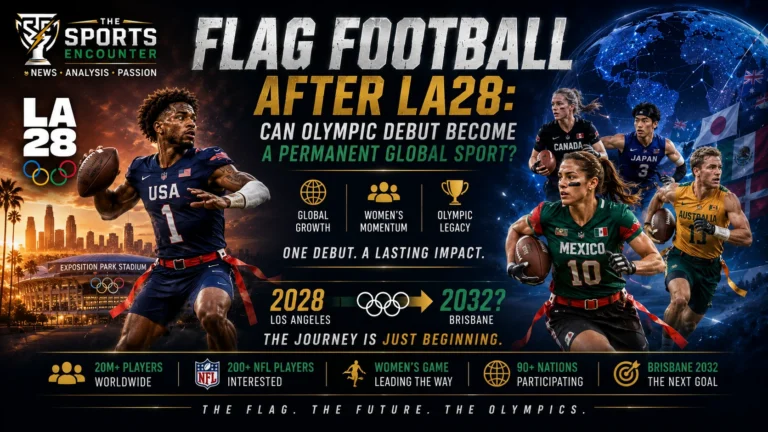
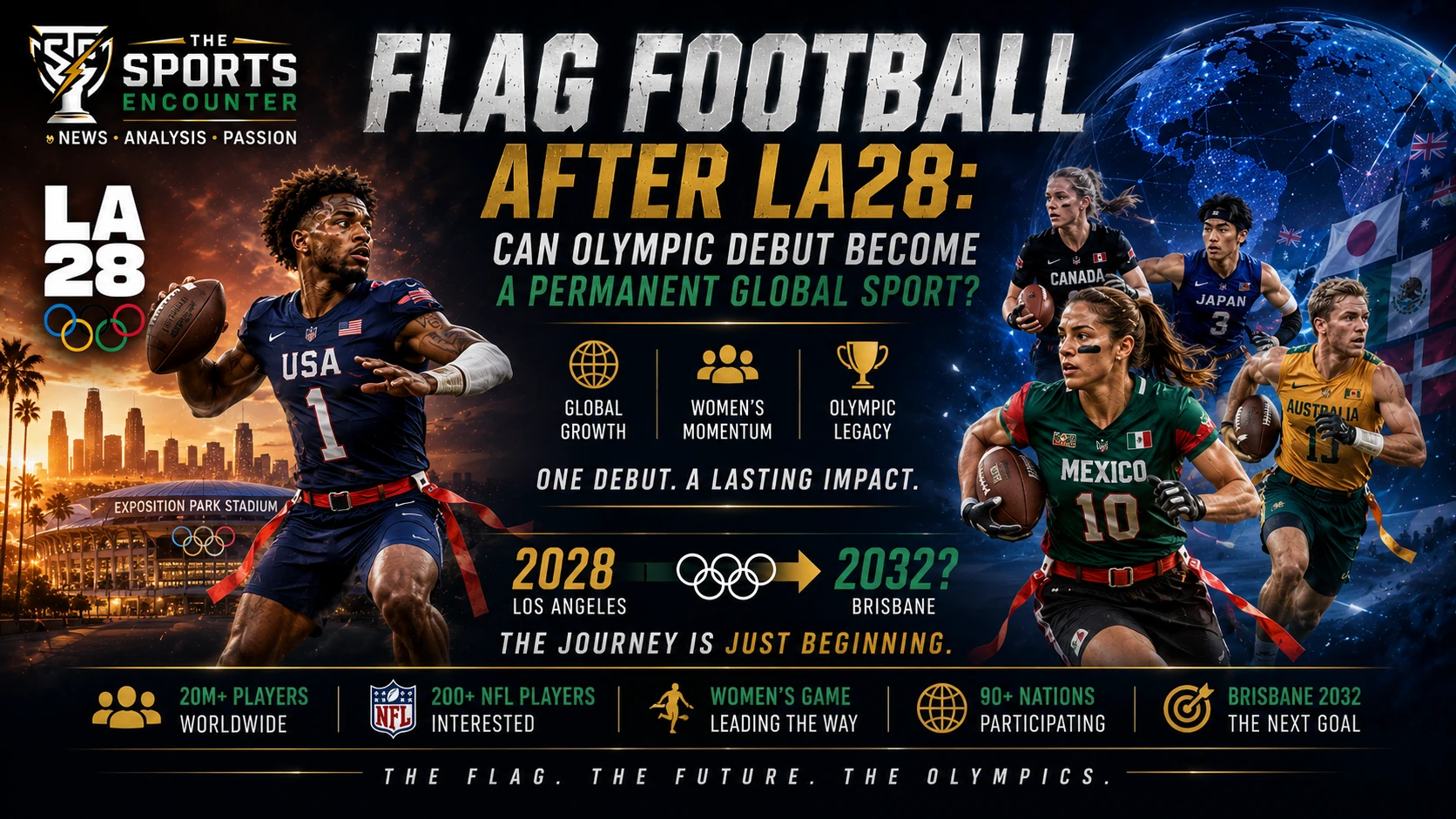
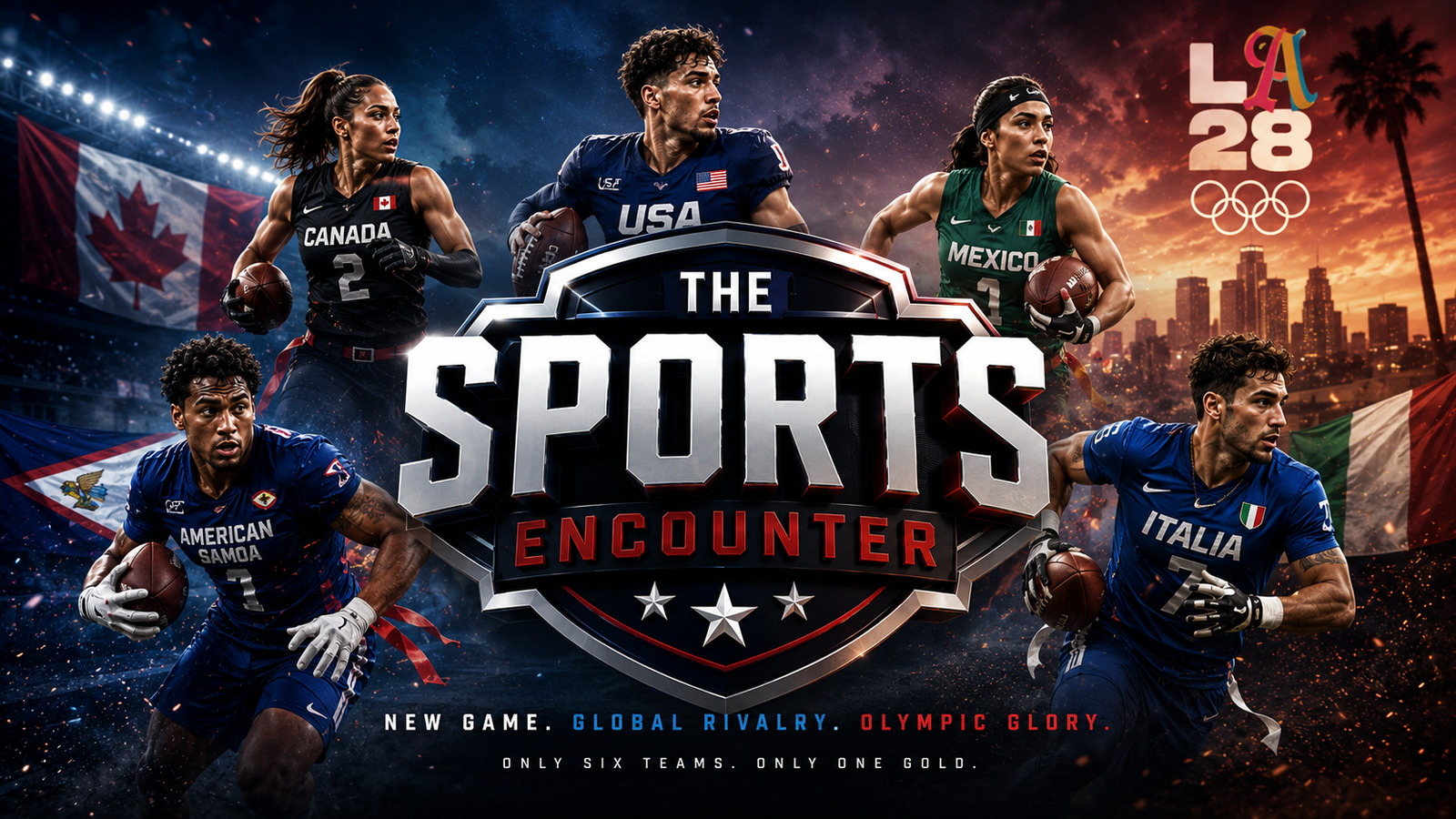
LOS ANGELES, August 22, 2026: More than 200 NFL players have already expressed interest in competing in flag football at the 2028 Los Angeles Olympics.

The number immediately grabs attention. The reason behind it is more interesting.

Olympic flag football offers NFL players something their professional careers cannot provide: the chance to represent a country, compete for an Olympic medal and become part of the first generation to play their version of football at the Games.

According to Reuters, NFL Senior Vice President of Global Flag Football Brian Flinn said more than 200 players representing over 25 countries have indicated that they would be interested in representing their nations at LA28.

The NFL began canvassing player interest after team owners approved participation in May 2025. The Olympic tournament will feature only six men’s teams and six women’s teams, so the early rush of interest is already much larger than the number of available places.

Joe Burrow has publicly talked about wanting to compete for Olympic gold. Patrick Mahomes has taken a different position, indicating that he expects to leave the opportunity to younger players.

Those contrasting reactions reveal the central tension surrounding LA28.

For some NFL stars, another summer competition creates unnecessary workload and injury risk. For others, the possibility of becoming an Olympic champion is too rare to ignore.

The Sports Encounter has already explored how LA28 is changing the ambitions of established American athletes through the debate around whether LeBron James could return for another Olympic run. Flag football now gives the NFL its own version of that conversation.

Why Are More Than 200 NFL Players Interested in LA28?

The NFL already offers money, celebrity, packed stadiums, national television exposure and the Super Bowl.

The Olympics offer a different reward.

An NFL player can become a league MVP, earn All-Pro selections and lift the Lombardi Trophy without ever experiencing what it feels like to compete for his country at an Olympic Games.

That distinction matters because LA28 will be the first Olympic appearance for flag football.

The athletes who win gold in Los Angeles will become the sport’s first Olympic champions. That achievement will remain theirs permanently, regardless of how large flag football eventually becomes.

1. Olympic Gold Creates a Different Kind of Legacy

Players spend NFL careers being measured against other professionals inside their own league.

Olympic success places them into a much broader sporting history.

Burrow’s interest makes sense from that perspective. A Super Bowl and an Olympic gold medal would represent two completely different accomplishments.

The appeal becomes stronger because LA28 may be the only realistic Olympic opportunity for many current players.

A player who is 27 or 28 in 2028 could still be near his athletic peak. Four years later, his NFL career may be ending or already over.

There is no guarantee that flag football will remain on every future Olympic program either.

For some stars, Los Angeles may genuinely be a once-in-a-career window.

2. The National Jersey Changes the Meaning of Competition

The NFL is built around franchises.

The Olympics are built around countries.

That changes the emotional stakes.

A Bengals player would no longer be representing Cincinnati. A Chiefs player would no longer be competing for Kansas City.

Players could represent the United States, Canada, Mexico, Germany, the United Kingdom or another country for which they meet international eligibility requirements.

Flinn’s disclosure that interested NFL players represent more than 25 countries is especially significant.

The NFL has become increasingly international, both through its player base and its expansion into overseas markets. Olympic flag football gives players with international backgrounds a direct national-team pathway that tackle football has rarely provided.

That could transform countries that have only a handful of elite American football athletes.

3. The Olympic Roster Is Tiny

The demand becomes even more striking when compared with the available spaces.

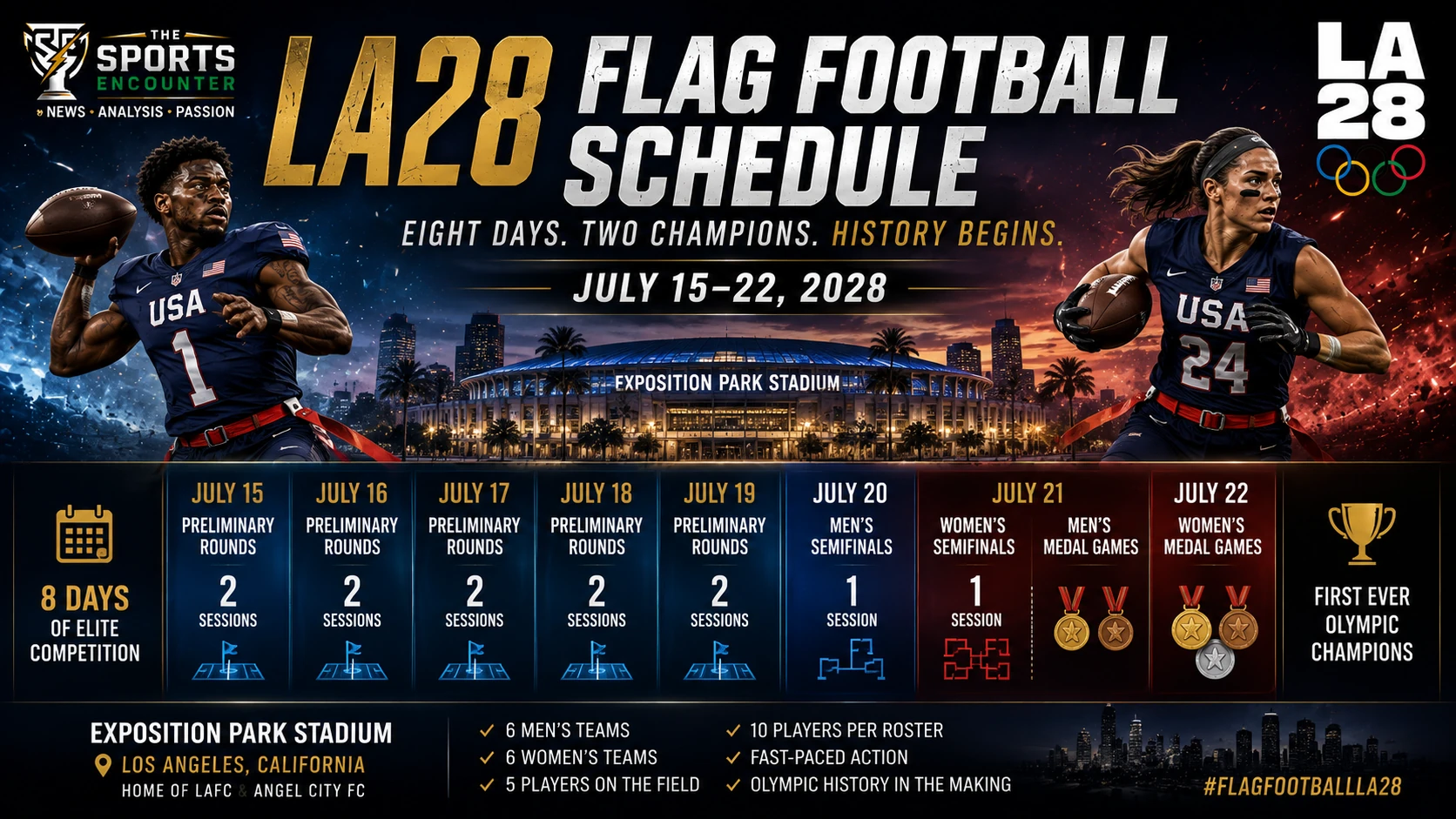
The LA28 tournament will feature six men’s teams and six women’s teams.

Olympic flag football will be played five-on-five, with small national-team rosters.

Hundreds of NFL players may be interested, but only a tiny percentage can actually reach Los Angeles.

For Team USA in particular, the selection battle could become one of the most competitive Olympic roster fights in American sport.

LA28 Flag FootballFormat
Men’s teams6
Women’s teams6
Players on field5 per team
NFL players expressing interest200+
Countries represented among interested NFL players25+

That scarcity makes an Olympic place more valuable rather than less.

4. Flag Football Gives Skill Players a Different Stage

Flag football removes tackling and most of the collision-heavy structure that defines the NFL.

It does not remove difficulty.

Instead, it changes which skills become decisive.

Quarterbacks need rapid processing and precise short-range accuracy. Receivers must create separation almost immediately. Defenders need anticipation, acceleration and clean flag-pulling technique in open space.

The smaller field and five-on-five format also create enormous amounts of space compared with conventional NFL formations.

That should naturally appeal to quarterbacks, wide receivers, defensive backs and other explosive players who thrive when they can operate away from heavy contact.

An NFL star accustomed to playing within detailed 11-on-11 schemes gets a chance to show a more stripped-down version of his athletic ability.

5. The Olympics Offer Global Exposure Beyond the NFL Audience

The NFL is already one of the largest sports businesses in the world, but its strongest cultural influence remains concentrated in North America.

The Olympic Games reach a much broader audience.

An NFL player competing at LA28 could appear before viewers who have never watched a full NFL game.

That creates obvious commercial value for players and the league.

The NFL has spent years growing internationally through games in Europe, Latin America and other markets. The Sports Encounter has also followed the league’s wider international and preseason storylines through our NFL training camp coverage and broader NFL preseason roundup.

Olympic flag football creates a far more accessible product for new markets because it requires less equipment, fewer players and significantly less physical infrastructure than traditional tackle football.

6. Playing in Los Angeles Makes Participation Easier

Location matters.

The first Olympic flag football tournament will take place in the United States rather than requiring NFL stars to travel halfway across the world during the offseason.

Los Angeles is already deeply connected to the league through the Rams, Chargers, major NFL events and the enormous commercial infrastructure surrounding American sports.

That reduces logistical complications and increases sponsorship, media and promotional opportunities.

For an NFL player considering his only Olympic appearance, LA28 is about as convenient as the opportunity could be.

7. The March Flag Football Classic Delivered a Reality Check

NFL stars may want Olympic roster positions.

They should not assume they will receive them.

The inaugural Fanatics Flag Football Classic in Los Angeles earlier this year provided the clearest warning.

Team USA’s experienced flag football players faced rosters loaded with NFL talent, including teams associated with stars such as Joe Burrow, Jalen Hurts and other prominent players.

The national flag specialists dominated.

Reuters reported that Team USA won the tournament and defeated the NFL-heavy opposition convincingly, including a 24-14 victory in the final.

The result demonstrated something selectors cannot ignore.

Elite tackle football ability does not automatically translate into elite flag football ability.

Flag Football Is Its Own Sport

The assumption that NFL players can simply remove their helmets and immediately dominate flag football is becoming harder to defend.

The spacing is different.

The quarterback timing is different.

Defensive technique changes because a defender cannot recover by making a tackle after losing leverage.

Route concepts develop differently when there are fewer players occupying the field.

Flag-pulling itself is a specialized defensive skill.

Existing national-team players have spent years learning those details.

That means NFL stars may need to earn Olympic selection through training camps, evaluation events and national-team competition rather than reputation.

USA Football, Not the NFL, Controls Team Selection

This distinction will become increasingly important as LA28 approaches.

USA Football is responsible for the American national program.

Its preliminary Olympic selection notice indicates that athletes being considered for Los Angeles can be evaluated through international championships, future qualification events, trials and training camps.

The USA Football Olympic selection framework makes clear that the process will extend well beyond name recognition.

That is important for established flag players who may otherwise fear that NFL stars will simply take their places.

Selection should ultimately come down to who gives Team USA the best chance to win.

Joe Burrow May Be One of the Most Fascinating Candidates

Burrow is likely to remain at the center of the conversation because he has publicly embraced the idea.

His NFL skill set appears suitable for flag football.

He processes defenses quickly, throws accurately into tight windows and remains composed when plays break down.

Yet even he has already seen the difference between the two sports.

During the Flag Football Classic, Team USA’s specialists showed that experienced flag defenses can disrupt NFL quarterbacks through spacing and anticipation without relying on traditional pass rush and tackling.

Burrow may eventually become an outstanding Olympic quarterback.

He will still need to learn the game.

Patrick Mahomes Represents the Other Side of the Debate

Mahomes has indicated that he expects to leave LA28 participation to younger players.

His position is equally understandable.

Olympic flag football may eliminate tackling, but it does not eliminate physical risk.

Players still sprint, cut, accelerate, jump and change direction.

Hamstrings, ankles and knees remain vulnerable.

By 2028, veteran superstars may decide that protecting their NFL careers matters more than adding an Olympic medal opportunity.

Franchises paying enormous guaranteed salaries will also have opinions about their most valuable players adding competitive football to the offseason.

The NFL Training Camp Question Could Become Complicated

The Los Angeles Olympics will take place during the summer, close to the period when NFL teams normally begin training camp.

That overlap creates one of the biggest practical challenges.

Olympic players will need national-team preparation before competing.

After the Games, many could have to transition almost immediately into NFL training.

A quarterback missing valuable installation time could affect an entire offense.

A receiver returning fatigued could enter preseason behind teammates who spent July preparing specifically for the NFL season.

These concerns do not make participation impossible.

They do ensure that clubs, national federations, the NFL and the NFL Players Association will spend the next two years negotiating details carefully.

International NFL Players Could Change the Qualification Race

Team USA will naturally dominate headlines because of the depth of American NFL talent.

The more disruptive development may occur elsewhere.

If interested players genuinely represent more than 25 countries, some national teams could suddenly gain athletes accustomed to competing at the highest level of American football.

One elite receiver or defensive back could transform a developing flag program.

A quarterback with professional experience could have an even larger impact.

The effect could be similar to what international stars sometimes provide to smaller basketball or soccer nations: one world-class athlete changes the entire tactical ceiling of the team.

How Olympic Flag Football Qualification Works

The United States receives automatic qualification as host.

The remaining countries must earn their positions through the international flag football structure run by IFAF and national federations.

The pathway includes major international championships and final Olympic qualification events before 2028.

That means NFL players representing countries outside the United States cannot simply announce that they want to go to Los Angeles.

Their countries have to qualify first.

This could create compelling stories involving NFL players trying to lift smaller national teams through international competition long before the Olympic opening ceremony.

Why the NFL Wants Its Players on the Olympic Stage

The league’s interest is easy to understand.

Flag football gives the NFL a pathway toward something tackle football has struggled to achieve: mass global participation.

Traditional American football requires helmets, pads, specialized fields, large rosters and significant coaching infrastructure.

Flag football dramatically reduces those barriers.

Young people can play it in schools, parks and community programs without enormous budgets.

Put recognizable NFL players into the Olympic tournament and the league suddenly has some of the world’s most marketable football ambassadors appearing under national flags.

That is powerful international marketing.

It is also a long-term development strategy.

Women’s Flag Football Could Benefit Even More

The NFL-player discussion naturally focuses on the men’s competition.

The women’s Olympic tournament may produce the larger developmental impact.

Women’s flag football has been growing rapidly in schools and organized programs, but it lacks a professional platform remotely comparable with the NFL.

LA28 gives elite women an Olympic goal, international visibility and a reason for national federations to invest more heavily in development.

The Games could create household names who currently have little mainstream exposure.

For girls entering the sport, that matters enormously.

The Real Team USA Debate: NFL Stars or Flag Specialists?

This may become the most controversial question of the entire Olympic build-up.

If dozens of elite NFL players want to represent Team USA, how many places should they receive?

A roster built entirely around NFL fame would attract enormous attention.

It might not produce the strongest flag football team.

The March exhibition provided evidence that specialists understand the sport at a level NFL players cannot immediately replicate.

The best solution may eventually be a hybrid roster.

RoleWhat Team USA May Value
QuarterbackRapid processing, accuracy, mobility and flag-specific timing
ReceiversSeparation, acceleration and spatial awareness
Defensive backsClosing speed, anticipation and flag-pulling technique
RusherExplosive acceleration and disciplined pursuit
Flag specialistsInternational experience and understanding of the five-on-five system
NFL starsElite athleticism, professional experience and high-level execution

The selectors who combine those qualities best may win the first Olympic gold medal.

LA28 Could Change How Young Football Players Develop

The Olympic effect may eventually reach far below the NFL.

Young players who do not have the size or physical profile required for elite tackle football suddenly have another pathway.

Speed, hands, throwing ability, anticipation and movement can become Olympic-level skills without requiring an athlete to survive years of collision-heavy football.

Schools and youth programs also have greater incentive to invest when athletes can see a clear international pathway.

This is where Olympic inclusion could permanently change American football development.

Could Flag Football Stay in the Olympics Beyond 2028?

Los Angeles is guaranteed.

The future beyond LA28 will depend partly on how the sport performs as an Olympic product.

A competitive tournament featuring recognizable NFL players would strengthen the case for continued inclusion.

Large crowds, global television interest and social-media engagement would demonstrate that flag football can contribute meaningful value to future Games.

That creates a shared interest among the NFL, IFAF, players, sponsors and organizers.

They want LA28 to work.

LA28 Is Part of a Wider Olympic Shift

The Olympic movement increasingly understands the value of sports that connect with younger audiences and established professional leagues.

Los Angeles will become an important test of how traditional Olympic structures interact with modern American sports culture.

The Sports Encounter has already examined the same issue through LeBron James and the possibility of another Team USA appearance, while athletes in other sports are also beginning to shape their careers around 2028.

For NFL players, Olympic planning is now becoming part of that conversation years earlier than anyone would have imagined before flag football entered the program.

TSE Analysis: NFL Stars Want Something Their Contracts Cannot Buy

The 200-player figure makes more sense when viewed through scarcity rather than money.

NFL stars already have access to extraordinary salaries.

They play in enormous stadiums.

They appear in national advertising campaigns.

They compete in one of the world’s most commercially powerful leagues.

None of those things guarantee access to an Olympic Games.

An Olympic roster spot cannot be negotiated into a contract.

A medal cannot be purchased.

The experience of representing a country cannot be replicated by another NFL Sunday.

For players who have already achieved financial security and professional recognition, that difference matters.

LA28 offers a new challenge precisely because it sits outside their normal careers.

The Biggest Mistake Would Be Assuming NFL Players Will Dominate

This is where the story becomes more interesting than a simple celebrity list.

The NFL players may possess the greater athletic résumés.

The flag specialists currently possess the greater flag football experience.

Team USA demonstrated that advantage in March.

By 2028, the gap could narrow dramatically if NFL players commit seriously to training and national-team competition.

But the Olympic tournament will punish anyone who treats the sport as a novelty.

Flag football is not watered-down tackle football.

It is a different tactical game built around space, timing, speed and precision.

What Happens Next?

Flinn said more information about NFL player involvement is expected after the 2026-27 season.

Before then, national federations will continue developing Olympic qualification and selection systems.

Players interested in Los Angeles will have to balance several competing priorities:

  • Olympic selection and national-team preparation
  • NFL contracts and club commitments
  • Injury protection
  • International eligibility
  • Flag-specific training
  • Competition with existing national-team specialists
  • Training camp and preseason schedules

Those details will determine whether the current list of more than 200 interested players becomes a genuine Olympic talent pool or gradually shrinks as 2028 approaches.

Final Verdict

More than 200 NFL players expressing interest in Olympic flag football says something powerful about the Games.

These are athletes who already compete at the top of the richest football league in the world.

They still see something in LA28 that the NFL cannot give them.

National pride matters.

Olympic history matters.

The scarcity of the opportunity matters.

So does the possibility of becoming one of the first Olympic flag football champions.

Joe Burrow may want gold. Dozens of other NFL stars may want the same thing.

Wanting it will be the easy part.

The harder challenge will be adapting to a sport whose established specialists have already shown they can beat NFL talent, surviving one of the most competitive selection processes imaginable and earning one of the few available places in Los Angeles.

That battle may become almost as fascinating as the Olympic tournament itself.

Frequently Asked Questions

How many NFL players want to play flag football at LA28?

The NFL says more than 200 players representing more than 25 countries have expressed interest in participating at the 2028 Los Angeles Olympics.

Will NFL players be allowed to compete at the Olympics?

Yes. NFL clubs approved player participation in May 2025, although athletes will still have to meet national-team selection and Olympic eligibility requirements.

Does Joe Burrow want to play at LA28?

Yes. Burrow has publicly expressed interest in competing in Olympic flag football and trying to win a gold medal.

Will Patrick Mahomes play Olympic flag football?

Mahomes has indicated that he expects to leave the opportunity to younger players.

How many teams will compete in LA28 flag football?

The Olympic tournament will feature six men’s national teams and six women’s national teams.

How many players are on the field in Olympic flag football?

Flag football is played five-on-five.

Is the United States automatically qualified?

Yes. Team USA receives automatic entry as the host nation.

Will NFL stars automatically make Team USA?

No. USA Football controls the national-team selection process, and NFL players will have to compete with established flag specialists for roster places.

Have NFL players already faced Team USA in flag football?

Yes. At the 2026 Fanatics Flag Football Classic, Team USA’s flag specialists defeated NFL-heavy opposition and won the tournament, demonstrating how different flag football is from tackle football.

When will flag football make its Olympic debut?

Flag football will make its Olympic debut at the Los Angeles Games in 2028.

Ruben Santos is a North America-focused sports writer covering the NBA, NHL, NFL, MLB, MLS, and major international competitions across the United States, Canada, and Mexico. His work follows the leagues, teams, players, trades, roster decisions, playoff races, and major developments shaping sports conversations across the region. At The Sports Encounter, Ruben contributes breaking news, game coverage, league analysis, player-focused features, and stories examining the wider business, governance, and cultural forces influencing modern sport. His reporting combines clear news judgment with statistical context, historical perspective, and an understanding of the fan experience surrounding major teams and competitions. He also covers FIFA and international soccer stories when they intersect with North American sport, major tournaments, and global sports governance.

Breaking News

Carlos Baleba to Manchester United: Why £70M Midfield Gamble Could Transform Carrick’s Title Push

Manchester United have agreed a deal worth up to £70 million for Carlos Baleba, giving Michael Carrick the defensive power, athleticism and midfield depth needed for a serious Premier League and Champions League push.

Published

on

Carlos Baleba in a cinematic Manchester United transfer scene after the club agreed a deal worth up to £70 million for the Brighton midfielder.

MANCHESTER, August 22, 2026: Manchester United have agreed a deal worth up to £70 million to sign Carlos Baleba from Brighton & Hove Albion, adding the most athletic and defensively aggressive piece yet to Michael Carrick’s midfield rebuild.

The agreement is reportedly structured at £65 million guaranteed plus £5 million in add-ons, with Brighton also securing a sell-on clause. Baleba is expected to undergo a medical before signing a five-year contract. Sky Sports reported the agreement on Friday, while United had spent much of the summer identifying the 22-year-old Cameroon international as a priority option for the final stage of their midfield reconstruction.

For Manchester United, this is more than another expensive signing.

Baleba gives Carrick a profile that Youri Tielemans and Andrey Santos do not fully provide on their own: a midfielder who can win the ball in deeper areas, cover large spaces, carry possession through pressure and inject physical force into a team that is preparing to balance a Premier League title challenge with a return to the Champions League.

That is why this transfer deserves to be judged as a tactical gamble rather than a simple statement of spending power.

United finished third last season with 71 points, 14 behind champions Arsenal. The Sports Encounter has already identified Carrick’s rebuilt midfield as one of the reasons United could become genuine title contenders in 2026-27. Our Premier League title-contenders analysis placed United immediately behind Arsenal and Manchester City, with midfield depth central to that assessment.

Carlos Baleba to Manchester United: Deal at a Glance

Transfer DetailInformation
PlayerCarlos Baleba
FromBrighton & Hove Albion
ToManchester United
Reported guaranteed fee£65 million
Potential add-ons£5 million
Total potential value£70 million
Additional clauseBrighton sell-on clause
Expected contractFive years
Age22
NationalityCameroon

Sky Sports reported that the clubs have agreed the £70 million package and that Baleba is expected to complete a medical before finalizing the move.

Why Manchester United Wanted a Third Midfielder

United’s summer midfield work did not begin with Baleba.

It began with necessity.

Casemiro’s departure removed one of the squad’s few natural defensive midfielders. Manuel Ugarte’s injury further reduced Carrick’s options, while Champions League qualification created the need for significantly greater depth than United required during last season’s domestic recovery.

The club responded by signing Andrey Santos and Youri Tielemans.

Santos offers mobility, progression and the ability to cover ground.

Tielemans brings passing range, Premier League experience and greater control in possession.

Neither, however, fully replaces the defensive power United lost.

That gap is where Baleba fits.

Sky Sports reported earlier in the summer that United were searching for a third midfielder with “more legs” and greater defensive presence after completing the Santos and Tielemans deals.

The Sports Encounter saw evidence of that plan during preseason. Our analysis of United’s 5-0 win over Rosenborg noted that Carrick was still looking for another midfielder capable of restoring the defensive intensity lost through Casemiro’s departure and Ugarte’s injury.

Baleba now appears to be that player.

What Carlos Baleba Actually Gives Manchester United

The easiest mistake is to describe Baleba simply as a defensive midfielder.

His appeal is broader.

At his best for Brighton, Baleba combines three qualities United have lacked consistently in the same player: ball recovery, athletic carrying and the ability to defend large spaces.

That combination matters enormously in Carrick’s system.

United want to control more matches through possession without becoming vulnerable when possession breaks down. That requires midfielders who can react immediately after losing the ball.

Baleba can cover ground quickly enough to disrupt transitions before they develop.

He is also comfortable receiving possession under pressure and driving forward rather than automatically playing sideways or backward.

That allows him to turn defensive actions into attacking momentum.

Baleba Could Solve United’s Transition Problem

One of Manchester United’s longest-running problems has been the space opponents find between midfield and defense.

Different managers have tried different structures.

The underlying issue has often remained.

When United attack with numbers and lose possession, the central midfield can become exposed.

Baleba’s athleticism changes that equation.

He is capable of recovering toward his own goal, matching runners and making tackles without requiring the entire team to retreat first.

That does not eliminate transition risk.

It gives Carrick another player capable of managing it.

The Difference Between Baleba, Santos and Tielemans

MidfielderPrimary StrengthWhat He Adds
Carlos BalebaDefensive power and ball carryingBall recovery, athletic coverage, physicality
Andrey SantosMobility and progressionTwo-way movement, pressing, forward runs
Youri TielemansPassing and controlTempo, distribution, long-range creation

The attraction of the three-player rebuild is not that Carrick has bought three versions of the same midfielder.

They solve different problems.

Tielemans can dictate.

Santos can connect.

Baleba can disrupt.

The question is how often Carrick can combine those qualities without sacrificing Bruno Fernandes’ influence further forward.

Where Does Baleba Fit in Manchester United’s Best XI?

The most natural role is at the base or left side of a midfield structure where Baleba can protect transitions while giving more technical players freedom ahead of him.

A possible midfield could feature Baleba behind Tielemans and Fernandes.

Another option would pair Baleba and Santos in matches where United expect greater physical pressure.

Against teams sitting deep, Carrick could use Tielemans alongside Baleba to increase passing quality.

Against stronger Champions League opponents, Santos and Baleba could provide greater mobility and defensive insurance.

The important change is choice.

Carrick no longer has to ask one midfielder to perform several incompatible roles simultaneously.

Manchester United’s Possible Midfield Combinations

Game TypePossible CombinationMain Purpose
Against deep defensesBaleba + Tielemans + FernandesControl plus creativity
Against elite oppositionBaleba + Santos + FernandesAthleticism and transition protection
High-possession gamesBaleba + TielemansBuild-up stability
High-intensity matchesBaleba + SantosPressing and ground coverage

Why £70 Million Is Still a Gamble

There is a reason this transfer cannot be framed as an automatic success.

Baleba’s development has not been linear.

His 2024-25 season made him one of the most admired young midfielders in the Premier League.

Brighton named him their Young Player of the Season after a campaign that highlighted his athletic ceiling and growing tactical maturity. The club’s official profile confirms that he joined Brighton from Lille in 2023 and established himself increasingly across his first two English seasons.

Last season was more uneven.

His form dipped.

Some of the numbers that had made him look like a future elite midfielder declined.

That creates the central risk in United’s investment.

They are paying for the player Baleba has already shown he can become rather than simply rewarding the version seen across every week of last season.

United Are Betting on Ceiling Rather Than Recent Form

This is where the transfer becomes strategically interesting.

Manchester United have made expensive mistakes before by buying players after their value had already peaked.

Baleba represents almost the opposite idea.

He is 22.

He has already demonstrated Premier League-level quality.

His best years should still be ahead.

If Carrick and his staff restore the level Baleba showed during his breakout campaign and improve his positional discipline, United could end up with a midfielder worth considerably more than the current investment.

If his inconsistency continues, £70 million will look like another expensive projection.

Why Brighton Could Demand Such a Large Fee

Brighton’s transfer model has repeatedly allowed them to dictate terms.

The club buys early, develops talent and rarely sells under pressure.

Baleba arrived from Lille as a long-term development project.

By the time United came calling seriously, Brighton had already seen enough evidence to place a premium value on his age, athletic profile and Premier League experience.

The sell-on clause adds another layer.

Brighton are not simply collecting the current fee.

They are protecting themselves against the possibility that Baleba becomes an elite midfielder and is eventually sold again for an even larger amount.

The Paul Pogba Comparison Is Tempting but Dangerous

Baleba has spoken about admiring midfielders such as Paul Pogba and Yaya Touré.

The comparison will naturally follow him to Old Trafford because of the physical similarities and ability to carry the ball through midfield.

United should avoid turning that into an expectation.

Baleba does not need to become Pogba.

He needs to become a more reliable version of himself.

His value to Carrick lies less in spectacular individual moments and more in making the entire midfield function with greater security.

Carrick’s Manchester United Are Being Built Around Control

That is perhaps the biggest difference between this rebuild and several previous United transfer windows.

The club is not simply accumulating attacking names.

Carrick appears to be building an operating structure.

United’s preseason offered early evidence.

Against Rosenborg, they controlled possession more patiently and created chances through different routes rather than relying exclusively on transition attacks.

The Sports Encounter’s preseason analysis identified that change as one of the clearest signs that Carrick was trying to evolve the team beyond the approach that stabilized United when he initially took charge.

Baleba fits that evolution.

The 14-Point Gap to Arsenal Is the Real Measurement

Transfers are often judged through highlight reels.

United’s season will be judged through the table.

They finished third last season with 71 points.

Arsenal won the Premier League with 85.

The Sports Encounter’s preseason title analysis framed United’s challenge around that 14-point gap.

In practical terms, Carrick needs his side to turn several draws into victories and several defeats into points.

That is where midfield control matters.

Championship teams do not win only because their attackers score more.

They also stop bad matches from becoming defeats.

Baleba could help United do that.

United Cannot Depend on Bruno Fernandes for Everything

For years, Bruno Fernandes has carried an extraordinary amount of Manchester United’s creative responsibility.

That dependence creates a problem during long seasons.

When Fernandes is marked out of a match, tired or unavailable, United have sometimes lacked another route to control the game.

Tielemans changes part of that.

Santos changes another part.

Baleba could give Fernandes something equally valuable: protection.

If United recover possession faster and defend transitions more effectively, Fernandes can operate higher without constantly having to retreat into midfield to stabilize the team.

Champions League Football Makes Baleba More Necessary

Manchester United’s return to the Champions League dramatically changes squad management.

Last season, Carrick could build much of his domestic recovery around a relatively stable weekly rhythm.

That luxury disappears now.

Premier League matches will follow European nights.

Injuries will accumulate.

Midfielders will need rotation.

United cannot realistically challenge Arsenal and Manchester City while asking the same two central players to control every major game.

The club’s deeper midfield is therefore not indulgence.

It is infrastructure.

Baleba Could Be the Player Who Makes Rotation Work

The best squad depth does not simply replace tired players.

It allows the manager to change the type of team he fields.

Baleba gives Carrick that possibility.

He can use greater technical control in one match.

Greater athleticism in another.

More aggressive pressing against a third opponent.

That tactical flexibility becomes especially valuable across competitions where United will face dramatically different styles.

What Baleba Still Needs to Improve

The upside is obvious.

The weaknesses are equally important.

Baleba can still become impatient in possession.

His decision-making is not always as polished as his physical execution.

He can carry the ball into dangerous areas but occasionally holds possession too long.

Positionally, he still has moments when his aggression draws him away from the space he is meant to protect.

Those are normal development issues for a 22-year-old midfielder.

At Manchester United, they will receive far more attention.

The Old Trafford Pressure Test Will Be Different

Brighton provided Baleba with an excellent environment for development.

Manchester United provide something else.

Every poor pass will be analyzed.

Every defeat becomes a national discussion.

A £70 million fee changes public expectations immediately.

Baleba will need time, but United supporters will expect evidence quickly.

That is another reason Carrick’s management matters.

The midfielder should not be asked to justify the transfer fee through individual heroics.

His success should be measured by whether United become harder to play through and more stable across 90 minutes.

Could Baleba Make United Genuine Title Challengers?

He will not do it alone.

No defensive midfielder can.

But he can address one of the structural differences between a team that finishes third and a team that survives a championship race.

United already have attacking quality through Fernandes, Bryan Mbeumo, Matheus Cunha and Amad.

The question is whether the team can sustain enough control to let those attackers decide matches without constantly exposing the defense.

Baleba’s arrival improves that possibility.

Manchester United’s Rebuild Is Becoming Easier to Understand

The summer now has a clear pattern.

Tielemans adds control.

Santos adds movement.

Baleba adds force.

Carrick has three midfielders at different stages of their careers and with different technical profiles.

That is a more coherent recruitment strategy than simply chasing whichever name becomes available.

The Sports Encounter’s full Premier League 2026-27 preview identified United as one of the clubs whose season would be defined by whether a strong 2025-26 recovery could become a genuine title push.

This deal strengthens that case.

TSE Analysis: Baleba Is the Risk United Should Be Taking

There is no guarantee Carlos Baleba becomes a £70 million midfielder.

That is precisely why this transfer is interesting.

Manchester United are not buying certainty.

They are buying a profile.

A 22-year-old Premier League midfielder with defensive power, carrying ability and enough athletic range to solve one of the biggest structural weaknesses in Carrick’s squad.

The recent form creates risk.

The age creates upside.

The tactical fit gives the gamble logic.

That distinction matters.

Expensive transfers become dangerous when clubs spend heavily without understanding the problem they are solving.

United understand the problem here.

They need more control after losing possession.

They need midfield legs during a Champions League season.

They need enough depth to rotate without changing the entire structure of the team.

Baleba addresses all three.

The Transfer Also Says Something About Carrick’s Ambition

United finished third last season.

A cautious club might have treated that as enough progress.

This summer suggests Carrick and the recruitment team see third place as a platform rather than a destination.

The midfield has been rebuilt almost completely.

That level of investment creates expectation.

If Arsenal and Manchester City begin strongly, United cannot spend the opening months explaining that their new midfield still needs time.

The rebuild has moved into the results phase.

What Happens Next?

Baleba is expected to undergo his Manchester United medical before completing personal formalities.

If the transfer proceeds as reported, attention will immediately turn to registration and whether he can be involved during the opening stages of United’s Premier League campaign.

United begin the season away to promoted Hull City.

The timing creates a useful opportunity.

Carrick can integrate Baleba gradually rather than forcing him directly into one of the season’s biggest fixtures.

That process should matter because his role requires understanding teammates as much as individual athleticism.

Final Verdict

Carlos Baleba does not arrive as the biggest name Manchester United could have signed.

He may arrive as one of the most important.

United already added technical quality through Youri Tielemans and two-way movement through Andrey Santos.

Baleba supplies the aggression, ball recovery and physical coverage that complete the midfield rebuild on paper.

The £70 million price carries obvious risk because his most recent season was inconsistent.

His earlier Brighton form explains why United are willing to take it.

If Carrick can recover that level and improve Baleba’s decision-making, Manchester United will have acquired something increasingly difficult to find: a young midfielder capable of protecting the defense, surviving Premier League physicality and carrying the ball forward without requiring a tactical substitution to change phases.

The transfer will ultimately be judged against Arsenal and Manchester City, not Brighton.

United finished 14 points short of the champions last season.

Their summer has been about finding those missing points.

Carlos Baleba could become one of the players who helps them close the gap.

Frequently Asked Questions

Have Manchester United agreed a deal for Carlos Baleba?

Yes. Manchester United have reportedly agreed a deal with Brighton worth up to £70 million for Carlos Baleba.

How much will Carlos Baleba cost Manchester United?

The reported deal is worth £65 million guaranteed plus up to £5 million in add-ons. Brighton have also secured a sell-on clause.

How long is Carlos Baleba expected to sign for?

Baleba is expected to sign a five-year contract after completing his medical and final transfer formalities.

How old is Carlos Baleba?

Baleba is 22 years old.

What position does Carlos Baleba play?

Baleba is primarily a central and defensive midfielder who combines ball-winning, athletic coverage and progressive carrying.

Why do Manchester United need Carlos Baleba after signing Youri Tielemans and Andrey Santos?

Baleba offers a different profile. Tielemans provides control and passing, Santos adds mobility and progression, while Baleba brings stronger defensive ball-winning and physical coverage.

Who did Carlos Baleba play for before Manchester United?

Baleba joined Brighton from Lille in 2023 and developed into one of the Premier League’s most highly rated young midfielders.

Did Carlos Baleba win an award at Brighton?

Yes. Brighton named him their Young Player of the Season for the 2024-25 campaign.

Can Carlos Baleba help Manchester United challenge for the Premier League title?

His arrival strengthens a midfield that was already being rebuilt for a title challenge and Champions League campaign. Whether United can close the 14-point gap to Arsenal will depend on the entire squad, but Baleba addresses an important structural weakness.

When could Carlos Baleba make his Manchester United debut?

That will depend on completion of his medical, registration and Carrick’s selection decisions. United begin their Premier League campaign away to Hull City.

Continue Reading

Breaking News

Al-Ittihad Give Reijnders’ Al-Qadsiah First Reality Check of Saudi Pro League

George Ilenikhena scored the winner as 10-man Al-Ittihad beat Al-Qadsiah 1-0, handing Tijjani Reijnders defeat on his Saudi Pro League debut.

Published

on

George Ilenikhena and Tijjani Reijnders featured in a Saudi Pro League match graphic after Al-Ittihad beat Al-Qadsiah 1-0.

George Ilenikhena scored the only goal as 10-man Al-Ittihad survived sustained pressure to beat Al-Qadsiah 1-0 at Prince Mohammed bin Fahd Stadium, handing Tijjani Reijnders defeat on his Saudi Pro League debut and bringing an early reality check for Brendan Rodgers’ ambitious side.

Ilenikhena struck in first-half stoppage time after Al-Qadsiah had created the better chances and seen a Julián Quiñones goal ruled out for offside following a VAR review. Al-Ittihad’s task became considerably harder when Dion Lopy was dismissed early in the second half, but goalkeeper Predrag Rajković and a disciplined defensive performance protected the advantage.

Reijnders, who joined Al-Qadsiah from Manchester City on a five-year contract earlier this week, entered from the bench in the 57th minute and almost made an immediate impact. His powerful effort from outside the penalty area two minutes later flew over the crossbar as Al-Qadsiah continued searching for an equalizer that never arrived.

The result gives Al-Ittihad four points from their opening two league games after a 1-1 draw with Al-Kholood, while Al-Qadsiah remain on three after beginning their campaign with an impressive 3-1 victory over Al-Shabab.

For more developments from Saudi Arabia and across the global game, follow The Sports Encounter’s soccer coverage.

Al-Qadsiah 0-1 Al-Ittihad: Match at a Glance

  • Competition: Saudi Pro League, Matchweek 2
  • Result: Al-Qadsiah 0-1 Al-Ittihad
  • Venue: Prince Mohammed bin Fahd Stadium
  • Winning goal: George Ilenikhena, 45+1′
  • Al-Ittihad red card: Dion Lopy, second yellow early in the second half
  • Disallowed goal: Julián Quiñones, 23′, offside after VAR review
  • Tijjani Reijnders debut: Introduced in the 57th minute
  • Al-Ittihad points after two games: 4
  • Al-Qadsiah points after two games: 3

Al-Qadsiah Started Like a Team Ready to Make a Statement

Much of the conversation before kickoff centered on Reijnders and whether his arrival from Manchester City could push Al-Qadsiah deeper into the Saudi Pro League title conversation.

For much of the opening half, Rodgers’ team played with the confidence of a side that believed it belonged there.

Quiñones threatened inside four minutes with a dangerous header before Otávio wasted another opportunity almost immediately. Al-Qadsiah continued finding spaces around the Al-Ittihad penalty area, with Quiñones forcing Rajković into another save in the 11th minute.

The Mexican international appeared to have given the hosts a deserved lead in the 23rd minute when he found the net, but the goal was overturned following a VAR review for offside.

That moment changed the shape of the half without changing Al-Qadsiah’s intent.

They kept pushing forward. Al-Ittihad kept absorbing pressure.

Then the game turned in the space of one shot.

George Ilenikhena Punishes Al-Qadsiah at the Worst Possible Time

Al-Ittihad had spent much of the first half responding to Al-Qadsiah rather than dictating the contest, but Ilenikhena needed only one opening.

In the first minute of stoppage time, the Nigerian forward unleashed a powerful effort from around the edge of the penalty area and beat the Al-Qadsiah defense to put the visitors ahead.

The timing was brutal for Rodgers’ side.

Al-Qadsiah had threatened repeatedly, forced saves and briefly celebrated a goal of their own. Instead of taking momentum into halftime, they walked off trailing.

For Ilenikhena, the strike continued an encouraging start to the season after his recent brace in Al-Ittihad’s King’s Cup victory over Al-Najma.

His emergence also gives Al-Ittihad another attacking option in a squad that has undergone substantial summer change. The Saudi Pro League’s official transfer tracker lists several additions and departures at the Jeddah club as they reshape under Jens Wissing.

Dion Lopy’s Red Card Changes Everything

Al-Ittihad’s position became much more difficult shortly after halftime.

Dion Lopy, already booked during the first half, received his second yellow card and left the visitors playing with 10 men for almost the entire second period.

That should have created the opening Al-Qadsiah needed.

Instead, it became a test of patience.

The hosts pushed higher and forced Al-Ittihad deeper, but possession and territory became increasingly disconnected from clear finishing opportunities. Mohammed Abu Al-Shamat went close shortly after the restart, sending an effort narrowly wide of the left post.

Al-Ittihad responded by protecting the central areas around their penalty box, reducing the spaces available to Quiñones and Mateo Retegui and trusting Rajković to deal with anything that reached his goal.

The Serbian goalkeeper became one of the defining players of the night.

According to the Saudi Pro League’s official match report, Rajković emerged as one of the key reasons Al-Ittihad survived the pressure and left with all three points.

Tijjani Reijnders Makes His Al-Qadsiah Debut

Rodgers turned to his new signing in the 57th minute.

Reijnders replaced Otávio only days after completing his transfer from Manchester City, giving Al-Qadsiah supporters their first competitive look at one of the league’s biggest summer additions.

He almost announced himself immediately.

Two minutes after entering, Reijnders collected the ball following a Musab Al-Juwayr corner and drove a powerful shot from outside the penalty area. The attempt carried enough force to cause concern but climbed over the crossbar.

It was only one moment, but it offered a glimpse of why Rodgers wanted him.

The Dutch midfielder is comfortable moving possession forward rather than merely circulating it. He can carry the ball through midfield, break defensive lines with passes and arrive around the edge of the penalty area as another scoring threat.

The Saudi Pro League’s analysis of Reijnders before the match highlighted those line-breaking qualities and described him as a player capable of strengthening Al-Qadsiah’s title credentials.

One defeat does not change that assessment.

It does show how difficult the job will be.

Why Al-Ittihad’s Win Matters More Than the Scoreline

A 1-0 victory in August does not settle a Saudi Pro League title race, but the manner of this win tells us something useful about Al-Ittihad.

They were second best for stretches of the first half. They lost a player shortly after halftime. They spent extended periods defending close to their own penalty area.

They still won.

That ability to survive difficult matches matters over a 34-game season.

Saudi football’s rapid growth has increased the amount of attacking talent throughout the league, but championship campaigns still depend on results earned when a team cannot control everything around it.

Al-Ittihad did exactly that in Al Khobar.

The visitors had opened the season with a 1-1 draw against Al-Kholood, meaning another dropped result would have created an uncomfortable early gap behind the teams making perfect starts.

Instead, Ilenikhena’s goal gives them four points and keeps them connected to the early leaders.

Al-Qadsiah’s Title Ambition Has Not Disappeared

The temptation after a major signing is to treat every subsequent match as a referendum on the transfer.

That would be premature here.

Reijnders joined Al-Qadsiah only days before facing Al-Ittihad. He started on the bench and played a little more than half an hour. Rodgers has barely had time to integrate him into the team’s pressing structure, possession patterns and midfield relationships.

Al-Qadsiah’s broader case remains interesting.

They opened the season by beating Al-Shabab 3-1 and have assembled a squad containing established international players alongside one of European football’s most recognizable recent midfielders.

Reijnders signed a five-year agreement after leaving Manchester City. The transfer was confirmed earlier this week, completing a rapid move after his single season in England.

Saudi Arabia’s growing ability to attract players with recent experience at major European clubs has been developing for several seasons. The Sports Encounter previously examined how the league helped extend Cristiano Ronaldo’s career at Al-Nassr and reshape the global attention surrounding Saudi football.

The league’s influence has also become visible in the European transfer market. Saudi interest formed part of the background to Vinícius Júnior’s contract negotiations at Real Madrid before the Brazilian eventually signed his new Madrid agreement through 2032.

Reijnders represents a different development because he has moved to Saudi Arabia at 28, with recent Manchester City, AC Milan and Netherlands experience.

Rodgers Now Has a Midfield Puzzle to Solve

The more interesting question after this defeat concerns how Rodgers incorporates Reijnders.

Al-Qadsiah already possess attacking quality. Quiñones and Retegui can occupy defenders, Musab Al-Juwayr offers creativity between the lines and the team showed against Al-Ittihad that it can generate sustained territorial pressure.

Reijnders should give them another route through midfield.

His ability to move forward with the ball could be particularly valuable against opponents defending deeper than Al-Ittihad did before the red card. He can also attack spaces beyond the midfield line rather than remaining stationed in front of the defense.

Rodgers’ challenge is finding the right balance around him.

The former Liverpool and Celtic coach has built teams around aggressive pressing and quick attacking transitions during different stages of his career. Reijnders appears suited to that approach, but a midfield containing several progressive players must still protect the spaces that appear when possession is lost.

The importance of coaching structure in Saudi football has grown alongside the league’s spending. The Sports Encounter saw that development from another angle when Matthias Jaissle’s success at Al-Ahli led to Newcastle United’s move for the German coach.

Saudi clubs are increasingly part of the global coaching and player market rather than existing at the end of it.

Rajković and Al-Ittihad’s Defense Deserve the Credit

The obvious headline belongs to Ilenikhena because goals decide matches.

Al-Ittihad’s defensive work after the red card was equally important.

Playing almost an entire half with 10 men against an Al-Qadsiah team containing Quiñones, Retegui and later Reijnders required concentration rather than constant last-ditch defending.

Al-Ittihad narrowed the central spaces and forced the hosts to keep searching for cleaner shooting positions. Rajković dealt with the pressure behind them and helped turn a difficult second half into three points.

His contribution matters because elite goalkeeping often decides precisely this type of league game.

Teams cannot dominate every week. A goalkeeper capable of protecting a narrow advantage can change the value of an otherwise uneven performance.

TSE Analysis: This Was a Warning, Not a Verdict on Al-Qadsiah

Al-Qadsiah should leave this game frustrated rather than alarmed.

They created enough pressure to believe the result could have been different. Quiñones had a goal ruled out, the hosts generated opportunities before and after the red card, and their expensive new midfielder was introduced only during the second half.

The concern is execution.

When an opponent loses a player and retreats deeper, territorial dominance has to become clear chances. Al-Qadsiah allowed Al-Ittihad to defend the penalty area with increasing confidence as the second half progressed.

That is where Reijnders may eventually change the equation.

His value will not be measured by whether he rescues every difficult game. Al-Qadsiah signed him because he can help transform possession into progression and give Rodgers another player capable of breaking an organized midfield line.

Al-Ittihad provided the perfect first examination.

The Dutchman has now seen the level of resistance his new club will encounter from another Saudi title contender.

What the Result Means for the Early Saudi Pro League Race

Two rounds are far too early for serious conclusions, but the opening weeks already show how little room the strongest Saudi clubs may have for complacency.

Al-Qadsiah came into the match carrying momentum from their 3-1 opening victory. Al-Ittihad arrived after dropping points against Al-Kholood.

One Ilenikhena strike reversed those moods.

Al-Ittihad now move to four points while Al-Qadsiah stay on three. The difference is tiny, but the psychological value of winning away with 10 men could prove useful for Wissing’s side.

Elsewhere, Al-Hilal and Al-Nassr have already applied early pressure near the top of the standings. That increases the cost of unnecessary dropped points among the clubs expected to challenge over the full season.

Saudi Arabia’s domestic football has become increasingly competitive alongside the country’s broader rise on the international stage. The Sports Encounter followed that wider progression throughout the World Cup, including Saudi Arabia’s disciplined 1-1 draw with Uruguay and the subsequent analysis of their difficult group-stage campaign.

At club level, the next phase is about depth, tactical quality and sustained results rather than simply attracting recognizable names.

What Comes Next for Al-Qadsiah and Al-Ittihad?

Al-Qadsiah’s response will be watched closely because Reijnders should now have additional training time before his next appearance.

Rodgers must decide whether the Netherlands midfielder is ready to start and how his arrival changes the roles around Al-Qadsiah’s existing midfielders.

Al-Ittihad, meanwhile, can take confidence from winning a match that repeatedly threatened to move away from them.

Ilenikhena’s form gives Wissing an encouraging attacking option, while Rajković’s performance reinforced his importance at the other end of the field.

The bigger lesson from Al Khobar is already clear.

Al-Qadsiah have enough talent to trouble serious opponents, and Reijnders should make them stronger. Al-Ittihad showed that talent alone will not decide this Saudi Pro League season.

Sometimes the team that survives the difficult night leaves with the points.

Visit The Sports Encounter for more match reports, transfers and analysis from football across the Middle East and around the world.

Frequently Asked Questions

Who won Al-Qadsiah vs Al-Ittihad?

Al-Ittihad beat Al-Qadsiah 1-0 in their Saudi Pro League Matchweek 2 meeting at Prince Mohammed bin Fahd Stadium.

Who scored for Al-Ittihad against Al-Qadsiah?

George Ilenikhena scored the only goal of the game in first-half stoppage time.

Did Tijjani Reijnders play against Al-Ittihad?

Yes. Reijnders made his Al-Qadsiah debut as a second-half substitute, entering in the 57th minute after joining the club from Manchester City earlier in the week.

Did Tijjani Reijnders score on his Al-Qadsiah debut?

No. Reijnders did not score, although he fired a powerful long-range effort over the crossbar shortly after entering the match.

Why was Julián Quiñones’ goal disallowed?

Quiñones found the net for Al-Qadsiah in the 23rd minute, but the goal was ruled out for offside following a VAR review.

Did Al-Ittihad receive a red card?

Yes. Dion Lopy was sent off after receiving a second yellow card early in the second half, leaving Al-Ittihad to defend their lead with 10 men.

How many points do Al-Ittihad have?

Al-Ittihad have four points from their opening two Saudi Pro League matches after drawing with Al-Kholood and beating Al-Qadsiah.

How many points do Al-Qadsiah have?

Al-Qadsiah have three points after beating Al-Shabab 3-1 in their opening match and losing 1-0 to Al-Ittihad in Matchweek 2.

Continue Reading

Athletics

Audrey Werro Wins Lausanne Thriller as Tebogo and Wanyonyi Fire Budapest Warning Shots

Audrey Werro thrilled the home crowd with a 1:55.33 win in Lausanne, while Letsile Tebogo, Emmanuel Wanyonyi, Masai Russell and Winfred Yavi all delivered major statements ahead of Budapest.

Published

on

Audrey Werro, Letsile Tebogo and Emmanuel Wanyonyi feature in a cinematic Lausanne Diamond League scene after major wins ahead of the 2026 World Athletics Ultimate Championships in Budapest.

LAUSANNE, Switzerland, August 22, 2026: Audrey Werro returned home as European champion and left Lausanne with another reminder that the women’s 800 meters has changed around her.

The 22-year-old Swiss star won the Athletissima women’s 800m in a meeting-record 1:55.33, surviving a furious late charge from Femke Broeders-Bol to continue a season that has already pushed her into the all-time elite of the event.

Werro’s victory was only one part of a Lausanne Diamond League meeting that doubled as an important form check before next month’s World Athletics Ultimate Championships in Budapest.

Letsile Tebogo won the men’s 200m in 19.87. Emmanuel Wanyonyi finally claimed his first 800m victory of the season in 1:42.19. Masai Russell extended her unbeaten run in the women’s 100m hurdles. Winfred Yavi beat world champion Faith Cherotich in the steeplechase. Kayla White won the women’s 200m, where Shericka Jackson pulled up with an apparent hamstring problem.

One night earlier, Mondo Duplantis had already turned Lausanne into one of the standout Diamond League meetings of the year by clearing 6.21m, with Emmanouil Karalis pushing him through a historic pole vault battle. World Athletics confirmed that Karalis cleared 6.16m, the highest ever non-winning mark in the event.

Friday’s main stadium program then shifted the conversation from records to championship momentum.

For Werro, Tebogo and Wanyonyi especially, Lausanne felt less like another stop on the circuit and more like a message to Budapest.

Lausanne Diamond League 2026: Key Results

EventWinnerWinning MarkMain Story
Women’s 800mAudrey Werro1:55.33Meeting record and home victory
Men’s 200mLetsile Tebogo19.87Strong Budapest statement
Men’s 800mEmmanuel Wanyonyi1:42.19First 800m win of the season
Women’s 200mKayla White22.18Shericka Jackson pulls up injured
Women’s 100m hurdlesMasai Russell12.27Ninth consecutive victory
Women’s 3000m steeplechaseWinfred Yavi9:00.04Beat Faith Cherotich

The official World Athletics Diamond League hub provides the updated schedule, results and standings for the closing stages of the season.

Audrey Werro Finds Another Way to Win

Werro’s season has already been defined by speed.

Lausanne was more revealing because she won without producing anything close to her fastest performance.

She had run 1:53.98 in Stockholm earlier this season before improving to 1:53.80 in Paris, performances that established her among the fastest women in 800m history.

World Athletics identified her as one of Lausanne’s major attractions after she followed those performances by winning the European title in Birmingham.

The Sports Encounter has tracked that rise closely. Only days before Lausanne, Werro’s European Championship appeared to have disappeared when she fell during the 800m semifinal in Birmingham. A successful Swiss appeal restored her to the final, a remarkable sequence detailed in our report on Werro’s fall and reinstatement.

She then turned the reprieve into gold.

Lausanne asked a different question.

Could she recover quickly enough from the physical and emotional demands of Birmingham and still beat another world-class field?

She did.

Werro Went Out Hard and Almost Paid for It

Werro attacked the race aggressively and began to fade over the final 200 meters after a very fast opening lap.

That created an opportunity for Broeders-Bol.

The Dutch athlete, already a double world champion in the 400m hurdles before moving into the 800m this season, closed rapidly through the final straight.

Werro reached the line in 1:55.33.

Broeders-Bol finished in 1:55.41.

Eight hundredths separated them.

The Swiss victory also produced a Lausanne meeting record.

It was not Werro’s fastest race.

It may have been one of her most useful.

Why the 1:55.33 Matters More Than It Looks

A runner who has already gone 1:53 can make 1:55 look ordinary on paper.

Championship athletics works differently.

Budapest will not necessarily be paced perfectly. There may be contact, tactical hesitation or an opening lap that develops far differently from what the favorites want.

Werro has already shown this season that she can run historically fast times.

Lausanne showed she can still win after misjudging parts of a race and carrying fatigue from a major championship.

That ability may matter more in Budapest than another personal best.

Broeders-Bol Is Becoming a Serious 800m Threat

Broeders-Bol’s second place should not disappear beneath the Werro celebration.

Her transition from 400m hurdles to 800m has rapidly moved from experiment to legitimate global story.

She ran 1:55.41 in Lausanne, nearly stealing the race after Werro appeared to have established enough separation.

Her own assessment after the race was revealing. Broeders-Bol said the performance strengthened her belief that she belongs among the best and that she still needs to trust herself more after 500 meters.

That sounds like an athlete who believes there is significantly more available.

The Women’s 800m Is Becoming One of Budapest’s Best Events

Werro and Broeders-Bol are only part of the picture.

Keely Hodgkinson remains the Olympic champion. World champion Lilian Odira remains dangerous. Georgia Hunter Bell has produced major performances this summer.

Werro has now beaten elite opposition repeatedly, including Hodgkinson on her way to the European title.

The Sports Encounter’s Birmingham coverage of Werro showed how quickly the event has become less predictable than it appeared at the beginning of the season.

Lausanne reinforced that shift.

Letsile Tebogo Executes the Race He Wanted

There was far less drama in the men’s 200m.

Tebogo won in 19.87, only 0.03 outside his season best.

South Africa’s Sinesipho Dambile finished second in 19.98.

The most impressive element was the way Tebogo described the performance afterward.

His focus was on the bend and the first 150 meters rather than chasing a spectacular time.

That is exactly the kind of language expected from an Olympic champion entering the final phase before another major championship.

The work is becoming more specific.

The times are becoming secondary to execution.

Tebogo’s 19.87 Is a Warning Without Being a Peak

Running 19.87 in August is obviously fast.

The more significant point is that Tebogo does not appear to believe he has reached the end of his preparation.

He said the previous five weeks had focused heavily on gym work and acknowledged the difficulty of maintaining elite form throughout an entire season.

That matters ahead of Budapest.

Many championship favorites arrive at late-season meetings trying to protect their bodies while holding enough sharpness to remain competitive.

Tebogo appears to be doing both.

His 19.87 suggests the speed is there.

The rest becomes timing.

Mental Management Has Become Part of Tebogo’s Championship Plan

Tebogo also spoke openly about protecting his mental health through the final phase of the season.

That should not be dismissed as a casual post-race remark.

Elite sprinting demands repeated peaks across championships, Diamond League meetings, travel and promotional obligations.

Tebogo said he now wants to enjoy racing rather than allow the final weeks of the season to become mentally draining.

The comment provides important context around his approach to Budapest.

He is trying to arrive fast without arriving exhausted.

Emmanuel Wanyonyi Finally Gets His 800m Win

The men’s 800m produced one of the strongest finishes of the meeting.

Wanyonyi powered through the final 20 meters to win in 1:42.19, securing his first 800m victory of the season.

Djamel Sedjati finished second in 1:42.31.

Brandon Miller took third in 1:42.55.

Marco Arop, who had controlled much of the race, faded to fourth.

The margin between Wanyonyi and Sedjati was only 0.12 seconds.

Why Wanyonyi Needed This Win

Wanyonyi is already an Olympic champion.

He does not need a Lausanne victory to establish his credentials.

He did need evidence that his closing power remained available before Budapest.

The final 20 meters provided it.

Wanyonyi admitted afterward that his legs were tightening over the final 100 meters, but he continued driving toward the line.

That is an important championship signal.

The 800m often becomes a strength contest in the closing straight, particularly when several athletes enter the final bend within striking distance.

Wanyonyi showed that he could still find another gear while under physical stress.

Lausanne Had Special Meaning for Wanyonyi

Wanyonyi was returning to the venue where he ran 1:41.11 in 2024, a performance that placed him among the fastest 800m runners in history.

He did not approach that mark on Friday.

He did not need to.

The victory was about re-establishing competitive rhythm rather than rewriting history.

Wanyonyi, Sedjati and Arop Are Heading Toward Another Battle

The men’s 800m continues to look like one of the deepest events in world athletics.

Wanyonyi owns Olympic authority.

Arop owns championship pedigree.

Sedjati remains one of the fastest athletes in the event and was only 0.12 behind in Lausanne.

Miller’s 1:42.55 further illustrated how little separation exists near the front.

One tactical error in Budapest could move an athlete from gold-medal contention to outside the podium.

Kayla White Wins as Shericka Jackson Pulls Up

The women’s 200m produced the most concerning moment of the night.

American Kayla White won in 22.18.

Amy Hunt finished second in 22.32, continuing an outstanding month after her historic European Championships.

Favour Ofili took third following a photo finish.

The result itself, however, was overshadowed by Shericka Jackson pulling up with an apparent hamstring injury coming off the bend.

The seriousness of the problem was not immediately clear.

With Budapest approaching, any muscular issue involving a two-time world 200m champion becomes significant.

Amy Hunt Keeps Producing After Birmingham

Hunt’s second place deserves attention because of what she had done only days earlier.

The British sprinter became the first athlete to win four gold medals at a single European Championships in Birmingham.

The Sports Encounter followed that rise from the beginning, including her opening-night European 100m title and the wider championship momentum that followed.

She arrived in Lausanne with very little recovery time and still ran 22.32 against a strong Diamond League field.

That is another encouraging indicator before Budapest.

Hunt’s Summer Has Changed Her Global Status

Earlier in the season, Hunt was still being evaluated primarily as one of Britain’s rising sprint talents.

Birmingham changed that.

She entered the European Championships having already produced major performances and left carrying four gold medals.

The Sports Encounter’s Birmingham Day 2 coverage showed how Britain’s sprint success kept accelerating, while Day 3 documented Hunt’s continued presence among the championship’s standout performers.

Lausanne now shows she has carried that level beyond the emotional lift of a home championship.

Masai Russell Extends Her Perfect Run

Olympic champion Masai Russell continued one of the most consistent seasons in athletics by winning the women’s 100m hurdles in 12.27.

It was her ninth consecutive victory of the season.

The American had not raced for a month, which made the result particularly useful as a Budapest indicator.

There was no obvious rust.

Russell controlled the race from the opening barrier and maintained her unbeaten sequence.

World Athletics had identified her as one of Lausanne’s headline performers after she ran 12.14 earlier this year, only 0.02 outside the world record.

Russell’s Consistency May Be Her Biggest Weapon

Hurdles races can collapse through one mistake.

A poor first barrier can destroy rhythm.

One clipped hurdle can change an entire final.

Russell has repeatedly avoided those problems this season.

Nine straight victories indicate more than speed.

They indicate reliability.

That quality becomes especially valuable at a championship requiring rounds before the final.

Winfred Yavi Beats Faith Cherotich

The women’s 3000m steeplechase produced another elite head-to-head.

Olympic champion Winfred Yavi won in 9:00.04.

Kenya’s world champion Faith Cherotich followed in 9:01.90.

Both athletes had already run 8:51 during the season, making Lausanne another important test before Budapest.

Yavi’s victory gives her another psychological edge before they potentially meet again in the championship final.

Duplantis Had Already Set the Tone One Night Earlier

Lausanne’s biggest performance may technically have happened before the main Friday program.

Duplantis cleared 6.21m during Thursday’s city pole vault competition.

Karalis responded with 6.16m.

Only Duplantis himself has ever cleared higher than 6.21m, according to World Athletics.

The contest provided an ideal opening to a meeting that repeatedly produced elite performances without requiring a world record on the second night.

Duplantis and Karalis showed what late-season championship preparation can look like when both athletes are already operating close to historic levels.

Lausanne Was About Budapest More Than Lausanne

The timing of Athletissima changes how every result should be interpreted.

The World Athletics Ultimate Championships are approaching.

Many athletes are carrying European Championship fatigue.

Others are returning from training blocks.

Some are trying to secure Diamond League Final positions.

The biggest names are also monitoring their own bodies, technical execution and recovery.

Winning still matters.

Qualification matters.

But late-season races increasingly become rehearsals for championship pressure.

Who Sent the Strongest Budapest Message?

AthleteLausanne ResultBudapest Signal
Audrey Werro1st, 800m, 1:55.33Can win despite fatigue and late pressure
Letsile Tebogo1st, 200m, 19.87Speed and technical execution are already sharp
Emmanuel Wanyonyi1st, 800m, 1:42.19Closing strength returns at the right time
Masai Russell1st, 100m hurdles, 12.27Unbeaten consistency survives month-long break
Winfred Yavi1st, 3000m steeplechase, 9:00.04Another win over major rival Faith Cherotich
Amy Hunt2nd, 200m, 22.32European Championship form carries into Diamond League

TSE Analysis: Werro’s Victory May Have Been the Most Valuable Performance

Tebogo ran faster relative to his event.

Wanyonyi produced one of the year’s strongest 800m times.

Russell remained unbeaten.

Yet Werro may have learned the most about herself.

She arrived tired.

She went out aggressively.

Broeders-Bol closed the gap.

The race became uncomfortable.

Werro still won.

That is championship information.

Her season had already established that she can run fast when conditions allow it.

Lausanne established that she can protect a race when those conditions begin moving against her.

After the chaos of Birmingham, where her semifinal fall nearly ended her European title bid, the progression is striking.

She has experienced the full range of middle-distance pressure in barely more than a week.

And she keeps winning.

The Women’s 800m Has a New Center of Gravity

For years, the event’s hierarchy was easy to frame around established Olympic and world champions.

Werro has complicated it.

Her 1:53 performances moved her into historic territory.

Her European title gave the speed championship credibility.

Her Lausanne win showed she can absorb fatigue and tactical imperfection.

Broeders-Bol’s continued improvement adds another problem for the rest of the field.

Hodgkinson remains dangerous.

Odira remains dangerous.

Budapest now looks less like a contest with one obvious favorite and more like an event that could be decided by positioning over the final 200 meters.

Tebogo and Wanyonyi Are Approaching Budapest Differently

Tebogo appears focused on precision.

Wanyonyi appears focused on competitive strength.

Those approaches fit their events.

The 200m rewards technical execution through the bend and maintenance of speed into the straight.

The 800m often requires an athlete to survive contact, positioning changes and fatigue while still producing a final acceleration.

Lausanne gave both champions evidence that the necessary pieces are arriving at the right time.

Shericka Jackson’s Injury Is the Major Concern

Every major meeting produces winners.

Sometimes the most important development comes from somebody who does not finish.

Jackson’s apparent hamstring problem could significantly affect the women’s sprint picture if it proves serious.

There was no confirmed diagnosis immediately after the race.

Until one is provided, any projection about Budapest would be premature.

What is clear is that a hamstring issue only weeks before a major championship creates uncertainty for an athlete whose career has been built around explosive sprint mechanics.

What Comes Next on the Diamond League Circuit?

The Diamond League moves from Lausanne to Silesia on August 23, followed by Zurich on August 27 and the Brussels final on September 4-5.

Readers can follow the updated calendar, standings and qualification picture through the official World Athletics Diamond League schedule.

For athletes already carrying heavy championship workloads, the next two weeks become a balancing act.

Race enough to stay sharp.

Avoid accumulating unnecessary fatigue.

Protect injuries.

Secure qualification where necessary.

Final Verdict

Lausanne did not need a world record on Friday to tell us something important about the next month of athletics.

Audrey Werro remains one of the central names in the 800m conversation after surviving a race that became far more difficult than expected.

Letsile Tebogo looks fast without appearing fully peaked.

Emmanuel Wanyonyi rediscovered the closing power that makes him so dangerous over two laps.

Masai Russell remains perfect.

Winfred Yavi beat the world champion.

Amy Hunt continues to carry her European Championship form into the global circuit.

Shericka Jackson, meanwhile, leaves Lausanne with an injury question that could matter far more than one Diamond League result.

The meeting began with Duplantis flying over 6.21m and ended with several Olympic champions reminding the rest of the world that their own seasons are moving toward another peak.

Budapest is still weeks away.

Lausanne made it feel considerably closer.

Frequently Asked Questions

Who won the women’s 800m at the Lausanne Diamond League?

Audrey Werro won in 1:55.33, holding off Femke Broeders-Bol by 0.08 seconds.

Was Audrey Werro’s 1:55.33 a meeting record?

Yes. Werro’s winning performance established a Lausanne meeting record.

Who won the men’s 200m in Lausanne?

Olympic champion Letsile Tebogo won in 19.87 seconds, with South Africa’s Sinesipho Dambile second in 19.98.

Who won the men’s 800m?

Emmanuel Wanyonyi won in 1:42.19, ahead of Djamel Sedjati in 1:42.31 and Brandon Miller in 1:42.55.

What happened to Shericka Jackson?

Jackson pulled up with an apparent hamstring injury during the women’s 200m. No confirmed diagnosis was immediately available.

Who won the women’s 200m?

Kayla White won in 22.18 seconds, with Amy Hunt second in 22.32.

How many races has Masai Russell won in a row?

Russell’s 12.27 victory in Lausanne extended her winning streak to nine consecutive races this season.

Who won the women’s 3000m steeplechase?

Winfred Yavi won in 9:00.04 ahead of world champion Faith Cherotich, who finished in 9:01.90.

What did Mondo Duplantis clear in Lausanne?

Duplantis cleared 6.21m during the city pole vault competition, while Emmanouil Karalis cleared 6.16m.

When is the next Diamond League meeting?

The next Diamond League stop is Silesia on August 23, followed by Zurich on August 27 and the Brussels final on September 4-5.

Continue Reading

FIFA World Cup 2026 Hub

Leandro Paredes and Argentina players during the fallout from the 2026 FIFA World Cup final as FIFA announces suspensions and disciplinary sanctions. Leandro Paredes and Argentina players during the fallout from the 2026 FIFA World Cup final as FIFA announces suspensions and disciplinary sanctions.
Breaking News3 hours ago

FIFA Hits Argentina with Heavy World Cup Sanctions as Paredes Gets 10-Game Ban

FIFA has handed Argentina major disciplinary sanctions after the 2026 World Cup final brawl, including a 10-game suspension for Leandro...

Gianni Infantino at the center of a cinematic FIFA power struggle as UEFA, AFC and CONCACAF weigh a possible no-confidence move against the FIFA president. Gianni Infantino at the center of a cinematic FIFA power struggle as UEFA, AFC and CONCACAF weigh a possible no-confidence move against the FIFA president.
Breaking News1 day ago

Can FIFA Oust Gianni Infantino? Regional Powerhouses Now Weigh Historic No-Confidence Vote

Gianni Infantino is facing the most serious political challenge of his FIFA presidency as UEFA, the AFC and CONCACAF discuss...

AFC President Sheikh Salman and Qatar football officials depicted in a dramatic split-screen graphic as the Gianni Infantino crisis deepens divisions inside Asian football. AFC President Sheikh Salman and Qatar football officials depicted in a dramatic split-screen graphic as the Gianni Infantino crisis deepens divisions inside Asian football.
Editor's Choice4 days ago

AFC-Qatar Rift Deepens as Infantino Crisis Divides Asian Football

AFC President Sheikh Salman bin Ebrahim Al-Khalifa has hit back at Qatar after its football federation challenged the confederation’s stance...

Kevin Lamour and Gianni Infantino feature in a FIFA governance graphic highlighting Lamour’s departure after criticism of the abandoned World Cup investment plan. Kevin Lamour and Gianni Infantino feature in a FIFA governance graphic highlighting Lamour’s departure after criticism of the abandoned World Cup investment plan.
Breaking News4 days ago

Why FIFA COO Kevin Lamour Was Shown the Exit Way

FIFA COO Kevin Lamour has left the organization weeks after accusing staff of being deceived over the abandoned FIFA Forward...

Gianni Infantino pictured against an Ireland football backdrop as the FAI withdraws support for his FIFA re-election campaign. Gianni Infantino pictured against an Ireland football backdrop as the FAI withdraws support for his FIFA re-election campaign.
Breaking News1 week ago

Ireland Turns on Infantino as FIFA Election Revolt Spreads Beyond Europe’s Heavyweights

Ireland has withdrawn its support for Gianni Infantino’s re-election as FIFA president, adding another national association to a widening governance...

Donald Trump backs Gianni Infantino as UEFA, AFC and CONCACAF intensify pressure on the FIFA president ahead of the 2027 election. Donald Trump backs Gianni Infantino as UEFA, AFC and CONCACAF intensify pressure on the FIFA president ahead of the 2027 election.
Breaking News2 weeks ago

Donald Trump Comes to Gianni Infantino’s Rescue as FIFA Crisis Turns Political

Donald Trump has thrown his support behind Gianni Infantino as UEFA, AFC and CONCACAF deepen their challenge to the FIFA...

Gianni Infantino appears under intense scrutiny as UEFA, AFC and CONCACAF challenge his FIFA leadership over the abandoned World Cup commercial rights stake-sale plan. Gianni Infantino appears under intense scrutiny as UEFA, AFC and CONCACAF challenge his FIFA leadership over the abandoned World Cup commercial rights stake-sale plan.
Editor's Choice2 weeks ago

UEFA, AFC and CONCACAF Turn on Infantino as FIFA Crisis Becomes a Fight for His Presidency

UEFA, the AFC and CONCACAF have jointly accused FIFA President Gianni Infantino of breaking trust over the abandoned World Cup...

Gianni Infantino stands under intense scrutiny in a cinematic FIFA leadership crisis scene, surrounded by press cameras, officials, global football imagery, and the headline “Infantino Under Pressure.” Gianni Infantino stands under intense scrutiny in a cinematic FIFA leadership crisis scene, surrounded by press cameras, officials, global football imagery, and the headline “Infantino Under Pressure.”
Editor's Choice2 weeks ago

FIFA Says Infantino Is Being Undermined as Leadership Crisis Turns Into a Battle Over Legitimacy

FIFA has escalated its defense of Gianni Infantino, warning of a concerted effort to undermine its president as the fallout...

Lionel Messi raises both index fingers toward the sky in Argentina’s No. 10 jersey during a match, illustrating the uncertainty around when the 39-year-old legend will retire from international football. Lionel Messi raises both index fingers toward the sky in Argentina’s No. 10 jersey during a match, illustrating the uncertainty around when the 39-year-old legend will retire from international football.
Editor's Choice2 weeks ago

When Will Lionel Messi Retire? Argentina President Says Only Messi Has the Answer

Lionel Messi’s retirement remains an open question after his eight-goal 2026 World Cup. Argentina president Claudio Tapia says only Messi...

Cinematic FIFA governance graphic showing a somber football executive at a FIFA Congress podium, a glowing FA letter stamped “Support Withdrawn,” the headline “FA Turns Against Infantino,” international flags, a connected globe, and The Sports Encounter logo. Cinematic FIFA governance graphic showing a somber football executive at a FIFA Congress podium, a glowing FA letter stamped “Support Withdrawn,” the headline “FA Turns Against Infantino,” international flags, a connected globe, and The Sports Encounter logo.
Breaking News2 weeks ago

English FA Turns Its Back on Gianni Infantino, Withdraws Support for Re-Election

The English FA has formally withdrawn its support for Gianni Infantino’s bid for another term as FIFA president, adding major...

A suited FIFA official bows at a crisis meeting beneath a fractured world football graphic, surrounded by delegates, torn $4.2 billion deal papers and the headline “World Cup Not for Sale.” A suited FIFA official bows at a crisis meeting beneath a fractured world football graphic, surrounded by delegates, torn $4.2 billion deal papers and the headline “World Cup Not for Sale.”
Editor's Choice2 weeks ago

FIFA President Apologizes to Member Nations After FIFA World Cup Selloff Plan Fails to Inspire

FIFA has apologized to its member associations after abandoning a controversial plan to sell a 20% stake in a new...

Gianni Infantino stands under pressure as FIFA officials hold crisis talks in Morocco following the rejected World Cup commercial stake sale proposal. Gianni Infantino stands under pressure as FIFA officials hold crisis talks in Morocco following the rejected World Cup commercial stake sale proposal.
Breaking News2 weeks ago

Infantino in Survival Mode After World Cup Stake Sale Idea Results in Global Revolt

Gianni Infantino’s abandoned World Cup commercial rights proposal has triggered an internal FIFA revolt, lost European support, and drawn a...

Gianni Infantino stands isolated at a FIFA podium as Arsène Wenger, Mattias Grafstrom, Prince Ali and divided football officials surround him, with fractured blue-and-red VFX imagery, The Sports Encounter logo, and the headline “Allies Break Ranks.” Gianni Infantino stands isolated at a FIFA podium as Arsène Wenger, Mattias Grafstrom, Prince Ali and divided football officials surround him, with fractured blue-and-red VFX imagery, The Sports Encounter logo, and the headline “Allies Break Ranks.”
Editor's Choice2 weeks ago

Crisis Plagues FIFA as Wenger, Grafstrom and Federations Break Ranks

Gianni Infantino’s grip on FIFA is under growing pressure after senior officials, European federations and former allies distanced themselves from...

Gianni Infantino stands between representatives of smaller football nations and the rejected UEFA and CONCACAF blocs, with a glowing world map, voting imagery, and the headline “Small Nations, Big Power” beneath The Sports Encounter logo. Gianni Infantino stands between representatives of smaller football nations and the rejected UEFA and CONCACAF blocs, with a glowing world map, voting imagery, and the headline “Small Nations, Big Power” beneath The Sports Encounter logo.
Editor's Choice3 weeks ago

Infantino Looks to Smaller Nations After UEFA, CONCACAF Snub

Gianni Infantino’s FIFA future may depend on smaller and emerging nations after UEFA and CONCACAF lost confidence in his leadership....

Gianni Infantino appears under a fractured World Cup trophy as UEFA, AFC, and other football stakeholders reject FIFA’s failed private investment stake plan. Gianni Infantino appears under a fractured World Cup trophy as UEFA, AFC, and other football stakeholders reject FIFA’s failed private investment stake plan.
Editor's Choice3 weeks ago

FIFA’s World Cup Stake Plan Failed in Three Days. The Damage to Gianni Infantino May Last Much Longer

FIFA’s attempt to sell a 20% stake in a new World Cup commercial entity collapsed within days after a global...

Cinematic tribute to Cristiano Ronaldo’s World Cup career, showing his rise, record-breaking goals and six-tournament journey on one side, and his emotional final farewell with Portugal on the other, under the headline “Goals. Records. Farewell.” with The Sports Encounter logo. Cinematic tribute to Cristiano Ronaldo’s World Cup career, showing his rise, record-breaking goals and six-tournament journey on one side, and his emotional final farewell with Portugal on the other, under the headline “Goals. Records. Farewell.” with The Sports Encounter logo.
Editor's Choice3 weeks ago

Cristiano Ronaldo’s World Cup Career: Goals, Records and Final Farewell

Cristiano Ronaldo became the first man to score in six FIFA World Cups, but football’s greatest tournament never gave him...

Cinematic VFX featured image showing fictionalized World Cup legend silhouettes walking toward a glowing stadium tunnel, with farewell confetti, The Sports Encounter logo, and the headline “The Last Dance: World Cup Legends Say Goodbye.” Cinematic VFX featured image showing fictionalized World Cup legend silhouettes walking toward a glowing stadium tunnel, with farewell confetti, The Sports Encounter logo, and the headline “The Last Dance: World Cup Legends Say Goodbye.”
Editor's Choice3 weeks ago

The Golden Generation Saying Goodbye After the FIFA World Cup 2026

The 2026 World Cup did more than crown a champion. It marked the emotional farewell of a generation that shaped...

Cinematic tribute to Neymar Jr.’s World Cup journey, showing his Brazilian flair and rainbow-flick skill on one side and his pain, injuries and emotional heartbreak on the other, with the headline “Skill. Pain. Legacy.” and The Sports Encounter logo. Cinematic tribute to Neymar Jr.’s World Cup journey, showing his Brazilian flair and rainbow-flick skill on one side and his pain, injuries and emotional heartbreak on the other, with the headline “Skill. Pain. Legacy.” and The Sports Encounter logo.
Editor's Choice3 weeks ago

Neymar’s World Cup Career: Skill, Pain, and the Rainbow Flick Legacy

Neymar carried Brazil’s World Cup hopes across four tournaments, producing unforgettable goals while enduring injuries, criticism and elimination heartbreak. His...

Cinematic FIFA World Cup 2030 graphic showing the golden trophy at the center of a global football revolt, with protesting delegates, distressed executives, collapsing financial charts, torn investment documents, and the headline “World Cup 2030: Not for Sale?” alongside The Sports Encounter logo. Cinematic FIFA World Cup 2030 graphic showing the golden trophy at the center of a global football revolt, with protesting delegates, distressed executives, collapsing financial charts, torn investment documents, and the headline “World Cup 2030: Not for Sale?” alongside The Sports Encounter logo.
Editor's Choice3 weeks ago

Is the FIFA World Cup 2030 Not for Sale Anymore?

FIFA’s proposal to sell a minority stake in a $20 billion World Cup commercial company appears to have collapsed after...

A cinematic World Cup 2030 graphic compares a 48-team format with a proposed 64-team expansion, surrounded by national teams, global flags, the trophy, and contrasting calls to grow or protect the tournament. A cinematic World Cup 2030 graphic compares a 48-team format with a proposed 64-team expansion, surrounded by national teams, global flags, the trophy, and contrasting calls to grow or protect the tournament.
Editor's Choice3 weeks ago

FIFA Explores 64-Nation World Cup for 2030: Is Another Expansion Worth It?

FIFA is examining whether the 2030 World Cup should expand from 48 to 64 teams. The proposal could increase global...

ASEAN Championship 2026

English Premier League 2026

NHL 2026

The Hundred 2026

Wimbledon 2026

French Open 2026

Lanka Premier League 2026

Global Super League 2026

The World of LeBron James

NFL 2026-27

Boxing Gloves On

US Open 2026

Breaking News