Breaking News
Portugal Edge Croatia After VAR Drama, Four Disallowed Goals and Late Ramos Winner
Portugal survived one of the wildest knockout matches of FIFA World Cup 2026, beating Croatia 2-1 after four disallowed goals, Ronaldo’s historic penalty, and Gonçalo Ramos’ stoppage-time winner set up a Round of 16 clash with Spain.
Toronto did not get a clean knockout match. It got tension, noise, disputed decisions, four disallowed goals, one Cristiano Ronaldo penalty, a Gonçalo Ramos rescue act, and a Croatian farewell that felt painful before the final whistle even settled.
Portugal beat Croatia 2-1 in a wild FIFA World Cup 2026 Round of 32 match that swung from control to panic and back again. Ivan Perišić gave Croatia the lead early in the second half. Ronaldo pulled Portugal level from the penalty spot in the 68th minute. Ramos then delivered the winner deep in stoppage time, heading Portugal into the Round of 16 and sending Croatia home from a tournament that may have closed Luka Modrić’s World Cup story.
Portugal now face Spain in the Round of 16, setting up one of the biggest knockout matches of the tournament. For full tournament context and related coverage, follow The Sports Encounter’s FIFA World Cup 2026 coverage hub and our preview of Portugal vs Croatia: Ronaldo and Modrić Walk Into One More World Cup Knife Edge.
Match Summary
| Detail | Information |
|---|---|
| Match | Portugal vs Croatia |
| Competition | FIFA World Cup 2026, Round of 32 |
| Venue | Toronto Stadium |
| Final Score | Portugal 2-1 Croatia |
| Croatia Scorer | Ivan Perišić 53’ |
| Portugal Scorers | Cristiano Ronaldo 68’ pen, Gonçalo Ramos 90+4’ |
| Key Moment | Ramos stoppage-time winner |
| Major Talking Point | Four disallowed goals and late VAR controversy |
| Next Match | Portugal vs Spain, Round of 16 |
| Red Cards | None |
| Yellow Cards | Rúben Dias, Luka Modrić, Ivan Perišić |
Portugal Start With Control, But Not Enough Damage
Portugal looked sharper in the first half than they had during parts of the group stage. Rafael Leão gave them speed on the left, Pedro Neto kept asking questions from the right, and Bruno Fernandes found pockets where Croatia had to keep shifting across the pitch.
The problem was familiar: Portugal had possession and territory, but not enough clean punishment.
Neto repeatedly delivered dangerous balls into the box. Ronaldo hovered between center-backs, waiting for the one cross that would drop perfectly. Fernandes got looks at goal. Leão carried threat with every direct run. Still, Croatia survived the pressure because Portugal’s final contact kept missing the required sharpness.
That gave Croatia exactly what they needed: time.
Zlatko Dalić’s team did not dominate the opening half, but it stayed alive. Croatia absorbed pressure, trusted its experienced core, and waited for the match to slow down enough for Modrić, Mateo Kovačić, and Perišić to influence it.
Croatia Strike First and Change the Mood
Croatia came out after halftime with better energy and more courage. Dalić changed the tone by introducing Igor Matanović, and Croatia suddenly looked more direct, more aggressive, and more willing to attack Portugal’s defensive spaces.
The breakthrough came in the 53rd minute. Josip Stanišić sent the ball across from the right, and Perišić arrived at the back post with the calm of a player who has lived through too many major tournament nights to panic. His finish beat Diogo Costa and gave Croatia a 1-0 lead.
For a few minutes, Portugal looked rattled.
Croatia thought they had another when Matanović finished clinically, only for the offside flag to cut the celebration short. Petar Sučić then forced Costa into an important save. Portugal had controlled much of the first half, but Croatia’s second-half surge gave the game a different smell.
This was no longer Portugal managing a knockout tie. This was Portugal trying to avoid another painful exit.
Ronaldo’s Night: Historic Goal, Limited Influence, Big Debate
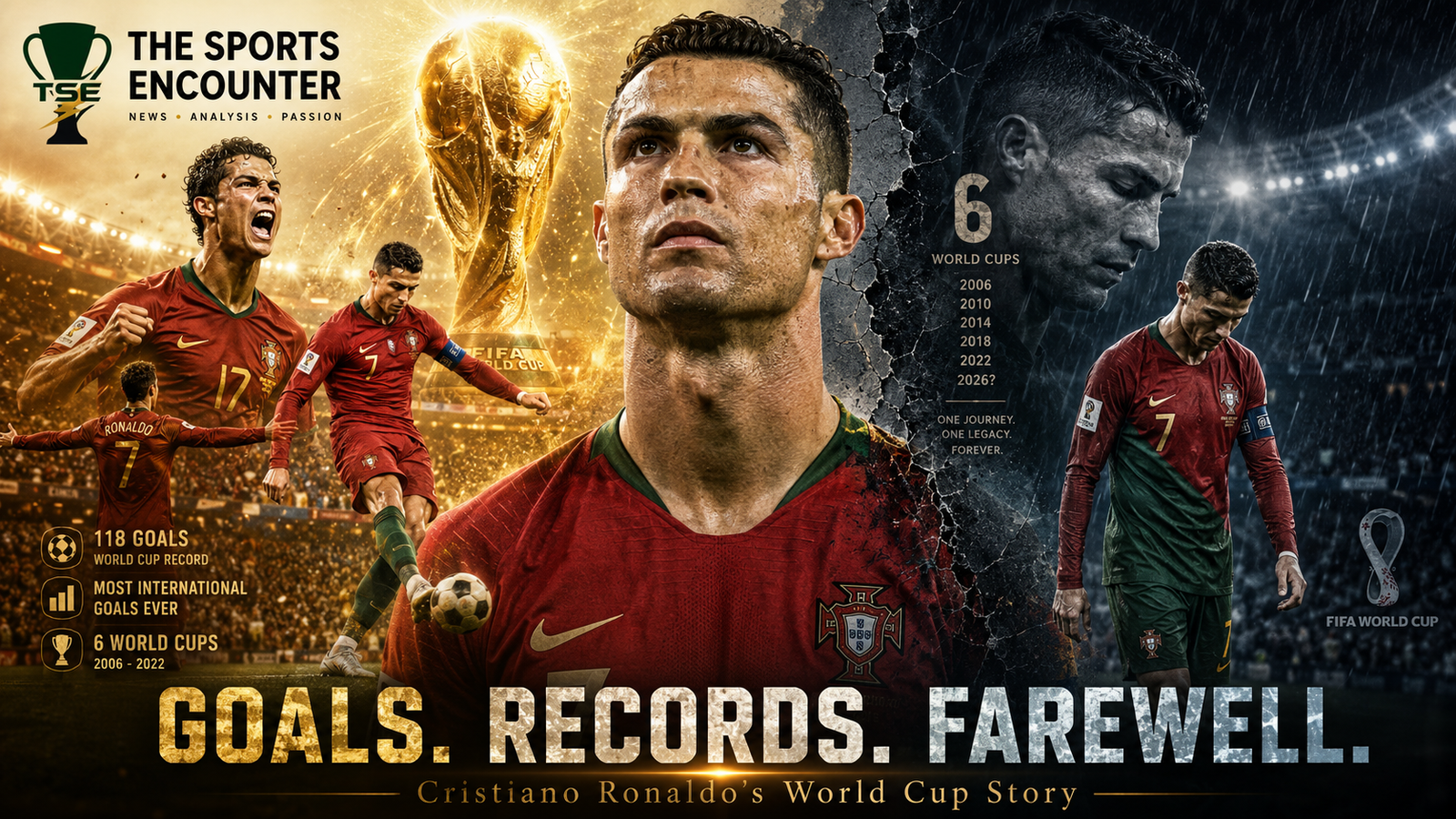
Cristiano Ronaldo finally got his World Cup knockout goal.
His 68th-minute penalty made it 1-1, and the moment carried history. At 41, Ronaldo became the oldest player to score in a World Cup knockout match. It was also his first goal in the knockout stage of the tournament, a strange missing piece in a career stacked with records.
The finish was cold. Ronaldo stepped up, sent Dominik Livaković the wrong way, and brought Portugal level.
Yet the rest of his performance needs a balanced reading. Ronaldo still gave Portugal penalty-box gravity. Croatia had to know where he was. But his overall involvement remained limited, and Reuters reported that the penalty was his only touch inside the opposition box before Roberto Martínez substituted him late in the game.
That substitution will be debated, but it worked. Martínez replaced Ronaldo with Rúben Neves to stabilize a midfield that had lost control for stretches of the second half. Ramos later scored the winner. Portugal advanced. The coach got the result.
Was Ronaldo’s Disallowed Goal the Wrong Call?
Ronaldo also had a goal ruled out before his penalty. He controlled a ball over the top and lifted it beyond Livaković, but the assistant’s flag went up for offside and VAR upheld the decision.
From some replay angles, the call looked extremely tight. Many fans felt Ronaldo had timed his run well. That is why the moment has already become one of the major talking points of the match.
Still, as per expert opinion, it cannot be called a confirmed wrong decision. The offside check stood, and live reports stated that VAR confirmed Ronaldo was just beyond the last defender when the pass came.
That does not mean the controversy will disappear. In a match packed with disallowed goals, every marginal call felt bigger than the last.
Was This the World Cup Match With the Most Disallowed Goals?
Yes, based on available post-match reporting, this was an extraordinary outlier.
The Guardian reported that Portugal vs Croatia had four disallowed goals, the first time in World Cup history that a match featured that total. Croatia had the most painful one at the end, when Joško Gvardiol appeared to score a last-second equalizer. VAR ruled it out for offside after the ball touched Matanović on the way through, placing Gvardiol in an offside position.
That decision triggered anger from Croatia’s players, staff, and fans. Bottles reportedly came onto the pitch after the final ruling. Dalić later criticized the refereeing but also admitted Croatia could not use it as an excuse.
The emotional truth for Croatia is simple: they were close enough to believe, but not clean enough to survive.
Ramos Steps Into the Moment
Ramos entered the match with Portugal needing legs, movement, and a different reference point in the box. In stoppage time, he gave them everything.
Leão created the chance from the left, and Ramos attacked the delivery with the hunger of a forward who knew the entire tie had opened for one second. His header in the 90+4th minute gave Portugal a 2-1 lead and turned Martínez’s late changes from a gamble into a winning decision.
It was not a perfect Portugal performance. Far from it. But knockout football often rewards teams that keep one more punch in reserve.
Ramos supplied it.
Croatia Leave With Pride, Pain and a Closing Era
Croatia’s exit hurts because they showed enough in the second half to imagine another outcome.
Perišić was excellent after halftime. Sučić gave them energy. Matanović changed the physical profile of the attack. Modrić, at 40, still tried to pull Croatia through the storm with rhythm and nerve.
But this may be the end of Croatia’s golden World Cup generation. They reached the 2018 final, finished third in 2022, and built one of the most respected tournament identities in modern football. In 2026, they leave without a medal and with the frustration of a match that felt decided by inches, reviews, and missed control.
For more Croatia context, read The Sports Encounter’s earlier feature on how Croatia found their knockout pulse as Ghana survived defeat.
Cards and Discipline
Portugal had one confirmed yellow card, with Rúben Dias booked in the 17th minute for a foul on Ante Budimir.
Croatia had two confirmed yellow cards. Luka Modrić was booked in the 59th minute, and Ivan Perišić received a late yellow card in stoppage time.
No red cards were confirmed in the available match-feed data.
What Comes Next for Portugal?
Portugal move into a Round of 16 clash with Spain, and that match will test them in a very different way.
Spain’s 3-0 win over Austria showed control, width, pressing discipline, and a sharper edge in the final third. Portugal have more individual knockout experience, but Spain look more balanced right now. Ronaldo’s role, Ramos’ impact, Leão’s direct running, and Martínez’s timing with substitutions will all sit under a brighter spotlight.
For related reading, see The Sports Encounter’s coverage of Spain finally breaking their World Cup knockout curse and our latest World Cup 2026 match reports.
Portugal survived Croatia. Spain will ask tougher questions.
The Sports Encounter’s World Cup 2026 coverage focuses on fixtures, team news, match analysis, fan stories, tournament trends, and the biggest talking points from football’s global stage.

Breaking News
Chelsea Bring Geovany Quenda Into Their Long Game Until 2034
Chelsea have completed the arrival of Geovany Quenda from Sporting Lisbon, with the Portuguese winger signing until 2034 after a deal agreed in 2025 allowed him to spend one more season developing in Portugal.
Chelsea have completed the arrival of Geovany Quenda from Sporting Lisbon, turning a transfer agreed more than a year ago into the latest piece of their long-term squad build.
The 19-year-old Portuguese winger has signed until 2034, giving Chelsea one of the most highly rated wide players to come out of Sporting’s development system in recent years. The move was agreed in March 2025, but Quenda stayed in Lisbon for the 2025/26 season before making the switch to Stamford Bridge.
That delay is the part of the story that matters most.
Chelsea did not sign Quenda as a short-term fix. They bought early, let him continue growing in a familiar environment, then brought him into England with another full senior season behind him. In a market where top young attackers become expensive very quickly, this was Chelsea trying to control the timeline before the rest of Europe could reset the price.
It follows the same broader Premier League pattern The Sports Encounter has tracked this summer, from Manchester United’s reported £50m midfield move for Andrey Santos to Leeds United’s decision to sign Harry Wilson on a four-year contract. Clubs are not only buying players. They are buying control, age profile and future flexibility.
Why Quenda Fits Chelsea’s Recruitment Model
Quenda fits Chelsea’s modern recruitment blueprint almost perfectly.
He is young, technically sharp, already battle-tested at senior level and flexible enough to play in more than one wide role. He has been used as a winger and wing-back, which gives Chelsea a player who understands both attacking width and defensive responsibility.
That matters in the Premier League.
Chelsea have collected plenty of young attacking talent in recent years, but Quenda brings a slightly different profile. He can stretch the pitch from the right side, attack defenders in isolated situations and give the team another left-footed option in wide areas. His Sporting education also means he arrives with experience in a demanding environment where young players are expected to mature quickly.
The challenge now is not talent.
The challenge is pathway.
Chelsea must decide whether Quenda is eased into the first team, used as a rotation winger, or given a more structured development plan across domestic cups, league minutes and European fixtures. The contract runs long, but football patience rarely does.
Quenda Leaves Sporting With More Than Potential
Quenda does not arrive as a mystery prospect.
During his two years around Sporting’s senior setup, he built a reputation as one of Portugal’s most exciting young wide players. He helped Sporting through a successful domestic cycle, gained European exposure and earned recognition as one of the standout young players in the Portuguese game.
He also made history at Sporting, becoming the club’s youngest-ever goalscorer and the youngest Portuguese player to score in the Champions League.
Those milestones are not decoration. They tell Chelsea that Quenda has already handled moments that many teenagers never reach. He has played in high-pressure games, carried expectation and produced at a club where academy graduates are judged against a serious tradition.
For Chelsea fans following the club’s wider squad direction through The Sports Encounter’s soccer transfer coverage, this signing should be viewed less as a flashy arrival and more as a long-term bet on attacking evolution.
What Quenda Can Bring to Stamford Bridge
Quenda’s biggest immediate value is width.
Chelsea have often needed players who can hold their position wide, receive under pressure and force defenders to make uncomfortable choices. Quenda can do that. He can stay outside and attack the full-back, or move inside to combine in tighter spaces.
His left foot gives him natural threat when cutting in from the right. His wing-back experience also helps him understand timing, recovery runs and the need to work without the ball.
That makes him more than a highlight-reel winger.
The Premier League will test his physicality and decision-making. English defenders will close space faster than he has often seen in Portugal. He will also need to adjust to Chelsea’s internal competition, where every young attacker is fighting for rhythm and relevance.
But the raw ingredients are clear: pace, courage, technical confidence and a profile Chelsea believe can grow over several seasons.
Why This Transfer Matters Beyond Chelsea
Quenda’s arrival says something about where elite recruitment has gone.
Big clubs are no longer waiting for young players to become obvious. They are moving earlier, accepting risk and building long contracts around future value. Chelsea’s 2034 agreement with Quenda is part of that reality.

The upside is obvious. If he develops into a first-team regular, Chelsea have secured a major wide talent before his value reaches another level.
The risk is just as clear. Long contracts create expectation. Crowded squads can slow development. Young players need minutes, trust and tactical clarity, not only a long-term deal and a big announcement graphic.
That is where Chelsea must get the next stage right.
Verdict: Chelsea Have Signed the Future, but Now They Must Build the Path
Geovany Quenda’s move to Chelsea is not only a transfer. It is a test of planning.
Chelsea have secured a young winger with serious Portuguese pedigree, senior Sporting experience and a contract that runs deep into the next decade. On paper, it looks like exactly the kind of move modern elite clubs want to make before the market catches up.
But the signing will not be judged by contract length.
It will be judged by development.
Quenda needs minutes, role clarity and patience. Chelsea FC need to make sure he does not become another talented name fighting for space in a crowded attacking group.
If they manage that balance, this could become one of the smarter long-term attacking moves of their current project.
If they do not, Quenda’s talent may become another reminder that buying potential is easier than building it.
FAQs
Has Geovany Quenda joined Chelsea?
Yes. Geovany Quenda has joined Chelsea from Sporting Lisbon and signed a contract running until 2034.
When did Chelsea agree the Geovany Quenda deal?
Chelsea agreed the deal in March 2025, with Quenda staying at Sporting Lisbon for the 2025/26 season before moving to Stamford Bridge.
How much did Chelsea pay for Geovany Quenda?
The deal was agreed for around £40m.
What position does Geovany Quenda play?
Geovany Quenda is mainly a right winger, but he has also played as a wing-back and can operate in wide attacking roles.
Why is Geovany Quenda considered a major talent?
Quenda made senior progress at Sporting Lisbon, became the club’s youngest-ever goalscorer and also became the youngest Portuguese player to score in the Champions League.
Breaking News
Manchester United Agree £50m Deal With Chelsea for Andrey Santos
Manchester United have reportedly agreed a £50m deal with Chelsea to sign Brazilian midfielder Andrey Santos, with the package including £48m guaranteed, £2m in add-ons and a 10 percent sell-on clause.
Manchester United have reportedly agreed a £50m deal with Chelsea to sign Brazilian midfielder Andrey Santos, in a move that could reshape the next phase of United’s midfield rebuild.
According to Sky Sports’ report on the Andrey Santos agreement, the deal is worth £50m in total. The structure includes a guaranteed £48m payment, £2m in add-ons and a 10 percent sell-on clause for Chelsea. Sky also reported that Santos joined Chelsea from Vasco da Gama in January 2023 and later spent loan spells at Nottingham Forest and Strasbourg.
At the time of writing, Manchester United and Chelsea had not both published full official club confirmation of the transfer. That makes the wording important: this is a reported agreement between the clubs, not yet a completed unveiled signing.
Still, the scale and structure of the deal suggest United have moved decisively for a player they see as part of their long-term midfield core.
Why United Wanted Santos
Santos, 22, gives Manchester United a younger midfield option with Premier League experience, European development time and a profile that fits the club’s need for energy through the middle of the pitch.

United have been linked with several midfielders this summer, but Santos offers a different blend. He can operate as a deeper midfielder, but his best work at Strasbourg also showed his box-to-box instincts. He can carry the ball, arrive in attacking areas and compete physically, which gives United more than a holding-midfield body.
The Guardian had reported earlier this week that United were targeting Santos as Chelsea valued him around £50m, with the Brazilian open to leaving Stamford Bridge for more regular minutes. That background matters because Santos’ path at Chelsea was blocked by strong competition in midfield, especially with Moisés Caicedo and Enzo Fernández central to the club’s plans. (The Guardian)
Chelsea Turn Potential Into Profit
For Chelsea, the agreement represents another significant sale from a player signed during their long-term recruitment push.
Santos arrived from Vasco da Gama in 2023 as one of Brazil’s most highly rated young midfielders. His early Chelsea journey was not straightforward. A loan spell at Nottingham Forest failed to give him consistent momentum, but his time at Strasbourg changed the picture. Sky noted that he later returned to Chelsea and featured 43 times in all competitions last season, scoring three goals and adding four assists.
The Times also reported that United have finalized a £50m deal for Santos, with Chelsea securing the same 10 percent sell-on clause. Its report noted that Santos impressed during his Strasbourg loan spell and that United were looking for midfield reinforcements after Casemiro’s departure and Manuel Ugarte’s injury concerns. (The Times)
Chelsea may view the deal as smart business. They developed Santos through the BlueCo pathway, brought him into the Premier League picture and are now set to receive a major fee while retaining upside through the sell-on clause.
What Santos Adds to Manchester United
Santos gives United midfield legs, age-profile balance and room for tactical growth.
His arrival would not solve every issue at Old Trafford, but it would address a clear need. United have needed younger midfielders who can cover ground, progress play and handle Premier League intensity. Santos fits that profile better than a short-term veteran signing.
The fee also tells its own story. United are not treating Santos as a squad gamble. A £50m package suggests they believe he can become an important first-team player, not simply a developmental option.
There will be pressure, of course. Moving from Chelsea to Manchester United brings immediate scrutiny. The price tag will follow him, especially because Santos has not yet established himself as an undisputed Premier League starter. But his age, Brazil pedigree and Strasbourg development make this a transfer with clear upside.
For more Premier League transfer updates, follow The Sports Encounter’s latest soccer coverage.
Verdict: A Bold Midfield Bet From United
Manchester United’s reported £50m agreement for Andrey Santos is bold, expensive and highly strategic.
It gives United a young Brazilian midfielder with Premier League exposure and room to grow. It gives Chelsea a strong return on a player who still had limited guaranteed minutes in their midfield structure. It also adds another major move to a summer window where Premier League clubs are acting early to secure midfield control.
If Santos develops quickly, United may look back on this as a smart long-term investment.
If he struggles for minutes or rhythm, the fee will become a talking point almost immediately.
That is the risk with a deal like this.
But United clearly believe the upside is worth it.
FAQs
Have Manchester United signed Andrey Santos?
Manchester United have reportedly agreed a £50m deal with Chelsea to sign Andrey Santos, but full official club confirmation should still be checked before treating the transfer as completed.
How much will Manchester United pay for Andrey Santos?
The reported deal is worth £50m, made up of £48m guaranteed and £2m in add-ons.
Is there a sell-on clause in the Andrey Santos deal?
Yes. Reports say Chelsea have secured a 10 percent sell-on clause as part of the agreement.
What position does Andrey Santos play?
Andrey Santos is a Brazilian midfielder who can play in deeper midfield roles and as a box-to-box player.
When did Andrey Santos join Chelsea?
Santos joined Chelsea from Vasco da Gama in January 2023.
Breaking News
Leeds United Sign Harry Wilson on Four-Year Deal After Fulham Exit
Leeds United have confirmed the signing of Wales forward Harry Wilson on a four-year contract after his Fulham deal expired, making him the club’s first summer signing.
Leeds United have confirmed the signing of Wales forward Harry Wilson on a four-year contract, making him their first signing of the summer transfer window after his departure from Fulham.
The 29-year-old joins the Whites following the expiry of his contract at Craven Cottage, with Leeds stating that Wilson chose Elland Road “over several offers from elsewhere.” The club announced the deal on Wednesday, ending weeks of speculation around one of the more attractive free-agent options in the Premier League market. Leeds confirmed the four-year agreement in their official Harry Wilson announcement.
For Leeds, this is a smart early-market move. Wilson brings Premier League experience, international pedigree, set-piece quality and the kind of final-third versatility that can help Daniel Farke’s side add more control and creativity in attacking areas.
The Sports Encounter has been tracking how Premier League clubs are moving early in the summer market, including Arsenal’s decision to permanently sign Piero Hincapie after his loan from Bayer Leverkusen. Leeds’ move for Wilson fits the same pattern: clubs are trying to solve squad needs before the market becomes more expensive and chaotic.
Why Leeds Wanted Harry Wilson
Wilson is not a gamble in the normal sense of a free transfer. He arrives with a deep top-flight CV and a clear profile.
Leeds described him as an experienced top-flight and international attacker who can operate across the forward line. That versatility matters because Wilson can play wide, drift inside, link midfield with attack and threaten from dead-ball situations. He is not only a touchline winger. He gives Leeds a player who can create, finish and add variety to the right side or central attacking zones.
Sky Sports had reported in June that Leeds had agreed a deal to sign Wilson once his Fulham contract expired, with Aston Villa and Everton also among the interested clubs. Sky also noted that Fulham tried to keep Wilson after a career-best Premier League campaign, but he chose Leeds on a long-term deal.
That makes the deal more meaningful. Leeds have not simply picked up a player nobody wanted. They have beaten competition for a proven Premier League forward without paying a transfer fee.
For more football transfer context and wider market movement, readers can follow The Sports Encounter’s Soccer coverage.
Wilson Leaves Fulham After Productive Final Season
Wilson spent five years at Fulham after joining from Liverpool in 2021. Leeds’ official statement credited him with helping Fulham earn promotion to the Premier League during his first season at Craven Cottage, scoring 12 goals in that campaign. The club also noted that he leaves West London after making just shy of 200 appearances.
His final season strengthened his market position. Leeds said Wilson produced 11 goals and eight assists last term, was named Fulham’s Player of the Season, and won the BBC Goal of the Season award for his strike against Crystal Palace.
Those numbers explain why Fulham wanted him to stay and why Leeds moved with urgency.
Wilson’s exit also leaves Fulham with an attacking gap to address. The Guardian recently reported that Fulham were looking at Crysencio Summerville as part of their search for wide options after losing Wilson, showing how his departure has already shaped Fulham’s recruitment planning.
A Career Built Through Loans, Set Pieces and Wales Duty
Wilson’s career has rarely followed a straight line, but it has produced steady experience.
He began at Liverpool and made two senior appearances for the first team before building his reputation on loan. Leeds highlighted his impact at Hull City, where he scored seven goals in 13 appearances, and his later spell at Derby County, where he produced a memorable 30-yard free kick against Manchester United in the League Cup and finished the season with 15 goals.
A Premier League loan at Bournemouth followed, then a spell with Cardiff City, before Wilson settled at Fulham and became a key figure across their promotion and Premier League years.
Internationally, Wilson also brings major-tournament experience. Leeds said he became Wales’ youngest-ever player when he debuted in October 2013, taking the record from Gareth Bale, and has earned 69 caps. He has represented Wales at Euro 2020 and the 2022 World Cup, and scored an international hat-trick in a 7-1 win over North Macedonia.
That matters for a Leeds side trying to build more maturity around its Premier League core.
What This Means for Leeds
Wilson gives Leeds an immediate attacking option who does not need a long adaptation period. He knows the league, understands the physical demands, and arrives after one of the strongest seasons of his career.
For Farke, the key question will be role. Wilson can start wide, operate as an inverted creator, or serve as a flexible attacking piece depending on the opponent. His set-piece quality also adds value in tight Premier League matches where one delivery can change the result.
This is not a headline-grabbing superstar signing. It is a practical, experienced, low-fee-market move that strengthens Leeds without draining transfer funds.
The wider Premier League picture remains active, and The Sports Encounter will continue tracking how clubs reshape squads before the new season through our latest football news and transfer coverage.
FAQs
Has Harry Wilson joined Leeds United?
Yes. Leeds United have officially signed Harry Wilson on a four-year contract after his Fulham deal expired.
How long is Harry Wilson’s Leeds contract?
Harry Wilson has signed a four-year contract with Leeds United.
Why did Harry Wilson leave Fulham?
Wilson left Fulham after his contract expired. Fulham tried to keep him, according to Sky Sports, but he chose Leeds on a long-term deal.
What position does Harry Wilson play?
Wilson is a forward who can play across the attacking line, especially as a winger or inside forward.
How did Harry Wilson perform last season?
Leeds said Wilson scored 11 goals and provided eight assists last season, while also winning Fulham’s Player of the Season award.