ST. LOUIS, United States, November 23, 2026: St. Louis CITY SC and San Jose Earthquakes enter the MLS Cup Playoffs with something they have not always enjoyed: home-field advantage and genuine expectations of advancing. But their opening opponents, Los Angeles FC and Houston Dynamo, carry enough attacking quality, defensive experience and championship history to make both Western Conference series difficult to predict.
Third-seeded St. Louis host sixth-seeded LAFC at Energizer Park, where Rafael Navarro and Carlo Holse will attempt to overcome an attack led by Son Heung-min and Denis Bouanga. The following evening, fourth-seeded San Jose welcome fifth-seeded Houston to PayPal Park for the stadium’s first MLS Cup Playoffs match.
Key Takeaways
- Third-seeded St. Louis host sixth-seeded LAFC at Energizer Park, where Rafael Navarro and Carlo Holse will attempt to overcome an attack led by Son Heung-min and Denis Bouanga.
- Both fixtures are part of Round One of the Western Conference playoffs.
- One of the strongest indications of St. Louis’ recent development came on Decision Day.
- San Jose’s improvement under Bruce Arena has been one of the season’s notable coaching developments.
Both encounters begin best-of-three series, meaning the winners will gain an immediate advantage without securing qualification outright.
Story at a glance

MLS Cup Playoffs: St. Louis-LAFC and San Jose-Houston Match Details
Both fixtures are part of Round One of the Western Conference playoffs. The times below are presented in each host city’s local time and Greenwich Mean Time.
St. Louis CITY SC vs LAFC: A Historic Season Faces Its Toughest Attacking Test
St. Louis have already accomplished more than many expected from their campaign.
Son Heung-min and Denis Bouanga Remain LAFC’s Greatest Threat
LAFC’s most recognizable strength is their attacking partnership.
St. Louis Have Already Shown They Can Beat Houston Under Pressure
One of the strongest indications of St. Louis’ recent development came on Decision Day.
San Jose Earthquakes vs Houston Dynamo: A Playoff Meeting With Unusual Historical Roots
San Jose’s matchup against Houston is particularly compelling because of the history connecting the two clubs.
The contrasting stories make these fixtures particularly compelling. St. Louis have transformed their season through a remarkable unbeaten run and a U.S. Open Cup triumph. San Jose have rebuilt under one of the most successful coaches in American soccer history. Their opponents possess different strengths: LAFC’s explosive attacking partnership and Houston’s ability to combine defensive stability with decisive individual performances.
For all four clubs, the postseason now presents a challenge that regular-season standings cannot fully measure. Winning enough points over several months establishes a team’s position. Winning two matches against the same opponent determines whether its championship pursuit continues.
MLS Cup Playoffs: St. Louis-LAFC and San Jose-Houston Match Details
Both fixtures are part of Round One of the Western Conference playoffs. The times below are presented in each host city’s local time and Greenwich Mean Time.
| Fixture | Venue | Local Kickoff | GMT |
|---|---|---|---|
| St. Louis CITY SC vs LAFC | Energizer Park, St. Louis | November 23, 7:00 PM CST | November 24, 1:00 AM GMT |
| San Jose Earthquakes vs Houston Dynamo FC | PayPal Park, San Jose | November 24, 7:00 PM PST | November 25, 3:00 AM GMT |
St. Louis hold the No. 3 seed, while LAFC enter sixth. San Jose are seeded fourth, one position ahead of Houston.
Both higher-seeded clubs host Game 1 and would also host a deciding Game 3 if required. LAFC and Houston will host Game 2 of their respective series.
St. Louis CITY SC vs LAFC: A Historic Season Faces Its Toughest Attacking Test
St. Louis have already accomplished more than many expected from their campaign.
Under head coach Yoann Damet, CITY assembled a 21-match unbeaten run across competitions and won the U.S. Open Cup, securing the first major trophy in club history.
The turnaround has been especially notable because the club experienced substantial changes during the season.
Marcel Hartel and Eduard Löwen departed, while Rafael Navarro and Carlo Holse arrived to reshape the attack. Navarro’s transfer from Colorado Rapids, reported at a club-record $12 million, represented a significant investment in the team’s ambitions.
Rather than allowing those changes to undermine consistency, St. Louis developed enough momentum to finish third in the Western Conference.
That achievement now faces a demanding examination.
LAFC may be seeded sixth, but their attacking options and recent postseason experience make them one of the most dangerous opponents outside the conference’s leading four positions.
Rafael Navarro Gives St. Louis a Different Route to Goal
Navarro’s importance extends beyond his finishing ability.
He provides St. Louis with a central attacking presence capable of occupying defenders, creating space for teammates and giving the midfield a target when advancing into dangerous areas.
Against LAFC, those qualities could become particularly valuable.
The visitors possess enough pace and attacking movement to punish teams that lose possession while committing too many players forward.
St. Louis therefore need to balance aggressive home attacking with protection against counterattacks.
Navarro’s ability to retain possession under pressure could help CITY prevent LAFC from repeatedly attacking immediately after turnovers.
Holse offers another attacking option, particularly when St. Louis need movement between the opposition’s defensive lines.
The challenge for Damet is to establish enough attacking pressure to exploit home advantage without creating the open spaces that LAFC’s leading forwards thrive upon.
Son Heung-min and Denis Bouanga Remain LAFC’s Greatest Threat
LAFC’s most recognizable strength is their attacking partnership.
Son Heung-min and Denis Bouanga combined for 25 goals and 24 assists during the regular season, according to MLS’s postseason assessment.
The pair have developed a dangerous understanding, allowing LAFC to attack through rapid movement, direct passing and well-timed runs behind opposition defenses.
Son’s arrival in Los Angeles also introduced one of international soccer’s most recognizable attacking players to Major League Soccer.
His experience at Tottenham Hotspur and in major international competitions gives LAFC a player accustomed to high-pressure occasions.
Bouanga provides a complementary threat through his pace, direct running and ability to finish from dangerous attacking positions.
The partnership means St. Louis cannot concentrate all its defensive attention on one forward.
Preventing Son from receiving the ball in dangerous areas may create opportunities for Bouanga. Defending too narrowly against Bouanga could open space elsewhere.
LAFC’s success will depend on how effectively they exploit those choices.
Why LAFC’s Sixth Seed May Understate Their Potential
LAFC’s regular-season position places them below St. Louis in the standings, but playoff experience provides an additional dimension to their prospects.
The club won MLS Cup in 2022 and returned to the final in 2023, establishing itself as a major force in the competition.
Those achievements do not guarantee success under the current squad and coaching arrangements.
However, they demonstrate that LAFC have operated within an environment where postseason expectations are consistently high.
St. Louis have enjoyed an outstanding year, yet their previous MLS playoff appearance ended in Round One against Sporting Kansas City in 2023.
That contrast creates one of the series’ most interesting questions.
Can St. Louis turn its recent momentum into postseason success, or will LAFC’s attacking quality and experience allow the visitors to overcome the disadvantage of playing away?
St. Louis Have Already Shown They Can Beat Houston Under Pressure
One of the strongest indications of St. Louis’ recent development came on Decision Day.
CITY defeated Houston with a late goal, securing their favorable seeding and denying the Dynamo a stronger opening position.
The result was consequential for both of the series now taking place.
St. Louis secured third place and a meeting with LAFC, while Houston finished fifth and were paired with fourth-seeded San Jose.
Before the final regular-season fixtures, The Sports Encounter’s MLS Decision Day analysis examined how Houston and St. Louis were competing for home-field advantage.
That contest now provides useful context for the postseason.
St. Louis demonstrated its ability to secure an important result against another playoff team when the standings were at stake.
LAFC present a different challenge, but the experience of winning consequential matches could help CITY manage the pressure of its opening series.
San Jose Earthquakes vs Houston Dynamo: A Playoff Meeting With Unusual Historical Roots
San Jose’s matchup against Houston is particularly compelling because of the history connecting the two clubs.
The original San Jose Earthquakes franchise relocated to Houston after the 2005 season and began competing as the Dynamo in 2006.
Houston subsequently won MLS Cup in 2006 and 2007, establishing an immediately successful identity in its new home.
San Jose returned to MLS in 2008 as an expansion club, continuing the Earthquakes name and the city’s soccer traditions.
The two organizations have since developed separate histories, but their connection remains one of the most distinctive in Major League Soccer.
Now they meet in the postseason for the first time.
The occasion also marks the first MLS Cup Playoffs match staged at PayPal Park, which opened in 2015.
For San Jose supporters, it represents an opportunity to celebrate the team’s progress in a stadium that has not previously hosted this particular stage of the competition.
For Houston, it offers a chance to overcome the higher seed and begin another postseason campaign with a victory away from home.
Bruce Arena Has Turned San Jose Into a Serious Western Conference Contender
San Jose’s improvement under Bruce Arena has been one of the season’s notable coaching developments.
A five-time MLS Cup-winning manager, Arena brings experience across championship campaigns, player development and rebuilding competitive teams.
His work with San Jose has produced the club’s first top-four Western Conference finish since its 2012 Supporters’ Shield-winning season.
The Earthquakes also return to the playoffs for the first time since 2023.
That progress has been supported by the emergence of younger players and the arrival of experienced attacking talent.
Timo Werner contributed six goals and 11 assists during his first MLS season, providing creativity and movement in the final third.
Homegrown midfielder Niko Tsakiris recorded three goals and 13 assists, establishing himself as one of San Jose’s most important creators.
Striker Preston Judd scored 17 goals, giving the Earthquakes a reliable finisher at the end of those attacking combinations.
Tsakiris, Werner and Judd Form San Jose’s Attacking Triangle
San Jose’s most important attacking relationships involve three players with complementary responsibilities.
Tsakiris offers passing creativity and the ability to identify opportunities between defensive lines.
Werner provides movement, experience and a capacity to create chances through attacking runs.
Judd is responsible for converting opportunities into goals.
The three players give Arena different ways to challenge an opponent.
Houston cannot simply protect the penalty area and assume San Jose will struggle to create openings.
If the Dynamo concentrate defenders around Judd, Werner and Tsakiris may find opportunities to create shooting positions elsewhere.
However, San Jose’s attacking options must be balanced against Houston’s ability to absorb pressure and respond through quick attacking movements.
The Earthquakes’ recent form provides reasons for confidence. They lost only two of their final 13 regular-season matches, demonstrating a substantial recovery after injuries had interrupted their earlier momentum.
Guilherme Is Houston Dynamo’s Most Important Attacking Player
Houston’s clearest attacking threat comes from Guilherme.
The Brazilian finished the regular season with 26 goal contributions and was involved in approximately 60 percent of the Dynamo’s scoring production.
That extraordinary share illustrates both his importance and a potential vulnerability.
When Guilherme is effective, Houston possess a player capable of creating and finishing decisive opportunities.
When opponents restrict his involvement, the Dynamo may need greater production from other attacking positions.
Guilherme’s performances earned recognition beyond his club.
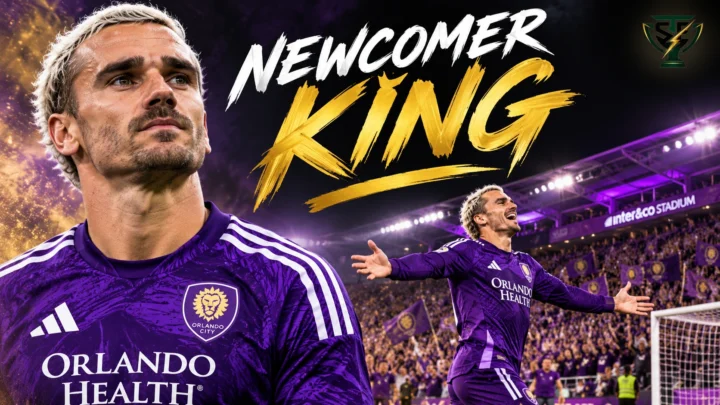
He finished second in MLS Newcomer of the Year voting behind Orlando City’s Antoine Griezmann.
The Sports Encounter’s examination of Griezmann’s award victory documented Guilherme’s strong support from voters and his contribution to Houston’s campaign.
His performance against San Jose may be especially important because the Dynamo are facing a team with considerable attacking quality of its own.
Houston will need to generate opportunities without abandoning the defensive discipline that helped secure its playoff place.
Jonathan Bond’s 12 Clean Sheets Give Houston a Defensive Foundation
Houston’s goalkeeper Jonathan Bond has been another important contributor.
Bond finished the regular season with 12 clean sheets, tying the Dynamo’s single-season club record shared by Tally Hall and Steve Clark.
The total placed him among the league’s leading goalkeepers in that category.
Houston also produced a five-match winning sequence without conceding, part of a run that demonstrated its capacity to protect narrow advantages.
Those achievements help explain why the Dynamo could be difficult opponents for San Jose despite entering as the lower seed.
The challenge facing Bond will be different from many ordinary league fixtures.
San Jose’s attacking options include Judd’s finishing, Tsakiris’ creativity and Werner’s movement.
Houston’s defenders must prevent the Earthquakes from repeatedly generating high-quality opportunities, while Bond needs to maintain the consistency that made him so important during the regular season.
Houston’s defensive ability has already contributed to significant away results.
In October, the Dynamo defeated Seattle Sounders 1-0, with Lucas Halter scoring the decisive goal.
TSE’s consolidated MLS report from that round documented Houston’s victory and the changing Western Conference playoff picture.
The result offered evidence that Houston can win away from home without requiring a high-scoring performance.
That capability may prove valuable against San Jose.
San Jose vs Houston: Why This Series Could Be Decided in Midfield
The contrasting attacking structures create an important tactical battle.
San Jose are likely to seek opportunities through Tsakiris and Werner, with Judd occupying defensive positions closer to goal.
Houston need to limit the space available to those players while retaining an effective route toward Guilherme.
The midfield battle could determine which team controls the pace of the contest.
If San Jose dominate possession and move the ball comfortably into attacking areas, Houston may spend long periods defending.
If the Dynamo regain possession in useful positions, they could create opportunities before the Earthquakes reorganize.
The balance between those phases will be particularly important because the teams finished only one seed apart.
Neither side enters with an overwhelming advantage based solely on its regular-season standing.
San Jose’s stronger seeding provides home-field protection across the series. Houston’s defensive record and experienced personnel offer a credible response.
Continue the MLS Story



Why Winning Game 1 Matters in a Best-of-Three Series
Both fixtures are being played under MLS’s best-of-three Round One format.
The first club to win two matches advances to the Western Conference Semifinals.
That makes the opening encounter important without turning it into a direct elimination game.
A team that wins Game 1 needs only one additional victory to progress.
A team that loses must win Game 2 to prevent elimination and force a deciding third match.
The higher-seeded team hosts Games 1 and 3, if necessary. The lower-seeded team hosts Game 2.
There is also an important difference from conventional knockout soccer.
If a Round One match finishes level after 90 minutes, it proceeds directly to a penalty shootout. There is no extra time.
The shootout determines which team receives the victory for that match and therefore the series advantage.
The official MLS explanation of the Round One format confirms these rules.
This structure creates a specific form of pressure for all four teams.
A club cannot assume that controlling possession or creating more chances will be sufficient. If it fails to convert its opportunities, a penalty shootout may decide the match.
That makes finishing, composure and game management particularly important.
What Comes Next in Both Western Conference Series?
The winners of these two series will enter different sections of the conference bracket.
The St. Louis-LAFC winner will advance to face the winner of FC Dallas against Portland Timbers.
The San Jose-Houston winner will meet the winner of Vancouver Whitecaps against Real Salt Lake.
Those possible opponents add another layer to the importance of the opening series.
Vancouver finished the regular season at the top of the Western Conference, making the potential route particularly demanding for San Jose or Houston.
Dallas secured the second seed, meaning that St. Louis or LAFC could face another higher-ranked opponent depending on their progress.
The Sports Encounter’s complete MLS Cup Playoffs bracket and schedule guide details how the conference pathways are organized.
Both Game 2 fixtures are scheduled for November 28, with LAFC hosting St. Louis and Houston welcoming San Jose.
If either series requires a decider, Game 3 is scheduled for December 2 at the higher seed’s home ground.
St. Louis and San Jose Have More Than Home Advantage to Protect
For St. Louis, the playoffs offer an opportunity to establish that its remarkable recovery and U.S. Open Cup triumph are part of a sustained competitive transformation.
For San Jose, this is a chance to turn Bruce Arena’s rebuilding work into meaningful postseason progress.
The two clubs reached their current positions through different paths, but both have demonstrated that they can challenge established MLS opponents.
LAFC and Houston, meanwhile, have their own reasons to believe their seeds do not tell the whole story.
LAFC possess one of the league’s most dangerous attacking partnerships. Houston have an influential creator in Guilherme and a goalkeeper whose clean-sheet record demonstrates the strength of their defensive foundation.
Recent league results have also shown how quickly the Western Conference hierarchy can change.
TSE’s early-November MLS results analysis documented Portland’s victory over Houston and the shifting momentum among clubs competing for playoff positions.
Those results reinforce the importance of judging teams by their current performances rather than relying exclusively on regular-season reputation.
Which Teams Can Turn Their Season Into a Championship Run?
The defining challenge for St. Louis will be containing Son and Bouanga while generating enough attacking opportunities for Navarro and Holse.
San Jose must find a way through Houston’s defensive structure while preventing Guilherme from exploiting gaps when possession changes hands.
Neither series can be settled through historical achievements or individual reputations.
St. Louis’ unbeaten streak and trophy success have earned the club considerable respect. LAFC’s championship experience makes the visitors dangerous, but it cannot guarantee another postseason run.
San Jose’s home advantage and attacking depth provide a strong foundation. Houston’s clean-sheet record and Guilherme’s influence make the Dynamo difficult opponents to dismiss.
The opening matches will establish which teams can translate those strengths into results when every mistake carries greater consequences.
For two higher-seeded clubs seeking to validate outstanding seasons and two experienced challengers determined to advance, the Western Conference playoffs have reached the point where reputations must give way to performances.
MLS Cup Playoffs
- MLS Cup Playoffs: LAFC Challenge St. Louis’ Historic Rise as San Jose and Houston Renew Rivalry
- Antoine Griezmann Wins MLS Newcomer Award After Transforming Orlando City
- MLS Cup Playoffs 2026: Can Messi Stop Nashville’s Record-Breaking Title Charge?
- MLS Decision Day 2026 Preview: Six Teams Fight for Three Playoff Spots as Messi and Nashville Chase History
- Abada Hat Trick Sends Charlotte Through, Vancouver Seizes West as Messi’s Miami Falters in MLS Thriller