Key Takeaways
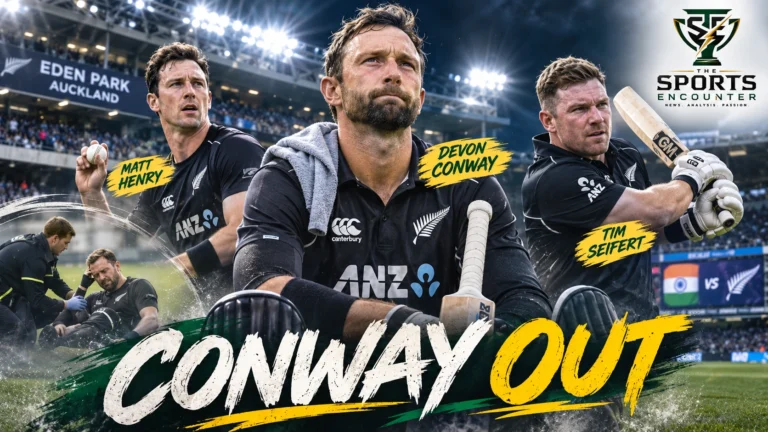
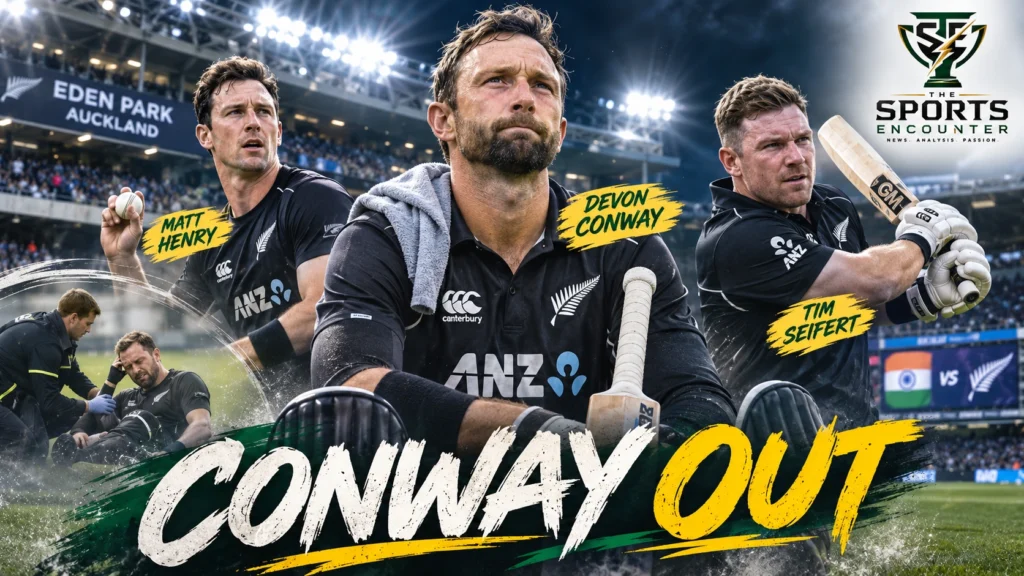
- Conway and Henry collided while attempting a catch during New Zealand’s pre-match fielding practice at Eden Park on Tuesday, November 3.
- According to New Zealand Cricket’s official medical update, both players received immediate treatment and underwent head injury assessments.
- Medical and availability information confirmed by New Zealand Cricket and the ICC as of November 3, 2026.
- The first ODI takes place at Eden Park on November 4, with four further matches scheduled over the following 11 days.
AUCKLAND, New Zealand, November 3, 2026: New Zealand’s preparations for their five-match ODI series against India suffered another serious blow on Tuesday when opening batter Devon Conway was ruled out of Wednesday’s first match after sustaining a concussion in a training-ground collision with fast bowler Matt Henry at Eden Park. Both players received immediate medical attention after colliding while attempting a catch, but Conway required further hospital examination that confirmed the concussion. His absence leaves captain Mitchell Santner considering another batting reshuffle just 24 hours before the series begins.
Tim Seifert is the leading candidate to replace Conway after his explosive 93 against India in the final T20I on November 1, although New Zealand have yet to confirm their playing XI. The complication extends beyond one opening position: Rachin Ravindra and Mark Chapman were already unavailable for the ODI series, Henry’s participation remains under monitoring, and the hosts must manage their resources ahead of two important World Test Championship matches. For a team that recovered from three consecutive T20I defeats to win its final two games, the injury has arrived at a particularly unfortunate moment.
What Happened to Devon Conway and Matt Henry at Eden Park?
Conway and Henry collided while attempting a catch during New Zealand’s pre-match fielding practice at Eden Park on Tuesday, November 3.
Story at a glance
What Happened to Devon Conway and Matt Henry at Eden Park?
Conway and Henry collided while attempting a catch during New Zealand’s pre-match fielding practice at Eden Park on Tuesday, November 3.
Why Tim Seifert Is the Likely Replacement for Conway
Tim Seifert is the obvious candidate to replace Conway, although a likely selection should not be confused with an officially confirmed playing XI.
New Zealand’s Three Batting Absences Create a Bigger Selection Problem
Conway’s injury becomes more significant when considered alongside the earlier withdrawals of Ravindra and Chapman.
Matt Henry’s Fitness Matters Beyond the Training-Ground Collision
Henry’s availability is important because New Zealand will be seeking early wickets against an Indian batting lineup that contains established ODI performers.
Why Eden Park Could Magnify New Zealand’s Fielding Problems
The venue adds another layer to an already difficult preparation period.
Read next India vs Pakistan World Cup Clash Draws 8.4M Ticket Requests as ICC World Cup Demand Crosses 120M
According to New Zealand Cricket’s official medical update, both players received immediate treatment and underwent head injury assessments.
Conway was subsequently taken to the hospital’s accident and emergency department for further examination. Those assessments confirmed a concussion, ruling him out of the opening ODI against India.
New Zealand Cricket also said both players would continue to be monitored and that further updates on their involvement in the series would follow.
The distinction between the two players’ circumstances is important. Conway has been definitively ruled out of Wednesday’s match. Henry has not been ruled out, but the official statement did not provide an unconditional clearance for him to play.
| Player | Incident or Injury | Confirmed Status | Immediate Selection Impact |
|---|---|---|---|
| Devon Conway | Concussion following a training collision | Ruled out of first ODI | Opening batting position must be filled |
| Matt Henry | Collision during same training incident | Under continued monitoring; not officially ruled out | Fast-bowling selection remains conditional on fitness |
| Rachin Ravindra | Shoulder injury | Ruled out of ODI series | Loss of left-handed batting and spin-bowling flexibility |
| Mark Chapman | Hamstring injury | Ruled out of ODI series | Reduced middle-order batting depth |
Medical and availability information confirmed by New Zealand Cricket and the ICC as of November 3, 2026. Future availability is subject to subsequent medical and selection updates.
The injury picture was already complicated before Tuesday’s collision. The Sports Encounter examined those problems in its November 2 report on Ravindra, Chapman and New Zealand’s revised ODI squads.
Conway’s absence adds a new problem at the top of the batting order, where the opening pair must negotiate the new ball against an Indian attack featuring several experienced international bowlers.
Why Tim Seifert Is the Likely Replacement for Conway
Tim Seifert is the obvious candidate to replace Conway, although a likely selection should not be confused with an officially confirmed playing XI.
The wicketkeeper-batter enters the ODI series after producing one of New Zealand’s finest performances in the preceding T20 internationals.
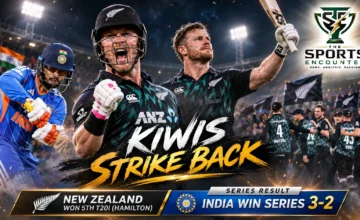
During the fifth match at Hamilton on November 1, Seifert scored 93 from 50 balls as New Zealand successfully chased India’s 191/8 with 12 deliveries remaining.
His innings contained 11 fours and five sixes, giving him 74 runs in boundaries and a strike rate of 186.00. New Zealand eventually reached 195/3 in 18 overs to complete a seven-wicket victory.
Our full report on Seifert’s 93 and New Zealand’s Hamilton victory explains how he combined with Glenn Phillips to control the chase.
Seifert now faces a different examination. One-day cricket places greater demands on innings construction, particularly during the middle overs when batting teams must balance consolidation with acceleration.
Can Seifert’s T20 Success Translate Into a 50-Over Opening Role?
The opportunity is particularly interesting because Seifert was initially expected to feature only in the latter stages of the ODI series.
New Zealand’s injury problems led to his availability being extended to all five matches, creating an immediate opening for him after Conway’s concussion.
The following comparison illustrates the different responsibilities involved.
| Selection Factor | Devon Conway | Tim Seifert |
|---|---|---|
| Batting style | Left-handed | Right-handed |
| Primary batting value | Established top-order innings construction | Aggressive top-order scoring |
| Recent relevant performance | Named in initial ODI squad before injury | 93 from 50 balls against India on November 1 |
| Availability for first ODI | Ruled out | Available for selection |
| Main tactical consideration | Conventional ODI opening stability | Adapting attacking methods to a longer innings |
This is a role-based editorial comparison, not a claim that Seifert has been selected or that his T20 statistics predict his ODI performance.
Seifert’s attacking instincts could be particularly valuable at Eden Park, where the straight boundaries are relatively short. However, a successful ODI opener must also manage changes in bowling pace, field restrictions and match circumstances.
That balance may become central to New Zealand’s batting strategy.
New Zealand’s Three Batting Absences Create a Bigger Selection Problem
Conway’s injury becomes more significant when considered alongside the earlier withdrawals of Ravindra and Chapman.
New Zealand had originally selected Ravindra for the first three ODIs after his shoulder injury disrupted his participation in the T20I series. However, his recovery had not progressed sufficiently for the demands of fielding in one-day cricket.
Chapman, meanwhile, remains sidelined with a hamstring problem and requires additional rehabilitation.
New Zealand have responded by expanding the availability of Seifert and calling in Henry Nicholls for the first three games and Dean Foxcroft for the final two.
The ICC’s November 1 squad update confirmed the changes and explained the importance of managing Ravindra’s recovery ahead of the Test series.
What Choices Does Mitchell Santner Have Against India?
Santner can approach the opening match in several ways, depending on the final fitness assessments and New Zealand’s preferred batting balance.
| Selection Question | Available Option | Potential Benefit | Important Limitation |
|---|---|---|---|
| Who replaces Conway? | Tim Seifert | Recent form and aggressive opening potential | ODI role requires different innings management |
| Who provides batting stability? | Will Young, Henry Nicholls and established middle-order players | More conventional innings-building options | Final batting order remains unconfirmed |
| Who provides wicketkeeping? | Tom Latham or Tim Seifert | Selection flexibility | Keeping assignment depends on final XI |
| What if Henry cannot play? | Other selected pace options, including Jacob Duffy and Kyle Jamieson | Fast-bowling alternatives | Combination depends on conditions and fitness |
| How is batting depth protected? | Batting contributions from Michael Bracewell, Glenn Phillips and Santner | Multiple all-round capabilities | Bowling and batting balance must still be maintained |
These are conditional selection possibilities based on New Zealand’s announced squad, not confirmed team selections.
The challenge is particularly delicate because New Zealand must avoid weakening one department while attempting to reinforce another.
Selecting additional batting protection could reduce bowling variety. Choosing an extra specialist bowler could leave the middle order carrying greater responsibility if Seifert or his opening partner departs early.
Henry’s final status may therefore influence the entire combination rather than only one position.
Matt Henry’s Fitness Matters Beyond the Training-Ground Collision
Henry’s availability is important because New Zealand will be seeking early wickets against an Indian batting lineup that contains established ODI performers.
The fast bowler was already part of the squad’s broader fitness considerations before Tuesday’s incident.
In New Zealand’s opening T20I defeat at Christchurch on October 22, India successfully chased 226, reaching 230/6 in 19.4 overs. Henry conceded 57 runs from 3.4 overs without taking a wicket.
That performance was examined in The Sports Encounter’s analysis of India’s record chase and New Zealand’s missed opportunities.
The ODI format offers a different set of tactical opportunities. With a new ball and more overs available, Henry’s ability to maintain a disciplined line and length could help New Zealand apply pressure without relying on early attacking fields throughout the powerplay.
However, no medical or selection conclusion should be drawn from the fact that Henry appeared in training. New Zealand Cricket has said his condition will continue to be monitored.
Why Eden Park Could Magnify New Zealand’s Fielding Problems
The venue adds another layer to an already difficult preparation period.
Eden Park has distinctive ground dimensions, including relatively short straight boundaries, while its exposed conditions can create difficult catching situations when the wind changes direction.
Santner acknowledged before the ODI opener that wind and catching conditions had challenged his team during the T20I series.
The issue is especially relevant after the hosts struggled to hold important catches during India’s earlier victories.
For New Zealand, accurate fielding is vital because another missed opportunity against an experienced Indian batter could place additional pressure on a team already missing several important players.
What Did New Zealand Learn From the Fourth T20I at Eden Park?
The answer emerged in New Zealand’s 87-run victory over India on October 30.
Glenn Phillips scored 107 from 49 balls, helping the hosts reach 259/7. Jacob Duffy then took 4/23 as India finished on 172/9.
Our detailed examination of the fourth T20I identified an important statistical difference.
New Zealand scored 150 runs in the final ten overs of their innings, while India managed only 65 in the corresponding period.
That 85-run separation across the second halves of the innings accounted for nearly the entire 87-run victory margin.
The result demonstrated how wickets in hand, effective middle-over batting and disciplined pace bowling could produce a decisive advantage.
Those lessons remain relevant to the ODI format, even though the required pace of an innings and fielding restrictions differ.
India Have the Series Momentum, but New Zealand Finished the T20Is Strongly
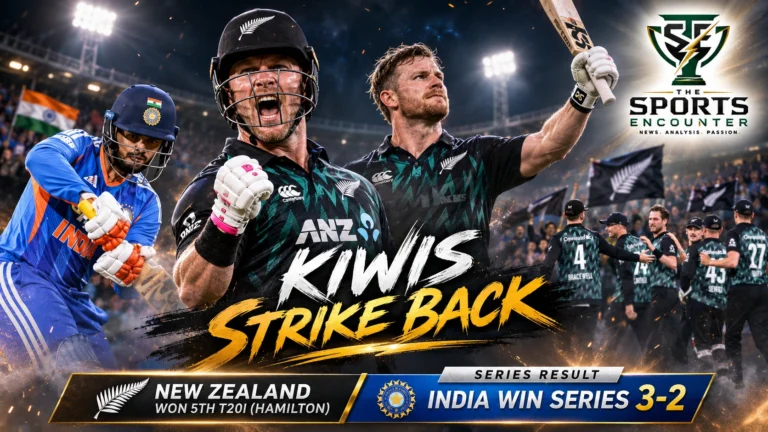
India won the preceding five-match T20I series 3-2, securing the contest by winning the opening three matches.
New Zealand subsequently recovered with emphatic victories in Auckland and Hamilton.
The sequence matters because it reveals two different trends. India established early dominance, while New Zealand ended the series with improved results and several outstanding individual performances.
| Match | Date | Venue | Result | Series Position |
|---|---|---|---|---|
| First T20I | October 22 | Christchurch | India won by 4 wickets | India 1-0 |
| Second T20I | October 24 | Christchurch | India won by 4 wickets | India 2-0 |
| Third T20I | October 27 | Wellington | India won by 6 wickets | India 3-0; series secured |
| Fourth T20I | October 30 | Auckland | New Zealand won by 87 runs | India 3-1 |
| Fifth T20I | November 1 | Hamilton | New Zealand won by 7 wickets | India won series 3-2 |
The results also formed part of an unusually eventful period of international cricket. The Sports Encounter’s October 22 international cricket review examined India’s extraordinary successful chase alongside major developments in Test and ODI cricket.
The approaching ODI series gives the two teams another opportunity to test their combinations ahead of the 2027 Cricket World Cup.
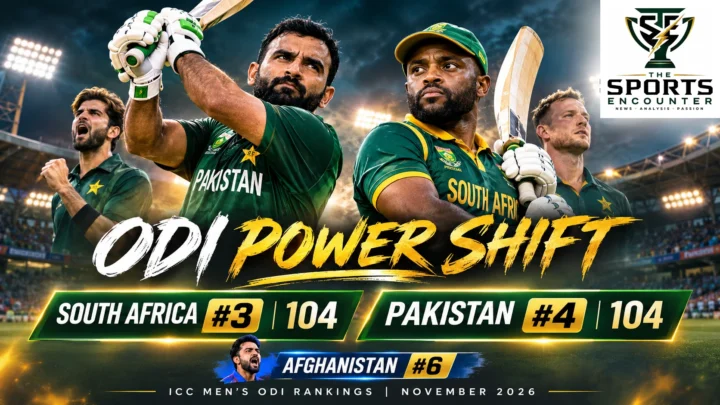
India and New Zealand currently occupy the top two positions in the ICC Men’s ODI rankings. Our November ODI rankings analysis places those standings in the wider context of the World Cup competition.
New Zealand vs India ODI Schedule: When Does Conway’s Availability Become Important Again?
The first ODI takes place at Eden Park on November 4, with four further matches scheduled over the following 11 days.
| Match | Date | Venue | Start Time (NZ Local) |
|---|---|---|---|
| First ODI | November 4 | Eden Park, Auckland | 3:00 PM |
| Second ODI | November 7 | Hnry Stadium, Wellington | 3:00 PM |
| Third ODI | November 10 | Seddon Park, Hamilton | 3:00 PM |
| Fourth ODI | November 13 | Bay Oval, Mount Maunganui | 3:00 PM |
| Fifth ODI | November 15 | Bay Oval, Mount Maunganui | 3:00 PM |
Source: New Zealand Cricket’s official 2026-27 international schedule.
The immediate question is whether Conway can return for any of the remaining fixtures.
New Zealand Cricket has not announced a return date. His availability will depend on further medical evaluation and the applicable concussion management requirements.
There is also a separate workload issue involving the Test series, which begins in Wellington on November 19.
Several established red-ball players are scheduled to leave ODI duty after the third match as New Zealand switch their preparation toward the World Test Championship.
For an explanation of India’s Test selections and the approaching red-ball challenge, read our analysis of India’s New Zealand Test squad and player fitness considerations.
What Does Conway’s Injury Mean for New Zealand’s 2027 World Cup Planning?
Every ODI in this series offers New Zealand an opportunity to evaluate players, partnerships and bowling combinations before the next global tournament.
The injury has created an unexpected test of the squad’s depth.
Seifert could strengthen his claim for a longer-term ODI role if he performs successfully against India. Nicholls has an opportunity to provide stability in the initial three games, while the balance of the team may change again when the later ODI squad takes over.
But a single good innings should not be treated as a definitive selection verdict, just as one poor performance should not determine a player’s World Cup future.
The coaching staff must evaluate how the batting unit functions collectively, particularly when conditions require greater patience or a different scoring approach.
The 2027 World Cup will be played in South Africa, Zimbabwe and Namibia. For wider international qualification context, see our report on Afghanistan securing World Cup qualification against Ireland.
Continue the Cricket Story
 CricketSeifert’s 93, Phillips’ Final Flourish Seal New Zealand’s Comeback But India Escape With 3-2 T20I Series Win
 CricketIndia vs Pakistan World Cup Clash Draws 8.4M Ticket Requests as ICC World Cup Demand Crosses 120M
 CricketRavindra and Chapman Out of India ODIs: Seifert’s Promotion, Nicholls’ Recall, and New Zealand’s Test Dilemma
Frequently Asked Questions About Devon Conway’s Concussion
Why is Devon Conway not playing the first ODI against India?
Conway sustained a concussion after colliding with teammate Matt Henry during fielding practice at Eden Park on November 3. New Zealand Cricket confirmed he would miss the November 4 match.
Was Matt Henry also injured in the collision?
Henry was involved in the same collision and received an immediate head injury assessment. New Zealand Cricket said both players would continue to be monitored but did not rule Henry out of the first ODI.
Who is likely to replace Devon Conway?
Tim Seifert is the leading candidate following his inclusion for the full ODI series and recent success against India. The final playing XI has not yet been confirmed.
Is Devon Conway ruled out of the entire ODI series?
No. New Zealand Cricket has confirmed his absence from the first match only. His availability for subsequent games remains subject to medical review.
Why are Rachin Ravindra and Mark Chapman unavailable?
Ravindra is recovering from a shoulder injury, while Chapman remains sidelined with a hamstring problem. Both have been ruled out of the five-match ODI series.
When does the India vs New Zealand ODI series begin?
The opening match is scheduled for Wednesday, November 4, 2026, at Eden Park in Auckland, beginning at 3:00 PM New Zealand local time.
Who won the preceding India vs New Zealand T20I series?
India won 3-2 after taking the first three matches. New Zealand recovered to win the final two games in Auckland and Hamilton.
When will Conway return to cricket?
No confirmed return date has been announced. His availability depends on further medical assessment and New Zealand Cricket’s concussion management procedures.
New Zealand’s Immediate Challenge: Protect the Players, Then Solve the Batting Order
New Zealand have enough experienced players to compete against India, but the timing of Conway’s concussion makes the opening ODI a difficult selection challenge.
Seifert’s recent form provides an encouraging alternative at the top of the order, while Young, Latham, Mitchell, Phillips and the other selected batters offer different ways to construct an innings.
Yet the loss of Conway, Ravindra and Chapman reduces the options available to Santner. If Henry cannot play, the fast-bowling combination will also require adjustment.
The captain must make those decisions while confronting an Indian team that has already shown how effectively it can punish missed catches, loose deliveries and unsuccessful bowling changes.
Eden Park’s short straight boundaries and variable catching conditions may amplify those challenges.
For New Zealand, the first priority remains Conway’s recovery and appropriate medical clearance. The cricketing challenge comes next: building an opening partnership capable of absorbing pressure, preserving batting resources and exploiting the opportunities available against India.
Seifert now has an unexpected chance to demonstrate that his T20 success can translate into ODI cricket. Whether that opportunity becomes a turning point in New Zealand’s World Cup preparations will depend on what happens after the first ball is bowled in Auckland.
Follow the developments through The Sports Encounter’s international cricket coverage and our upcoming sports calendar.