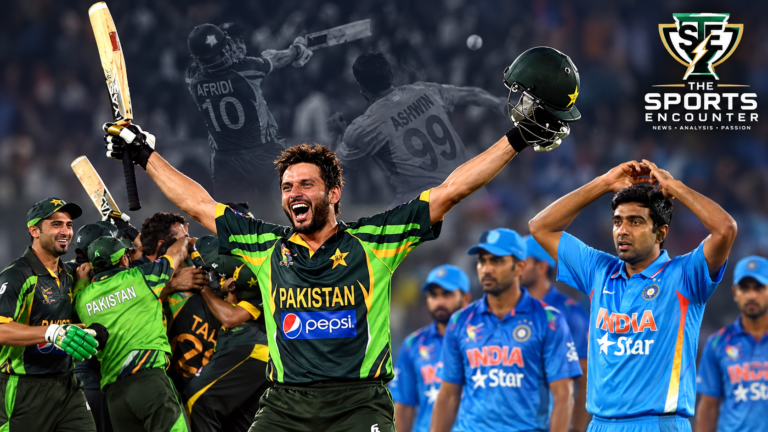
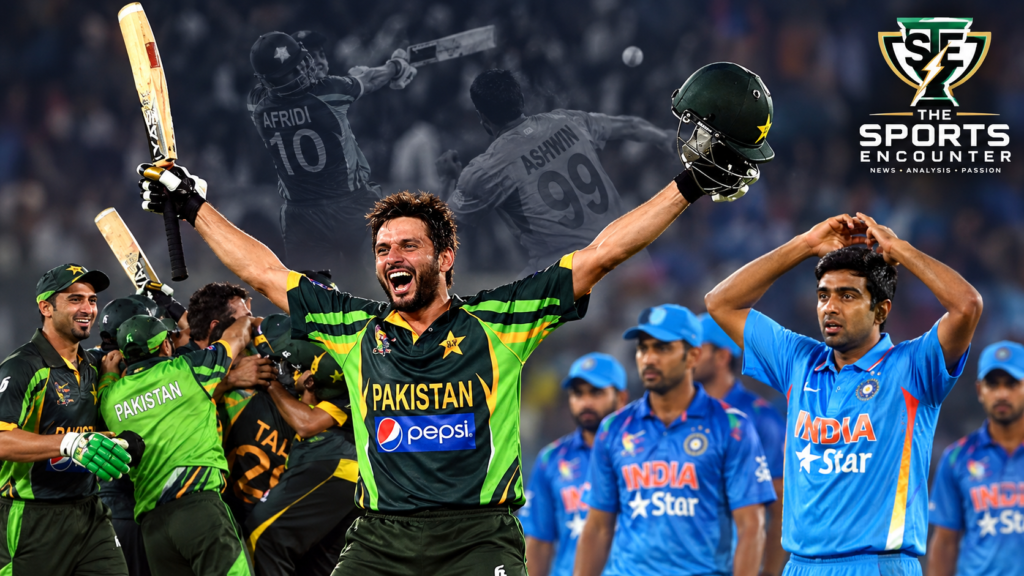
MIRPUR, Bangladesh, March 2, 2014: Pakistan needed ten runs from five deliveries with just one wicket standing between them and another agonizing defeat against India. Ravichandran Ashwin had bowled Saeed Ajmal with the first ball of the final over, and Shahid Afridi could only watch from the other end. Junaid Khan somehow managed a single from the next delivery, returning the strike to Pakistan’s most unpredictable match-winner. Afridi then launched Ashwin for consecutive sixes, completing an extraordinary one-wicket victory with two balls remaining in the 2014 Asia Cup.
Pakistan reached 249 for 9 in 49.4 overs after restricting India to 245 for 8. Mohammad Hafeez had held the chase together with a patient 75, supported by Ahmed Shehzad’s 42 and Sohaib Maqsood’s 38. But the dismissal of Hafeez, a costly run-out and three late Indian wickets threatened to turn a manageable chase into a humiliating collapse. Afridi’s unbeaten 34 from 18 deliveries rescued Pakistan, although Hafeez received the Player of the Match award for his batting and two wickets earlier in the afternoon.
It was a contest that appeared to have been won and lost several times before Afridi’s final assault.
India had recovered from 103 for 4 through Ambati Rayudu’s 58 and Ravindra Jadeja’s unbeaten 52.
Story at a glance
Rohit Sharma’s 56 Gives India a Promising Start Before Pakistan Hit Back
India’s innings began with an early setback after Pakistan captain Misbah-ul-Haq elected to field.
Mohammad Talha’s 2 for 22 Provides Pakistan’s Most Economical Spell
Mohammad Talha delivered an outstanding spell of controlled pace bowling.
Ambati Rayudu’s 58 Rescues India From Middle-Order Trouble
Ambati Rayudu produced India’s highest individual score.
Ravindra Jadeja’s Unbeaten 52 Gives India a Total Worth Defending
Jadeja contributed a crucial unbeaten 52 from 49 deliveries.
Saeed Ajmal’s Three Wickets Restrict India to 245
Saeed Ajmal was Pakistan’s leading wicket-taker.
Pakistan’s openers responded aggressively before the Indian spinners slowed the chase.
Hafeez and Maqsood repaired the damage, taking Pakistan to 200 for 4 with more than six overs remaining.
The target appeared manageable.
Then Pakistan lost five wickets for 36 runs, leaving Afridi stranded with the last batter and the match slipping away.
The two sixes that followed became part of India-Pakistan cricket folklore.
This extraordinary finish earns its place as Match 61 in The Sports Encounter’s A Celebration of 5000 ODIs, a series examining the pressure, individual brilliance and unexpected reversals that made 100 ODIs unforgettable.
The contest also carries a fascinating historical connection with India’s dramatic 2010 Asia Cup victory over Pakistan, when Harbhajan Singh finished another tense chase with a six.
Four years later, Afridi turned the tables.
Pakistan vs India, 2014 Asia Cup: Match Summary
| Match detail | Information |
|---|---|
| Competition | Asia Cup 2014 |
| Match | Sixth match, round-robin stage |
| Date | March 2, 2014 |
| Venue | Sher-e-Bangla National Cricket Stadium, Mirpur |
| Location | Dhaka, Bangladesh |
| Toss | Pakistan won and fielded |
| India | 245/8 in 50 overs |
| Pakistan | 249/9 in 49.4 overs |
| Result | Pakistan won by one wicket |
| Balls remaining | 2 |
| Player of the Match | Mohammad Hafeez |
| India’s leading scorer | Ambati Rayudu, 58 |
| Pakistan’s leading scorer | Mohammad Hafeez, 75 |
| Match-winning innings | Shahid Afridi, 34 not out |
| Pakistan’s best bowling | Saeed Ajmal, 3/40 |
| India’s best bowling | Ravichandran Ashwin, 3/44 |
| Winning shot | Afridi’s second consecutive six off Ashwin |
Rohit Sharma’s 56 Gives India a Promising Start Before Pakistan Hit Back
India’s innings began with an early setback after Pakistan captain Misbah-ul-Haq elected to field.
Shikhar Dhawan scored ten from 13 deliveries before Mohammad Hafeez trapped him lbw.
Virat Kohli, captaining India in MS Dhoni’s absence, managed only five before Umar Gul had him caught behind.
India were 56 for 2 in the tenth over.
Rohit Sharma nevertheless continued playing positively.
He scored 56 from 58 balls, striking seven fours and two sixes.
His innings was important because India required a stable platform against Pakistan’s experienced spin attack.
Rohit initially found support from Ajinkya Rahane, who contributed 23 from 50 deliveries.
However, Mohammad Talha dismissed both batters.
India slipped to 103 for 4 in the 24th over.
The innings had lost momentum despite Rohit’s half-century.
Pakistan’s bowlers had successfully prevented India from establishing a substantial top-order partnership.
Mohammad Talha’s 2 for 22 Provides Pakistan’s Most Economical Spell
Mohammad Talha delivered an outstanding spell of controlled pace bowling.
The fast bowler took 2 for 22 from seven overs, including one maiden.
His economy rate of 3.14 was the best among Pakistan’s bowlers.
Talha removed Rohit and Rahane, two batters who had threatened to provide India with stability.
Those wickets were especially valuable because both players had spent considerable time at the crease.
Talha’s contribution ensured India’s top order could not accelerate freely.
Pakistan also benefited from Hafeez’s controlled off-spin.
He dismissed Dhawan and Dinesh Karthik while conceding only 38 runs from nine overs.
The combination of pace and spin reduced India’s opportunity to construct a dominant total.
Ambati Rayudu’s 58 Rescues India From Middle-Order Trouble
Ambati Rayudu produced India’s highest individual score.
He made 58 from 62 deliveries, hitting four fours and one six.
His innings became particularly important after the top-order wickets left India struggling at 103 for 4.
Rayudu initially rebuilt alongside Karthik.
The pair added 52 runs for the fifth wicket, taking India to 155 for 5.
Karthik scored 23 from 46 deliveries before Hafeez dismissed him.
Rayudu then found a more aggressive partner in Jadeja.
Their sixth-wicket partnership added 59 runs.
Rayudu was eventually dismissed by Saeed Ajmal, with India reaching 214 for 6.
His contribution restored respectability to a total that had appeared likely to finish substantially below 230.
However, Rayudu’s innings also illustrates India’s difficulty during the middle overs.
Pakistan’s spinners repeatedly slowed the scoring, preventing the batters from establishing sustained acceleration.
India needed a late contribution from Jadeja to reach a competitive total.
Ravindra Jadeja’s Unbeaten 52 Gives India a Total Worth Defending
Jadeja contributed a crucial unbeaten 52 from 49 deliveries.
His innings included four fours and two sixes.
Jadeja arrived after India had lost five wickets and needed greater scoring momentum.
He initially supported Rayudu before accelerating in the final overs.
His half-century ensured India completed its allocation on 245 for 8.
Jadeja’s innings was particularly significant because Pakistan eventually required almost every run to complete the chase.
India could have finished with a considerably smaller total without his contribution.
He also provided an attacking option against Pakistan’s fast bowlers during the final overs.
Unfortunately for India, his bowling performance would later become part of the decisive final stages.
Afridi attacked Jadeja during the 46th over of Pakistan’s chase, striking a six and a four that revived the visitors’ hopes.
Jadeja had helped India establish a defendable target with the bat.
He could not prevent Pakistan from reaching it.
Saeed Ajmal’s Three Wickets Restrict India to 245
Saeed Ajmal was Pakistan’s leading wicket-taker.
He returned 3 for 40 from ten overs.
His victims were Rayudu, Ravichandran Ashwin and Mohammed Shami.
Ajmal’s effectiveness was particularly evident during the closing stages.
After Rayudu’s dismissal, India needed its lower order to support Jadeja.
Ajmal removed Ashwin and Shami in the 49th over, preventing India from exploiting all its remaining batting resources.
Shahid Afridi also contributed an economical spell, conceding 38 runs from eight overs without taking a wicket.
Pakistan’s bowling performance provided a reasonable platform for the chase.
A target of 246 required an average rate of 4.92 runs per over.
Against India’s attack, Pakistan had good reason to believe the target was achievable.
Sharjeel Khan and Ahmed Shehzad Give Pakistan the Start It Needed
Pakistan’s openers responded positively.
Sharjeel Khan scored 25 from 30 balls, striking three fours and one six.
Ahmed Shehzad contributed 42 from 44 deliveries, including six boundaries.
Together, they added 71 runs for the first wicket.
The partnership gave Pakistan an early advantage.
India needed wickets to prevent the required rate from becoming increasingly manageable.
Ashwin eventually bowled Sharjeel in the 11th over.
Amit Mishra then dismissed Shehzad, leaving Pakistan 93 for 2.
The opening pair had done its job.
Pakistan needed another substantial partnership to maintain control.
That responsibility fell to Hafeez.
Mohammad Hafeez’s 75 Earns the Player of the Match Award
Mohammad Hafeez played Pakistan’s most important substantial innings.
He scored 75 from 117 deliveries, striking three fours and two sixes.
His innings was significantly slower than those of the opening batters, but it served a different purpose.
Pakistan lost captain Misbah-ul-Haq for one and Umar Akmal for four after the opening partnership ended.
At 113 for 4, the chase had become increasingly uncertain.
Hafeez remained at the crease and rebuilt with Maqsood.
The pair added 87 runs for the fifth wicket.
By the time Hafeez departed, Pakistan had reached 200 for 5 in the 44th over.
Only 46 runs were required.
Why Hafeez’s Innings Was More Important Than Its Strike Rate Suggests
Hafeez scored at a strike rate of 64.10.
In isolation, that appears conservative.
However, the target was 246 rather than 350, and Pakistan had lost important middle-order wickets.
Hafeez’s responsibility was to preserve the chase.
His partnership with Maqsood allowed Pakistan to maintain control of the required rate while preventing further wickets.
He also contributed 2 for 38 with the ball.
That all-round performance explains why Hafeez received the official Player of the Match award, even though Afridi supplied the unforgettable finish.
The award was based on his overall contribution, not simply the most dramatic moment.
Amit Mishra’s 2 for 28 Nearly Wins the Match for India
Amit Mishra produced India’s most economical bowling performance.
He conceded only 28 runs from ten overs while taking two wickets.
His economy rate of 2.80 was exceptional in a match where Pakistan needed fewer than five runs per over.
Mishra removed Shehzad and Umar Akmal, interrupting Pakistan’s progress during the middle overs.
His spell was important because it prevented Pakistan from completing the chase comfortably.
The visitors had established a promising start but were forced to rebuild after the wickets.
Mishra also combined effectively with Ashwin, whose three wickets eventually brought India within one dismissal of victory.
Pakistan’s chase became difficult primarily because India’s spinners created sustained pressure.
Sohaib Maqsood’s 38 Keeps Pakistan in Control Until a Costly Run-Out
Sohaib Maqsood scored 38 from 53 deliveries.
He joined Hafeez with Pakistan 113 for 4.
The pair constructed the partnership needed to restore stability.
Their 87-run stand carried Pakistan to 200.
At that stage, the visitors were well positioned.
However, Hafeez’s dismissal to Ashwin changed the situation.
Maqsood was subsequently run out for 38 after confusion with Afridi.
Pakistan slipped to 203 for 6.
The dismissal was especially damaging because Maqsood had spent considerable time at the crease and understood the conditions.
Afridi now faced the task of completing the chase alongside the lower order.
The target remained achievable, but the margin for error was disappearing.
Shahid Afridi’s 34 Turns a Near-Collapse Into One of Pakistan’s Greatest ODI Finishes
Shahid Afridi entered the most demanding phase of the match.
He scored an unbeaten 34 from only 18 deliveries, striking two fours and three sixes.
His strike rate of 188.89 was comfortably the highest among Pakistan’s major contributors.
Afridi’s innings became particularly important because Pakistan repeatedly lost wickets while attempting to complete the chase.
With the score at 203 for 6, the visitors required 43 runs from 32 deliveries.
Afridi immediately attacked Jadeja.
He struck a six and a four during the 46th over, reducing the required rate and shifting pressure back onto India’s fielders.
Umar Gul then provided a valuable contribution, scoring 12 from 12 deliveries, including a six.
The partnership carried Pakistan closer to victory.
However, another dramatic collapse followed.
Bhuvneshwar Kumar’s Double Strike Leaves Pakistan on the Brink
India’s seam bowler Bhuvneshwar Kumar produced two crucial late wickets.
He dismissed Gul for 12, with Rahane taking a catch near the boundary.
Mohammad Talha then attempted a big shot but was caught by Jadeja.
Pakistan were 236 for 8 after 49 overs.
Ten runs remained.
Only two wickets were available.
Ashwin had the responsibility of bowling the final over.
The equation was difficult but still achievable with Afridi at the crease.
However, Ashwin immediately created another breakthrough.
He bowled Ajmal from the first delivery.
Pakistan were 236 for 9.
The match appeared to have swung decisively toward India.
Afridi Hits Ashwin for Two Sixes After Junaid Khan Survives the Final Over
The defining sequence began with Pakistan needing ten runs from five balls.
Junaid Khan was facing Ashwin.
Afridi waited at the non-striker’s end.
Junaid managed to take a single.
That delivery was almost as important as the two sixes that followed because it restored the strike to Pakistan’s most dangerous hitter.
Afridi now needed nine runs from four balls.
He attacked Ashwin immediately.
First Six: Afridi Clears Extra Cover
Afridi made room and struck Ashwin over deep extra cover.
Pakistan were suddenly within three runs of victory.
The pressure shifted sharply back onto India.
One more boundary would finish the contest.
Second Six: Afridi Clears the Leg-Side Boundary
Ashwin delivered again.
Afridi swung toward the leg side.
The ball travelled over the boundary for another six.
Pakistan had won.
Afridi raised his arms in celebration as his teammates rushed onto the field.
India’s players were left stunned after coming within one wicket of victory.
The winning six arrived from the fourth delivery of the final over.
Pakistan reached 249 for 9 in 49.4 overs, winning by one wicket with two balls remaining.
The ICC’s retrospective of memorable India-Pakistan Asia Cup encounters identifies Afridi’s consecutive sixes as one of the rivalry’s defining tournament moments.
The Final Over Reconstructed
| Delivery | Event | Pakistan score |
|---|---|---|
| 49.1 | Ashwin bowls Saeed Ajmal | 236/9 |
| 49.2 | Junaid Khan takes one | 237/9 |
| 49.3 | Afridi hits six over extra cover | 243/9 |
| 49.4 | Afridi hits six toward the leg side | 249/9 |
Result: Pakistan won by one wicket, with two deliveries remaining.
Five Turning Points That Decided the 2014 Asia Cup Classic
1. Pakistan Reduce India to 103 for 4
Hafeez, Umar Gul and Talha removed India’s top-order batters before the halfway stage.
Rohit’s 56 helped India score quickly, but repeated wickets disrupted the innings.
Pakistan’s disciplined bowling prevented India from building the partnerships needed to reach 280 or more.
2. Rayudu and Jadeja Rescue India With a 59-Run Stand
India were 155 for 5 when the pair established their partnership.
Rayudu’s 58 and Jadeja’s unbeaten 52 pushed the total to 245.
Those runs eventually gave India’s bowlers a realistic opportunity to win.
3. Hafeez and Maqsood Add 87 Before Both Fall
Pakistan recovered from 113 for 4 to 200 for 4.
The partnership had almost established the conditions for a comfortable finish.
However, Hafeez’s dismissal and Maqsood’s subsequent run-out reduced Pakistan to 203 for 6.
Afridi suddenly needed to finish the chase with the lower order.
4. India Take Three Wickets as Pakistan Slip to 236 for 9
Bhuvneshwar dismissed Gul and Talha, before Ashwin removed Ajmal.
India needed only one more wicket.
Pakistan still needed ten runs.
The match appeared to be in India’s hands.
5. Afridi Hits Consecutive Sixes to Finish the Chase
Junaid’s single restored the strike to Afridi.
The all-rounder hit Ashwin over extra cover and then over the leg-side boundary.
Pakistan completed the chase with two balls remaining.
The entire match turned on three consecutive scoring deliveries.
Why India Lost Despite Being One Wicket Away From Victory
India’s defeat was particularly painful because its bowlers had produced an impressive recovery.
Mishra and Ashwin restricted Pakistan during the middle overs.
Mishra conceded only 28 runs from ten overs.
Ashwin claimed three wickets, including the important dismissals of Sharjeel, Hafeez and Ajmal.
Bhuvneshwar then removed two lower-order batters, creating a dramatic final-over opportunity.
India’s problem was that Afridi remained unbeaten.
Even with nine wickets down, Pakistan possessed a batter capable of clearing the boundary.
That altered the pressure on Ashwin.
The spinner needed to deny Afridi deliveries he could attack, while also preventing Junaid from rotating the strike.
Junaid’s single became an important tactical moment.
Once Afridi regained the strike, Pakistan needed only two substantial hits.
He supplied them.
Was Ashwin’s Final-Over Bowling the Decisive Failure?
Ashwin’s first delivery was excellent.
He bowled Ajmal and brought India within one wicket of victory.
The subsequent single to Junaid created the opportunity for Afridi.
Ashwin then conceded two sixes.
The first was struck over extra cover, and the second over the leg side.
Both reflected Afridi’s willingness to take enormous risks.
Ashwin’s execution can be questioned, but it would be simplistic to blame the defeat entirely on him.
India had earlier allowed Pakistan’s opening partnership to reach 71.
Hafeez and Maqsood subsequently added 87.
Those partnerships gave Pakistan a realistic chance even after the lower-order collapse.
Ashwin had also taken three wickets.
The final result reflected Pakistan’s batting recovery, India’s pressure through spin and Afridi’s exceptional finishing ability.
Why Pakistan Almost Lost a Chase It Had Controlled
Pakistan’s victory should not conceal its repeated batting mistakes.
The opening partnership established a strong foundation.
Hafeez and Maqsood then rebuilt effectively after the middle-order dismissals.
Pakistan were 200 for 4 in the 44th over.
The chase required fewer than eight runs per over, with six wickets remaining.
Yet the visitors quickly lost their advantage.
Hafeez attempted an attacking stroke and was caught.
Maqsood was run out.
Gul and Talha departed attempting to accelerate.
Ajmal was bowled from the first delivery of the final over.
Pakistan’s batting had transformed a manageable finish into a crisis.
Afridi rescued the result, but the performance exposed the team’s vulnerability when established batters departed.
A stronger finishing strategy might have prevented the need for such an extraordinary conclusion.
That distinction matters.
Pakistan deserve credit for the victory, but Afridi’s heroics should not distract from the errors that made the finish necessary.
Why Hafeez Was Player of the Match Despite Afridi’s Winning Sixes
Afridi produced the match’s defining moment.
Hafeez contributed across both innings.
His 2 for 38 restricted India during the first innings.
He then scored 75 from 117 balls, holding Pakistan’s chase together while wickets fell around him.
Without that innings, Pakistan might never have reached a position where Afridi could finish the match.
Afridi’s 34 from 18 deliveries was extraordinary, but Hafeez’s combined batting and bowling contribution offered value across a much greater portion of the contest.
The official scorecard therefore records Hafeez as Player of the Match.
Both contributions were essential.
Hafeez made victory possible.
Afridi made it unforgettable.
What the Victory Meant for the 2014 Asia Cup
Pakistan’s victory strengthened their chances of reaching the tournament final.
India had entered the encounter under pressure following an earlier defeat to Sri Lanka.
The one-wicket result damaged India’s hopes and left the team needing other results to go its way.
Pakistan subsequently defeated Bangladesh to reach the championship match.
However, their campaign did not end with the trophy.
Sri Lanka beat Pakistan by five wickets in the final on March 8, completing an unbeaten tournament.
That outcome adds an interesting dimension to the Mirpur classic.
Afridi’s sixes secured one of Pakistan’s most celebrated victories over India.
But they did not ultimately deliver the Asia Cup championship.
The result nevertheless remains among the rivalry’s most memorable ODI finishes.
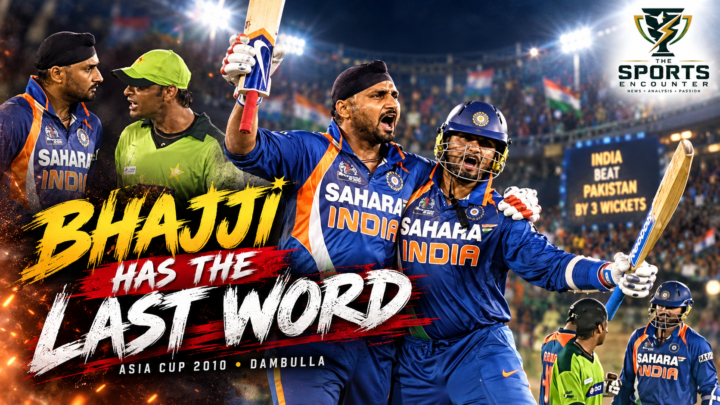
The Historical Connection With Harbhajan Singh’s 2010 Winning Six
The 2014 encounter also represents a remarkable reversal of an earlier India-Pakistan Asia Cup thriller.
In 2010, India needed seven runs from the final over against Pakistan at Dambulla.
Harbhajan Singh struck Mohammad Amir for the winning six, completing a three-wicket victory.
Four years later, Afridi produced an even more dramatic lower-order finish.
Pakistan needed ten from the final over.
Ashwin removed Ajmal immediately.
Junaid survived and took a single.
Afridi finished the chase with consecutive sixes.
The resemblance between the two contests is striking.
Both involved India and Pakistan.
Both were Asia Cup encounters.
Both produced tension during the final over.
Both were settled by batters better known for their all-round abilities than for opening an ODI innings.
And both ended with a six that became part of the rivalry’s lasting memory.
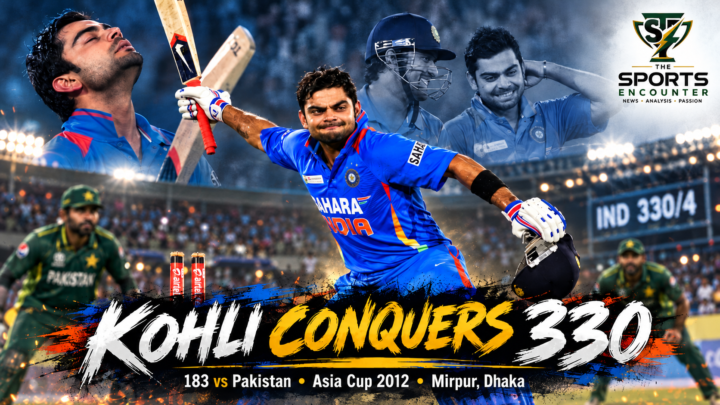
The Sports Encounter revisited India’s 2010 victory in Match 55 of A Celebration of 5000 ODIs.
The contrasting finishes illustrate why the rivalry has repeatedly produced extraordinary moments under tournament pressure.
Why Match 61 Belongs in A Celebration of 5000 ODIs
The 2014 Asia Cup contest qualifies for this collection because it combined historical rivalry, a fluctuating chase, outstanding bowling and an almost impossible finish.
India were 103 for 4 before Rayudu and Jadeja repaired the innings.
Pakistan reached 71 without loss before India’s spinners slowed their progress.
Hafeez and Maqsood added 87 runs, restoring Pakistan’s advantage.
Then India took five wickets for 36 runs.
Pakistan were reduced to 236 for 9.
The match appeared lost.
Afridi required just two deliveries after regaining the strike to complete the chase.
His consecutive sixes became the lasting image, but the contest was shaped by far more than its final blows.
Hafeez’s all-round contribution, Mishra’s economical spell, Ajmal’s three wickets and the costly dismissals during Pakistan’s chase all deserve recognition.
The match illustrates how ODI cricket can transform a modest target into extraordinary pressure when wickets begin falling.
Pakistan needed only 246.
At the beginning of the final over, the requirement had become ten runs with one wicket remaining.
For most batters, that situation would have represented a desperate gamble.
For Afridi, it was an invitation to attack.
India needed one wicket. Pakistan needed two big hits. Shahid Afridi delivered both before Ashwin could bowl another ball.
That extraordinary conclusion makes the 2014 Asia Cup clash an essential chapter in The Sports Encounter’s A Celebration of 5000 ODIs.
Complete Match Scorecard
Asia Cup 2014 | Sixth Match | India vs Pakistan | March 2, 2014 | Mirpur, Bangladesh
India Innings: 245/8 in 50 Overs
| Batter | Dismissal | R | B | 4s | 6s | SR |
|---|---|---|---|---|---|---|
| Rohit Sharma | c Hafeez b Talha | 56 | 58 | 7 | 2 | 96.55 |
| Shikhar Dhawan | lbw b Hafeez | 10 | 13 | 2 | 0 | 76.92 |
| Virat Kohli (c) | c Umar Akmal b Umar Gul | 5 | 11 | 0 | 0 | 45.45 |
| Ajinkya Rahane | c Hafeez b Talha | 23 | 50 | 3 | 0 | 46.00 |
| Ambati Rayudu | c substitute b Ajmal | 58 | 62 | 4 | 1 | 93.55 |
| Dinesh Karthik (wk) | c Ajmal b Hafeez | 23 | 46 | 1 | 0 | 50.00 |
| Ravindra Jadeja | Not out | 52 | 49 | 4 | 2 | 106.12 |
| Ravichandran Ashwin | st Umar Akmal b Ajmal | 9 | 7 | 2 | 0 | 128.57 |
| Mohammed Shami | c Maqsood b Ajmal | 0 | 3 | 0 | 0 | 0.00 |
| Amit Mishra | Not out | 1 | 1 | 0 | 0 | 100.00 |
| Bhuvneshwar Kumar | Did not bat | |||||
| Extras | 3 leg-byes, 5 wides | 8 | ||||
| Total | 8 wickets, 50 overs | 245 |
Fall of wickets: 1-18 (Dhawan, 2.6), 2-56 (Kohli, 9.1), 3-92 (Rohit, 19.1), 4-103 (Rahane, 23.2), 5-155 (Karthik, 36.1), 6-214 (Rayudu, 46.2), 7-237 (Ashwin, 48.2), 8-237 (Shami, 48.5).
Pakistan Bowling
| Bowler | O | M | R | W | Econ |
|---|---|---|---|---|---|
| Mohammad Hafeez | 9 | 0 | 38 | 2 | 4.22 |
| Umar Gul | 9 | 0 | 60 | 1 | 6.67 |
| Junaid Khan | 7 | 0 | 44 | 0 | 6.29 |
| Shahid Afridi | 8 | 0 | 38 | 0 | 4.75 |
| Mohammad Talha | 7 | 1 | 22 | 2 | 3.14 |
| Saeed Ajmal | 10 | 0 | 40 | 3 | 4.00 |
Pakistan Innings: 249/9 in 49.4 Overs
| Batter | Dismissal | R | B | 4s | 6s | SR |
|---|---|---|---|---|---|---|
| Sharjeel Khan | b Ashwin | 25 | 30 | 3 | 1 | 83.33 |
| Ahmed Shehzad | c Ashwin b Mishra | 42 | 44 | 6 | 0 | 95.45 |
| Mohammad Hafeez | c Bhuvneshwar b Ashwin | 75 | 117 | 3 | 2 | 64.10 |
| Misbah-ul-Haq (c) | Run out (Jadeja/Mishra) | 1 | 4 | 0 | 0 | 25.00 |
| Umar Akmal (wk) | c Jadeja b Mishra | 4 | 17 | 0 | 0 | 23.53 |
| Sohaib Maqsood | Run out (Ashwin/Karthik) | 38 | 53 | 2 | 1 | 71.70 |
| Shahid Afridi | Not out | 34 | 18 | 2 | 3 | 188.89 |
| Umar Gul | c Rahane b Bhuvneshwar | 12 | 12 | 0 | 1 | 100.00 |
| Mohammad Talha | c Jadeja b Bhuvneshwar | 0 | 1 | 0 | 0 | 0.00 |
| Saeed Ajmal | b Ashwin | 0 | 1 | 0 | 0 | 0.00 |
| Junaid Khan | Not out | 1 | 1 | 0 | 0 | 100.00 |
| Extras | 11 leg-byes, 6 wides | 17 | ||||
| Total | 9 wickets, 49.4 overs | 249 |
Fall of wickets: 1-71 (Sharjeel, 10.6), 2-93 (Shehzad, 14.6), 3-96 (Misbah, 16.2), 4-113 (Umar Akmal, 22.2), 5-200 (Hafeez, 43.3), 6-203 (Maqsood, 44.4), 7-235 (Gul, 48.3), 8-236 (Talha, 48.6), 9-236 (Ajmal, 49.1).
India Bowling
| Bowler | O | M | R | W | Econ |
|---|---|---|---|---|---|
| Bhuvneshwar Kumar | 10 | 0 | 56 | 2 | 5.60 |
| Mohammed Shami | 10 | 0 | 49 | 0 | 4.90 |
| Ravichandran Ashwin | 9.4 | 0 | 44 | 3 | 4.55 |
| Ravindra Jadeja | 10 | 1 | 61 | 0 | 6.10 |
| Amit Mishra | 10 | 0 | 28 | 2 | 2.80 |
Result: Pakistan won by one wicket with two balls remaining.
Player of the Match: Mohammad Hafeez, 75 runs and 2/38.
Scorecard Verification Note
There are minor transcription inconsistencies in the historical archives. The PCB’s archived page lists Hafeez on 76 with 16 extras, while the ICC’s retrospective, BCCI’s match report and multiple independent scorecards record 75 with 17 extras. The latter figures reconcile to Pakistan’s confirmed 249 and have been adopted here. Some archived fall-of-wicket figures also differ, so this table follows the detailed ball-by-ball scorecard.

PCB
+3
Continue A Celebration of 5000 ODIs
 A Celebration of 5000 ODIsA Celebration of 5000 ODIs Match 53: Pathan Has Pakistan Reeling at 27/3, but Yousuf’s 81 Breaks India’s Champions Trophy Hopes
 A Celebration of 5000 ODIsA Celebration of 5000 ODIs Match 60: Sri Lanka Set Just 139, but Malinga’s Four Wickets Leave New Zealand One Blow From Defeat
 A Celebration of 5000 ODIsA Celebration of 5000 ODIs Match 59: England Need 20 From 16, but Ishant and Jadeja Steal the 2013 Champions Trophy
Frequently Asked Questions
Who Won Pakistan vs India in the 2014 Asia Cup?
Pakistan defeated India by one wicket at Mirpur on March 2, 2014, successfully chasing 246 with two deliveries remaining.
How Many Runs Did Shahid Afridi Score?
Afridi scored an unbeaten 34 from 18 deliveries, striking two fours and three sixes.
Who Bowled the Final Over?
Ravichandran Ashwin bowled the final over. He dismissed Saeed Ajmal before Afridi hit consecutive sixes to complete Pakistan’s victory.
Who Was Player of the Match?
Mohammad Hafeez received the award after scoring 75 and taking two wickets for 38 runs.
Who Was India’s Highest Scorer?
Ambati Rayudu scored 58 from 62 deliveries. Rohit Sharma made 56, while Ravindra Jadeja finished unbeaten on 52.
Who Took the Most Wickets for Pakistan?
Saeed Ajmal took three wickets for 40 runs from ten overs.
Who Was India’s Best Bowler?
Amit Mishra produced the most economical spell, taking 2 for 28. Ashwin was the leading wicket-taker with 3 for 44.
How Many Runs Did Pakistan Need From the Final Over?
Pakistan needed ten runs from six deliveries. Ashwin dismissed Ajmal from the first ball, Junaid took a single, and Afridi hit two sixes to win.
Did Pakistan Win the 2014 Asia Cup?
No. Pakistan reached the final but lost to Sri Lanka by five wickets on March 8, 2014.