


AJDABIYA, Libya, October 30, 2026: Three rounds were not enough to decide the 2020 Libyan Freestyle Football Championship final. Faraj Rahil remembers facing Bader Mohammed on December 24 and returning for an additional decisive round after the judges could not separate them. He emerged as Libya’s national 1v1 champion, a title later recognized in writing by the World Freestyle Football Association (WFFA). But a national championship did not pay for the next competitive journey. Rahil says an opportunity to travel to Nigeria for an African championship in 2021 fell through because he could not obtain sufficient financial and institutional support. His story exposes the difference between developing sporting talent and giving that talent somewhere to compete.
In an exclusive interview with The Sports Encounter, Rahil described years of disciplined training, an international breakthrough in Red Bull Street Style 2022, a knee injury that interrupted his training for approximately four months, and the meaning of performing freestyle football in traditional Libyan clothing. He also supplied a WFFA acknowledgment and photographs from his journey. Official WFFA records confirm his 2022 Libyan national champion status and presence in the African regional qualifier. The exact 2020 final details, missed Nigeria opportunity, injury and 2022 performance in Doha are personal accounts and are attributed accordingly. His experience offers a rare insight into an emerging sport where an athlete may learn independently but still depend on others to access higher levels of competition.
Faraj Rahil at a Glance: What Is Established and What Remains Personal Testimony
| Period | Milestone | Verification status |
|---|---|---|
| December 24, 2020 | National 1v1 title after an additional final round against Bader Mohammed | WFFA acknowledges 2020 title; date and opponent from Rahil |
| 2021 | Missed intended competition journey to Nigeria | Rahil’s account; invitation and event not independently established |
| 2022 | Libyan champion in Red Bull Street Style and African regional participant | WFFA public tournament records |
| 2022 | Performance in traditional Libyan attire during World Cup period in Doha | Rahil’s account; specific venue unconfirmed |
| September 2024 | Knee injury interrupted training for approximately four months | Self-reported; diagnosis not independently verified |
| October 2026 | Supplied original written interview, follow-up details, WFFA letter and 15 unique photographs | Direct correspondence reviewed by TSE |

Ajdabiya, a Football and a Different Way to Compete
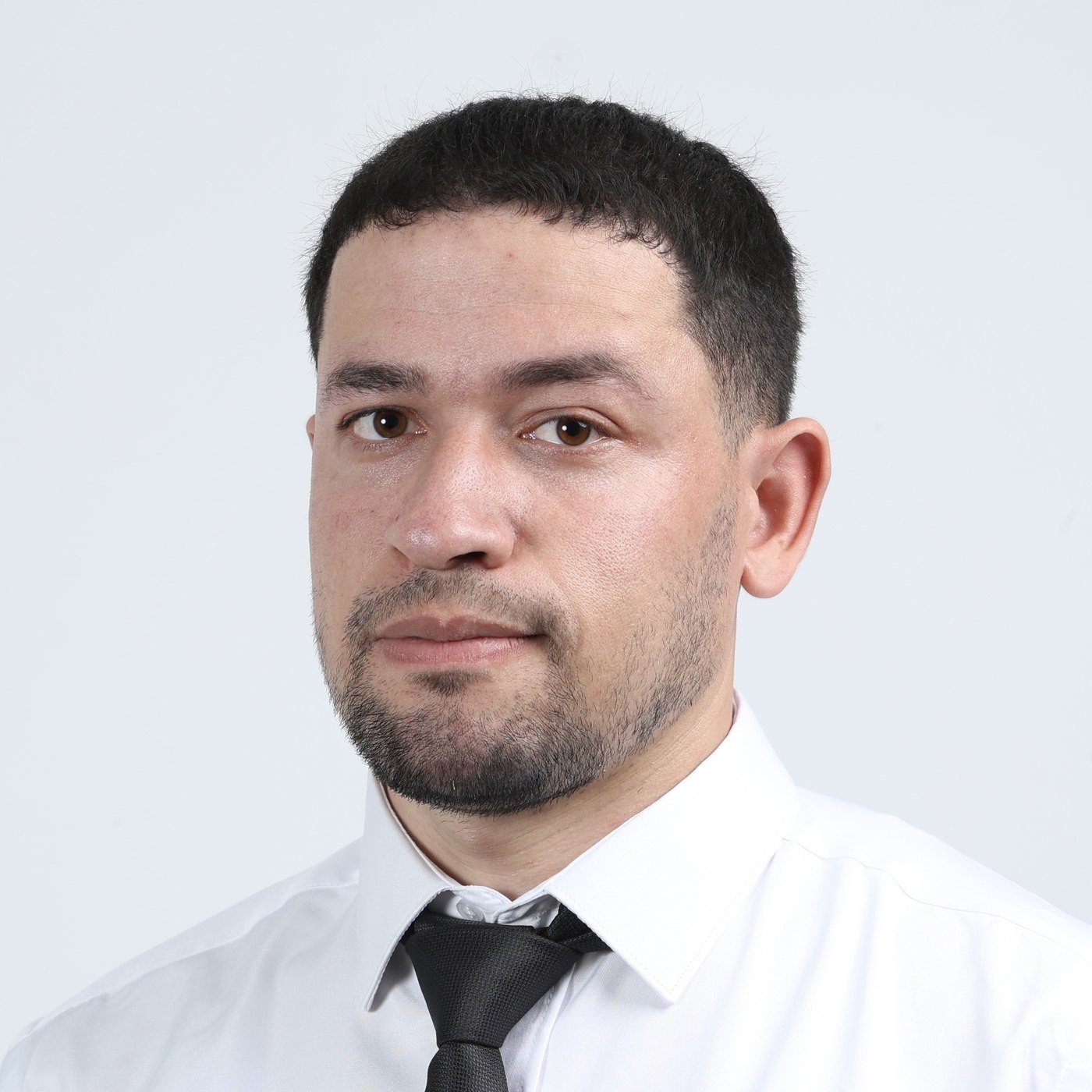
Rahil grew up in Ajdabiya in eastern Libya, where traditional football is a familiar part of social life. He was drawn instead to the freedom of creating an individual routine with the ball. Freestyle combines juggling, technical transitions, balance and creativity, and an athlete can develop a recognizable style without belonging to a conventional team.
“What attracted me was the freedom of the discipline,” he told TSE. “In freestyle, every athlete has the opportunity to develop an individual style.” He did not identify a single first trick or famous athlete as the defining starting point. What he remembers is the accumulation of repetition, small corrections and eventual control.
The distinction matters because the sport can be mistaken for entertainment alone. Competitive freestyle is judged, and high-level routines are the result of sustained technical work. The athlete has to control both the ball and the sequence of movements while the audience and, in competition, judges watch.

December 2020: The Round That Made Rahil a National Champion
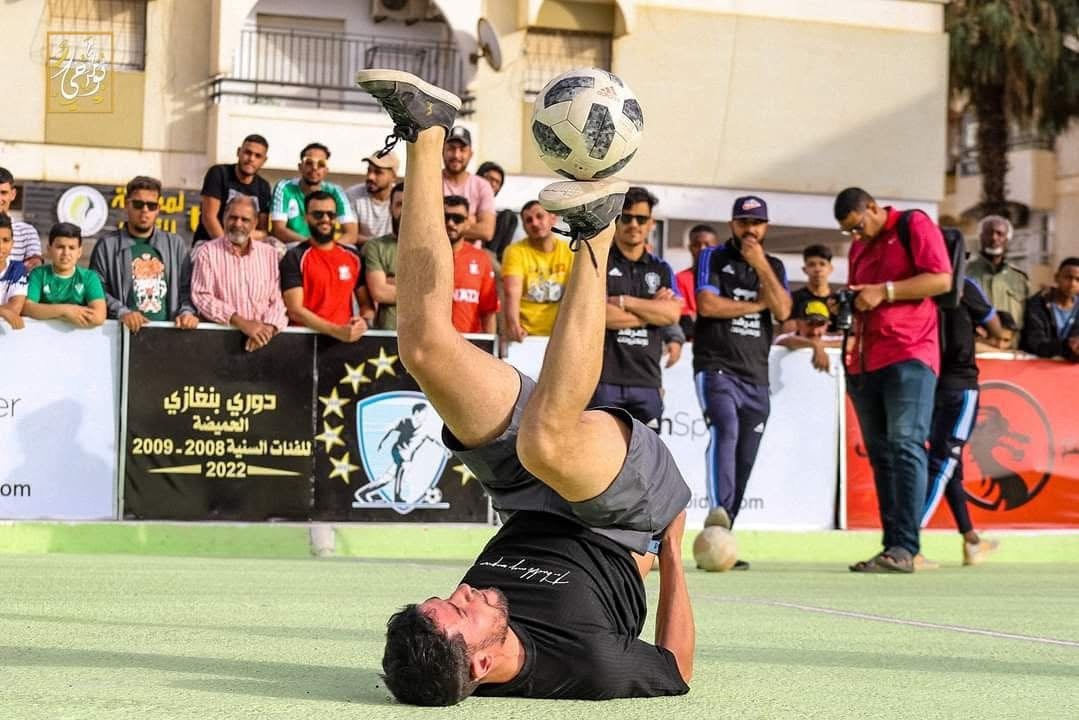
Rahil says the Libyan Freestyle Football Championship was held on December 24, 2020. In the final he faced Bader Mohammed, with each athlete originally expected to perform three rounds. The judges then called for another round to decide the contest.
“The final was extremely competitive,” he recalled. “The official format consisted of three rounds for each athlete. However, after those rounds, the judges decided that an additional decisive round was needed.”
He remembers the closing moments as important but did not describe the exact tricks that secured the result, and TSE has not reviewed the original score sheets or video.
The WFFA acknowledgment dated October 28, 2026, recognizes Rahil as winner of Libya’s national 1v1 battles in 2020. That documentary confirmation should not be extended to claim independent verification of every detail of the final.
In that signed acknowledgment, WFFA Head of Operations Lukáš “Lucaso” Škoda described Rahil as “one of the best athletes in the Libyan scene of Freestyle Football.” It is an endorsement of his standing in the discipline, not a record of an international world title.
What is useful for readers is understanding that freestyle battles have their own scoring logic. The WFFA’s published 2021 competition rules describe judging dimensions including difficulty, all-round ability, originality, execution and control, with extra rounds possible after tied decisions. These rules provide historical sporting context, not proof of the specific judging procedure applied in Libya in 2020.
| Judging factor | Why it matters |
|---|---|
| Difficulty | Technical challenge and combinations performed |
| All-round ability | Variety of lower, upper, seated and transitional skills |
| Originality | Individual style, creativity and variety |
| Execution | Clean movements and fluent combinations |
| Control | Ball management and avoidance of mistakes |
For Rahil, the national title was more than a medal. It made the next goal, representing Libya internationally, feel attainable.


Why a Chance to Compete in Nigeria Never Became a Trip
Rahil’s clearest example of a lost opportunity came in 2021. He says he was prepared to attend an African freestyle championship in Nigeria but lacked the financial and institutional backing needed to travel.
“It was disappointing to miss an international opportunity despite being willing and prepared to participate,” he said.
TSE has not independently confirmed a specific invitation, event date, itinerary or the cost of that intended journey. These details are reported as Rahil’s personal account. The underlying issue is still worth examining: international participation may depend on travel funding, visas or travel arrangements, accommodation, local administration and a training schedule, even when an athlete has already proved capable of winning nationally.
The relationship between funding and competition access appears across African sport, though the scale of the problem varies. TSE’s analysis of CAF’s competition-financing debate illustrates how even major governing bodies have to plan around commercial resources. Rahil describes the challenge at the other end of the system: one athlete unable to reach the next event.
His national championship was decided in an extra round. The intended Nigeria appearance was not decided in competition at all.

Red Bull Street Style 2022: What the International Record Confirms
Two years after his Libyan title, Rahil’s participation in a major international competition received clear public acknowledgment. WFFA’s official Red Bull Street Style 2022 event page identifies him as the Libyan national champion, and its African regional qualifying pools include his name.
Rahil says he won the Libyan qualification process and participated online in the regional competition. The WFFA letter supplied to TSE identifies him as an “Online Regional Finalist.” That wording is important. Neither the event record nor the letter establishes that he participated in the world final in Croatia.
“Representing Libya in an international competition carries a special responsibility,” he said. The experience gave him a way to compare creative styles, technical execution and preparation with athletes from other countries.
| 2022 competition stage | Supported description | Limit of the record |
|---|---|---|
| Libyan national qualifier | Rahil named national champion by WFFA | Not a world championship title |
| African qualifying pools | Rahil named among the regional participants | Individual match scores not established here |
| Regional-final status | WFFA acknowledgment calls him online regional finalist | Use exact wording |
| World final in Pula | A separate final competition stage | No verified claim Rahil competed there |
There is a particularly revealing detail in the WFFA’s African qualifying-pool announcement: the published table placed Rahil in Group 4 alongside Algeria’s Ali Yahia Ouahmed. That is a documented cross-border competitive grouping, although the list alone does not establish which athlete won any particular battle.
| African men’s group in WFFA’s 2022 draw | Countries represented | Verified significance |
|---|---|---|
| Group 1 | Egypt, Sudan, Kenya | Three national representatives listed |
| Group 2 | Ghana, Mozambique, Cameroon | Three national representatives listed |
| Group 3 | South Africa, Madagascar | Two national representatives listed |
| Group 4 | Algeria, Libya | Ali Yahia Ouahmed and Faraj Rahil listed |
TSE data observation: WFFA’s published men’s African pool list identified 10 athletes from 10 countries across four groups. The count describes the published group draw, not all freestyle footballers or all countries active in the sport. For a clear distinction between regional participation and qualifying for Croatia, WFFA separately published the 2022 world-final roster.
The experience mattered because it connected an athlete from Ajdabiya to a genuinely international evaluation process rather than simply placing his videos before online spectators.


Two Hours a Day, Then Four Months Away: The Training and Injury Story
Rahil says he once practiced for approximately two hours daily with Friday as his rest day. At that frequency, a typical full week would contain about 12 scheduled training hours. That is an illustrative calculation based on his account, not a verified record of every week of his career or a statement about his present routine.
“You try, make mistakes, adjust your technique, and keep repeating the movement until you gain control,” he explained. He emphasizes the patience required to perform difficult movements repeatedly and consistently.
In September 2024, he says he suffered a painful knee injury and stopped training for approximately four months to undergo treatment and rehabilitation. TSE has no diagnosis or medical record and does not speculate about the exact injury.
“It taught me patience and the importance of recovery in an athlete’s journey,” he said. The injury became an interruption not only to practice but to the activity through which he expresses his identity.

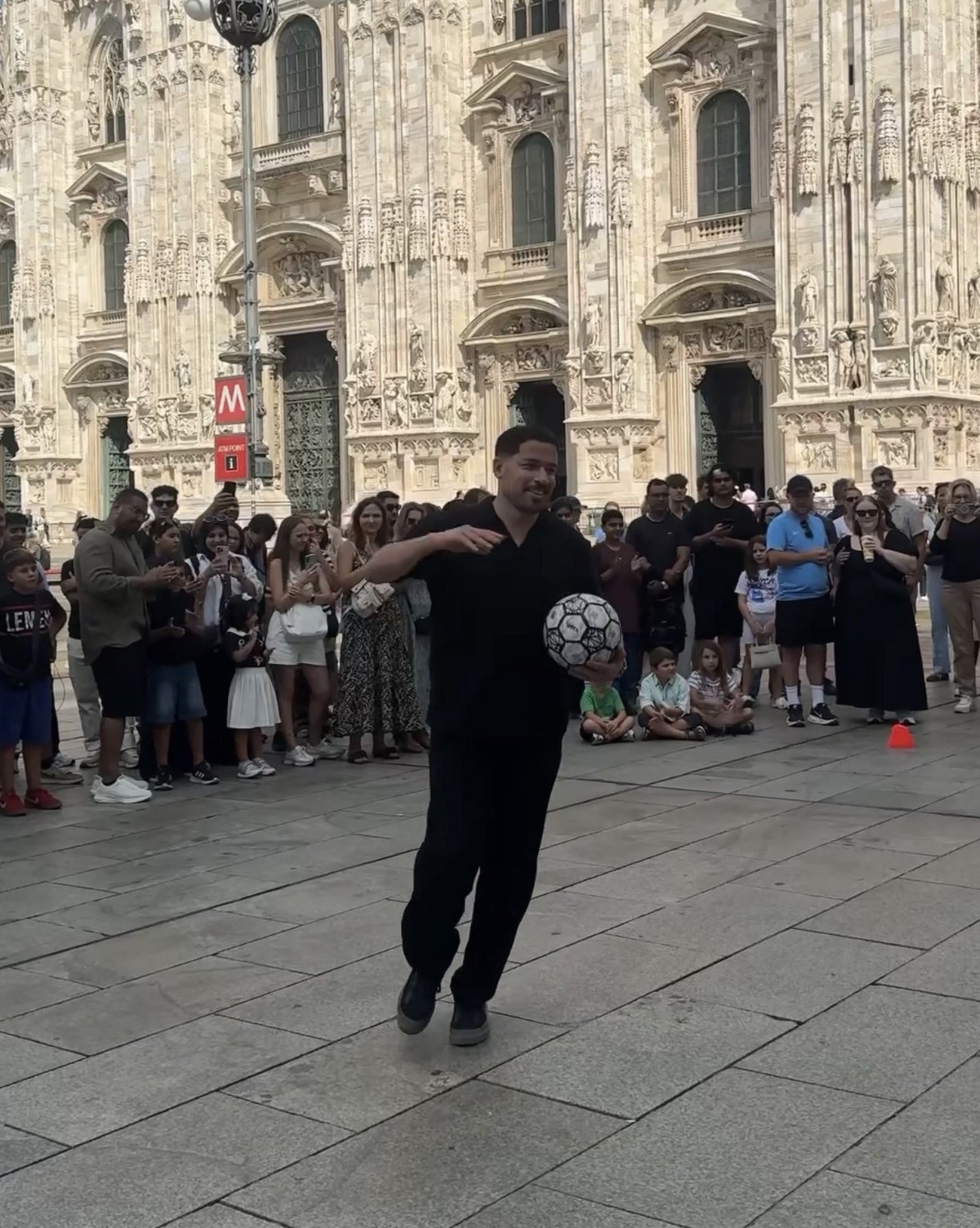

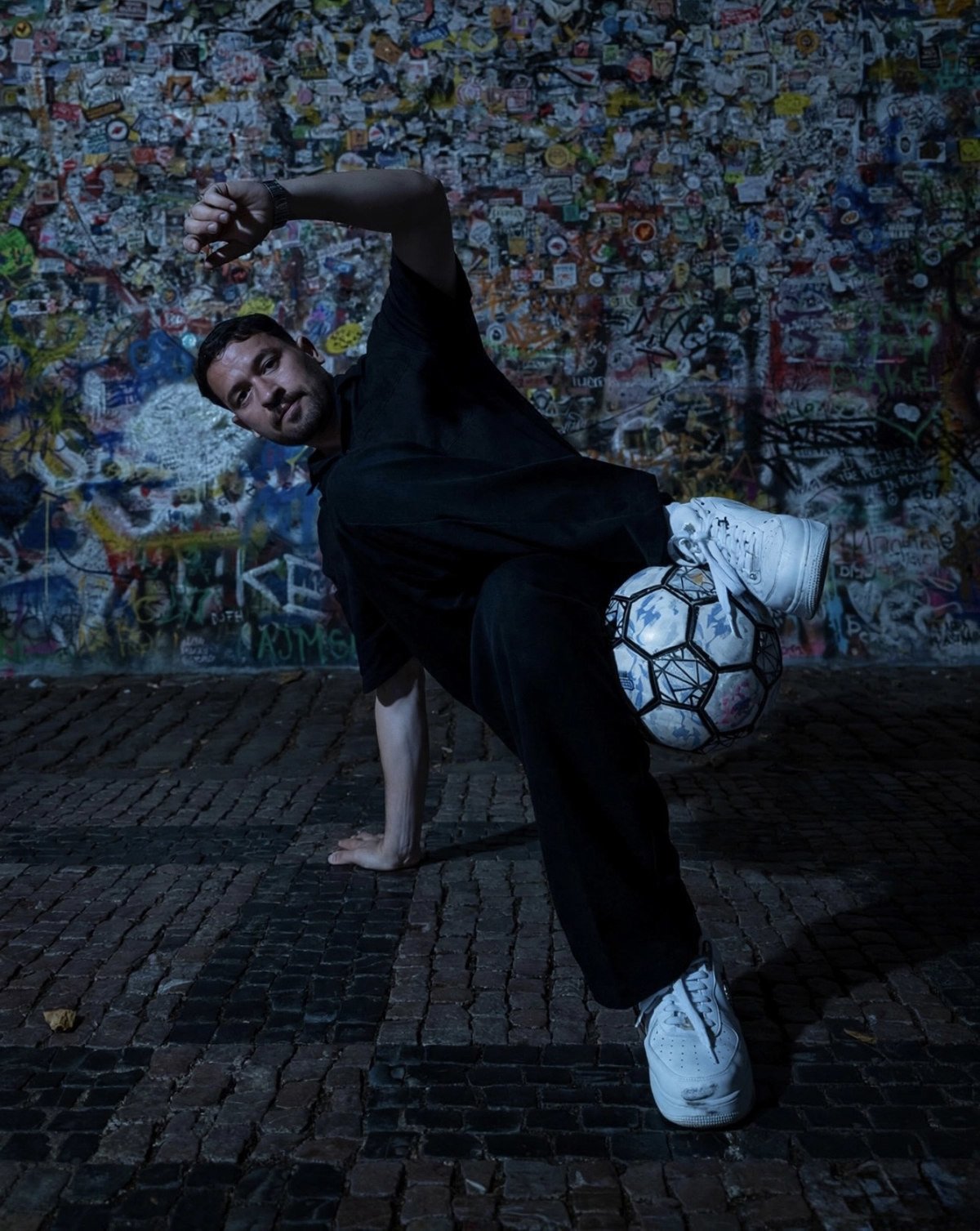
Why Traditional Libyan Clothing Is Part of His Freestyle Identity
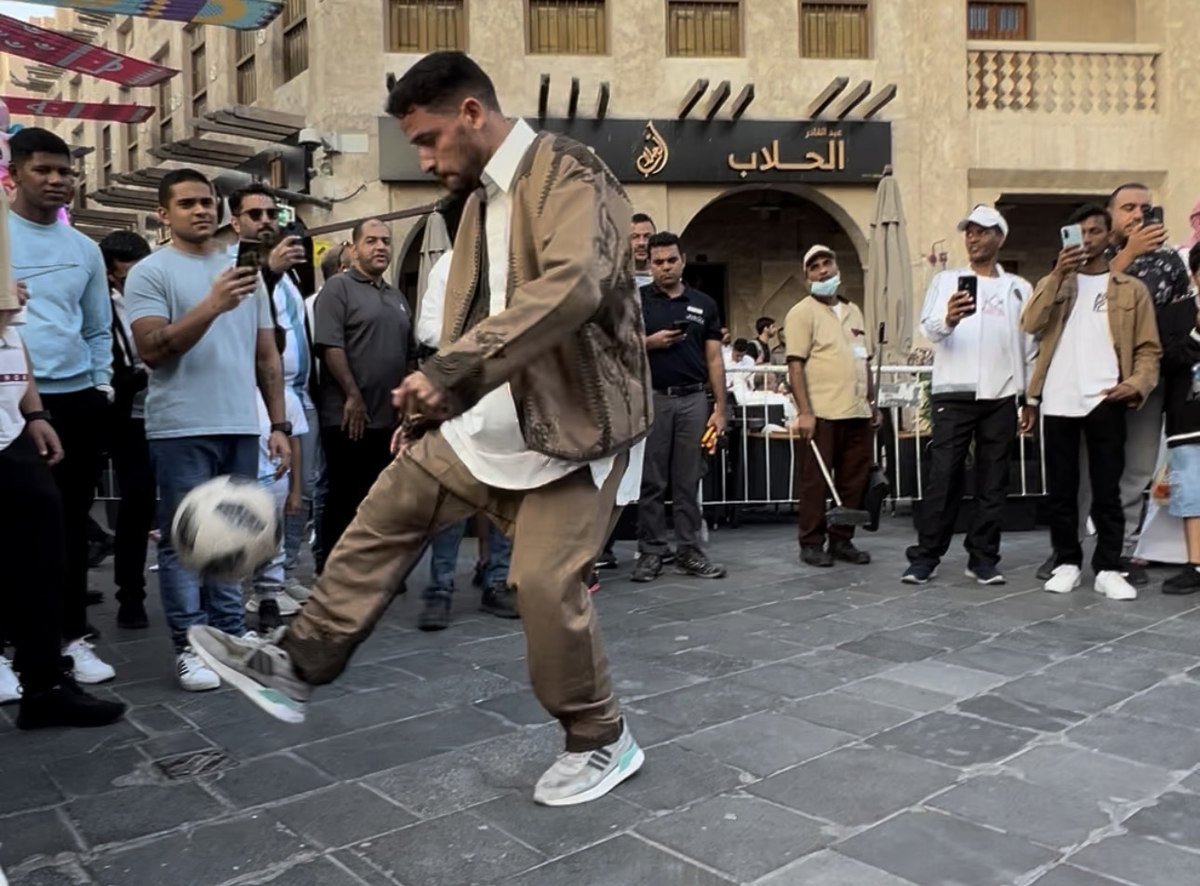
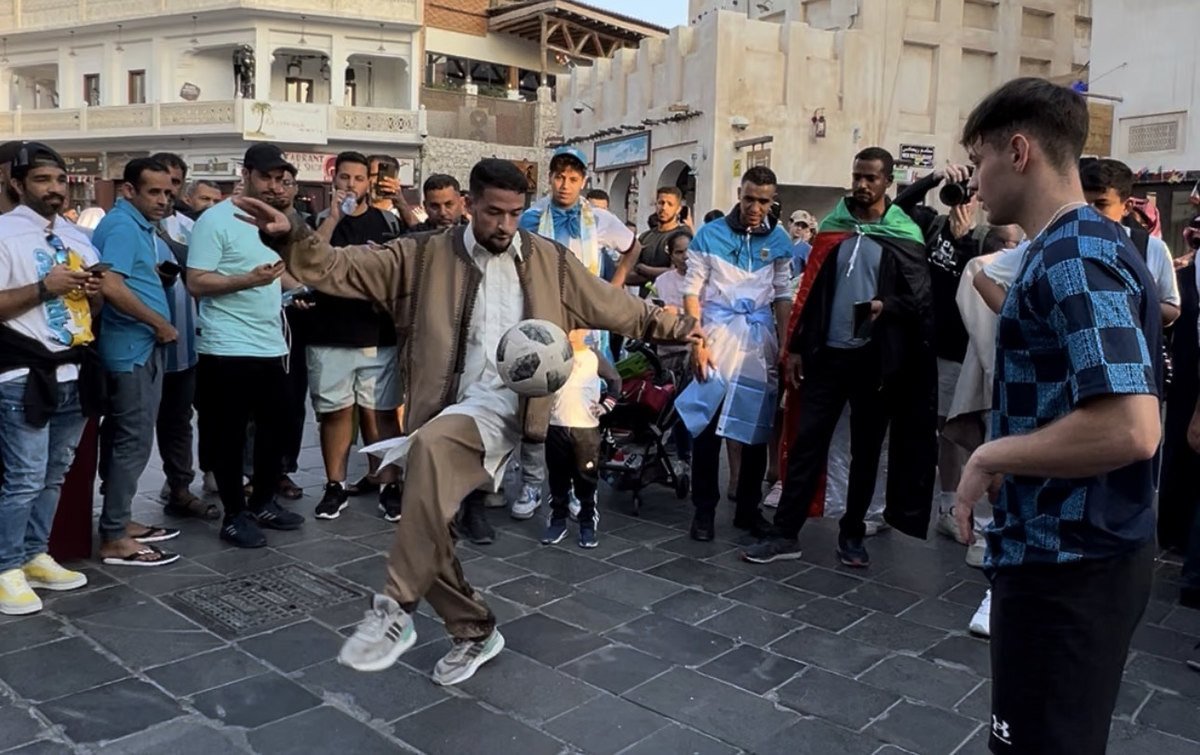
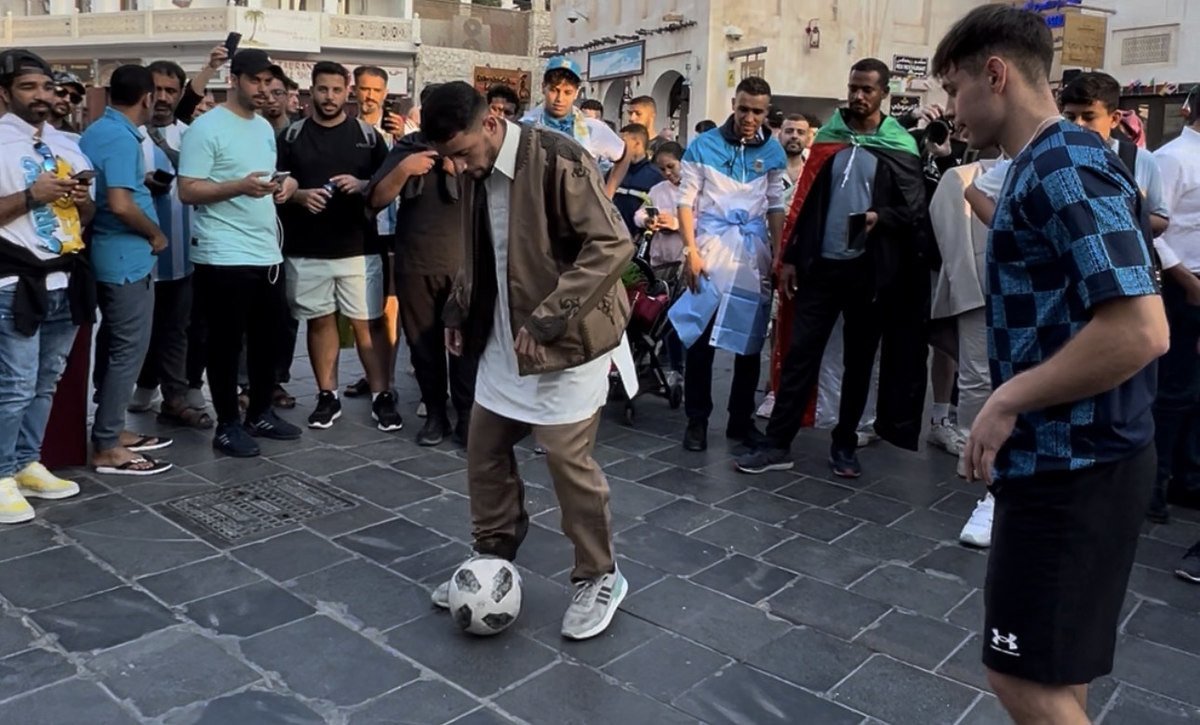
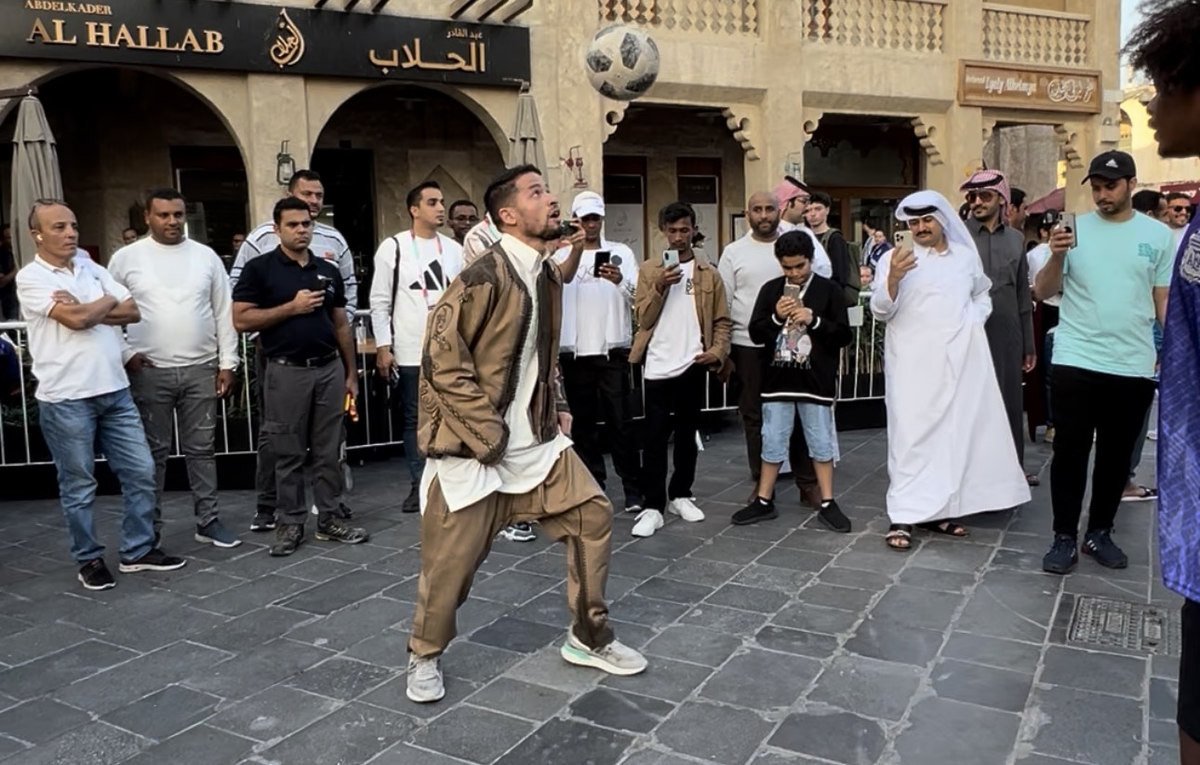
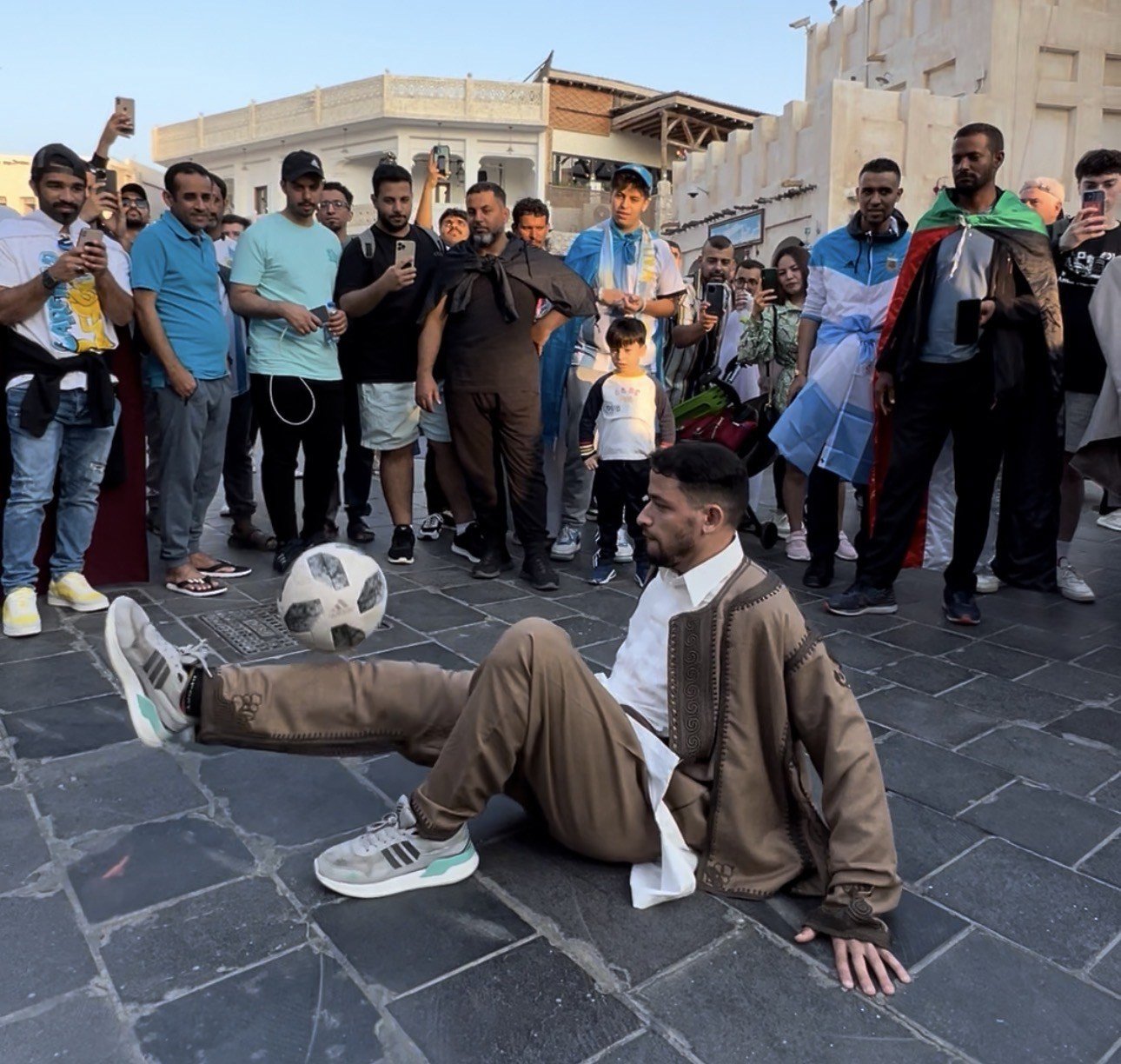
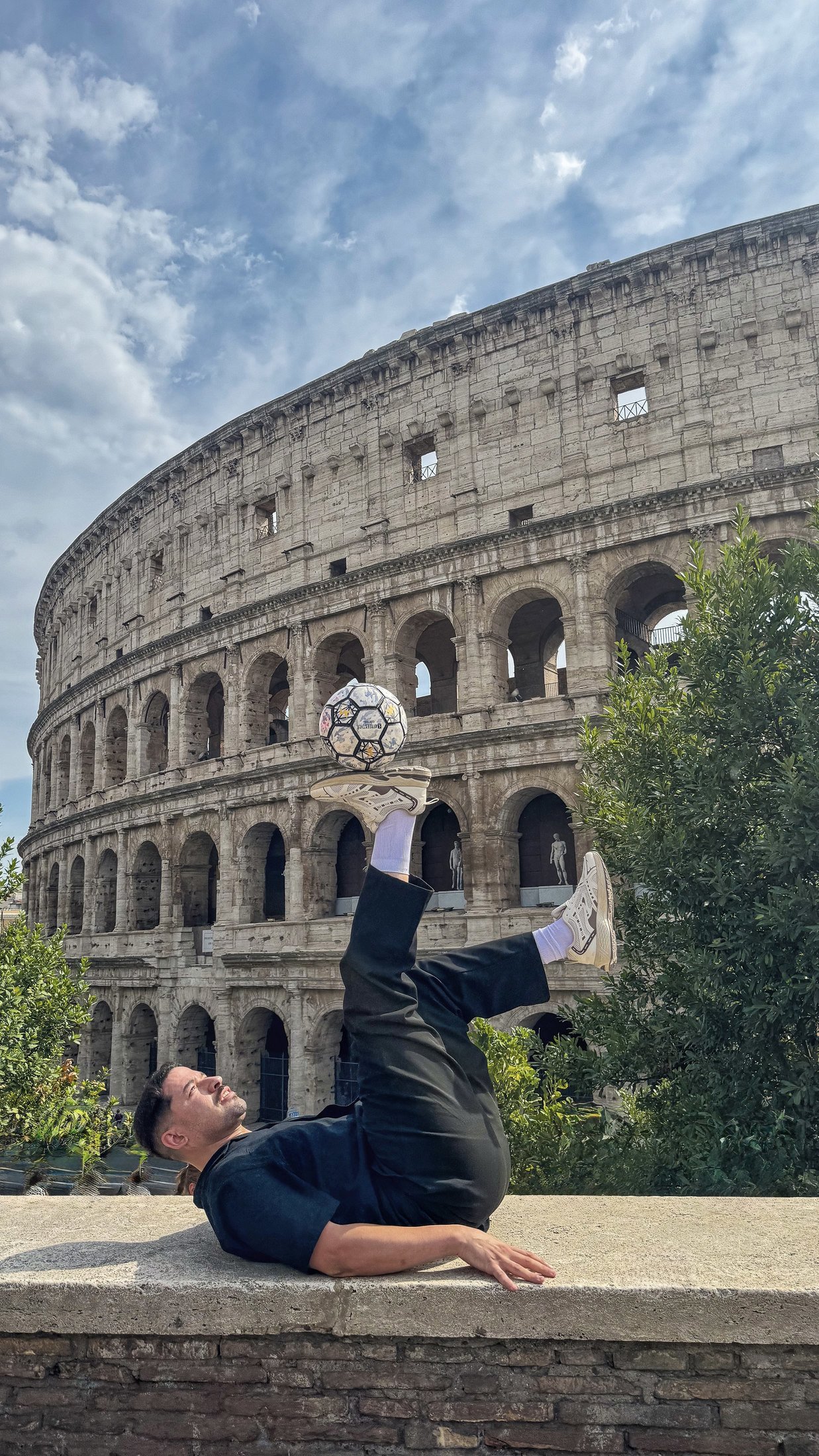
One of Rahil’s most striking choices is performing in traditional Libyan Arab clothing. During the FIFA World Cup period in 2022, he says he demonstrated freestyle football in Doha, Qatar, amid visitors from different countries. The specific venue, date and audience response have not been independently established. None of the photographs is assigned to that performance without a confirmed caption.
“For me, traditional Libyan clothing is not simply a visual element or a costume for a performance,” Rahil told TSE. “It represents heritage, belonging, and pride in my country.”
He believes the combination gives people a reason to remember more than the trick: the athlete and his country become part of the performance. TSE has also considered how sporting moments can carry lasting meaning for audiences. Rahil’s version is a personal statement of identity, not a claim to a tournament result.

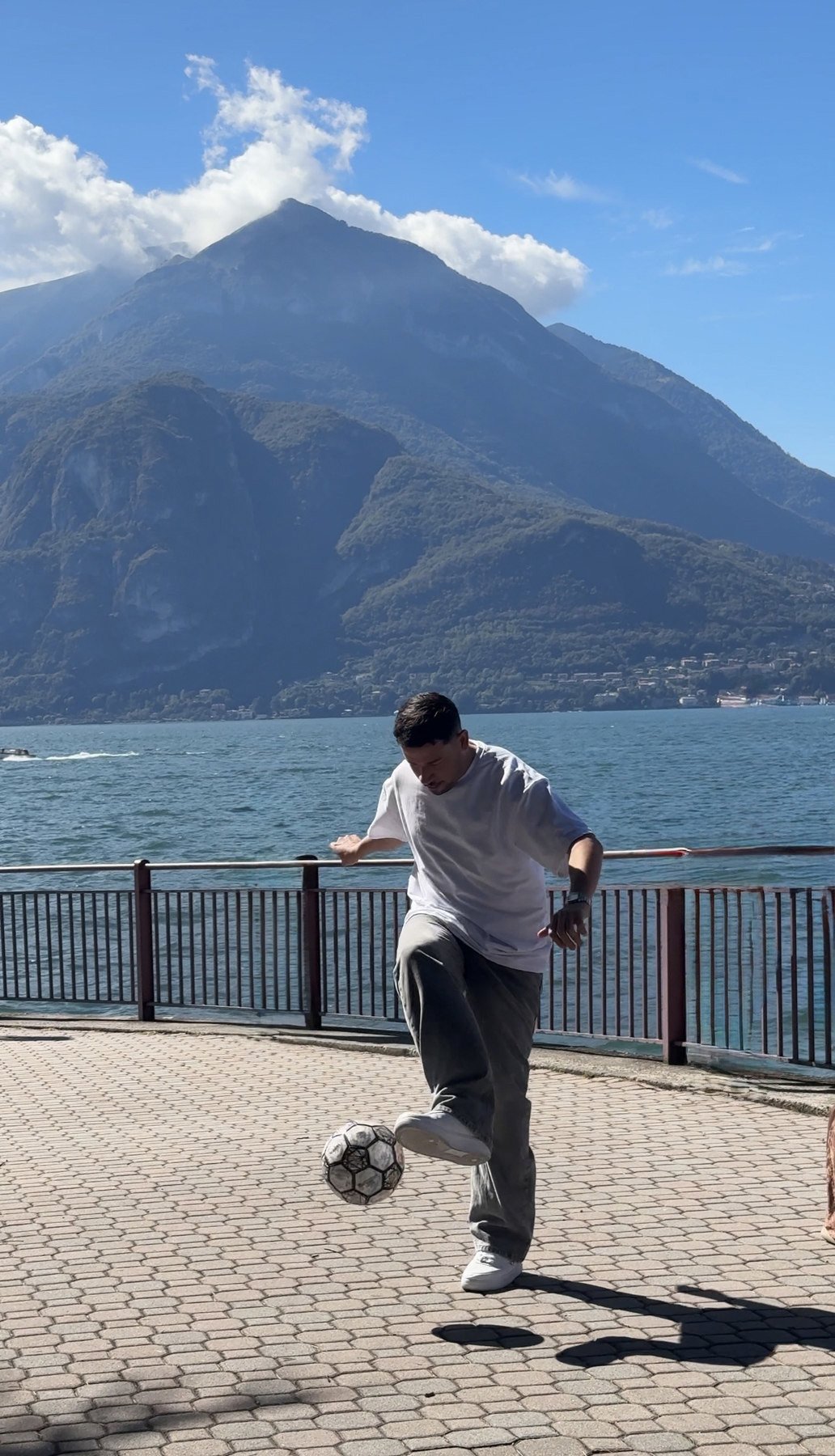

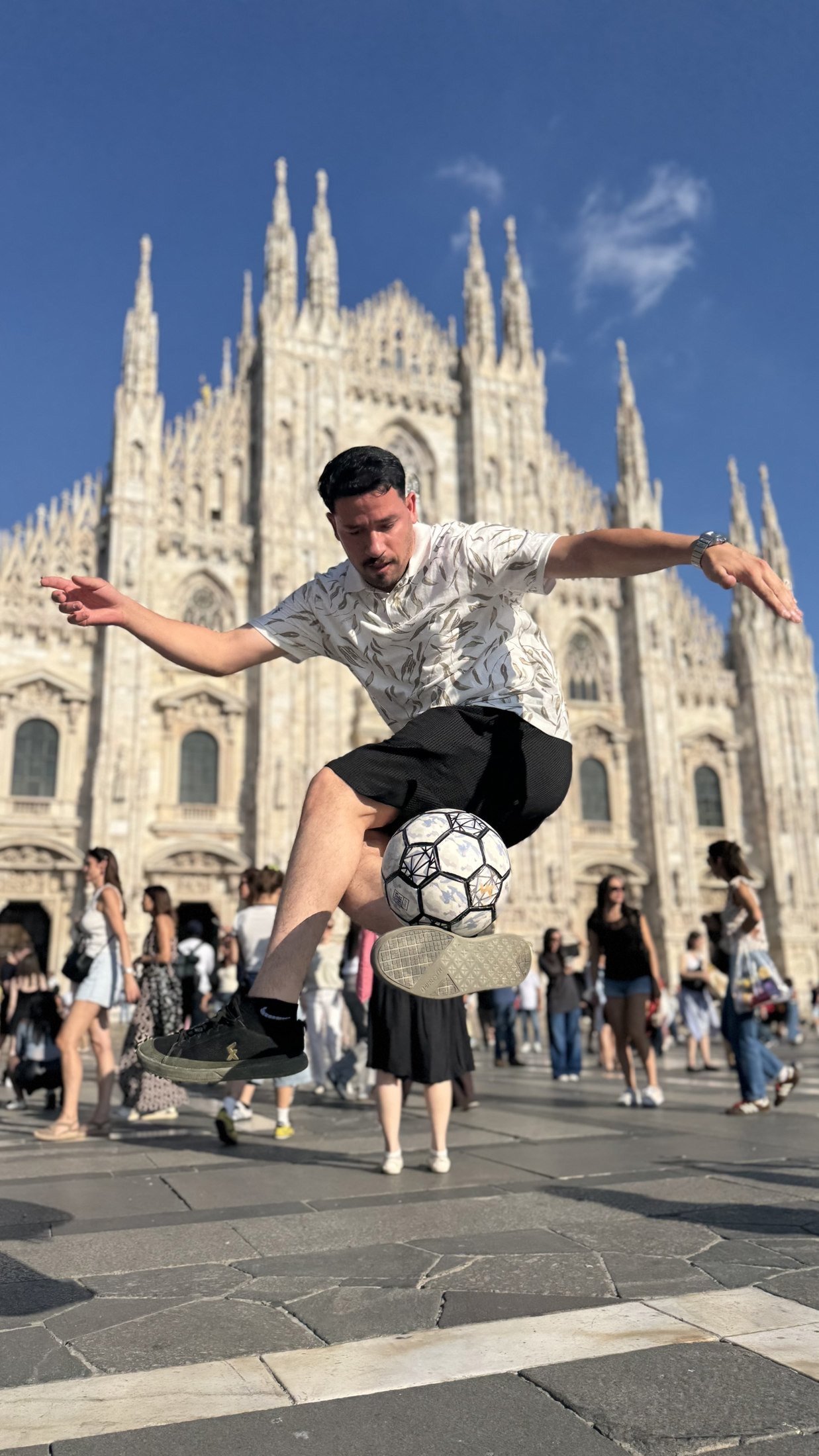
What Young Freestyle Athletes in Libya Need, According to Rahil
Rahil says he would like to see local competitions in different cities, youth training, better links to international organizations and meaningful sponsorship. Online tutorials can help someone start, but they cannot replace a full system in which athletes compete, receive feedback and progress beyond personal videos.
His assessment is firsthand testimony rather than a comprehensive survey of Libya’s sports infrastructure. TSE has not established the number of freestyle clubs, coaches or annual national events. Still, his specific missed Nigeria opportunity offers a practical illustration of the barriers he describes.
| Need identified | What it could change | Evidence status |
|---|---|---|
| Regional competitions | More chances to perform in judged battles | Rahil’s proposal |
| Coaching and exchanges | Structured technique development and feedback | Rahil’s proposal |
| Travel assistance | Access to international tournaments | Rahil links this to his 2021 experience |
| Commercial and institutional funding | Reduced dependence on individual resources | Rahil’s assessment |
| Youth development initiatives | Opportunity for beginners beyond major cities | Future ambition, not a current academy |
There are other African examples of what greater pathways can mean. Malawi’s women’s continental final and Senegal’s national-team coaching transition illustrate very different sporting systems, not direct parallels to freestyle. Both underline that development requires structures beyond any one talented athlete.
TSE’s reporting on national teams entering the AFCON 2027 qualifiers also shows the opportunities created by recurring competitive fixtures, while Wiliete’s breakthrough against Mamelodi Sundowns offers an example of why lower-profile African sporting talent deserves serious attention. These examples are not direct measures of the Libyan freestyle scene.
Developing a real competition pathway also means understanding how other sports and regions have attempted to build one. TSE’s reporting on Algeria and Morocco’s women’s World Cup qualification highlights the achievements of athletes in Libya’s North African neighborhood.
Michele Kang’s investment in women’s football infrastructure offers a different model for turning financial backing into more organized opportunities. In another discipline, the selection of Nairobi to host a world athletics championship illustrates the importance of bringing international competition closer to African audiences. These are comparisons of access and structure, not evidence that the same resources are currently available to Libyan freestylers.
Rahil’s message is specific: athletes outside major cities should not be overlooked simply because the organized opportunities are elsewhere.
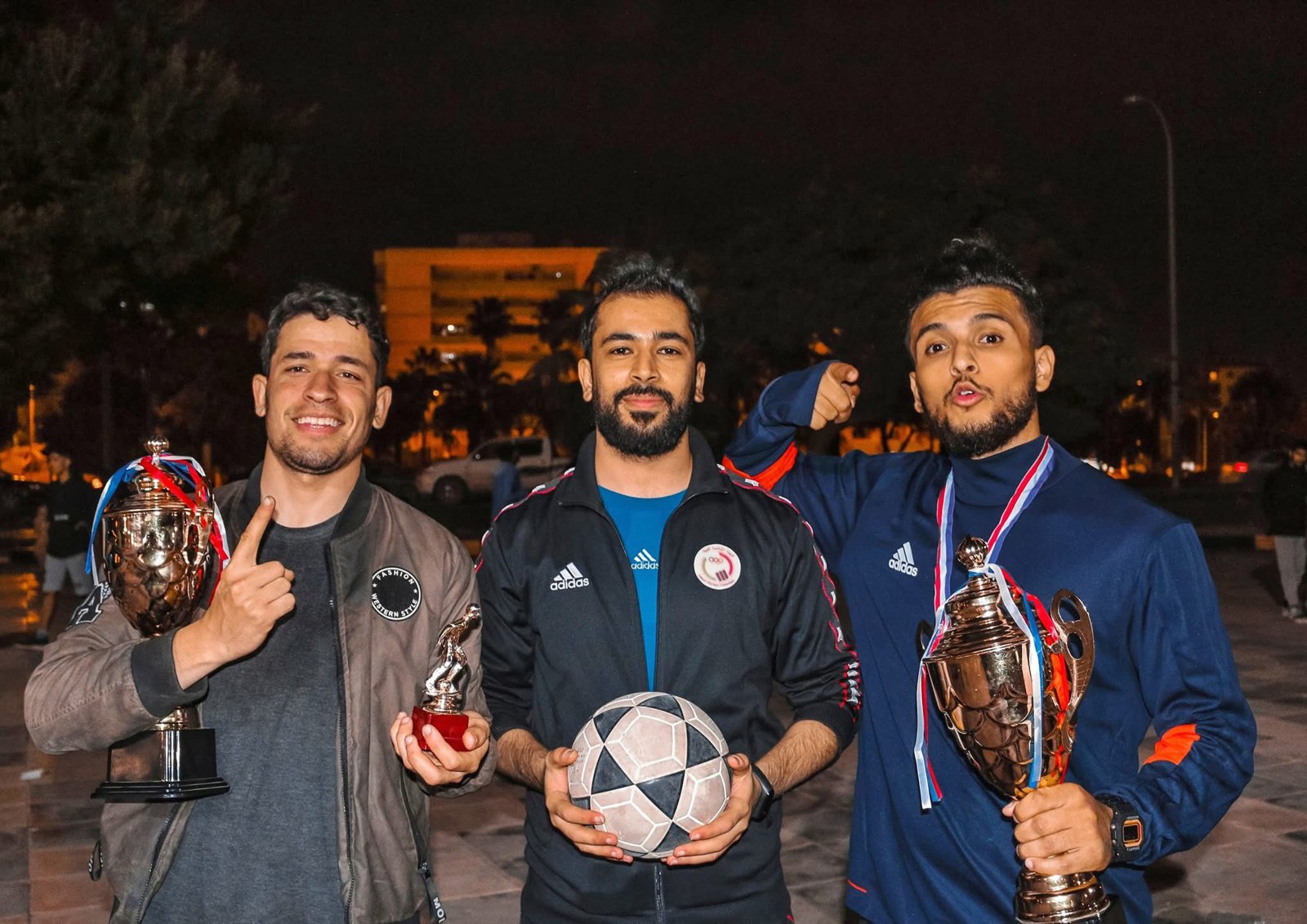
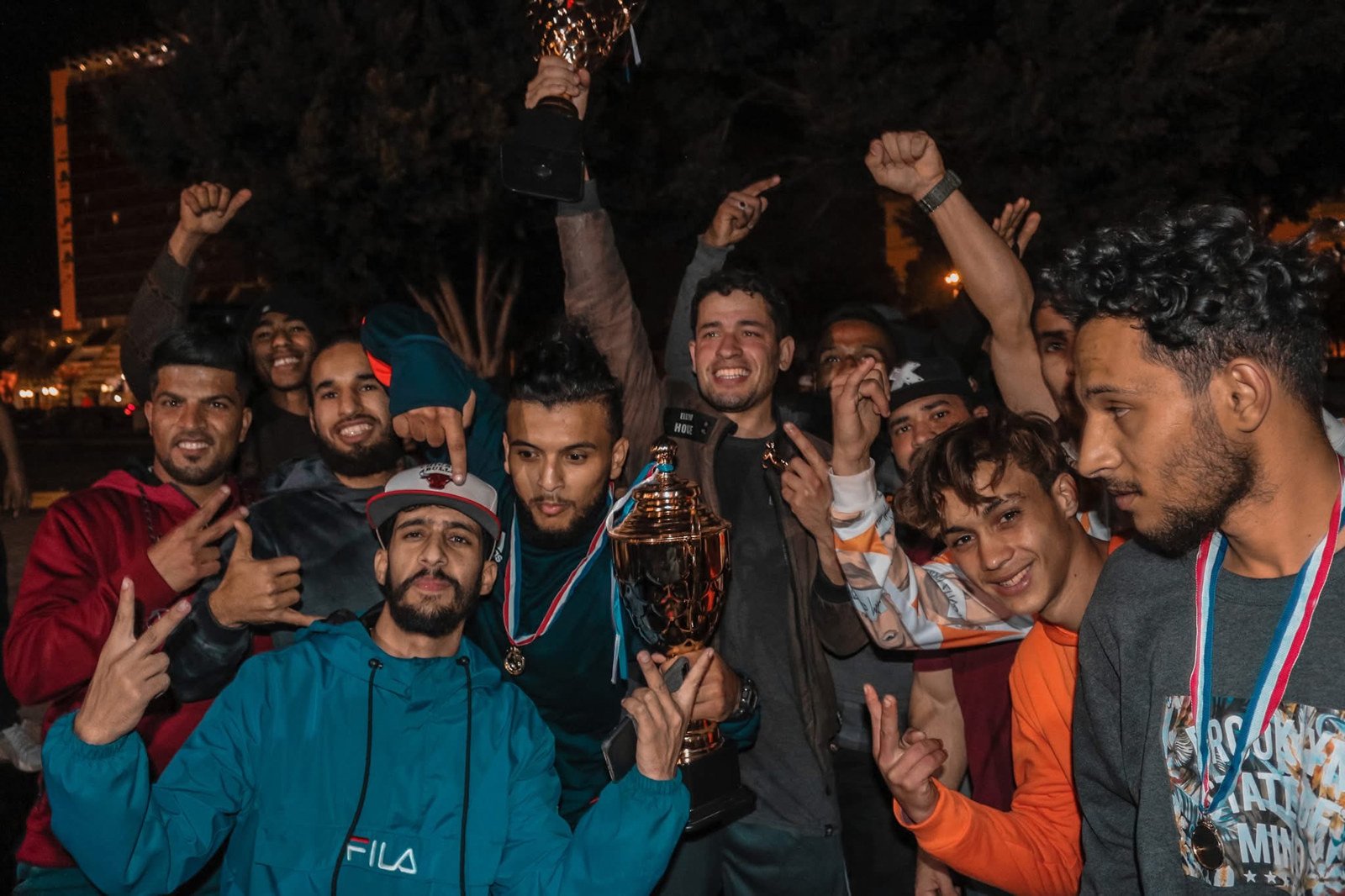
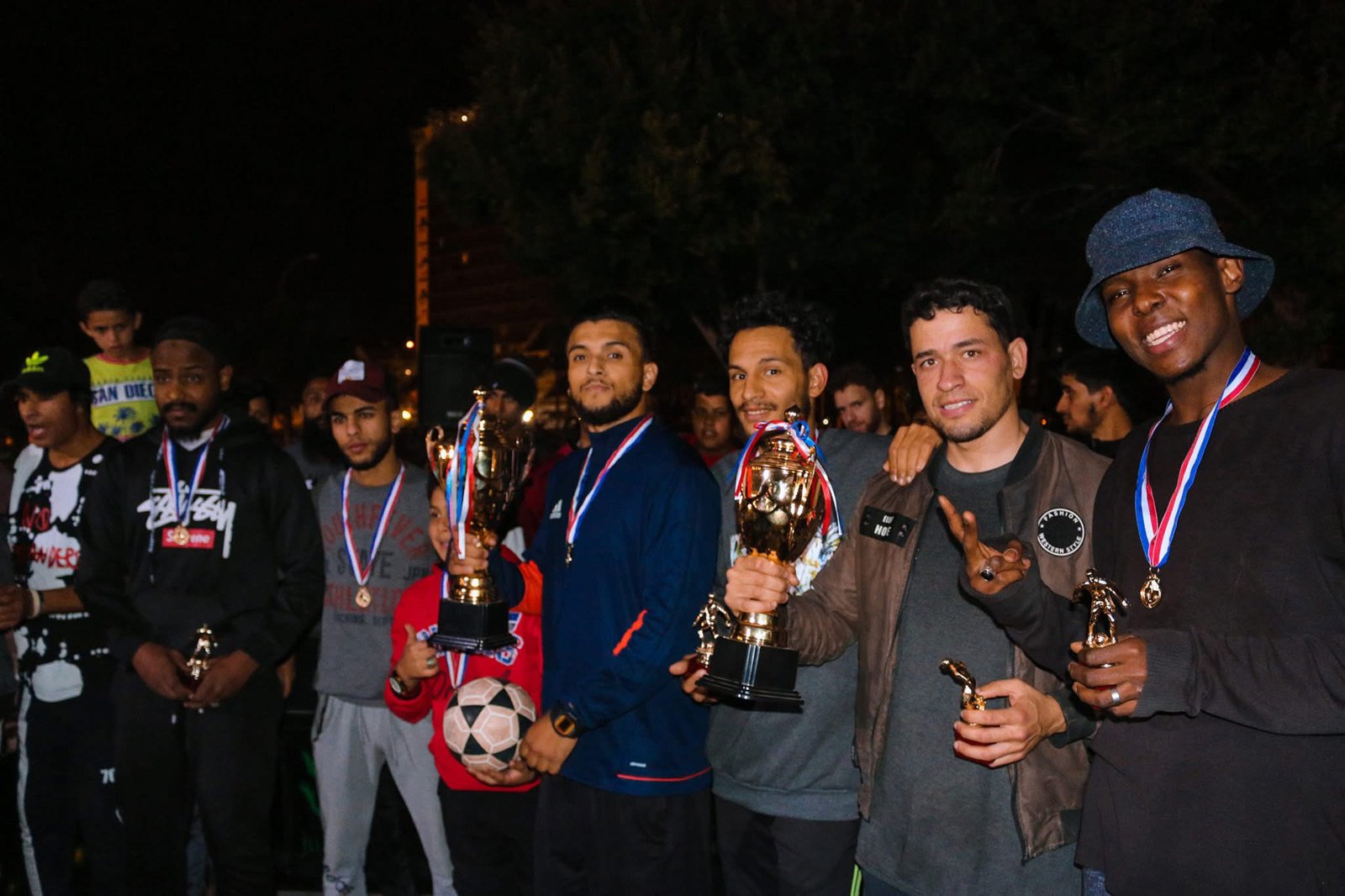
Three New Award Photographs and the Wider Freestyle Community
Rahil subsequently supplied three additional images showing athletes holding medals and trophies. They offer a look at the broader social and competitive world around freestyle football, not just the solitary athlete performing a trick. Their specific events, dates and other participants have not yet been verified, so they are not presented as proof of any named championship result.


Faraj Rahil’s Next Ambition: A Path Others Can Follow
Rahil hopes to compete internationally again and contribute to more organized freestyle opportunities for young Libyans. He has discussed a possible training academy or community initiative as an ambition. TSE has not established that such a program currently operates.
“Young people outside the main sporting centers should not be overlooked,” he said. “Talent can exist anywhere, and geography should not determine whether someone has a chance to develop.”
His story suggests that persistence can build personal skills and win championships. But an athlete also needs reliable opportunities to test those skills, and sometimes help to reach them. The next Libyan freestyler may be able to learn a routine on a phone; reaching the international stage could still depend on what support exists beyond the screen.
Faraj Rahil: Frequently Asked Questions
Who is Faraj Rahil?
He is a freestyle football athlete and content creator from Ajdabiya, Libya, also known as Rahil Freestyle.
What national title did he win?
WFFA recognizes him as winner of Libya’s 2020 national 1v1 freestyle football battles.
Who did he defeat in the final?
According to Rahil, his opponent was Bader Mohammed and the contest required an extra deciding round.
Was Rahil a Red Bull Street Style world finalist?
The public records confirm his Libyan national title and African regional qualifying participation, not a world-final appearance. His WFFA acknowledgment uses the wording online regional finalist.
Why did he miss the 2021 Nigeria opportunity?
Rahil says financial and institutional support was unavailable. The specific intended championship has not been independently authenticated.
How long did his knee injury interrupt training?
He reports about four months away from practice following a September 2024 injury.
Why does he wear traditional Libyan clothing when performing?
He says it expresses heritage, belonging and national pride while introducing audiences to Libya.
What does he hope to change in Libya?
He wants more competitions, youth training opportunities, sponsorship and international access for emerging athletes.
The Battle That Happened Beyond the Final
Rahil’s first championship was decided by an additional round. His attempt to reach a competition in Nigeria, he says, never reached the stage where a judge could score his skills. That is the overlooked part of his story: an emerging athlete may win the contest in front of him yet still struggle to access the next one.
He continues to train, perform and speak of developing the sport for young people in cities such as Ajdabiya. Malawi’s remarkable international qualification story is another reminder of the importance of seeing sporting possibilities beyond traditional powers, although each discipline has different conditions.
The title remains part of his record. So does the opportunity he says slipped away. The future he imagines is one in which a young freestyler does not need to choose between ambition and the means of showing what they can do.
Reporting note: This feature is based on original written interviews and follow-up correspondence with Faraj Rahil, WFFA documentation he supplied, and the governing body’s public competition materials. Personal claims not independently corroborated are clearly attributed. The 15 unique photographs were supplied for TSE editorial use. Photographer names and exact event captions will be updated if independently confirmed.