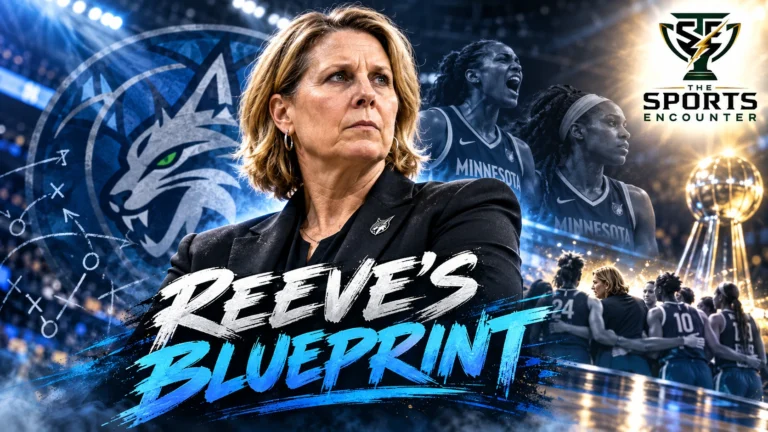
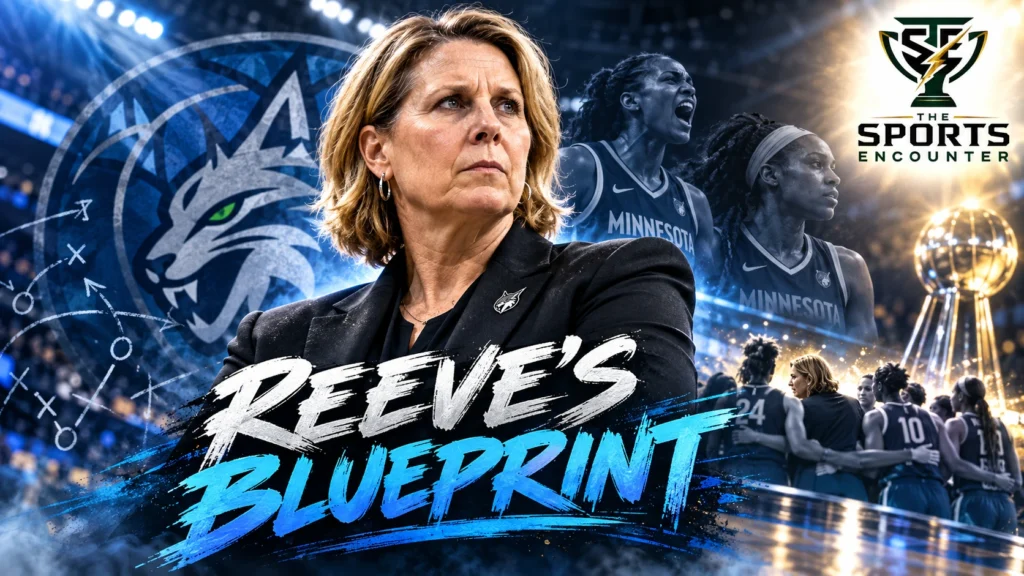
MINNEAPOLIS, United States, October 13, 2026: Cheryl Reeve has been named the WNBA’s Basketball Executive of the Year for the third time after constructing a Minnesota Lynx roster that won 33 regular-season games, claimed the league’s No. 1 playoff seed and produced its unanimous Rookie of the Year. Yet the achievement comes with an uncomfortable distinction: the best team over 44 regular-season games could not win a single postseason game.
Minnesota’s first-round sweep against the New York Liberty means Reeve enters the offseason with two prestigious individual honors and a championship pursuit that ended far earlier than expected.
The Lynx head coach and president of basketball operations won her latest executive award on Monday, October 12, adding to previous victories in 2019 and 2024. She also collected her record fifth WNBA Coach of the Year honor in September.
That combination has placed Reeve in an extraordinary position in professional basketball. She is responsible for both assembling the roster and coaching the players, and the league has judged her the best at both jobs in the same season for the second time.
Story at a glance
Cheryl Reeve’s Third Executive Award: The Record and Its Significance
Reeve has now won the WNBA Executive of the Year award three times, tying Atlanta Dream executive Dan Padover for the most selections since the award was introduced in 2017.
How Reeve Won Coach and Executive of the Year in the Same Season Again
Reeve’s achievement is unusual because the two awards evaluate different responsibilities.
The Olivia Miles Draft Pick Was Reeve’s Defining Personnel Decision
The most compelling evidence supporting Reeve’s executive award is the selection of Olivia Miles with the second overall pick in the 2026 WNBA Draft.
Natasha Howard Gave Minnesota Experience and Reliability
Reeve’s other major personnel decision was signing veteran forward Natasha Howard.
Reeve Preserved the Lynx Core While Changing the Supporting Cast
Roster continuity was another important part of Minnesota’s successful regular season.
But Minnesota’s early elimination complicates the celebration.
The central question is no longer whether Reeve can build a team capable of dominating the regular season. Her latest award and Minnesota’s 33-11 record have answered that emphatically.
The question is why that dominance failed to survive its first postseason examination, and what Reeve must change before the Lynx can translate another successful season into a championship.
Cheryl Reeve’s Third Executive Award: The Record and Its Significance
Reeve has now won the WNBA Executive of the Year award three times, tying Atlanta Dream executive Dan Padover for the most selections since the award was introduced in 2017.
Her winning years are 2019, 2024 and 2026. Padover received the honor in 2020, 2021 and 2025.
Reeve’s latest recognition followed a vote by basketball executives representing the league’s 15 franchises. Executives ranked their preferred candidates and were prohibited from voting for themselves.
She appeared on 13 of the 14 ballots available to her, an especially significant endorsement because it came from professional peers responsible for making the same kinds of personnel decisions.
| Executive | Team | Ballots |
|---|---|---|
| Cheryl Reeve | Minnesota Lynx | 13 |
| Dan Padover | Atlanta Dream | 11 |
| Ohemaa Nyanin | Golden State Valkyries | 8 |
| Curt Miller | Dallas Wings | 5 |
| Vanja Černivec | Portland Fire | 4 |
| Michael Winger | Washington Mystics | 3 |
| Monica Wright Rogers | Toronto Tempo | 1 |
The WNBA’s official Executive of the Year announcement confirms the voting totals, historical records and Minnesota’s regular-season achievements.
The margin between Reeve and Padover is revealing. Both received substantial support, indicating that the league’s executives recognized the work performed by more than one successful front office.
The award recognizes roster-building performance across the season. It is not a guarantee that the winning executive has constructed the eventual champion.
How Reeve Won Coach and Executive of the Year in the Same Season Again
Reeve’s achievement is unusual because the two awards evaluate different responsibilities.
Executive of the Year recognizes personnel construction, acquisitions, draft decisions and the management of a competitive roster.
Coach of the Year considers how effectively a coach converts available talent into performance, develops players and manages the demands of a season.
Winning both requires success across those distinct functions.
Reeve first completed that double in 2024 and has now repeated it in 2026. No other individual has achieved the combination twice.
Curt Miller won both awards with the Connecticut Sun in 2017, establishing that the feat was possible. Reeve has subsequently made it a recurring part of her leadership record.
Her coaching resume is equally significant. The 2026 award was her fifth, following previous honors in 2011, 2016, 2020 and 2024.
The WNBA’s official Coach of the Year release confirms that Reeve received 40 of 74 media votes, ahead of Golden State coach Natalie Nakase and Washington’s Sydney Johnson.
The coaching award was decided by journalists and broadcasters, while the executive award was decided by basketball operations professionals.
That distinction makes the double recognition more meaningful. Two different voting groups, examining different aspects of her work, reached the same conclusion about the quality of her season.
The Olivia Miles Draft Pick Was Reeve’s Defining Personnel Decision
The most compelling evidence supporting Reeve’s executive award is the selection of Olivia Miles with the second overall pick in the 2026 WNBA Draft.
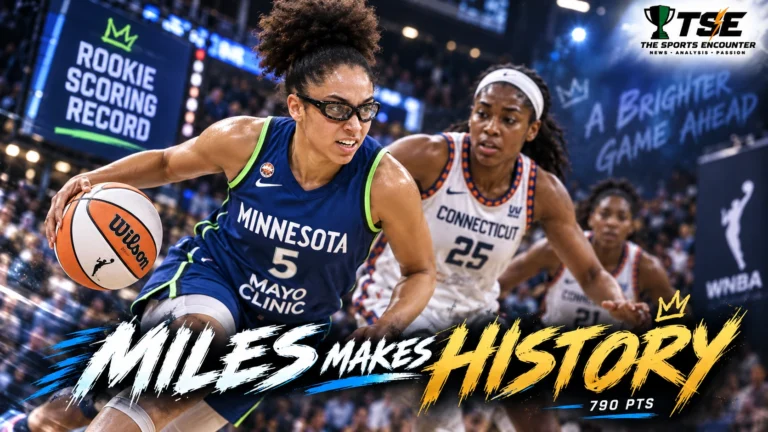
Miles entered Minnesota as a highly regarded young guard. She finished the season as the unanimous WNBA Rookie of the Year after setting a league rookie record with 790 points.
The immediate impact was extraordinary.
Rather than requiring an extended adjustment period before becoming a productive contributor, Miles established herself as one of Minnesota’s most important offensive players.
Her scoring record provides one measure of that influence. Her playmaking, ball-handling and ability to create opportunities for teammates added further value.
The Sports Encounter followed Miles’ emergence throughout the season, including her appearance in our 2026 WNBA All-Star Game guide, when she was already producing at an exceptional level for a rookie.
Why Drafting Miles Was About More Than Scoring
Successful draft decisions should not be evaluated solely by the number of points a player produces in the first season.
A franchise must consider how the player fits alongside its established stars, whether the player’s strengths address existing roster needs and how the selection affects future planning.
Miles gave Minnesota another player capable of initiating offense and creating scoring opportunities without requiring every possession to pass through an established veteran.
That capability matters for a team built around experienced contributors who can become more effective when defensive attention is distributed across several dangerous options.
Her rookie campaign also changed Minnesota’s longer-term outlook.
Reeve is not simply managing an established contender whose window will eventually close as its veteran players age. She has a young guard who could form part of the next competitive core.
However, Miles’ remarkable debut does not settle every question about her future.
Opposing teams will study her strengths, prepare more targeted defensive plans and attempt to force adjustments during subsequent seasons.
Her next challenge is sustaining her performance as opponents become more familiar with her game.
790 Points and the Importance of Measurable Draft Value
Miles’ 790 points established a new WNBA rookie scoring record.
That is a substantial return from the second overall selection, particularly when combined with Minnesota’s first-place finish.
Her achievement also brought her into the broader league MVP conversation.
Miles finished second behind A’ja Wilson in the 2026 MVP vote, another indicator of how quickly she moved from promising prospect to established contributor.
The Sports Encounter’s analysis of A’ja Wilson’s historic fifth WNBA MVP award documented Miles’ runner-up finish and the voting gap separating the two players.
Finishing behind an established superstar does not diminish Miles’ achievement. It demonstrates how strongly she was evaluated during her first professional season.
For Reeve, the selection provided both immediate results and evidence of a future building block.
Those are precisely the two objectives that make a high draft pick valuable to a franchise seeking sustained success.
Natasha Howard Gave Minnesota Experience and Reliability
Reeve’s other major personnel decision was signing veteran forward Natasha Howard.
Howard arrived with extensive championship experience and became an important part of Minnesota’s rotation.
She started all 44 regular-season games and was selected as an All-Star starter.
That combination of availability and production is particularly significant for a roster trying to maintain consistency across a long season.
Miles gave Minnesota emerging talent and offensive creativity. Howard supplied established professional experience, frontcourt versatility and another reliable contributor.
The two decisions complemented one another.
Reeve did not attempt to rebuild entirely through youth, nor did she rely exclusively on the veteran core that had already produced competitive seasons.
She combined an impactful rookie with an experienced acquisition while retaining important established players.
Howard’s All-Star recognition also connected Minnesota’s roster construction with the league’s changing balance between established champions and younger players.
The Sports Encounter’s analysis of the United States’ 2026 FIBA Women’s World Cup roster examined the increasing overlap between basketball’s established stars and its next generation.
The same tension between experience and renewal is visible in Minnesota.
Reeve Preserved the Lynx Core While Changing the Supporting Cast
Roster continuity was another important part of Minnesota’s successful regular season.
Napheesa Collier remained the team’s established frontcourt centerpiece, while guards Kayla McBride and Courtney Williams supplied further experience and offensive capability.
Keeping a dependable foundation allowed Minnesota to integrate new contributors without completely changing its identity.
That continuity matters because basketball requires coordinated decision-making rather than isolated individual production.
Players must understand where teammates prefer to receive passes, which defensive rotations require immediate support and how the offense responds when the first option is unavailable.
Keeping experienced players together can reduce the adjustment time needed to establish those relationships.
Reeve’s approach combined continuity with targeted change.
She retained important elements of Minnesota’s established roster while adding Miles and Howard to address competitive needs.
The result was the league’s best regular-season record.
Yet that model now faces a further question: was the balance between experience, offensive creation and physical defensive capability sufficient for postseason basketball?
The Numbers Behind Minnesota’s 33-11 Regular Season
The Lynx finished with 33 wins and 11 defeats, giving them a winning percentage of .750 and the No. 1 playoff seed.
They also established a WNBA record with 18 road victories.
That away performance is particularly important because it demonstrates an ability to win outside the familiar environment of Target Center.
Minnesota also recorded a 10-game winning streak from July 11 through August 12, its longest since 2016.
The team’s overall efficiency reflected that consistency.
| 2026 Minnesota Lynx Metric | Performance |
|---|---|
| Regular-season record | 33-11 |
| Winning percentage | 75.0% |
| Playoff seeding | No. 1 |
| Road wins | 18, WNBA record |
| Longest winning streak | 10 games |
| Net rating | +9.1 |
| Offensive rating | 115.0 |
| Defensive rating | 103.5 |
| Assists per game | 21.9 |
| Steals per game | 9.1 |
These numbers reveal a team that succeeded through much more than individual scoring.
A strong net rating indicates that Minnesota substantially outperformed opponents across the regular season.
The assist average points toward an offense capable of creating opportunities through coordinated movement and passing.
The defensive figures demonstrate that Minnesota also had the ability to limit opponents rather than depending exclusively on winning high-scoring games.
Reeve’s performance as both executive and coach deserves recognition because those outcomes depend on constructing the roster and then using it effectively.
The difficulty is that regular-season efficiency did not translate into postseason survival.
Why Did the WNBA’s Best Regular-Season Team Lose in the First Round?
Minnesota entered the playoffs as the top seed and was expected to make a serious championship challenge.
Instead, the Lynx were swept by the New York Liberty in their opening series.
That result immediately changed how the season would be remembered.
A 33-win record demonstrates excellent performance over a substantial sample of games. A playoff sweep reveals that the team failed to meet its most important immediate objective.
Both conclusions can be true.
Regular-Season Success Does Not Guarantee Playoff Adaptability
During the regular season, teams face changing opponents and varied schedules.
They can benefit from established systems that opponents have limited time to prepare for in detail.
Playoff basketball presents a different challenge.
An opponent can prepare specifically for one team, repeatedly test its weaknesses and adjust tactical priorities between games.
The same offensive actions that worked consistently throughout the season may become less productive when an opponent anticipates them.
That does not automatically explain Minnesota’s elimination. A definitive assessment of the sweep requires possession-level analysis of the series.
It does, however, establish why strong regular-season statistics cannot independently guarantee postseason success.
New York Exposed the Difference Between Seeding and Matchup Strength
The Liberty entered the postseason as the No. 8 seed.
On paper, that made Minnesota the clear favorite.
But seeding describes regular-season results, not necessarily how two particular teams will match up during a playoff series.
A lower-seeded opponent may possess defensive personnel, size or offensive options that create unusually difficult problems for a higher seed.
The Liberty demonstrated that possibility by eliminating Minnesota despite the large difference in their regular-season positions.
The significance of the result extends beyond one upset.
It forces Reeve to examine whether the roster’s strengths are sufficiently adaptable when an opponent successfully limits its preferred approach.
Should Reeve Change a Team That Won 33 Games?
This is the central offseason dilemma.
Changing a successful roster too aggressively can damage the qualities that produced its success.
Keeping the same group together without addressing recurring weaknesses can produce another strong regular season followed by another disappointing playoff result.
Reeve must determine which shortcomings were specific to the New York matchup and which represent broader roster vulnerabilities.
That distinction requires detailed evaluation rather than a reaction based solely on frustration.
The Lynx do not need to dismiss 44 games of strong performances because of one playoff series.
They also cannot dismiss a playoff sweep because they performed brilliantly before it.
Three Offseason Questions Reeve Must Answer
1. Does Minnesota Need More Physicality and Interior Protection?
One area worth examining is how effectively Minnesota handles opponents capable of disrupting its movement and applying sustained physical pressure.
Rebounding, interior defense and the ability to finish possessions through contact become especially important when playoff opponents limit easy opportunities.
Any potential improvement must be assessed against the team’s existing personnel and available roster resources.
The challenge is to identify whether additional physical presence would strengthen the team without undermining its mobility and offensive cohesion.
2. Can Olivia Miles Become an Even More Important Playoff Creator?
Miles’ rookie season demonstrated elite potential, but playoff defenses will continue adapting to her.
Minnesota should examine how to support her development as both a scorer and a decision-maker under pressure.
That could mean improving spacing around her, diversifying offensive actions and ensuring other players can create when opponents concentrate on limiting her preferred options.
Her first season provides strong evidence of ability. Her next developmental stage will be shaped by how effectively she responds to targeted defenses.
3. How Does Minnesota Balance Veteran Continuity With Its Future?
The Lynx retain experienced players who helped build the team’s identity.
They also have a young star whose emergence changes the franchise’s medium-term outlook.
Reeve must evaluate how those timelines fit together.
Retaining veterans can preserve important competitive advantages, but Minnesota must also plan for future roster changes and the development of younger contributors.
The broader issue is familiar across professional basketball: how does a contender remain competitive now without sacrificing the structure of its next successful team?
The Sports Encounter previously examined similar roster-planning challenges in its analysis of Team USA’s late World Cup roster changes, where injuries accelerated the responsibilities given to younger players.
Minnesota’s circumstances differ, but the relationship between veteran stability and emerging talent is relevant.
Dan Padover and Ohemaa Nyanin Show Why the Executive Race Was Competitive
Reeve’s victory also deserves context from the work of her closest rivals.
Atlanta’s Dan Padover appeared on 11 ballots, just two fewer than Reeve.
Padover entered 2026 tied with Reeve on two Executive of the Year victories before both reached three awards across their careers.
Golden State general manager Ohemaa Nyanin finished third, appearing on eight ballots.
Her recognition reflects the wider competitive progress of the Valkyries, a franchise that began playing in 2025 and has quickly become a major factor in the league.
The Sports Encounter examined Golden State’s rapid development when San Francisco secured the 2027 WNBA All-Star Game, a decision that highlighted the franchise’s growing sporting and commercial influence.
The award voting therefore recognizes three different organizational achievements.
Reeve sustained a long-established contender and successfully incorporated important additions.
Padover helped Atlanta build toward the top of the league.
Nyanin contributed to the rapid development of a relatively new franchise.
There is no single formula for effective roster construction, and the voting illustrates that executives can earn substantial recognition through different organizational models.
Why the 2026 WNBA Finals Add Another Twist
The timing of Reeve’s award is particularly striking because the WNBA championship will be contested by Atlanta and Golden State.
The Dream and Valkyries are scheduled to begin the Finals on Saturday, October 17, in San Francisco.
That means the two executives who finished immediately behind Reeve have organizations competing for the league’s ultimate prize.
Reeve won the individual executive award, but the final championship will belong to another franchise.
That is not a contradiction in how the award is administered. Executive of the Year evaluates a season’s personnel work, while the championship reflects the eventual outcome of postseason competition.
But the contrast offers an important reminder.
Different measures of success can produce different winners.
A team’s strong regular-season record, successful draft picks and effective roster construction may justify executive recognition even when another organization proves more successful in the playoffs.
For Minnesota, the distinction provides little consolation for the early elimination.
Reeve’s award is deserved on the evidence of the regular season. Her next priority is constructing a roster that can translate similar performance into postseason victories.
Reeve’s Coaching Legacy Is Already Secure, but the Next Challenge Is Different
Reeve completed her 17th season as Minnesota’s head coach in 2026.
She has led the franchise to four WNBA championships and remains one of the most accomplished figures in league history.
During the current season, she became the WNBA’s all-time leader in regular-season coaching victories.
Her 380th win, recorded July 8 against Connecticut, established the record. She finished the regular season with 397 career victories.
Those achievements demonstrate remarkable longevity in a profession where performance pressure frequently leads to coaching changes.
But longevity alone does not explain her success.
Reeve has adapted her responsibilities over time, moving beyond coaching into roster management and basketball operations leadership.
Holding both responsibilities creates advantages and risks.
It can produce alignment between the players an organization acquires and the system its coach wants to implement.
It also concentrates accountability.
When Minnesota succeeds, Reeve receives credit for both constructing and coaching the roster.
When the team falls short, she must evaluate decisions made on both sides of that responsibility.
The same person who selected the players is also responsible for examining how they were used.
That makes Minnesota’s offseason especially important.
What the Award Means for the WNBA’s Changing Competitive Landscape
The 2026 season has highlighted a league undergoing significant competitive and organizational change.
Established teams remain influential, but newer and rapidly improving franchises are increasingly capable of challenging familiar powers.
Golden State has reached the WNBA Finals in only its second season, while Atlanta has constructed another championship opportunity.
At the same time, individual talents such as A’ja Wilson and Olivia Miles have produced major historical milestones.
The Sports Encounter has followed those changes through its basketball news and analysis coverage, including the relationship between established stars, draft development and postseason expectations.
Reeve’s executive award belongs within that broader competitive context.
Minnesota successfully built the league’s strongest regular-season team, but rival organizations have demonstrated that successful roster construction is increasingly widespread.
Winning a championship requires more than assembling talent.
It requires enough flexibility to survive injuries, respond to opponents and execute under the greater pressure of postseason basketball.
The growth of the league makes those requirements more demanding as the number of credible contenders increases.
What Should Minnesota Lynx Fans Watch During the Offseason?
| Issue | Key Question | Why It Matters |
|---|---|---|
| Roster continuity | Which established contributors return? | Preserves chemistry and defines available positions |
| Olivia Miles | How does her second-season role develop? | Determines Minnesota’s future offensive identity |
| Frontcourt balance | Does the roster need different physical or defensive options? | Addresses possible playoff matchup vulnerabilities |
| Offensive flexibility | Can Minnesota create efficiently when its primary actions are disrupted? | Improves adaptability in playoff series |
| Coaching evaluation | What did the New York sweep expose? | Separates structural weaknesses from matchup-specific problems |
| League competition | How will Atlanta, Golden State and New York improve? | Determines the standard Minnesota must reach next season |
Some of these questions will be answered through personnel announcements. Others require substantial on-court evidence when the next season begins.
Reeve’s award does not remove the need for careful evaluation.
It reinforces the expectation that Minnesota’s leadership can identify the changes necessary to remain competitive.
Continue the NBA Story

Frequently Asked Questions
Who Won the 2026 WNBA Executive of the Year Award?
Cheryl Reeve of the Minnesota Lynx won the 2026 WNBA Basketball Executive of the Year award, announced October 12.
How Many Executive of the Year Awards Has Cheryl Reeve Won?
Reeve has won three, in 2019, 2024 and 2026, tying Dan Padover for the most selections in the award’s history.
Did Cheryl Reeve Also Win Coach of the Year in 2026?
Yes. Reeve won her fifth WNBA Coach of the Year award in September 2026, extending her league record.
Has Anyone Won Both Awards Twice?
Reeve is the first person to win Coach of the Year and Executive of the Year in the same WNBA season twice, accomplishing the double in 2024 and 2026.
What Was Minnesota’s Record in 2026?
The Lynx finished the regular season 33-11, giving them the league’s best record and No. 1 playoff seed.
Who Did Minnesota Select in the 2026 WNBA Draft?
The Lynx selected guard Olivia Miles with the second overall pick. She subsequently won the Rookie of the Year award unanimously.
How Many Points Did Olivia Miles Score?
Miles scored 790 regular-season points in 2026, setting a WNBA rookie scoring record.
Who Did Minnesota Sign Before the Season?
One of the team’s most significant additions was veteran forward Natasha Howard, who started all 44 regular-season games and became an All-Star starter.
Why Did the Lynx Not Reach the WNBA Finals?
Minnesota was swept by the eighth-seeded New York Liberty in the first round of the playoffs. The result requires a broader evaluation of the team’s postseason execution and roster adaptability.
Who Finished Second in Executive of the Year Voting?
Atlanta Dream executive Dan Padover finished second, appearing on 11 ballots. Golden State’s Ohemaa Nyanin placed third with eight.
Who Is Playing in the 2026 WNBA Finals?
The Atlanta Dream and Golden State Valkyries are scheduled to contest the Finals, beginning October 17 in San Francisco.
Final Analysis: Reeve Won the Awards, but Minnesota Still Has a Championship Problem to Solve
Cheryl Reeve’s 2026 season deserves recognition.
She retained an effective roster foundation, selected a rookie who immediately became one of the league’s most influential players and signed an experienced forward who delivered reliable production.
Her team won 33 games, claimed the No. 1 playoff seed, established a record for road victories and performed at a consistently high level across the regular season.
The league’s basketball executives recognized that work with a third Executive of the Year award.
Coaching voters had already awarded Reeve her fifth Coach of the Year honor.
The achievements are substantial and historically significant.
But Minnesota’s first-round elimination means the season cannot be remembered as an unqualified success.
The Lynx have demonstrated that their leadership can build an outstanding regular-season team.
The next challenge is determining why that team failed in the postseason and how to reduce the risk of repeating the experience.
Miles gives the franchise an emerging star. Howard and the established core provide valuable experience. Reeve offers championship credentials and an unusually complete understanding of both coaching and personnel construction.
Those advantages provide a strong foundation for another challenge.
But the gap between a 33-win team and a championship-winning team remains real.
For Reeve, the third Executive of the Year award confirms an extraordinary career of organizational achievement.
The more important question awaiting Minnesota is whether her next round of decisions can convert that achievement into another championship.
Her latest trophy recognizes the team she built.
Her next challenge is building one that survives October.