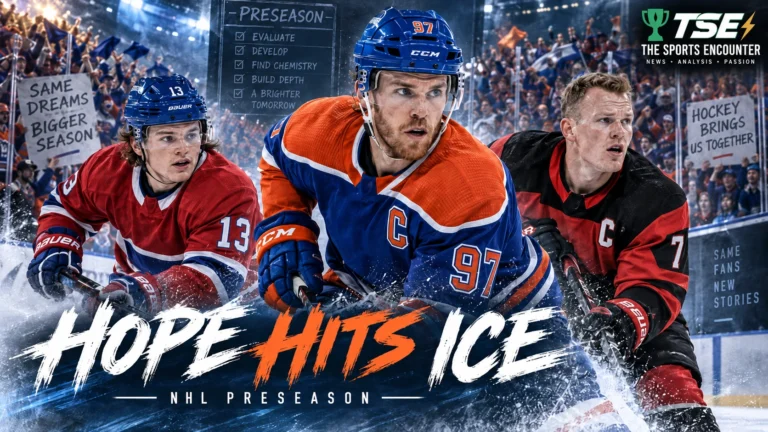
NEW YORK, United States, September 21, 2026: An NHL preseason game can finish 5-2 and become irrelevant by breakfast. The goals do not count toward the standings, the lineups may contain players who will begin October in the American Hockey League, and a star who dominates one exhibition night can disappear from the next roster entirely.
Yet thousands of hockey fans still watch.
They follow training-camp reports, debate line combinations, learn the names of prospects who have never played an NHL game, study goaltending rotations, question coaching experiments and search for the smallest evidence that their team might be better than it was five months earlier.
That relationship explains why preseason hockey occupies such an unusual place in North American sports culture. NHL supporters generally do not treat exhibition results with the intensity reserved for the regular season or Stanley Cup Playoffs. Many understand that September scorelines can mislead. What keeps them interested is everything surrounding the score.
Story at a glance
Do NHL Fans Really Care About Preseason Games?
Yes, but the answer depends on what “care” means.
Hockey Fandom Begins Long Before the Games Count
The NHL’s relationship with its supporters is unusually tied to routine.
The Shortened 2026 NHL Preseason Has Made Every Audition More Valuable
The 2026 format adds urgency that previous preseasons did not always possess.
Prospects Give Fans a Reason to Watch Games That Do Not Count
Few elements of NHL preseason culture generate more interest than prospects.
Roster Battles Turn Exhibition Hockey Into a Job Interview
The most compelling preseason stories often involve players whose careers are less secure than those of the stars.
The 2026-27 preseason provides a particularly useful case study because the NHL has shortened the exhibition calendar dramatically. The official NHL preseason schedule contains 65 games across only eight days, from September 19 through September 26, before the expanded 84-game regular season begins September 29.
That compression has changed what preseason means to coaches, players and supporters. Teams have fewer opportunities to experiment. Prospects have fewer shifts to make an impression. Veterans have less time to regain competitive rhythm. Fans have fewer games through which to work out which training-camp developments deserve attention.
For continuing game reports, roster decisions and player analysis, follow The Sports Encounter’s NHL Hub and our wider NHL coverage.
Do NHL Fans Really Care About Preseason Games?
Yes, but the answer depends on what “care” means.
A September exhibition between two incomplete rosters does not carry the emotional consequences of a divisional game in March. Fans are unlikely to remember a preseason team’s win-loss record years later. Nobody hangs a banner because a club finished exhibition play unbeaten.
That makes raw results one of the least useful ways to measure preseason interest.
Hockey supporters tend to watch for information instead.
- Which prospect looks ready for the NHL?
- Who is skating beside the first-line center?
- Which defense pair is receiving difficult minutes?
- Is a veteran returning from injury moving normally?
- Which goalie appears to have moved ahead in a competition?
- Can a new signing fit the power play?
- Does a young player look comfortable against NHL speed?
- Which player on the roster bubble is forcing the coaching staff to reconsider its plans?
These questions explain why an exhibition game can matter even when the result does not.
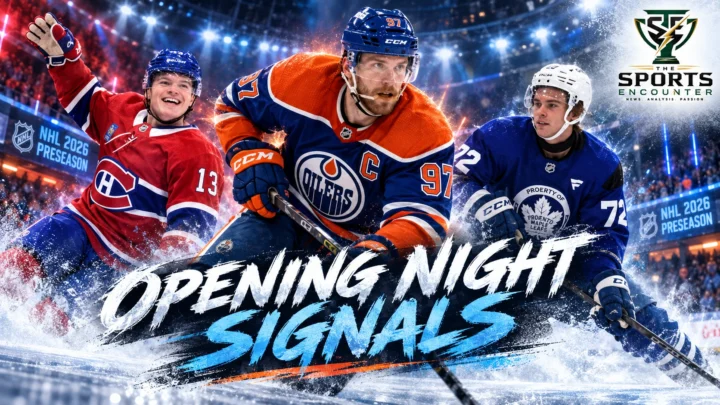
The Sports Encounter’s opening-night preseason analysis provided several examples. Montreal’s two wins over Toronto mattered partly because fans saw Cole Caufield and Lane Hutson sharp immediately. Edmonton supporters saw Connor McDavid and Leon Draisaitl produce two points each. Seattle’s younger players received meaningful opportunities, while Toronto gave No. 1 draft pick Gavin McKenna his first preseason exposure against NHL opposition.
None of those performances guaranteed anything for the regular season.
They gave supporters their first evidence.
Hockey Fandom Begins Long Before the Games Count
The NHL’s relationship with its supporters is unusually tied to routine.
Hockey seasons stretch across winter. Families organize evenings around games. Local bars, youth teams and supporter groups build calendars around schedules. Children often inherit teams from parents. Cities such as Montreal, Toronto, Boston, Detroit, Chicago, Pittsburgh, Edmonton and Winnipeg carry hockey memories across generations.
That means the return of hockey has emotional value before standings points appear.
The first training-camp photos matter because fans have spent months without their team. A preseason broadcast provides familiar uniforms, familiar commentary, the sound of skates cutting ice and the first chance to see how an offseason of trades, injuries, contracts and draft decisions looks in motion.
This is particularly powerful after a disappointing season.
A fan whose team missed the playoffs does not enter September carrying the same emotional baggage as April. The record has returned to zero. A prospect may have developed. A new coach may have changed the system. A summer acquisition can alter a weak line. One healthy veteran may solve a problem that defined the previous year.
The optimism may eventually prove misplaced.
For several weeks, it remains possible.
The Shortened 2026 NHL Preseason Has Made Every Audition More Valuable
The 2026 format adds urgency that previous preseasons did not always possess.
NHL teams traditionally had considerably more exhibition time. The league’s new collective bargaining structure has reduced most clubs to four preseason games while increasing the regular season from 82 to 84 games.
The NHL’s own examination of the condensed training-camp and preseason structure highlighted the practical problem facing coaches: teams have fewer practices and fewer competitive games before opening night.
Veteran participation is restricted too. Players with at least 100 games of NHL experience can appear in no more than two exhibitions under the new arrangement.
That changes what supporters are watching.
In a longer preseason, one poor performance from a prospect could be repaired three nights later. A goalie might receive several starts. Coaches could test one line combination, abandon it and try something completely different.
Four games leave far less room.
Every shift involving a player fighting for the 12th forward position becomes more meaningful. One excellent night from a young defenseman can change the order of the depth chart. A goalie who receives only 30 or 60 minutes may have no second chance to show he belongs.
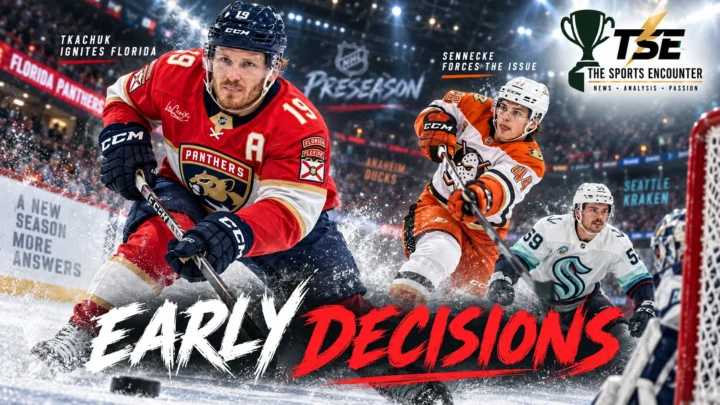
TSE’s second preseason roundup showed this pressure immediately. Beckett Sennecke’s hat trick gave Anaheim a significant developmental story. Young players in Boston, Colorado, New Jersey and Seattle used limited ice time to force more difficult roster decisions, while new additions around the league were already being tested in combinations coaches may carry into September 29.
Prospects Give Fans a Reason to Watch Games That Do Not Count
Few elements of NHL preseason culture generate more interest than prospects.
Fans spend months reading draft reports and prospect rankings without seeing those players against NHL opposition. Preseason is often the first moment when projection meets reality.
A junior star may suddenly look physically overwhelmed.
An unheralded late-round pick may look completely comfortable.
A player expected to return to the AHL may force his way into a serious roster conversation.
Supporters become emotionally invested because prospects represent the future of the franchise.
For rebuilding teams, the effect is even stronger. The next contender may already be inside the organization, but fans do not yet know which players will survive the transition.
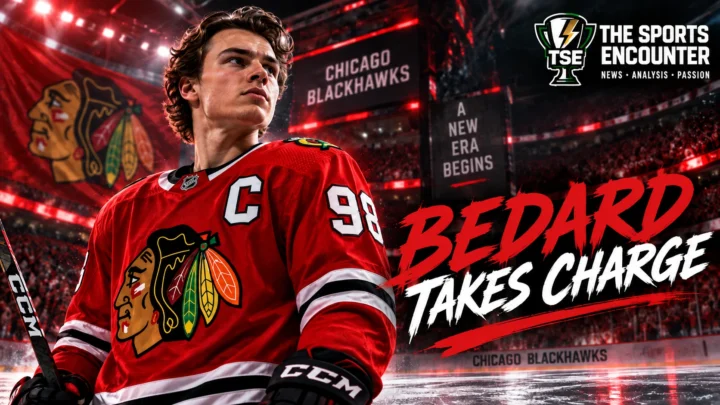
Chicago offers a useful example. The Blackhawks have formally handed leadership of their next era to Connor Bedard, a decision TSE examined after Bedard became Chicago’s captain at 21.
Bedard is currently recovering from shoulder surgery, which increases the value of preseason evaluation around him. Chicago supporters are watching other young players because somebody must absorb larger responsibilities while the captain is unavailable.
The score of a Minnesota-Chicago exhibition may disappear quickly.
Evidence that another young Blackhawk can handle NHL minutes may matter for months.
Roster Battles Turn Exhibition Hockey Into a Job Interview
The most compelling preseason stories often involve players whose careers are less secure than those of the stars.
Connor McDavid does not need a strong September to earn an Edmonton roster spot.
Sidney Crosby does not need to prove he belongs in Pittsburgh.
Hundreds of other players arrive at training camp without that certainty.
A fourth-line position can determine whether somebody earns an NHL salary or spends the winter riding buses in the AHL. The seventh-defenseman role can decide whether a young player practices beside established stars or waits for an injury call-up. A backup-goalie competition can redirect an entire season for two careers.
Fans understand those stakes.
They may know that one exhibition goal means little statistically while simultaneously recognizing that it can mean everything to the player who scored it.
This is where preseason hockey becomes more human than its “meaningless games” label suggests.
Every September contains players trying to extend careers, teenagers trying to begin them, veterans returning from injury, journeymen on professional tryouts and prospects trying to convince coaches that their development has accelerated faster than expected.
The standings do not record those battles.
The final roster does.
New Signings Give Supporters Their First Look at an Offseason Plan
Fans spend the summer debating transactions in theory.
Preseason provides the first moving picture.
A general manager may claim that a new winger can solve a scoring problem. The first exhibition allows supporters to see where he actually plays. A defenseman acquired through trade may suddenly appear beside the club’s best puck mover. A new center may receive first-unit power-play time immediately.
Those choices tell fans how the organization itself views the acquisition.
Boston provides one current example. The Bruins committed seven years and $50.4 million to Fraser Minten before he reached restricted free agency, a decision TSE analyzed in detail when examining why Boston made such an early long-term bet.
The contract created expectations before the season began. Preseason usage starts revealing how Boston intends to justify them.
The Metropolitan Division contains another example. The Rangers added Eeli Tolvanen through a comparatively lower-risk route, while the Devils invested greater future capital in Luke Evangelista. TSE’s breakdown of the Rangers and Devils’ contrasting roster strategies examined those decisions before the players entered competitive lineups.
Preseason is where those theories begin generating visual evidence.
Line Combinations Become an Entire September Language
Few sports generate as much preseason discussion around combinations as hockey.
Fans track who skates beside whom during morning practice.
One winger moving onto the top line can become news. A defense pairing can trigger an afternoon of debate. Power-play groups receive scrutiny before they play a meaningful minute.
Some of this can become excessive. Coaches experiment. Injuries alter practice groups. Veterans may receive rest. A line used on September 20 may disappear before September 29.
Still, combinations matter because hockey depends heavily on chemistry.
Forwards read each other’s routes at high speed. Defensemen must understand when a partner will pinch and when he will retreat. Power-play units rely on predictable movement and puck distribution. Goaltenders communicate with defenders whose habits can differ significantly.
Fans therefore watch preseason partly as tactical reconnaissance.
The final score may say 4-2.
The more interesting information may be that a rookie spent 18 minutes beside a first-line center.
Goaltending Battles Can Make Preseason Much More Important Than It Looks
No position exposes the value of limited preseason evidence more clearly than goaltender.
A forward may receive several shifts every period.
A goalie can wait days for one appearance.
With four exhibition games and veteran participation limits, coaches cannot give every goaltender in camp a full competitive audition. That means workload distribution itself becomes meaningful.
Fans watch who starts.
They watch who enters halfway through.
They watch rebound control, movement, puck handling and performance under traffic.
Most importantly, they watch who receives the final preseason game, because that can provide one of the strongest hints about opening-night trust.
Again, preseason statistics require caution. A goalie facing an AHL-heavy opponent is not receiving the same test as one seeing an NHL-caliber power play.
The deployment still tells a story.
Rivalries Do Not Completely Switch Off in September
Players may call preseason a preparation period. Supporters are less capable of turning rivalry instincts on and off.
Montreal against Toronto still looks like Montreal against Toronto.
The Rangers and Devils can meet with incomplete rosters and the geographical tension remains recognizable.
Calgary and Edmonton can play an exhibition and supporters will still notice every heavy hit.
The intensity may be lower, but the history does not disappear because the standings are inactive.
This season’s NHL 2026-27 season preview highlighted how an expanded 84-game schedule gives divisional matchups slightly greater importance once the regular season begins. Preseason provides the first reminder of those relationships.
Fans know the real battles are coming.
September gives them the first taste.
Kraft Hockeyville Shows That NHL Preseason Can Mean Far More Than Preparation
The relationship between hockey and community becomes particularly visible when preseason games leave normal NHL arenas.
Monday’s Montreal Canadiens-Ottawa Senators game in Trois-Rivières is tied to Saint-Boniface, Quebec, the 2025 Kraft Hockeyville winner.
The NHL’s Hockeyville coverage documents how the event has brought players, alumni, supporters, children and the Stanley Cup into a community celebration built around far more than one exhibition result.
Saint-Boniface received $250,000 toward arena improvements and $10,000 in youth hockey equipment through NHLPA Goals & Dreams. The NHL game is the centerpiece, but the deeper value comes from what surrounds it.
Children meet players they have watched on television.
Former stars return to local hockey communities.
Families gather around a rink whose importance predates the NHL’s arrival.
A preseason game becomes a mechanism through which the league reconnects elite professional hockey with the grassroots game beneath it.
This helps explain why describing every exhibition as meaningless misses the cultural role some games play.
They may mean nothing to the standings.
They can mean plenty to the people in the building.
NHL Fandom Is Also About Memory
Hockey fans rarely interact with their clubs only through current results.
They carry old captains, old arenas, retired numbers, playoff collapses, championship runs and players their parents watched.
That continuity helps the league maintain unusually deep emotional relationships with certain markets.
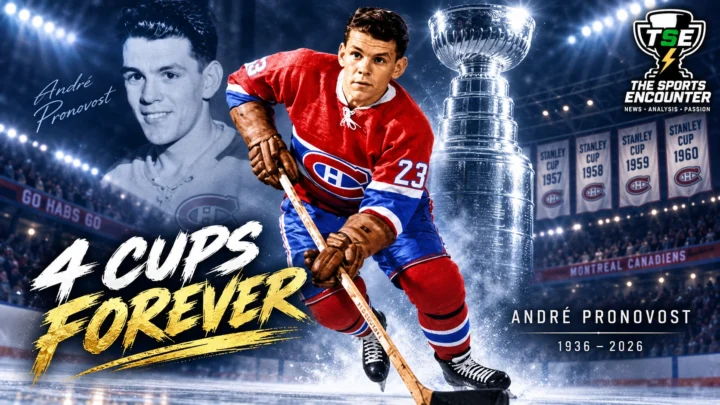
The Sports Encounter’s recent tribute to four-time Stanley Cup champion André Pronovost reached back into the Montreal dynasty of the 1950s, yet those stories still matter because Canadiens fans understand the present through the club’s past.
The same principle explains why preseason anticipation can become intense in traditional markets. Fans are not meeting a new product every September.
They are resuming a relationship.
The names change.
The sweater remains.
International Growth Shows the NHL Wants New Fans to Build the Same Habits
The relationship is no longer limited to Canada and traditional U.S. hockey cities.
The NHL increasingly wants international supporters to develop the same attachment to players, teams and schedules.
Germany offers one of the clearest examples.
Edmonton will take Leon Draisaitl back to Cologne in 2027-28, while Boston will bring JJ Peterka to Munich. Ottawa and Chicago are already scheduled to play in Düsseldorf during the 2026-27 season.
TSE examined the larger strategy in our report on the NHL’s growing commitment to Germany.
The important part is not simply staging games overseas.
The league wants supporters to develop habits.
Recognize a player.
Choose a team.
Follow transactions.
Watch preseason.
Care when opening night arrives.
That is how casual curiosity eventually becomes fandom.
What Preseason Can Tell NHL Fans
Preseason provides useful information when supporters know what deserves attention.
| Useful Preseason Signal | Why It Matters |
|---|---|
| Prospect usage | Shows whether coaches are giving a young player a legitimate NHL opportunity |
| Line combinations | Can reveal potential opening-night roles and chemistry experiments |
| Power-play deployment | Often provides clues about offensive hierarchy |
| Goalie workload | Can indicate where a roster competition currently stands |
| Veteran health | Shows whether returning players are moving comfortably under game pressure |
| New-signing usage | Reveals how coaches intend to integrate offseason acquisitions |
| Roster-bubble performance | Can directly influence final cuts and call-up priority |
| System changes | Offers the first look at coaching adjustments before regular-season pressure arrives |
What Preseason Cannot Reliably Tell NHL Fans
The other half of intelligent preseason viewing is knowing what to ignore.
Win-loss records can be deceptive because teams use different levels of roster strength from night to night.
A club starting several established NHL players may face an opponent filled largely with prospects and AHL candidates.
One prospect can score twice against a defensive pair he will never face during the regular season.
A veteran goalie may allow three goals while concentrating more on movement and timing than on producing an exhibition shutout.
Special teams can include players who will not occupy those roles when games count.
That means fans should resist several easy conclusions:
- An unbeaten preseason does not prove a team is a Stanley Cup contender.
- A losing preseason does not prove a team is in trouble.
- One hot scorer has not necessarily won a major role.
- A veteran’s quiet exhibition statistics are rarely meaningful by themselves.
- Team shooting percentages over four games tell very little about an 84-game season.
The real skill for fans is separating evaluation from prediction.
The 2026 Preseason Is Already Showing Why Fans Watch
Only the opening weekend was needed to produce several meaningful stories.
Cole Caufield finished an overtime win for Montreal. Gavin McKenna received his first Maple Leafs preseason opportunity. McDavid and Draisaitl looked sharp immediately for Edmonton. Seattle’s young players made cases for greater responsibility.
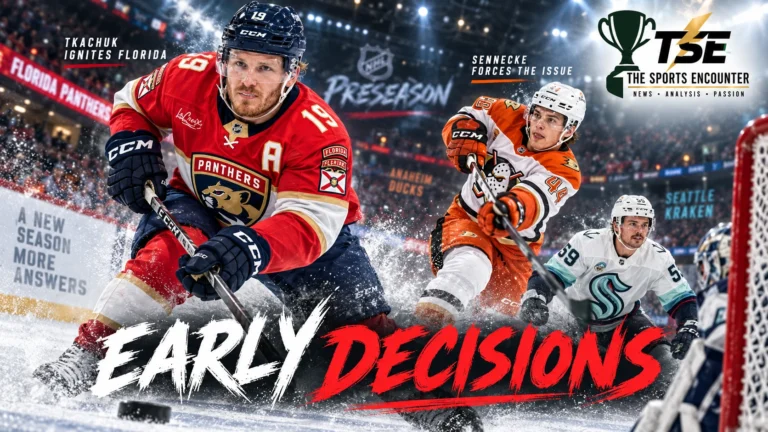
One day later, Brady Tkachuk made his first preseason impact with Florida, Beckett Sennecke scored three times for Anaheim and multiple prospects complicated roster decisions around the league.
TSE has followed those developments because the correct preseason question is rarely, “Who won?”
The more useful question is, “What did we learn?”
That distinction should guide coverage throughout the remaining exhibition schedule.
How Closely Should Fans Follow NHL Preseason?
There is no reason for every supporter to watch all 65 games.
A casual fan can comfortably wait until September 29.
A supporter interested in one established star may only need the final tune-up.
Anyone deeply invested in team building, prospects, tactical changes and roster construction will find substantially more value in preseason.
The most efficient approach is selective.
Follow the games involving important roster battles.
Watch the first appearances of major acquisitions.
Pay attention when an elite prospect receives top-six minutes.
Check the final exhibition lineup because it often resembles the group a coach intends to use when the regular season begins.
Ignore the temptation to treat every final score as evidence of what will happen next.
Why the NHL-Fan Relationship Makes Preseason Different
The NHL preseason works because supporters bring meaning to games that formally carry very little.
A prospect’s first appearance can give a rebuilding fan base something to imagine.
A veteran’s return can reassure a city that lost him to injury months earlier.
A rivalry can wake up after a summer without needing standings points to remind anybody who is playing.
A small Canadian community can turn one exhibition into the biggest hockey event it has hosted in years.
None of those experiences require the score to matter in April.
They require people to care about the team before April arrives.
That is the part of preseason hockey outsiders can easily miss.
The game itself is preparation.
For the supporter watching a first-round pick chase an NHL job, seeing a new signing in familiar colors or simply hearing the opening faceoff after months without hockey, preseason serves another purpose.
It tells them the season is back within reach.
Continue the NHL Story


Frequently Asked Questions About NHL Preseason and Fans
Do NHL preseason games count in the standings?
No. NHL preseason results do not count toward regular-season standings, playoff qualification or regular-season player totals.
Why do NHL fans watch preseason games?
Fans commonly follow preseason to evaluate prospects, roster battles, new signings, line combinations, goaltending competitions, returning players and tactical changes before opening night.
How many NHL preseason games are there in 2026?
The 2026-27 NHL preseason contains 65 games played over eight days from September 19 through September 26.
Why is the 2026 NHL preseason shorter?
The preseason was shortened as part of the new NHL-NHLPA collective bargaining structure while the regular season expands from 82 to 84 games per team.
How many preseason games does each NHL team play?
Most clubs play four exhibition games under the new condensed format, although split-squad scheduling can affect the number of individual team dates.
Do NHL stars play in preseason games?
Yes, although established veterans usually play limited minutes and limited games. Under the new structure, players with at least 100 NHL games are restricted to no more than two preseason appearances.
Are NHL preseason results useful for predicting the regular season?
Only to a limited degree. Lineups vary heavily, and teams often emphasize evaluation over winning. Player usage and roster decisions generally provide more useful information than win-loss records.
Why are prospects so important during NHL preseason?
Preseason gives prospects one of their best opportunities to compete against NHL-level players and demonstrate whether they are ready for a roster spot or should be high on the call-up list.
When does the 2026-27 NHL regular season begin?
The regular season begins Tuesday, September 29, 2026.