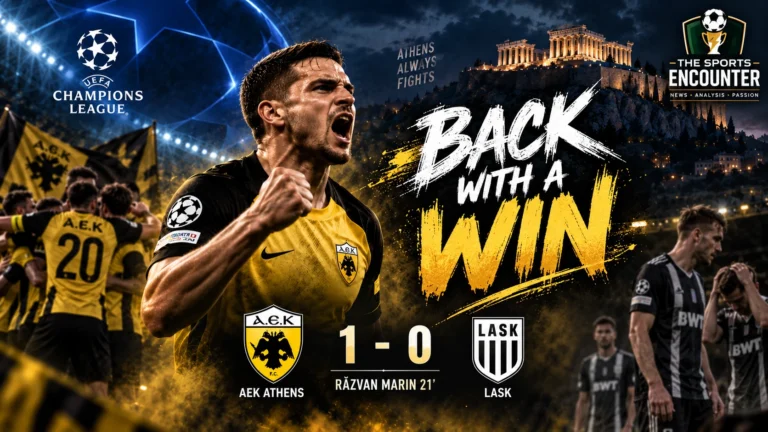
Champions League Play-Offs: Celtic Collapse, Fenerbahçe Return as Three Clubs Make History
The Champions League play-offs delivered 30 second-leg goals, three extra-time finishes and several historic qualifications. LASK overturned Celtic’s huge aggregate advantage, Fenerbahçe returned after 18 years, while Sabah and Viking reached the competition proper for the first time.
Seven Champions League places were available. By the end of two nights that produced 30 goals, three extra-time finishes, three red cards and one extraordinary four-goal aggregate reversal, the final shape of the 2026-27 league phase was complete.
Fenerbahçe ended an absence stretching back to 2008-09. Viking reached the Champions League proper for the first time. Sabah and LASK also broke new ground, while Bodø/Glimt returned for a second successive season, AEK Athens ended an eight-year wait and Slovan Bratislava survived one of the closest ties of the round.
The final scores tell only part of the story.
Celtic travelled to Austria protecting a 3-0 advantage, scored the opening goal of the second leg and somehow went out 5-4 on aggregate. NEC Nijmegen effectively began their attempt to recover a two-goal deficit with ten men after goalkeeper Gonzalo Crettaz was dismissed inside three minutes. Sabah twice found themselves two goals behind on aggregate before forcing extra time deep into stoppage time.
Across seven return legs, the margins between qualification and elimination repeatedly moved within minutes.
UEFA’s official Champions League qualifying record confirms that Sabah, LASK, Bodø/Glimt, AEK Athens, Viking, Slovan Bratislava and Fenerbahçe have taken the seven available league-phase places.
The Sports Encounter had already followed several of these stories through the first legs and Wednesday’s decisive action. Looking at the complete round together, however, reveals something bigger: this was a qualifying week in which reputation offered remarkably little protection.
Champions League Play-Off Second-Leg Results
| Second Leg | Result | Aggregate | Qualified |
|---|---|---|---|
| Sabah vs Hapoel Beer-Sheva | 5-2 AET | 6-4 | Sabah |
| LASK vs Celtic | 5-1 AET | 5-4 | LASK |
| Bodø/Glimt vs NEC Nijmegen | 3-0 | 6-1 | Bodø/Glimt |
| AEK Athens vs Levski Sofia | 4-0 | 4-0 | AEK Athens |
| Viking vs Dinamo Zagreb | 3-1 | 5-3 | Viking |
| Celje vs Slovan Bratislava | 1-2 AET | 2-3 | Slovan Bratislava |
| Lyon vs Fenerbahçe | 1-2 | 2-3 | Fenerbahçe |
Those seven matches produced 30 second-leg goals. Across both legs of the seven ties, there were 48 goals. Three required extra time.
That combination of scoring, reversals and late drama made the final qualifying round considerably more volatile than the simple list of qualifiers suggests.
LASK 5-1 Celtic: From 4-0 Down to the Champions League
No result better illustrates what happened during the play-offs than Celtic’s collapse in Linz.
The Scottish champions entered the second leg holding a commanding 3-0 advantage after their victory at Celtic Park, a result The Sports Encounter examined in detail in our first-leg Celtic vs LASK analysis.
Then Callum McGregor scored in Austria.
At that moment, Celtic were 4-0 ahead on aggregate.
For LASK, qualification now required five goals without another Celtic reply.
They scored all five.
Moses Usor started the recovery before halftime. Robert Ljubičić made it 2-1 early in the second half, and Samuel Adeniran’s long-range effort dragged LASK closer to the aggregate score.
The crucial goal arrived in stoppage time.
Florian Flecker headed in to make it 4-1 on the night and 4-4 overall, sending a tie that Celtic had controlled by four aggregate goals into extra time.
Adeniran then struck again in the 109th minute.
LASK had turned a 4-0 aggregate deficit into a 5-4 victory.
UEFA noted another detail that makes the result even more striking: LASK entered the match without a victory in their previous 11 UEFA competition games.
They ended that sequence by producing the most consequential win in their European history and reaching the Champions League league phase for the first time.
Where Celtic actually lost control
The immediate temptation is to describe the result as a defensive collapse, but the deeper issue was Celtic’s inability to interrupt LASK’s growing belief.
Once Usor scored, the game stopped behaving like a second leg being managed by a team with a huge aggregate cushion.
Every subsequent LASK goal altered the emotional mathematics.
At 2-1, Celtic remained comfortable. At 3-1, the Austrian crowd could see a route. Flecker’s stoppage-time header removed the last psychological protection Celtic had left.
By extra time, the team that had started four goals ahead was reacting to the contest rather than controlling it.
Sabah 5-2 Hapoel Beer-Sheva: The Tie That Refused to End
Sabah’s route into the Champions League may have been even more chaotic.
The Azerbaijani club began the evening trailing 2-1 from the first leg. Igor Zlatanović then scored for Hapoel Beer-Sheva after ten minutes, extending the Israeli side’s aggregate lead to 3-1.
Christian Nwachukwu brought Sabah back into the contest in the 37th minute, only for Guy Mizrahi to restore Hapoel’s two-goal aggregate advantage after the interval.
The situation still looked bleak with little more than 15 minutes remaining.
Umarali Rakhmonaliev made it 2-2 on the night before Tellur Mutallimov produced one of the most important goals anywhere in Champions League qualifying, volleying home from a corner in second-half stoppage time.
That goal made it 4-4 on aggregate.
Extra time then turned sharply against Hapoel.
Djibril Diop was sent off shortly before Orphe Mbina headed Sabah in front. Joy-Lance Mickels added another in the 115th minute, and Eliel Peretz was subsequently dismissed as Hapoel finished with nine men.
Sabah eventually won 6-4 on aggregate.
The scoreline looks relatively comfortable when read without context. The contest itself was anything but.
Sabah had been two goals behind on aggregate twice during the second leg and were still facing elimination as stoppage time began. They finished the night as Champions League qualifiers.
Azerbaijan now has another Champions League story
UEFA confirmed that Sabah have become only the second Azerbaijani club to reach the competition proper, following Qarabağ.
That development matters beyond one dramatic evening.
The Champions League’s expanding competitive map is increasingly visible through clubs arriving from leagues that historically received little attention during the main European season.
Readers can follow those wider stories through The Sports Encounter’s global soccer coverage.
Bodø/Glimt 3-0 NEC: A Red Card Ends the Contest Before It Can Develop
While Sabah and LASK needed extraordinary recoveries, Bodø/Glimt experienced a very different second leg.
They already led NEC Nijmegen 3-1 after winning in the Netherlands.
NEC’s difficult assignment became dramatically harder after only three minutes when goalkeeper Gonzalo Crettaz was sent off.
Any plan built around patience, controlled aggression and an early goal immediately disappeared.
Fredrik André Bjørkan eventually opened the scoring from Sondre Auklend’s cutback, Auklend added the second before halftime and a Deveron Fonville own goal completed the 3-0 victory.
Bodø/Glimt progressed 6-1 on aggregate and qualified for the Champions League for a second consecutive season.
UEFA’s statistical note provides useful context for how reliably the Norwegian side has carried its domestic attacking identity into Europe: Bodø had scored at least twice in 11 of their previous 12 UEFA competition matches after completing the tie.
The result can easily be filed as a routine 6-1 aggregate victory. The third-minute dismissal is what really explains why NEC never had an opportunity to turn the second leg into a contest.
Fenerbahçe Beat Lyon and Finally End an 18-Year Wait
Fenerbahçe’s qualification carried a different kind of pressure.
The Istanbul club had not appeared in the Champions League proper since 2008-09.
After a 1-1 draw in Turkey, their return depended on winning in Lyon.
They did most of the decisive work within a four-minute first-half spell.
Vedat Muriqi scored in the 24th minute before Archie Brown made it 2-0 in the 28th.
Malick Fofana pulled one back for Lyon after halftime, but the French side could not find the equalizer that would have forced extra time.
Fenerbahçe advanced 3-2 on aggregate.
As covered in our dedicated Champions League play-off report on Fenerbahçe, Viking, AEK and Slovan, this qualification closed one of the longest Champions League absences involving a major European club.
There was another historical obstacle involved.
UEFA confirmed that Fenerbahçe had lost their previous four European two-legged ties against French opposition. Victory over Lyon therefore represented their first successful UEFA knockout tie against a French club at the fifth attempt.
That is a more revealing measure of the breakthrough than the final 3-2 aggregate score alone.
Viking 3-1 Dinamo Zagreb: Norwegian Football Gains Another Seat
Viking’s qualification may carry the greatest long-term meaning.
The Norwegian club had never played in the Champions League proper.
Dinamo Zagreb appeared determined to keep it that way when Arbër Hoxha scored after ten minutes in Stavanger, restoring the Croatian side’s aggregate advantage after the first leg had ended 2-2.
Viking’s reaction was immediate enough to prevent anxiety from taking over.
Zlatko Tripić converted a penalty in the 18th minute.
Then came the sequence that decided the tie.
Edvin Austbø struck in the 48th minute, and Tobias Moi scored two minutes later.
Within the opening five minutes of the second half, a balanced contest had become a 3-1 Viking lead.
They held it and progressed 5-3 on aggregate.
Viking will now join Bodø/Glimt in the Champions League, giving Norwegian football two clubs in the league phase.
That deserves attention because Bodø’s European rise is increasingly looking less like an isolated phenomenon. Viking have now added another Norwegian model to Europe’s elite competition.
AEK Athens 4-0 Levski Sofia: Twenty-Nine Minutes Settle Everything
AEK Athens entered their home leg in perhaps the cleanest position of the seven ties.
The first match against Levski Sofia had finished 0-0.
There was no deficit to chase and no advantage to protect.
AEK required only 29 minutes to remove nearly all uncertainty.
Luka Jović headed in Lazaros Rota’s cross after seven minutes. Barnabás Varga then scored twice in quick succession, sending AEK into halftime three goals ahead.
Răzvan Marin converted a penalty after the break to complete the 4-0 victory.
AEK therefore return to the Champions League proper for the first time since the 2018-19 season.
The interesting detail was not simply the margin.
After 90 goalless minutes in Bulgaria, AEK effectively decided the entire 180-minute contest during a 22-minute stretch in Athens.
UEFA also highlighted their growing home strength in continental competition. AEK have now won nine of their last 11 UEFA home matches, with one draw and one defeat.
Slovan Bratislava Survive 210 Minutes Against Celje
If AEK settled their tie early, Slovan Bratislava needed almost every available minute.
The first leg had finished 1-1.
Andraž Šporar gave Slovan the lead in Slovenia after 18 minutes, but Svit Sešlar converted a penalty 16 minutes later.
From there, the contest tightened.
Celje’s Yaya Dukuly hit the post. Slovan’s Roman Čerepkai later struck the woodwork at the other end.
Neither side could find a winner in regulation time.
Cristian Martínez finally broke the deadlock in the 100th minute after Nino Marcelli carried the ball forward from deep.
Even then Celje nearly responded, with Mario Kvesić hitting the woodwork.
Slovan eventually advanced 3-2 on aggregate after 210 minutes of football.
UEFA’s broader record shows why they were equipped for such a tie: Slovan have now won eight of their last ten European two-legged contests.
That is the kind of experience that becomes particularly valuable when qualification is reduced to one moment in extra time.
Three First-Time Qualifiers Changed the Shape of the League Phase
The most significant collective story from the play-offs is the number of clubs entering new territory.
Sabah, LASK and Viking have all reached the Champions League proper for the first time.
Bodø/Glimt have made it for a second consecutive season, while Fenerbahçe have returned after 18 years and AEK after eight.
The league phase therefore gains several clubs carrying very different levels of European history.
That mix will sit alongside established continental powers and other unusual 2026-27 storylines, including Shakhtar Donetsk playing their Champions League home matches at Stamford Bridge.
Manchester United are also back after their domestic recovery under Michael Carrick, which we examined in our analysis of Manchester United’s 2026-27 rebuild.
The Numbers Behind an Extraordinary Play-Off Round
Seven second legs produced 30 goals, an average of more than four per game.
The full seven ties generated 48 goals across both legs.
Three second legs required extra time: Sabah against Hapoel Beer-Sheva, LASK against Celtic and Celje against Slovan Bratislava.
Three players were sent off across the decisive matches, with NEC goalkeeper Crettaz dismissed after three minutes and Hapoel Beer-Sheva finishing extra time against Sabah with nine men.
Perhaps the most remarkable number belongs to Celtic.
They moved four goals ahead on aggregate after scoring first in Austria and were eliminated 5-4.
No single metric captures qualifying pressure better.
What the Seven Qualifiers Bring Into the Champions League
- Sabah: A competition newcomer representing only the second Azerbaijani club to reach this level.
- LASK: A first Champions League appearance earned through one of the great qualifying comebacks.
- Bodø/Glimt: Consecutive league-phase qualifications and growing evidence of sustained Norwegian European strength.
- AEK Athens: A return after an eight-season absence, backed by increasingly strong European home form.
- Viking: A first Champions League appearance and another major breakthrough for Norwegian club football.
- Slovan Bratislava: A team increasingly comfortable surviving close European knockout ties.
- Fenerbahçe: A major club returning after 18 years and carrying a substantial fan base back onto Europe’s biggest stage.
The Next Test Is Very Different
Qualifying rewards survival.
The league phase rewards consistency against a deeper level of opposition.
The seven play-off winners now join 29 automatic qualifiers in the 36-team field. The structure awaiting them is explained in our UEFA league-phase draw guide, where finishing inside the top eight earns direct passage to the round of 16, positions nine through 24 lead to knockout play-offs, and 25th or lower means European elimination.
UEFA’s official second-leg round-up confirms that the seven play-off winners complete the league-phase field.
The UEFA league-phase draw then determines the eight opponents each club will face under the current Champions League format.
For clubs such as Sabah, LASK and Viking, simply reaching this point already changes their season financially, competitively and historically.
The next question is whether any of them can turn qualification into something more.
A Qualifying Week That Punished Assumptions
Celtic appeared almost untouchable with a 3-0 first-leg lead.
They went out.
Dinamo Zagreb carried far more Champions League experience than Viking.
They went out.
Lyon had home advantage in a level tie against a Fenerbahçe side carrying nearly two decades of Champions League frustration.
They went out.
Those outcomes do not mean experience or reputation stopped mattering. They show how little protection either provides when the margin for a poor spell becomes this small.
The same lesson applies once the league phase begins.
Paris Saint-Germain have already opened the European season by beating Aston Villa in the UEFA Super Cup, a match covered in our PSG vs Aston Villa Super Cup report. The distance between clubs at that level may appear substantial on paper, but this qualifying round has already shown what pressure, momentum and a few decisive minutes can do.
The biggest names will soon enter the competition.
Sabah, LASK, Bodø/Glimt, AEK, Viking, Slovan Bratislava and Fenerbahçe have already survived the part where there was no room for tomorrow.
Frequently Asked Questions
Which teams qualified for the 2026-27 Champions League through the play-offs?
Sabah, LASK, Bodø/Glimt, AEK Athens, Viking FK, Slovan Bratislava and Fenerbahçe won the seven play-off ties and qualified for the 36-team Champions League league phase.
What happened to Celtic in the Champions League play-offs?
Celtic won the first leg against LASK 3-0 and then scored first in Austria, moving 4-0 ahead on aggregate. LASK responded with five unanswered goals, including a stoppage-time equalizer on aggregate and an extra-time winner, to advance 5-4 overall.
When did Fenerbahçe last play in the Champions League?
Fenerbahçe’s previous appearance in the Champions League proper was in the 2008-09 season. Their 3-2 aggregate win over Lyon ended an 18-year absence.
Did Viking qualify for the Champions League for the first time?
Yes. Viking defeated Dinamo Zagreb 5-3 on aggregate to qualify for the Champions League proper for the first time in club history.
Did Sabah qualify for the Champions League for the first time?
Yes. Sabah defeated Hapoel Beer-Sheva 6-4 on aggregate after extra time and became only the second Azerbaijani club to reach the Champions League proper.
What was the biggest Champions League play-off comeback?
Among the 2026-27 play-off second legs, LASK produced the most dramatic reversal. They fell 4-0 behind Celtic on aggregate before scoring five consecutive goals to win the tie 5-4.
How many Champions League play-off second legs went to extra time?
Three of the seven second legs required extra time: Sabah vs Hapoel Beer-Sheva, LASK vs Celtic and Celje vs Slovan Bratislava.
What happens to teams eliminated from the Champions League play-offs?
Under UEFA’s 2026-27 qualifying structure, the seven clubs defeated in the Champions League play-off round move into the UEFA Europa League league phase.
How many teams are in the 2026-27 Champions League league phase?
The league phase contains 36 clubs. Twenty-nine qualified automatically and seven earned their places through the Champions League play-offs.
When does the 2026-27 Champions League league phase begin?
The opening league-phase matches are scheduled for September 8-10, 2026.

Breaking News
Champions League 2026-27 Draw: Biggest Clashes, Toughest Paths and Winners
The 2026-27 Champions League draw is complete. PSG, Arsenal, Manchester United, Barcelona, Real Madrid and the competition’s newcomers now know their eight league-phase opponents, creating blockbuster clashes and some brutally difficult paths.
The 2026-27 UEFA Champions League league-phase draw has given Europe’s biggest clubs very different roads toward the knockout rounds, and some of the most interesting assignments belong to teams that only reached this stage days ago.
Paris Saint-Germain will defend their European title against a schedule containing Barcelona, Manchester City, Aston Villa and Roma. Arsenal must deal with Real Madrid, Bayern Munich and Borussia Dortmund. Aston Villa have been handed Barcelona away and PSG at home, while Manchester United’s return to the competition immediately brings Bayern Munich, Atlético Madrid, Roma and Villarreal.
Then come the newcomers.
Sabah’s first Champions League campaign includes Barcelona and Borussia Dortmund at home, plus trips to Arsenal and Manchester United. AEK Athens will welcome Real Madrid and Roma before traveling to Manchester City and Dortmund. Viking host Bayern Munich. LASK get Liverpool at home and Real Madrid away.
The draw therefore achieved something that the league-phase format is designed to create: almost every club has at least one fixture capable of changing the mood of its European season.
The official UEFA Champions League draw confirms all eight opponents for each of the 36 teams.
The Sports Encounter had already followed the competition through the qualifying rounds and examined the wider structure in our UEFA draw-week guide. Thursday’s draw has now transformed that structure into eight specific problems for every club.
Champions League 2026-27 League-Phase Draw: All 36 Teams and Opponents
| Club | Home Opponents | Away Opponents |
|---|---|---|
| AEK Athens | Real Madrid, Roma, Galatasaray, LASK | Manchester City, Borussia Dortmund, Shakhtar Donetsk, Como |
| Arsenal | Real Madrid, Borussia Dortmund, Lille, Sabah | Bayern Munich, Real Betis, Napoli, Slavia Prague |
| Aston Villa | Paris Saint-Germain, Borussia Dortmund, Fenerbahçe, Viking | Barcelona, Club Brugge, Galatasaray, Slavia Prague |
| Atlético Madrid | Bayern Munich, Manchester United, Fenerbahçe, Viking | Liverpool, PSV, Bodø/Glimt, Stuttgart |
| Borussia Dortmund | Inter, Real Betis, Villarreal, AEK Athens | Arsenal, Aston Villa, Bodø/Glimt, Sabah |
| Barcelona | Manchester City, Aston Villa, Feyenoord, Como | Paris Saint-Germain, Sporting CP, Galatasaray, Sabah |
| Bayern Munich | Arsenal, Real Betis, Bodø/Glimt, Slavia Prague | Atlético Madrid, Manchester United, Lille, Viking |
| Bodø/Glimt | Atlético Madrid, Borussia Dortmund, Lille, LASK | Bayern Munich, Club Brugge, Napoli, Lens |
| Club Brugge | Liverpool, Aston Villa, Bodø/Glimt, Lens | Inter, PSV, Napoli, Stuttgart |
| Como | Paris Saint-Germain, Manchester United, Leipzig, AEK Athens | Barcelona, Real Betis, Feyenoord, Lens |
| Fenerbahçe | Liverpool, Roma, Villarreal, Slavia Prague | Atlético Madrid, Aston Villa, Shakhtar Donetsk, LASK |
| Feyenoord | Inter, Porto, Leipzig, Como | Barcelona, Real Betis, Galatasaray, Viking |
| Galatasaray | Barcelona, Aston Villa, Feyenoord, Stuttgart | Paris Saint-Germain, Sporting CP, Lille, AEK Athens |
| Inter | Liverpool, Club Brugge, Shakhtar Donetsk, Stuttgart | Real Madrid, Borussia Dortmund, Feyenoord, Slovan Bratislava |
| LASK | Liverpool, Porto, Fenerbahçe, Slovan Bratislava | Real Madrid, Sporting CP, Bodø/Glimt, AEK Athens |
| Leipzig | Manchester City, PSV, Shakhtar Donetsk, Lens | Real Madrid, Manchester United, Feyenoord, Como |
| Lens | Manchester City, Sporting CP, Bodø/Glimt, Como | Liverpool, Club Brugge, Leipzig, Slavia Prague |
| Lille | Bayern Munich, Real Betis, Galatasaray, Slovan Bratislava | Arsenal, Roma, Bodø/Glimt, Stuttgart |
| Liverpool | Atlético Madrid, Porto, Villarreal, Lens | Inter, Club Brugge, Fenerbahçe, LASK |
| Manchester City | Paris Saint-Germain, Sporting CP, Napoli, AEK Athens | Barcelona, Porto, Leipzig, Lens |
| Manchester United | Bayern Munich, Roma, Leipzig, Sabah | Atlético Madrid, Sporting CP, Villarreal, Como |
| Napoli | Arsenal, Club Brugge, Bodø/Glimt, Viking | Manchester City, Porto, Villarreal, Sabah |
| Paris Saint-Germain | Barcelona, Roma, Galatasaray, Slovan Bratislava | Manchester City, Aston Villa, Villarreal, Como |
| Porto | Manchester City, PSV, Napoli, Slavia Prague | Liverpool, Real Betis, Feyenoord, LASK |
| PSV | Atlético Madrid, Club Brugge, Shakhtar Donetsk, Stuttgart | Real Madrid, Porto, Leipzig, Viking |
| Real Betis | Arsenal, Porto, Feyenoord, Como | Bayern Munich, Borussia Dortmund, Lille, Slovan Bratislava |
| Real Madrid | Inter, PSV, Leipzig, LASK | Arsenal, Roma, Shakhtar Donetsk, AEK Athens |
| Roma | Real Madrid, Sporting CP, Lille, Slovan Bratislava | Paris Saint-Germain, Manchester United, Fenerbahçe, AEK Athens |
| Sabah | Barcelona, Borussia Dortmund, Napoli, Slavia Prague | Arsenal, Manchester United, Villarreal, Viking |
| Shakhtar Donetsk | Real Madrid, Sporting CP, Fenerbahçe, AEK Athens | Inter, PSV, Leipzig, Slovan Bratislava |
| Slavia Prague | Arsenal, Aston Villa, Villarreal, Lens | Bayern Munich, Porto, Fenerbahçe, Sabah |
| Slovan Bratislava | Inter, Real Betis, Shakhtar Donetsk, Stuttgart | Paris Saint-Germain, Roma, Lille, LASK |
| Sporting CP | Barcelona, Manchester United, Galatasaray, LASK | Manchester City, Roma, Shakhtar Donetsk, Lens |
| Stuttgart | Atlético Madrid, Club Brugge, Lille, Viking | Inter, PSV, Galatasaray, Slovan Bratislava |
| Viking | Bayern Munich, PSV, Feyenoord, Sabah | Atlético Madrid, Aston Villa, Napoli, Stuttgart |
| Villarreal | Paris Saint-Germain, Manchester United, Napoli, Sabah | Liverpool, Borussia Dortmund, Fenerbahçe, Slavia Prague |
Paris Saint-Germain Get the Draw Every Champion Fears
Paris Saint-Germain begin their title defense with one of the most demanding schedules in the competition.
Barcelona come to Paris.
Manchester City wait away.
Aston Villa, who PSG beat in the UEFA Super Cup earlier this month, are also on the road schedule. Roma visit the Parc des Princes, while Villarreal and Como add difficult away assignments of very different kinds.
The Sports Encounter covered PSG’s 2-1 Super Cup victory over Aston Villa, but the league-phase rematch will carry considerably different consequences.
The overlooked issue for PSG is not simply the number of famous opponents.
It is the distribution.
Two of their most difficult assignments, Manchester City and Aston Villa, come away from home. Barcelona are at home, but Villarreal also require a trip to Spain.
Champions League title defenses are rarely straightforward. PSG have been given very little margin to ease into this one.
Arsenal’s Reward for Pot 1 Status Is Real Madrid, Bayern and Dortmund
Being seeded in Pot 1 does not protect a club from elite opposition under the current format.
Arsenal are the clearest example.
Real Madrid and Borussia Dortmund come to the Emirates. Bayern Munich await in Germany.
Napoli away may ultimately be just as difficult as some of the Pot 1 assignments, particularly if the Italian champions establish early momentum under Massimiliano Allegri.
The defending Premier League champions therefore have four fixtures that could realistically resemble knockout-round games before February arrives.
Arsenal’s domestic season began strongly with a 3-0 win over Coventry, part of the opening-weekend picture examined in The Sports Encounter’s Premier League opening-weekend wrap.
The Champions League will test something entirely different: whether their control survives when the opposition possesses comparable quality.
Aston Villa’s Schedule Is Built Around Big Nights
Aston Villa supporters will get PSG and Borussia Dortmund at Villa Park.
They will also get Fenerbahçe, who return to the Champions League after an 18-year absence, and first-time qualifier Viking.
The away schedule is harsher.
Barcelona, Club Brugge, Galatasaray and Slavia Prague offer four very different environments.
The Barcelona trip is the obvious headline fixture, but Galatasaray away may become one of the more difficult atmospheric assignments anywhere in the league phase.
Villa therefore have a draw that offers enormous nights without giving them many obvious free points.
Their home matches may determine whether this becomes a top-eight campaign or a battle for the knockout play-off positions.
Manchester United Return to Europe’s Elite With No Gentle Introduction
Manchester United have waited to return to the Champions League.
UEFA has immediately given them Bayern Munich at Old Trafford.
Roma and Leipzig also visit Manchester, while Sabah complete the home schedule.
Away from Old Trafford, Michael Carrick’s side travel to Atlético Madrid, Sporting CP, Villarreal and Como.
The Sports Encounter’s analysis of Carrick’s Manchester United rebuild identified Champions League qualification as one of the clearest measures of how far the club had recovered.
Now comes the harder question.
Can United compete on this stage while simultaneously sustaining domestic progress?
The draw gives them enough quality opposition to find out quickly.
Manchester City Face PSG and Barcelona
Manchester City have been handed perhaps the two most glamorous Pot 1 fixtures available.
PSG come to Manchester.
City travel to Barcelona.
Napoli at home adds another high-level tactical contest, while away matches against Porto, Leipzig and Lens give Pep Guardiola’s side very little repetition in terms of style.
That variety may matter more than the names.
City will move from Barcelona’s positional game to Porto’s physical European approach, Leipzig’s pressing and Lens’ intensity.
The league phase rewards adaptability as much as sustained quality.
Real Madrid’s Away Schedule Is More Dangerous Than the Home List
Real Madrid welcome Inter, PSV, Leipzig and LASK.
That is manageable by their standards.
The away schedule creates the greater challenge.
Arsenal.
Roma.
Shakhtar Donetsk.
AEK Athens.
Three of those four environments could become emotionally difficult even before football quality enters the equation.
Shakhtar’s fixture carries another unusual twist because the Ukrainian club will stage their Champions League home matches at Stamford Bridge, an arrangement examined in The Sports Encounter’s feature on Shakhtar’s London relocation.
Real Madrid therefore get a European schedule that looks relatively balanced on paper but contains several away fixtures where game management will matter.
Inter Have Liverpool at Home and Real Madrid Away
Inter’s Pot 1 assignments could hardly be more demanding.
Liverpool visit San Siro.
Inter then travel to Real Madrid.
Borussia Dortmund away adds another major fixture from Pot 2, while Feyenoord away and Shakhtar at home ensure the Italian champions have very little breathing room.
That schedule also intersects with a Serie A season in which Inter are defending their domestic title while several rivals rebuild.
The Sports Encounter’s Serie A 2026-27 preview identified European workload as one of the quiet variables that could influence the Scudetto race.
Inter’s draw reinforces that point.
Barcelona Have Manchester City at Home and PSG Away
Barcelona’s two Pot 1 opponents are Manchester City and defending champions PSG.
That alone gives the schedule heavyweight status.
Aston Villa and Feyenoord visit Barcelona, while Sporting CP and Galatasaray require difficult away trips.
Sabah are also on the road schedule.
That fixture may look straightforward through the lens of club history, but Champions League first-timers playing at home often bring an intensity established teams cannot reproduce in ordinary league matches.
Barcelona should still expect to finish high in the table.
The path toward the top eight is far from automatic.
Liverpool’s Biggest Problem May Be the Away Games
Liverpool welcome Atlético Madrid, Porto, Villarreal and Lens.
At Anfield, that is a schedule they will expect to attack.
Away from home, the picture changes.
Inter.
Club Brugge.
Fenerbahçe.
LASK.
San Siro and Istanbul are obvious tests. LASK’s presence is easy to underestimate after the Austrian club’s extraordinary qualification.
The Sports Encounter’s complete Champions League play-off wrap documented how LASK recovered from a 4-0 aggregate deficit against Celtic to win 5-4.
A team capable of surviving that kind of tie will not regard Liverpool’s arrival as an occasion to protect itself.
Fenerbahçe’s Return Immediately Brings Liverpool and Roma
Fenerbahçe spent 18 years trying to return to this competition.
The reward is Liverpool and Roma at home.
Villarreal and Slavia Prague complete the Istanbul schedule.
Away trips to Atlético Madrid and Aston Villa are considerably more demanding, while Shakhtar and LASK provide two matches where Fenerbahçe may reasonably target points.
The Sports Encounter followed Fenerbahçe’s return through their decisive play-off victory over Lyon.
Qualification ended one story.
The draw immediately created another.
Fenerbahçe now need to show that returning to the Champions League was the beginning of their European season rather than its emotional peak.
Sabah Get a First Champions League Draw They Will Never Forget
Sabah’s first Champions League campaign contains the kind of opponent list clubs usually imagine rather than receive.
Barcelona visit Azerbaijan.
Borussia Dortmund visit Azerbaijan.
Napoli visit Azerbaijan.
Then come away matches against Arsenal and Manchester United.
Villarreal are also waiting in Spain.
From a competitive perspective, this may be one of the hardest schedules in the entire draw.
From a historical perspective, it is extraordinary.
Sabah only became the second Azerbaijani club to reach the Champions League proper after surviving Hapoel Beer-Sheva in extra time during the play-offs.
They will now host three clubs with major Champions League histories.
The overlooked question is what those home dates could mean for Azerbaijani football beyond Sabah.
For emerging European markets, elite opposition does more than provide difficult fixtures. It creates visibility, commercial opportunity, coefficient potential and a benchmark for domestic development.
AEK Athens May Have the Toughest Pot 4 Draw
AEK Athens return to the Champions League after eight years.
UEFA has given them Real Madrid and Roma at home.
Manchester City and Borussia Dortmund are away.
Galatasaray also come to Athens, while Shakhtar and Como complete difficult road assignments.
There are few obvious places to hide.
Even their fellow Pot 4 opponent LASK earned qualification by producing one of the most astonishing comebacks of the summer.
AEK demolished Levski Sofia 4-0 to reach the league phase, part of a qualification night covered in our August 26 Champions League play-off report.
The league phase will demand a completely different level of execution.
Viking’s Historic Reward Includes Bayern Munich at Home
Viking had never reached the Champions League proper before this season.
Their supporters will now see Bayern Munich in Stavanger.
PSV and Feyenoord also visit Norway, while Sabah provides another fascinating meeting between two clubs writing new Champions League histories.
The away schedule is much tougher.
Atlético Madrid, Aston Villa, Napoli and Stuttgart.
Viking therefore have four matches in which home advantage may become essential rather than helpful.
The Norwegian club eliminated Dinamo Zagreb to reach this stage and already showed during qualifying that they are comfortable playing without the burden of expectation.
They will need that freedom again.
LASK Go From Celtic Miracle to Liverpool and Real Madrid
LASK’s Champions League journey has already produced one of the stories of the season.
They were four goals behind Celtic on aggregate and somehow advanced.
Now Liverpool are coming to Austria.
Porto and Fenerbahçe will follow, while Real Madrid await away.
Sporting CP and Bodø/Glimt also feature on the road.
The competitive challenge is enormous.
The psychological benefit is equally clear.
LASK enter this league phase after already experiencing the point where their Champions League campaign appeared completely dead.
Everything after that comeback may feel like opportunity.
Como’s First Champions League Season Gets PSG, United and Barcelona
Como’s rise has been one of the most unusual stories in European club football.
Their first Champions League draw has made it even more surreal.
Paris Saint-Germain and Manchester United visit Como.
Leipzig and AEK Athens complete the home schedule.
Barcelona await away.
The Italian side also travel to Real Betis, Feyenoord and Lens.
That is an unforgiving schedule for a Champions League newcomer.
It is also the type of draw that turns a remarkable domestic rise into a global story.
Como’s ability to balance this competition with Serie A could become one of Italy’s most interesting subplots this season.
Which Clubs Got the Toughest Draw?
There is no official UEFA ranking of draw difficulty, and home-away context makes simplistic strength-of-schedule calculations unreliable before matches are played.
From an editorial perspective, however, several schedules stand out.
| Club | Why the Draw Looks Difficult |
|---|---|
| Paris Saint-Germain | Barcelona and Roma at home, Manchester City and Aston Villa away, plus Villarreal away. |
| AEK Athens | Real Madrid and Roma at home, Manchester City and Dortmund away, with Galatasaray also included. |
| Sabah | Barcelona, Dortmund and Napoli at home; Arsenal and Manchester United away. |
| Arsenal | Real Madrid and Dortmund at home; Bayern and Napoli away. |
| Inter | Liverpool at home; Real Madrid and Dortmund away. |
| Manchester City | PSG and Napoli at home; Barcelona away, plus Porto and Leipzig trips. |
| Villarreal | PSG and Manchester United at home; Liverpool and Dortmund away, plus Napoli. |
| Como | PSG and Manchester United at home; Barcelona away in their first Champions League season. |
Who Might Quietly Like Their Draw?
Calling any Champions League draw easy is risky.
Some clubs nevertheless received schedules where the balance appears more manageable.
Real Madrid have Inter at home and Arsenal away, but their other six opponents offer a path toward the top eight if they perform to expectation.
Borussia Dortmund avoided PSG, Real Madrid, Barcelona, Bayern and Manchester City altogether.
They still face Inter and Arsenal, but the remaining schedule contains several opponents against whom Dortmund should expect to compete strongly.
Stuttgart may also see opportunity. Atlético Madrid are their only Pot 1 home opponent, and although Inter await away, the rest of the schedule offers a reasonable number of competitive games rather than a sequence of European giants.
Those assessments remain projections.
The league phase has repeatedly shown that opponent reputation and actual form can diverge dramatically by November.
The Pot System No Longer Protects the Elite
This is the structural feature of the draw that continues to change Champions League thinking.
Under the old group-stage system, Pot 1 status often meant avoiding most of the competition’s strongest teams until the knockouts.
That protection no longer exists.
Every club plays two opponents from every pot.
One is at home.
One is away.
UEFA’s 2026-27 Champions League regulations confirm that the 36 teams are divided into four pots of nine and that each club must face two teams from each pot.
That is why Arsenal can be Pot 1 and still draw Real Madrid and Bayern.
It is why Barcelona can get Manchester City and PSG.
It is why PSG can defend the trophy while immediately confronting two of the strongest clubs in Europe.
Home Advantage Matters More Than the Pot Number
The most overlooked part of the draw is often the home-away allocation.
Receiving an elite opponent at home is fundamentally different from traveling to them.
Arsenal get Real Madrid at the Emirates but must visit Bayern.
PSG host Barcelona but travel to Manchester City.
United host Bayern but go to Atlético.
Viking welcome Bayern but travel to Atlético, Villa and Napoli.
That distribution can shape the league table just as much as the opponent list itself.
A club that turns intimidating home fixtures into four or six points can survive an otherwise brutal draw.
The Seven Play-Off Winners Have Been Given Very Different Rewards
Sabah, LASK, Bodø/Glimt, AEK Athens, Viking, Slovan Bratislava and Fenerbahçe survived qualifying to complete the 36-team field.
The Sports Encounter’s full play-off wrap documented how wildly different their routes were.
The draw has continued that contrast.
| Play-Off Winner | Headline League-Phase Fixtures |
|---|---|
| Sabah | Barcelona, Dortmund and Napoli at home; Arsenal and Manchester United away |
| LASK | Liverpool at home; Real Madrid away |
| Bodø/Glimt | Atlético Madrid and Dortmund at home; Bayern and Napoli away |
| AEK Athens | Real Madrid and Roma at home; Manchester City and Dortmund away |
| Viking | Bayern Munich at home; Atlético Madrid, Aston Villa and Napoli away |
| Slovan Bratislava | Inter at home; PSG and Roma away |
| Fenerbahçe | Liverpool and Roma at home; Atlético Madrid and Aston Villa away |
Qualification was supposed to be the reward.
For several of these clubs, the draw itself has become part of the reward.
Why Top Eight Matters So Much
The Champions League league phase is one 36-team table.
The top eight qualify directly for the round of 16.
Teams finishing ninth through 24th must contest the knockout-phase play-offs.
Positions 25 through 36 mean elimination from Europe.
There is no Europa League drop-down.
That makes the difference between eighth and ninth unusually valuable.
It removes two additional knockout fixtures in February and gives the top-eight clubs extra recovery time during a congested domestic season.
The format therefore rewards teams capable of accumulating points early rather than simply surviving until the final matchday.
Eight Matchdays Will Stretch Across Five Months
UEFA has confirmed the league phase will run from September through January:
- Matchday 1: September 8-10, 2026
- Matchday 2: October 13-14, 2026
- Matchday 3: October 20-21, 2026
- Matchday 4: November 3-4, 2026
- Matchday 5: November 24-25, 2026
- Matchday 6: December 8-9, 2026
- Matchday 7: January 19-20, 2027
- Matchday 8: January 27, 2027
UEFA says the complete fixture list, including match dates and kickoff times, will be communicated no later than August 29. The full competition calendar is available through UEFA’s official 2026-27 Champions League guide.
The League Phase Could Reshape Domestic Title Races
The draw matters beyond Europe.
Arsenal, Manchester City, Liverpool, Manchester United and Aston Villa all face domestic campaigns where dropped points can rapidly change the Premier League table.
The Sports Encounter’s Premier League curtain raiser highlighted the unusual number of English clubs carrying European commitments this season.
The Champions League schedules now show exactly where that pressure will come from.
Italy faces the same problem.
Inter, Napoli, Roma and Como all have domestic ambitions while carrying eight European fixtures before the knockout rounds even begin.
Rotation is no longer optional.
Neither is depth.
TSE Early Draw Winners
Borussia Dortmund
Dortmund still face Arsenal and Inter, but avoiding PSG, Real Madrid, Barcelona, Bayern and Manchester City gives them a schedule with more manageable stretches than several other elite clubs.
Real Madrid
Arsenal away and Inter at home are major assignments. The remaining six matches provide enough opportunity for Madrid to expect a top-eight challenge.
Stuttgart
They received Atlético Madrid at home and Inter away but avoided the kind of Pot 1 pairing that could have made the schedule immediately overwhelming.
Fenerbahçe
The headline names are difficult, but Liverpool and Roma both come to Istanbul. Home advantage could make those fixtures considerably more competitive than a neutral reading of the draw suggests.
TSE Early Draw Losers
Paris Saint-Germain
The champions face Barcelona, Manchester City, Aston Villa, Roma and Villarreal among their eight opponents. There is very little recovery space.
Sabah
Historic nights are guaranteed. Points will be harder. Barcelona, Dortmund, Napoli, Arsenal and Manchester United represent an extraordinary first Champions League schedule.
AEK Athens
Real Madrid and Roma at home would already constitute a difficult draw. Manchester City and Dortmund away make it considerably tougher.
Como
PSG, Manchester United and Barcelona arrive in their first Champions League opponent list. The experience will be memorable; the competitive demands will be severe.
Villarreal
PSG, Manchester United, Napoli, Liverpool and Dortmund account for five of their eight opponents.
Ten Champions League League-Phase Fixtures We Already Want to See
- PSG vs Barcelona – defending champions against one of European football’s defining institutions.
- Barcelona vs Manchester City – two possession-heavy teams with enormous attacking quality.
- Arsenal vs Real Madrid – English champions against the competition’s most successful club.
- Manchester City vs PSG – Guardiola’s side against the defending European champions.
- Inter vs Liverpool – two physically intense sides meeting at San Siro.
- Manchester United vs Bayern Munich – one of Europe’s classic modern matchups returns.
- Atlético Madrid vs Manchester United – tactical control against a United side still evolving under Carrick.
- AEK Athens vs Real Madrid – a historic home night for AEK after an eight-year Champions League absence.
- Viking vs Bayern Munich – the kind of fixture Champions League newcomers spend decades trying to earn.
- Sabah vs Barcelona – arguably the most striking contrast produced by the entire draw.
The Biggest Story May Be the New Geography of the Champions League
The obvious temptation after a Champions League draw is to focus entirely on Real Madrid, Barcelona, Bayern, PSG and the English clubs.
This season offers something broader.
Viking are here.
Sabah are here.
LASK are here.
Como are here.
Bodø/Glimt are back.
AEK Athens have returned.
Fenerbahçe have ended an 18-year absence.
Those clubs now share the same league table as Real Madrid, Liverpool, Barcelona and the defending champions.
That is one of the most important consequences of the league-phase model.
It creates fixtures that would rarely have existed under the old group system and gives emerging clubs direct competitive exposure to European football’s most powerful institutions.
The Draw Is Complete, but the Real Schedule Is Still Coming
We know the opponents.
We do not yet know the order.
That distinction matters.
Playing Real Madrid in September can be very different from playing them in January.
Travel sequences matter.
Domestic fixtures surrounding European nights matter.
Injuries and squad rotation will matter.
UEFA expects to publish the exact fixture dates and kickoff times by August 29.
Only then will clubs fully understand whether the draw has created difficult opponents, difficult logistics or both.
The Detail That Matters
The 2026-27 Champions League draw should not be reduced to who received the biggest names.
The deeper question is where those matches will be played and how the eight-game sequence interacts with domestic schedules.
PSG have Barcelona at home but City and Villa away.
Arsenal host Real Madrid but travel to Bayern.
United welcome Bayern but must go to Atlético.
Viking host Bayern while facing four demanding away trips.
Sabah receive Barcelona, Dortmund and Napoli at home, turning Azerbaijan into one of the most unusual destinations in this season’s Champions League.
Every club has eight opponents.
The difficulty is not evenly distributed.
That imbalance is where the league phase begins to become interesting before a ball has even been kicked.
Frequently Asked Questions
When was the 2026-27 Champions League league-phase draw?
The draw took place in Monaco on Thursday, August 27, 2026.
How many teams are in the Champions League league phase?
The league phase contains 36 clubs. Twenty-nine qualified automatically and seven came through the Champions League play-offs.
How many Champions League matches does each team play in the league phase?
Each club plays eight different opponents, with four matches at home and four away.
Who will Arsenal play in the Champions League?
Arsenal will host Real Madrid, Borussia Dortmund, Lille and Sabah, and travel to Bayern Munich, Real Betis, Napoli and Slavia Prague.
Who will Manchester United play in the Champions League?
Manchester United will host Bayern Munich, Roma, Leipzig and Sabah, while traveling to Atlético Madrid, Sporting CP, Villarreal and Como.
Who will Barcelona play in the Champions League?
Barcelona will host Manchester City, Aston Villa, Feyenoord and Como, and travel to PSG, Sporting CP, Galatasaray and Sabah.
Who will Real Madrid play in the Champions League?
Real Madrid will host Inter, PSV, Leipzig and LASK, with away games against Arsenal, Roma, Shakhtar Donetsk and AEK Athens.
Who will PSG play in the Champions League?
PSG will host Barcelona, Roma, Galatasaray and Slovan Bratislava, while traveling to Manchester City, Aston Villa, Villarreal and Como.
Who did Sabah draw in their first Champions League campaign?
Sabah will host Barcelona, Borussia Dortmund, Napoli and Slavia Prague, and play away against Arsenal, Manchester United, Villarreal and Viking.
Who will Viking play in the Champions League?
Viking host Bayern Munich, PSV, Feyenoord and Sabah, with away matches against Atlético Madrid, Aston Villa, Napoli and Stuttgart.
When does the Champions League league phase begin?
Matchday 1 is scheduled for September 8-10, 2026.
When will UEFA announce the exact Champions League fixtures?
UEFA says the complete match schedule, including dates and kickoff times, will be communicated no later than Saturday, August 29.
How do teams qualify for the Champions League round of 16?
The top eight teams in the 36-team table qualify directly for the round of 16. Teams finishing ninth through 24th enter knockout-phase play-offs, while the bottom 12 are eliminated.
Where will the 2027 Champions League final be played?
The final will be held at Atlético Madrid’s Estadio Metropolitano in Madrid on June 5, 2027.
Breaking News
Carabao Cup Wrap: Welbeck Scores on Chelsea Debut as Fulham Ease Past Wimbledon
Danny Welbeck scored on his Chelsea debut as the Blues beat Luton Town 2-0, while Fulham eased past AFC Wimbledon 3-0 with goals from Emile Smith Rowe, Rodrigo Muniz, and Gonzalo García.
Two Premier League clubs entered the Carabao Cup on Thursday night carrying very different pressures.
Chelsea needed to show that Xabi Alonso could rotate without losing control. Fulham needed their first victory under Alvaro Arbeloa after opening the Premier League season with a defeat.
Both delivered.
Danny Welbeck scored on his Chelsea debut as the Blues beat Luton Town 2-0 at Stamford Bridge, while Emile Smith Rowe, Rodrigo Muniz and Gonzalo García carried Fulham past AFC Wimbledon 3-0 at Craven Cottage.
The results send Chelsea into a third-round meeting with Leeds United and Fulham into a London tie against West Ham United.
The EFL’s official Carabao Cup competition page confirms both second-round fixtures as part of the 2026-27 knockout schedule, while the official third-round draw confirms Chelsea vs Leeds and West Ham vs Fulham as the next assignments.
The most useful detail from Thursday was not simply that two Premier League clubs eliminated lower-league opposition.
It was how both managers used the competition to answer questions about squad depth, new signings and players who needed competitive minutes.
Carabao Cup Thursday Results
| Match | Result | Key Scorers | Next Round |
|---|---|---|---|
| Chelsea vs Luton Town | Chelsea 2-0 Luton | Danny Welbeck, Hakeem Odoffin own goal | Chelsea vs Leeds United |
| Fulham vs AFC Wimbledon | Fulham 3-0 AFC Wimbledon | Emile Smith Rowe, Rodrigo Muniz, Gonzalo García | West Ham United vs Fulham |
Danny Welbeck’s Chelsea Debut Produces the Breakthrough
Chelsea controlled most of the first half against Luton without finding the goal that would make their superiority count.
Cole Palmer tested goalkeeper Josh Keeley. Reece James forced another save from a free kick. Estevao repeatedly attacked the right side, while Morgan Rogers eventually struck the crossbar shortly before halftime.
At 0-0, Luton had achieved the basic requirement of an away cup tie.
They had kept the favorite uncomfortable.
That lasted five minutes after the restart.
Estevao worked the ball into Malo Gusto’s path on the right. Gusto delivered the cross, and Welbeck headed Chelsea in front.
The goal was important beyond the scoreline.
Welbeck had been handed his Chelsea debut by Alonso and immediately gave the manager a different center-forward profile: experienced movement, timing inside the box and the ability to finish a simple attacking pattern without needing several touches.
The Sports Encounter had already examined the pressure surrounding Alonso after Chelsea’s extensive summer rebuild in our analysis of Chelsea’s £117 million Morgan Rogers investment.
Thursday offered a quieter but equally useful reminder that not every signing needs to reshape the team.
Some simply need to finish the moments created around them.
Estevao’s Influence Was Greater Than the Scorecard Suggests
Welbeck scored the opener.
Estevao influenced both goals.
His combination with Gusto created the first. His driving run and shot produced the second when the ball struck Hakeem Odoffin and was recorded as an own goal.
That means Chelsea’s 2-0 victory was shaped heavily by a winger who did not officially appear on the scoresheet as a goalscorer.
This is exactly the type of contribution that can disappear when cup matches are reduced to scorers and final results.
Estevao repeatedly forced Luton to retreat, created width and gave Chelsea a direct attacking route whenever their central play became crowded.
That matters because Alonso’s Chelsea have already shown considerable attacking variety.
The Sports Encounter’s report on Chelsea’s 3-2 Premier League victory over Fulham focused on the combination of Palmer, Rogers and João Pedro.
Against Luton, another attacking option moved closer to the front of the conversation.
Three Chelsea Debuts, One Comfortable Qualification
Alonso handed competitive Chelsea debuts to Mike Penders, Valentin Barco and Welbeck.
That gave the match a developmental purpose without turning the lineup into an experimental side.
Palmer started.
Rogers started.
Reece James captained the team.
Gusto and Estevao were also involved from the beginning.
Chelsea therefore found a useful balance between rotation and seriousness.
That distinction matters in this competition.
Premier League clubs often discover that excessive rotation can turn lower-league opposition into a much more dangerous problem.
Chelsea avoided that trap.
Alonso used the match to give new players minutes while keeping enough senior quality on the pitch to maintain control.
Luton Stayed Alive Longer Than the Final Score Suggests
A 2-0 defeat can make Luton’s evening appear straightforward.
For 50 minutes, it was not.
The League One side kept Chelsea scoreless throughout the first half despite sustained pressure.
Josh Keeley made several saves, Rogers hit the crossbar and Luton remained only one moment away from turning the match into something uncomfortable.
Once Welbeck scored, that structure became harder to maintain.
Luton had to consider committing more players forward.
That created greater space for Chelsea’s attacking players.
Estevao eventually exploited it.
The deeper lesson is familiar in knockout football: lower-league teams can often survive territorial pressure much longer than they can survive the first goal.
Chelsea’s Third-Round Draw Immediately Raises the Difficulty
Chelsea will face Leeds United in the third round.
The level therefore rises sharply.
Leeds already eliminated Nottingham Forest during the second round and will bring far more Premier League-level intensity than Luton could sustain for 90 minutes.
The Sports Encounter covered that broader round in our Carabao Cup second-round wrap, where Bradford’s upset of Burnley and Tottenham’s five-goal performance showed how quickly this tournament can change from routine to dangerous.
Chelsea’s reward for a controlled Thursday night is therefore a much harder test.
Fulham Needed a Response After Losing to Chelsea
Fulham entered their meeting with AFC Wimbledon only three days after losing 3-2 to Chelsea in their Premier League opener.
The Sports Encounter’s west London derby report highlighted the positive attacking signs Fulham showed despite the defeat.
Arbeloa responded by making 10 changes for the Carabao Cup.
That created a different question.
Could Fulham change almost the entire starting XI and still control League One opposition?
The answer was yes.
Smith Rowe and Muniz Settle the Match Before Halftime
Fulham’s breakthrough arrived in the 37th minute.
Emile Smith Rowe headed the opening goal from close range.
Five minutes later, Rodrigo Muniz doubled the lead with another header.
Two goals in five minutes changed the entire character of the match.
Wimbledon had survived more than half an hour without conceding.
By halftime, they were two goals behind.
The timing was devastating.
Fulham no longer needed to chase the game after the interval. Wimbledon were forced to take more risks against a Premier League side with fresher players available from the bench.
Muniz’s Goal Ends a Long Wait
Muniz’s goal carried more weight than a routine cup finish.
It was his first goal in more than a year.
That makes the second goal one of the most meaningful individual moments from either match.
Strikers can spend long periods contributing through movement, pressing and hold-up play without scoring.
Eventually, the absence of goals becomes the story.
Muniz now has a result that allows that conversation to change.
The finish itself was simple.
The timing may prove more valuable.
Gonzalo García Scores Again
Gonzalo García completed Fulham’s 3-0 win in second-half stoppage time.
The goal continued an encouraging start to life in England.
García had already scored against Chelsea in Fulham’s Premier League opener.
He has now scored in consecutive competitive appearances.
That is particularly useful for Arbeloa because García arrived as part of Fulham’s attempt to increase attacking depth rather than depend on one forward to carry the scoring load.
The Sports Encounter’s Premier League season preview identified Fulham as one of several clubs entering the campaign under a new manager and with questions around how quickly new attacking relationships would develop.
García has answered one part of that question quickly.
The Sessegnon Detail Was Easy to Miss
One of the night’s more unusual subplots involved the Sessegnon brothers.
Ryan Sessegnon started for Fulham.
Steven Sessegnon started for AFC Wimbledon.
The possibility of the brothers facing one another had already attracted attention before the match.
Then Ryan directly influenced the scoring.
His delivery helped create Smith Rowe’s opener.
In a match dominated by Fulham’s greater quality, the family connection gave the evening a smaller story that would otherwise disappear beneath the 3-0 scoreline.
Fulham’s 10 Changes Did Not Produce a Disconnected Team
This may have been Arbeloa’s most encouraging takeaway.
Managers often talk about squad depth when discussing domestic cups.
The real test comes when almost the entire lineup changes.
Fulham made 10 alterations after the Chelsea defeat and still produced a controlled result.
Smith Rowe scored.
Muniz scored.
García came on and scored.
The defensive unit kept a clean sheet.
That gives Arbeloa evidence that his squad can absorb rotation without losing its basic structure.
For a club trying to compete across multiple domestic competitions, that may matter more than the margin of victory.
Fulham Now Face West Ham
The third-round draw sends Fulham to West Ham United.
That gives the competition another London tie and removes the comfort of lower-league opposition.
Fulham can reasonably leave Thursday satisfied.
The next round will tell us more.
The Sports Encounter’s Premier League opening-weekend wrap showed how narrow the margins already look across the middle of the table.
West Ham vs Fulham should carry the same kind of tension.
Why These Two Wins Matter Beyond Qualification
Chelsea and Fulham were expected to win.
That does not make the matches meaningless.
Chelsea used the night to integrate three debutants, give Welbeck an immediate goal and reinforce Estevao’s growing importance.
Fulham used theirs to recover from an opening-weekend defeat, give fringe players competitive minutes and restore Muniz to the scoresheet.
Those are measurable outcomes.
The broader Carabao Cup picture also continues to develop quickly.
The Sports Encounter’s Round One North wrap showed how early the competition began producing penalty drama, while this week’s second-round coverage has already included Premier League teams being eliminated.
Chelsea and Fulham avoided becoming part of that list.
Xabi Alonso and Alvaro Arbeloa Both Get Something They Needed
The managerial subplot links the two matches.
Alonso and Arbeloa faced each other only days ago in the Premier League.
Chelsea won that contest 3-2.
Thursday separated them geographically but connected their objectives.
Alonso needed another controlled performance after an emotional derby victory.
Arbeloa needed his first win as Fulham manager.
Both got what they wanted.
Chelsea’s victory was Alonso’s first competitive home win at Stamford Bridge.
Fulham’s was Arbeloa’s first victory since taking charge.
Those details will matter more to both managers than simply reaching Round Three.
Round Three Will Give Us Better Answers
The Carabao Cup becomes much more difficult from here.
Premier League clubs involved in European competition enter the tournament, creating a stronger third-round field.
Chelsea face Leeds.
Fulham travel to West Ham.
Other headline ties include Liverpool against Tottenham.
The competition is moving out of the phase where squad depth alone can overwhelm opponents.
That transition should suit TSE’s coverage because the next round will generate stronger tactical and selection questions.
For Chelsea, the question becomes whether Thursday’s rotation options can influence matches against Premier League-level opposition.
For Fulham, the test is whether the depth Arbeloa trusted against Wimbledon can continue contributing when the margin for error becomes smaller.
The Detail That Matters
Chelsea and Fulham won by a combined score of 5-0.
The more useful story lies underneath that number.
Welbeck scored on debut.
Estevao created the conditions for both Chelsea goals.
Muniz ended a scoring drought stretching beyond a year.
García scored for the second competitive game in succession.
Alonso gave three players their Chelsea debuts.
Arbeloa changed 10 players and still produced his first win.
Those are the developments that can carry into the next month.
The final scores will disappear into the Carabao Cup results list.
The squad answers may stay relevant much longer.
Frequently Asked Questions
What was the Chelsea vs Luton Town score?
Chelsea beat Luton Town 2-0 at Stamford Bridge in the Carabao Cup second round.
Who scored for Chelsea against Luton?
Danny Welbeck scored Chelsea’s opening goal on his debut. Chelsea’s second was recorded as an own goal by Luton defender Hakeem Odoffin after an Estevao shot.
Did Danny Welbeck score on his Chelsea debut?
Yes. Welbeck headed in Malo Gusto’s cross early in the second half to score on his competitive Chelsea debut.
Who will Chelsea play in the Carabao Cup third round?
Chelsea will face Leeds United in the third round.
What was the Fulham vs AFC Wimbledon score?
Fulham beat AFC Wimbledon 3-0 at Craven Cottage.
Who scored for Fulham against Wimbledon?
Emile Smith Rowe, Rodrigo Muniz and Gonzalo García scored for Fulham.
How long had Rodrigo Muniz gone without scoring?
Muniz’s goal against Wimbledon was his first in more than a year.
Was Fulham vs AFC Wimbledon Alvaro Arbeloa’s first win?
Yes. The 3-0 Carabao Cup victory was Arbeloa’s first competitive win as Fulham manager.
Who will Fulham play in the Carabao Cup third round?
Fulham will face West Ham United away in the third round.
How many changes did Fulham make against Wimbledon?
Fulham made 10 changes from the side that lost 3-2 to Chelsea in the Premier League three days earlier.
Breaking News
UEFA Conference League Play-Offs: Rangers Crash Out as Brighton, Ajax and Atalanta Advance
Rangers were eliminated on penalties, Brighton hit four, Ajax scored five and Lincoln Red Imps overturned a two-goal deficit as 23 clubs sealed Conference League league-phase places.
Twenty-three UEFA Conference League second legs produced 84 goals, seven ties that went beyond 90 minutes and one of the most dramatic qualification nights of the European summer.
Rangers travelled to Czechia protecting a 1-0 advantage and still went out on penalties. Twente arrived in Azerbaijan one goal behind and left with a 4-2 aggregate victory after extra time. Lincoln Red Imps overturned a two-goal first-leg deficit against Larne, while Brighton, Ajax, Freiburg and Monaco removed almost all doubt with emphatic home performances.
Atalanta needed only one goal across 180 minutes against Hapoel Tel Aviv. Getafe survived despite losing the second leg in Belgrade. KuPS edged Shamrock Rovers in Finland, and Inter Club d’Escaldes reached the league phase after a penalty shootout against Drita.
The outcomes completed the final Thursday block of Conference League qualifying and settled 23 more places in Friday’s league-phase draw.
UEFA’s official Conference League qualifying record confirms every result and aggregate score from Thursday night.
The Sports Encounter had already examined how the Conference League fits into UEFA’s wider 108-club structure in our complete UEFA draw-week guide. The qualifying phase has now delivered the teams that will actually enter that six-match league phase.
UEFA Conference League Play-Off Second-Leg Results
| Second Leg | Result | Aggregate | Qualified |
|---|---|---|---|
| KuPS vs Shamrock Rovers | 1-0 | 2-1 | KuPS |
| Jablonec vs Rangers | 1-0 AET | 1-1, Jablonec won 4-3 on penalties | Jablonec |
| Qarabağ vs Twente | 1-4 AET | 2-4 | Twente |
| Maccabi Tel Aviv vs Lugano | 1-1 | 2-3 | Lugano |
| Freiburg vs Motherwell | 4-1 | 7-2 | Freiburg |
| Monaco vs Górnik Zabrze | 4-1 | 7-3 | Monaco |
| Copenhagen vs Inter Turku | 4-1 | 4-1 | Copenhagen |
| Riga vs KÍ Klaksvík | 2-1 | 2-1 | Riga |
| Inter Club d’Escaldes vs Drita | 0-0 AET | 2-2, Inter Escaldes won 4-2 on penalties | Inter Club d’Escaldes |
| Raków vs Hajduk Split | 2-3 AET | 4-5 | Hajduk Split |
| Hradec Králové vs Panathinaikos | 1-2 AET | 3-4 | Panathinaikos |
| Brann vs PAOK | 3-2 | 4-3 | Brann |
| Pafos vs Dinamo City | 4-2 AET | 5-3 | Pafos |
| Hapoel Tel Aviv vs Atalanta | 0-1 | 0-1 | Atalanta |
| St. Gallen vs Nordsjælland | 2-3 | 2-4 | Nordsjælland |
| Ajax vs Sion | 5-3 | 9-5 | Ajax |
| Borac vs Víkingur Reykjavík | 3-1 | 6-2 | Borac |
| Brighton vs Tromsø | 4-0 | 4-0 | Brighton |
| Austria Wien vs Braga | 0-0 | 0-2 | Braga |
| Rijeka vs Midtjylland | 1-4 | 1-6 | Midtjylland |
| Larne vs Lincoln Red Imps | 0-3 AET | 2-3 | Lincoln Red Imps |
| Hibernian vs Gent | 2-3 | 2-3 | Gent |
| Partizan vs Getafe | 2-1 | 3-4 | Getafe |
Rangers Lose a Tie They Had Controlled for 180 Minutes
Rangers travelled to Jablonec with something every away team wants in a European second leg: a lead.
The Scottish side had won 1-0 at home.
That advantage survived the regulation 90 minutes in Czechia only in the sense that the aggregate score remained level. Jablonec’s 1-0 victory forced extra time, and neither side found the decisive goal during the additional half-hour.
The penalty shootout finally separated them.
Jablonec won 4-3.
Rangers therefore exited despite conceding only once across 210 minutes of open play.
That is the detail that makes the result particularly painful.
This was not a tie in which Rangers were repeatedly exposed or overwhelmed. Their entire European campaign effectively came down to one goal conceded and one shootout.
The margin between league-phase football and elimination could hardly have been thinner.
The result also continues a qualification week in which established names have repeatedly discovered how little protection reputation offers, a theme already visible in The Sports Encounter’s Champions League play-off wrap.
Twente Produce One of the Night’s Biggest Reversals
Qarabağ appeared to hold an ideal position entering the return in Baku.
They had won 1-0 in the Netherlands.
Home advantage and an aggregate lead should have allowed the Azerbaijani side to control the emotional rhythm of the second leg.
Instead, Twente scored four times.
The Dutch club won 4-1 after extra time and advanced 4-2 on aggregate.
That means a tie Qarabağ led after the entire first leg ultimately finished with Twente two goals ahead.
Extra time became the dividing line.
Once the contest moved beyond 90 minutes, Twente were able to convert a recovery into complete control.
Among Thursday’s qualifiers, only Lincoln Red Imps produced a comparable reversal from such a difficult starting position.
Lincoln Red Imps Turn 0-2 Into 3-2
Larne had done almost everything required in the first leg.
A 2-0 away victory gave the Northern Irish club one of the strongest positions in the champions path.
Then the return happened.
Lincoln Red Imps won 3-0 after extra time.
The Gibraltar club therefore advanced 3-2 on aggregate after beginning the evening two goals behind.
The turnaround carried an additional layer because Larne were playing at home.
Lincoln needed to erase a two-goal deficit away from their own stadium, force extra time and then finish the job.
They did all three.
For a club operating from one of UEFA’s smallest football associations, reaching the Conference League league phase carries significance far beyond a single result.
Brighton Turn a Goalless Tie Into a Statement
Brighton returned from Norway with no away goal, no aggregate advantage and no room for complacency.
Their first leg against Tromsø had finished 0-0.
The second leg looked completely different.
Brighton won 4-0.
The result gave Fabian Hürzeler’s side one of the cleanest qualifications of the night and underlined how quickly Brighton have adapted to the additional demands of European football.
The Sports Encounter had already seen the domestic version of that confidence when Brighton opened their Premier League campaign by thrashing Aston Villa 4-0.
They have now produced another four-goal home performance within days.
That matters because European participation can expose the depth of clubs that are accustomed to preparing for one game per week.
Brighton entered this season as one of nine English clubs playing UEFA football, something we highlighted in The Sports Encounter’s Premier League season preview.
So far, the additional workload has not reduced their intensity.
Ajax Score Nine Across the Tie but Still Show a Defensive Warning
Ajax arrived home with a 4-2 advantage over Sion.
The qualification was never particularly comfortable defensively.
It became even more entertaining in Amsterdam.
Ajax won 5-3, completing a remarkable 9-5 aggregate score.
Fourteen goals across two legs tells us two things.
Ajax clearly possessed far too much attacking quality for Sion to contain.
They also conceded five times across the tie.
That defensive figure is the more useful detail looking ahead.
The league phase will include opponents capable of punishing that openness without conceding five themselves.
Ajax advanced emphatically.
The manner of qualification still leaves something to correct.
Atalanta Need Only One Goal Across 180 Minutes
Atalanta’s tie could hardly have been more different.
The first leg against Hapoel Tel Aviv ended 0-0.
The return produced only one goal.
Atalanta won 1-0 and advanced by the same aggregate score.
For a club adapting to a major tactical transition under Maurizio Sarri, that type of controlled European qualification may prove useful.
The Sports Encounter’s Serie A season preview examined the challenge Atalanta face in moving away from years of Gian Piero Gasperini’s man-oriented football into Sarri’s more structured positional system.
The early domestic signs have also been encouraging. Atalanta opened the league season with a victory, covered in our Serie A opening-weekend wrap.
Thursday’s qualification adds a European result without requiring the kind of chaotic attacking performance seen elsewhere in the round.
Getafe Lose in Belgrade but Protect the Work Done in Spain
Getafe entered the Partizan Stadium with a 3-1 advantage.
Partizan won the return 2-1.
That still left the Spanish club 4-3 ahead on aggregate.
It is another useful reminder that second-leg results cannot be read in isolation.
Partizan won the match.
Getafe won the tie.
The visitors did not need to chase another victory once their first-leg advantage had created enough protection.
Beşiktaş had experienced almost the same situation earlier in the Europa League, losing their second leg while still qualifying comfortably.
European two-legged football rewards the complete 180-minute performance.
KuPS Finish the Job Against Shamrock Rovers
KuPS and Shamrock Rovers began their return in Finland level after a 1-1 draw in Dublin.
One goal decided everything.
KuPS won 1-0 and progressed 2-1 on aggregate.
There was no five-goal comeback, shootout or wild second half.
The significance comes from the consequence.
KuPS are now in the Conference League league phase after navigating a tie in which neither side ever had more than a one-goal aggregate advantage.
For clubs operating outside Europe’s biggest commercial leagues, the financial and competitive value of reaching the league phase can change the scale of an entire season.
Freiburg and Monaco Remove All Remaining Doubt
Freiburg and Monaco arrived home holding advantages.
Both made them larger.
Freiburg beat Motherwell 4-1 and completed a 7-2 aggregate victory.
Monaco produced exactly the same second-leg score against Górnik Zabrze, progressing 7-3 overall.
Neither club approached the return as an exercise in simply protecting what had already been built.
That aggressive mentality may become important once the league phase begins.
The Conference League has only six league-phase matches rather than eight, meaning there is less time to recover from conservative or poor performances.
Copenhagen Turn 0-0 Into 4-1
Copenhagen had been held goalless by Inter Turku in Finland.
The return gave a much clearer picture of the difference between the teams.
The Danish club won 4-1.
Like Brighton, Copenhagen moved from a completely level first leg into a comfortable qualification at home.
That kind of second-leg shift often reveals how much venue, territorial control and pressure change once the supposedly stronger side gets the return match on familiar ground.
Hajduk, Panathinaikos and Pafos All Need Extra Time
Three more main-path ties stretched beyond 90 minutes.
Hajduk Split beat Raków 3-2 after extra time to progress 5-4 overall.
Panathinaikos defeated Hradec Králové 2-1 after extra time, giving the Greek side a 4-3 aggregate victory.
Pafos overcame Dinamo City 4-2 after extra time and advanced 5-3.
All three ties demonstrate why aggregate scores around 2-2 or 3-3 entering the closing stages create a completely different competitive environment.
One goal no longer merely changes the match.
It changes the competition a club will be playing in for the next several months.
Brann Edge PAOK in Another One-Goal Aggregate Tie
Brann and PAOK had drawn 1-1 in Greece.
The return in Norway produced five goals.
Brann won 3-2 and progressed 4-3 overall.
The tie therefore remained separated by only one goal after 180 minutes despite six goals being scored across the two matches.
Brann join a growing Norwegian presence across UEFA competition this season, following Viking and Bodø/Glimt’s Champions League qualification.
The Sports Encounter examined that broader European shift in our Champions League qualification coverage.
Midtjylland Produce One of the Round’s Strongest Aggregate Wins
Midtjylland travelled to Rijeka already leading 2-0.
They won the return 4-1.
The final aggregate score was 6-1.
That makes the Danish club one of Thursday’s most convincing qualifiers alongside Freiburg, Monaco, Ajax and Brighton.
Unlike those teams, Midtjylland completed the decisive performance away from home.
That distinction matters.
Gent End Hibernian’s European Run
Hibernian returned to Edinburgh after a 0-0 first leg against Gent.
The Scottish club therefore began the match with exactly the same opportunity as their Belgian opponents.
Gent won 3-2.
There was no aggregate cushion involved.
Five goals in Scotland alone decided which club would enter the league phase.
With Rangers also eliminated, Thursday became a difficult night for Scottish clubs despite Motherwell already facing a daunting deficit against Freiburg.
Braga Use Their First-Leg Work to Control Austria Wien
Braga had won the first leg 2-0.
The second ended 0-0.
No comeback developed.
The Portuguese side progressed 2-0 on aggregate after producing one of the least dramatic but most professionally managed qualifications of the evening.
That contrast is useful.
A European play-off does not require chaos if the first leg has already created the right conditions.
The Conference League Field Is Now Complete
Thursday’s 23 winners join Hearts, who qualified on Wednesday after defeating SK Rapid on penalties.
Those 24 Conference League play-off winners combine with the 12 teams eliminated from the Europa League play-offs to create the full 36-team league phase.
UEFA confirms that all 36 Conference League teams reach the league phase through qualifying, with no club receiving direct league-phase entry.
That creates a competition shaped differently from the Champions League and Europa League.
Every Conference League participant has already had to survive a European qualification pathway before the league phase begins.
Why the 84-Goal Night Matters
The 23 Thursday second legs produced 84 goals.
That is more than 3.6 goals per match.
Seven ties went beyond regulation time:
- Jablonec vs Rangers
- Qarabağ vs Twente
- Inter Club d’Escaldes vs Drita
- Raków vs Hajduk Split
- Hradec Králové vs Panathinaikos
- Pafos vs Dinamo City
- Larne vs Lincoln Red Imps
Two required penalty shootouts.
That is the part of the night worth remembering.
The Conference League is often treated as the quieter member of UEFA’s three-club competition structure.
Thursday produced more simultaneous jeopardy than either of the other play-off rounds.
Twenty-three different European seasons were effectively being decided at once.
Friday’s Draw Changes Everything Again
UEFA’s Conference League league-phase draw takes place on Friday, August 28, from 13:00 CET in Monaco.
Each club will receive six different opponents.
Three matches will be played at home and three away.
The league phase begins on October 15.
The top eight teams will qualify directly for the round of 16.
Teams finishing ninth through 24th enter the knockout-phase play-offs.
Positions 25 through 36 mean elimination.
Unlike qualifying, there is no competition beneath the Conference League waiting to catch anyone.
The Sports Encounter’s UEFA Super Cup coverage opened the European season at the very top of the continental pyramid.
Thursday night showed what the other end looks like.
Some clubs arrived with global recognition and major budgets.
Others came from associations rarely represented in the biggest European conversations.
By Friday, all 36 will be looking at the same table.
The Detail That Defines the Night
Brighton scored four.
Ajax scored five.
Freiburg and Monaco produced seven-goal aggregate wins.
Those are the easy headlines.
The deeper story came from the clubs who had to keep playing after 90 minutes.
Rangers had a first-leg advantage and still disappeared in a shootout.
Twente were behind after the first leg and eventually won by two.
Lincoln Red Imps began two goals down and finished one ahead.
Inter Club d’Escaldes could not separate themselves from Drita in 210 minutes, then did it from the penalty spot.
That is what UEFA qualifying compresses into one night.
Months of planning, transfer spending, preseason work and European ambition can eventually depend on one extra-time attack or one penalty.
Thursday’s 23 matches were supposed to complete the Conference League field.
They also produced one of the most volatile European nights of the season so far.
Frequently Asked Questions
Which teams qualified for the 2026-27 Conference League on August 27?
KuPS, Jablonec, Twente, Lugano, Freiburg, Monaco, Copenhagen, Riga, Inter Club d’Escaldes, Hajduk Split, Panathinaikos, Brann, Pafos, Atalanta, Nordsjælland, Ajax, Borac, Brighton, Braga, Midtjylland, Lincoln Red Imps, Gent and Getafe qualified on Thursday.
Did Rangers qualify for the Conference League?
No. Rangers lost 1-0 to Jablonec after extra time, leaving the aggregate score at 1-1. Jablonec then won the penalty shootout 4-3.
Did Brighton qualify for the Conference League?
Yes. Brighton beat Tromsø 4-0 after the first leg had finished 0-0, giving the Premier League club a 4-0 aggregate victory.
Did Ajax qualify for the Conference League?
Yes. Ajax beat Sion 5-3 in Amsterdam and advanced 9-5 on aggregate.
Did Atalanta qualify for the Conference League?
Yes. Atalanta defeated Hapoel Tel Aviv 1-0 after a goalless first leg and advanced 1-0 on aggregate.
Did Getafe qualify despite losing to Partizan?
Yes. Partizan won the second leg 2-1, but Getafe’s 3-1 first-leg victory gave the Spanish club a 4-3 aggregate win.
What was the biggest comeback of the night?
Lincoln Red Imps overturned a 2-0 first-leg defeat against Larne by winning the return 3-0 after extra time. Twente also produced a major turnaround after losing the first leg 1-0 to Qarabağ before advancing 4-2 on aggregate.
How many Conference League play-off second legs went beyond 90 minutes?
Seven of Thursday’s 23 ties required extra time, and two of those were ultimately decided by penalty shootouts.
How many goals were scored in Thursday’s Conference League second legs?
The 23 matches produced 84 goals.
When is the 2026-27 Conference League league-phase draw?
The draw takes place in Monaco on Friday, August 28, 2026, beginning at 13:00 CET.
-
Cricket4 weeks agoIs The Hundred Losing Its Oomph Among English Cricket Fans?
-
Editor's Choice3 weeks agoPremier League 2026–27 Curtain Raiser: Fixtures, Teams, Title Contenders, Transfers and Season Predictions
-
Editor's Choice4 weeks agoUS Open 2026 Curtain-Raiser: Players, Schedule, Title Contenders, New York Storylines and Everything Fans Need to Know