Gold Without the Anthem: Angelina Melnikova Makes Her Case on the Competition Floor
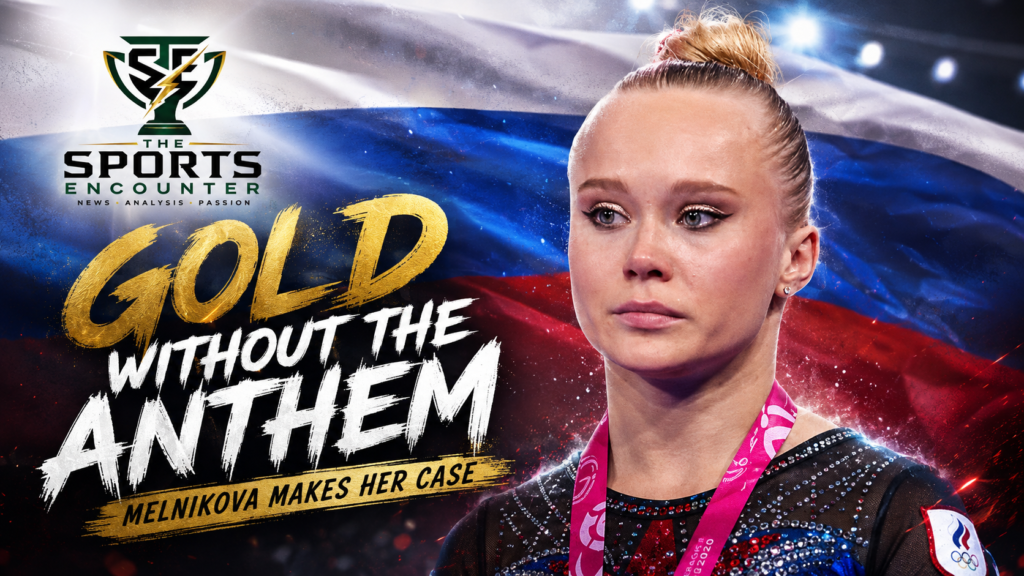
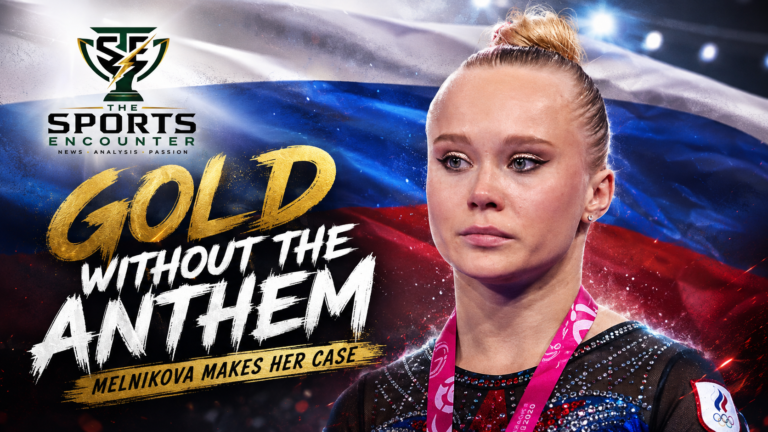
Angelina Melnikova returned to the European stage with all-around and vault gold in Zagreb, competing without Russia’s flag or anthem and reopening the debate over how international sport should treat eligible Russian athletes.
Angelina Melnikova stood on top of the European all-around podium in Zagreb with 55.932 points.
The gold medal was real.
The score was real.
The applause was real.
The flag above her was not Russian, and the anthem associated with her country was not played.
That contrast is the heart of this story.
Melnikova, 26, returned to the European Championships as one of the most accomplished gymnasts of her generation and immediately reminded everyone why she still belongs among the sport’s elite. She won the women’s all-around title on August 13, then added vault gold two days later with a 14.166 average, along with bronze medals on balance beam and floor. European Gymnastics confirmed her all-around victory with a total of 55.932 and listed her under the WG2 designation used for Russian athletes in Zagreb. :contentReference[oaicite:0]{index=0}
By the end of the championships, the Russian women also won the team title with 165.430 points, ahead of Italy and France. :contentReference[oaicite:1]{index=1}
For supporters of the return of eligible Russian athletes to major international competition, Zagreb offered a powerful image.
Melnikova did not arrive asking judges for sympathy. She did not ask for a political exemption. She competed under the rules available to her, performed against Europe’s best gymnasts, and won on score.
That does not erase the political argument surrounding Russian participation.
It does make the sporting argument harder to ignore.
At some point, every debate about sanctions, neutrality and reintegration reaches the competition floor. When that happens, the athlete is no longer an abstract symbol in a policy document.
She is a gymnast standing at the end of a vault runway, preparing to sprint.
And once the judges raise the score, sport has delivered an answer of its own.
Angelina Melnikova at Zagreb 2026: Key Results
| Competition | 2026 European Championships in Women’s Artistic Gymnastics |
| Venue | Arena Zagreb, Croatia |
| All-around result | Gold, 55.932 |
| Vault final | Gold, 14.166 average |
| Balance beam | Bronze, 13.700 |
| Floor exercise | Bronze, 13.566 |
| Team final | Gold with Russia, 165.430 |
| Competition designation | WG2 |
| National flag used | World Gymnastics flag |
| Anthem | Neutral music, not Russian national anthem |
The complete championship structure and official event information are available through the European Gymnastics Zagreb 2026 event page.
Melnikova Won the Title in a Championship Already Carrying Political Weight
This was never going to be an ordinary European Championships for Russian athletes.
World Gymnastics had already changed its policy earlier in 2026 by lifting restrictions on Russian and Belarusian gymnasts and allowing them to return to international competition under national identities. The federation argued that equal treatment and the separation of sport from politics should guide participation. :contentReference[oaicite:2]{index=2}
Croatia took a different position for the European Championships it was hosting.
The Croatian government required restrictions on Russian and Belarusian national symbols at Zagreb 2026. European Gymnastics confirmed that national flags would not be displayed, national anthems would not be played, and the World Gymnastics flag and neutral music would be used instead. :contentReference[oaicite:3]{index=3}
That created a strange competitive reality.
Russian gymnasts were allowed to compete as athletes but not fully represent their national identity in the ceremonial sense.
They could win.
They could stand on the podium.
They could collect medals.
But the traditional language of sporting victory, flag, anthem, national colors, had been politically restricted.
Melnikova stepped directly into that tension.
The Scoreboard Did Not Care About the Debate
The scoreboard only measures performance.
Melnikova’s all-around total of 55.932 put her ahead of Anna Kalmykova on 54.632 and France’s Elena Colas on 53.966. European Gymnastics listed the result clearly. :contentReference[oaicite:4]{index=4}
That matters because all-around gymnastics is difficult to fake.
A gymnast cannot rely on one great apparatus.
She has to survive vault.
She has to handle uneven bars.
She has to stay composed on balance beam.
She has to finish on floor.
Weakness is exposed quickly.
Melnikova did enough across all four events to win Europe’s most complete individual title.
Then she returned for the apparatus finals.
Her vault gold came with a 14.166 average, ahead of Germany’s Karina Schönmaier and Belgium’s Lisa Vaelen. She also took bronze on floor and beam. :contentReference[oaicite:5]{index=5}
By Sunday, she was part of the Russian trio that won the team championship as well. :contentReference[oaicite:6]{index=6}
That progression changed the nature of her week.
Zagreb was no longer simply one great all-around performance.
It became a complete championship statement.
For Supporters of Russian Athletes’ Return, This Is the Case They Wanted to See
The argument for bringing eligible Russian athletes back into international sport has always been strongest when it is framed around individual responsibility rather than nationality.
That position says athletes should be judged on their own conduct, eligibility, anti-doping status and compliance with competition rules.
It argues that an athlete should not automatically lose years of a career because of government decisions she did not make.
The Sports Encounter explored that argument in detail in Why Keeping Russia Out of Global Sports Events Is a Bad Idea, which made the case for targeted accountability rather than indefinite blanket exclusion.
Melnikova’s Zagreb performance gives that debate a human face.
She was not competing as a cabinet minister.
She was not making foreign policy.
She was performing gymnastics.
Supporters of reintegration will look at what happened in Zagreb and ask a simple question:
If an athlete meets the eligibility requirements, accepts the competition conditions and competes under the rules, what sporting purpose is served by keeping her out entirely?
That Question Has No Easy Answer Because Ukraine’s Athletes Carry Their Own Reality
Any serious article about this issue has to acknowledge the opposing case clearly.
Critics of Russian reintegration argue that the war has directly damaged Ukrainian sport.
Athletes have been displaced.
Training facilities have been damaged or lost.
Some competitors have joined the military.
Others have lost family members, teammates or coaches.
Nine European Union countries recently urged the EU to cut funding to sports organizations that have readmitted Russian and Belarusian athletes, arguing that international sport cannot simply ignore the broader consequences of the war. :contentReference[oaicite:7]{index=7}
World Athletics has taken one of the strictest positions. It reaffirmed the exclusion of Russian and Belarusian athletes in July 2026, citing the continuing impact of the war on Ukrainian athletes and infrastructure. :contentReference[oaicite:8]{index=8}
This difference between sports is important.
Gymnastics has moved toward reintegration.
Athletics has not.
Swimming has moved further still in some competitions.
The IOC has taken a more cautious neutral-athlete approach in Olympic contexts.
There is no single global policy.
That inconsistency is part of why the issue remains so divisive.
Neutral Participation Was Supposed to Be a Compromise
The neutral model was created to split the difference between full exclusion and full national representation.
Under that approach, eligible athletes can compete without national flags, anthems or other official symbols.
The athlete returns.
The state does not receive the same ceremonial visibility.
In theory, that creates a middle ground.
Zagreb showed both the strength and weakness of that compromise.
For supporters, it worked.
Melnikova competed.
Ukraine and other opponents of full Russian representation did not have to watch the Russian anthem played inside Arena Zagreb.
The result was decided by gymnastics.
For critics, neutrality can still feel cosmetic.
Everyone knows where the athlete comes from.
Fans know.
Broadcasters know.
Other competitors know.
A neutral flag does not erase nationality.
It simply changes how nationality is displayed.
Gold Without the Anthem Creates a Different Kind of Podium
Sporting ceremonies are built around symbols.
The medal belongs to the athlete.
The anthem usually belongs to the country.
The flag creates the visual connection between the two.
Remove those symbols and the podium feels different.
For some athletes, that distinction may be secondary.
Winning is still winning.
For others, representing a country is inseparable from the meaning of the achievement.
Melnikova’s victory sits between those two realities.
She could celebrate a European title.
She could not experience the ceremony in the traditional Russian form.
That does not reduce the competitive quality of what she did.
It changes the emotional texture around it.
That is why the title of this article matters.
Gold without the anthem.
The medal is still there.
The politics remain around it.
Melnikova Has Already Lived Through Several Different Versions of Russian Sporting Identity
Few athletes are better placed to understand how quickly sporting identity can change.
Melnikova has competed under different labels and conditions across the most turbulent period in modern Russian sport.
She was part of the Russian Olympic Committee era.
She competed internationally under neutral status.
She returned to the world stage as an AIN athlete.
She won the 2025 World all-around title in Jakarta under neutral designation, edging Leanne Wong by 0.1 points with 55.066. :contentReference[oaicite:9]{index=9}
Now she has won the European all-around title under WG2 conditions in Zagreb.
That means one of the most accomplished gymnasts in the world has spent years navigating a competition environment in which her sporting identity has repeatedly been rewritten by governing bodies.
She has still kept winning.
Her Age Makes the Story More Important
At 26, Melnikova is no longer the teenager trying to break into a senior team.
In women’s artistic gymnastics, 26 represents experience.
It also represents survival.
The sport places enormous demands on the body.
Ankles.
Knees.
Wrists.
Back.
Shoulders.
Years of repetitions leave a cost.
That is why longevity matters.
Melnikova is still performing at a level that can win major all-around titles against a younger field.
That makes every lost year of international competition more significant.
This is another argument supporters of reintegration make.
Athletic careers are short.
Political sanctions can last longer than the competitive prime of the athlete affected by them.
Russia’s Gymnastics Return Is Becoming a Wider 2026 Story
Melnikova’s success in Zagreb does not exist in isolation.
Russian rhythmic gymnasts also returned to the World Championships in Frankfurt after a five-year absence and immediately won the team competition.
The Sports Encounter covered that comeback in Russia’s Young Gymnasts Announce Their Return to the World Stage.
The similarities are hard to miss.
Different discipline.
Different athletes.
Same broader question.
What happens when Russian competitors who spent years outside the normal international system return to the same floors, apparatus and judging panels as everyone else?
So far, the answer has been competitive.
They have won.
That does not settle the political debate.
It does settle one sporting question.
The level is still there.
Competition Is Stronger When the Best Eligible Athletes Are Present
This is the most persuasive sporting argument for reintegration.
A championship is supposed to identify the best competitor among those eligible to take part.
If world-class athletes are absent because of nationality alone, the event may still produce a valid champion under the rules.
It may not produce the strongest possible field.
That distinction matters for fans.
It matters for athletes too.
Winning against the best carries a different kind of authority.
France’s Elena Colas gained something from sharing an all-around podium with Melnikova and Kalmykova.
So did the athletes who competed against Melnikova in the apparatus finals.
They now know exactly where they stand against one of the world’s best gymnasts.
Competition is supposed to reveal that.
But Competitive Strength Cannot Be the Only Value in International Sport
This is where the argument becomes uncomfortable.
If sporting quality were the only consideration, international federations would almost always allow the strongest athletes to compete.
But global sport has never operated on performance alone.
It has rules about discrimination.
It has anti-doping regulations.
It has sanctions.
It has governance standards.
It sometimes responds to geopolitical events.
Supporters of Ukraine argue that allowing Russian athletes to return too quickly risks normalizing a situation in which Ukrainian athletes continue to train and compete under unequal conditions.
That argument deserves respect.
It is possible to support individual athlete participation while still recognizing why Ukrainian athletes and federations may experience that return very differently.
The Better Question Is Whether Sanctions Should Be Individual or Collective
This is where Melnikova’s case becomes useful.
International sport needs mechanisms capable of distinguishing between individuals.
An athlete with direct military ties may present one case.
An athlete who publicly promotes a war may present another.
An athlete with no such documented connections presents a different one.
Blanket nationality bans remove those distinctions.
Neutral eligibility systems attempt to restore them.
They are imperfect.
But they at least ask a more precise question:
What has this athlete actually done?
That is a stronger standard than asking only what passport she carries.
The Global Sports System Is Moving in Different Directions
The debate is becoming more complicated because international federations are no longer aligned.
World Gymnastics has lifted restrictions.
World Aquatics has moved toward full reinstatement.
World Athletics continues to exclude Russian and Belarusian athletes.
The IOC has used neutral-athlete conditions in Olympic contexts.
Russia’s athletics federation is now challenging World Athletics sanctions at the Court of Arbitration for Sport, a dispute The Sports Encounter examined in Russian Athletics Takes World Athletics Sanctions to CAS.
That inconsistency creates a credibility problem.
The same athlete can be considered eligible in one sport and ineligible in another even when the geopolitical context is identical.
International federations have different legal structures and responsibilities, but the contrast is increasingly difficult for fans to understand.
Zagreb Was Not a Return to Normal
It would be misleading to describe Melnikova’s week as evidence that Russian sport has simply returned to normal.
It has not.
The WG2 label itself proves that.
The missing anthem proves that.
The World Gymnastics flag proves that.
The Croatian restrictions prove that.
The online arguments after her victories prove that.
What Zagreb showed was something more transitional.
Russian athletes are returning in some sports, but the conditions surrounding that return remain politically negotiated.
That may continue for years.
The Gymnastics Was Still the Cleanest Part of the Story
Everything around Melnikova was complicated.
The apparatus were not.
Vault does not know nationality.
The uneven bars do not know foreign policy.
The beam does not care which anthem will play later.
The floor does not understand sanctions.
A gymnast either lands or she does not.
She either maintains control or gives away tenths.
That purity is part of why sport remains so emotionally powerful during political disputes.
The competition cannot solve the conflict outside the arena.
It can still create a space where the immediate question is simpler.
Who performed best today?
In the Zagreb all-around, the answer was Angelina Melnikova.
Her Vault Gold Strengthened the Argument
The all-around title could theoretically have been dismissed by critics as one strong day.
The apparatus finals made that harder.
Melnikova won vault with a 14.166 average, then took bronze on floor and beam. :contentReference[oaicite:10]{index=10}
That demonstrated range.
She remained competitive across the entire championship.
Then came the team gold.
The Russian trio of Melnikova, Anna Kalmykova and Liudmila Roshchina finished first with 165.430 points, ahead of Italy on 161.769 and France on 159.263. :contentReference[oaicite:11]{index=11}
Melnikova’s Zagreb medal collection therefore became part of a wider Russian team resurgence.
This Is About More Than Russia
The principle being tested here will not always involve Russian athletes.
International sport constantly has to decide how much responsibility individuals should carry for the actions of institutions, federations or governments around them.
The precedent matters.
If nationality alone can justify indefinite exclusion, other geopolitical conflicts may eventually create similar demands.
If nationality can never justify exclusion, governing bodies may lose one of the few peaceful tools they possess to respond to international crises.
There is no comfortable universal answer.
That is why individual eligibility matters.
Fans Who Support the Return Saw Something Important in Zagreb
For supporters of reintegration, Melnikova’s gold offered an emotional confirmation.
She had spent years outside a normal European championship pathway.
She returned.
She stood alongside athletes from France, Italy, Britain, Germany, the Netherlands and elsewhere.
She was judged by the same code.
Her routines were scored by the same international panels.
She won.
Nothing about that result required anyone to endorse the Russian government.
Nothing about applauding a well-executed vault required anyone to forget what Ukrainian athletes have endured.
Sporting respect and political disagreement can exist at the same time.
That May Be the Compromise International Sport Needs
The future may not be full national normalization or complete exclusion.
It may be conditional participation.
Independent eligibility checks.
Strong anti-doping oversight.
Restrictions on government officials.
Restrictions on athletes with military or propaganda connections.
Neutral symbols in certain host countries.
Individual accountability instead of blanket national punishment.
That model will satisfy nobody completely.
Compromises rarely do.
It may still be more sustainable than policies that erase entire generations of athletes.
Melnikova’s Career Is a Reminder That Lost Seasons Cannot Be Returned
Administrators can reverse a rule.
They cannot give an athlete back three or four years.
That is one of the hardest truths in this debate.
A federation can eventually say an athlete may compete again.
The athlete may no longer be in her prime.
She may have retired.
Her body may have changed.
Her opportunity may already be gone.
Melnikova is unusual because she survived the gap and returned at championship-winning level.
Many athletes will not.
That is why long-term exclusions deserve continuous review rather than becoming automatic permanent policy.
What Zagreb Means for Melnikova’s Future
From a purely sporting perspective, the implications are significant.
Melnikova is again a European all-around champion.
She is a world all-around champion from 2025.
She remains one of Europe’s best vaulters.
Her beam and floor scores are medal-level.
She has shown she can contribute heavily in a team final.
That makes her highly relevant to the next World Championships and to the wider Los Angeles 2028 cycle if eligibility rules continue allowing her to compete.
The next question is no longer whether she can still perform.
Zagreb answered that.
The question is what international conditions will surround her next championship.
TSE Verdict: The Medal Belongs to the Athlete
The strongest case for Russian athletes returning to international sport is not political.
It is individual.
Angelina Melnikova did not choose the circumstances that turned her nationality into a recurring eligibility debate.
She did choose to continue training.
She chose to keep competing when opportunities reopened.
She chose to accept the conditions placed on her in Zagreb.
Then she competed.
That is the part international sport should never lose sight of.
Sanctions can target institutions.
They can restrict symbols.
They can exclude officials.
They can impose strict eligibility checks on individuals with documented links to military or political activity.
Those are legitimate tools.
Blanket exclusion for indefinite periods is harder to defend when an athlete can meet the rules and compete independently.
The opposing view remains serious.
Ukrainian athletes have suffered consequences far beyond a missing flag or anthem.
That reality cannot be minimized.
International sport has a responsibility to support them, protect their access to training and competition, and ensure sanctions are not reduced to empty symbolism.
But protecting Ukrainian athletes does not automatically require erasing every eligible Russian athlete from international sport forever.
Zagreb showed what another model can look like.
The political argument stayed outside the scoring system.
The national symbols were restricted.
The athletes competed.
The judges scored what they saw.
And Angelina Melnikova won.
She did not get the Russian anthem.
She did not get the traditional flag above the podium.
She did get the one thing no political decision could award or remove once the competition began.
The highest score.
That is why this gold matters.
For supporters of Russian athletes returning to world sport, Melnikova did not need to make a speech.
Her argument was already written across four apparatus.
For more stories about athlete comebacks, international competition and the politics shaping global sport, follow The Sports Encounter.
Frequently Asked Questions
Did Angelina Melnikova win the 2026 European all-around title?
Yes. Melnikova won the women’s all-around title at the 2026 European Championships in Zagreb with a score of 55.932.
Why did Angelina Melnikova compete under a neutral flag?
Croatia imposed restrictions on Russian and Belarusian national symbols for the championships. European Gymnastics confirmed that the World Gymnastics flag would be used instead and that national anthems would not be played.
What does WG2 mean at the 2026 European Gymnastics Championships?
WG2 was the designation used in Zagreb for Russian athletes competing under the World Gymnastics framework rather than under normal Russian national symbols.
Did Melnikova also win vault gold?
Yes. She won the women’s vault final with a 14.166 average.
How many medals did Melnikova win in Zagreb?
Melnikova won all-around gold, vault gold, bronze on balance beam, bronze on floor exercise and team gold.
Did Russia win the women’s team title?
Yes. The Russian team of Angelina Melnikova, Anna Kalmykova and Liudmila Roshchina won the team final with 165.430 points, ahead of Italy and France.
Are Russian gymnasts fully reinstated internationally?
World Gymnastics lifted its restrictions on Russian and Belarusian athletes in 2026, but host-country rules and continental competition policies can still affect how they are represented at individual events.
Why is the return of Russian athletes still controversial?
Supporters argue that eligible athletes should not face indefinite collective punishment for government actions. Critics point to the continuing war in Ukraine, damage to Ukrainian sport and concerns about military or state links involving some Russian athletes.
What is the strongest argument for neutral participation?
Neutral participation allows eligible athletes to compete while limiting national symbols and ceremonial representation. Supporters see it as a way to separate individual athletes from state institutions.
What is the strongest argument against reintegration?
Opponents argue that international sport cannot be fully separated from geopolitical reality while Ukrainian athletes continue to face displacement, damaged facilities and unequal training conditions because of the war.
The Sports Encounter covers major championships, athlete comebacks, sporting governance and the human stories that sit behind the results.
Breaking News
Vietnam Break Malaysia’s Resistance as Xuân Son Double Sets Up Thailand Final Rematch
Nguyễn Xuân Son came off the bench to score twice as defending champion Vietnam completed a 4-0 aggregate semifinal victory and booked another ASEAN final against Thailand.
Malaysia survived an hour in Hanoi with their comeback hopes technically alive. Within three minutes of Nguyễn Xuân Son entering the contest, those hopes had all but disappeared.
The striker scored twice after coming off the bench as Vietnam defeated Malaysia 2-0 at a packed Mỹ Đình National Stadium on Wednesday, August 19. Combined with their two-goal first-leg victory in Kuala Lumpur, the result carried the defending champions into the ASEAN Hyundai Cup 2026 final with a convincing 4-0 aggregate win.
Vietnam will now face Thailand in a repeat of the 2024 final. Kim Sang-sik’s team enters the decider with greater momentum, while the seven-time champion has an additional recovery day and will host Saturday’s opening leg in Bangkok.
TL;DR
- Vietnam defeated Malaysia 2-0 in the semifinal second leg and advanced 4-0 on aggregate.
- Substitute Nguyễn Xuân Son scored in the 62nd and 89th minutes.
- Xuân Son earned the official Hyundai Player of the Match award.
- Malaysia goalkeeper Azri Ghani made seven saves and delayed Vietnam’s breakthrough.
- No yellow or red cards appeared in the accessible official ASEAN and Google event feeds.
- Vietnam will visit Thailand on August 22 before hosting the return leg on August 26.
Vietnam vs Malaysia Match Information
| Detail | Information |
|---|---|
| Competition | ASEAN Hyundai Cup 2026 |
| Stage | Second semifinal, second leg |
| Result | Vietnam 2-0 Malaysia |
| Aggregate Result | Vietnam won 4-0 |
| Venue | Mỹ Đình National Stadium, Hanoi |
| Date | Wednesday, August 19, 2026 |
| Goalscorer | Nguyễn Xuân Son 62’, 89’ |
| Player of the Match | Nguyễn Xuân Son |
| Turning Point | Xuân Son scored three minutes after entering as a substitute |
| Yellow Cards | None listed in the accessible official ASEAN or Google event feeds |
| Red Cards | None listed |
| Final | Thailand vs Vietnam, August 22 and 26 |
The score, goalscorer and official match award were confirmed by the ASEAN Championship’s match report. Additional national-team updates are available through the Vietnam Football Federation and the Football Association of Malaysia.
Vietnam Control the Tie Before Xuân Son Finishes It
Vietnam began with the authority expected from a team protecting a 2-0 advantage. Nguyễn Đình Bắc attacked the right channel inside the opening minute, while Đoàn Văn Hậu forced Azri into an important intervention after 10 minutes.
Pressure continued through Đình Bắc, Nguyễn Quang Hải and Văn Hậu. Malaysia’s goalkeeper repeatedly prevented an early goal, including a flying save when Đình Bắc appeared ready to find the top corner.
Vietnam recorded 26 shots, with 10 reaching the target. Their 11 corners reflected the amount of time spent around Malaysia’s penalty area. The hosts had already shown this attacking depth while winning Group A against Cambodia and during their 3-0 victory over Indonesia.
Malaysia remained level at halftime because Azri performed superbly and Vietnam missed several presentable openings. Holding out was only part of the visitors’ task, however. They still needed two goals to force extra time.
Nguyễn Xuân Son Turns Pressure Into Goals
Kim introduced Xuân Son in the 59th minute after Vietnam’s starting attack had created chances without finding the finish.
The decision produced an almost immediate return. Azri saved Xuân Son’s first close-range header, but the striker remained alert when Trương Tiến Anh’s effort was blocked in the 62nd minute. He collected the loose ball and converted from close range.
Xuân Son added his second in the 89th minute, powering down the left, cutting inside and beating Azri to complete the semifinal.
His six shots and four attempts on target made him the match’s most dangerous player despite spending only half an hour on the field. The double took his tournament total to five goals, level with Đình Bắc at the top of Vietnam’s scoring chart.
Xuân Son’s influence also strengthens Vietnam’s final prospects. Their route to the semifinals had already demonstrated that goals could come from different areas. Now the forward who scored eight times during the 2024 title campaign has found his sharpest form at the ideal moment.
Patrik Lê Giang Preserves Another Clean Sheet
Malaysia enjoyed its best spell shortly after halftime. G. Pavithran forced Patrik Lê Giang into a reaction save before Paulo Josué’s follow-up was deflected over.
Those opportunities offered Malaysia a brief route back into the semifinal. A goal would have reduced the aggregate deficit and placed pressure on a home side growing frustrated by Azri’s saves.
Lê Giang ended the match with four stops and another clean sheet. His calm handling prevented Malaysia from building momentum and allowed Vietnam to continue attacking without panic.
The goalkeeper had also played an important role in Kuala Lumpur. His consistency across both legs helped Vietnam complete a semifinal without conceding.
Malaysia Compete, but Lack the Required Cutting Edge
Malaysia held 52 percent possession and completed 363 accurate passes, yet much of that control occurred away from Vietnam’s most vulnerable areas.
Tan Cheng Hoe’s team needed an early goal but struggled to place runners behind Vietnam’s back three. Paulo Josué lacked sustained service, while Malaysia’s wide attacks rarely created clear opportunities before the interval.
Azri was Malaysia’s outstanding performer. His seven saves kept the game scoreless for 61 minutes and prevented the aggregate margin from becoming heavier.
Reaching the semifinals still represented a respectable campaign. Malaysia secured qualification by defeating the Philippines in their final group game, but losses to Thailand and Vietnam exposed the gap between a competitive semifinalist and the tournament’s two strongest teams.
Vietnam vs Thailand: Who Has the Advantage in the Final?
The ASEAN Championship semifinal history pointed toward another meeting between the region’s dominant programs. Both have arrived, although their semifinal performances created different moods.
Vietnam enters as the slight favorite. The defending champion won both semifinal legs, kept two clean sheets and produced a 4-0 aggregate victory. Kim can also introduce Xuân Son from the bench or restore him to the starting lineup.
Thailand holds the logistical advantage before the opening leg. Anthony Hudson’s players have one additional recovery day and remain in Bangkok, where Saturday’s match will take place. Thailand also won all four group matches and scored 10 unanswered goals before the semifinals.
Concern emerged during their 2-1 home defeat to Singapore. After progressing 4-3 on aggregate, Hudson admitted he was “disappointed with the performance” and said there were “a lot of things we need to fix.”
Vietnam will host the second leg in Hanoi, which gives the defending champion the more valuable structural advantage. If Kim’s team remains level or close after Bangkok, the title will be decided before its own crowd at Mỹ Đình.
Thailand brings seven titles, a record 12th final appearance and the experience of surviving uncomfortable knockout situations. Vietnam carries stronger form, a deeper range of scorers and home advantage in the decisive leg.
The 2024 final ended with Vietnam defeating Thailand 5-3 on aggregate. Two years later, the War Elephants have a chance to settle that account, while Vietnam can confirm that Southeast Asian football’s balance of power has shifted.
Follow continuing tournament analysis through The Sports Encounter’s soccer coverage, its ASEAN Championship qualification archive and the broader FIFA World Cup 2026 hub.https://chatgpt.com/backend-api/sentinel/frame.html?sv=20260810913b
Breaking News
Harry Sawyer Breaks APIA Hearts as Melbourne Victory Reach Australia Cup Semifinals
Harry Sawyer came off the bench to score the decisive extra-time goal as Melbourne Victory edged APIA Leichhardt 1-0 at Leichhardt Oval and booked a Hahn Australia Cup 2026 semifinal against Sydney FC.
SYDNEY, August 19, 2026: Melbourne Victory needed 120 minutes to end APIA Leichhardt’s latest Australia Cup challenge, with substitute Harry Sawyer scoring the decisive extra-time goal in a tense 1-0 quarterfinal victory at Leichhardt Oval.
The result makes Victory the second team through to the Hahn Australia Cup 2026 semifinals and sets up a heavyweight meeting with Sydney FC for a place in the final.
According to the official Australia Cup match report, APIA frustrated the two-time Cup winners through 90 scoreless minutes before Sawyer finally found the breakthrough in the first half of extra time.
Victory had been warned repeatedly that this would not be a routine assignment. The Sports Encounter’s quarterfinal preview highlighted APIA’s home advantage, strong NPL NSW form and history of eliminating A-League opposition.
That warning proved accurate.
Melbourne had more of the ball for long periods, but APIA stayed organized, threatened after halftime and even had the ball in the net before an offside decision preserved the deadlock.
Sawyer eventually supplied the difference, continuing an impressive personal Australia Cup run and ensuring Giovanni Savarese’s side survived another difficult knockout night in New South Wales.
APIA Leichhardt 0-1 Melbourne Victory: Match Summary
| Competition | Hahn Australia Cup 2026 |
| Round | Quarterfinal |
| Result | APIA Leichhardt 0-1 Melbourne Victory after extra time |
| Scorer | Harry Sawyer |
| Venue | Leichhardt Oval |
| Melbourne Victory coach | Giovanni Savarese |
| Full-time score | 0-0 |
| Semifinal opponent | Sydney FC |
Melbourne Victory Control the Ball but Find No Easy Route Through APIA
Victory entered the quarterfinal as favorites, but the opening half quickly demonstrated why APIA had reached the last eight.
The NPL NSW side defended with discipline and refused to allow Melbourne’s possession to translate into clear chances.
Keegan Jelacic became increasingly involved as Victory tried to build through midfield, while Louis D’Arrigo sent a left-footed effort narrowly wide during one of the visitors’ better first-half moments.
APIA were without two important attacking options from the starting lineup, with Presley Ortiz and Michael Konestabo having dealt with illness during the week. Both were available from the bench.
The absences contributed to a cautious opening, although APIA gradually grew into the contest.
Jordan Segreto tested his range from a free kick late in the first half, while Frans Deli went down seeking a penalty after contact with Jordi Valadon. The appeal did not produce a spot kick.
At halftime, the game remained 0-0.
APIA Turn Up the Pressure After the Break
The balance changed after halftime.
APIA began pushing forward with greater confidence, forcing Melbourne to defend rather than simply dictate possession.
Jack Stewart created one of the first genuine moments of danger when he drove toward goal from a tight angle. Victory goalkeeper Jack Duncan stood firm, and Jason Davidson then blocked an effort from Deli during the same attacking sequence.
Moments later, Leichhardt Oval thought the underdogs had found their breakthrough.
Sean Symons converted at the back post following a well-delivered set piece, only for the assistant referee’s flag to rule the goal out for offside.
It was the type of moment that can completely change a knockout game.
APIA had gone from believing they were ahead to watching Victory immediately attack at the other end.
Matthew Grimaldi was given an excellent opportunity at the back post but sent his attempt over the crossbar.
APIA’s Defensive Resistance Pushes Victory Toward Extra Time
Melbourne continued to have more possession, yet APIA’s defensive structure held.
Victory manager Giovanni Savarese eventually turned to his bench.
Harry Shillington entered before Sawyer was introduced to give the visitors a stronger central presence in the penalty area.
The move nearly paid off quickly when a Jason Davidson cross reached Sawyer at the far post, forcing Oliver Kalac to remain alert.
The match then moved toward the type of finish APIA wanted.
Every scoreless minute increased the pressure on the A-League side while strengthening the belief inside the home ground.
Victory almost avoided extra time entirely.
Deep in second-half stoppage time, Jelacic and Grimaldi both found shooting opportunities in dangerous positions, only for APIA defenders to block the efforts and preserve the 0-0 score.
Ninety minutes had not been enough.
Harry Sawyer Changes Another Australia Cup Tie
Sawyer had already established himself as one of Melbourne Victory’s important Cup figures before arriving at Leichhardt Oval.
He scored in extra time against Western Sydney Wanderers in the previous round before Victory eventually advanced through a penalty shootout.
The striker delivered again when another knockout match required a decisive intervention.
Victory patiently moved possession through midfield before Valadon found Jelacic in space. Jelacic spotted Sawyer’s movement inside the penalty area and threaded the ball into his path.
Sawyer finished across goal into the bottom corner.
After more than 90 minutes of frustration, Melbourne finally had the lead.
The official Melbourne Victory match report credited the move to patient buildup through Valadon and Jelacic before Sawyer supplied the finishing touch.
Sawyer Is Building an Australia Cup Reputation Quickly
There is an interesting pattern developing around the striker.
Sawyer joined Victory during the offseason and has not needed long to become influential in knockout competition.
He scored his first competitive goal for the club during the Round of 16 against Western Sydney.
Now another extra-time goal has taken Victory into the semifinals.
Those are valuable contributions from a player who does not necessarily need to dominate entire matches to change them.
In cup competition, that quality can become decisive.
The difference between elimination and progression is frequently one movement, one pass or one composed finish after more than an hour of tactical stalemate.
Sawyer has now delivered those moments twice.
Jack Duncan Makes Sure Sawyer’s Goal Is Enough
The story could easily have changed again after Melbourne went ahead.
APIA had little choice but to commit more players forward.
Presley Ortiz, introduced from the bench, provided the home side with another attacking threat and eventually forced Duncan into an important save during the second period of extra time.
Duncan moved across his goal to keep out Ortiz’s low attempt and protect Melbourne’s advantage.
His contribution continues an excellent Cup campaign.
The goalkeeper was already Victory’s hero against Western Sydney, where he saved three penalties during the Round of 16 shootout.
This time he did not need penalties.
He still produced the intervention Melbourne required.
APIA Leave the Australia Cup With Their Reputation Enhanced
The result ends APIA Leichhardt’s tournament, but the manner of the defeat deserves context.
They took an established A-League club beyond 90 minutes and were separated by a single extra-time goal.
Their quarterfinal appearance was built on substance rather than novelty.
APIA entered the match as NPL NSW leaders and had already survived a dramatic penalty shootout against Sydney United 58 in the previous round.
The Sports Encounter’s pre-match analysis also noted the club’s previous Australia Cup victories over A-League opposition, including its memorable win against Melbourne Victory in 2018.
Another upset did not arrive in 2026.
The possibility remained alive until extra time.
Victory Avoid Another Australia Cup “Cupset”
The 2026 tournament has again demonstrated why professional status provides no guarantee in one-off knockout soccer.
NPL clubs have repeatedly tested A-League opponents, and several have already eliminated professional teams.
Melbourne understood that danger better than most.
APIA had beaten them in this competition before.
The location was the same.
The home crowd understood the history.
Victory therefore deserve credit for avoiding the emotional trap that can consume favorites in cup competition.
They did not panic when APIA stayed level.
They survived the disallowed goal.
They continued building attacks even as the game moved deeper into uncomfortable territory.
Eventually, their professional depth provided the answer.
Sydney FC vs Melbourne Victory Is Now Confirmed
Victory’s reward is one of the biggest fixtures available in Australian domestic soccer.
Sydney FC will face Melbourne Victory in the semifinals, renewing the Big Blue rivalry with a place in the Australia Cup final at stake.
Sydney became the first team through after beating SD Raiders 1-0, a match covered in full in The Sports Encounter’s Sydney FC vs SD Raiders quarterfinal report.
Takahiro Sekine scored the only goal at Fairfield Showground, although the Raiders pushed Sydney much harder than the final score might suggest.
The official Sydney FC quarterfinal report confirmed the Sky Blues’ progression after their 1-0 win.
The Big Blue Adds a Different Dimension to the Semifinal
Australia Cup knockout matches involving NPL clubs often draw attention because of the possibility of an upset.
Sydney against Victory brings a different type of pressure.
Both clubs will believe they should reach the final.
Both have major domestic histories.
Neither will carry the psychological freedom APIA or SD Raiders enjoyed in the quarterfinals.
The semifinal will therefore become a more traditional battle between two professional squads with expectations attached.
Sydney are chasing another Australia Cup trophy.
Melbourne Victory are two-time winners and are now one victory away from returning to the final.
Giovanni Savarese’s Victory Keep Finding Ways to Win
The result also continues Giovanni Savarese’s encouraging start at Melbourne Victory.
His side have experienced very different tests during this Cup run.
They comfortably handled Kingborough Lions United in the Round of 32.
Western Sydney Wanderers forced them through extra time and penalties.
APIA then turned the quarterfinal into another long, tactical contest.
Victory progressed from all three.
That adaptability matters at this stage of preseason.
Savarese is still developing combinations and assessing his squad ahead of the domestic campaign, yet the Australia Cup offers no room for experimental defeats.
Every match has consequences.
Australian Soccer’s Knockout Summer Keeps Delivering Tight Margins
There has been a familiar theme running through Australian soccer in 2026: knockout matches refusing to follow simple expectations.
The Socceroos experienced exactly that at the FIFA World Cup.
Australia opened the tournament with an impressive 2-0 victory over Türkiye, before tactical questions emerged following their defeat against the United States.
They then survived a demanding 0-0 draw with Paraguay to reach the knockout stage.
Australia’s run eventually ended when Egypt eliminated the Socceroos on penalties.
The circumstances are different, but the competitive lesson travels well.
Knockout soccer rewards teams that remain emotionally stable when the match does not follow the expected script.
Melbourne Victory did that at Leichhardt.
Australia Cup 2026 Quarterfinal Picture
| Quarterfinal | Result/Status |
|---|---|
| SD Raiders vs Sydney FC | Sydney FC won 1-0 |
| APIA Leichhardt vs Melbourne Victory | Melbourne Victory won 1-0 after extra time |
| Lions FC vs North Sunshine Eagles | Upcoming |
| Preston Lions vs South Melbourne | Upcoming |
The wider tournament can be followed through The Sports Encounter’s soccer coverage, while our FIFA World Cup 2026 hub provides additional coverage of Australia’s international campaign and the major soccer stories shaping 2026.
TSE Turning Points
APIA’s disallowed goal
Sean Symons putting the ball into the net early in the second half briefly changed the atmosphere inside Leichhardt Oval. The offside flag prevented APIA from gaining the kind of lead that could have transformed the final half-hour.
Grimaldi misses at the other end
Victory immediately generated a major opportunity after APIA’s disallowed goal, but Matthew Grimaldi could not keep his attempt down. Both teams had their chance to seize control during the same frantic period.
APIA’s stoppage-time blocks
Jelacic and Grimaldi both saw late attempts blocked as APIA forced the match beyond 90 minutes.
Sawyer changes the game
Melbourne’s substitutes ultimately mattered. Sawyer found the space and finish that had been missing throughout regulation time.
Duncan denies Ortiz
APIA still created one last major opportunity, but Duncan’s late extra-time save ensured Sawyer’s goal remained enough.
TSE Verdict: Victory Were Tested, and That May Help Them Against Sydney
Melbourne Victory did not dominate APIA Leichhardt into submission.
They had to solve them.
That distinction is important.
APIA defended intelligently, grew into the match and came close enough to an upset that Victory were forced into extra time before finally finding the decisive opening.
Sawyer deserves the headline because his finish separated the teams.
Duncan deserves considerable credit because APIA still had an opportunity to take the semifinal away from Melbourne after falling behind.
Jelacic’s involvement in the winning move also reflected his growing influence throughout the contest.
For Savarese, the most encouraging part may be the variety of ways Victory have progressed through this tournament.
They have won comfortably.
They have survived penalties.
Now they have survived a difficult away quarterfinal against an NPL club that had every reason to believe another upset was possible.
Sydney FC will present a very different challenge.
The Sky Blues have professional depth, Cup pedigree and their own warning from the quarterfinal after SD Raiders pushed them hard.
The semifinal therefore arrives with both teams already reminded that reputation does not win Australia Cup matches.
Victory escaped Leichhardt.
The Big Blue now decides which A-League heavyweight reaches the final.
Frequently Asked Questions
Who won APIA Leichhardt vs Melbourne Victory?
Melbourne Victory defeated APIA Leichhardt 1-0 after extra time in the Hahn Australia Cup 2026 quarterfinal.
Who scored the winning goal for Melbourne Victory?
Harry Sawyer scored the only goal of the match during the first half of extra time.
What was the score after 90 minutes?
The match was 0-0 at the end of regulation time.
Did APIA Leichhardt score against Melbourne Victory?
APIA put the ball in the net during the second half through Sean Symons, but the goal was ruled out for offside.
Who will Melbourne Victory play in the Australia Cup semifinal?
Melbourne Victory will face Sydney FC in the semifinals.
How did Sydney FC reach the semifinal?
Sydney FC defeated SD Raiders 1-0, with Takahiro Sekine scoring the decisive first-half goal.
Did Jack Duncan make an important save in extra time?
Yes. Duncan denied substitute Presley Ortiz as APIA pushed for an equalizer after Melbourne had taken the lead.
Has Harry Sawyer scored in consecutive Australia Cup rounds?
Yes. Sawyer also scored in extra time against Western Sydney Wanderers in the Round of 16 before scoring the quarterfinal winner against APIA.
How many Australia Cup titles have Melbourne Victory won?
Melbourne Victory are two-time winners of the competition and are now chasing a third title.
Where can fans follow official Australia Cup updates?
Fixtures, results, match reports and tournament information are available through the official Australia Cup website.
Breaking News
Real Madrid Officially Unveil Bernardo Silva as Mourinho Gains His Midfield Swiss Army Knife
Bernardo Silva has been officially presented as a Real Madrid player after signing a two-year contract through June 2028. The former Manchester City midfielder will wear No. 20 and gives José Mourinho a versatile new option across midfield.
MADRID, August 19, 2026: Bernardo Silva has been officially presented as a Real Madrid player, completing the ceremonial side of a move that could become one of the most tactically important additions of the club’s summer rebuild.
According to Real Madrid’s official website, the Portuguese midfielder was welcomed at Ciudad Real Madrid on Wednesday by club president Florentino Pérez before signing the contract that will keep him at the Santiago Bernabéu until June 30, 2028.
Bernardo was then presented with a replica of the stadium, a watch and his new Real Madrid jersey carrying the No. 20. Honorary president José Martínez “Pirri” also attended the ceremony. :contentReference[oaicite:1]{index=1}
The formal presentation arrives several weeks after Madrid first announced the agreement and after Bernardo had already begun training and appearing in preseason under José Mourinho. What happened on Wednesday therefore felt less like the beginning of his Madrid career and more like confirmation that one of European soccer’s most experienced midfielders is now fully embedded in Mourinho’s new project.
The Sports Encounter has already followed that project closely, including José Mourinho’s return to Real Madrid, Yan Diomande’s major summer arrival and the resolution of Vinícius Júnior’s future.
Bernardo Silva at Real Madrid: Key Details
| Player | Bernardo Silva |
| Club | Real Madrid |
| Contract | Until June 30, 2028 |
| Shirt number | 20 |
| Position | Midfielder |
| Previous club | Manchester City |
| Real Madrid coach | José Mourinho |
| Official presentation | August 19, 2026, Ciudad Real Madrid |
Real Madrid Make the Bernardo Silva Era Official
Real Madrid had already announced in June that Bernardo would join the club for the next two seasons. Wednesday’s ceremony completed the traditional institutional welcome attached to major Madrid arrivals. :contentReference[oaicite:2]{index=2}
The symbolism was familiar.
Florentino Pérez received him inside the boardroom. The contract was signed. The shirt was presented. The new player was formally placed inside the institutional history of the club.
For Bernardo, however, the football had already started.
He joined Madrid’s preseason group following Portugal’s World Cup campaign and completed his first training sessions at Ciudad Real Madrid earlier this month. The club has already used him in friendly competition, meaning Mourinho has had several weeks to begin defining the role he wants the 32-year-old to perform. :contentReference[oaicite:3]{index=3}
Why No. 20 Fits Bernardo Better Than a Superstar Number
The No. 20 shirt may not carry the immediate glamour associated with Madrid’s historic attacking numbers, but that almost suits Bernardo.
His game has rarely depended on celebrity positioning.
He wins influence through movement, repetition, intelligence and technical reliability.
The official Real Madrid player profile lists him simply as a midfielder, but his actual role has always been more fluid. :contentReference[oaicite:4]{index=4}
He can receive deep during buildup.
He can operate between the lines.
He can move wide and create overloads.
He presses intelligently and understands how to manipulate space without needing to dominate possession individually.
That versatility is precisely why Mourinho wanted him.
Mourinho Has Gained a Midfielder Who Can Solve Several Problems
Madrid’s midfield has enough athletic power.
Jude Bellingham can drive through pressure and arrive inside the penalty area. Federico Valverde provides range and intensity. Eduardo Camavinga can carry the ball and defend large spaces. Aurélien Tchouaméni can anchor deeper positions.
Bernardo brings something slightly different.
Control.
His value appears most clearly when a match becomes slow, narrow or technically difficult.
Madrid will face plenty of opponents this season who defend in compact blocks and refuse to give Kylian Mbappé or Vinícius Júnior open grass to attack.
Those games demand players capable of changing angles, sustaining pressure and knowing when to accelerate rather than simply trying to play faster.
Bernardo has spent years doing exactly that.
The Sports Encounter’s recent report on Real Madrid’s Teresa Herrera win over Deportivo already showed how his positional intelligence can help Mourinho control tighter matches.
His First Madrid Appearances Have Already Offered Clues
Bernardo’s integration did not wait for Wednesday’s presentation.
He has already featured in preseason and spoken about his willingness to adapt to whatever the team requires.
After his Real Madrid debut, Bernardo explained that he can contribute deeper in buildup, press higher up the pitch or move into more advanced areas depending on the game. :contentReference[oaicite:5]{index=5}
That is more than convenient squad depth.
It gives Mourinho tactical freedom.
A coach can change the shape of a midfield without necessarily making a substitution if one player is capable of moving between several roles during the match.
Bernardo Arrives With Nine Years of Manchester City Habits
Madrid are also buying experience developed inside one of the most demanding positional systems in modern soccer.
Bernardo spent nine seasons at Manchester City, making 460 appearances and scoring 76 goals while winning 20 major trophies, according to Manchester City’s official farewell announcement. :contentReference[oaicite:6]{index=6}
That period placed him at the center of Pep Guardiola’s most successful era.
He won six Premier League titles, the Champions League, domestic cups and international club honors. Manchester City also identified him as the most-used player of Guardiola’s managerial career, underlining how consistently he earned trust inside a system built around positional discipline. :contentReference[oaicite:7]{index=7}
That background makes him unusually useful to Mourinho.
The two coaches approach soccer differently, but both demand intelligence without the ball and clarity inside team structures.
From Guardiola to Mourinho Is a Fascinating Tactical Shift
Bernardo spent most of the last decade playing under a coach who wants possession to control territory.
He now joins a coach whose best teams have often been more willing to change rhythm, defend deeper and attack space directly.
That does not make Bernardo a poor fit.
It may make him more valuable.
Mourinho’s Madrid already contain enormous transition threat through Mbappé, Vinícius and the club’s younger attacking options.
The missing ingredient in some matches may be the ability to slow everything down.
Bernardo can provide that.
The Manchester City Exit Also Marks the End of an Era
For City, Bernardo’s departure represents more than losing another midfielder.
He was part of the core that transformed the club from domestic powerhouse into European champion.
His movement, pressing and ability to play through pressure made him central to some of the defining matches of that era.
That history also creates an unusual Madrid connection.
Bernardo produced one of the greatest performances of his City career against Real Madrid, scoring twice in the 4-0 Champions League semifinal victory at the Etihad in 2023.
Now the player who once helped dismantle Madrid on a historic European night will wear white.
Bernardo Is Joining a Much Bigger Summer Rebuild
His arrival cannot be viewed in isolation.
Real Madrid have spent the summer restructuring the squad around Mourinho.
Marc Cucurella arrived to reshape the left side, a move The Sports Encounter examined when Mourinho made the Spanish full-back one of his first major additions.
Yan Diomande later joined in a deal reported at €125 million, bringing speed and long-term attacking upside. Our analysis of the Diomande transfer showed how aggressively Madrid have invested in immediate improvement.
At the same time, Vinícius Júnior’s future has been stabilized after months of speculation. Madrid’s refusal to sell and subsequent long-term planning removed one of the biggest distractions surrounding the attack. The earlier Vinícius transfer saga had shown how quickly uncertainty around one star could dominate the club’s summer.
Bernardo Gives Bellingham Something He Has Not Always Had
One of the most interesting tactical consequences could involve Jude Bellingham.
Bellingham is most dangerous when he is allowed to move.
His ability to arrive late in attacking areas, carry the ball and attack the penalty box becomes less useful if he must spend too much time controlling every possession from deeper positions.
Bernardo can absorb some of that responsibility.
That may allow Bellingham to operate more aggressively without making Madrid’s midfield structurally careless.
Bellingham remains one of the central players in Madrid’s next era, a status reinforced during the World Cup when his performances for England further strengthened his profile as a global star.
Where Could Bernardo Actually Play?
There are several realistic options.
As a No. 8
This may be the most natural role.
Bernardo can play on either side of midfield, receive under pressure and connect deeper players with Madrid’s forwards.
As a deeper controller
He is not a traditional holding midfielder, but against weaker opponents he can drop into buildup and help Madrid play through the first line of pressure.
As a No. 10
Mourinho can use him behind the forwards when he wants additional creativity between the lines.
From the right side
Bernardo has spent significant parts of his career starting wide before drifting inside.
That option could be especially useful when Madrid want to overload midfield without losing width elsewhere.
Bernardo May Be More Important Against Smaller Teams Than Against Giants
The obvious temptation is to imagine how he changes Champions League nights.
His biggest week-to-week impact may come somewhere less glamorous.
Real Madrid regularly face domestic opponents who defend deep, slow the tempo and ask the favorites to solve a crowded final third.
Those matches often decide league titles.
Madrid rarely lack players capable of producing moments of brilliance.
The harder task is consistently turning territorial control into clear chances.
Bernardo’s patience could become crucial there.
The Rodri Story Shows Why Madrid Wanted More Control
Madrid’s interest in central control has been visible throughout the summer.
The club had previously been linked with Rodri, another Manchester City midfielder whose positioning and game management offered an obvious solution to Madrid’s need for greater structure.
The Sports Encounter examined that possibility in our analysis of the Real Madrid-Manchester City battle for Rodri.
Rodri ultimately moved elsewhere, but Bernardo gives Madrid a different route toward the same broader objective.
He does not protect midfield in the same way.
He does help control it.
Age Is the Main Question
Bernardo turned 32 earlier this month. Real Madrid therefore have not signed him as a decade-long project. :contentReference[oaicite:8]{index=8}
The two-year contract reflects that reality.
Madrid are buying immediate intelligence, experience and technical quality rather than future resale value.
That creates a clear expectation.
Bernardo needs to matter now.
His Game Could Age Better Than Most
The encouraging part is that his greatest strengths are not built primarily on raw pace.
His game depends on awareness, touch, balance, passing angles and timing.
Those qualities generally age more gracefully than explosive acceleration.
He may lose some ability to press at the extraordinary volume associated with his prime Manchester City years.
He can compensate by reading situations earlier.
The No. 20 Shirt Arrives With a Different Kind of Expectation
Bernardo is unlikely to become the face of Real Madrid.
He does not need to.
Mbappé, Vinícius and Bellingham already carry enormous commercial and attacking attention.
Bernardo’s responsibility is more subtle.
Make the team function better.
That can be just as valuable.
TSE Verdict: Madrid Have Signed a Problem-Solver
The official presentation completes the formal story.
The football story is more interesting.
Real Madrid have not signed Bernardo Silva to become their next global superstar.
They have signed him because superstars need structure around them.
Mourinho already has pace.
He has power.
He has attackers capable of winning matches individually.
Bernardo adds control, intelligence and the ability to solve different tactical problems without changing personnel.
His Manchester City career proves he understands how elite teams manage possession and pressure.
His early Real Madrid appearances suggest he is comfortable adapting.
The contract length makes the expectation immediate.
Two seasons.
No long development period.
No need to build a future resale market.
Madrid want the version of Bernardo Silva capable of helping them win now.
Wednesday’s ceremony gave him the shirt.
The next stage is showing why No. 20 could become one of the most important numbers in Mourinho’s first season back at the Bernabéu.
For continuing Real Madrid, La Liga and European soccer coverage, follow The Sports Encounter’s soccer section.
Frequently Asked Questions
Has Bernardo Silva officially joined Real Madrid?
Yes. Real Madrid formally presented Bernardo Silva at Ciudad Real Madrid on August 19, 2026.
How long is Bernardo Silva’s Real Madrid contract?
His contract runs until June 30, 2028.
What shirt number will Bernardo Silva wear at Real Madrid?
Bernardo Silva will wear the No. 20 shirt.
Who welcomed Bernardo Silva at Real Madrid?
Club president Florentino Pérez welcomed him during the official presentation ceremony. Honorary president José Martínez “Pirri” also attended.
Where did Bernardo Silva play before Real Madrid?
He spent nine seasons with Manchester City from 2017 to 2026.
How many appearances did Bernardo Silva make for Manchester City?
Manchester City’s official records list 460 appearances and 76 goals across his nine seasons at the club.
How many trophies did Bernardo Silva win at Manchester City?
Manchester City credited him with 20 major trophies during his time at the Etihad Stadium.
What position will Bernardo Silva play for Real Madrid?
He is officially listed as a midfielder, but he can operate as a No. 8, in a deeper buildup role, as a No. 10 or from the right side.
Who is Real Madrid’s coach for the 2026-27 season?
José Mourinho is Real Madrid’s coach following his return to the club.
Has Bernardo Silva already played for Real Madrid?
Yes. He joined preseason training before his official presentation and has already featured in friendly matches.