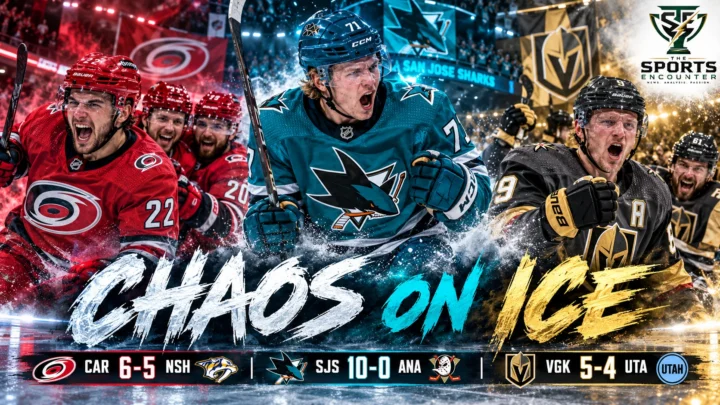
NEW YORK, United States, September 28, 2026: The NHL has run out of rehearsal time.
Eight days, 65 games and hundreds of roster decisions later, every club now has to decide which parts of the 2026 preseason were useful evidence and which were September noise.
This was not a normal exhibition schedule. The NHL compressed the preseason into September 19-26 after the new collective bargaining agreement expanded the regular season to 84 games. Most teams played only four exhibitions. Montreal and Ottawa reached five because of split-squad games.
That makes every conclusion provisional.
Story at a glance

What Were the Biggest NHL Preseason 2026 Results?
The final records provide a useful starting point, but not a power ranking. The NHL’s official preseason statistics should be read alongside lineup quality, injuries and the specific questions each club was attempting to answer.
Which NHL Teams Had the Best Preseason?
If the question is strictly about results, Dallas and Edmonton stand alone at 4-0-0.
Which Teams Have the Most to Fix Before Opening Night?
Anaheim produced the largest statistical warning at -11. Ottawa and Philadelphia both finished at -9. Nashville allowed 16 goals and ended with a 6-0 defeat.
What Should NHL Fans Actually Trust From Preseason?
The most dangerous mistake is treating exhibition standings as a prediction model.
Preseason records do not carry into October. Veterans play controlled minutes, contenders experiment with combinations, prospects receive roles they may never see once the roster is settled, and opponents rarely deploy identical levels of NHL talent.
Yet exhibition hockey still leaves clues.
Dallas allowed three goals in four games. Edmonton did not lose. Carolina finished by scoring six against Nashville. San Jose responded to an ugly opening defeat with one of the most explosive weeks of any young roster. Anaheim went in the opposite direction. Buffalo finished with two goaltenders carrying injuries.
The Sports Encounter followed those developments throughout its NHL coverage. Now that the preseason is complete, here is what all 32 teams actually showed before the games start counting.
What Were the Biggest NHL Preseason 2026 Results?
The final records provide a useful starting point, but not a power ranking. The NHL’s official preseason statistics should be read alongside lineup quality, injuries and the specific questions each club was attempting to answer.
| Team | Record | GF | GA | Goal Difference |
|---|---|---|---|---|
| Montreal Canadiens | 4-1-0 | 18 | 12 | +6 |
| Florida Panthers | 2-0-2 | 15 | 12 | +3 |
| Toronto Maple Leafs | 2-1-1 | 14 | 11 | +3 |
| Detroit Red Wings | 2-1-1 | 12 | 11 | +1 |
| Tampa Bay Lightning | 2-1-1 | 10 | 11 | -1 |
| Boston Bruins | 2-1-1 | 10 | 8 | +2 |
| Buffalo Sabres | 1-2-1 | 9 | 11 | -2 |
| Ottawa Senators | 1-3-1 | 11 | 20 | -9 |
| Washington Capitals | 3-0-1 | 15 | 8 | +7 |
| New Jersey Devils | 3-0-1 | 12 | 8 | +4 |
| Carolina Hurricanes | 3-1-0 | 18 | 13 | +5 |
| Columbus Blue Jackets | 3-1-0 | 10 | 7 | +3 |
| Pittsburgh Penguins | 2-2-0 | 11 | 13 | -2 |
| New York Rangers | 2-2-0 | 15 | 11 | +4 |
| New York Islanders | 1-3-0 | 7 | 15 | -8 |
| Philadelphia Flyers | 1-3-0 | 6 | 15 | -9 |
| Dallas Stars | 4-0-0 | 8 | 3 | +5 |
| Utah Mammoth | 2-1-1 | 13 | 12 | +1 |
| Chicago Blackhawks | 2-1-1 | 9 | 9 | 0 |
| Colorado Avalanche | 2-2-0 | 10 | 8 | +2 |
| Minnesota Wild | 1-2-1 | 7 | 10 | -3 |
| Winnipeg Jets | 1-2-1 | 8 | 13 | -5 |
| St. Louis Blues | 1-3-0 | 5 | 7 | -2 |
| Nashville Predators | 1-3-0 | 9 | 16 | -7 |
| Edmonton Oilers | 4-0-0 | 13 | 5 | +8 |
| Seattle Kraken | 3-1-0 | 15 | 11 | +4 |
| Vegas Golden Knights | 3-1-0 | 13 | 11 | +2 |
| San Jose Sharks | 2-1-1 | 17 | 10 | +7 |
| Los Angeles Kings | 2-2-0 | 13 | 13 | 0 |
| Calgary Flames | 1-2-1 | 9 | 13 | -4 |
| Vancouver Canucks | 1-3-0 | 8 | 12 | -4 |
| Anaheim Ducks | 1-3-0 | 9 | 20 | -11 |
Atlantic Division: Who Looks Ready and Who Has Questions?
Montreal Canadiens: The Results Matched the Energy
Preseason signal: Strong. Montreal’s 4-1-0 record came with 18 goals, tied for the most in the league, although the Canadiens also played one more game than most clubs because of the split-squad format.
The more useful takeaway was how often Montreal’s skill showed up. Cole Caufield delivered an overtime winner, Lane Hutson drove offense, and the Canadiens repeatedly found production from the younger core around their established players.
Four wins do not establish Montreal as an Atlantic favorite, but the Canadiens leave September looking fast, confident and capable of creating offense from several areas of the lineup.
Florida Panthers: Brady Tkachuk Already Looks Comfortable
Preseason signal: Encouraging. Florida finished 2-0-2 and did not lose in regulation.
The loudest development came immediately when Brady Tkachuk scored twice and added an assist in his first preseason appearance for Florida. TSE examined why Tkachuk’s introduction looked more meaningful than an ordinary exhibition debut.
Florida’s preseason was less about proving that its stars can produce and more about beginning to integrate a dramatically important new piece. On that front, the first signs were positive.
Toronto Maple Leafs: Enough Offense, but the Real Tests Come Now
Preseason signal: Positive but incomplete. Toronto went 2-1-1 and scored 14 goals.
The Leafs absorbed the unusual challenge of opening with simultaneous split-squad games against Montreal, then finished the exhibition schedule with consecutive victories.
Toronto looked capable of generating offense despite another offseason of change. The harder questions around structure, defensive consistency and how the roster holds up when every opponent is using its best lineup cannot be settled in four exhibition results.
Detroit Red Wings: The Offensive Ceiling Flashed
Preseason signal: Encouraging. Detroit finished 2-1-1, but the headline moment was its seven-goal eruption against Pittsburgh.
Michael Brandsegg-Nygard scored twice and Anton Johansson recorded four assists that night, giving Detroit exactly the kind of young-player contribution preseason is designed to uncover. TSE tracked that performance in its September 22 preseason review.
The Red Wings were less convincing in their finale, but September showed that there is enough attacking talent below the obvious names to make roster competition meaningful.
Tampa Bay Lightning: Competitive Without Looking Fully Settled
Preseason signal: Mixed. Tampa Bay went 2-1-1 with 10 goals scored and 11 allowed.
The Lightning produced good stretches, but also showed how quickly control can disappear when Nashville erased a two-goal third-period deficit and beat them in overtime.
There was nothing in four games that should create panic around an experienced team. There was also little reason to call Tampa one of September’s clearest winners. The Lightning looked like a club still connecting offseason pieces to an established core.
Boston Bruins: Quietly Solid at the Back
Preseason signal: Solid. Boston’s 2-1-1 record was accompanied by only eight goals against.
Jeremy Swayman stopped 20 shots in a 5-1 victory over Philadelphia, while Boston received contributions from players competing for larger roles.
The Bruins did not need an exhibition scoring binge. Their more valuable sign was that the defensive floor looked stable enough while the staff continued sorting combinations. Boston is also part of the NHL’s wider international plans, which TSE explored in its look at the league’s coming Germany expansion.
Buffalo Sabres: The Goaltending Situation Changed the Mood
Preseason signal: Concern. Buffalo’s 1-2-1 record is not the main problem.
The Sabres briefly looked extremely sharp when a lineup close to their projected regular-season group beat Columbus 5-1. Then goaltending health became the bigger story.
Alex Lyon sustained an upper-body injury against Detroit. Ukko-Pekka Luukkonen then left the 3-1 finale against Pittsburgh after tweaking his lower body.
Buffalo may ultimately avoid a serious problem, but heading toward opening week with uncertainty around two goaltenders is far more relevant than a losing preseason record.
Ottawa Senators: The Scoreboard Raised Defensive Questions
Preseason signal: Concerning. Ottawa finished 1-3-1 and allowed 20 goals, tied with Anaheim for the most in the NHL preseason.
The Senators at least closed with a victory in one of their split-squad games against Montreal, providing a better final impression than the cumulative numbers suggest.
Still, 20 goals against in five exhibitions is too large a number to ignore completely. Ottawa will want the regular-season structure to look considerably tighter when lineups become stable.
Metropolitan Division: Did Carolina Look Like the Champion Again?
Washington Capitals: Winning Without Needing Ovechkin
Preseason signal: Strong. Washington finished 3-0-1 with 15 goals scored and eight allowed.
That is encouraging because Alex Ovechkin did not need to be pushed through meaningless games while recovering from a lower-body issue. The Capitals held him out of their final two exhibitions as a precaution, with the expectation that he will be ready for the regular-season opener barring a setback.
Washington’s +7 differential suggests that the surrounding roster handled its work well while its biggest name prepared on a different timetable.
New Jersey Devils: Efficient and Difficult to Beat
Preseason signal: Strong. New Jersey joined Washington at 3-0-1 and allowed only eight goals.
Jack Hughes supplied a late game-winner against the Rangers, while the Devils consistently found enough offense without needing to turn games into track meets.
New Jersey leaves the preseason with one of the East’s cleaner statistical profiles. That does not resolve every question surrounding the roster, but it is certainly preferable to spending the final days before opening night repairing obvious problems.
Carolina Hurricanes: The Champions Finished With a Warning Shot
Preseason signal: Very strong. Carolina finished 3-1-0 and tied Montreal for the league lead with 18 goals despite playing one fewer game.
The most impressive evidence arrived last. With much of the championship roster back in action, Carolina overwhelmed Nashville 6-0. Jackson Blake recorded three points, Nikolaj Ehlers had a goal and an assist, and Brandon Bussi stopped all 22 shots.
The Hurricanes already know what their system looks like under pressure. They proved it while winning the 2026 Stanley Cup. The preseason suggested those habits have not disappeared over the summer.
Columbus Blue Jackets: The Defensive Numbers Deserve Attention
Preseason signal: Positive. Columbus went 3-1-0 and conceded only seven goals.
That is the kind of exhibition profile coaches tend to appreciate because it does not depend on unsustainably hot finishing. Columbus kept games manageable and repeatedly gave itself a chance to win.
The Blue Jackets still have to prove that structure against full-strength regular-season opponents, but allowing fewer than two goals per game across the four exhibitions is a useful starting point.
Pittsburgh Penguins: More Uneven Than the Final Record Suggests
Preseason signal: Mixed. Pittsburgh finished 2-2-0.
The Penguins experienced both extremes. Detroit put seven past them earlier in the week, but Pittsburgh responded by finishing with a controlled 3-1 victory over Buffalo. Sidney Crosby scored his first goal of the preseason in the finale, Ville Koivunen and Nicholas Robertson also scored, and Arturs Silovs made 23 saves.
For a veteran team, the final performance matters more than whether September ended at .500.
New York Rangers: The Finish Was Better Than the Start
Preseason signal: Improving. The Rangers started 0-2 and finished 2-2, scoring 15 goals overall.
Their final two wins included a 6-1 victory over the Islanders, which changed the tone considerably after the early defeats.
A +4 goal differential on an even record tells the story: New York’s good stretches were more convincing than its worst ones. The Rangers still need consistency, but they did not carry their poor start into opening week.
New York Islanders: Varlamov’s Return Was Bigger Than the Record
Preseason signal: Mixed, with one major positive. The Islanders finished 1-3-0 and were outscored 15-7.
Those are poor numbers. Semyon Varlamov’s return after nearly two years away, however, made the preseason meaningful for a different reason. He stopped all 10 shots he faced in his return as the Islanders erased a three-goal deficit against the Rangers.
The team performance needs work. The return of another viable goaltending option could matter for far longer than a 1-3 exhibition record.
Philadelphia Flyers: Too Little Offense, Too Many Goals Against
Preseason signal: Concern. Philadelphia scored only six times and allowed 15 goals in a 1-3-0 preseason.
The Flyers also had to deal with Dan Vladar leaving the Boston game with an upper-body issue, adding another variable to a camp that already needed clarity.
Preseason scoring droughts can disappear immediately once real line combinations settle, but six goals in four games left Philadelphia with less attacking evidence than most of the Metropolitan Division.
Central Division: Dallas Made Defense the Loudest Statement
Dallas Stars: Four Wins, Three Goals Allowed
Preseason signal: Excellent. Dallas went 4-0-0 and allowed only three goals, the fewest in the league.
The Stars did not overwhelm opponents offensively. They scored only eight times. Instead, they made exhibition games look controlled, low-risk and difficult to break open.
Tyler Seguin’s return was another major positive. He played 13:57 against Minnesota in his first preseason appearance following ACL surgery.
Dallas therefore leaves September with both the cleanest defensive record and an important veteran moving back toward regular-season action.
Utah Mammoth: More Offensive Possibilities Than Last Year
Preseason signal: Encouraging. Utah finished 2-1-1 with 13 goals.
Anders Lee announced himself with two goals in his first Mammoth appearance, while Utah showed enough offensive variety to suggest its offseason changes have increased the number of ways it can attack.
The final 2-0 victory over Colorado provided a useful closing contrast to some of the more open games earlier in the schedule. Utah demonstrated that it can win without needing a high-scoring exchange.
Chicago Blackhawks: Young Energy Is Becoming Real Competition
Preseason signal: Encouraging. Chicago finished 2-1-1 with an even 9-9 goal margin.
Bowen Byram delivered one of the performances of the preseason with a hat trick, including the overtime winner against Minnesota.
Chicago is still a developing team, but the franchise has also started formalizing its next era. TSE examined that transition when Connor Bedard was named Blackhawks captain.
The preseason did not prove the rebuild is complete. It did show that internal competition is becoming more serious.
Colorado Avalanche: Good Enough Without Chasing September
Preseason signal: Neutral to positive. Colorado finished 2-2-0 with a +2 goal differential.
The Avalanche demonstrated their offensive ceiling in a 5-2 victory over Winnipeg, then were shut out 2-0 by Utah in the finale despite strong goaltending from Scott Wedgewood.
For an established contender, that is not particularly alarming. Colorado showed enough pace and creation during the week without needing a perfect record to validate a roster built for much bigger games.
Minnesota Wild: Results Slipped and Faber Created a Health Watch
Preseason signal: Cautious. Minnesota finished 1-2-1 and lost its final three exhibitions.
The most important moment was not a goal. Brock Faber was hit in the head by a puck against Dallas. He returned for the next shift but was then held out for the remainder as a precaution.
The initial message was not that Minnesota had suffered a major loss, but the incident reinforced the biggest preseason rule of all: avoiding meaningful injuries matters more than collecting meaningless standings points.
Winnipeg Jets: Defensive Work Remains on the List
Preseason signal: Mixed to concerning. Winnipeg went 1-2-1 and was outscored 13-8.
The Jets did have positive individual goaltending stretches and competitive moments, but they did not build enough consistency across the four-game schedule.
The 5-2 loss to Colorado was particularly useful as a reminder that Winnipeg will need cleaner defensive transitions once opponents are moving their full top-six units over the boards.
St. Louis Blues: Low-Event Hockey, but Not Enough Scoring
Preseason signal: Mixed. St. Louis finished 1-3-0, but only seven goals were allowed in four games.
That distinction matters. The Blues were not being repeatedly overwhelmed. Their larger issue was scoring only five times.
If the defensive structure transfers into the regular season, that gives St. Louis a floor. The question is whether enough offense can be generated without requiring goaltending and defensive execution to remain near-perfect.
Nashville Predators: The Finale Exposed the Biggest Concern
Preseason signal: Concerning. Nashville went 1-3-0 and conceded 16 goals.
The Predators showed resilience earlier in the week when they erased a late 2-0 deficit against Tampa Bay and won in overtime. That was the high point.
The low point was much louder. Carolina scored three times in the opening 13:29 of the finale and eventually won 6-0.
No team should redesign its season around one exhibition loss, but Nashville enters the real schedule knowing its defensive details must improve immediately.
Pacific Division: Edmonton Was Perfect, but San Jose Created the Surprise
Edmonton Oilers: Four Games, Four Wins
Preseason signal: Excellent. Edmonton matched Dallas with a perfect 4-0-0 record and produced the league’s best goal differential at +8.
The Oilers scored 13 and allowed only five, winning games through different combinations of star influence, depth production and goaltending.
That balance is more useful than the undefeated record itself. Edmonton was already positioned among the major contenders in TSE’s early 2026-27 NHL season assessment. Nothing in preseason weakened that case.
Seattle Kraken: The Kids Made the Competition Interesting
Preseason signal: Encouraging. Seattle won its first three games before losing 4-3 to Vancouver in the finale.
The Kraken scored 15 times overall, and the preseason repeatedly gave younger players opportunities to push the roster conversation rather than simply fill exhibition minutes.
Berkly Catton scored in the final game, while Brandon Montour contributed a goal and an assist. Seattle’s 3-1-0 record is less important than the evidence that the organization has more internal options than it did entering camp.
Vegas Golden Knights: Still Built to Punish Mistakes
Preseason signal: Strong. Vegas began 3-0 before San Jose handed the Golden Knights their only defeat.
Jack Eichel delivered an overtime winner against Utah, and Vegas repeatedly showed the quality through the middle of the lineup that has made it one of the West’s most reliable contenders.
The 4-2 loss to San Jose in the finale prevents an artificially perfect narrative. That may be useful. Vegas received plenty of positive evidence without getting the illusion that everything is already finished.
San Jose Sharks: The Most Interesting Preseason Transformation
Preseason signal: Very encouraging. Few teams changed the mood around their camp as dramatically as San Jose.
The Sharks opened by losing 6-2 to Anaheim. They finished 2-1-1 with 17 goals scored and a +7 differential.
Ivar Stenberg quickly became one of the names of the week. After producing an assist and scoring in the shootout during his debut, he erupted for a hat trick and an assist in San Jose’s 10-0 response against Anaheim.
A young team will still make young-team mistakes. What San Jose demonstrated was genuine offensive upside and the ability to respond after being embarrassed.
Los Angeles Kings: The Last Two Games Changed the Picture
Preseason signal: Positive finish. Los Angeles began 0-2 and ended 2-2.
The Kings’ final game was their strongest, a 6-2 victory over Anaheim with something closer to a regular-season lineup.
The final 13-13 goal balance explains why the overall assessment should stay measured. Los Angeles was inconsistent across the week, but teams would rather arrive at opening night improving than fading.
Continue the NHL Story



Calgary Flames: More Questions Than Answers, but Not a Collapse
Preseason signal: Mixed. Calgary went 1-2-1 and was outscored 13-9.
There were individual positives, including Matt Coronato’s power-play contribution and useful stretches from Dustin Wolf, but the Flames did not build sustained momentum.
A 4-1 loss to Edmonton closed the schedule. Calgary now has to determine how much of the preseason inconsistency came from rotating lineups and how much points toward issues that will survive into October.
Vancouver Canucks: The Finale Offered Relief, but Chytil Matters More
Preseason signal: Mixed to concerning. Vancouver lost its first three games before beating Seattle 4-3 in the finale.
Brock Boeser and Elias Pettersson each produced a goal and an assist in that victory, while Jake DeBrusk had three points. It was easily Vancouver’s most reassuring team performance.
The larger concern is health. Filip Chytil is week to week with a shoulder injury. The Canucks can dismiss a 1-3 preseason record. Losing an important forward for meaningful games is harder to dismiss.
Anaheim Ducks: One Great Night Followed by Three Alarming Ones
Preseason signal: Red flag. Anaheim produced one of the best performances of opening weekend when Beckett Sennecke scored a hat trick in a 6-2 victory over San Jose.
Then almost everything reversed.
The Ducks lost their next three games and finished with a league-worst -11 goal differential. Most damaging was the 10-0 rematch loss to San Jose before Los Angeles beat Anaheim 6-2 in the finale.
After the 6-2 opening win, Anaheim was outscored 18-3 across its remaining three exhibitions.
Sennecke’s breakout remains a real positive. The team defense is the much larger question going into the season.
Which NHL Teams Had the Best Preseason?
If the question is strictly about results, Dallas and Edmonton stand alone at 4-0-0.
If the question is about the most useful preseason evidence, the list becomes broader.
Dallas allowed only three goals. Edmonton posted the league’s best goal differential. Carolina finished with a 6-0 statement when much of the championship group returned. Washington went 3-0-1 without needing to rush Ovechkin. Montreal repeatedly generated offense. San Jose produced perhaps the most encouraging young-player surge.
Those accomplishments are not equivalent, but each team learned something useful.
Which Teams Have the Most to Fix Before Opening Night?
Anaheim produced the largest statistical warning at -11. Ottawa and Philadelphia both finished at -9. Nashville allowed 16 goals and ended with a 6-0 defeat.
Buffalo’s situation is different. Its underlying concern is not simply performance but the health of Luukkonen and Lyon.
Vancouver also has to account for Chytil’s shoulder injury even after finally producing an encouraging team performance in the finale.
None of these issues guarantee a poor start to the regular season. They simply represent the clearest unresolved questions coming out of camp.
What Should NHL Fans Actually Trust From Preseason?
The most dangerous mistake is treating exhibition standings as a prediction model.
Dallas and Edmonton deserve credit for going undefeated, but neither receives a regular-season point for doing it. Anaheim’s -11 differential does not condemn the Ducks to an 84-game disaster. Carolina’s six-goal finale does not award another Stanley Cup.
The useful information sits underneath the records:
- Did established players look physically ready?
- Did new combinations create chemistry?
- Did prospects force difficult roster decisions?
- Did returning injured players handle real game contact?
- Did goaltenders look comfortable?
- Did teams repeatedly concede the same types of chances?
- Did injuries change the opening-night depth chart?
Those are questions that can survive the transition from preseason to regular-season hockey.
The results themselves disappear Tuesday.
The 2026-27 NHL regular season begins September 29 with Carolina raising its Stanley Cup banner before facing Florida, Montreal visiting Toronto, the Rangers going to Boston, Vancouver visiting Edmonton and Chicago facing Vegas.
Those games will begin telling us which September clues were real.
The next stage of TSE’s coverage will examine every team in much greater depth, including rosters, stars, rookies, injuries, tactical questions, playoff expectations and the issues fans are searching for before the new season. Until then, follow the latest developments through The Sports Encounter’s NHL coverage.
NHL Preseason 2026 FAQs
Which Teams Finished the 2026 NHL Preseason Undefeated?
Dallas and Edmonton finished with perfect 4-0-0 records. Florida, Washington and New Jersey also avoided regulation defeats, but each had at least one overtime loss.
Which NHL Team Had the Best Preseason Goal Differential?
Edmonton finished with the best goal differential at +8 after scoring 13 goals and allowing five.
Which Teams Scored the Most Goals in the 2026 NHL Preseason?
Montreal and Carolina each scored 18 goals. Montreal played five games because of split-squad scheduling, while Carolina played four.
Which NHL Team Allowed the Fewest Preseason Goals?
Dallas allowed only three goals across four games, the best defensive total in the league.
Which NHL Team Had the Worst Preseason Goal Differential?
Anaheim finished at -11 after scoring nine goals and allowing 20. The Ducks lost their final three games after opening with a 6-2 win over San Jose.
Do NHL Preseason Wins Count in the Regular-Season Standings?
No. Preseason results have no effect on regular-season standings or playoff qualification.
Why Was the 2026 NHL Preseason So Short?
The new NHL/NHLPA collective bargaining agreement shortened the preseason as the regular-season schedule expanded from 82 to 84 games per team.
When Does the 2026-27 NHL Regular Season Start?
The regular season begins Tuesday, September 29, 2026.
NHL Preseason 2026
- How All 32 Teams Stack Up After the NHL Preseason 2026
- NHL Preseason: Hurricanes Erase 5-1 Hole, Stenberg Hits Hat Trick and Eichel Saves Vegas
- NHL Preseason: Byram’s Hat Trick, Caufield’s Overtime Habit and Goalies Force Hard Roster Decisions
- NHL Preseason: Brady Tkachuk Ignites Florida as Sennecke and Seattle’s Kids Force Early Decisions
- NHL Preseason Opens With Canadiens Sweep, McDavid-Draisaitl Spark and Young Players Making Their Cases