Pakistani cricket does not need enemies when its own sports media can turn a routine dressing-room moment into a national controversy within hours.
The latest example came from a short video clip involving Shaheen Shah Afridi, Pakistan bowling coach Umar Gul, and Hasan Ali. A few seconds of footage began circulating on social media, and instead of asking a basic journalistic question, “What actually happened here?”, sections of Pakistani sports media jumped straight into speculation.
The claim was simple, dramatic, and perfect for engagement: Shaheen had allegedly misbehaved with Umar Gul.
Then Umar Gul spoke.
Story at a glance
A Viral Clip Is Not a Verified Story
A professional journalist does not take a muted or half-visible clip, add a spicy interpretation, and present it as dressing-room rebellion.
Scrutiny and Sensationalism Are Not the Same Thing
There is a huge difference between scrutiny and sensationalism.
The PSL Excuse Falls Apart When You Look at Nahid Rana
During Umar Gul’s press interaction, a journalist suggested that Pakistani players did not get enough time and practice to prepare for the Test series against Bangladesh because of PSL 2026.
So What Exactly Is the Argument?
That PSL ruined Pakistan’s Test preparation, but somehow sharpened Nahid Rana?
The Real Questions Require More Work
Those problems require research.
The former Pakistan fast bowler clearly dismissed the speculation. He explained that the moment had nothing to do with disrespect, confrontation, or a player ignoring his coach. According to Gul, Hasan Ali had taken a blow to the head, Shaheen was sitting outside the field, and the discussion was related to that situation and routine player management.
Gul said the video had been wrongly portrayed as a fight, while nothing of that sort had happened.
That should embarrass everyone who rushed to frame the clip as indiscipline.
This is not journalism. This is content farming with a press card.
For readers following the broader team context, the Pakistan Cricket Board’s official squad announcement for the Bangladesh Test series confirmed Umar Gul’s role as Pakistan’s bowling coach for the tour.
A Viral Clip Is Not a Verified Story
A professional journalist does not take a muted or half-visible clip, add a spicy interpretation, and present it as dressing-room rebellion.
A professional journalist checks the context.
A professional journalist speaks to the people involved.
A professional journalist understands that elite sport is full of animated body language, tactical instructions, injury discussions, frustration, intensity, and split-second communication.
Pakistani cricket already operates under extreme public pressure. Every dropped catch becomes a character flaw. Every defeat becomes a conspiracy. Every conversation becomes a fight.
When journalists add fuel to that fire without verification, they are not holding players accountable. They are poisoning the public conversation.
This matters even more with a player such as Shaheen Afridi, whose performances, fitness, workload, pace, and international future have remained under constant scrutiny. The Sports Encounter later examined those pressures in our analysis of Shaheen Afridi’s LPL debut and the career crossroads surrounding Pakistan’s former all-format pace spearhead.
Scrutiny and Sensationalism Are Not the Same Thing
There is a huge difference between scrutiny and sensationalism.
Scrutiny asks why Pakistan’s Test preparation failed.
Sensationalism asks whether Shaheen rolled his eyes at Umar Gul.
Scrutiny asks why Pakistan’s bowlers look short of rhythm.
Sensationalism takes a camera angle and invents a dressing-room feud.
Scrutiny asks whether the Pakistan Cricket Board planned the calendar intelligently.
Sensationalism blames the Pakistan Super League without testing the argument against facts.
The same distinction applies whenever Pakistan cricket enters another cycle of criticism. Our later analysis of Pakistan’s 2-1 ODI series victory over Australia examined another example of how legitimate cricket debate can become distorted when conclusions arrive before context.
The PSL Excuse Falls Apart When You Look at Nahid Rana
During Umar Gul’s press interaction, a journalist suggested that Pakistani players did not get enough time and practice to prepare for the Test series against Bangladesh because of PSL 2026.
Gul played down the question, but the issue is bigger than one answer.
The question itself reflected lazy framing.
If PSL involvement destroyed Pakistan’s preparation, how does one explain Nahid Rana?
The Bangladesh fast bowler also featured in PSL 2026. He returned to international cricket and became one of the most influential bowlers in the Test series against Pakistan.
In the first Test in Dhaka, Rana produced a match-winning five-wicket haul as Bangladesh defeated Pakistan by 104 runs. The ICC’s official report on Bangladesh’s first-Test victory identified Rana as the star with the ball after Pakistan were dismissed for 163 while chasing 268.
His impact continued in Sylhet.
Rana took three wickets in Pakistan’s first innings of the second Test and remained central to Bangladesh’s pace attack as the hosts pushed toward a historic series victory.
So What Exactly Is the Argument?
That PSL ruined Pakistan’s Test preparation, but somehow sharpened Nahid Rana?
That Pakistani players were tired because of franchise cricket, but a Bangladeshi fast bowler could play the same tournament, return to red-ball cricket, and still trouble Pakistan’s batting lineup?
That is not analysis.
That is excuse-making dressed up as a question.
Good journalism does not begin with a conclusion and then search for a convenient villain.
It follows the evidence.
In this case, the evidence points toward deeper problems: poor red-ball planning, fragile batting under pressure, lack of match awareness, questionable selection logic, and a broader failure to build Test cricket discipline in a T20-heavy ecosystem.
Those structural problems became harder to ignore as Pakistan moved deeper into 2026. The board eventually returned to Babar Azam as Test captain, a decision The Sports Encounter examined in our analysis of Pakistan’s red-ball reset under Babar Azam.
That leadership reversal did not happen because of one viral video or one franchise tournament. It reflected years of unstable planning, selection changes, declining Test results, and repeated attempts to rebuild the team without allowing one structure enough time to settle.
The Real Questions Require More Work
Those problems require research.
They require talking to coaches, players, selectors, analysts, and people who understand workload, skill transition, and red-ball preparation.
It is much easier to blame PSL, frame Shaheen as disrespectful, and create a viral clip.
This is where Pakistani sports journalism keeps failing the game.
Too many journalists now behave like social media accounts with microphones.
The goal is no longer clarity. The goal is reaction.
A clip is not treated as a clue to investigate. It is treated as a headline waiting to happen.
A player’s gesture becomes attitude. A coach’s expression becomes a rift. A team’s defeat becomes a circus.
For readers interested in the wider cricket context behind these debates, The Sports Encounter’s Cricket section follows Pakistan cricket, international series, player performance, selection decisions, tactical debates, and the deeper questions shaping the modern game.
Pakistani Cricket Fans Deserve Better
Fans deserve reporting that separates fact from assumption.
They deserve questions that challenge the system, not questions built on WhatsApp narratives.
They deserve journalists who understand that national players are public figures, not punching bags for half-baked speculation.
Shaheen Afridi can be criticized for performance.
Umar Gul can be questioned on bowling plans.
The PCB can be challenged on scheduling.
Team management can be pressed on preparation.
That is fair. That is necessary.
But accusing a player of misbehavior without context is reckless.
Shaheen’s Career Shows Why Context Matters
The Shaheen Afridi debate has only become more complicated since this incident.
His pace has fluctuated. Injuries have interrupted his progress. Pakistan have changed coaches, captains, combinations, and expectations around him. His role across formats has also become a subject of serious cricket debate.
Those are legitimate stories.
The Sports Encounter explored the historical pressure surrounding Shaheen and other Pakistan quicks in our analysis of why Pakistan’s fast-bowling past remains so heavily romanticized.
Pakistan’s greatest fast bowlers created standards that modern players inherit whether they ask for them or not. Every decline in pace becomes a national conversation. Every injury invites comparisons. Every difficult spell produces another question about whether the latest fast bowler has lost what made him special.
That is precisely why responsible journalism matters.
There is enough genuine material to analyze without inventing conflict.
The Irony Is Difficult to Ignore
The same journalists who demand discipline from players often show none in their own work.
They ask cricketers to be professional while publishing or amplifying unverified claims.
They speak about national pride while damaging reputations through careless framing.
They complain about player attitude while refusing to follow the basic ethics of their own profession.
This should be the minimum standard:
- Before running a controversy, get the other side.
- Before blaming PSL, check whether players from both teams had similar franchise exposure.
- Before turning body language into a scandal, ask the coach, player, or team management what happened.
- Before presenting speculation as fact, establish what can actually be verified.
That is Journalism 101.
Pakistan’s Selection Debates Need the Same Discipline
The same principle applies beyond media controversies.
Pakistan’s selection decisions routinely generate emotional reactions before the cricketing logic has been examined.
When Pakistan later selected a younger squad for the Asian Games while India named a far more experienced group, the immediate temptation was again to reduce a complicated selection decision to a simple emotional argument. Our analysis of Pakistan and India’s contrasting Asian Games 2026 squad strategies showed why context matters before judgment.
Selection can be questioned.
Planning can be criticized.
Players can be held accountable.
But those arguments become useful only when evidence comes before outrage.
Franchise Cricket Is Not Automatically the Villain
The PSL question also belongs inside a much wider conversation about modern cricket.
International players now move constantly between national teams and franchise competitions. Workload management matters. Preparation matters. Format transition matters.
But simply blaming franchise cricket every time an international team performs poorly is not analysis.
Shaheen’s later move into the Lanka Premier League provided another example. His LPL campaign carried genuine questions about workload, declining pace, confidence, and Pakistan’s handling of his career. Readers can follow that wider tournament context through The Sports Encounter’s Lanka Premier League coverage.
Continue the Cricket Story
 CricketTamim Iqbal Brings Imran Khan’s Six-Team Philosophy to Bangladesh With D3 Overhaul
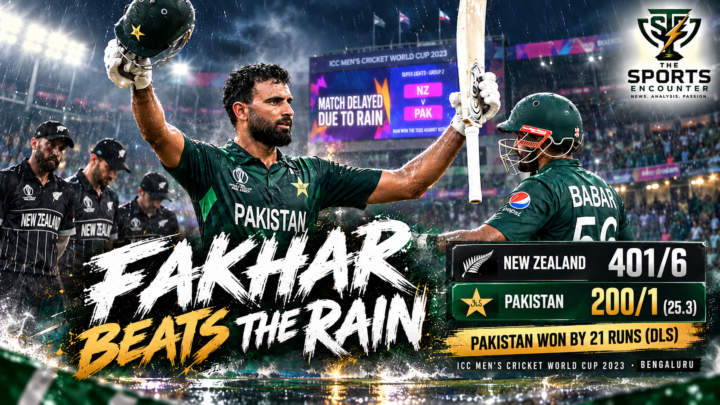
 A Celebration of 5000 ODIsA Celebration of 5000 ODIs Match 45: Fakhar Makes 402 Look Reachable Before Rain Seals Pakistan’s World Cup Lifeline
 CricketPCB Hits T20 Reset: Farhan Replaces Agha as Captain With Seven World Cup Players Shown Exit Way
Those are harder questions than asking whether a player should have participated in a franchise tournament at all.
Pakistan Cricket Needs Better Questions
Pakistan cricket has enough real problems to keep journalists busy.
Captaincy instability has been one of them.
Selection inconsistency has been another.
Fast-bowling development, workload management, player fitness, domestic structure, batting technique, overseas performance, and the relationship between franchise cricket and Test preparation all deserve serious examination.
The return of Babar Azam as Test captain showed how quickly Pakistan can travel back toward an old solution after abandoning it. Meanwhile, Shaheen’s changing role showed how difficult it can be to manage a fast bowler who carried enormous expectations from a young age.
Those themes continue across our West Indies vs Pakistan Test series preview, where Pakistan entered another red-ball reset with Babar back in charge and major questions surrounding the bowling attack.
Those are stories worth investigating.
A few seconds of ambiguous body language are not.
The Shaheen-Umar Gul Video Should Be Remembered as a Media Failure
The Shaheen-Umar Gul episode should not be remembered as a player controversy.
It should be remembered as a media failure.
A few seconds of video were enough for some people to build a story.
A simple clarification from Umar Gul was enough to collapse it.
The Nahid Rana example exposes the larger problem.
Pakistani cricket discourse often wants easy villains.
PSL becomes the villain.
Shaheen becomes the villain.
The coach becomes the villain.
But the real problem is lazy thinking.
Even Shaheen’s wider career deserves more thoughtful treatment. He remains one of Pakistan’s most significant modern fast bowlers and was named ICC Men’s Cricketer of the Year in 2021, part of a remarkable period for Pakistan players documented in The Sports Encounter’s complete ICC Awards review from 2015 to 2024.
That history does not make him immune from criticism.
It makes accurate criticism more important.
Final Word
If Pakistani sports journalism wants to be taken seriously, it must stop chasing noise and start respecting context.
Players should be challenged when performances fall below international standards.
Coaches should answer difficult tactical questions.
Selectors and administrators should explain decisions that affect the national team.
Journalists should demand those answers.
But journalism loses its purpose when speculation is packaged as evidence and virality becomes more valuable than verification.
Cricket does not suffer only when players fail on the field.
It also suffers when journalists fail off it.