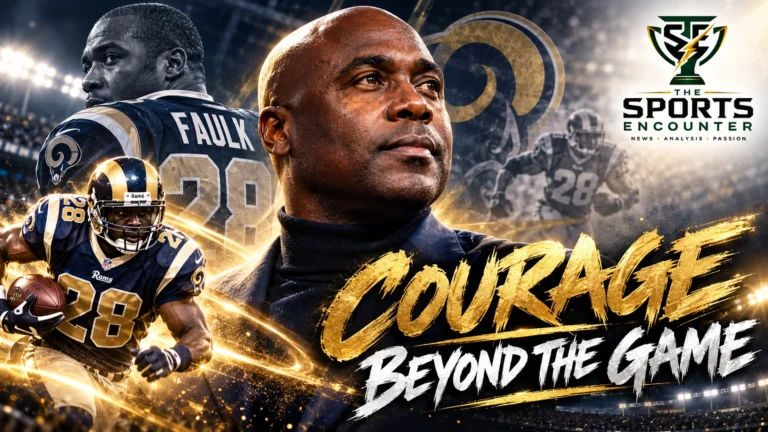
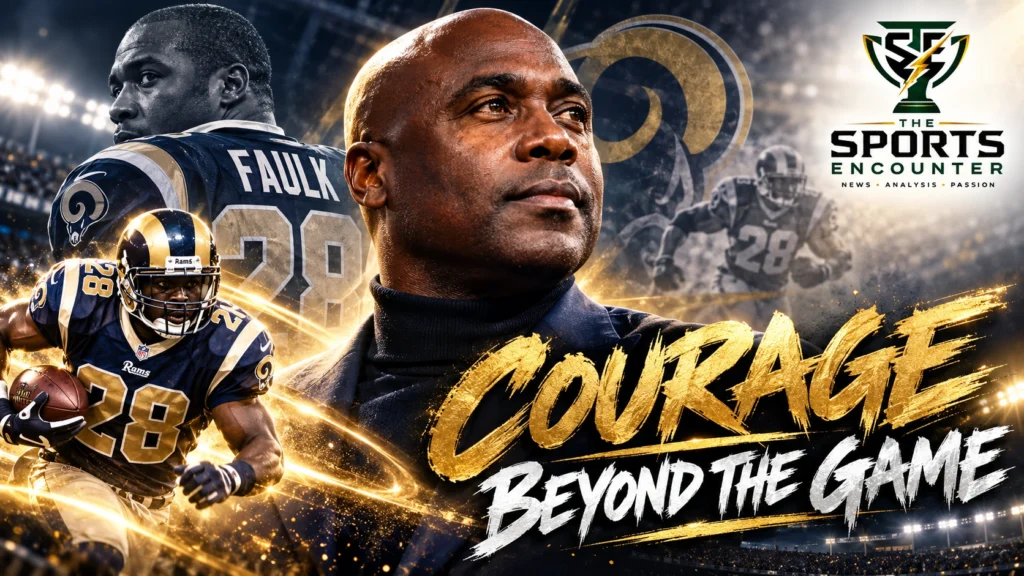
BATON ROUGE, United States, October 22, 2026: Marshall Faulk spent 12 NFL seasons making extraordinary physical movements look effortless, combining explosive rushing with the receiving instincts that helped transform the modern running back position. Now, the 53-year-old Pro Football Hall of Famer has revealed that he is living with Parkinson’s disease, a progressive neurological condition affecting movement. The first warning signs did not emerge during a football game or coaching session. They appeared while he was putting on a golf course, when an unusual movement in his hand initially seemed like ordinary nerves.
Faulk discussed his diagnosis during an interview with neurologist Dr. Sandeep Thakkar on The Caring Neurologist podcast. He explained that the symptoms continued even when he was playing golf without competitive pressure, eventually prompting medical evaluation. The former St. Louis Rams and Indianapolis Colts star says medication has helped him manage the condition, and he remains active as Southern University’s head football coach. His announcement comes less than three months after former Green Bay Packers running back Ahman Green publicly disclosed his own Parkinson’s diagnosis, adding another important voice to the growing discussion about neurological health among former professional football players.
Marshall Faulk Reveals Parkinson’s Diagnosis: What He Actually Said
Faulk’s announcement emerged during a conversation with Dr. Sandeep Thakkar, a neurologist specializing in Parkinson’s disease and movement disorders.
The discussion focused on the former running back’s experience with the condition and the importance of recognizing symptoms that might initially appear insignificant.
Story at a glance
Marshall Faulk Reveals Parkinson’s Diagnosis: What He Actually Said
Faulk’s announcement emerged during a conversation with Dr. Sandeep Thakkar, a neurologist specializing in Parkinson’s disease and movement disorders.
Why a Small Movement on the Golf Course Became Such an Important Warning
There is something particularly striking about the setting in which Faulk first noticed his symptoms.
Faulk Says Medication Is Helping, but Parkinson’s Remains a Progressive Condition
Faulk’s comments about medication provide an encouraging picture of his present circumstances.
Marshall Faulk at 53: His Health Disclosure Comes During a New Coaching Career
Faulk’s diagnosis has attracted additional attention because he is no longer simply a retired NFL star making occasional public appearances.
Why Coaching at Southern University Matters to Faulk’s Next Chapter
Faulk’s return to Louisiana carries a personal significance extending beyond football.
Faulk explained that he first became aware of something unusual while playing golf.
Putting requires delicate control of the hands, wrists and arms. Even small involuntary movements can interfere with a player’s ability to direct the ball accurately.
Initially, Faulk assumed the problem reflected the nervousness that can accompany an important putt.
But the sensation did not disappear when the competitive pressure was removed.
He continued noticing the movement while playing recreationally.
That distinction eventually became important.
If the movement occurred only during stressful situations, ordinary performance anxiety might have seemed a plausible explanation. Its presence during relaxed play suggested that another explanation deserved investigation.
A physician subsequently encouraged him to consult a specialist.
Faulk underwent neurological evaluation and received a Parkinson’s diagnosis.
The precise date of that diagnosis has not been established in the public information reviewed for this report.
He has also not publicly provided a detailed medical classification, disease stage or long-term prognosis.
Those details should not be inferred from his appearance or the fact that he continues coaching.
What Faulk has confirmed is that treatment has helped.
He told Dr. Thakkar that he has experienced relatively few problems since beginning medication.
He also emphasized that a Parkinson’s diagnosis should not automatically be interpreted as the immediate end of a productive life.
His account, reported by WAFB’s October 22 coverage of the podcast interview, places particular importance on recognizing changes, seeking professional care and managing the condition.
Why a Small Movement on the Golf Course Became Such an Important Warning
There is something particularly striking about the setting in which Faulk first noticed his symptoms.
His professional reputation was built on control of movement.
During his NFL career, he could accelerate through a narrow opening, change direction around a defender and immediately transition from running to catching a pass.
Those actions demanded exceptional coordination.
Golf requires a different kind of control.
A successful putt depends on measured movement rather than explosive speed. The margin between a precise stroke and a missed attempt can be extremely small.
That made an unusual hand movement more noticeable.
Faulk’s experience also illustrates why neurological symptoms can initially be difficult for people to interpret.
A tremor or involuntary movement does not always indicate Parkinson’s disease.
Various medical conditions, medications, fatigue and other factors can cause movement changes.
Parkinson’s can also begin with symptoms that are less visually obvious than a tremor.
These may include reduced movement, muscle stiffness, smaller handwriting, changes in walking or alterations in sleep and smell.
Some individuals experience symptoms for considerable periods before receiving a diagnosis.
The important point is not that every unusual movement should be interpreted as Parkinson’s.
It is that persistent or unexplained changes deserve medical assessment.
Faulk’s decision to seek specialist evaluation allowed him to begin treatment aimed at controlling his symptoms.
His public account may encourage others to pay attention to changes they might otherwise dismiss.
Faulk Says Medication Is Helping, but Parkinson’s Remains a Progressive Condition
Faulk’s comments about medication provide an encouraging picture of his present circumstances.
He reports that treatment has reduced the problems he experiences.
However, symptom control and a cure are not the same thing.
Parkinson’s disease is a progressive neurological disorder associated with changes in the brain systems responsible for movement.
The condition affects dopamine-producing nerve cells, particularly in an area of the brain involved in regulating physical activity.
As those systems become less effective, individuals may experience tremors, stiffness, slower movement and difficulties with balance.
Non-movement symptoms can also occur, including sleep disturbances, fatigue and changes in mood.
The progression varies substantially between individuals.
Some people experience symptoms that remain manageable for extended periods. Others face more significant difficulties.
Medication can improve movement symptoms and help people maintain independence, but available treatments do not currently provide a cure.
The Parkinson’s Foundation’s official treatment guidance explains that medication, rehabilitation, exercise and individualized medical care can help manage symptoms and support quality of life.
Faulk has not disclosed his medication regimen.
There is therefore no basis for claiming that he is receiving any particular medicine, surgical intervention or experimental treatment.
His reported improvement should be understood as his personal experience rather than a prediction of how the condition will progress.
Marshall Faulk at 53: His Health Disclosure Comes During a New Coaching Career
Faulk’s diagnosis has attracted additional attention because he is no longer simply a retired NFL star making occasional public appearances.
He has returned to football in a demanding professional role.
On December 1, 2025, Southern University introduced him as the 22nd head coach in its football history.
The appointment followed one season working under Deion Sanders as the running backs coach at the University of Colorado.
For Faulk, Southern offered an opportunity to move from teaching one position group to managing an entire college football program.
The job involves recruiting, player development, practice preparation, tactical planning and organizational leadership.
Those responsibilities are different from those of an NFL running back.
As a player, Faulk could influence games through individual preparation and execution.
As a head coach, he must coordinate the work of numerous athletes, assistants and support personnel.
The position also brings substantial public expectations because of his playing reputation.
Southern competes in the Southwestern Athletic Conference, and its football program has a long history within historically Black college athletics.
Faulk’s arrival created considerable excitement, particularly because he is a Louisiana native returning to work in his home state.
His new medical disclosure does not change the confirmed fact that he is serving as head coach.
Nor does it establish that he is unable to perform the role.
No official medical restriction or coaching departure has been announced in the sources reviewed for this report.
Speculation about his ability to remain employed would therefore be premature.
The relevant question is how Faulk and his medical team manage his health while he continues working.
Why Coaching at Southern University Matters to Faulk’s Next Chapter
Faulk’s return to Louisiana carries a personal significance extending beyond football.
He was born in New Orleans on February 26, 1973.
His remarkable professional career took him to Indianapolis and St. Louis before he entered broadcasting and coaching.
Returning to his home state placed him in an environment where his achievements were already widely recognized.
Southern’s decision to hire him also followed a difficult period for its football program.
The Jaguars finished the 2025 campaign with a 2-10 record.
Faulk was therefore appointed to lead a rebuilding effort rather than simply maintain an established championship team.
The assignment requires patience and organizational development.
Success cannot be measured only by his fame or accomplishments as a player.
He must demonstrate the ability to recruit suitable personnel, develop athletes and build a competitive program.
That makes his current work an important professional chapter in its own right.
The diagnosis introduces a new consideration into his personal circumstances, but it should not become the sole measure of his coaching career.
Faulk remains responsible for a football program with its own ambitions, athletes and competitive challenges.
From New Orleans to San Diego State: The Making of an Extraordinary Running Back
Long before Parkinson’s became part of his public story, Faulk had established himself as one of the most gifted running backs in American football history.
He emerged as a major prospect at San Diego State University.
His college career immediately demonstrated the unusual combination of speed, vision and offensive versatility that would later define his NFL performances.
In 1991, he rushed for 386 yards in his first collegiate start, establishing a major NCAA record at the time.
He became the first freshman in NCAA history to lead the country in both rushing and scoring.
Across three seasons, Faulk developed into one of the most productive players in college football.
He earned multiple All-America honors and became a three-time Heisman Trophy finalist.
Those achievements made him one of the leading prospects entering the 1994 NFL Draft.
The Indianapolis Colts selected him second overall.
The decision proved immediately successful.
Faulk rushed for 143 yards and scored three touchdowns in his NFL debut against the Houston Oilers.
He finished his rookie campaign with 1,282 rushing yards and 11 rushing touchdowns.
He also caught 52 passes for 522 yards and one touchdown.
The NFL recognized him as its Offensive Rookie of the Year.
He was already demonstrating that his contribution extended beyond conventional rushing statistics.
Indianapolis Colts: Faulk Established the Blueprint for a Modern Dual-Threat Back
During five seasons with Indianapolis, Faulk developed into one of the NFL’s most productive offensive players.
He rushed for more than 1,000 yards in four of those five campaigns.
He also accumulated 2,804 receiving yards on 297 receptions.
Those numbers revealed a skill set that forced defenses to treat him as both a runner and a legitimate receiving threat.
Traditional defensive approaches to running backs frequently concentrated on stopping runs between or outside the tackles.
Faulk complicated those assignments.
He could catch passes from the backfield, operate in open space and create yards after receiving the ball.
That versatility made him difficult to contain through one defensive strategy.
Linebackers responsible for stopping his rushing attempts could also be required to cover him in the passing game.
Defensive substitutions designed to improve coverage could then create opportunities for rushing attacks.
By the end of the 1998 season, Faulk had produced 1,319 rushing yards and 908 receiving yards in the same campaign.
He had established himself as one of the league’s most complete offensive weapons.
The following year, a trade to the St. Louis Rams would place him within an offense that fully exploited those qualities.
The Greatest Show on Turf: How Faulk Helped Transform the St. Louis Rams
In 1999, Indianapolis traded Faulk to St. Louis.
The Rams acquired a running back already capable of dominating multiple aspects of an offense.
What followed became one of the most celebrated periods in NFL history.
Playing alongside quarterback Kurt Warner and wide receivers Isaac Bruce and Torry Holt, Faulk became a central figure in the offense known as the Greatest Show on Turf.
The Rams combined explosive passing, aggressive play design and exceptional individual talent.
Faulk was essential because he allowed the offense to change its approach without necessarily changing personnel.
He could carry the ball, catch passes, block and move into different alignments.
Opponents could not assume that his presence on the field signaled a particular type of play.
In 1999, he rushed for 1,381 yards and caught 87 passes for another 1,048 yards.
His combined 2,429 yards from scrimmage established a then-NFL record.
He became only the second player in league history to record at least 1,000 rushing yards and 1,000 receiving yards in the same season.
The Rams went on to win Super Bowl XXXIV, defeating the Tennessee Titans.
The championship established Faulk as a vital member of one of the most influential offenses the league had seen.
His success also demonstrated the value of a player capable of changing how opponents organized their defenses.
The Sports Encounter has continued following the Rams’ evolution through different generations, including our analysis of Aaron Donald’s return and the franchise’s latest Super Bowl ambitions.
Faulk belonged to an earlier Rams championship generation, but his offensive influence remains an important part of the organization’s history.
Marshall Faulk’s 2000 NFL MVP Season: 26 Touchdowns and a Historic Peak
Faulk’s extraordinary run continued in 2000.
He rushed for 1,359 yards and scored 18 rushing touchdowns.
He also caught 81 passes for 830 yards and eight receiving touchdowns.
That produced 2,189 yards from scrimmage and 26 total touchdowns.
The touchdown total established an NFL single-season record at the time.
Faulk earned the league’s Most Valuable Player award.
He was also named Offensive Player of the Year for the second consecutive season.
The following year, he collected a third straight Offensive Player of the Year award.
From 1998 through 2001, Faulk became the first NFL player to gain more than 2,000 yards from scrimmage in four consecutive seasons.
His achievements were not based solely on explosive rushing performances.
They reflected sustained productivity through multiple offensive roles.
Marshall Faulk’s Four Consecutive 2,000-Yard Seasons
| Season | Team | Rushing Yards | Receiving Yards | Total Scrimmage Yards |
|---|---|---|---|---|
| 1998 | Indianapolis Colts | 1,319 | 908 | 2,227 |
| 1999 | St. Louis Rams | 1,381 | 1,048 | 2,429 |
| 2000 | St. Louis Rams | 1,359 | 830 | 2,189 |
| 2001 | St. Louis Rams | 1,382 | 765 | 2,147 |
| Four-Season Total | 1998-2001 | 5,441 | 3,551 | 8,992 |
TSE statistical analysis: Faulk averaged 2,248 yards from scrimmage per season across this four-year period.
The sequence included one season in Indianapolis and three in St. Louis, demonstrating that his high-level production survived a major franchise change.
Those numbers help explain why his playing career remains one of the most influential examples of a dual-threat running back.
Marshall Faulk’s Career Statistics: Why His Hall of Fame Record Still Matters
Faulk completed a 12-season NFL career with 12,279 rushing yards.
He also caught 767 passes for 6,875 receiving yards.
His combined 19,154 yards from scrimmage placed him among the most productive offensive players in NFL history.
He scored 100 rushing touchdowns and 36 receiving touchdowns.
Those 136 touchdowns reflect his ability to finish drives through two different offensive methods.
He appeared in seven Pro Bowls and earned three first-team All-Pro selections.
In 2011, he entered the Pro Football Hall of Fame.
Marshall Faulk: NFL Career at a Glance
| Statistic | Career Total |
|---|---|
| NFL seasons | 12 |
| Regular-season games | 176 |
| Rushing yards | 12,279 |
| Rushing touchdowns | 100 |
| Receptions | 767 |
| Receiving yards | 6,875 |
| Receiving touchdowns | 36 |
| Total yards from scrimmage | 19,154 |
| Total rushing and receiving touchdowns | 136 |
| Pro Bowl selections | 7 |
| First-team All-Pro selections | 3 |
| NFL MVP awards | 1, in 2000 |
| Offensive Player of the Year awards | 3 |
| Super Bowl victories | 1, Super Bowl XXXIV |
| Pro Football Hall of Fame induction | 2011 |
The Pro Football Hall of Fame’s official Marshall Faulk profile documents these achievements and his year-by-year NFL statistics.
His career also provides a reference point for evaluating other versatile running backs.
At the 2026 Hall of Fame ceremony, Roger Craig’s induction prompted renewed discussion about the historical importance of running backs who could produce at a high level as both rushers and receivers.
The Sports Encounter explored Craig’s achievements and deeply personal health disclosure in our feature on the Pro Football Hall of Fame Class of 2026.
Craig and Faulk belonged to different generations, but both helped demonstrate the strategic advantages of a running back who could contribute across the offense.
Ahman Green, Brett Favre and Marshall Faulk: Three Prominent NFL Parkinson’s Disclosures
Faulk is not the first former NFL star to publicly discuss Parkinson’s disease.
In September 2024, Hall of Fame quarterback Brett Favre disclosed his diagnosis during testimony before the United States Congress.
Favre subsequently discussed his treatment and concerns about his health.
In July 2026, former Green Bay Packers running back Ahman Green revealed that he had been diagnosed with early-onset Parkinson’s in January 2025.
Green described symptoms including unusual movements during sleep before seeking medical evaluation.
The Sports Encounter examined his story in Ahman Green Reveals Parkinson’s Diagnosis: A Packers Legacy Story Far More Human.
Now Faulk has shared his own experience.
The three disclosures have important similarities.
All involve former NFL players with long professional careers and substantial public recognition.
All concern a neurological disorder that can affect movement and daily life.
All have drawn attention to health concerns that may remain largely invisible to audiences accustomed to remembering athletes at their physical peak.
However, the cases also differ.
The individuals reported different initial symptoms, followed different diagnostic timelines and have not disclosed identical medical circumstances.
Their public announcements should not be treated as evidence that they have the same disease severity or expected progression.
Nor should the diagnoses automatically be attributed to football injuries.
Three NFL Veterans Who Have Publicly Disclosed Parkinson’s
| Player | Primary NFL Teams | Public Disclosure | Relevant Context |
|---|---|---|---|
| Brett Favre | Packers, Jets, Vikings | September 2024 | Hall of Fame quarterback disclosed diagnosis during congressional testimony |
| Ahman Green | Packers, Seahawks, Texans | July 2026 | Former running back described early-onset diagnosis and symptoms during sleep |
| Marshall Faulk | Colts, Rams | October 2026 | Hall of Fame running back noticed movement changes while golfing |
The comparisons are based on the athletes’ public disclosures, not private medical records.
They establish a pattern of prominent former players discussing neurological health, but cannot independently establish a shared cause.
Does Playing NFL Football Cause Parkinson’s Disease?
Faulk’s announcement will inevitably renew questions about the long-term neurological consequences of professional football.
The sport involves repeated physical contact and potential head injuries.
Researchers have examined whether traumatic brain injuries and repetitive head impacts are associated with an increased risk of Parkinson’s disease or other neurological disorders.
Some observational research has identified associations between previous head injuries and subsequent Parkinson’s diagnoses.
However, findings differ between studies, and establishing causation is complicated.
Parkinson’s disease can develop through several possible influences, including genetic susceptibility, aging and environmental factors.
For many patients, no single cause can be identified.
Faulk has not publicly established that football caused his condition.
It would therefore be inaccurate to describe his diagnosis as a confirmed consequence of his NFL career.
Similarly, Parkinson’s disease, parkinsonism and chronic traumatic encephalopathy are not interchangeable diagnoses.
Parkinsonism describes a group of movement symptoms that can arise from different causes.
Parkinson’s disease is one particular neurological disorder.
Chronic traumatic encephalopathy, commonly called CTE, is a separate condition associated with exposure to repetitive head impacts and requires distinct medical consideration.
The distinctions matter because imprecise language can mislead readers and create unnecessary alarm.
Faulk’s disclosure provides an important reason to examine neurological health in football, but responsible reporting must distinguish established evidence from speculation about an individual athlete.
The Larger NFL Health Debate Now Extends Beyond Concussions
Football’s relationship with player health has changed considerably over the past two decades.
Concussion protocols, head-injury assessment and discussions about long-term neurological consequences have become increasingly prominent.
Former players have also spoken publicly about chronic pain, orthopedic injuries, cardiovascular concerns and mental health.
The physical demands of an NFL career can create medical considerations that remain relevant long after retirement.
However, not every health condition reported by a former player is caused by football.
The distinction is essential when discussing Parkinson’s disease.
It is equally important when considering other neurological conditions.
In August 2026, Roger Craig disclosed that he was living with vascular dementia during his Pro Football Hall of Fame induction.
His condition is medically distinct from Parkinson’s disease.
Nevertheless, the announcement contributed to a broader discussion about how sporting institutions and the public respond when celebrated athletes face difficult health changes later in life.
The Sports Encounter also recently examined the challenges facing basketball coach Bob Huggins in our report on his progressive cognitive condition and Cincinnati Hall of Fame recognition.
Huggins’ family had not publicly provided a specific neurological diagnosis in that report, making it inappropriate to equate his circumstances with Faulk’s.
What these stories share is the importance of preserving dignity and accuracy when reporting on an athlete or coach’s health.
Why Faulk’s Experience Should Not Be Reduced to Fear About the Future
Parkinson’s disease is serious and progressive.
That reality should not be minimized.
But neither should every new diagnosis be described as an immediate loss of independence or professional ability.
Faulk has publicly stated that medication is helping him.
He remains active in football.
He has also chosen to discuss his experience openly rather than allow speculation to define his condition.
That distinction is important.
People living with Parkinson’s can experience very different symptoms and levels of functional ability.
Some continue working, exercising and participating in demanding activities for many years.
Others require progressively greater assistance.
Individual outcomes depend on numerous factors that cannot be determined from a public interview.
Faulk’s current circumstances provide encouraging evidence about how he says he feels, not a guarantee about the future.
His account may also help challenge the assumption that a neurological diagnosis immediately ends a meaningful professional life.
For a coach who has spent decades studying football, the ability to continue teaching and contributing to the sport may be particularly valuable.
Marshall Faulk’s Disclosure Raises Questions About Athlete Health After Retirement
The transition from professional sport to retirement can be complicated.
Some athletes move into coaching or broadcasting.
Others pursue business ventures or entirely different careers.
Many also manage physical consequences from years of high-level competition.
Faulk worked in football broadcasting after retirement before moving into coaching.
His current position provides another opportunity to apply the knowledge developed during his career.
But the new diagnosis means his personal health will remain an important part of how he plans for the future.
This is not unique to football.
The Sports Encounter previously examined the challenges facing former world champion runner Jenny Simpson in Jenny Simpson Faces Life Beyond Running After Rare Heart Diagnosis.
Simpson’s medical condition is entirely different from Parkinson’s disease, but her experience illustrates how health problems can affect an athlete’s relationship with activities that once defined their life.
Another example emerged when Eagles veteran Lane Johnson addressed mental health and retirement, a subject examined in our report on Lane Johnson’s retirement and the importance of mental well-being.
Neither comparison establishes anything about Faulk’s prognosis.
They instead demonstrate why athlete health deserves consideration as part of a professional career rather than simply after it ends.
What Faulk’s Disclosure Means for Southern University
Southern University’s football program now enters a new phase of public attention.
Its head coach is one of the most recognizable former NFL players in the country.
Continue the NFL Story

He has also disclosed a serious neurological diagnosis.
Those facts will attract questions, but the university’s immediate responsibility remains to support its staff and athletes while respecting personal medical boundaries.
Faulk has not announced that he intends to leave coaching.
Southern has not announced a change in his head-coaching status as a consequence of the diagnosis.
His ability to continue performing his duties should therefore be assessed through confirmed developments rather than speculation.
Coaching also provides an opportunity for Faulk to communicate lessons extending beyond football technique.
He has experienced major professional transitions, championship success, setbacks and the demands of rebuilding a program.
Now he has chosen to speak publicly about managing a health condition.
That openness may influence how athletes around him think about reporting injuries, seeking medical advice and taking unfamiliar symptoms seriously.
Such an influence is possible, although it should not be presented as an established result of his disclosure.
The larger point is that athletes benefit from environments where health concerns can be discussed without automatically being interpreted as weakness.
The NFL’s Changing Relationship With Player Safety
The modern NFL operates under greater scrutiny concerning player injuries and long-term health than it did during Faulk’s playing years.
Medical protocols, injury reporting and public attention to neurological issues have developed substantially.
At the same time, football remains a physically demanding sport involving significant contact.
The challenges of balancing competition with player welfare continue.
The Sports Encounter explored another side of that debate in NFL Ends the Pro Bowl Game: Why a Football Tradition Finally Ran Out of Steam.
That decision concerned the structure of an all-star exhibition rather than Parkinson’s disease, but it reflected broader questions about the value and physical demands of additional football activity.
Current medical controversies also illustrate why independent assessment and clear reporting matter.
Our recent investigation into Jalen Hurts’ medical situation and the NFLPA’s concerns concerned a different health issue and should not be conflated with Faulk’s diagnosis.
Nevertheless, both stories reinforce a basic editorial principle: medical facts, official procedures and unconfirmed assumptions must remain separate.
What Fans Should Understand About Parkinson’s Disease
Parkinson’s disease is frequently associated with visible shaking, but it can involve a wider range of symptoms.
The experience varies considerably between individuals.
Some people first notice a tremor in one hand.
Others become aware of slower movements, stiffness, balance problems or changes in everyday physical tasks.
Non-movement symptoms can also affect sleep, digestion, mood and other aspects of health.
Diagnosis generally involves evaluation by a qualified medical professional, often a neurologist.
No single symptom or isolated observation is sufficient to establish Parkinson’s disease in every case.
Treatment is individualized and can change over time.
Medication, physical activity, rehabilitation and specialist monitoring can help people manage symptoms and maintain quality of life.
Medical decisions depend on the patient’s circumstances.
Faulk’s public experience provides a useful reminder that early medical attention can create opportunities for symptom management.
It does not mean that everyone who experiences an unusual hand movement has Parkinson’s disease, nor that everyone will respond to treatment in the same way.
What Happens Next for Marshall Faulk?
The immediate next chapter remains his work at Southern University.
Faulk is in his first season as the Jaguars’ head coach.
The program continues pursuing its competitive goals under his leadership.
His medical disclosure introduces questions about the support and treatment he may require over time, but no public timetable has been established for changes to his professional responsibilities.
Faulk’s own statements emphasize that medication has helped him manage the symptoms he experiences.
That is the clearest available information about his current condition.
Future updates should be evaluated against confirmed statements from Faulk, his representatives, Southern University or appropriate medical sources.
His diagnosis alone should not become the basis for speculation about resignation, cognitive decline, loss of independence or reduced life expectancy.
Parkinson’s disease affects individuals differently.
Faulk remains entitled to the same medical privacy and personal dignity as anyone else living with the condition.
Marshall Faulk’s Parkinson’s Diagnosis: Frequently Asked Questions
Has Marshall Faulk Been Diagnosed With Parkinson’s Disease?
Yes. Faulk publicly discussed his diagnosis in October 2026 during an appearance on The Caring Neurologist podcast with Dr. Sandeep Thakkar.
How Old Is Marshall Faulk?
Faulk is 53. He was born on February 26, 1973, in New Orleans, Louisiana.
How Did Marshall Faulk First Notice His Symptoms?
He noticed unusual hand movements while putting during golf. He initially thought the movement was related to nerves, but it continued during noncompetitive play.
Is Marshall Faulk Receiving Treatment?
Yes. Faulk said medication has helped him manage his symptoms. He has not publicly disclosed a detailed treatment regimen.
When Was Marshall Faulk Diagnosed?
He confirmed his diagnosis publicly in October 2026, but the exact date of his original diagnosis has not been independently established in the reviewed sources.
Is Marshall Faulk Still Coaching?
Yes. As of his October 22 disclosure, Faulk is Southern University’s head football coach, a position he accepted in December 2025.
Did Football Cause Marshall Faulk’s Parkinson’s Disease?
No specific cause has been established publicly. Research has examined associations between head injuries and Parkinson’s disease, but that does not establish the cause of Faulk’s individual diagnosis.
Which NFL Teams Did Marshall Faulk Play For?
He played for the Indianapolis Colts from 1994 through 1998 and the St. Louis Rams from 1999 through 2005.
Did Marshall Faulk Win a Super Bowl?
Yes. He helped the Rams defeat the Tennessee Titans in Super Bowl XXXIV following the 1999 season.
How Many Rushing Yards Did Marshall Faulk Record?
He rushed for 12,279 yards during his 12-season NFL career.
How Many Total Touchdowns Did Marshall Faulk Score?
Faulk scored 136 regular-season rushing and receiving touchdowns, including 100 on the ground and 36 through receptions.
Was Marshall Faulk an NFL MVP?
Yes. He won the NFL Most Valuable Player award for the 2000 season.
When Was Marshall Faulk Inducted Into the Hall of Fame?
He was inducted into the Pro Football Hall of Fame in 2011.
Have Other NFL Players Revealed Parkinson’s Diagnoses?
Yes. Former NFL stars Brett Favre and Ahman Green have also publicly disclosed Parkinson’s diagnoses.
Is Parkinson’s Disease Curable?
There is currently no cure, but treatment can help manage symptoms and improve quality of life.
Marshall Faulk’s Greatest Contribution May Now Extend Beyond Football
Marshall Faulk’s football career is already secure in history.
He won a Super Bowl, earned the league’s Most Valuable Player award and became one of the most productive dual-threat running backs the NFL has known.
His ability to run and receive helped redefine what an offense could demand from one player.
He became a Hall of Famer because he repeatedly performed at an exceptional level against the best competition in professional football.
Those achievements will not change because of his Parkinson’s diagnosis.
But his decision to speak publicly creates another opportunity to influence people.
This time, the message is not about how to attack defensive coverage or identify a running lane.
It concerns recognizing changes in one’s health and taking them seriously.
Faulk first noticed something unusual while doing an ordinary recreational activity.
He sought medical advice, received a diagnosis and began treatment.
He now reports that medication is helping him manage his symptoms.
He is also continuing a professional career that allows him to share his football knowledge with another generation.
None of that eliminates the uncertainty associated with Parkinson’s disease.
It does, however, provide a more complete picture than a diagnosis considered in isolation.
For football supporters who remember Faulk’s extraordinary acceleration, precise movements and influence on the Greatest Show on Turf, the announcement may be difficult to process.
But the man who helped change offensive football is still participating in the sport.
He has chosen to make his health experience public, and he has encouraged people to seek medical guidance when something does not seem right.
That may become one of the most valuable messages of this stage of his life.
Faulk once helped quarterbacks and coaches see possibilities they had not fully recognized in the running back position.
Today, his experience may help others recognize the importance of symptoms they might otherwise overlook.