MANCHESTER, England, October 14, 2026: Manchester United have changed managers, rebuilt their midfield, recovered from a humiliating 15th-place Premier League finish, and returned to the Champions League. Yet six league matches into the 2026-27 season, the Red Devils sit 13th with six points, have won just twice in nine competitive games, and are confronting another crisis after Tuesday’s 2-0 defeat to Atlético Madrid. Lisandro Martínez’s extraordinary criticism of the club’s hierarchy has exposed a problem that extends beyond Michael Carrick’s tactics: United keep producing short-lived recoveries without building a team capable of sustaining them.
The defeat in Madrid was United’s fifth consecutive match without a victory and came only five months after Carrick completed a remarkable turnaround, guiding the club to third place in the Premier League. Martínez questioned the summer recruitment strategy and singled out director of football Jason Wilcox, arguing that United had failed to build adequately on last season’s progress. His criticism followed a transfer window dominated by midfield signings, recurring defensive injuries, and another series of matches in which United created opportunities but failed to control decisive moments. Four seasons of domestic and European results reveal why the problems keep returning.
Manchester United’s Crisis in Numbers: Four Seasons of Recovery and Regression
United’s results since Erik ten Hag’s first season provide an important starting point.
The club has experienced European qualification, domestic cup victories, a Europa League final, a disastrous league campaign and an impressive managerial recovery. These achievements and setbacks have arrived without the sustained improvement normally associated with a settled, title-challenging team.
Story at a glance
Manchester United’s Crisis in Numbers: Four Seasons of Recovery and Regression
United’s results since Erik ten Hag’s first season provide an important starting point.
Atlético Madrid 2-0 Manchester United: The Match That Exposed the Fault Lines
United arrived at the Riyadh Air Metropolitano needing a response after four matches without a victory.
Lisandro Martínez’s Outburst: Why the Dressing Room Is Questioning Recruitment
After the final whistle, Martínez made clear that he believed responsibility for United’s problems extended beyond the coach and players.
Problem One: United Can Take Control of a Scoreline Without Controlling a Match
The clearest recurring football weakness is United’s inability to turn favorable situations into secure results.
Problem Two: A Midfield Rebuild Has Left Other Positions Exposed
United’s recruitment strategy during the summer of 2026 concentrated heavily on central midfield.
| Season | Premier League | Points | European Performance | Defining Outcome |
|---|---|---|---|---|
| 2022-23 | 3rd | 75 | Europa League quarterfinals | Won League Cup |
| 2023-24 | 8th | 60 | Bottom of Champions League group | Won FA Cup |
| 2024-25 | 15th | 42 | Europa League runners-up | Lost final to Tottenham |
| 2025-26 | 3rd | 71 | Did not qualify for European competition | Carrick restored Champions League qualification |
| 2026-27* | 13th | 6 | One win, one defeat in Champions League | Worst league start in 40 years |
*2026-27 figures reflect six completed Premier League matches as of October 14, 2026. Previous seasons show final league positions.
The progression is extraordinary.
United moved from 75 points to 60, then to 42, before recovering to 71 last season. That amounts to a 33-point decline across two campaigns, followed by a 29-point recovery.
The 2025-26 revival was substantial. It was not evidence that all underlying weaknesses had permanently disappeared.
The pattern suggests a club repeatedly capable of producing a good phase of football while struggling to preserve the conditions that made it possible.
Why the 2025-26 Recovery Matters
When Carrick replaced Ruben Amorim in January 2026, United were seventh and facing another disappointing campaign.
The former United midfielder restored defensive organization, improved the team’s attacking movement and gave established players more clearly defined responsibilities.
United won 12 of Carrick’s 17 matches during that period, eventually climbing to third.
They finished with 71 points, 14 behind champions Arsenal, and secured a return to Europe’s leading club competition.
The Sports Encounter’s earlier analysis of Carrick’s Manchester United rebuild examined why the improvement appeared more substantial than another temporary managerial bounce.
The question now is why those advances have proved so difficult to reproduce.
Atlético Madrid 2-0 Manchester United: The Match That Exposed the Fault Lines
United arrived at the Riyadh Air Metropolitano needing a response after four matches without a victory.
They were behind inside the opening minute.
Pablo Barrios scored after approximately 53 seconds, exploiting space created when Atlético moved the ball quickly through United’s defensive structure.
United’s recovery began almost immediately, but their attacking opportunities were not converted.
Bruno Fernandes missed an inviting second-half chance and later struck the crossbar. Atlético goalkeeper Jan Oblak also made important interventions as the visitors attempted to level the score.
Then Leny Yoro was sent off following a VAR review of his challenge on Jonathan David.
The decision was controversial, and Carrick questioned it afterward.
United were already trailing 1-0 when Yoro was dismissed. Ademola Lookman scored Atlético’s second goal shortly afterward, confirming a 2-0 defeat.
Why the Red Card Cannot Explain the Whole Defeat
The dismissal unquestionably made United’s task more difficult.
Yet the team had already conceded in the opening minute and spent significant periods struggling to contain Atlético’s attacking movement.
The opening goal illustrated a recurring defensive concern: opponents can move through United’s structure before their midfield and defensive lines reorganize.
The missed attacking opportunities illustrated another: United frequently need individual players to deliver difficult finishes because the team cannot establish enough control to generate repeatable scoring chances.
Atlético benefited from better defensive organization and sharper execution at decisive moments.
The result left United with three points from two Champions League matches.
It also triggered a public confrontation over the club’s sporting direction.
Lisandro Martínez’s Outburst: Why the Dressing Room Is Questioning Recruitment
After the final whistle, Martínez made clear that he believed responsibility for United’s problems extended beyond the coach and players.
He criticized the club’s summer transfer activity and specifically identified Jason Wilcox, the director of football, as someone from whom he expected greater support.
Martínez acknowledged that players must improve their performances but questioned whether the club had assembled a squad capable of competing at the highest level.
He also defended Carrick against the familiar tendency to respond to every downturn by changing managers.
That criticism is significant because Martínez is an established first-team player speaking publicly about decisions normally debated inside the club.
It is also important to distinguish his assessment from an independently established failure of any particular executive.
Wilcox and the wider football leadership are responsible for recruitment planning, but individual transfers involve multiple sporting, contractual and financial considerations.
Martínez’s comments provide evidence of dissatisfaction. They do not independently establish that the entire dressing room shares his views or that the club deliberately withheld resources.
Has Carrick Lost the Dressing Room?
There is insufficient evidence to conclude that he has.
Martínez’s criticism was directed primarily at the club’s leadership, and his comments included a defense of the manager.
Other players have expressed frustration following recent defeats, but dissatisfaction with results is not the same as organized opposition to the head coach.
Carrick responded cautiously, suggesting that emotions following the Atlético defeat may have influenced the remarks and indicating that he needed to examine them more closely.
What can be established is that United’s leadership now faces public questions from within the playing squad.
That creates additional pressure during an already difficult period.
Problem One: United Can Take Control of a Scoreline Without Controlling a Match
The clearest recurring football weakness is United’s inability to turn favorable situations into secure results.
The most revealing example came against Brighton in September.
United led 2-0 after only 10 minutes of their Carabao Cup third-round match at Old Trafford.
Shea Lacey and Mason Mount had given Carrick’s team the ideal start.
Brighton recovered through Charalampos Kostoulas, Pascal Groß and Maxim De Cuyper to win 3-2.
The Sports Encounter’s match analysis of Brighton’s comeback showed how United surrendered control despite establishing a commanding early lead.
The nature of the collapse matters.
United did not spend the entire game desperately chasing an opponent that was clearly superior. They created the advantage themselves, then failed to manage the transition from attacking aggressively to protecting their lead.
A similar pattern appeared against Tottenham on October 10.
Bryan Mbeumo put United ahead in the 73rd minute.
Five minutes later, Rodrigo Bentancur was sent off, leaving Tottenham with ten players.
United had the lead, home advantage and an extra player.
Dominic Solanke nevertheless equalized during stoppage time.
As detailed in TSE’s Premier League Matchweek 6 report, United were unable to convert one of their strongest opportunities of the season into three points.
What Does Game Control Actually Require?
Managing a lead involves more than defending closer to goal.
Successful teams retain possession when appropriate, limit dangerous turnovers, control second balls and recognize when to reduce the speed of a match.
They also maintain enough attacking threat to prevent opponents from committing additional players forward without consequences.
United have repeatedly struggled to combine those responsibilities.
When their attack loses momentum, the defense can become exposed. When the team retreats, its ability to move possession forward becomes less reliable.
That relationship between attacking decisions and defensive protection is a significant part of the current crisis.
Problem Two: A Midfield Rebuild Has Left Other Positions Exposed
United’s recruitment strategy during the summer of 2026 concentrated heavily on central midfield.
The club signed Carlos Baleba from Brighton, Andrey Santos from Chelsea and Youri Tielemans from Aston Villa.
Those arrivals gave Carrick three different midfield profiles.
Baleba provides athleticism, defensive ball-winning and the ability to carry possession through pressure.
Tielemans offers passing range and experience controlling the tempo of Premier League matches.
Santos adds energy, movement and an ability to contribute in more advanced positions.
On paper, the combination addresses genuine weaknesses in United’s midfield.
But spending heavily in one department does not automatically solve a team’s overall balance.
Reports have placed the combined summer investment in the three midfielders at approximately £155 million, although the club has not disclosed every transfer fee in full.
The Sports Encounter examined the strategic reasoning behind Baleba’s arrival from Brighton, including the defensive qualities United expected him to provide.
Why United Still Needed More Than Midfielders
The most obvious unanswered questions concern defensive depth and attacking cover.
Luke Shaw’s recurring fitness problems have affected continuity on the left side of defense.
Patrick Dorgu and Noussair Mazraoui have also faced injury problems this season.
Matthijs de Ligt’s prolonged absence reduced defensive options before his return to the squad.
Benjamin Sesko’s injury has exposed the limitations of United’s attacking cover.
Each absence requires the manager to adjust personnel or responsibilities elsewhere.
That can weaken combinations built during training and force players into roles that do not necessarily suit their strengths.
United’s summer recruitment was therefore addressing an important problem without comprehensively resolving the squad’s other vulnerabilities.
Martínez’s complaint carries weight in this context.
However, the assessment must remain fair to the players who arrived.
Baleba’s performances have provided encouraging evidence of his individual quality. His signing should not be judged a failure simply because United’s collective performances have deteriorated.
The bigger question concerns the balance of the complete squad.
Problem Three: Bruno Fernandes Remains Indispensable to the Attack
Bruno Fernandes produced an extraordinary 2025-26 Premier League campaign.
He recorded 21 assists, setting a new single-season competition record, and added nine goals.
He also won the Premier League Player of the Season award.
The Premier League’s official 2025-26 season review confirms both his record and the individual recognition he received.
Those achievements helped drive United’s rise to third place.
They also reveal how heavily United depend on one player to create attacking solutions.
Fernandes can change a match through passing, movement, set pieces and shooting.
But a side seeking to compete for major trophies needs several dependable routes to goal.
Why One Exceptional Creator Cannot Carry an Entire System
When Fernandes finds space between midfield and defense, United become more dangerous.
Opponents can respond by restricting those areas, forcing the ball into less productive positions or pressing the players responsible for supplying him.
United then need wide players, fullbacks and other midfielders to generate alternatives.
That process has not been consistent enough.
The defeat at Atlético provided another example.
Fernandes found himself in a promising shooting position during the second half but missed the target. He later struck the crossbar.
Those moments should be evaluated alongside the team’s collective attacking output.
United created chances, but their failure to finish them placed additional pressure on a defense that had already conceded.
Improving the quality and variety of their attacks would reduce the burden on Fernandes and make the team less dependent on individual interventions.
Problem Four: Defensive Instability Has Become a Recurring Weakness
United’s defensive problems are not confined to the current season.
In 2023-24, they finished eighth in the Premier League with a negative goal difference despite winning the FA Cup.
The following season, they finished 15th with 42 points and another negative goal difference.
Carrick restored greater defensive stability during the second half of 2025-26.
The early stages of 2026-27 have shown how vulnerable that improvement remains to changes in personnel, ineffective pressing and mistakes during transitions.
Why the Press and Defensive Line Must Work Together
A coordinated high press requires forwards and midfielders to restrict passing options while defenders maintain suitable distances behind them.
If attacking players press without sufficient support, opponents can pass into the spaces left behind.
If defenders drop too early, the gap between the lines becomes larger and midfielders are forced to cover more ground.
United have experienced both problems.
At Atlético, the first goal arrived before United had established any real defensive rhythm.
The hosts repeatedly found space between and around United’s defensive units.
Some of those difficulties reflected the quality of Atlético’s movement. Others exposed United’s problems with positioning, pressing coordination and recovery runs.
The Sports Encounter’s earlier 14-point investigation into United’s early-season decline identified similar issues with spacing, intensity, defensive transitions and midfield coverage.
The latest results suggest those problems have not yet been corrected consistently.
Are Injuries the Main Explanation?
Injuries are a significant contributing factor.
They affect team selection, continuity and the ability to maintain established partnerships.
United have experienced disruption involving Shaw, De Ligt, Mazraoui, Dorgu, Mainoo and Sesko at different stages.
Yet injuries cannot account for every failure.
A team leading 2-0 against Brighton still needs to manage the match.
A team leading ten-man Tottenham in the closing minutes still needs to defend effectively.
A team playing away to Atlético must be organized from the opening whistle.
The recurring nature of these problems indicates that availability and collective execution both require attention.
Problem Five: Recruitment Has Followed Managerial Changes Without Producing Lasting Continuity
The decline becomes clearer when United’s recent managerial history is considered.
Erik ten Hag arrived in 2022 and initially improved results.
United finished third in 2022-23 and won the League Cup.
They then finished eighth in 2023-24, although an FA Cup final victory over Manchester City provided an important achievement.
Ten Hag departed during the following season.
Ruben Amorim inherited a squad assembled through several different recruitment periods and attempted to establish a different tactical structure.
Results deteriorated, and United eventually finished 15th in 2024-25.
Amorim remained in charge into the following campaign before Carrick replaced him in January 2026.
Carrick changed the immediate approach and improved performances.
But the frequent shifts in coaching philosophy have left the club repeatedly adjusting its squad-building priorities.
How Repeated Tactical Changes Complicate Recruitment
Different managers require different player profiles.
A coach using wingbacks may place greater emphasis on athletic wide defenders who can advance and recover repeatedly.
A coach using a back four may prefer different fullback responsibilities and a more conventional balance between central midfield and wide attacking players.
Changes in pressing intensity, possession structure and attacking width can also alter the suitability of existing players.
Repeatedly recruiting for one system and then abandoning it creates difficult decisions about contracts, playing time and squad depth.
That does not establish that every United transfer was inappropriate.
It does suggest the importance of maintaining a coherent recruitment strategy that can survive managerial changes.
Players need to fit a clearly defined sporting model as well as the immediate preferences of the person in charge.
Problem Six: United Have Struggled to Manage the Careers of Established Players
Marcus Rashford offers a revealing example of the problems created when club strategy, player performance and coaching relationships become entangled.
The academy graduate fell out of favor under Amorim and spent time on loan at Aston Villa and Barcelona.
He returned to United’s plans after Carrick took charge.
The Sports Encounter’s analysis of Rashford’s return to Manchester United examined the breakdown in trust that had contributed to his departure and the attempt to rebuild his role under the new manager.
Rashford remains capable of providing pace, direct attacking movement and goals.
However, his changing position within the club illustrates how unstable squad planning can affect even established players.
The challenge for United is to create clear expectations around player roles, development, performance and accountability without allowing every managerial change to produce another major reassessment of personnel.
Problem Seven: United’s Financial Strength Has Not Guaranteed Footballing Efficiency
Manchester United remain one of the world’s most recognizable and commercially powerful soccer clubs.
For the financial year ending June 30, 2026, the club reported record revenue of £677.6 million.
The same financial results showed an operating profit of £22.6 million and adjusted EBITDA of £216.4 million.
However, United also reported a net loss of approximately £43 million.
The figures reveal an important distinction between generating revenue and producing sustained financial profitability.
The club’s official September 23, 2026 financial announcement attributes improvements in operating performance partly to cost reductions and stronger Premier League results.
United nevertheless continue to face substantial financial obligations, including debt servicing and player-related expenditure.
Why Record Revenue Does Not Automatically Mean Unlimited Transfer Spending
A club’s reported revenue is not the amount it can immediately spend on new players.
It must meet wages, operating expenses, existing transfer obligations, financing costs and other commitments.
Premier League financial regulations also affect how clubs structure expenditure.
United’s recent financial record includes repeated annual losses despite its considerable commercial income.
That helps explain why recruitment decisions require difficult prioritization.
But financial limitations do not independently establish that United chose the best available balance between midfield, defense and attack.
The club’s reported investment in Baleba, Santos and Tielemans demonstrates that significant funds were available for selected transfers.
The question is whether those funds were allocated in a way that improved the entire team’s competitive structure.
Recruitment efficiency should therefore be assessed through the combined performance and suitability of the squad, rather than the amount spent alone.
Problem Eight: European Football Keeps Exposing United’s Lack of Consistency
United’s European record over the past several seasons reflects the same instability visible domestically.
During the 2023-24 Champions League, United finished bottom of their group behind Bayern Munich, Copenhagen and Galatasaray.
They were eliminated before the knockout stages and did not qualify for the Europa League through third place.
In 2024-25, they reached the Europa League final.
That campaign showed that United could remain competitive over a demanding European knockout schedule.
But Tottenham defeated them 1-0 in Bilbao, with Brennan Johnson scoring the decisive goal.
The official UEFA report on the 2025 Europa League final documents how Spurs secured the trophy and left United without European silverware.
United did not participate in European competition during 2025-26.
That absence allowed Carrick’s team to focus on domestic league matches during the second half of the season.
The 2026-27 campaign has reintroduced a more demanding schedule and stronger European opponents.
Why the Sabah Victory Gave a Misleading Sense of Security
United opened their Champions League campaign by defeating Azerbaijan’s Sabah FK 4-0.
The performance featured sustained attacking pressure, strong possession figures and a clean sheet.
The Sports Encounter’s report on United’s Champions League return documented the dominance.
The result demonstrated what Carrick’s team could achieve against an opponent it was expected to beat.
Atlético presented a different test.
Diego Simeone’s side offered greater tactical discipline, more dangerous attacking movement and an ability to capitalize on mistakes.
United lost 2-0.
The difference between those matches highlights a recurring problem: United can produce convincing performances against certain opponents without demonstrating that the same approach will work against elite European competition.
A successful return to the Champions League requires more than defeating the weakest opponents on the schedule.
Problem Nine: Controversial Decisions Have Added Frustration Without Explaining the Entire Crisis
United have also suffered from decisions that have attracted considerable criticism.
The September Manchester derby provided one notable example.
Manchester City won 1-0 after Erling Haaland’s goal was allowed to stand following a VAR review.
PGMOL chief refereeing officer Howard Webb subsequently acknowledged that officials had failed to properly assess whether Enzo Fernández interfered with play from an offside position.
The Sports Encounter’s investigation into the Manchester derby VAR error explained why the decision raised serious questions about the review process.
Yoro’s dismissal against Atlético has now added another disputed decision to United’s difficult season.
Such incidents matter because individual points and results can significantly influence a team’s position.
However, they must be evaluated separately from United’s recurring weaknesses in defensive organization, finishing and game management.
Officiating errors can affect results. They do not explain why a team repeatedly struggles to protect leads or sustain performance across different competitions.
What Carrick Must Fix Before United’s Season Slips Further
Carrick’s previous results justify assessing his work over more than a few difficult weeks.
His recovery of United during the second half of last season was real.
He demonstrated an ability to establish a clearer structure, improve morale and produce victories against Premier League opponents.
The current campaign requires another adjustment.
Opponents have had additional time to study his team’s movements, pressing patterns and attacking preferences.
The squad has also changed, while Champions League fixtures have increased the demands on available players.
Five Areas Where Improvement Can Be Measured
| Priority | Current Problem | Evidence of Improvement |
|---|---|---|
| Defensive coordination | Space between pressing lines and poor recovery positioning | Fewer clear chances conceded from transitions |
| Game management | Failure to protect leads and numerical advantages | More points secured from winning positions |
| Attacking variety | Excessive dependence on Fernandes and individual finishing | More repeatable chances generated through multiple combinations |
| Squad balance | Injuries and gaps outside central midfield | Improved defensive and attacking continuity as players return |
| Competitive consistency | Good isolated performances followed by substantial regressions | Strong results maintained over several successive matches |
These are editorial performance indicators rather than official club targets.
They provide a clearer basis for judging United’s recovery than focusing solely on a manager’s press conferences or the result of one fixture.
Leeds and Como: Two Different Tests of the Same Manchester United
United’s next two fixtures should provide useful evidence of their immediate direction.
They travel to Leeds United in the Premier League on October 18 before visiting Como in the Champions League on October 21.
Leeds will test United’s response in a physically demanding domestic rivalry.
Como present a different challenge through their possession-oriented approach and ability to build attacks from deeper areas.
United must demonstrate that they can compete effectively against opponents with contrasting styles.
Victories would reduce immediate pressure and provide confidence.
Yet the performances behind those results will also matter.
United need evidence that their defensive shape, possession management and attacking combinations are becoming more dependable.
Another sequence of isolated good moments surrounded by preventable mistakes would suggest the underlying problems remain unresolved.
Who Is Responsible for Manchester United’s Decline?
There is no single decision that explains United’s repeated regressions.
The Glazer family’s ownership remains central to the club’s broader governance and financial structure.
Sir Jim Ratcliffe and the football leadership have assumed substantial influence over sporting decisions.
Jason Wilcox’s responsibilities place recruitment and squad planning under particular scrutiny.
Carrick remains responsible for preparation, tactics, team selection and performances.
The players are responsible for executing those plans, maintaining concentration and producing acceptable standards on the field.
Each level therefore carries a different share of accountability.
Martínez’s criticism is important because it challenges the idea that replacing a head coach necessarily addresses weaknesses originating elsewhere in the organization.
But holding executives accountable does not remove Carrick’s responsibility for how the available players perform.
A credible recovery requires both effective management and coherent support from the club’s football operations.
The Sports Encounter Verdict: United Have Been Rebuilding the Team Without Securing the Foundations
Manchester United’s recent history contains genuine achievements.
They have won domestic trophies, reached a European final, produced record-breaking individual performances and returned to the Champions League after an impressive league recovery.
Those successes explain why expectations remain high.
They also make the repeated setbacks more difficult to understand.
The central weakness is United’s inability to convert periods of improvement into a reliable competitive system.
Recruitment has strengthened individual positions without consistently creating a balanced squad.
Managerial changes have sometimes improved short-term results while forcing further adjustments to personnel and tactics.
Injuries have disrupted continuity, but defensive organization and game management have also failed in situations where United possessed clear advantages.
Commercial strength has provided substantial resources, yet sporting returns remain inconsistent.
And the Champions League continues to reveal the difference between a team capable of producing an impressive result and one capable of sustaining elite-level performances.
Carrick deserves recognition for the recovery he delivered last season. The present campaign will test whether he can develop that improvement into a more durable structure.
The club’s hierarchy faces an equally demanding examination of its recruitment strategy and the balance of responsibility between executives and the head coach.
For United, the next victory will matter. So will the manner in which it is achieved.
The club has already demonstrated that it can recover from failure. Its unresolved task is to build a team that does not require another rescue every time expectations rise.
Continue the Premier League Story
 Premier LeagueCoventry Thrash Newcastle 4-1 to Complete 36-Goal Premier League Weekend as Manchester City Pull Clear
 Premier LeagueManchester United’s Five-Game Alarm: 14 Reasons Carrick’s Revival Has Stalled
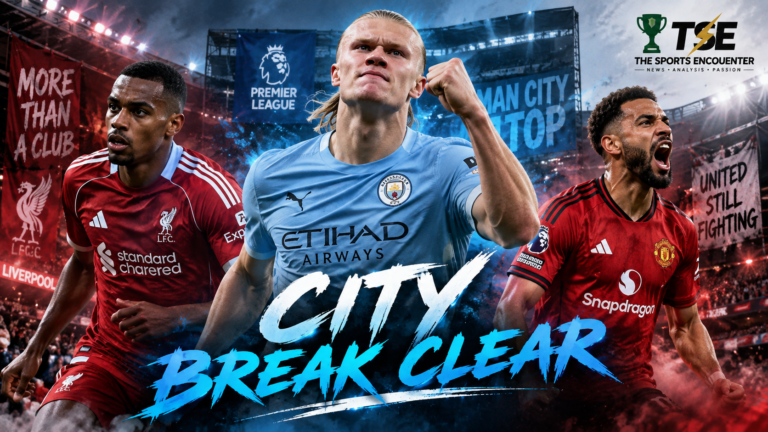 Premier LeaguePremier League: Man City Take Control as Isak Delivers and Manchester United Stumble Again
Frequently Asked Questions About Manchester United’s Struggles
Why are Manchester United struggling in the 2026-27 season?
United’s early problems involve defensive instability, poor management of winning positions, inconsistent finishing, injuries and an unbalanced squad. They have also struggled to reproduce the tactical consistency achieved under Michael Carrick during the previous season.
Where are Manchester United in the Premier League table?
Manchester United were 13th with six points from six league matches as of October 14, 2026, following one victory, three draws and two defeats.
How many games have Manchester United won this season?
United have won two of their opening nine competitive matches in 2026-27. Their victories came against Ipswich Town in the Premier League and Sabah FK in the Champions League.
What did Lisandro Martínez say about Manchester United’s hierarchy?
Martínez criticized the club’s failure to invest sufficiently in the squad following its successful 2025-26 season. He singled out director of football Jason Wilcox while acknowledging that the players also needed to improve.
Is Michael Carrick responsible for Manchester United’s problems?
Carrick is responsible for tactics, preparation and match performances, but the problems also involve recruitment, squad depth, injuries and longer-term organizational decisions. He guided United to third place last season, establishing a substantial record of improvement before the current downturn.
How did Manchester United perform in the last four Premier League seasons?
United finished third with 75 points in 2022-23, eighth with 60 in 2023-24, 15th with 42 in 2024-25, and third with 71 in 2025-26.
Why did Manchester United lose to Atlético Madrid?
United conceded to Pablo Barrios inside the first minute, failed to convert several chances, and were reduced to ten players after Leny Yoro’s red card. Ademola Lookman scored Atlético’s second goal to secure a 2-0 Champions League victory.
Did Manchester United strengthen their squad in summer 2026?
United signed Carlos Baleba, Andrey Santos and Youri Tielemans as part of a midfield rebuild. Critics have questioned the limited reinforcement in other positions, particularly defense and attacking cover.
When is Manchester United’s next match?
Manchester United are scheduled to visit Leeds United in the Premier League on October 18, 2026, followed by an away Champions League fixture against Como on October 21.
Manchester United
- What’s Wrong With Manchester United? Inside the Failures Holding the Red Devils Hostage
- Manchester United’s Five-Game Alarm: 14 Reasons Carrick’s Revival Has Stalled
- Premier League: Man City Take Control as Isak Delivers and Manchester United Stumble Again
- Smilla Holmberg Saves Arsenal at 95 Minutes as Manchester United’s Defensive Reset Falls Seconds Short
- Brighton Erase 2-0 Deficit to Knock Manchester United Out of League Cup 2026