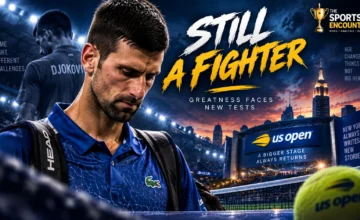
US Open 2026: Rain Delays Qualifying Dreams as Wong, Montgomery, and Dimitrov Break Through
Rain interrupted the final round of US Open 2026 qualifying on August 27, but Coleman Wong, Robin Montgomery, Grigor Dimitrov and six others secured main-draw places as the men’s and women’s singles draws were also unveiled.
The US Open moved one step closer to its main event on August 27, but New York refused to let Fan Week end neatly.
Rain disrupted what was supposed to be the final day of singles qualifying at the USTA Billie Jean King National Tennis Center, leaving much of the field waiting until Friday to learn whether their US Open would continue.
Nine players did escape the uncertainty.
Coleman Wong, Robin Montgomery and Grigor Dimitrov were among the biggest names to secure main-draw places, while Toby Samuel, Tomas Barrios Vera, Andrea Guerrieri, Lucrezia Stefanini, Polina Iatcenko and Gabriela Knutson also completed the three-match qualifying journey.
For others, including Kei Nishikori, Qinwen Zheng and Bianca Andreescu, the final step remained unfinished when weather pushed the conclusion of qualifying into August 28.
Thursday was also draw day.
Alexander Zverev became the top seed in the men’s tournament following Jannik Sinner’s withdrawal, defending champion Carlos Alcaraz learned the first obstacle awaiting him after a long injury layoff, and Novak Djokovic discovered the route standing between him and a record 25th Grand Slam title.
On the women’s side, Aryna Sabalenka’s attempt to win a third consecutive US Open gained its first structure, while Coco Gauff, Iga Swiatek, Elena Rybakina, Mirra Andreeva and Venus Williams all learned where their New York campaigns will begin.
For readers following the tournament from Fan Week through championship weekend, The Sports Encounter Tennis Hub brings together our US Open reporting, Grand Slam analysis and player coverage.
US Open August 27, 2026: What Happened?
| Storyline | August 27 Outcome |
|---|---|
| Men’s qualifying | Five players secured main-draw places before rain interrupted the schedule |
| Women’s qualifying | Four players qualified before remaining matches were moved to Friday |
| Coleman Wong | Defeated Dusan Lajovic 6-4, 6-3 |
| Robin Montgomery | Defeated Carson Branstine 2-6, 6-2, 6-2 |
| Grigor Dimitrov | Advanced after Otto Virtanen withdrew |
| Men’s singles draw | Alexander Zverev leads the top half; Carlos Alcaraz anchors the bottom half |
| Women’s singles draw | Aryna Sabalenka begins title defense against Camila Osorio |
| Main-draw singles start | Sunday, August 30 |
Rain Changes the Final Day of US Open Qualifying
Thursday had been designed as a day of closure.
Three victories in qualifying would deliver a place in the 128-player singles main draws. One defeat would end a player’s tournament before the first official round began.
Instead, weather turned the final qualifying round into a two-day test.
The ATP confirmed that rain pushed most men’s final-round qualifying matches to Friday, while the WTA confirmed the same disruption on the women’s side.
That left two very different groups of players walking away from Flushing Meadows on Thursday night.
Nine knew they would return for the main tournament.
Everyone else had to wait.
The uncertainty added another chapter to a Fan Week that had already produced far more competitive significance than a conventional pre-tournament build-up. Wednesday had delivered a Grand Slam title for Karolina Muchova and Jakub Mensik, along with another round of qualifying pressure covered in The Sports Encounter’s August 26 US Open wrap.
Thursday replaced the trophy ceremony with something more uncomfortable.
Survival.
Coleman Wong Turns Another Qualifying Run Into a Main-Draw Place
Wong produced one of Thursday’s cleanest qualifying performances.
The Hong Kong player defeated experienced Serbian Dusan Lajovic 6-4, 6-3 to earn a place in the US Open main draw for the second consecutive year.
His progress matters because 2025 established that qualifying was not his ceiling.
Wong reached the third round in New York last year after coming through qualifying, eventually losing a five-set match to Andrey Rublev.
That run made him the first Hong Kong man of the Open Era to compete in a Grand Slam main draw.
He returns in 2026 with considerably more evidence that he belongs there.
The 22-year-old had already reached his first ATP semifinal earlier this summer and broken into the Top 100 before arriving in New York.
His qualifying campaign also developed in the right direction. After dropping his opening set of the tournament, Wong won six consecutive sets to reach the main draw.
Against Lajovic, he did not need a comeback, a deciding set or a weather restart.
He simply finished the job before the rain could become part of his story.
Robin Montgomery Recovers From a Set Down to Return to the US Open
Montgomery’s route was very different.
Carson Branstine took the opening set 6-2, leaving the American one set from elimination.
Montgomery answered with consecutive 6-2 sets of her own.
The 2-6, 6-2, 6-2 victory sends her into the US Open main draw for the third time and continues a season that has already represented a significant comeback.
Montgomery won the US Open girls’ singles and doubles titles in 2021, but injuries complicated the transition into the senior game. A wrist problem later kept her out for nine months.
Her 2026 recovery has changed the trajectory again.
She won her first WTA title on grass at the Libéma Open earlier this season and also qualified for Wimbledon.
Now she has earned her New York place through three rounds rather than receiving it through reputation or a wildcard.
That distinction makes Thursday’s comeback particularly meaningful.
Dimitrov Returns Without Having to Play the Final Match
Grigor Dimitrov’s final qualifying round ended before it began.
Otto Virtanen withdrew, giving the Bulgarian a walkover into the main draw.
The circumstances were unusual, but the destination matters more.
Dimitrov had already defeated Lorenzo Giustino and Timofey Skatov in straight sets during the first two rounds of qualifying.
His reward is a return to a tournament that once produced one of the best Grand Slam runs of his career.
Dimitrov reached the US Open semifinals in 2019 and the quarterfinals in 2024. He then missed last year’s tournament after suffering a pectoral injury at Wimbledon.
His presence in qualifying at all illustrated how dramatically injuries and ranking movement can alter the position of even an established former world No. 3.
Thursday restored something more familiar.
Dimitrov will be part of the US Open main draw again.
Samuel, Barrios Vera and Guerrieri Complete the Men’s Qualifying Group
Three other men secured their places before the rain took control of the schedule.
Toby Samuel advanced after Cristian Garin retired during their deciding set. Garin had taken the opener 6-4, Samuel responded by winning the second set 6-4 and had moved 5-0 ahead in the third when the match ended.
Tomas Barrios Vera produced a more straightforward result, beating Daniel Rincon 6-4, 6-3.
Andrea Guerrieri also qualified in straight sets, defeating Aziz Dougaz 6-2, 6-4.
Men Who Qualified for the US Open on August 27
| Qualifier | Opponent | Result |
|---|---|---|
| Coleman Wong | Dusan Lajovic | 6-4, 6-3 |
| Toby Samuel | Cristian Garin | 4-6, 6-4, 5-0 ret. |
| Tomas Barrios Vera | Daniel Rincon | 6-4, 6-3 |
| Andrea Guerrieri | Aziz Dougaz | 6-2, 6-4 |
| Grigor Dimitrov | Otto Virtanen | Walkover |
Stefanini, Iatcenko and Knutson Earn Grand Slam Breakthroughs
Montgomery carried the most recognizable American storyline among the women’s qualifiers, but Thursday also created three important career milestones.
Lucrezia Stefanini defeated American teenager Julieta Pareja 6-4, 6-3 to reach the US Open main draw for the first time.
Stefanini had already competed in the other three Grand Slam main draws. New York was the missing piece.
Polina Iatcenko went one step further in personal significance.
The 22-year-old defeated Andrea Lazaro Garcia 7-5, 6-1 to qualify for the first Grand Slam main draw of her career.
Gabriela Knutson achieved the same breakthrough at age 29.
She beat Ekaterine Gorgodze 6-4, 6-4 to earn her first Grand Slam main-draw appearance.
Qualifying tournaments are often described primarily through the established names trying to return to the main event.
Iatcenko and Knutson offered the opposite perspective.
For them, Thursday was not about returning.
It was about arriving.
Women Who Qualified for the US Open on August 27
| Qualifier | Opponent | Result |
|---|---|---|
| Robin Montgomery | Carson Branstine | 2-6, 6-2, 6-2 |
| Lucrezia Stefanini | Julieta Pareja | 6-4, 6-3 |
| Polina Iatcenko | Andrea Lazaro Garcia | 7-5, 6-1 |
| Gabriela Knutson | Ekaterine Gorgodze | 6-4, 6-4 |
Nishikori, Zheng and Andreescu Must Wait Until Friday
The rain left several of Fan Week’s biggest qualifying stories unresolved.
Kei Nishikori still needs to complete his attempt to reach another US Open main draw, with fellow Japanese player Rei Sakamoto standing between him and the tournament.
Qinwen Zheng also remains in the qualifying fight.
The former world No. 4 and two-time US Open quarterfinalist entered qualifying after injury disrupted her recent Grand Slam appearances. Her presence in the preliminary draw had already made this year’s women’s qualifying unusually strong.
Bianca Andreescu is another former major champion forced to return on Friday.
The 2019 US Open champion has been trying to reach her first Grand Slam main draw since the 2024 US Open.
That means the final qualifying day will still contain names normally associated with the main tournament rather than the week before it.
The Singles Draw Turns August 27 Into More Than a Qualifying Day
The qualifying courts were only half the story.
Thursday also produced the men’s and women’s singles draws, finally converting weeks of speculation into actual tournament paths.
The Sports Encounter has already broken down the biggest implications in our detailed report on the US Open 2026 singles draws.
The official US Open draw analysis confirms the unusual balance created by injuries, comeback stories and the distribution of former champions.
Jannik Sinner’s withdrawal elevated Alexander Zverev to the top seed.
Zverev begins against Lorenzo Sonego.
Defending champion Carlos Alcaraz leads the bottom half and opens against Roman Safiullin after spending roughly five months away from singles competition because of a wrist injury.
That comeback has been one of the central themes of the tournament since Alcaraz returned to competition in mixed doubles with Serena Williams earlier this week. Their run ended in the quarterfinals, but TSE’s report on Serena and Alcaraz’s US Open return showed why even two abbreviated doubles matches mattered to his preparation.
Djokovic’s Route to No. 25 Begins With Mariano Navone
Novak Djokovic will begin his attempt to win a record 25th Grand Slam singles title against Mariano Navone.
He sits in Alcaraz’s half of the draw, creating the possibility of a major semifinal between the defending champion and the most successful men’s Grand Slam player of the era.
The broader men’s picture had already changed before draw day.
Sinner’s absence, Alcaraz’s uncertain match rhythm and Zverev’s breakthrough Grand Slam season created an opening examined in our analysis of Zverev, Djokovic and Ben Shelton’s US Open chances.
Shelton now begins against Tallon Griekspoor.
Arthur Fils faces Stefanos Tsitsipas in one of the strongest opening-round matches on paper.
Former champions also collide with established threats immediately.
Stan Wawrinka faces Matteo Berrettini in what could become the final US Open singles match of Wawrinka’s career if he loses.
The Swiss veteran’s presence in the field itself required a late change after he initially appeared set to miss New York. TSE followed that unusual sequence in our report on Wawrinka’s late US Open wildcard.
Key Men’s First-Round Matches Revealed August 27
| Player | First-Round Opponent | Why It Matters |
|---|---|---|
| Alexander Zverev | Lorenzo Sonego | Top seed begins pursuit of another major title |
| Carlos Alcaraz | Roman Safiullin | Defending champion returns after long injury layoff |
| Novak Djokovic | Mariano Navone | Djokovic begins chase for Grand Slam No. 25 |
| Ben Shelton | Tallon Griekspoor | Leading American contender receives dangerous opener |
| Stefanos Tsitsipas | Arthur Fils | One of Round 1’s strongest unseeded-versus-seeded style matchups |
| Stan Wawrinka | Matteo Berrettini | Potential final US Open match for the 2016 champion |
Sabalenka’s Three-Peat Attempt Begins Against Camila Osorio
The women’s draw produced just as many questions.
Aryna Sabalenka will begin her attempt to win a third consecutive US Open title against Camila Osorio.
Sabalenka won New York in both 2024 and 2025, but her 2026 season has not given her the same Grand Slam control.
Jessica Pegula and reigning Wimbledon champion Linda Noskova are positioned in the same top half.
The bottom half carries its own concentration of champions and contenders.
Coco Gauff opens against Zeynep Sonmez.
Iga Swiatek begins against Xiyu Wang.
Elena Rybakina faces American wildcard Thea Frodin, while Mirra Andreeva opens against Janice Tjen.
Naomi Osaka begins against Anastasia Zakharova.
No opening match, however, carries quite the same generational intrigue as Venus Williams against Sofia Kenin.
Venus Williams Gets an All-American Opening Against Sofia Kenin
Venus Williams will play another US Open singles match at age 46.
Her opponent is fellow American and former Australian Open champion Sofia Kenin.
The two have never met at tour level.
Both entered the tournament through wildcards, but their career contexts could hardly be more different.
Venus is returning to a tournament she first played almost three decades ago and won twice.
Kenin is trying to rebuild after slipping outside the Top 100.
The winner could face Jessica Pegula in the second round.
Venus’ singles appearance is not the only Williams storyline still developing in New York. She and Serena have also received a women’s doubles wildcard, bringing one of tennis’ greatest partnerships back to a Grand Slam. TSE examined that history in our report on Serena and Venus Williams’ US Open doubles reunion.
Key Women’s First-Round Matches Revealed August 27
| Player | First-Round Opponent | Main Storyline |
|---|---|---|
| Aryna Sabalenka | Camila Osorio | Attempting third consecutive US Open title |
| Coco Gauff | Zeynep Sonmez | Former champion returns with strong summer form |
| Iga Swiatek | Xiyu Wang | 2022 champion begins another New York title pursuit |
| Elena Rybakina | Thea Frodin | Grand Slam champion faces American wildcard |
| Naomi Osaka | Anastasia Zakharova | Two-time champion continues comeback |
| Venus Williams | Sofia Kenin | Two former major champions meet in all-American opener |
Fan Week Has Already Changed the Meaning of “Before the US Open”
The main singles tournament has not begun, yet the 2026 US Open has already produced a surprising amount of consequential tennis.
Serena Williams returned to competition at Arthur Ashe Stadium alongside Alcaraz.
Novak Djokovic and Sabalenka were eliminated by doubles specialists Katerina Siniakova and Henry Patten, a result TSE examined in our analysis of why the redesigned mixed-doubles event rewarded specialists.
Muchova and Mensik won the mixed doubles title.
Wawrinka regained a place in what will be his final US Open.
Serena and Venus received another doubles opportunity.
Gael Monfils has also arrived for what is expected to be his last US Open, following an emotional Fan Week mixed-doubles run with wife Elina Svitolina. Their story is explored in The Sports Encounter’s feature on Monfils and Svitolina in New York.
That accumulation of stories has changed the role of the week before the singles tournament.
It is no longer merely practice, ticket promotions and preparation.
Players are already winning trophies, losing tournament opportunities, fighting through qualifying and learning exactly who stands between them and a Grand Slam title.
What Comes Next at the US Open?
The unfinished final qualifying matches will resume Friday, August 28.
That means Nishikori, Zheng, Andreescu and several other players still need to complete the final step into the main draw.
Once those places are settled, attention will shift fully toward Sunday.
The US Open men’s and women’s singles main draws begin on August 30 and continue through September 13.
The complete tournament framework, dates, Fan Week structure, player field and major pre-tournament narratives are available in The Sports Encounter’s complete US Open 2026 curtain-raiser.
The Sports Encounter Verdict
August 27 should have been the day qualifying ended.
Instead, it became a day split between certainty and waiting.
Wong walked away knowing his second consecutive US Open main draw was secure.
Montgomery completed another important step in a comeback season.
Dimitrov returned to familiar Grand Slam territory.
Stefanini finally added New York to her Grand Slam résumé, while Iatcenko and Knutson earned their first appearances on a major main-draw stage.
Nishikori, Zheng and Andreescu received no such closure.
The rain made them wait another day.
At the same time, the singles draw changed the tournament from a collection of contenders into a map of actual confrontations.
Alcaraz knows who will test his match readiness first.
Djokovic can see the route toward No. 25.
Sabalenka can see the path toward three straight New York titles.
Venus Williams knows which former major champion will stand across the net when another remarkable US Open chapter begins.
That was the real significance of Thursday.
Some players reached the tournament.
Everyone else finally learned what the tournament might demand from them.
Frequently Asked Questions
What happened at the US Open on August 27, 2026?
The final round of men’s and women’s singles qualifying began, but rain forced many matches to be postponed until August 28. Five men and four women secured main-draw places before play was disrupted. The men’s and women’s singles draws were also released.
Who qualified for the US Open men’s main draw on August 27?
Coleman Wong, Grigor Dimitrov, Toby Samuel, Tomas Barrios Vera and Andrea Guerrieri secured men’s singles main-draw places on August 27.
Who qualified for the US Open women’s main draw on August 27?
Robin Montgomery, Lucrezia Stefanini, Polina Iatcenko and Gabriela Knutson secured women’s singles main-draw places before rain interrupted the qualifying finale.
Did Grigor Dimitrov qualify for the 2026 US Open?
Yes. Dimitrov reached the main draw after Otto Virtanen withdrew before their final-round qualifying match. Dimitrov had won his first two qualifying matches in straight sets.
Did Coleman Wong qualify for the 2026 US Open?
Yes. Wong defeated Dusan Lajovic 6-4, 6-3 to qualify for the US Open main draw for the second consecutive year.
Did Robin Montgomery qualify for the US Open?
Yes. Montgomery recovered from losing the first set to beat Carson Branstine 2-6, 6-2, 6-2 and earn her third US Open main-draw appearance.
Why was US Open qualifying postponed?
Rain disrupted the final qualifying round on August 27 and forced most remaining matches to be completed on Friday, August 28.
Who does Carlos Alcaraz play in the first round of the 2026 US Open?
Defending champion Carlos Alcaraz will face Roman Safiullin in the first round.
Who does Novak Djokovic play first at the 2026 US Open?
Djokovic begins his pursuit of a record 25th Grand Slam singles title against Mariano Navone.
Who does Aryna Sabalenka play in the first round?
Two-time defending champion Aryna Sabalenka opens against Camila Osorio as she attempts to win a third consecutive US Open women’s singles title.

Athletics
Weltklasse Zurich 2026: Two World Records, Werro’s 1:53.70 and a Night of Historic Marks
Weltklasse Zurich 2026 produced two world records, Audrey Werro’s stunning 1:53.70, a 6.25m clearance from Mondo Duplantis and a remarkable collection of world leads, national records and historic performances across two days.
Weltklasse Zurich 2026 started above the concourse of Zurich Main Station and ended with the Letzigrund track producing one of the most extraordinary collections of performances seen anywhere in athletics this season.
Across August 26 and 27, the final qualifying stop of the 2026 Wanda Diamond League delivered two world records, multiple world leads, national records, meeting records, a Diamond League record and several performances that pushed established events toward territory once considered almost unreachable.
Alison dos Santos ran 45.80 seconds to break Karsten Warholm’s men’s 400m hurdles world record. Less than 40 minutes later, Masai Russell lowered the women’s 100m hurdles record to 12.09. Audrey Werro then came within 0.42 seconds of the oldest women’s outdoor world record still standing, while Mondo Duplantis and Emmanouil Karalis turned the pole vault into a contest at heights few athletes in history have even attempted.
The Sports Encounter has already examined Dos Santos’ 45.80 world record in detail, as well as Russell’s historic 12.09 sprint-hurdles performance. This wrap brings the entire Zurich meeting together, including the performances that might have dominated a normal Diamond League night but were almost overshadowed by the two global records.
Official performances and placings can be checked through the World Athletics Weltklasse Zurich results.
Weltklasse Zurich 2026 at a Glance
| Detail | Information |
|---|---|
| Meeting | Weltklasse Zurich 2026 |
| Series | Wanda Diamond League |
| Dates | August 26-27, 2026 |
| Venues | Zurich Main Station and Letzigrund Stadium |
| Major Stadium Attendance | Approximately 25,000 spectators |
| World Records | 2 |
| Men’s 400m Hurdles WR | Alison dos Santos, 45.80 |
| Women’s 100m Hurdles WR | Masai Russell, 12.09 |
| Women’s 800m | Audrey Werro, 1:53.70 |
| Men’s Pole Vault | Mondo Duplantis, 6.25m |
| Next Diamond League Stop | Final in Brussels, September 4-5 |
Complete Weltklasse Zurich 2026 Winners
| Event | Winner | Country | Performance | Significance |
|---|---|---|---|---|
| Women’s Pole Vault, Main Station | Hana Moll | USA | 4.90m | Personal best |
| Women’s 100m | Julien Alfred | Saint Lucia | 10.70 | National record |
| Women’s 200m, pre-program | Fabienne Hoenke | Switzerland | 22.53 | Home victory |
| Women’s 800m | Audrey Werro | Switzerland | 1:53.70 | World lead, Diamond League record, meeting record, national record |
| Women’s 1500m, pre-program | Ludovica Cavalli | Italy | 4:03.27 | Victory |
| Women’s 100m Hurdles | Masai Russell | USA | 12.09 | World record |
| Women’s 400m Hurdles | Anna Cockrell | USA | 52.13 | World lead and meeting record |
| Women’s 3000m Steeplechase | Faith Cherotich | Kenya | 8:55.82 | Victory |
| Women’s High Jump | Nicola Olyslagers | Australia | 2.02m | Season best |
| Men’s 200m | Kenny Bednarek | USA | 19.62 | World lead |
| Men’s 400m, pre-program | Yuki Joseph Nakajima | Japan | 44.62 | Victory |
| Men’s 800m | Emmanuel Wanyonyi | Kenya | 1:41.76 | World lead |
| Men’s 1500m | Cole Hocker | USA | 3:31.71 | First Diamond League victory |
| Men’s 3000m | Parker Wolfe | USA | 7:27.43 | Meeting record |
| Men’s 110m Hurdles, pre-program | Jason Joseph | Switzerland | 13.11 | Home victory |
| Men’s 400m Hurdles | Alison dos Santos | Brazil | 45.80 | World record |
| Men’s Pole Vault | Mondo Duplantis | Sweden | 6.25m | Meeting record and outdoor world lead |
| Men’s Long Jump | Miltiadis Tentoglou | Greece | 8.45m | Victory |
| Men’s Shot Put | Jordan Geist | USA | 22.53m | Personal best |
| Men’s Javelin | Rumesh Tharanga Pathirage | Sri Lanka | 92.07m | Second 92m-plus competition of his season |
| Men’s 1500m Wheelchair, pre-program | Marcel Hug | Switzerland | 3:02.41 | Home victory |
Alison dos Santos Runs Straight Through Warholm’s World Record
The moment that changed the scale of the meeting came in the men’s 400m hurdles.
Dos Santos entered Zurich having beaten Warholm repeatedly during 2026, including a 46.43 world lead in Silesia only days earlier. Warholm remained in exceptional form himself after running 46.63 to win another European title in Birmingham.
Zurich removed any uncertainty about where the event currently stands.
Dos Santos made up ground on Warholm rapidly and had effectively erased the stagger by halfway. His final two hurdle clearances remained controlled despite the pace, and the Brazilian crossed the line in 45.80.
Warholm’s 45.94 Olympic world record from Tokyo had survived for five years. Dos Santos lowered it by 0.14 seconds while the former record holder was racing directly against him.
Warholm finished second in 46.69.
The significance of that number should not be missed. Warholm remained inside historically elite territory, yet Dos Santos finished almost nine-tenths ahead.
That performance followed a rivalry already documented in The Sports Encounter’s Birmingham European Championships wrap, where Warholm had looked anything but vulnerable.
Masai Russell Makes It Two World Records in Less Than 40 Minutes
Zurich barely had time to absorb the first world record before another one arrived.
Russell entered the women’s 100m hurdles having already run 12.14 earlier this season, only two hundredths outside Tobi Amusan’s 12.12 record.
The Olympic champion finally broke through at Letzigrund.
With the wind reading exactly 0.0 m/s, Russell ran 12.09 to become the first woman to break 12.10 in legal conditions.
Amusan was there to see her record disappear from the lane beside her. The Nigerian responded with a season-best 12.23 for second, while European champion Nadine Visser took third in a season-best 12.34.
Two hurdles events had now produced two world records in the same stadium within approximately 40 minutes.
Audrey Werro Runs 1:53.70 and Moves Within 0.42 of History
If Zurich had produced no world records, Werro’s women’s 800m might have been the unquestioned story of the meeting.
The Swiss star won in 1:53.70, improving her own world lead and Diamond League record while also setting meeting and national records.
Jarmila Kratochvílová’s 1:53.28 world record, set in 1983, survived by only 0.42 seconds.
Werro’s progression through 2026 has changed the entire balance of the event. She had already beaten Keely Hodgkinson to European gold in Birmingham, a victory examined in TSE’s analysis of her championship-record European triumph.
Hodgkinson was originally expected in Zurich before withdrawing because her body was not ready to race again after the European Championships. That development had placed even more attention on Werro, Broeders-Bol and Georgia Hunter Bell, as explained in our Zurich 800m preview following Hodgkinson’s withdrawal.
Femke Broeders-Bol Runs 1:54.71 and Still Finishes Second
The depth of the race was almost as remarkable as Werro’s winning time.
Femke Broeders-Bol ran aggressively behind the pacemaker and held the lead until Werro moved past with roughly 200 meters remaining.
Broeders-Bol crossed the line in 1:54.71.
That performance lowered her Dutch national record by 0.70 seconds, took her below 1:55 for the first time and moved her to ninth on the all-time women’s 800m list.
She finished second.
Hunter Bell then ran 1:55.03 for third, giving Zurich three athletes below 1:56 in one of the fastest women’s 800m races ever staged.
The scale of Broeders-Bol’s transition into middle-distance running is examined more closely in our report on her 1:54.71 Dutch record.
Duplantis and Karalis Turn Six Meters Into the Beginning of the Contest
Men’s pole vault supplied the strongest field-event performance of the night.
Mondo Duplantis cleared 6.25m to win, establishing a Weltklasse Zurich meeting record and the outdoor world lead.
Yet the most important development may have been what happened behind him.
Emmanouil Karalis cleared 6.20m, improving his Greek national record and forcing Duplantis to continue competing rather than winning the event before turning his attention toward record attempts.
Sondre Guttormsen cleared 6.00m for third. Chris Nilsen and Ernest John Obiena both reached 5.90m, reflecting the depth of a competition operating at an unusually high level.
Karalis passed at 6.25m after Duplantis cleared it, and both athletes then attempted 6.32m, one centimeter beyond Duplantis’ world record.
Neither succeeded.
The fact that two athletes were simultaneously attempting a height above the world record was significant enough on its own. Our full Duplantis-Karalis Zurich analysis examines how Karalis is changing the competitive dynamic at the top of the event.
Wanyonyi and Sedjati Both Break 1:42
The men’s 800m had been advertised as a possible world-record attempt, and the opening lap reflected that ambition.
The pacemaker reached 400 meters in 49.20.
Olympic champion Emmanuel Wanyonyi took control after 600 meters, but Djamel Sedjati refused to let him escape.
Wanyonyi held on in 1:41.76, the fastest time in the world this season. Sedjati finished only seven hundredths behind in a season-best 1:41.83.
The world record survived, but two men running below 1:42 in the same late-season race reinforced just how high the current standard has become.
Julien Alfred Wins a 10.70 Photo Finish
The women’s 100m delivered one of the tightest finishes of the meeting.
Julien Alfred and Melissa Jefferson-Wooden both stopped the clock at 10.70 despite a 0.7 m/s headwind.
The difference required a photo finish.
Alfred won by five thousandths of a second, setting a Saint Lucian national record. Jefferson-Wooden’s long unbeaten streak over 100m ended despite matching the winning time.
Sha’Carri Richardson finished third in 10.97.
World Athletics noted that it was only the second race in history in which two women had run 10.70 or faster.
Kenny Bednarek Produces the Fastest 200m of 2026
Kenny Bednarek removed most of the suspense from the men’s 200m before the finish.
The American powered clear to win in 19.62, setting a world lead and finishing only 0.05 outside his personal best.
South Africa’s Sinesipho Dambile finished 0.20 seconds behind.
Bednarek’s performance was another example of why Zurich cannot be reduced to its world records. A 19.62 sprint would normally have been one of the main international athletics headlines of the week.
Anna Cockrell Takes Over the Women’s 400m Hurdles World Lead
Anna Cockrell delivered another major hurdles performance for the United States.
She ran 52.13 to break the Zurich meeting record and take the world lead from Emma Zapletalová.
Zapletalová had been level with Cockrell entering the home straight but struck the penultimate hurdle and eventually faded to sixth.
Former world record holder Dalilah Muhammad ran a season-best 53.16 to finish second.
Cockrell’s winning time took 0.05 seconds from the previous meeting record set in 2025.
Parker Wolfe Erases a 40-Year Zurich Record
Some records survive because nobody gets close enough to threaten them.
Saïd Aouita’s Zurich 3000m mark had lasted since 1986.
Parker Wolfe ended that run with a decisive late move.
Australia’s Cameron Myers attacked with around 250 meters remaining, but Wolfe responded and moved ahead inside the final 100 meters. He crossed in 7:27.43, taking approximately five seconds from the old meeting record.
Graham Blanks completed an American one-two in 7:27.92, while Myers finished third in 7:27.97.
Seven athletes broke 7:30.
Pathirage Throws Beyond 92 Meters Again
Sri Lanka’s Rumesh Tharanga Pathirage entered Zurich having already produced a 92.62m personal best earlier in 2026.
Repeating that level was always going to matter almost as much as the original breakthrough.
Pathirage delivered.
Anderson Peters led the javelin competition after the opening round with 86.93m before Pathirage moved ahead at 88.23m. The Sri Lankan extended his lead to 89.90m and then launched 92.07m with his final attempt.
The throw finished only 21 centimeters short of the 30-year-old Zurich meeting record of 92.28m.
The significance of producing another 92m-plus competition is explored in The Sports Encounter’s full Pathirage Zurich report.
Olyslagers Beats Mahuchikh in the High Jump
Nicola Olyslagers added another victory in one of women’s high jump’s strongest current rivalries.
The Australian cleared a season-best 2.02m and was the only athlete over the winning height.
Iryna Gerashchenko reached 2.00m, equaling her personal best, to finish second.
World record holder Yaroslava Mahuchikh cleared 1.96m and finished equal fourth.
Olyslagers’ result reinforced a competitive pattern that has developed across recent championships and Diamond League meetings. Mahuchikh remains the world record holder, but Olyslagers continues to accumulate victories in direct competition.
Faith Cherotich Wins Another Fast Steeplechase
Faith Cherotich defended her Zurich success in the women’s 3000m steeplechase with an 8:55.82 victory.
The world champion narrowly held off fellow Kenyan Doris Lemngole, with only 0.12 seconds separating them.
Peruth Chemutai also finished below nine minutes, running 8:58.28.
The result sets up another high-level confrontation at the Diamond League Final, where the women’s steeplechase field will again bring together several of the fastest runners of 2026.
Jordan Geist Produces the Shot Put Surprise
Jordan Geist entered a men’s shot put field containing several more established global names and left with a 22.53m personal best.
The American beat Jamaica’s Rajindra Campbell, who reached 22.22m.
Italian favorite Leonardo Fabbri finished third.
Geist’s win was one of the meeting’s quieter surprises, but a 22.53m personal best in that field gave it genuine international weight.
Tentoglou Survives a Long Jump Battle by Two Centimeters
Miltiadis Tentoglou needed 8.45m to win a high-quality men’s long jump.
Tajay Gayle finished only two centimeters behind at 8.43m.
Wayne Pinnock took third with 8.33m, while Jorge Hodelin was fourth at 8.32m.
Swiss favorite Simon Ehammer also broke eight meters at Letzigrund for the first time, reaching 8.14m and finishing sixth.
Cole Hocker Finally Gets His First Diamond League Win
Cole Hocker already owned titles considerably bigger than a regular Diamond League meeting win.
The Olympic 1500m champion and world 5000m champion had nevertheless never won a Diamond League race.
Zurich changed that.
Hocker timed his finish effectively and crossed in 3:31.71, narrowly ahead of Kenya’s Phanuel Koech in 3:31.84.
Jakob Ingebrigtsen finished fifth in 3:32.16 as he continued his return to elite racing following his injury-disrupted season.
Hana Moll Opens Zurich With a 4.90m Breakthrough
The meeting had actually begun one day before the Letzigrund spectacle.
Zurich Main Station was converted into an athletics arena for the women’s pole vault on August 26, with more than 3,000 spectators watching from the temporary grandstand and standing areas.
Hana Moll won with a personal-best 4.90m.
Home favorite Angelica Moser cleared 4.85m for second, while Katie Moon and Sandi Morris shared third at 4.75m.
The depth was exceptional. Six women cleared at least 4.75m, something the official Zurich organizers noted had happened in only three previous women’s pole vault competitions.
The full competition is documented in the official Weltklasse Zurich Main Station report.
Why Zurich 2026 Was Bigger Than Two World Records
The obvious temptation is to remember Zurich through Dos Santos and Russell alone.
Both deserve that attention.
Yet the true scale of the meeting becomes clearer when the performances underneath those records are placed beside them.
| Athlete | Performance | Achievement |
|---|---|---|
| Alison dos Santos | 45.80 | Men’s 400m hurdles world record |
| Masai Russell | 12.09 | Women’s 100m hurdles world record |
| Audrey Werro | 1:53.70 | World lead, Diamond League record, 0.42 from WR |
| Femke Broeders-Bol | 1:54.71 | Dutch 800m record |
| Mondo Duplantis | 6.25m | Meeting record and outdoor world lead |
| Emmanouil Karalis | 6.20m | Greek pole vault record |
| Emmanuel Wanyonyi | 1:41.76 | Men’s 800m world lead |
| Kenny Bednarek | 19.62 | Men’s 200m world lead |
| Anna Cockrell | 52.13 | World lead and meeting record |
| Parker Wolfe | 7:27.43 | 40-year-old meeting record broken |
| Julien Alfred | 10.70 | Saint Lucia 100m national record |
| Rumesh Pathirage | 92.07m | Second 92m-plus javelin performance of 2026 |
Those marks came from sprints, hurdles, middle-distance races, distance running, jumps and throws.
That distribution is what separates a great individual performance from a great meeting.
Zurich did not produce one extraordinary event surrounded by ordinary ones. High-level performances kept arriving across almost every discipline.
Zurich Also Changed the Narrative Heading Into Brussels
Zurich was the 14th and final qualifying meeting of the 2026 Wanda Diamond League season.
The series now moves to Brussels for its two-day Final on September 4 and 5, where all 32 Diamond League champions will be crowned.
Several Zurich winners will arrive with very different expectations after what happened at Letzigrund.
Dos Santos is no longer merely the athlete who keeps beating Warholm. He now owns the world record.
Russell moves from world-record challenger to world-record holder.
Werro enters the closing phase of the season with 1:53.28 no longer looking impossibly distant.
Karalis has shown he can remain in Duplantis’ competition beyond six meters, while Wanyonyi and Sedjati have again pushed the men’s 800m under 1:42.
The broader season then continues toward the inaugural World Athletics Ultimate Championship in September, where athletics will introduce a different championship format and several rule innovations. TSE has explained those changes in our complete World Athletics Ultimate Championship rules guide.
The Sports Encounter Verdict
Weltklasse Zurich has built its reputation over decades by attracting fields capable of producing performances that matter beyond one evening.
The 2026 edition lived up to that reputation in an unusually complete way.
Dos Santos and Russell changed two world-record tables. Werro pushed a 43-year-old standard deeper into view. Duplantis and Karalis took the pole vault beyond 6.20m in the same competition. Wanyonyi and Sedjati both broke 1:42. Alfred needed thousandths to separate herself from Jefferson-Wooden. Cockrell, Bednarek and Wolfe produced world-leading or record-breaking performances of their own.
Even the events outside the central spotlight delivered elite marks.
Pathirage went beyond 92 meters again. Olyslagers cleared 2.02m. Geist produced a personal best to defeat a world-class shot put field. Tentoglou survived an 8.43m challenge from Gayle. Hocker finally collected his first Diamond League victory.
The meeting started with Moll flying over 4.90m above Zurich Main Station and finished with an entire athletics season looking slightly different.
The official World Athletics Zurich report describes the night as unforgettable.
That description is difficult to argue with.
Brussels will award the trophies.
Zurich changed the standards the finalists will carry there.
Frequently Asked Questions
When was Weltklasse Zurich 2026 held?
Weltklasse Zurich 2026 took place across August 26 and 27. The women’s pole vault was staged at Zurich Main Station on August 26, with the main stadium program held at Letzigrund on August 27.
How many world records were broken in Zurich?
Two world records were broken. Alison dos Santos ran 45.80 in the men’s 400m hurdles, while Masai Russell ran 12.09 in the women’s 100m hurdles.
What world record did Alison dos Santos break?
Dos Santos broke Karsten Warholm’s men’s 400m hurdles world record of 45.94 by running 45.80.
What world record did Masai Russell break?
Russell broke Tobi Amusan’s women’s 100m hurdles world record of 12.12 with a 12.09 performance.
How fast did Audrey Werro run in Zurich?
Werro won the women’s 800m in 1:53.70, setting a world lead, Diamond League record, meeting record and Swiss national record.
How close was Audrey Werro to the women’s 800m world record?
Werro finished 0.42 seconds outside Jarmila Kratochvílová’s 1:53.28 world record from 1983.
Who won the men’s pole vault in Zurich?
Mondo Duplantis won with 6.25m. Emmanouil Karalis finished second after clearing a Greek national record of 6.20m.
Who won the women’s 100m in Zurich?
Julien Alfred defeated Melissa Jefferson-Wooden in a photo finish. Both were timed at 10.70, with Alfred winning by five thousandths of a second and setting a Saint Lucian national record.
Who won the Zurich men’s 800m?
Emmanuel Wanyonyi won in a world-leading 1:41.76, narrowly beating Djamel Sedjati, who ran 1:41.83.
When is the 2026 Diamond League Final?
The Wanda Diamond League Final will take place at the King Baudouin Stadium in Brussels on September 4 and 5, 2026.
Breaking News
Al Nassr 2-1 Al Taawoun: Ronaldo Winner Seals Second Comeback in Three Day
Cristiano Ronaldo scored the decisive second-half goal as Al Nassr recovered from an early deficit to beat Al Taawoun 2-1. Samú Costa equalized before Ronaldo completed a second comeback victory in three days.
Three days ago, Cristiano Ronaldo watched from the bench as Al Nassr somehow escaped a two-goal deficit with 10 men.
Against Al Taawoun, the Saudi Pro League champions fell behind again.
This time, their captain finished the comeback himself.
Ronaldo scored five minutes into the second half as Al Nassr recovered from an early Bassam Al Hurayji goal to beat Al Taawoun 2-1 on Friday, August 28, extending their perfect start to the 2026/27 Saudi Pro League season to four victories from four matches.
Samú Costa had dragged Ange Postecoglou’s side level deep into first-half stoppage time before Ronaldo struck from close range in the 50th minute following a corner.
The victory keeps the defending champions on maximum points, but the manner of it is becoming almost as interesting as the results themselves.
Al Nassr began the season with controlled victories. Their last two league matches have demanded something different. They came from 2-0 down with 10 men to beat Al Ettifaq 3-2, then recovered from another deficit against Al Taawoun only three days later.
The latest win belonged to Ronaldo, but it also strengthened an early impression of Postecoglou’s team: they are already finding several different ways to survive difficult matches.
Follow The Sports Encounter’s complete soccer coverage for the latest developments from Saudi Arabia, the Middle East and the major leagues around the world.
Al Nassr vs Al Taawoun: Final Score and Goals
| Match detail | Information |
|---|---|
| Competition | Saudi Pro League 2026/27 |
| Matchweek | 4 |
| Result | Al Nassr 2-1 Al Taawoun |
| Al Taawoun scorer | Bassam Al Hurayji 11′ |
| Al Nassr scorers | Samú Costa 45+5′, Cristiano Ronaldo 50′ |
| Halftime score | 1-1 |
| Ronaldo | Winning goal, 50′ |
| Al Nassr record | 4 wins from 4 league matches |
| Points | 12 |
The full scoring sequence and match events are available through the official Saudi Pro League match commentary.
Al Taawoun Punish Al Nassr After Only 11 Minutes
Al Nassr had barely established any control when Al Taawoun struck first.
Younes El Bahraoui’s effort was blocked during an attacking sequence in the 11th minute, but the danger remained alive. Al Hurayji eventually finished from very close range to put the visitors 1-0 ahead.
The goal immediately changed the problem confronting Postecoglou.
Al Taawoun no longer needed to chase the champions. They could protect space, challenge Al Nassr to break them down and look for opportunities through players such as El Bahraoui and former Al Nassr rival Abderrazak Hamdallah.
Al Nassr responded with pressure rather than panic.
Sadio Mané saw an effort blocked. Samú Costa tested goalkeeper Mailson from distance. Ângelo also had an attempt stopped as the home side gradually forced Al Taawoun deeper.
Still, the equalizer refused to arrive through most of the first half.
That made Costa’s intervention in stoppage time particularly important.
Samú Costa Produces Another Important Al Nassr Moment
Costa has needed very little time to become relevant to Al Nassr’s season.
The Portuguese midfielder arrived from Mallorca during the summer and scored only seven minutes into his Saudi Pro League debut against Al Fateh. The Saudi Pro League’s official summer transfer tracker lists Costa among the major additions to Postecoglou’s championship squad.
Against Al Taawoun, he produced a goal Al Nassr genuinely needed.
Mané found Costa outside the penalty area in the fifth minute of first-half stoppage time. The midfielder struck left-footed into the bottom corner, sending the champions into halftime level at 1-1.
It was considerably more important than a consolation goal during a comfortable performance.
Al Nassr had spent most of the half behind. Costa changed the emotional position of the match just before the break and ensured Postecoglou did not need to send his players back out chasing both an equalizer and a winner.
His growing importance is another indication that this Al Nassr side cannot be reduced to Ronaldo alone.
The Sports Encounter made that point after the 4-0 victory over Al Riyadh, when Ronaldo scored after coming from the bench but entered only after his teammates had already built a three-goal advantage.
Against Al Taawoun, the supporting cast again created the platform.
Then Ronaldo took over.
Cristiano Ronaldo Needs Five Second-Half Minutes to Put Al Nassr Ahead
The second half had barely begun when Ronaldo changed the score.
Al Nassr won a corner in the 50th minute. Mané’s involvement helped create an opening for Mohamed Simakan, whose shot from the center of the penalty area was blocked.
Ronaldo reacted quicker than anyone around him.
From close range, the 41-year-old finished high into the net to put Al Nassr 2-1 ahead.
The goal was typical of the version of Ronaldo that has extended his career deep into his 40s. There was no need for a spectacular run or long-range strike. He read the second ball, occupied the dangerous space and finished when the opportunity appeared.
That penalty-box instinct has remained the most durable part of his game through Manchester United, Real Madrid, Juventus, Portugal and now Al Nassr.
His longevity was one of the central themes of The Sports Encounter’s detailed review of Cristiano Ronaldo’s six-World Cup career and final international farewell.
Saudi Arabia is now providing the closing club chapters of that story.
Ronaldo returned to league action with a goal against Al Riyadh, started the extraordinary match against Al Ettifaq and has now supplied a match-winner against Al Taawoun.
Al Nassr Did Not Put the Game Away, but They Controlled the Danger
Ronaldo’s goal did not turn the remaining 40 minutes into a procession.
That distinction matters.
Al Nassr created opportunities to increase their advantage, with Kingsley Coman missing from close range and Mané striking the left post in the 80th minute after João Félix released him.
Ronaldo was withdrawn in the same minute, with Abdullah Al Hamdan replacing him as Postecoglou managed the final phase.
Al Taawoun remained within one goal throughout, meaning a single mistake could still have cost the champions two points.
They avoided it.
That represents another type of progress after the chaos of the previous match.
Why the Al Ettifaq Comeback Changes the Meaning of This Win
Seen in isolation, beating Al Taawoun 2-1 at home is the sort of result expected from the defending Saudi champions.
Seen alongside what happened three days earlier, it becomes more revealing.
Al Nassr were 2-0 down against Al Ettifaq and had been playing with 10 men since Bento’s 12th-minute red card. Ronaldo was substituted at halftime as Postecoglou reorganized the team.
Mané then scored twice and Abdulelah Al-Amri added another as Al Nassr somehow won 3-2.
The Sports Encounter’s full report on the 10-man comeback against Al Ettifaq examined how Postecoglou’s tactical decision to remove Ronaldo helped rebalance a team facing an extraordinary situation.
That match proved Al Nassr could win after their captain left the field.
Friday proved he can still be the player who decides the next one.
The two results belong together because they remove a simplistic question that has followed Al Nassr for years.
The important issue is no longer whether every important victory must come through Ronaldo.
Postecoglou now has Mané, João Félix, Coman, Ângelo, Costa and others capable of changing matches around him. Ronaldo remains the most recognizable finisher, but he increasingly operates inside a deeper attacking structure.
Postecoglou’s Al Nassr Are Showing Championship Resilience Early
Al Nassr’s first two league victories looked straightforward.
They beat Al Fateh 3-0 and Al Riyadh 4-0.
The next two matches asked much harder questions.
Against Al Ettifaq, they lost their goalkeeper early, conceded twice and had to reconstruct the game with 10 men.
Against Al Taawoun, they conceded after 11 minutes and had to spend almost the entire first half trying to recover.
They won both.
The official Saudi Pro League account of the Al Ettifaq comeback documented how Postecoglou praised his team’s willingness to fight after that victory.
The coach received another example only days later.
Championship teams rarely dominate every week. Over a long season, the ability to collect three points when the original plan breaks down often separates title winners from attractive challengers.
Al Nassr experienced that themselves last season before eventually ending a seven-year Saudi league-title drought.
They are now defending the trophy rather than chasing it, which changes the pressure surrounding every difficult match.
Four wins have already required different solutions
The opening four league results have not followed one pattern.
Al Fateh required control.
Al Riyadh allowed Al Nassr to demonstrate attacking depth, including Ronaldo’s successful return from the bench.
Al Ettifaq required survival and tactical adjustment.
Al Taawoun demanded patience after conceding first.
Twelve points from those four different situations is a far more useful early-season signal than a single spectacular victory.
Sadio Mané’s Influence Went Beyond the Score Sheet
Ronaldo will dominate the headline because he scored the winner, but Mané’s contribution deserves equal tactical attention.
The Senegal international assisted Costa’s equalizer before the break.
He was then involved in the sequence that produced Ronaldo’s goal after halftime and remained one of Al Nassr’s most dangerous attacking players as the match opened up.
In the 80th minute, Mané came within inches of making it 3-1 when his left-footed effort struck the post.
That followed his decisive brace against Al Ettifaq.
Across two comeback victories, Mané has therefore shifted from match-winner to facilitator without disappearing from the attacking story.
This is exactly the kind of depth Al Nassr need if they want to defend their title.
The league around them continues to become more competitive. The Sports Encounter recently examined that broader shift through Steven Bergwijn and Tijjani Reijnders’ growing influence in the Saudi Pro League, evidence that match-changing quality is now spread across considerably more clubs.
Costa’s Late Injury Is the One Concern to Carry Forward
There was one uncomfortable development before the final whistle.
Costa was substituted in the 87th minute because of an injury, with Sami Al Naji replacing him.
The official match commentary did not immediately establish the severity of the problem, so any wider conclusion would be premature.
It is still worth monitoring.
Costa has already scored twice during the opening weeks of his Al Nassr career and is giving Postecoglou a combination of physical presence, midfield aggression and willingness to attack the penalty area.
Losing him for any significant period would reduce the coach’s options at a point when the schedule is beginning to accelerate.
Al Nassr’s Perfect Start Raises the Pressure on the Title Race
Four games.
Four wins.
Twelve points.
The championship cannot be won in August, but early perfection changes how rivals experience their own results.
Al Nassr are no longer the side trying to catch the leaders. They are the defending champions asking everyone else to keep pace.
Al Hilal remain the most obvious Riyadh threat, while Al Ittihad, Al Ahli and Al Qadsiah possess enough quality and investment to keep the race complicated.
The wider structural stakes around those clubs are also changing. Saudi Arabia’s ongoing ownership reforms involving Al Nassr, Al Hilal, Al Ittihad and Al Ahli were examined in The Sports Encounter’s report on the latest phase of Saudi football privatization.
On the field, Al Nassr have established the earliest benchmark.
The official Saudi Pro League Al Nassr page tracks the defending champions’ season, squad and position as Postecoglou begins his first title defense in Riyadh.
Saudi Football’s Stronger Club Picture Makes Every Al Nassr Result Matter More
The domestic title is only one measure of where Saudi football now stands.
Al Ahli are chasing another major international prize after successive Asian championships, while Al Hilal, Al Ittihad and several ambitious challengers continue strengthening their squads.
The Sports Encounter recently examined that growing global test when Al Ahli moved closer to a possible FIFA Intercontinental Cup meeting with PSG.
That broader competitive environment makes Al Nassr’s perfect domestic opening more significant.
They are defending champions in a league where the quality immediately beneath them continues to rise.
Winning comfortably will not always be possible.
Friday showed they can win without comfort.
The Sports Encounter Verdict
The winning goal will belong to Cristiano Ronaldo.
The more important story belongs to Al Nassr.
For the second time in three days, Postecoglou’s team conceded first and still found a route to three points.
Against Al Ettifaq, Ronaldo left at halftime and Mané drove an extraordinary comeback.
Against Al Taawoun, Costa repaired the first-half damage before Ronaldo returned after the break and finished the job himself.
Those are two very different victories involving the same central quality: Al Nassr did not allow a bad game state to define the result.
Four victories from four matches will keep them at the center of the Saudi title race.
The harder question for their rivals is already becoming clear.
Even when Al Nassr fall behind, somebody keeps finding a way to change the game.
Frequently Asked Questions
What was the Al Nassr vs Al Taawoun final score?
Al Nassr beat Al Taawoun 2-1 in Matchweek 4 of the 2026/27 Saudi Pro League.
Who scored Al Nassr’s goals against Al Taawoun?
Samú Costa equalized in first-half stoppage time before Cristiano Ronaldo scored the winning goal in the 50th minute.
Who scored for Al Taawoun against Al Nassr?
Bassam Al Hurayji opened the scoring for Al Taawoun in the 11th minute.
Did Cristiano Ronaldo score against Al Taawoun?
Yes. Ronaldo scored from close range in the 50th minute to put Al Nassr 2-1 ahead.
Who assisted Cristiano Ronaldo’s goal against Al Taawoun?
Mohamed Simakan was credited with the assist after his initial effort following a corner was blocked before Ronaldo converted the loose ball.
Who assisted Samú Costa’s goal?
Sadio Mané assisted Costa’s 45+5-minute equalizer.
How many points do Al Nassr have after four matches?
Al Nassr have 12 points after winning each of their opening four Saudi Pro League matches.
Have Al Nassr come from behind in consecutive matches?
Yes. Al Nassr recovered from 2-0 down with 10 men to beat Al Ettifaq 3-2 before coming from 1-0 down to defeat Al Taawoun 2-1.
Was Cristiano Ronaldo substituted against Al Taawoun?
Yes. Ronaldo was replaced by Abdullah Al Hamdan in the 80th minute after scoring the winning goal.
What happened to Samú Costa late in the match?
Costa was substituted in the 87th minute because of an injury. The official match commentary did not immediately provide further details about its severity.
Breaking News
Lille 2-2 PSG: Vitinha, Marquinhos Turn 2-0 Deficit Into Four-Minute Escape
Lille were minutes away from a major home win after Hákon Haraldsson and debutant Dilane Bakwa made it 2-0, but Vitinha and Marquinhos struck late to rescue PSG and complete another two-goal comeback.
With five minutes of normal time remaining, Lille appeared to have delivered the first major statement of the new Ligue 1 season.
Hákon Haraldsson had given LOSC the lead in the first half, and new signing Dilane Bakwa marked his debut by curling home an 85th-minute goal that put Paris Saint-Germain 2-0 down at the Decathlon Arena Stade Pierre-Mauroy.
Then PSG did something they have already been forced to do once this season: rescue themselves from a two-goal deficit.
Vitinha struck in the 90th minute before captain Marquinhos equalized four minutes into stoppage time, dragging the defending champions to a remarkable 2-2 draw and denying Davide Ancelotti what would have been a defining early victory in charge of Lille.
The comeback showed the resilience that has become deeply embedded in Luis Enrique’s European champions. It also exposed an uncomfortable pattern. PSG have played two Ligue 1 matches this season, fallen 2-0 behind in both of them and recovered to draw both 2-2.
For Lille, four points from their opening two matches still represent a strong start. Friday night will feel like two points lost because they were only minutes away from taking all three.
Follow The Sports Encounter’s complete soccer coverage for match reports, analysis and the major stories shaping the European season.
Lille vs PSG: Final Score and Match Facts
| Match detail | Information |
|---|---|
| Competition | Ligue 1 2026/27, Matchday 2 |
| Result | LOSC Lille 2-2 Paris Saint-Germain |
| Lille scorers | Hákon Haraldsson 21′, Dilane Bakwa 85′ |
| PSG scorers | Vitinha 90′, Marquinhos 90+4′ |
| Venue | Decathlon Arena Stade Pierre-Mauroy |
| Attendance | 47,793 |
| Lille coach | Davide Ancelotti |
| PSG coach | Luis Enrique |
| Lille points after two matches | 4 |
| PSG points after two matches | 2 |
Lille Play Like a Team That Believes It Belongs With PSG
The pre-match question was whether Lille could carry the authority of their 2-0 opening-day victory at Angers into a much more demanding examination against the reigning champions.
They answered it quickly.
Lille were aggressive without becoming reckless and looked comfortable attacking PSG whenever the opportunity appeared. Ethan Mbappé created an early opening for Olivier Giroud, whose effort was stopped by Matvey Safonov, before the hosts produced the move that gave them the lead.
Giroud’s contribution was particularly clever. The veteran forward returned the ball into Haraldsson’s path, and the Iceland international drove a powerful finish beyond Safonov in the 21st minute.
The goal reflected what Lille had done well throughout the opening phase. They played with purpose, supported attacks quickly and made PSG defend rather than allowing the visitors to settle into long stretches of comfortable possession.
The official Ligue 1 Matchday 2 preview had framed the fixture as the first major challenge of Ancelotti’s tenure after Lille’s impressive start at Angers. His team responded by making PSG uncomfortable for much of the night.
Haraldsson Rewards Lille’s First-Half Authority
Haraldsson’s opener carried more meaning than simply putting Lille ahead.
PSG arrived having already dropped points at Rennes, while Lille were playing their first home league game under Ancelotti. An early lead gave the hosts exactly the emotional environment they wanted, with the crowd engaged and PSG forced to pursue the match.
Giroud’s role also showed why his experience remains useful beyond his own goal tally. His touch created the space, Haraldsson attacked it decisively, and Lille converted one of their strongest first-half sequences into something tangible.
PSG still had enough individual quality to threaten, but the champions were unable to turn their possession into an equalizer before halftime.
That mattered because Luis Enrique had already entered the evening managing an unusual early-season workload. Ousmane Dembélé was rested after a demanding summer, a reminder of the recovery issues facing many players who went deep into the World Cup. Dembélé had been among the leading performers in The Sports Encounter’s World Cup 2026 player rankings.
Squad management can explain some early-season unevenness. It cannot make repeated two-goal deficits harmless.
Dilane Bakwa Turns His Lille Debut Into a Dream
The most remarkable individual story appeared to arrive in the 85th minute.
Dilane Bakwa had joined Lille only two days earlier and began Friday night’s game on the bench. Ancelotti introduced him in the second half, giving the winger his first appearance for the club almost immediately after his arrival.
He needed very little time to make the occasion memorable.
Bakwa received the opportunity on his favored left foot and curled an excellent finish into the top corner to make it 2-0. With only five minutes of normal time left, the goal appeared to have settled the match.
The image of a new signing scoring on debut against the defending champions looked ready to become the defining photograph of Lille’s night.
Instead, it became the beginning of one of the most painful endings they will experience all season.
Vitinha Starts PSG’s Escape in the 90th Minute
PSG had already demonstrated their ability to recover from severe trouble on opening weekend. Rennes led them 2-0 before Ferran Torres scored twice in the second half to secure a 2-2 draw.
At Lille, the rescue began much later.
Vitinha struck in the 90th minute, producing the quality PSG desperately needed and reducing the deficit to 2-1 just as Lille were beginning to believe the job had been completed.
The Portuguese midfielder has become central to the way PSG control difficult matches. His influence was also one of the major themes entering the season, including in The Sports Encounter’s UEFA Super Cup preview.
At Stade Pierre-Mauroy, his goal changed the emotional state of the match immediately. Lille were no longer protecting a comfortable two-goal advantage. They were trying to survive the final minutes against a team suddenly convinced another comeback was possible.
Marquinhos Turns Lille Celebration Into Stoppage-Time Silence
Four minutes after Vitinha’s goal, PSG completed the recovery.
Marquinhos, the captain who has lived through virtually every stage of PSG’s transformation into European champions, delivered the equalizer in the fourth minute of stoppage time.
The timing made it brutal for Lille.
Bakwa had seemingly finished the champions at 2-0. Nine minutes later, including stoppage time, the scoreboard read 2-2.
The outcome also continued PSG’s remarkable capacity to survive games that appear to have escaped them. That resilience was visible earlier this month when they beat Aston Villa 2-1 to lift another European trophy, a final covered in The Sports Encounter’s report on PSG’s UEFA Super Cup victory.
Friday’s comeback was different. PSG were rescuing a league point rather than lifting silverware, and needing such an escape for the second weekend running gives Luis Enrique something substantial to address.
Two Matches, Two 2-0 Deficits: PSG Have an Early Pattern to Break
This is the detail that changes the meaning of the result.
PSG trailed Rennes 2-0 in Matchday 1. Ferran Torres scored in the 71st and 82nd minutes to recover a point.
Five days later, Lille led them 2-0 until the 90th minute. Vitinha and Marquinhos recovered another point.
PSG therefore have two points from their opening two Ligue 1 matches after spending large portions of both games chasing deficits created before their late quality took over.
The character inside the squad is obvious. Very few teams possess enough technical quality, experience and belief to recover two-goal deficits in consecutive league matches.
The repeated need for those recoveries is the concern.
Defending a Ligue 1 title across 34 matches requires more than the ability to escape bad situations. PSG will eventually encounter opponents capable of protecting a two-goal advantage, particularly when European fixtures begin consuming more physical and mental energy.
Luis Enrique Is Chasing History, Which Raises the Standard
Luis Enrique enters his fourth consecutive season in charge attempting to win a fourth straight Ligue 1 championship. The LFP’s official review of the 2026/27 coaches notes that such a run would place him in rare historical company.
That context makes PSG’s opening two draws more interesting than an ordinary slow start. The champions have already shown enough resilience to avoid defeat twice, but they have yet to establish the early control expected from a team attempting another historic domestic season.
Four goals scored and four conceded tell a simple early story
Across Rennes and Lille, PSG have scored four goals and conceded four. Every one of those PSG goals has arrived while they were behind.
Two matches cannot define a season, especially after a summer complicated by international tournaments and another European final. They can still expose an area that deserves attention. PSG have spent too much of their opening league campaign reacting to games rather than determining them.
Lille Should Take Encouragement, Even If This Draw Feels Like Defeat
The emotional response inside the Lille dressing room will understandably be frustration.
They were minutes from beating the defending champions. Bakwa was on the verge of celebrating a match-winning debut. Ancelotti was close to turning his first home league game into a result that would immediately strengthen belief in his new project.
Those details should not disappear because of four chaotic minutes.
Lille have taken four points from their first two matches, beaten Angers away and then gone within stoppage time of defeating PSG. Their performance on Friday showed they can create chances, defend difficult periods and hurt elite opposition when space appears.
That matters beyond Ligue 1 because Lille are returning to the Champions League after finishing third last season.
Ancelotti’s challenge will be making sure the psychological damage of losing a two-goal lead does not obscure how well his team competed for most of the night.
The Champions League Draw Makes This Warning More Relevant for Both Clubs
The timing of Friday’s match added another layer to the result. Less than 24 hours earlier, PSG and Lille learned their opponents in the 2026/27 Champions League league phase.
The official UEFA draw handed both French clubs demanding schedules. PSG will face opponents including Barcelona and Manchester City, while Lille’s assignments include Bayern Munich and Arsenal.
The Sports Encounter broke down those routes in our full Champions League 2026/27 draw analysis, while our wider UEFA draw-week explainer examined the scale of the European schedule awaiting clubs across the continent.
For Lille, Friday provides evidence that they can trouble teams of genuine Champions League quality. Their home meeting with Bayern already looks fascinating after the German champions opened their Bundesliga season by crushing Stuttgart 5-1.
For PSG, the lesson is harsher. Barcelona and Manchester City are unlikely to offer many routes back if Luis Enrique’s team repeatedly spends an hour trying to repair early damage.
PSG’s Calendar Gives Every Dropped League Point More Weight
PSG are also preparing for responsibilities that extend beyond their domestic and European campaigns.
Their status at the top of the club game means further international competition remains part of the season, including the route toward another FIFA Intercontinental Cup appearance. The Sports Encounter recently examined how Al Ahli are attempting to reach a potential showdown with PSG.
A schedule carrying Ligue 1, Champions League and global commitments will eventually demand rotation. Building a healthy domestic points cushion before that congestion deepens would make Luis Enrique’s job considerably easier.
Instead, PSG have opened with two draws.
There is plenty of time to correct that position, but the champions have already spent four league points in matches where late comebacks prevented the damage from being worse.
The Sports Encounter Verdict
Lille will remember this as the night they almost beat PSG. Bakwa’s debut goal appeared to have completed a performance full of courage and control, only for Vitinha and Marquinhos to remove the victory in the final minutes.
PSG will remember something different. For the second Ligue 1 game running, they discovered that a 2-0 deficit does not necessarily mean defeat.
That ability to survive is valuable, especially for a squad accustomed to the pressure of major finals. Repeating the circumstances that require survival will eventually become expensive.
Friday night therefore produced two truths at once. Lille look capable of making Ancelotti’s first season genuinely interesting, while PSG remain extraordinarily difficult to finish off.
The champions now need to show they can control a league match before the rescue mission becomes necessary.
Frequently Asked Questions
What was the final score between Lille and PSG?
LOSC Lille and Paris Saint-Germain drew 2-2 in their Ligue 1 Matchday 2 fixture at the Decathlon Arena Stade Pierre-Mauroy on August 28, 2026.
Who scored for Lille against PSG?
Hákon Haraldsson scored Lille’s opening goal in the 21st minute before debutant Dilane Bakwa made it 2-0 in the 85th minute.
Who scored PSG’s goals against Lille?
Vitinha scored in the 90th minute and Marquinhos equalized in the fourth minute of stoppage time.
Did Dilane Bakwa score on his Lille debut?
Yes. Bakwa came off the bench and scored in the 85th minute only two days after joining Lille, briefly putting his new club 2-0 ahead against PSG.
Did PSG come back from 2-0 down against Lille?
Yes. PSG were 2-0 behind after Bakwa’s goal but scored twice in the closing minutes through Vitinha and Marquinhos to secure a 2-2 draw.
Have PSG won a Ligue 1 match this season?
No. PSG have drawn their opening two league matches 2-2, first against Rennes and then against Lille. They came from 2-0 behind in both matches.
How many points do Lille and PSG have after two Ligue 1 matches?
Lille have four points after beating Angers and drawing with PSG. Paris Saint-Germain have two points after consecutive draws against Rennes and Lille.
Are Lille and PSG playing in the Champions League this season?
Yes. Both clubs qualified for the 2026/27 UEFA Champions League league phase. PSG enter as the defending European champions, while Lille return to the competition after finishing third in Ligue 1 last season.
-
Cricket4 weeks agoIs The Hundred Losing Its Oomph Among English Cricket Fans?
-
Editor's Choice3 weeks agoPremier League 2026–27 Curtain Raiser: Fixtures, Teams, Title Contenders, Transfers and Season Predictions
-
Editor's Choice4 weeks agoUS Open 2026 Curtain-Raiser: Players, Schedule, Title Contenders, New York Storylines and Everything Fans Need to Know