Guyana Amazon Warriors Defend 85 to Break San Francisco Hearts and Retain Global Super League Title
Guyana Amazon Warriors recovered from 29 for eight, defended a total of 85, and defeated San Francisco Unicorns by six runs to retain the Global Super League title. Dwaine Pretorius starred with an unbeaten 17 and three wickets.
Guyana Amazon Warriors produced one of the most improbable title defenses in modern franchise cricket, recovering from 29 for eight to defend 85 and defeat San Francisco Unicorns by six runs in the Global Super League 2026 final at Providence Stadium.
The score looked hopeless at the innings break.
Guyana had been bowled out for 85 in 18.5 overs after Peter Siddle and Anirudh Immanuel ripped through a batting lineup containing Rahmanullah Gurbaz, Shimron Hetmyer, Mohammad Nabi, Rovman Powell, and Romario Shepherd.
San Francisco needed fewer than five runs per over.
They still could not get home.
Dwaine Pretorius struck with the first ball of the chase, removed captain Hassan Khan later in the powerplay, and returned to dismiss Fabian Allen as Guyana bowled the Unicorns out for 79 in 18.3 overs.
Pretorius was named Player of the Match after scoring an unbeaten 17 from 30 balls and taking three for 24. Mohammad Nabi collected the Player of the Series award after finishing the tournament with 53 runs and 10 wickets.
The Warriors had defended their title, but nothing about the victory was routine.
Readers can follow continuing tournament coverage, match reports, player analysis, and international cricket stories through The Sports Encounter’s Cricket Hub.
Global Super League 2026 Final: Match Summary
| Match detail | Information |
|---|---|
| Match | Guyana Amazon Warriors vs San Francisco Unicorns |
| Competition | Global Super League 2026 Final |
| Venue | Providence Stadium, Guyana |
| Date | August 1, 2026 |
| Guyana Amazon Warriors | 85 all out in 18.5 overs |
| San Francisco Unicorns | 79 all out in 18.3 overs |
| Result | Guyana Amazon Warriors won by six runs |
| Player of the Match | Dwaine Pretorius, 17 not out and 3/24 |
| Player of the Series | Mohammad Nabi, 53 runs and 10 wickets |
| Best Guyana partnership | Dwaine Pretorius and Matthew Forde, 41 runs |
| Best San Francisco score | Oliver Peake, 31 from 28 balls |
| Series outcome | Guyana Amazon Warriors retained the Global Super League title |
Guyana Collapse Before the Final Has Properly Begun
Guyana chose to bat first, a decision that appeared disastrous within minutes.
Johnson Charles was trapped leg before by Siddle for two at the end of the second over. Fabian Allen then removed Gurbaz for eight, caught and bowled, leaving the hosts 10 for two.
The damage accelerated.
Siddle dismissed Hetmyer for four and Mohammad Haris for six, while Immanuel removed Nabi, Powell, and Gudakesh Motie during a devastating passage.
Shepherd was run out for a duck.
At 29 for eight after 8.5 overs, Guyana were not merely struggling. They were approaching one of the lowest totals ever recorded in a major franchise final.
The scorecard was filled with single figures.
Charles made two. Haris scored six. Hetmyer added four. Nabi, Powell, and Motie each made two. Shepherd failed to score.
San Francisco’s bowling was accurate, relentless, and perfectly suited to the Providence surface.
Siddle finished with three for 18 from four overs, using movement and a disciplined stump-to-stump line. Immanuel was even more economical, claiming three for seven from four overs and delivering 17 dot balls.
Hassan Khan conceded only 11 runs from his four overs, while Callum Stow and Karima Gore also kept the pressure intact.
For almost half the innings, San Francisco played near-perfect knockout cricket.
Pretorius and Forde Rescue Something From Nothing
Guyana’s recovery began with survival rather than counterattack.
Pretorius and Matthew Forde understood that the immediate objective was no longer a competitive T20 total. It was to stay at the crease long enough to give the bowlers something to defend.
Forde provided the aggression.
The young all-rounder struck 28 from 23 balls, including two fours and two sixes. His willingness to attack loosened the field and forced San Francisco to think beyond simply finishing the innings.
Pretorius played the quieter role, absorbing deliveries and protecting his wicket.
Their ninth-wicket partnership added 41 runs and carried Guyana from 29 for eight to 70 for nine.
That stand changed the emotional balance of the final.
A target below 50 would have been almost impossible to defend. Reaching 85 gave the Warriors a slim route back, especially on a pitch where the ball was gripping, holding, and rewarding changes of pace.
Stow eventually removed Forde, while Gore dismissed Imran Tahir for 11 to end the innings.
Pretorius remained unbeaten on 17 from 30 balls.
His strike rate of 56.66 looked modest, but context gave the innings enormous value. Guyana had lost eight wickets before the end of the ninth over. Every delivery Pretorius survived increased the pressure San Francisco would later feel.
The First Ball Changes the Chase
San Francisco began the chase needing 86 from 120 balls.
Pretorius removed Tim Robinson with the first delivery.
Robinson, fresh from an unbeaten 68 in the Qualifier against Desert Vipers, edged behind for a golden duck. The dismissal gave Guyana belief before the target had even begun to shrink.
Robinson’s match-winning performance in the previous round had carried the Unicorns into the final, as detailed in The Sports Encounter’s Global Super League Qualifier report.
Connor Esterhuizen struck one boundary before Motie bowled him for five.
Hassan Khan responded aggressively, scoring nine from six balls and hitting a six, but Pretorius removed him at 28 for three.
The Unicorns still held the advantage.
They required 58 runs from more than 17 overs, with Oliver Peake settled and a long batting lineup to follow.
The final changed when Guyana stopped thinking about the target and started attacking each batter individually.
Peake Builds the Only Stable San Francisco Innings
Peake once again became the Unicorns’ most composed batter under pressure.
He scored 31 from 28 deliveries, hitting three fours and one six. His innings carried San Francisco to 53 for four at the halfway point of the chase.
Alongside Sanjay Krishnamurthi, Peake appeared to be guiding the Unicorns toward safety.
The fourth-wicket partnership added 25 runs, and Guyana’s total was beginning to look too small.
Krishnamurthi’s innings, however, became increasingly difficult.
He scored nine from 24 balls, consuming a significant portion of the chase without finding a reliable method of rotating the strike. On a difficult surface, survival had value, but San Francisco allowed the pressure to shift from the scoreboard to the batters.
Nabi removed Krishnamurthi with the final ball of the 10th over.
The Unicorns were 53 for four.
They needed 33 from 60 balls.
That should still have been comfortable.
Five Wickets for Five Runs Destroy the Chase
The decisive collapse began almost immediately.
Imran Tahir bowled Hammad Azam for one and removed Karima Gore for a golden duck with the next delivery.
Peake was then trapped leg before by Nabi for 31.
Immanuel followed four balls later, also lbw to Nabi, without scoring.
San Francisco had fallen from 53 for four to 58 for eight.
Four wickets disappeared for five runs.
The target had barely changed, but the match had.
Nabi’s spell was a masterclass in control. He conceded only 12 runs from four overs, delivered 18 dot balls, and claimed three wickets.
Tahir finished with two for 16, using his experience and variation to attack a middle order that suddenly looked uncertain.
Motie conceded only 15 from four overs and removed Esterhuizen. Shepherd and Forde combined for 3.3 overs at a cost of nine runs.
Guyana did not defend 85 through one extraordinary bowler. Every member of the attack contributed to the squeeze.
Pretorius Returns for the Final Breakthrough
Fabian Allen and Siddle gave San Francisco one last chance.
Allen occupied 15 balls for six runs, while Siddle battled through 22 deliveries for an unbeaten 13. Their ninth-wicket stand added 14 and carried the Unicorns to 72.
With 14 needed and two wickets remaining, the final was still alive.
Pretorius returned and bowled Allen for six.
The Player of the Match had now removed Robinson, Hassan, and Allen, three wickets at three different stages of the chase.
Siddle struck the only six of the innings late in the 18th over, briefly reducing the equation to seven from nine balls.
Stow was then run out by Hetmyer while attempting to force the pace.
San Francisco were dismissed for 79.
Guyana had defended 85.
Why San Francisco Lost a Match They Controlled
The Unicorns dominated the first innings and still lost because they treated the chase as a formality before it had been completed.
The top order failed to absorb the first-ball shock
Robinson’s dismissal gave Guyana energy. Esterhuizen and Hassan responded with aggressive strokes, but neither stayed long enough to settle the chase.
Krishnamurthi became trapped
His nine from 24 balls created pressure despite the low target. San Francisco did not need regular boundaries, but they did need singles and controlled strike rotation.
The middle order panicked against spin
Azam, Gore, Peake, and Immanuel fell within 13 balls. The Unicorns moved from control to crisis without forcing Guyana to change its plans.
No partnership finished the game
Peake looked capable of batting through the chase, but once he fell, San Francisco’s lower order faced a task that should never have reached them.
The Unicorns had already demonstrated their ability to recover during the tournament. Their Qualifier performance reversed a heavy league-stage defeat against the Vipers, but the final required a simpler lesson: respect the target, however small.
Guyana’s Title Defense Was Built on Belief
Guyana had beaten San Francisco earlier in the competition, winning their league-stage meeting by three wickets under the DLS method after Powell guided a tense chase.
The Sports Encounter previously examined how Rovman Powell carried Guyana through that rain-affected contest.
The final followed a different script but produced the same outcome.
Guyana were placed under extreme pressure, lost control of the scoreboard, and still found enough discipline to finish the match.
Their route to the title was not flawless. Perth Scorchers defeated them by 14 runs during the league stage after spin dismantled the Warriors’ chase.
That defeat exposed their vulnerability against slower bowling and is analyzed in The Sports Encounter’s report on Perth’s upset at Providence.
Guyana responded when the tournament reached its decisive night.
That capacity matters more than an unbeaten record.
Nabi Wins Player of the Series
Nabi’s influence extended beyond the final.
He finished the competition with 53 runs and 10 wickets, earning Player of the Series recognition.
His final figures of three for 12 captured the qualities that defined his tournament: control, experience, and an ability to recognize the match situation faster than most opponents.
Nabi did not need mystery or extreme turn.
He bowled accurately, changed pace, attacked the stumps, and forced San Francisco to take risks against a target that should never have required them.
The wickets of Krishnamurthi, Peake, and Immanuel broke the chase at its most vulnerable point.
His value was not limited to statistics. Nabi gave Guyana stability in a tournament where several matches were decided by pressure rather than power.
Pretorius Delivers the Complete Final Performance
Pretorius’ contribution deserves to be understood as more than 17 runs and three wickets.
At 29 for eight, his first responsibility was to prevent Guyana’s innings from ending inside 10 overs.
He stayed.
With the ball, he then struck before San Francisco could settle, removing Robinson first ball.
When Hassan threatened to counterattack, Pretorius dismissed him.
During the lower-order resistance, he returned to bowl Allen.
Each contribution arrived when Guyana needed it most.
That is why his performance carried greater weight than the raw numbers suggest.
Warriors Retain the GSL Crown
Guyana entered the 2026 competition as defending champions after winning the previous edition in front of their home supporters.
The tournament brought together franchise teams from different domestic leagues, creating matchups that would not normally occur during the international calendar.
Official tournament information, team details, fixtures, and competition updates are available through the official Global Super League website.
The Warriors finished first in the league stage, lost only once, and then defeated San Francisco for the second time in the tournament.
Their opening win against the Unicorns established the resilience that later defined the final. Guyana recovered from 107 for seven in that earlier chase, while the championship match demanded an even greater escape.
The wider tournament also featured several dramatic recoveries and narrow finishes.
San Francisco survived Perth Scorchers by five runs after Hammad Azam rescued their innings, a result examined in The Sports Encounter’s report on the Unicorns’ first GSL victory.
Desert Vipers later revived their campaign with a commanding nine-wicket win over San Francisco. That turnaround is covered in our analysis of how Shadab Khan and Zachary Carter overwhelmed the Unicorns.
The Vipers then survived a one-wicket thriller against Perth to remain in playoff contention, as detailed in The Sports Encounter’s report on their dramatic final-over escape.
Each of those results reinforced the same theme that defined the championship match: modest totals, shifting pressure, and unfinished contests.
Providence Rewards Discipline Over Reputation
The Providence surface repeatedly punished teams that tried to force the pace without reading the conditions.
Earlier in the tournament, Lahore Qalandars demonstrated how disciplined batting and spin could shape a match, with their opening victory covered in The Sports Encounter’s report on Farhan Yousaf’s breakthrough innings.
Michael Bracewell and Usama Mir then helped Lahore defeat Desert Vipers, showing how quickly a chase could unravel once slower bowling gained control.
That contest is analyzed in our report on how Bracewell led Lahore from the front at Providence.
The final was the most extreme version of that pattern.
San Francisco’s seamers used the surface brilliantly during Guyana’s innings. Nabi, Tahir, and Motie then demonstrated that spin remained the more decisive weapon once scoreboard pressure entered the chase.
The winning total was not large.
The pressure attached to it became enormous.
Key Statistics From the GSL 2026 Final
- Guyana Amazon Warriors were bowled out for 85 in 18.5 overs.
- San Francisco Unicorns were dismissed for 79 in 18.3 overs.
- Guyana won the final by six runs.
- Dwaine Pretorius scored 17 not out and took three wickets for 24 runs.
- Matthew Forde top-scored for Guyana with 28 from 23 balls.
- Guyana recovered from 29 for eight through a 41-run ninth-wicket partnership.
- Peter Siddle took three wickets for 18 runs.
- Anirudh Immanuel claimed three for seven and delivered 17 dot balls.
- Oliver Peake top-scored for San Francisco with 31 from 28 deliveries.
- Mohammad Nabi took three wickets for 12 runs and bowled 18 dot balls.
- Imran Tahir claimed two wickets in consecutive deliveries.
- San Francisco lost four wickets for five runs during the decisive collapse.
- Nabi finished the tournament with 53 runs and 10 wickets.
- Guyana Amazon Warriors retained the Global Super League title.
Final Verdict
Guyana Amazon Warriors won a final they had no statistical right to win.
Their top order collapsed. Eight wickets were gone for 29. The total stopped at 85.
San Francisco’s bowlers had done almost everything required to become champions.
Their batters could not complete the job.
Pretorius and Forde gave Guyana a score. Pretorius then supplied the first wicket. Nabi and Tahir broke the middle order, while Hetmyer completed the final run-out.
The Unicorns needed patience and lost control. Guyana needed near-perfection and found enough of it.
Defending 85 did more than secure another trophy.
It gave the Global Super League a final that will be remembered whenever cricket supporters argue that a low-scoring match cannot produce high drama.
Cricket
Charith Asalanka, Mohammad Nawaz Power Galle Gallants Into LPL Qualifier 1
Charith Asalanka scored 58 before Mohammad Nawaz claimed three wickets as Galle Gallants defeated Colombo Kaps by 13 runs, finished top of the LPL 2026 table, and secured a place in Qualifier 1 against Jaffna Kings.
Galle Gallants finished the Lanka Premier League 2026 league stage exactly where every team wanted to be: at the top of the table, with a second chance built into their playoff route.
Their 13-run victory over Colombo Kaps in Match 19 at Pallekele was built on Charith Asalanka’s authority with the bat, Mohammad Nawaz’s control through the middle overs, and a tactical contrast that became more obvious as the night unfolded.
Galle posted 201 for six after being asked to bat first, then dismissed Colombo for 188 in 19.4 overs. The result moved the Gallants to first place and confirmed a Qualifier 1 meeting with Jaffna Kings, while Colombo were pushed into the Eliminator.
Asalanka earned Player of the Match honors for his 58 from 37 balls, but Nawaz produced the most decisive bowling performance. His four overs cost only 24 runs and brought three wickets, including Sadeera Samarawickrama, Kamindu Mendis, and Ashen Bandara.
Colombo had raced to 62 for one in the powerplay. Once the field spread and Nawaz entered the contest, the chase changed completely.
Readers can follow every result, playoff development, team update, and tactical storyline through The Sports Encounter’s Lanka Premier League coverage hub.
Galle Gallants vs Colombo Kaps: Match Summary
| Match detail | Information |
|---|---|
| Competition | Lanka Premier League 2026 |
| Match | Match 19 |
| Venue | Pallekele International Cricket Stadium |
| Date | August 1, 2026 |
| Galle Gallants | 201/6 in 20 overs |
| Colombo Kaps | 188 all out in 19.4 overs |
| Result | Galle Gallants won by 13 runs |
| Player of the Match | Charith Asalanka, 58 from 37 balls |
| Best bowling | Mohammad Nawaz, 3/24 |
| Top Colombo scorer | Ben McDermott, 38 from 28 balls |
| Playoff impact | Galle advanced to Qualifier 1 against Jaffna Kings |
| Colombo’s route | Colombo moved into the Eliminator |
Galle Attack Early Despite Losing Rogers
Colombo captain Kamindu Mendis chose to bowl first because of the weather conditions, a decision he continued to defend after the match.
The call was understandable. Night matches at Pallekele can create uncertainty around moisture, dew, and chasing conditions. Mendis believed bowling first offered the safer route and insisted afterward that he would make the same choice again.
Galle immediately challenged that plan.
Thomas Rogers struck his first ball for four before Mujeeb Ur Rahman trapped him leg before for four from two deliveries. The early wicket did not slow the innings.
Sam Harper attacked from the other end, scoring 28 from 16 balls with four fours and one six. His approach forced Colombo’s bowlers to defend rather than settle into disciplined new-ball lengths.
Galle reached 49 for two by the end of the fourth over after Wanuja Sahan removed Harper, but the innings had already gained its desired tempo.
The powerplay ended at 71 for two.
That rate gave Galle room to absorb quieter overs later without losing control of the innings.
Harper had already played a major role in Galle’s earlier victory over Colombo, when he scored 65 during a successful pursuit of 190. That match is revisited in our report on how Harper and Sahan Arachchige completed Galle’s first win over the Kaps.
Asalanka Reads the Surface Better Than Colombo
Asalanka’s innings was the central batting performance because it matched aggression with awareness.
He made 58 from 37 balls at a strike rate of 156.75, hitting seven fours and two sixes. His half-century came from 31 deliveries.
The Galle batter admitted afterward that the pitch did not behave like a typical Kandy surface. Despite reaching 201, he occasionally wondered whether the total would be enough.
“We were really happy about the score because we saw that this is not a typical Kandy pitch. But still, sometimes I thought that 200 was not enough.”
The comment reflected the uncertainty of the conditions.
The ball traveled well during the powerplay, yet the pitch later offered grip, turn, drift, and extra bounce. The challenge was identifying when to attack and when to preserve wickets.
Asalanka managed that balance better than anyone else in the top order.
Dinura Kalupahana required 21 balls for his 20, while Chamika Karunaratne fell for two. Galle were 103 for four after 10.4 overs, with the innings at risk of losing the advantage created during the powerplay.
Asalanka did not allow the slowdown to become a collapse.
He found a valuable partner in Sahan Arachchige, who scored 43 from 29 balls. Their fifth-wicket stand added 66 runs and restored control through the middle and closing phases.
Asalanka had also shaped Galle’s opening victory over Jaffna Kings with 65 before Eshan Malinga took four wickets. That performance can be revisited in our report on how Asalanka and Malinga launched Galle’s LPL campaign.
Arachchige and Shanaka Turn a Strong Total Into 201
Arachchige’s innings carried considerable tactical value.
He struck four fours and two sixes, rotated the strike effectively, and ensured Asalanka did not have to manufacture every scoring opportunity.
Their 50-run partnership came from 32 balls.
Colombo eventually removed Arachchige at 169, followed by Asalanka two runs later. At 171 for six after 18.1 overs, the Kaps had an opportunity to keep Galle below 190.
Dasun Shanaka closed that door.
The Galle captain struck 21 not out from eight balls, including one four and two sixes. Nawaz added an unbeaten seven from four, and the Gallants reached 200 with one ball remaining.
They collected 48 runs from the final four overs.
That finish was especially damaging because Colombo had not used its slow-bowling resources as effectively as the conditions demanded.
Ripon Mondol endured a difficult LPL debut, conceding 34 runs from two overs. Mujeeb gave away 37 from four, while Kamindu’s three overs cost 27.
Milan Rathnayaka was Colombo’s most economical bowler, conceding 14 runs from two overs and removing Asalanka.
Arachchige has repeatedly provided Galle with middle-order stability during the tournament. He also led their recovery during the 60-run victory over Jaffna, covered in our analysis of how Galle overwhelmed the Kings after an uncertain start.
Colombo’s Bowling Plan Misses the Surface Clues
The first innings exposed a tactical problem that became even clearer during Galle’s defense.
The surface increasingly rewarded slower pace and spin, yet Colombo relied heavily on pace and did not maximize the overs available from its slower bowlers.
Malsha Tharupathi bowled only two overs and claimed one for 16. Wanuja Sahan took two for 28 from three. Kamindu delivered three overs without taking a wicket.
Colombo’s spinners and slower options had eight overs remaining in their combined allocations.
Galle later demonstrated what a more spin-focused plan could achieve.
Kamindu defended the toss decision after the match, pointing to the weather and insisting he would make the same choice again. The bigger concern was not the toss. It was the deployment of the attack after the pitch began revealing its character.
“Considering the weather, we felt bowling first was the right decision. I don’t take it back. We made the choice and backed it.”
Galle adapted. Colombo stayed closer to its original script.
That difference helped produce a target above 200.
Samarawickrama Gives Colombo a Flying Start
Colombo’s chase began with the required urgency.
Rubin Hermann fell for five in the second over, caught off Akif Javed, but Samarawickrama immediately transformed the powerplay.
He struck 37 from 19 deliveries, hitting five fours and two sixes. His strike rate of 194.73 brought Colombo back ahead of the required pace.
With Ben McDermott supporting him, the Kaps reached 50 in 5.4 overs and completed the powerplay at 62 for one.
At that stage, the chase was alive.
Colombo required 140 from 14 overs with nine wickets available. The scoring rate was demanding but manageable, particularly with McDermott settled and Kamindu, Bandara, James Neesham, and Janith Liyanage still to come.
Then Nawaz took the ball.
Nawaz’s First Over Breaks the Chase
The seventh over decided the match.
Samarawickrama attempted a reverse sweep and chipped Nawaz directly to short third. The shot had delivered runs earlier, but the field placement and surface made it a high-risk option immediately after the powerplay.
He departed for 37.
Three balls later, Nawaz trapped Kamindu leg before for one.
Colombo had moved from 62 for one to 65 for three.
The psychological damage was as important as the wickets. Their most aggressive batter was gone, the captain had failed, and the momentum built during the powerplay disappeared before the middle overs had properly begun.
Nawaz struck again in the ninth over.
He drew Bandara forward with a beautifully flighted delivery, beat him in the air and off the pitch, and allowed Harper to complete the stumping.
Colombo were 74 for four.
Nawaz’s opening spell had removed three batters for almost no cost and forced the Kaps to rebuild when they needed to keep attacking.
McDermott Cannot Carry the Middle Order
McDermott tried to stabilize the chase while keeping the required rate within reach.
He scored 38 from 28 balls with four fours and one six, but his innings never fully escaped the pressure created by the wickets around him.
Sachindu Colombage removed him in the 11th over, with Rogers completing the catch.
The dismissal left Colombo at 93 for five.
Janith Liyanage briefly attacked with a boundary but fell leg before for five. Neesham made 20 from 15 before Malinga dismissed him at 121 for seven.
The chase had lost six wickets for 59 runs after the powerplay.
That phase captured the tactical difference between the teams.
Galle’s spinners varied their pace, challenged both edges, and forced the batters to hit against turn. Colombo’s middle order responded with hurried strokes rather than calculated partnerships.
Nawaz completed his four overs with figures of three for 24 and 12 dot balls.
In a match where both sides scored quickly overall, his economy rate of six was exceptional.
Colombo’s middle order had previously demonstrated its ability to rescue difficult chases. Liyanage and Neesham added an unbeaten 115 against Kandy, as detailed in our report on how Colombo recovered from 67 for four to punish Kandy.
No comparable partnership emerged against Galle.
Tharupathi Gives Colombo One Final Chance
Malsha Tharupathi nearly dragged Colombo back into the match.
He attacked immediately, scoring 36 from 15 balls with three fours and three sixes. His strike rate of 240 gave the Kaps their first serious momentum since Samarawickrama’s dismissal.
Milan Rathnayaka supported him with 21 from 19 deliveries.
Their eighth-wicket partnership added 52 runs from 28 balls and took Colombo from 121 for seven to 173 for eight.
The stand briefly changed the equation.
With 29 needed from 13 balls and Tharupathi striking cleanly, Galle could not relax.
Malinga ended the threat by dismissing Tharupathi for 36. Akif then removed Rathnayaka in the following over.
Colombo entered the final over needing 21.
The innings ended chaotically at 188 when Ripon Mondol failed to respond to Wanuja Sahan’s call for a second run. Both batters finished at the same end, completing a difficult debut for Mondol and a frustrating night for the Kaps.
Sahan had already produced a dramatic lower-order assault against Jaffna earlier in the season, although Colombo fell five runs short. That match is covered in our report on how Jaffna survived Sahan’s late charge.
Eshan Malinga Takes the Purple Cap
Malinga finished with two for 43 from 3.4 overs.
His spell was expensive, particularly during Tharupathi’s assault, but the wickets of Neesham and Tharupathi carried major value.
The second dismissal moved Malinga to the top of the LPL 2026 wicket-taking list, earning him the Purple Cap at the end of Match 19.
His rise continues a strong tournament for the young Sri Lankan fast bowler. Malinga has provided pace, wicket-taking threat, and the willingness to return during the most demanding stages of an innings.
His ability to remove Tharupathi after being attacked showed why Galle continue to trust him in high-pressure overs.
Galle’s bowling figures also demonstrated the importance of shared responsibility.
Akif took two for 42, Colombage claimed one for 34, and Tharindu Ratnayake conceded 37 while removing Liyanage.
The collective attack survived the late hitting because Nawaz had created such a large advantage earlier.
Why Galle Gallants Won
Three tactical areas separated the teams.
First, Galle maximized the powerplay. Their 71 for two gave the innings a strong base even when the scoring rate slowed.
Second, Asalanka and Arachchige rebuilt without surrendering intent. Their partnership prevented the middle overs from becoming a period of control for Colombo.
Third, Galle used spin more intelligently.
Nawaz’s spell was the clearest example, but Colombage also benefited from the surface. The Gallants understood that the pitch offered more once the ball aged and the field spread.
Colombo missed the same opportunity during the first innings.
Kamindu acknowledged that his side had areas to refine in both batting and bowling. His decision to bowl first was defensible. The greater concern was the failure to adjust quickly enough once the pitch began favoring spin.
“The boys have been doing really well, but there are areas we need to refine in both batting and bowling. Mistakes are bound to happen. The important thing is that we learn from them and come back stronger in the next round.”
Galle Finish First and Earn Two Chances
The victory lifted Galle to the top of the standings and confirmed their place in Qualifier 1.
They will face Jaffna Kings, with the winner advancing directly to the final.
The loser will receive another opportunity in Qualifier 2 against the winner of the Eliminator.
That safety net explains why Asalanka emphasized the importance of finishing in the top two.
“That’s what we were aiming for, to take one of the first two spots, because then we get two chances to qualify for the final.”
Galle have earned two possible routes to the championship match rather than facing immediate elimination.
Schedules, match information, standings, and official tournament updates are available through the official Lanka Premier League website.
Galle’s Qualifier 1 opponent will arrive with confidence from several close victories, including Jaffna’s recovery against Dambulla. That match is covered in our analysis of how Bhanuka Rajapaksa rescued the Kings from 35 for three.
Colombo Head Into the Eliminator
Colombo’s defeat leaves them facing a more dangerous path.
They will meet either Kandy Royals or Dambulla Sixers in the Eliminator, depending on the outcome of the final league match.
One poor evening will now end their season.
Kamindu struck the right tone after the defeat. He defended the toss decision, accepted that mistakes had been made, and focused on learning before the playoffs.
Colombo have played several close matches during the tournament. That experience may help in the Eliminator, but their middle-order collapses and bowling adjustments remain serious concerns.
The Kaps cannot afford to rely on repeated recoveries from Tharupathi, Rathnayaka, or the lower order.
Their top six must carry more of the chase.
Kandy and Dambulla have both produced dangerous performances during the league stage. Kandy’s first victory came through Wanindu Hasaranga and Nuwan Thushara, as covered in our report on how Kandy defeated Dambulla by 43 runs.
Asalanka Demands More Despite Finishing First
Asalanka’s post-match comments showed why Galle remain dangerous.
He praised the fielding and welcomed the top-two finish, but he also identified death bowling and fielding as areas requiring continued improvement.
“We are playing good cricket at the moment, but I still think there are certain areas we can really improve, like our death bowling and especially our fielding. But today, I think our fielding was fantastic.”
That may sound overly critical after a win, yet Galle did allow Colombo to recover from 121 for seven to 173 for eight.
A stronger opponent could punish those late overs more severely.
The Gallants have reached the playoffs with momentum, balance, and a batting order capable of scoring 200. Nawaz gives them control through the middle, while Malinga offers wicket-taking pace at the death.
They are leading the table because they have solved more match situations than their rivals.
Qualifier 1 will demand another level.
Galle’s Campaign Has Combined Power With Recovery
Galle have rarely depended on a single batting formula.
Asalanka and Shanaka powered them beyond 200 in the tournament opener. Harper and Arachchige then completed a chase against Colombo. Arachchige and Nawaz rebuilt the innings during the 60-run victory over Jaffna.
The Gallants also experienced setbacks, including a defeat to Dambulla Sixers when Reeza Hendricks punished their attack. That performance is examined in our report on how Hendricks drove Dambulla past Galle.
The defeat did not derail Galle because their lineup retained several methods of winning.
They can attack inside the powerplay, recover through Asalanka and Arachchige, finish through Shanaka and Nawaz, and use spin to control the middle overs.
That adaptability has placed them at the top of the standings.
Key Statistics From Galle Gallants vs Colombo Kaps
- Galle Gallants scored 201 for six at a run rate of 10.05 per over.
- Charith Asalanka made 58 from 37 balls with seven fours and two sixes.
- Sahan Arachchige scored 43 from 29 deliveries.
- Dasun Shanaka finished unbeaten on 21 from eight balls.
- Galle scored 71 runs during the six-over powerplay.
- Sadeera Samarawickrama struck 37 from 19 balls for Colombo.
- Mohammad Nawaz took three wickets for 24 runs from four overs.
- Nawaz dismissed Samarawickrama and Kamindu Mendis in the same over.
- Ben McDermott top-scored for Colombo with 38 from 28 deliveries.
- Malsha Tharupathi made 36 from only 15 balls.
- Tharupathi and Milan Rathnayaka added 52 runs for the eighth wicket.
- Eshan Malinga claimed two wickets and finished the match as the tournament’s leading wicket-taker.
- Colombo were bowled out for 188 with two balls remaining.
Conclusion
Galle Gallants won because they understood the conditions faster and used them more intelligently.
Asalanka’s 58 gave the innings control. Arachchige ensured the middle overs remained productive. Shanaka turned a strong score into 201.
Colombo then started brilliantly but lost the chase in one devastating phase.
Nawaz removed Samarawickrama and Kamindu in the same over, dismissed Bandara shortly afterward, and left the Kaps rebuilding against a required rate that kept climbing.
Tharupathi’s 15-ball 36 restored drama, but the repair job was too large.
Galle finished the league stage on top and secured the protection of Qualifier 1. Colombo remain alive, although their next mistake could end the campaign.
The Gallants did more than win by 13 runs at Pallekele.
They earned the most valuable advantage available before an LPL final: a second chance.
Breaking News
Archer Destroys London Spirit as Southern Brave Survive Nervous Chase
Jofra Archer claimed 4/9 before David Miller steadied a difficult chase as Southern Brave defeated London Spirit by five wickets at Lord’s.
London Spirit had reached 103 for five with Jonny Bairstow still at the crease and enough deliveries left to build a competitive total. Twenty balls later, their innings was over.
Jofra Archer triggered a collapse that transformed the match at Lord’s. His pace, control, and late accuracy carried him to remarkable figures of 4 for 9 from 20 balls, leaving Southern Brave with a target of only 106.
The chase became uncomfortable when Brave slipped to 60 for five, but David Miller absorbed the pressure and finished unbeaten on 39. Southern Brave reached 111 for five from 97 balls to secure a five-wicket victory and move back into serious contention for the knockout stage of The Hundred 2026.
TL;DR
- Southern Brave beat London Spirit by five wickets at Lord’s.
- London Spirit collapsed from 103 for five to 105 all out in 92 balls.
- Jofra Archer claimed 4 for 9 and received the Match Hero award.
- Jonny Bairstow scored 56 from 43 balls, more than half of Spirit’s total.
- Jamie Smith struck 36 from 22 before David Miller finished the chase with an unbeaten 39.
- Brave moved to eight points, while Spirit’s qualification prospects suffered another major setback.
London Spirit vs Southern Brave Scorecard
| Detail | Information |
|---|---|
| Competition | The Hundred Men’s Competition 2026 |
| Match | Match 16 |
| Date | August 1, 2026 |
| Venue | Lord’s Cricket Ground, London |
| Toss | Southern Brave elected to bowl |
| London Spirit | 105 all out from 92 balls |
| Southern Brave | 111/5 from 97 balls |
| Result | Southern Brave won by five wickets |
| Top Spirit Batter | Jonny Bairstow, 56 from 43 balls |
| Top Brave Batters | David Miller 39*, Jamie Smith 36 |
| Top Bowler | Jofra Archer, 4/9 from 20 balls |
| Match Hero | Jofra Archer |
| Turning Point | London Spirit collapsed from 103/5 to 105 all out |
| Tournament Impact | Brave moved to eight points; Spirit remained on four |
Archer Turns a Recoverable Innings Into a Collapse
London Spirit’s innings depended almost entirely on Bairstow. The opener scored 56 from 43 deliveries, hitting five fours and two sixes while wickets disappeared around him.
Lhuan-dre Pretorius gave Spirit an aggressive start with 11 from eight balls, but Marcus Stoinis removed him with the score on 14. James Rew added 11, while Liam Livingstone managed only five before Adil Rashid dismissed both batters.
Spirit’s middle order then failed to support Bairstow. Dewald Brevis scored one, James Coles made two, and Jamie Overton’s 10 represented the only other double-figure contribution.
At 68 for five, Bairstow and Overton began a necessary recovery. Their partnership carried the total to 103 and gave Spirit a chance of reaching something close to 125, a score that could have tested Brave on a surface offering help to pace and spin.
Archer closed that route immediately.
He removed Bairstow for 56, caught by Chris Jordan, before dismissing David Willey and trapping Andrew Tye leg before on consecutive deliveries. Stoinis then claimed the final two wickets as Spirit lost five wickets for two runs.
Archer finished with four wickets while conceding only nine runs from his full allocation. Stoinis collected 3 for 17 from 17 balls, and Rashid added 2 for 17. The performance strengthened a Brave attack that had already shown its ability to control difficult games when Marcus Stoinis inspired the record defense against Birmingham Phoenix.
Jamie Smith Attacks Before Spirit Fight Back
A target of 106 appeared modest, but Southern Brave quickly discovered that the Lord’s surface still demanded careful batting.
David Willey bowled Ben McKinney for a duck and later removed Nikhil Chaudhary for five. Jamie Smith prevented Spirit from taking complete control by scoring 36 from 22 balls, including four fours and two sixes.
Smith’s aggression gave Brave 38 runs from the 25-ball powerplay. His approach mattered because the rest of the top order struggled to rotate the strike or find boundaries.
James Coles dismissed Smith with the score on 55. Adam Zampa then removed Moeen Ali for nine before a run-out ended Stoinis’ innings on three. Brave had fallen to 60 for five, and Spirit suddenly had a realistic chance of defending one of the lowest totals in the competition.
That pressure exposed a familiar weakness in Brave’s batting. Their earlier last-ball defeat to MI London showed how quickly control could disappear during a tight chase.
Miller refused to allow another collapse.
David Miller Brings Calm to a Nervous Chase
Miller combined calculation with selective aggression. He scored an unbeaten 39 from 28 balls, striking four fours and two sixes while Tristan Stubbs concentrated on survival at the other end.
Stubbs made only 12 from 20 deliveries, but his role carried considerable value. He protected his wicket, helped build an unbroken 51-run partnership, and allowed Miller to target favorable matchups.
The pair required 45 balls to complete their stand, reflecting the difficulty of the pitch and the tension created by Spirit’s bowlers. Miller supplied 38 of those partnership runs from 25 balls.
Willey finished with 2 for 28, while Zampa conceded only 14 from 20 deliveries. Coles also produced a controlled spell of 1 for 13 from 20 balls. Spirit’s bowlers gave the team a chance, but their batters had left them with almost no margin.
Readers can follow further English and franchise coverage through The Sports Encounter’s cricket hub and its wider collection of breaking sports stories.
What the Result Means for Qualification
Southern Brave entered the match with four points from four games after one win and three defeats. Their second consecutive victory lifted them to eight points from five matches, placing them firmly inside the group competing for the three knockout positions.
Brave still have work ahead. Trent Rockets and Welsh Fire occupied the leading positions before this result, while Manchester Super Giants, SunRisers Leeds, and MI London were also clustered around the qualification race. With three league matches remaining, Brave can now influence their own future rather than relying entirely on other results.
Their next match against Welsh Fire on August 3 carries immediate importance. Victory would move Brave to 12 points and strengthen their challenge for the Eliminator. The improved bowling form of Archer, Stoinis, and Rashid gives them a reliable foundation even while the batting remains inconsistent.
London Spirit’s position looks far more dangerous. They remain on four points after one win and three defeats, with five matches still available. Qualification remains mathematically possible, but Spirit will probably need at least four victories and a significant improvement in net run rate.
Their batting must become less dependent on individual rescue efforts. Livingstone had previously produced a major all-round performance, while Bairstow carried this innings almost alone. The repeated lack of middle-order support has become a structural problem rather than an isolated bad night.
The result also arrives during a broader discussion over The Hundred’s connection with English cricket fans. At Lord’s, Archer supplied the kind of high-quality individual performance the competition needs, while the fluctuating chase kept the contest alive until its closing stages.
Final Verdict
Southern Brave won because Archer destroyed London Spirit’s chance of building a defendable total and Miller managed the chase when five wickets created genuine pressure.
Bairstow’s 56 and Spirit’s disciplined bowling deserved more support. A collapse from 103 for five to 105 all out proved too damaging to overcome.
Brave now have consecutive victories and a clear route back into the qualification race. Spirit still have time, but their margin for another batting failure has almost disappeared.
Cricket
Tim Robinson Explodes as Unicorns Thump Vipers to Enter the Global Super League Final
Tim Robinson struck an unbeaten 68 as San Francisco Unicorns defeated Desert Vipers by eight wickets in the Global Super League Qualifier, setting up a final against Guyana Amazon Warriors.
San Francisco Unicorns turned one of their most painful defeats of the Global Super League into the performance that saved their tournament.
Four days after Desert Vipers dismantled them by nine wickets at Providence, the Unicorns returned to the same ground, controlled the Qualifier from the opening overs, and completed a commanding eight-wicket victory with 23 balls remaining.
Tim Robinson anchored the chase with an unbeaten 68 from 54 deliveries as San Francisco reached 126 for two in 16.1 overs, comfortably overhauling the Vipers’ modest 122 for seven.
The result sends the Unicorns into the Global Super League final against defending champions Guyana Amazon Warriors, giving the Major League Cricket representatives an immediate opportunity to avenge another earlier defeat.
Robinson was named Player of the Match after combining his composed half-century with two catches in the field. His innings contained eight fours and one six, but its real value came from the calm he brought after San Francisco lost two wickets in three balls.
Oliver Peake finished unbeaten on 33 from 31 deliveries and shared an unbroken 97-run third-wicket partnership with Robinson. Together, they turned what could have become a nervous chase into a controlled procession.
Readers can follow the tournament, franchise cricket, and international match coverage through The Sports Encounter’s Cricket Hub.
Global Super League Qualifier Match Summary
| Match detail | Information |
|---|---|
| Competition | Global Super League 2026, Qualifier |
| Match | Desert Vipers vs San Francisco Unicorns |
| Venue | Providence Stadium, Guyana |
| Date | July 31, 2026 |
| Desert Vipers | 122/7 in 20 overs |
| San Francisco Unicorns | 126/2 in 16.1 overs |
| Result | San Francisco Unicorns won by eight wickets |
| Balls remaining | 23 |
| Player of the Match | Tim Robinson, 68 not out from 54 balls and two catches |
| Best bowling | Fabian Allen, 3/20 |
| Key partnership | Tim Robinson and Oliver Peake, unbeaten 97 |
| Next match | Global Super League final against Guyana Amazon Warriors |
Unicorns Respond to Their Earlier Humiliation
This was more than a routine knockout victory.
When the teams met during the league stage, Desert Vipers restricted San Francisco to 151 for seven before chasing the target in only 16.1 overs for the loss of one wicket.
Shadab Khan dominated that match with four wickets for 13 runs, while 19-year-old Zachary Carter struck 55 from 29 deliveries during a nine-wicket victory that revived the Vipers’ tournament.
The Sports Encounter documented how Shadab and Carter rescued the Desert Vipers’ GSL campaign through one of the most complete performances of the league stage.
The Qualifier produced an almost complete reversal.
San Francisco won the toss, chose to field, squeezed the Vipers through the middle overs, and completed their chase in exactly 16.1 overs, the same point at which the Vipers had finished their earlier pursuit.
That symmetry told the story of a team that had learned quickly.
Hassan Khan’s side did not allow the previous defeat to dictate the rematch. The Unicorns changed the pace of the contest, attacked with spin, held their catches, and forced the Vipers into a style of batting that never suited the pressure of a knockout match.
Vipers Lose Momentum Before They Can Build It
Desert Vipers never found a stable tempo after being asked to bat first.
Andries Gous fell for eight in the third over, caught by Peter Siddle off Fabian Allen. Rilee Rossouw briefly threatened to increase the scoring rate with 11 from seven balls, including a four and a six, but Anirudh Immanuel removed him with the total on 29.
The innings then became trapped between survival and acceleration.
Zachary Carter made 15 from 23 deliveries, while captain Shadab Khan required 24 balls for his 14. Their partnership occupied valuable time without creating the platform required for a strong finish.
Carter’s strike rate of 65.21 and Shadab’s 58.33 left the middle and lower order with too much repair work. By the time Kyle Mayers was dismissed for 15 in the 13th over, the Vipers were only 61 for four.
San Francisco understood that wickets were more valuable than chasing dot-ball perfection. The bowlers offered few easy boundary deliveries and kept inviting the batters to force shots against a Providence surface that rewarded patience and changes of pace.
The Vipers reached only 81 for six after Bevon Jacobs fell in the 17th over.
At that point, a total near 110 appeared possible.
Vriitya Aravind prevented a complete collapse with an unbeaten 29 from 20 balls. His five boundaries gave the innings some late life, while Khary Pierre contributed eight from six and Sanjay Pahal struck five from two deliveries.
The Vipers scored 41 runs from their final 23 balls, but the late recovery could not disguise the damage caused earlier.
A total of 122 left almost no room for defensive mistakes.
Fabian Allen Changes the Match
Fabian Allen delivered the most influential bowling performance of the night.
The left-arm spinner finished with three for 20 from four overs, dismissing Gous, Shadab, and Jacobs. Those wickets came at three different stages of the innings and prevented the Vipers from developing any meaningful continuity.
Allen removed Gous before the opener could settle, returned to dismiss Shadab when the captain was attempting to rebuild, and then ended Jacobs’ effort just as the batter threatened to accelerate.
His economy rate of five runs per over was impressive, but the timing of his wickets mattered more.
Hassan Khan also produced an outstanding spell, conceding only 14 runs from four overs and removing Mayers. Immanuel matched those figures with one for 14, while Karima Gore needed only one over to claim Carter’s wicket for four runs.
Together, Allen, Hassan, Immanuel, and Gore bowled 13 overs for 52 runs and took all six wickets credited to bowlers.
That collective return decided the match.
Peter Siddle and Callum Stow conceded 70 runs between them from seven overs without taking a wicket, yet the pressure created by the slower bowlers ensured those expensive overs never became part of a sustained Vipers surge.
San Francisco’s attack demonstrated an important T20 principle: every bowler does not need to dominate when the team’s strongest matchup is used correctly and for long enough.
Early Wickets Give the Vipers Brief Hope
A target of 123 should have been comfortable, but the Vipers briefly created an opening.
Connor Esterhuizen began aggressively, striking 17 from 10 balls with two fours and a six. His intent helped San Francisco move quickly to 29, reducing the pressure on Robinson.
Khary Pierre then changed the atmosphere.
The spinner bowled Esterhuizen for 17 and dismissed captain Hassan Khan for a two-ball duck later in the same over. San Francisco had lost two wickets without adding a run.
At 29 for two after 4.4 overs, the Vipers had their only genuine chance to make the chase uncomfortable.
Another wicket could have exposed a middle order that had experienced collapses earlier in the tournament.
Robinson and Peake refused to offer it.
Robinson Chooses Control Over Drama
Robinson’s innings was built for the situation rather than the highlight reel.
He had already scored 48 against the Vipers in the league-stage defeat, making him San Francisco’s leading batter in both meetings between the teams. This time, he converted his start and remained at the crease until the match was finished.
His half-century came from 48 balls, reflecting the measured nature of the chase. With the required rate barely above six runs per over, there was no reason to manufacture risks against Pierre or attack every delivery from the other spinners.
Robinson waited for errors, rotated the strike, and punished width when it appeared.
Thirty-eight of his 68 runs came in boundaries. The remaining 30 were accumulated through running and strike management, an important detail on a night when the chase required discipline more than explosive power.
Peake played the supporting role intelligently.
The young Australian scored 33 from 31 balls, hitting two fours and two sixes. He did not attempt to match Robinson shot for shot. Instead, he absorbed pressure, targeted selected bowlers, and ensured the Vipers could not create another opening.
Their unbeaten partnership added 97 runs after the double strike at 29.
San Francisco passed 50 in 7.1 overs, reached 78 for two at the halfway stage, and crossed 100 at the end of the 14th over. By then, the outcome had become a matter of timing rather than uncertainty.
Robinson completed the chase in the 17th over, delivering the controlled finish his team had lacked in several earlier passages of the tournament.
Shadab’s Difficult Night Captures the Vipers’ Decline
Shadab Khan had been the central figure in the Vipers’ league-stage victory over San Francisco.
In the Qualifier, his influence disappeared.
He scored 14 from 24 balls, failed to hit a boundary, and conceded 41 runs from four wicketless overs. The Unicorns targeted his bowling more successfully than any other part of the Vipers’ attack.
Shadab’s economy rate of 10.25 was the most expensive among the specialist bowlers who completed four overs.
The contrast with his earlier four-wicket performance was striking.
San Francisco appeared better prepared for his variations, avoided giving him easy dismissals, and forced him to bowl under the pressure of defending a small total. Robinson and Peake were content to wait when the delivery was difficult and attack whenever the length became hittable.
Pierre offered the Vipers some resistance with two for 22, but he could not bowl from both ends.
Vitel Lawes conceded 27 from four overs, Carter gave away 25 from 3.1, and the Unicorns never allowed the required rate to become a factor.
Desert Vipers’ Tournament Ends After a Dramatic Recovery
The Vipers’ elimination will feel particularly painful because they had fought their way back into contention after a difficult start.
They lost their first two matches before Shadab and Carter inspired the nine-wicket victory over San Francisco.
Rilee Rossouw then scored a vital half-century as the Vipers survived Akeal Hosein’s four-wicket spell to defeat Perth Scorchers XI by one wicket. That final-over thriller kept their qualification hopes alive and demonstrated the resilience of a side that had appeared close to elimination.
The full story of that escape can be revisited in The Sports Encounter’s report on how the Vipers survived Akeal Hosein and Perth in a one-wicket GSL thriller.
The Qualifier presented a different challenge.
San Francisco’s slower bowlers denied Rossouw and Shadab the influence they had enjoyed earlier in the tournament. Aravind’s late effort offered hope, but the Vipers had already conceded too much control during the first 16 overs.
San Francisco’s Tournament Has Been Built on Recovery
The Unicorns’ path to the final has rarely been comfortable.
They lost their opening encounter against Guyana Amazon Warriors by three wickets under the DLS method after making 156 for six.
The hosts recovered from 107 for seven to complete the chase, with Rovman Powell remaining unbeaten on 29 and Matthew Forde striking the winning boundary.
That dramatic opening meeting is covered in The Sports Encounter’s report on how Rovman Powell carried Guyana past San Francisco in a rain-shortened chase.
The Unicorns then survived a five-run thriller against Perth Scorchers.
Hammad Azam rescued the innings with an unbeaten 64 after San Francisco slipped to 46 for four, while Ghulam Mudassar took four wickets to defend 152.
Their nine-wicket league-stage defeat to the Vipers exposed major weaknesses, particularly against Shadab and during the middle overs. The Qualifier showed how effectively the team responded.
This has become a campaign defined by repair.
Different players have carried the side at different moments. Hammad rescued them against Perth. Mudassar defended a modest total. Robinson then controlled the most important chase of their GSL campaign.
That variety gives San Francisco a credible chance in the final.
Guyana Amazon Warriors Await in the Final
The Unicorns will now face the tournament’s strongest and most settled team.
Guyana Amazon Warriors entered the competition as defending champions and secured direct qualification for the final by finishing at the top of the league standings.
The competition format awarded the leading team automatic entry into the championship match, while the second- and third-placed sides contested the Qualifier to determine the other finalist.
Schedules, results, tournament information, and official updates are available through the official Global Super League website.
The Warriors have already beaten San Francisco once, but that earlier meeting also showed that the hosts can be placed under severe pressure.
The Unicorns reduced Guyana to 107 for seven before allowing the chase to escape. Their challenge in the final will be to finish the moments they created in the league game.
Providence will bring another layer of difficulty.
Guyana will have the local crowd, greater familiarity with the conditions, and the confidence of defending champions. San Francisco, however, enter the final with fresh evidence that earlier results do not have to define knockout matches.
They have already reversed a nine-wicket defeat against the Vipers.
Now they must attempt the same transformation against the Warriors.
Guyana’s Final League Match Exposed a Possible Weakness
Guyana may have finished at the top of the table, but their passage into the final was not flawless.
Perth Scorchers XI defeated the Warriors by 14 runs after recovering from 78 for eight to score 135. Brody Couch made 43 from 29 balls before Perth’s spinners bowled Guyana out for 121 in 16.1 overs.
The Sports Encounter’s report on how Perth’s spin attack silenced Guyana at Providence provides San Francisco with a useful tactical reference before the final.
Guyana’s top order can be dangerous, particularly when Rahmanullah Gurbaz establishes an early tempo. However, the Perth defeat showed that their batting can unravel when several spin options operate accurately through the middle overs.
San Francisco’s performance against the Vipers suggests they possess the resources to test that vulnerability.
Allen, Hassan, Immanuel, and Gore combined for six wickets and conceded only 52 runs from 13 overs in the Qualifier. Repeating that level of control against Guyana would give the Unicorns a genuine route to the title.
What San Francisco Must Do Differently in the Final
The league-stage meeting with Guyana offered San Francisco both encouragement and warning.
Robinson attacked early, Hammad Azam built an unbeaten 61, and the Unicorns reached 156 for six. Their bowlers then reduced the Warriors to seven wickets down.
The decisive problem was their inability to close the match.
Powell remained calm while wickets fell around him, and San Francisco conceded enough boundaries during the final phase to lose with three deliveries remaining.
The Unicorns must improve in four areas:
- Protect wickets during the powerplay: Losing two or three early wickets would allow Guyana’s experienced spinners to dictate the middle overs.
- Attack the middle overs selectively: Robinson and Peake showed against the Vipers that controlled batting can be more valuable than constant aggression.
- Use spin as the primary pressure weapon: Guyana’s defeat to Perth and the Qualifier both showed how effective slower bowling can be at Providence.
- Finish the chase or defense: Creating pressure will not be enough if Powell or another experienced Guyana batter remains at the crease.
Providence Continues to Reward Adaptability
The 2026 Global Super League has repeatedly shown that Providence cannot be approached with a single batting formula.
Lahore Qalandars began the tournament by scoring 171 for seven before defeating Perth by 16 runs. The Sports Encounter covered how Farhan Yousaf announced his arrival in the GSL opener with an explosive half-century.
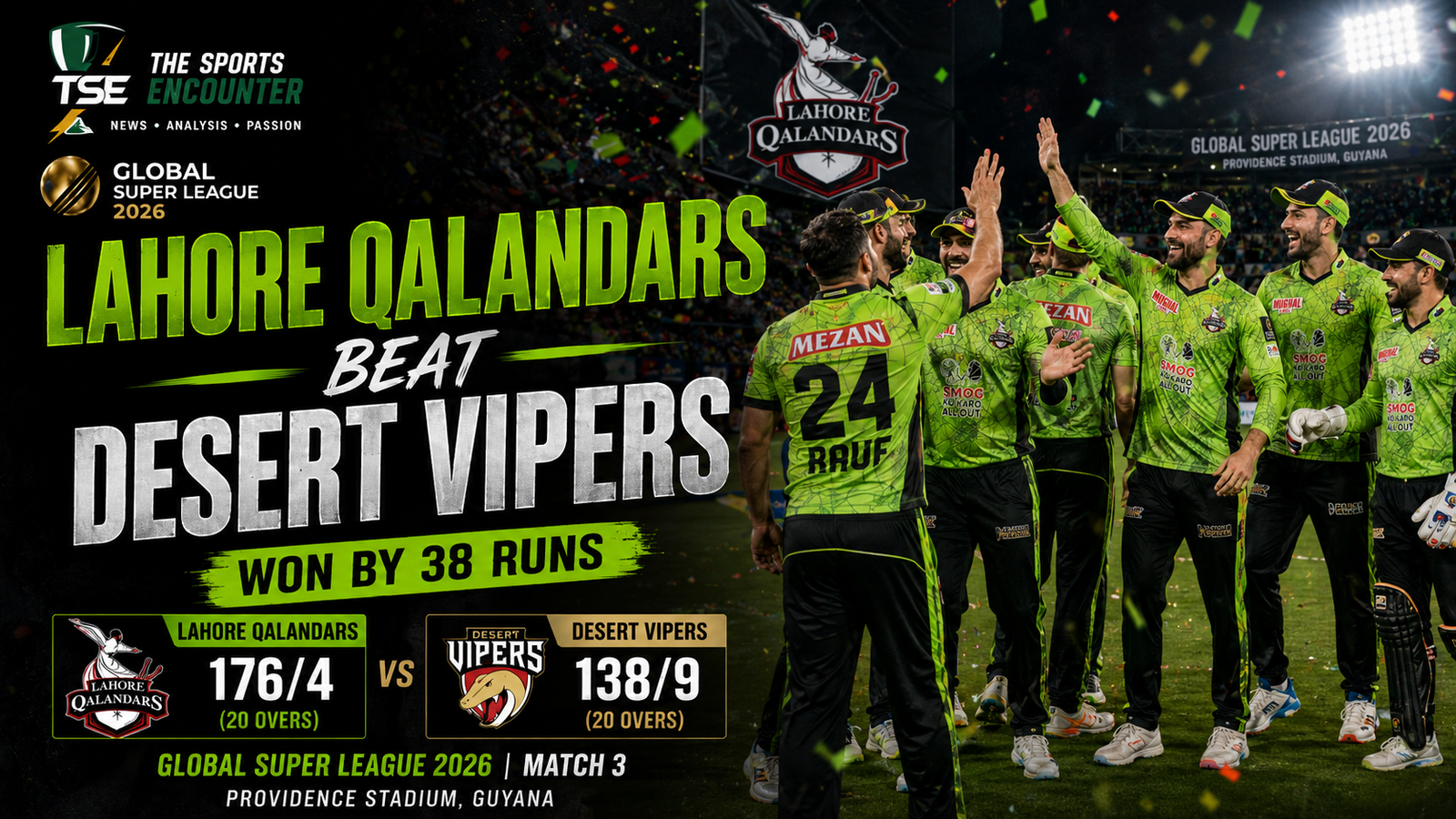
A day later, Michael Bracewell and Usama Mir helped Lahore defeat the Vipers by 38 runs. That performance, detailed in our report on how Bracewell led Lahore from the front at Providence, demonstrated how quickly an innings can collapse once spin gains control.
Later matches produced totals of 112, 122, 135, and 152, reinforcing the importance of reading the pitch rather than relying on a fixed target.
San Francisco handled that challenge correctly in the Qualifier. They recognized that 123 did not require reckless acceleration, absorbed Pierre’s double strike, and allowed Robinson to pace the chase around the required rate.
The final may demand a different approach.
San Francisco Carry Major League Cricket Experience
The Unicorns also bring experience from a highly competitive American franchise system.
Major League Cricket’s recent season produced several close finishes, including a one-run championship match won by Los Angeles Knight Riders.
The Sports Encounter’s report on the Los Angeles Knight Riders’ dramatic MLC final victory highlighted how small tactical decisions can determine a title match.
San Francisco will need the same awareness at Providence.
One loose over, a missed catch, or an unnecessary middle-over dismissal could separate the champion from the runner-up. The Unicorns’ Qualifier performance showed they can execute under pressure, but Guyana will present a deeper batting order and a more experienced bowling attack.
Key Statistics From the Qualifier
- San Francisco Unicorns won by eight wickets with 23 balls remaining.
- Tim Robinson scored an unbeaten 68 from 54 balls, including eight fours and one six.
- Oliver Peake made 33 not out from 31 deliveries.
- Robinson and Peake shared an unbeaten 97-run third-wicket partnership.
- Fabian Allen took three wickets for 20 runs from four overs.
- Hassan Khan and Anirudh Immanuel each conceded only 14 runs from four overs.
- Vriitya Aravind top-scored for the Vipers with an unbeaten 29 from 20 balls.
- Shadab Khan scored 14 from 24 balls and conceded 41 runs from four wicketless overs.
- Khary Pierre claimed both San Francisco wickets and finished with two for 22.
- The Unicorns reached their target at a run rate of 7.79 per over.
Final Verdict
The scorecard will show an eight-wicket victory completed with 23 balls remaining.
The deeper story is how thoroughly San Francisco corrected the failures of their previous meeting with Desert Vipers.
Their spinners controlled the innings. Allen delivered wickets at crucial stages. Robinson absorbed the pressure created by Pierre’s double strike. Peake stayed with him, and the chase never drifted into panic.
Desert Vipers will regret the 70 deliveries consumed by Carter, Shadab, and Mayers for only 44 runs. Aravind’s late assault gave the total some respectability, but knockout cricket rarely forgives an innings that spends too long searching for momentum.
The Unicorns were sharper, calmer, and more adaptable.
They arrived at Providence carrying the memory of a heavy defeat and left with a place in the Global Super League final.
Guyana Amazon Warriors are next, and San Francisco have already learned the most valuable lesson of their campaign: in a knockout match, the first result does not get a vote.
Frequently Asked Questions
Who won the Global Super League Qualifier between Desert Vipers and San Francisco Unicorns?
San Francisco Unicorns defeated Desert Vipers by eight wickets in the Global Super League Qualifier at Providence Stadium. The Unicorns chased 123 in 16.1 overs with 23 balls remaining.
Who was Player of the Match in the Vipers vs Unicorns Qualifier?
Tim Robinson was named Player of the Match after scoring an unbeaten 68 from 54 balls and taking two catches during the Desert Vipers innings.
How many runs did Tim Robinson score against Desert Vipers?
Tim Robinson scored 68 not out from 54 deliveries, including eight fours and one six. He also shared an unbeaten 97-run partnership with Oliver Peake.
What was the key partnership in San Francisco Unicorns’ chase?
Tim Robinson and Oliver Peake added an unbeaten 97 runs for the third wicket after San Francisco had slipped to 29 for two.
Who was the best bowler for San Francisco Unicorns?
Fabian Allen was the leading bowler for the Unicorns, taking three wickets for 20 runs from four overs. Hassan Khan and Anirudh Immanuel also conceded only 14 runs each from their four-over spells.
Why did Desert Vipers score only 122?
The Vipers struggled to build momentum through the middle overs. Zachary Carter, Shadab Khan, and Kyle Mayers consumed 70 balls for only 44 runs combined, leaving the lower order with too much work to do late in the innings.
Who top-scored for Desert Vipers?
Vriitya Aravind top-scored with an unbeaten 29 from 20 balls. His late boundaries helped the Vipers recover from 81 for six to 122 for seven.
How did Khary Pierre perform in the Qualifier?
Khary Pierre took both San Francisco wickets and finished with figures of two for 22 from four overs. He dismissed Connor Esterhuizen and Hassan Khan in the same over.
Why was Shadab Khan unable to influence the Qualifier?
Shadab struggled with both bat and ball. He scored 14 from 24 deliveries without a boundary and conceded 41 runs from four wicketless overs.
Who will San Francisco Unicorns face in the Global Super League final?
San Francisco Unicorns will face Guyana Amazon Warriors in the Global Super League final.
Why did Guyana Amazon Warriors qualify directly for the final?
Guyana Amazon Warriors finished at the top of the league standings. Under the tournament format, the first-placed team advanced directly to the final, while the second- and third-placed teams contested the Qualifier.
Where will the Global Super League final be played?
The final will be played at Providence Stadium in Guyana, the main venue for the 2026 Global Super League.
When is the Global Super League final?
The final is scheduled for Sunday, with San Francisco Unicorns facing defending champions Guyana Amazon Warriors.
Did Desert Vipers beat San Francisco Unicorns earlier in the tournament?
Yes. Desert Vipers defeated San Francisco Unicorns by nine wickets during the league stage before the Unicorns reversed the result in the Qualifier.
Has San Francisco Unicorns already played Guyana Amazon Warriors in GSL 2026?
Yes. Guyana Amazon Warriors defeated San Francisco by three wickets under the DLS method during the league stage.
What must San Francisco Unicorns improve before the final?
The Unicorns must protect early wickets, use their spin attack effectively, and finish decisive moments more clinically than they did in their earlier defeat to Guyana.