


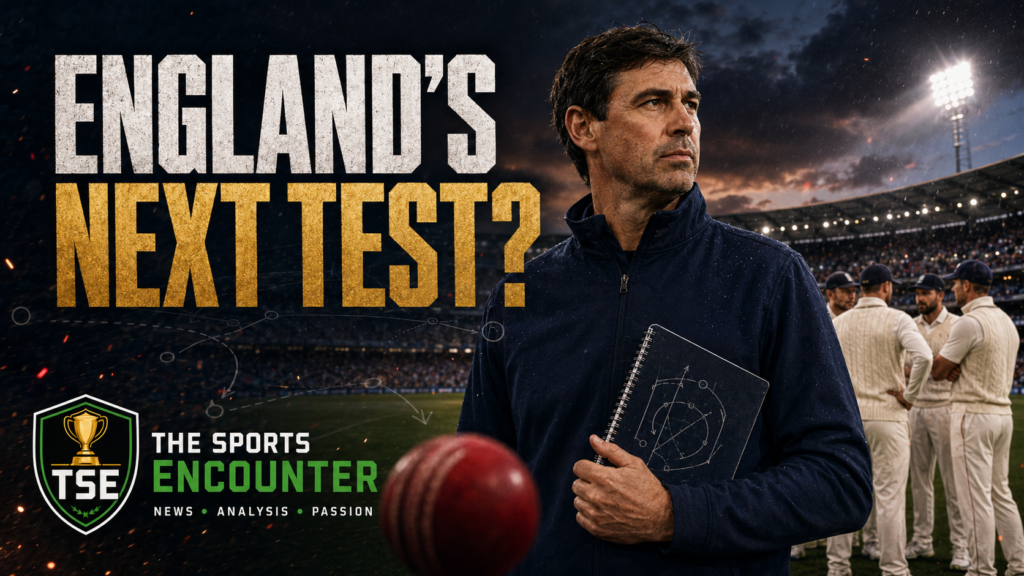
Stephen Fleming is expected to become England’s new Test head coach after emerging as the successful candidate from an extensive England and Wales Cricket Board recruitment process.
The former New Zealand captain has impressed ECB decision-makers during interviews and is now finalizing the terms of an appointment that would place him in charge of an England Test team facing its most significant leadership transition since 2022.
Fleming, 53, would replace Brendon McCullum as red-ball coach. McCullum lost the Test role following England’s 4-1 Ashes defeat in Australia, a 2-1 home series loss to New Zealand, and a run of seven defeats in nine Tests. He remains responsible for England’s white-ball teams under a contract running through the end of 2027.
The anticipated appointment carries a strong New Zealand connection, but it does not represent a simple continuation of McCullum’s methods. Fleming built his reputation through tactical restraint, long-term planning, role clarity, and one of the most stable team cultures in franchise cricket. England now need those qualities after a period shaped by declining results, disciplinary problems, and the retirement of former captain Ben Stokes.
An official announcement has yet to be made, and final contract discussions remain important. Fleming may also be unable to take charge before England begin their three-Test home series against Pakistan on August 19. Marcus Trescothick is considered the likely interim option if the permanent coach cannot begin immediately.
Whenever Fleming formally assumes control, he will inherit a team carrying unresolved questions about captaincy, selection, batting discipline, workload management, and the future of the aggressive approach that became known as Bazball.
Stephen Fleming’s Expected England Appointment At A Glance
| Category | Current Position |
|---|---|
| Expected Appointment | England Men’s Test Head Coach |
| Coach Being Replaced | Brendon McCullum |
| Appointment Status | Expected, with final contract discussions reportedly continuing |
| Other Interviewed Candidates | Jonathan Trott, Richard Dawson, and Tom Moody |
| Former Leading Candidate | Andy Flower, who withdrew from consideration |
| Possible Interim Coach | Marcus Trescothick |
| England’s Next Test | Against Pakistan at Headingley, beginning August 19, 2026 |
| Fleming’s Test Record | 111 matches, 7,172 runs, average of 40.06 |
| New Zealand Test Captaincy | 80 matches, 28 victories |
| Major Coaching Titles | Five IPL titles and two Champions League T20 titles |
| International Head-Coaching Experience | None at senior national-team level |
Readers can follow wider developments involving the national side through The Sports Encounter’s cricket news, match reports, and analysis hub.
Why The ECB Chose Stephen Fleming
England’s coaching search began with a broad list of candidates because the ECB needed someone capable of restoring results without removing every positive feature of the previous era.
Former England coach Andy Flower initially appeared to be a strong option. His knowledge of English cricket, international experience, and success across franchise competitions gave him a compelling profile. Flower decided to remain within franchise cricket, leaving Fleming as the candidate who most clearly combined leadership experience, tactical authority, and familiarity with England’s existing structure.
Jonathan Trott, Richard Dawson, and Tom Moody were among the other candidates interviewed. Trott has international head-coaching experience with Afghanistan, Dawson understands the English system, and Moody has worked across international and franchise environments. Fleming reportedly made the strongest impression during the interview process.
His candidacy also arrived at an ideal moment. Fleming stepped down as Chennai Super Kings head coach in July after an association that began during the inaugural Indian Premier League season in 2008. He played for the franchise before becoming its coach in 2009.
Leaving Chennai removed the largest obstacle to accepting a demanding international role. Fleming had previously resisted full-time national-team coaching because of family commitments and the year-round pressures attached to international cricket. Reports indicate that his personal circumstances have changed as his children have grown older, making the England position more practical.
The split-coaching arrangement may also help. McCullum will continue running the white-ball teams, allowing Fleming to focus primarily on Test preparation, red-ball selection, and long-term development.
That structure still carries potential tension. England have several important multi-format players, including Harry Brook, Joe Root, Jamie Smith, Jofra Archer, and Mark Wood. Test and white-ball priorities may collide during crowded periods. Fleming and McCullum will need clear authority, regular communication, and an agreed system for managing player availability.
Their existing relationship should make those conversations easier. Fleming captained McCullum for New Zealand, later became an influential mentor, and worked with him in business. Familiarity can support cooperation, although the ECB must ensure that the two coaches retain distinct responsibilities.
England Need A Rebuild After Bazball Lost Its Balance
McCullum and Stokes transformed England Test cricket when they took charge in 2022. The team won 10 of its first 12 Tests under their leadership and completed an extraordinary 3-0 series victory in Pakistan.
England attacked more freely, scored faster, and pursued results from situations that earlier teams might have accepted as draws. Players felt liberated, crowds responded, and Test cricket regained energy around the national side.
The Sports Encounter’s analysis of how Bazball changed and eventually exposed England explains how that original freedom gradually became vulnerable to predictability and poor decision-making.
Aggressive cricket works when players read conditions, bowlers, match situations, and risk. England increasingly treated aggression as an automatic response. Batters sometimes attacked without first earning control. Tactical errors received public protection rather than meaningful examination. Preparation also came under scrutiny as the schedule compressed and England’s results declined.
The 4-1 Ashes defeat in Australia exposed those weaknesses at the highest level. A home series loss to New Zealand then removed the sense that England’s problems belonged only to difficult overseas conditions.
England’s defeat in the second New Zealand Test, covered in The Sports Encounter’s report on New Zealand’s dominant victory and England’s growing pressure, showed how quickly matches could move away from a team that lacked control.
Fleming is unlikely to abandon positive cricket. His Chennai teams regularly backed experienced players, trusted instinct, and accepted calculated risk. His greater contribution may involve helping England separate purposeful aggression from impulsive shot selection.
What Fleming Could Change Without Removing England’s Identity
England do not need to return to fearful batting or defensive captaincy. Their strongest path lies between the caution of the pre-2022 period and the excesses that appeared during the later Bazball years.
Fleming can preserve scoring intent while demanding stronger match awareness. A batter can attack a weak bowler and still respect a difficult new-ball spell. A captain can pursue victory without sacrificing control of an entire session. Bowlers can use aggressive fields while retaining plans for containment and pressure.
His Chennai record suggests that he values clear roles. Players generally knew why they were selected, where they would bat, and how the team expected them to influence a game. England have sometimes shifted between instinct, loyalty, and short-term reaction when making selection decisions.
Fleming will also need to bring greater honesty to performance reviews. Confidence matters, but international teams improve when coaches identify tactical errors clearly and privately. England’s public messaging under McCullum occasionally made legitimate criticism sound like opposition to positive cricket.
A more measured culture could help players retain confidence while accepting responsibility for avoidable mistakes.
A New Coach Will Inherit England’s Captaincy Crisis
Fleming’s first major decision may involve the identity of England’s permanent Test captain.
Stokes retired from international cricket after the home series against New Zealand, ending one of the most influential captaincy periods in recent English history. His departure removed the emotional and tactical center of the team at the same time as McCullum lost the Test coaching position.
The full background to his decision appears in The Sports Encounter’s report on Ben Stokes’ retirement and England’s leadership crisis.
Joe Root offers experience and immediate stability. He captained England in a record 64 Tests and remains the side’s most accomplished batter. Returning to the position, however, would increase the burden on a player whose runs remain critical to England’s chances.
Harry Brook represents the longer-term option. His aggressive instincts fit the team’s established identity, and Stokes reportedly identified him as a possible successor. Brook already carries white-ball leadership responsibilities, raising serious workload questions in a calendar filled with overlapping formats.
Fleming’s arrival could influence the final decision. His record as New Zealand captain gives him the standing to mentor a younger leader. He may prefer to support Brook through a long-term transition, or he could recommend Root as a stabilizing captain while England prepare another candidate.
There is also public discussion about a possible Stokes return. His history includes reversing an ODI retirement, and Australia coach Andrew McDonald has described an Ashes comeback as a potential “fairytale.” England cannot plan around an uncertain reversal, but a new environment may leave the door open if Stokes changes his mind.
The Sports Encounter previously examined the pressures surrounding the former captain in The Curious Case of Ben Stokes and His Opponents.
Who Is Stephen Fleming And What Is His Cricket Record?
Stephen Paul Fleming is a former New Zealand opening batter, national captain, and one of the most successful coaches in franchise cricket history.
Born in Christchurch on April 1, 1973, Fleming made his Test debut against India in 1994. The left-hander played 111 Tests and scored 7,172 runs at an average of 40.06. His record included nine centuries, 46 fifties, and a highest score of 274 not out against Sri Lanka in Colombo in 2003.
Fleming became the first New Zealand batter to pass 7,000 Test runs. He also played 280 one-day internationals, scoring 8,037 runs with eight centuries and 49 fifties. His highest ODI score was an unbeaten 134 against South Africa during the 2003 World Cup.
His reputation extended far beyond his batting statistics. Fleming captained New Zealand in 80 Tests, winning 28, losing 27, and drawing 25. He remains the country’s most successful Test captain by victories.
In ODIs, he led New Zealand in 218 matches and recorded 98 wins. He also captained the Black Caps to the 2000 ICC KnockOut Trophy, later renamed the Champions Trophy. That victory gave New Zealand its first major ICC title.
Fleming rarely had access to the depth available to Australia, India, or South Africa during his captaincy years. He built competitive teams through tactical awareness, accurate use of limited resources, strong field placements, and a clear understanding of opposition weaknesses.
Shane Warne once described Fleming as the best captain in world cricket, recognition that reflected the New Zealander’s strategic reputation among his opponents.
| Playing Category | Stephen Fleming’s Record |
|---|---|
| Test Matches | 111 |
| Test Runs | 7,172 |
| Test Batting Average | 40.06 |
| Test Centuries | 9 |
| Test Fifties | 46 |
| Highest Test Score | 274 not out |
| ODI Matches | 280 |
| ODI Runs | 8,037 |
| Tests As Captain | 80 |
| Test Wins As Captain | 28 |
| ODIs As Captain | 218 |
| ODI Wins As Captain | 98 |
Stephen Fleming’s Coaching Record With Chennai Super Kings
Fleming joined Chennai Super Kings as a player in 2008 and became head coach the following year. His partnership with captain MS Dhoni developed into one of cricket’s most successful coach-captain relationships.
Chennai won five IPL titles under Fleming in 2010, 2011, 2018, 2021, and 2023. The franchise also claimed the Champions League T20 title in 2010 and 2014 and reached 10 IPL finals during his tenure.
He later extended his work across the Super Kings network, coaching Joburg Super Kings in South Africa’s SA20 and Texas Super Kings in Major League Cricket. Fleming also coached Melbourne Stars and Rising Pune Supergiant.
His success came from continuity rather than constant reinvention. Chennai often retained experienced players whom other teams considered too old, then placed them in clearly defined roles. Fleming and Dhoni created a calm environment in a tournament known for rapid change and intense scrutiny.
England will ask him to transfer parts of that culture into Test cricket. The formats differ greatly, but leadership principles involving trust, preparation, tactical clarity, and emotional control remain relevant.
Why Fleming’s Lack Of International Coaching Experience Matters
Fleming has never served as the full-time head coach of a senior international team. That gap will become the clearest question surrounding his appointment.
Franchise coaching involves shorter competitions, player drafts, overseas limits, and squads assembled for a defined window. International coaching demands year-round planning, coordination with domestic cricket, management of central contracts, and development across multiple Test cycles.
Test cricket also creates problems that a T20 franchise coach rarely faces. A five-day match can change through weather, pitch deterioration, player fatigue, and tactical pressure built across several sessions. The coach must prepare players to manage long periods without immediate reward.
Fleming’s playing and captaincy experience reduces that concern. He spent 14 years in international cricket and led New Zealand through 303 matches across formats. He understands national-team scrutiny and the emotional weight attached to Test results.
His challenge will involve translating that knowledge into modern England management. Players now move between Test cricket, white-ball internationals, the IPL, The Hundred, and other franchise leagues. Rest, injury management, and availability influence selection almost as heavily as form.
The ECB must give Fleming enough authority to make difficult decisions. A famous coach cannot repair structural problems if selection, scheduling, and workload policies pull in different directions.
Pakistan Series Creates An Immediate Deadline
England’s next Test assignment begins against Pakistan at Headingley on August 19. The teams then meet at Lord’s from August 27 and Edgbaston from September 9.
The series belongs to the 2025-27 ICC World Test Championship and gives England little time to settle its coaching and captaincy structure.
Pakistan will arrive under Babar Azam, who has returned for a second spell as Test captain. England must prepare for an opponent with strong batting experience, a varied bowling attack, and recent knowledge of the conditions.
If Fleming cannot begin before the series, Trescothick may lead the side on an interim basis. That arrangement would allow the ECB to complete contract discussions without rushing the permanent coach into a Test campaign with limited preparation.
It would also delay Fleming’s practical influence. England need to choose a captain, define the leadership group, assess player availability following The Hundred, and establish how much of the previous tactical philosophy should remain.
Official England fixtures, team announcements, and national-team information are available through the England and Wales Cricket Board’s official England Men website.
What Stephen Fleming’s Appointment Could Mean For Bazball
Fleming’s expected arrival should begin a period of refinement rather than an immediate tactical revolution.
England’s aggressive identity still has value. Root, Brook, Ben Duckett, Jamie Smith, and other established players have produced important performances within that environment. Removing freedom completely could create fresh uncertainty.
The new coach must add judgment to that freedom. England need batters who understand when a scoring opportunity carries acceptable risk. They need bowlers capable of defending a total as well as attacking for wickets. The captain must recognize when a match requires imagination and when it rewards patience.
Fleming’s career suggests that he will focus on adaptable cricket. His New Zealand teams competed through tactical intelligence, while Chennai succeeded by matching roles to conditions and personnel.
That approach could also reshape England’s selection policy. Loyalty helped players feel secure under Stokes and McCullum, but prolonged faith sometimes protected poor performance. Fleming has a reputation for backing experienced players, although his support usually operates within a defined tactical role.
England’s next phase should therefore be judged through clarity. Players need to know what the team expects, how selection decisions are made, and which standards apply when results decline.
The debate over England’s great all-rounders, including the scale of Stokes’ contribution, appears in The Sports Encounter’s comparison of Ben Stokes, Ian Botham, and Andrew Flintoff.
The McCullum Relationship Brings Opportunity And Risk
Fleming and McCullum share a long professional relationship. Fleming captained McCullum during his early international career and became a trusted mentor. Their familiarity could help England manage the division between Test and white-ball cricket.
Both coaches understand aggressive cricket, player confidence, and the pressures surrounding the modern international schedule. They should be able to discuss shared players without spending months developing trust.
The arrangement may become difficult when priorities conflict. A fast bowler preparing for an important Test series may also be needed for a white-ball tournament. Brook could emerge as Test captain while continuing to lead in limited-overs cricket. Fleming and McCullum may hold different views on rest, preparation, or tactical development.
Rob Key, England’s managing director of men’s cricket, will need to establish firm decision-making boundaries. Fleming must have authority over the Test program, while McCullum requires enough control to run the white-ball teams effectively.
The friendship between the two New Zealanders can support the structure, but governance must carry more weight than personal understanding.
Final Verdict
Stephen Fleming appears ready to accept the largest international coaching challenge of his career.
His playing record gives him credibility with elite Test cricketers. His captaincy record shows that he can build competitive teams without relying on overwhelming resources. Five IPL championships and two Champions League titles demonstrate sustained success across changing squads and competitive cycles.
England still present a difficult assignment. Results have deteriorated, Stokes has retired, McCullum has lost the Test role, and no permanent captain has been confirmed. The next series begins in less than a month, while a demanding 2027 calendar already waits beyond it.
Fleming’s first responsibility will involve restoring stability. England need a clear captaincy decision, honest performance assessment, stronger preparation, and an attacking philosophy guided by match awareness.
His expected appointment also tells us something about the ECB’s preferred direction. Decision-makers have chosen experience, calm leadership, and tactical depth over a complete cultural reset.
Fleming will inherit the energy created by Bazball and the damage caused when that philosophy lost its balance. His success will depend on whether he can preserve England’s courage while rebuilding discipline around it.
For a coach who spent years turning Chennai Super Kings into one of cricket’s most stable organizations, England now offer a very different test of the same leadership qualities.
The announcement may still be pending, but the red-ball rebuild appears to have found its preferred architect.
Frequently Asked Questions About Stephen Fleming And England
Is Stephen Fleming The New England Test Coach?
Stephen Fleming is expected to become England’s new Test head coach after impressing during the ECB’s interview process. An official appointment had not been announced at the time of publication, and final contract discussions were reportedly continuing.
Who Will Stephen Fleming Replace As England Test Coach?
Fleming is expected to replace Brendon McCullum, who was removed from the Test role after England lost seven of nine matches. McCullum remains England’s white-ball head coach.
Why Was Brendon McCullum Sacked As England Test Coach?
The ECB removed McCullum from the Test role following a prolonged decline that included a 4-1 Ashes defeat in Australia and a 2-1 home series loss to New Zealand. Questions also emerged around preparation, tactical discipline, and dressing-room culture.
When Will Stephen Fleming Start As England Coach?
A confirmed starting date has not been announced. Fleming may be unable to take charge before England’s first Test against Pakistan on August 19, leaving Marcus Trescothick as a possible interim coach.
Has Stephen Fleming Coached An International Team Before?
No. The England position would be Fleming’s first full-time head-coaching role with a senior international team. He has extensive experience as a New Zealand captain and franchise coach.
How Many IPL Titles Has Stephen Fleming Won As Coach?
Fleming coached Chennai Super Kings to five IPL championships in 2010, 2011, 2018, 2021, and 2023.
What Is Stephen Fleming’s Test Cricket Record?
Fleming played 111 Tests for New Zealand and scored 7,172 runs at an average of 40.06. He registered nine centuries, 46 fifties, and a highest score of 274 not out.
How Successful Was Stephen Fleming As New Zealand Captain?
Fleming captained New Zealand in 80 Tests and won 28, making him the country’s most successful Test captain by victories. He also led New Zealand to the 2000 ICC KnockOut Trophy.
Who Were The Other Candidates For The England Test Coach Job?
Jonathan Trott, Richard Dawson, and Tom Moody were among the candidates interviewed. Andy Flower had been viewed as a leading option but withdrew from consideration.
Will Brendon McCullum Continue Coaching England?
Yes. McCullum remains head coach of England’s ODI and T20I teams under his existing contract, which runs through 2027.
Are Stephen Fleming And Brendon McCullum Friends?
Fleming captained McCullum for New Zealand and later became a mentor and business associate. Their longstanding relationship may help England operate separate Test and white-ball coaching structures.
Who Will Be England’s Next Test Captain?
The ECB has not confirmed a permanent successor to Ben Stokes. Joe Root and Harry Brook are considered leading options, while Marcus Trescothick may support the team on an interim basis if required.
When Is England’s Next Test Match?
England are scheduled to face Pakistan at Headingley from August 19 to 23, 2026. Further Tests will follow at Lord’s and Edgbaston.
Will Stephen Fleming End Bazball?
Fleming is unlikely to remove England’s attacking approach completely. His greater task will be to add tactical control, preparation, and match awareness so that aggressive cricket becomes more adaptable.
Could Ben Stokes Return To Test Cricket Under Stephen Fleming?
Stokes has retired from international cricket, and England must plan without him. A future return remains possible because he previously reversed an ODI retirement, but neither Stokes nor the ECB has confirmed that he intends to resume his Test career.