Breaking News
Sidny Lopes Cabral’s World Cup Wonder Goal Gave Cape Verde a Moment No One Can Take Away
Sidny Lopes Cabral’s stunning 25-yard strike against Argentina gave Cape Verde its defining World Cup 2026 moment. The 23-year-old left-back won the Hyundai Goal of the Tournament after fans voted for a goal that carried technique, pressure, national pride, and one unforgettable underdog story.

Some goals win matches. Some goals win tournaments. A few goals survive beyond both.
Sidny Lopes Cabral’s strike against Argentina belongs in that final category.
The Cape Verde left-back has won the Hyundai Goal of the Tournament at the 2026 FIFA World Cup after fans voted his extra-time equalizer against Argentina as the best goal of the competition. FIFA confirmed the award after a public vote, with Lopes Cabral’s goal chosen from a shortlist of 12 outstanding strikes from the tournament.
The moment came on July 3 in the Round of 32, with Cape Verde trailing Argentina 2-1 in extra time. The match already felt like a football fairytale stretched to its limit. Argentina had the pedigree, the history, the champions’ aura, and the weight of expectation. Cape Verde had belief, structure, bravery, and nothing to lose.
Then Lopes Cabral stepped onto a loose ball from 25 yards.
He struck it with his right foot. The ball bent wickedly, rose cleanly, and flew into the far top corner. Argentina’s goalkeeper had no real answer. The Cape Verde bench exploded. The crowd froze for a fraction of a second, then understood what it had just seen.
Cape Verde had equalized against Argentina in extra time at the World Cup.
Argentina eventually advanced 3-2, but the goal stayed with the tournament. It stayed with fans, neutrals, Cape Verdeans, and anyone who watches football for the moments that feel bigger than the scoreline.
For more World Cup coverage, visit The Sports Encounter’s FIFA World Cup 2026 hub.
Why Lopes Cabral’s Goal Won the Fan Vote
The award was not handed to him because the story was romantic. It was won because the goal had everything a great World Cup strike needs.
There was distance, technique, pressure, and timing. And there was opponent quality and the emotional chaos around it.
According to the Associated Press, Lopes Cabral’s goal was voted the best of 308 goals scored at the tournament. It finished ahead of Eldor Shomurodov’s lob for Uzbekistan against Congo and Wilson Isidor’s rising strike for Haiti against Morocco.
That matters because this was not a quiet award given in isolation. Fans chose it from a tournament full of elite finishing, long-range shots, clever team moves, and individual brilliance. Lopes Cabral’s goal still rose above the rest.
Part of its appeal came from the visual drama. A left-back hitting a right-footed curler from distance already feels slightly unexpected. Doing it against Argentina in extra time gives it a different temperature. The ball seemed to carry more than technique. It carried a country’s refusal to leave the tournament quietly.
The official FIFA World Cup report on Sidny Lopes Cabral’s Goal of the Tournament award confirmed the fan-voted honor and placed the Cape Verde defender among the most memorable names of the 2026 World Cup.
A Cape Verde Goal Against the Scale of World Football
Cape Verde entered the 2026 World Cup as one of the tournament’s most compelling stories.
This is a nation of roughly 600,000 people, spread across islands in the Atlantic, competing on football’s biggest stage against countries with deeper systems, larger populations, richer leagues, and generations of World Cup history.
That scale is why Lopes Cabral’s goal mattered so much.
TL;DR
Cape Verde’s Sidny Lopes Cabral has won the Hyundai Goal of the Tournament at the 2026 FIFA World Cup for his stunning 25-yard strike against Argentina in the Round of 32. The 23-year-old left-back equalized in extra time with a curling right-footed shot into the top corner, taking the score to 2-2 before Argentina eventually won 3-2. For Cape Verde, a nation of roughly 600,000 people, the goal became more than a highlight. It became a symbol of belief, identity, and football’s ability to make smaller nations feel enormous for one unforgettable night.
It was not only Cape Verde scoring against Argentina, but it was also a smaller football country forcing one of the game’s giants to feel real fear in extra time. To say the least, it was a left-back from a developing football nation producing the tournament’s most replayed technical moment against one of the sport’s most powerful teams.
Cape Verde did not win the match. Yet football memory has never belonged only to winners.
Cameroon still has Italia 90. Senegal still has 2002. Costa Rica still has 2014. Morocco still has 2022. Cape Verde now has 2026, and Lopes Cabral’s goal may become the single image that carries that memory for years.
For fans who followed the tournament’s wider emotional stories, our coverage of the FIFA World Cup 2026 fan-voted dream team showed how strongly supporters responded to surprise performers and unlikely heroes.
The Journey Behind the Strike
The goal becomes even stronger when placed next to Lopes Cabral’s career path.
Born in Rotterdam to Cape Verdean parents, he grew up inside Europe’s football structure but carried Cape Verde through family, identity, and national belonging. His route to the World Cup was not polished from the start.
He once earned around €850 a month while playing in Germany’s fifth tier. That is not the glamorous road people often imagine when they watch a World Cup highlight. It is the road of lower-league football, uncertain contracts, modest wages, long travel, and stubborn belief.
From there, Lopes Cabral climbed to Trabzonspor and then into Cape Verde’s World Cup story. His career arc now reads like a message to young players who feel the professional game is already closed to them.
Football likes to sell dreams, but it rarely explains the difficult middle part. Lopes Cabral’s story contains that middle part. The low salary. The lower divisions. The slow climb. The need to keep going when nobody is building a campaign around your name.
That is why his message to young Cape Verdeans lands with real weight. He hopes this moment shows them their dreams are reachable. After this World Cup, that line sounds less like motivation and more like evidence.
The Celebration Made It Human
Great goals often become more powerful because of what happens after the ball hits the net.
Lopes Cabral’s celebration added another layer to the story. AP reported that he broke away from teammates and climbed toward the stands to reach his girlfriend and look for his mother. He later said he had told them before the match that if he scored, he would run to them.
That detail changed the scene.
The goal was no longer only about technique. It became family, sacrifice, migration, national pride, and the private life behind a public moment. His mother’s emotional reaction, his girlfriend in the stands, and his desperate attempt to reach them gave the strike a human ending.
Football fans remember those moments because they cut through the noise.
A 25-yard curler against Argentina is spectacular. A young Cape Verdean player climbing toward his family after scoring it feels unforgettable.
Why This Goal Belongs in World Cup Memory
Every World Cup has a goal that captures the tournament’s spirit.
Sometimes it comes from a superstar. Sometimes it comes from a tactical masterpiece. Some other times, it comes from a player who briefly turns into a symbol for something much larger than himself.
Lopes Cabral’s goal fits the third category.

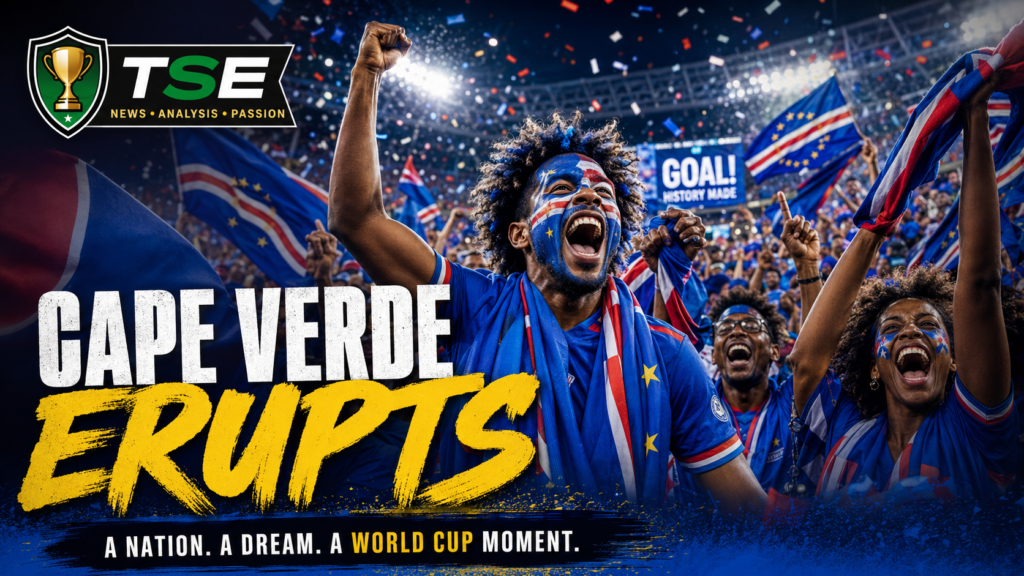
It did not win Cape Verde the match. Neither did it send them into the next round. It did something different; it gave their World Cup debut a permanent image, it gave supporters a moment they can replay without needing to explain the final result first.
That is a rare kind of sporting power.
Argentina advanced, as great teams often do. Cape Verde left, as brave teams sometimes must. But the goal belonged to Cape Verde. The tournament’s fans confirmed that by voting it the best goal of the World Cup.
For more stories about tournament-defining football moments, read The Sports Encounter’s analysis of how the World Cup 2026 final viewership reflected soccer’s rise in the United States.
The Bigger Meaning for African Football
Lopes Cabral’s award also speaks to African football’s growing presence at the World Cup.
For decades, African teams have brought talent, athleticism, culture, and atmosphere to the tournament. What has changed in recent years is the expectation. More African sides now arrive with tactical maturity, global experience, and players developed across Europe, Africa, and beyond.
Cape Verde’s run added a new layer to that story.
This was not one of Africa’s traditional World Cup powers. It was a smaller nation making its first major global statement. That gives the achievement a different texture. It tells other smaller federations that progress does not always need to begin with a huge population or a giant domestic league.
It can begin with scouting, diaspora connections, coaching structure, defensive organization, player belief, and one generation willing to carry the flag into uncomfortable places.
Lopes Cabral became the face of that belief because his goal translated all of it into one clean strike.
What Comes Next for Sidny Lopes Cabral?
The challenge now is turning the moment into momentum.
World Cups can change careers quickly. A goal like this brings attention, but attention does not guarantee stability. Lopes Cabral will now return to club football with a different profile. Opponents will know him. Scouts will track him. Cape Verdeans will expect more from him.
That is the next test.
The best version of this story is not only that Lopes Cabral scored the goal of the tournament. It is that the goal becomes a platform for a stronger club career, greater national responsibility, and a new generation of Cape Verdean players who see his path as possible.
For Cape Verde, the award keeps the country’s World Cup story alive beyond elimination. But, for Lopes Cabral, it turns one shot into a career marker. For world football, it offers a reminder that the most meaningful moments often come from places the global audience was too slow to watch.
Final Verdict
Sidny Lopes Cabral’s Hyundai Goal of the Tournament award feels right because the goal carried everything football asks from a World Cup moment.
It had beauty, pressure, surprise, a giant opponent, a smaller nation refusing to disappear, and it had a family story behind it and a national story around it.
Cape Verde lost 3-2 to Argentina, but Lopes Cabral gave his country something that defeat could not erase.
Years from now, people may not remember every detail of that Round of 32 match. They may forget the sequence before the shot. They may need reminding who scored Argentina’s winner.
But they will remember the Cape Verde left-back who bent a right-footed strike into the top corner from 25 yards and made a nation of 600,000 feel like the center of the football world.
That is why fans voted for it.
That is why it mattered.
And that is why Sidny Lopes Cabral’s goal now belongs to World Cup history.